Opening a jar of honey and finding it thick, cloudy, or completely solid can be confusing if you don’t know what’s going on. The good news is that crystallized honey isn’t spoiled, and learning how to liquefy honey at home takes just a few minutes with tools you already own. This guide walks through the safest methods, the mistakes that ruin flavor and texture, and how to keep honey pourable for longer.
The fastest and safest way to liquefy honey is to set the jar (lid loosened or off) in a pan of warm water kept between 100°F and 110°F, stirring occasionally until the crystals dissolve, which usually takes 15 to 30 minutes. Avoid boiling water and avoid microwaving honey at full power, since high heat destroys flavor compounds and enzymes and can scorch the honey.
Key Takeaways
Crystallized or hardened honey is not spoiled; it’s a normal, reversible chemical process caused by the natural sugars in honey.
The most reliable way to liquefy honey is a warm water bath at 100°F to 110°F, not the microwave or stovetop direct heat.
Keep honey below about 110°F whenever you’re softening it. Higher temperatures darken honey, dull its flavor, and break down the natural enzymes.
Room temperature, tightly sealed storage away from light slows down future crystallization far better than the refrigerator.
Honey should never be given to infants under 12 months old, liquefied or not, because of the risk of infant botulism.
What You Need to Know About Honey Crystallization
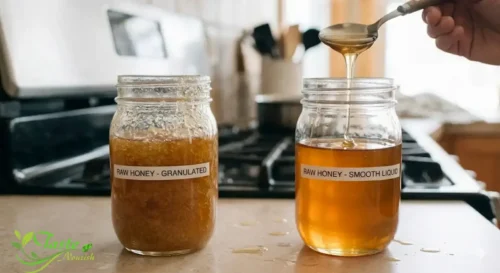
Honey is a supersaturated solution, meaning it holds more dissolved sugar than water can normally keep in solution. Over time, the glucose in honey separates from the water and forms crystals, which is what turns smooth honey grainy, cloudy, or solid. Honeys with a higher ratio of glucose to fructose, such as clover or canola honey, crystallize faster than honeys higher in fructose, such as tupelo or acacia honey.
Cooler temperatures speed up crystallization, which is why a jar left in a chilly pantry or garage can harden faster than one kept in a warm kitchen. Raw, unfiltered honey also crystallizes more readily than heavily filtered honey, because tiny particles of pollen and wax give the sugar crystals something to form around.
None of this affects safety. Crystallized honey is still good honey; it just needs gentle heat to return to a pourable, spreadable consistency.
How to Liquefy Honey
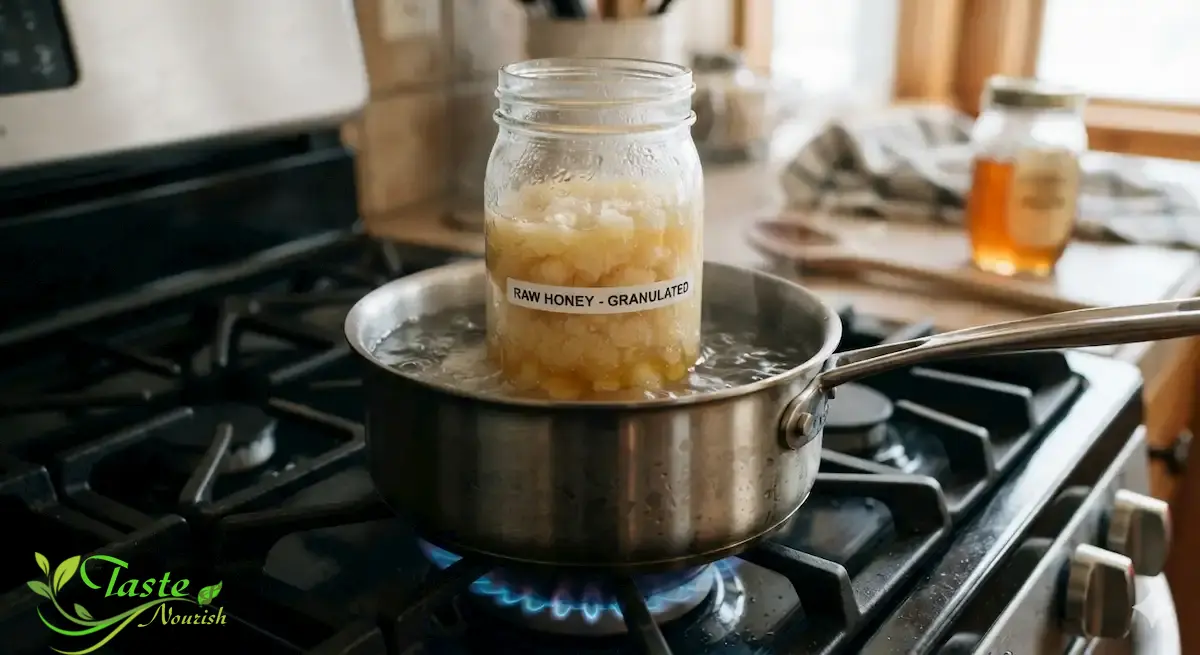
This warm water bath method is the standard approach used by home cooks and honey producers alike, because it warms the honey evenly without overheating any one spot.
Loosen or remove the lid. If the honey is in a glass jar, loosen the lid slightly so trapped air can escape as the honey warms; plastic bottles can usually stay capped since they’re more flexible.
Heat water to 100°F to 110°F. Fill a pot or bowl with water that’s warm to the touch but not hot enough to sting your hand. If you have a kitchen thermometer, aim for the low end of this range to start.
Set the jar in the water bath. Lower the honey container into the water so the water level sits below the rim of the jar or bottle to keep water out of the honey.
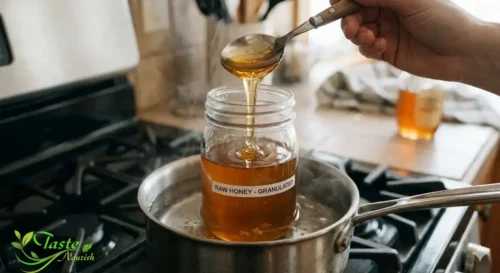
Let it sit and stir occasionally. Every 5 to 10 minutes, give the honey a gentle stir or swirl the jar to help distribute the heat and speed up dissolving the crystals.
Refresh the water as it cools. Warm water bath water drops in temperature fairly quickly, so swap it out for fresh warm water once or twice during the process.
Stop once the honey is smooth and clear. Depending on how crystallized the honey was, this takes anywhere from 15 minutes for a small jar to about an hour for a large one.
Microwave Method (Use With Caution)
Microwaving works in a pinch, but it heats unevenly and can easily overheat parts of the honey while other parts stay solid.
Transfer the honey to a microwave-safe glass or ceramic container if it’s currently in a metal tin or a container with metallic accents.
Microwave in 15 to 20 second bursts at 50% power.
Stir thoroughly after every burst to redistribute heat and check the temperature.
Stop as soon as the honey is smooth. Don’t wait for it to look completely clear inside the microwave, since residual heat will continue softening it for a minute or two afterward.
Best Way to Liquefy Honey
Between the two options, the warm water bath is the best way to liquefy honey for most home cooks. It heats the entire jar gradually and evenly, which protects the delicate aroma compounds and natural enzymes that give good honey its character. The microwave is faster, but the risk of hot spots that scorch the honey or destroy its flavor is much higher.
If you liquefy honey often, especially a large jar, consider keeping a small dedicated pot just for this purpose so you don’t have to dirty a good saucepan every time. A slow cooker set to its lowest “keep warm” setting, checked and stirred periodically, also works well for very large containers.
How Long Does It Take?
Timing depends on the size of the container and how far the honey has crystallized.
Small jar (8 to 12 oz), lightly crystallized: 15 to 20 minutes in a warm water bath.
Standard jar (16 oz), fully hardened: 30 to 45 minutes, with one or two water changes.
Large jar or squeeze bottle (32 oz or more): 45 minutes to about an hour.
Microwave, small portion: Usually under 2 minutes total, in short bursts with stirring in between.
Once liquefied, honey stays pourable for weeks to months before it’s likely to crystallize again, depending on how and where you store it.
Temperature and Food Safety
Pure honey is naturally low in moisture and highly acidic, which makes it inhospitable to the bacteria that cause most foodborne illness in adults. That’s why honey doesn’t require refrigeration and doesn’t carry the same safety concerns as perishable foods.
Keep the liquefying temperature under about 110°F. Honey doesn’t need to get hot to melt; it just needs steady, gentle warmth. Overheating past this point starts to caramelize the sugars, darken the color, and break down heat-sensitive enzymes and aroma compounds, which changes both flavor and nutritional character without making the honey unsafe.
There is one important exception to honey’s overall safety record: honey should never be given to infants younger than 12 months old, in any form, cooked or raw. Honey can contain spores of the bacteria that cause infant botulism, which healthy adult digestive systems handle without issue but an infant’s immature gut cannot. This applies to honey added to food, water, formula, or pacifiers.
Best Containers, Tools, or Equipment
You don’t need anything specialized to liquefy or store honey well.
Glass jars are ideal for both storage and liquefying, since glass doesn’t absorb odors and holds up fine in a warm water bath.
A deep pot or heatproof bowl large enough to submerge most of the jar makes the water bath method easier.
A kitchen thermometer helps you stay in the safe 100°F to 110°F range instead of guessing.
Squeeze bottles are handy once honey is liquefied, since they let you portion honey without dipping a utensil back into the main jar.
Plastic honey bottles handle gentle warming fine but shouldn’t go in the microwave unless labeled microwave-safe.
How to Store Honey
Good storage habits do more to prevent crystallization and preserve flavor than any liquefying method.
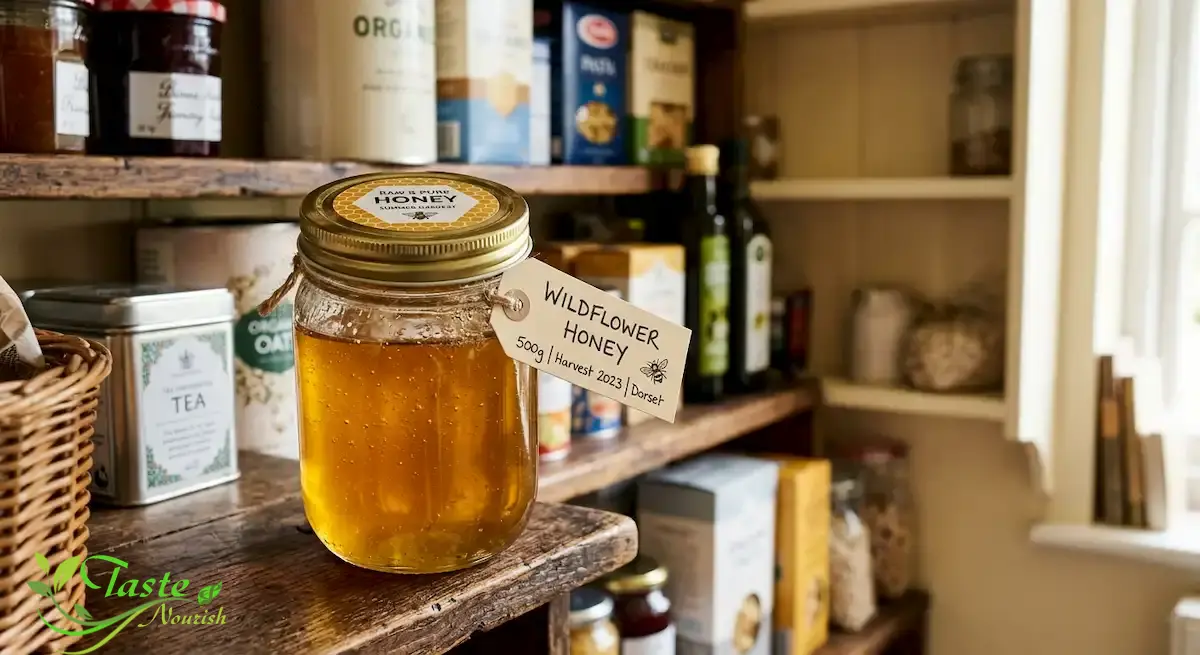
Room temperature — Store honey in a cool, dry cupboard or pantry, ideally between 70°F and 80°F. This range slows crystallization better than either colder or warmer conditions.
Refrigerator — Refrigeration is not recommended for honey. Cold temperatures actually speed up crystallization rather than prevent it.
Freezer — Freezing is the one cold-storage option that works, since honey doesn’t crystallize at freezer temperatures (see the next section).
Containers — Keep honey in a tightly sealed glass or food-safe plastic container to limit air and moisture exposure.
Moisture control — Always use a clean, dry spoon or utensil. Introducing water or food residue into the jar is the main way honey ferments or spoils.
Light exposure — Store honey away from direct sunlight, which can gradually degrade color and flavor over time.
Labeling — If you decant honey into a new container, jot down the purchase date so you can track how long it’s been on the shelf, even though honey is one of the few foods with an essentially indefinite quality life when sealed and stored well.
Can You Freeze Honey?
Yes, and freezing is actually the most effective way to prevent crystallization altogether if you buy honey in bulk or don’t use it quickly.
Preparation: No special prep is needed. Honey doesn’t freeze solid the way water does, since its sugar content depresses its freezing point well below 0°F, so it stays soft and scoopable even in the freezer.
Containers: Use a freezer-safe jar or squeeze bottle with room left at the top, since honey does expand slightly as it gets colder.
Preventing freezer burn: Keep the container tightly sealed; honey’s low moisture content makes it far less prone to freezer burn than most foods, but an airtight seal still protects flavor.
Quality duration: Frozen honey maintains excellent quality for a year or more.
Thawing: Simply move the container to the counter or pantry and let it come back to room temperature naturally; no water bath is needed since it never fully solidified.
Texture and flavor effects: Freezing has minimal impact on honey’s texture or flavor once thawed, which is part of why it’s such a reliable long-term storage option.
How to Tell If Honey Is No Longer Good
True spoilage in honey is rare, but it can happen if moisture gets into the jar and allows fermentation to start.
Foaming or bubbling — This usually signals fermentation from excess moisture.
A sour or alcohol-like smell — A distinct off-odor, different from honey’s normal sweet aroma, is a sign fermentation has occurred.
Unusual texture beyond crystallization — Thick, grainy, or solid honey on its own is normal; a slimy or watery separation layer combined with an off smell is not.
Visible mold — Rare in pure honey because of its low water activity, but any mold growth means the jar should be discarded.
Damaged packaging — A bulging lid, damaged seal, or contamination from a dirty utensil are reasons to be cautious even if the honey looks normal.
If you notice any of these signs, don’t taste the honey to check; when in doubt, it’s safest to throw it out and start with a fresh jar.
Common Mistakes to Avoid
Microwaving honey at full power: This creates hot spots that can scorch the honey before the rest even softens. Use 50% power in short bursts instead.
Using boiling water: Boiling water is far hotter than honey needs and can damage flavor and enzymes. Stick to warm, not boiling, water.
Skipping the stirring step: Honey heats unevenly without occasional stirring, especially in the microwave, leading to some parts staying crystallized while others overheat.
Storing honey in the refrigerator: This speeds up crystallization rather than preventing it, the opposite of what most people expect.
Sealing the lid tightly during a water bath: Trapped steam and expanding air can build pressure in a fully sealed jar. Loosen the lid first.
Reusing a dirty spoon: Dipping a used spoon, especially one that’s touched tea, yogurt, or other foods, back into the jar introduces moisture and bacteria that can cause fermentation.
Assuming crystallized honey has gone bad: Crystallization is a normal, reversible process, not a sign of spoilage, and there’s no need to throw the jar away.
Overheating honey in a saucepan directly on the stove: Direct heat without a water buffer heats unevenly and makes scorching much more likely than an indirect water bath.
Expert Kitchen Tips
Buy honey in smaller jars if you use it slowly, since less time in storage means less opportunity to crystallize before you finish it.
Keep the water bath below 110°F to protect flavor and enzyme activity; a thermometer takes the guesswork out of this.
Decant liquefied honey into a squeeze bottle so future portions are quick to pour without needing to reheat the whole jar.
Store honey near the stove or in a warm cabinet rather than a cold pantry corner if crystallization keeps happening quickly.
Swirl instead of stirring vigorously during a water bath to avoid introducing air bubbles into the honey.
Warm only what you need by scooping out a small portion into a separate dish if you only need a spoonful, rather than repeatedly reheating the whole jar.
Let the jar air-dry completely if any water splashes onto the outside during a water bath, then wipe it before sealing to avoid dripping moisture into the honey.
Give it time before reaching for heat — sometimes a jar left on the counter in a warm kitchen for a day will loosen up on its own without any active liquefying.
Variations and Alternatives
Not every use of honey requires it to be liquid. Crystallized honey spreads beautifully on toast or biscuits straight from the jar, much like a firmer nut butter. Some cooks prefer this texture and never bother liquefying it at all.
Creamed honey (sometimes called whipped or spun honey) is a different product entirely, made by intentionally controlling crystallization to produce a smooth, spreadable consistency that stays that way. It doesn’t need liquefying and can be used interchangeably with regular honey in most recipes, though it won’t pour the way liquid honey does.
If a recipe specifically calls for liquid honey and you’re out of patience, warmed maple syrup or agave nectar can stand in for pourability in some recipes, though the flavor will be noticeably different.
Troubleshooting
Honey turned darker or smells scorched after heating: This happens from heat that was too high or applied too long. Prevention: keep water bath temperatures under 110°F and use short microwave bursts with stirring.
Honey re-crystallized within a few weeks of liquefying: This is normal, especially for raw, unfiltered honey stored anywhere other than a warm, stable spot. Prevention: store liquefied honey at a consistent room temperature, and consider freezing a portion you won’t use soon.
Honey has a layer of clear liquid on top after crystallizing: This usually means the crystals settled unevenly. Fix it by stirring gently once the honey is liquefied again; it’s a texture issue, not a safety issue.
Microwaved honey overflowed or bubbled up: This happens when honey is heated too long in one burst. Prevention: stick to 15 to 20 second bursts and stir between each one.
Honey feels gritty even after a water bath: Some larger crystal clusters take longer to dissolve than others. Extend the water bath time in 10-minute increments and keep stirring rather than increasing the temperature.
Food Safety Notes
It’s worth separating a few concepts that often get blurred together with honey. Crystallization is a quality change, not a safety issue. A “best by” date on a honey label is about peak flavor and appearance, not a safety cutoff; honey stored properly typically remains safe well past that date. Fermentation, signaled by foaming or an off, alcohol-like smell, is the rare case where honey quality has actually broken down enough to warrant discarding it.
The one firm safety rule that applies regardless of a honey’s age, source, or how it’s been stored is the infant botulism risk: honey should never be fed to a child under 12 months old.
Quick Reference Table
Method
Temperature
Approximate Time
Best For
Warm water bath
100°F to 110°F
15 to 60 minutes, depending on jar size
Most home use; protects flavor and enzymes
Microwave (short bursts)
50% power
Under 2 minutes total
Small portions when you’re in a hurry
Warm room or sunny counter
Ambient, roughly 75°F to 85°F
Several hours to a day or two
Light crystallization; no active effort needed
Freezing (prevention, not liquefying)
0°F or below
Indefinite storage
Preventing crystallization before it starts
How to Liquefy Honey FAQs
How do you liquefy hardened honey without a microwave?
Set the jar, lid loosened, into a pot or bowl of warm water kept around 100°F to 110°F. Stir occasionally and refresh the water as it cools until the honey turns smooth and clear, which usually takes 15 to 45 minutes.
Is it safe to microwave honey?
It’s safe in the sense that it won’t make the honey harmful, but it’s easy to overheat unevenly in a microwave. Use short 15 to 20 second bursts at 50% power and stir between each one to avoid scorching.
Why does honey crystallize in the first place?
Honey holds more dissolved sugar than water can normally keep in solution. Over time, the glucose separates out and forms crystals, a natural process that speeds up in cooler temperatures and in honeys with a higher glucose-to-fructose ratio.
Does crystallized honey mean it has gone bad?
No. Crystallization is a normal physical change, not spoilage. Crystallized honey is perfectly fine to eat as is or to liquefy back to a pourable texture.
Can you freeze honey to stop it from crystallizing?
Yes. Honey doesn’t freeze solid because of its sugar content, and freezer temperatures prevent the crystal formation that happens at room or refrigerator temperatures. It stays soft and usable straight from the freezer.
Does honey need to be refrigerated?
No, and it’s better not to. Refrigeration speeds up crystallization rather than preventing it. Room temperature storage, sealed and away from light, is best.
Why does honey become dark or smell burnt after heating?
This happens when honey is heated above roughly 110°F or for too long, which caramelizes the sugars and breaks down delicate flavor compounds. Keep water bath temperatures moderate and use short bursts if microwaving.
How can you prevent honey from crystallizing so quickly?
Store it tightly sealed at a stable room temperature between about 70°F and 80°F, away from cold spots and direct sunlight. Buying smaller jars you’ll use up quickly also helps.
Key Takeaways: How to Liquefy Honey
Learning how to liquefy honey correctly comes down to gentle, even heat, ideally a warm water bath between 100°F and 110°F.
Crystallized honey is a normal, reversible process and not a sign of spoilage.
Avoid boiling water and full-power microwaving, both of which risk scorching honey and destroying its natural enzymes and flavor.
Room temperature storage in a tightly sealed container slows future crystallization better than the refrigerator.
Freezing honey is a safe, effective way to prevent crystallization entirely for long-term storage.
Never give honey to a child under 12 months old, regardless of how it’s been prepared.
How to Liquefy Honey: The Bottom Line
A jar of thick, cloudy, or solid honey isn’t a problem, it’s just chemistry. A gentle warm water bath, patience, and the occasional stir will bring it right back to smooth, pourable honey without sacrificing flavor or quality. Skip the boiling water and the full-power microwave, and that jar in your pantry will keep serving you well for a long time to come.
FoodSafety.gov. “FoodKeeper App.” U.S. Department of Agriculture Food Safety and Inspection Service, in partnership with Cornell University and the Food Marketing Institute. https://www.foodsafety.gov/keep-food-safe/foodkeeper-app
Hanan Abo Samra is the founder of Taste & Nourish, sharing trustworthy nutrition guidance and recipes drawn from 20+ years of hands-on cooking experience. When she's not developing new recipes, Hanan is researching the science behind everyday ingredients to bring readers practical, evidence-based guidance for a healthier lifestyle.