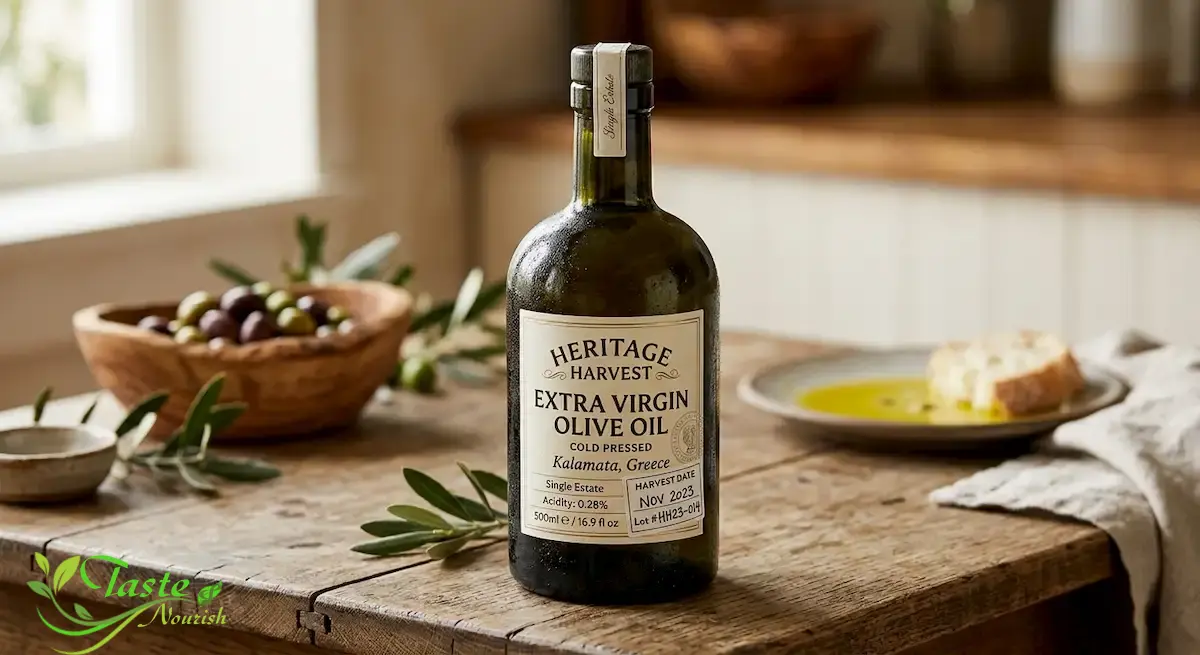
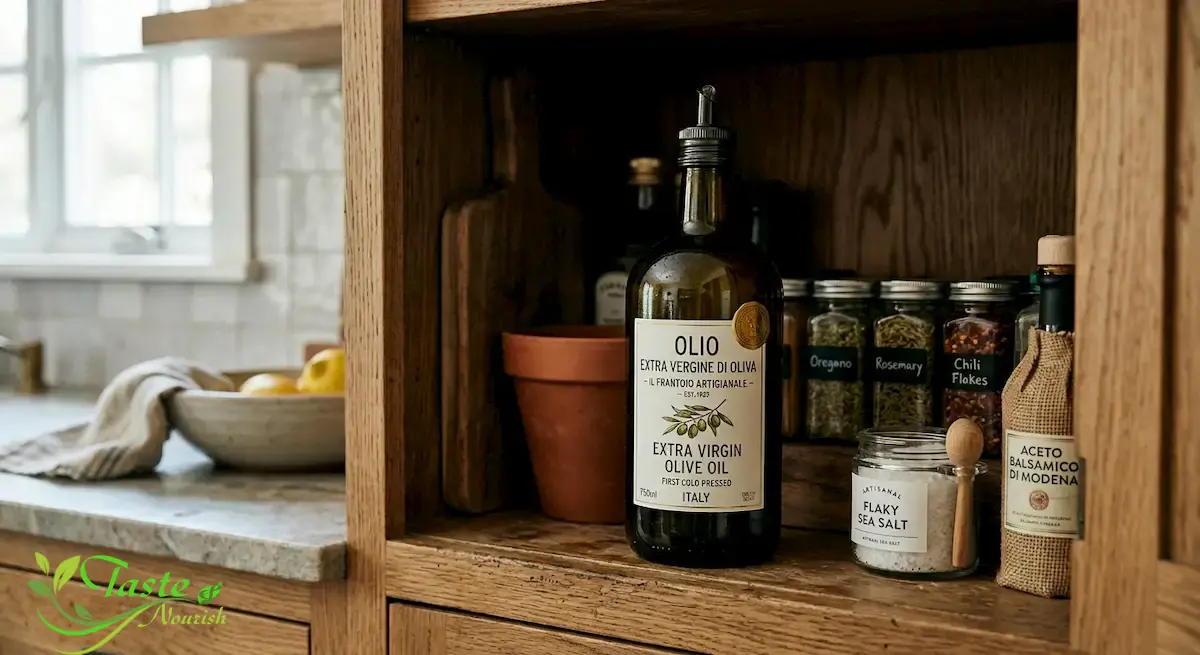
Standing in the olive oil aisle can feel like a guessing game. Bottles claim “extra virgin,” “cold-pressed,” and “premium” with almost no way to tell which ones actually deliver. Learning how to choose extra virgin olive oil comes down to a handful of concrete checks you can do in under a minute at the store: the harvest date, the bottle material, the label details, and where the oil actually comes from.
This guide walks through exactly what to look for, what to skip, and how to keep your oil tasting good once you get it home.
Quick Answer: How to Choose Extra Virgin Olive Oil
To choose extra virgin olive oil, look for a harvest date (not just a best-by date), buy oil packaged in dark glass or tin rather than clear glass, favor a single country or estate of origin over vague blends, and buy a bottle size you can use up within about two months of opening. Skip anything labeled “light,” “pure,” or “pomace” if true extra virgin flavor and quality matter to you.
Key Takeaways
Knowing how to choose extra virgin olive oil starts with checking the harvest date on the label, not just the best-by date.
Dark glass or tin containers protect the oil from light-driven oxidation far better than clear glass.
A peppery, slightly bitter taste that makes you cough is a sign of freshness, not a flaw.
Third-party seals like the USDA shield, COOC, or NAOOA indicate the oil has passed independent testing.
Buy smaller bottles more often rather than one large jug that sits open for months.
What You Need to Know About Extra Virgin Olive Oil
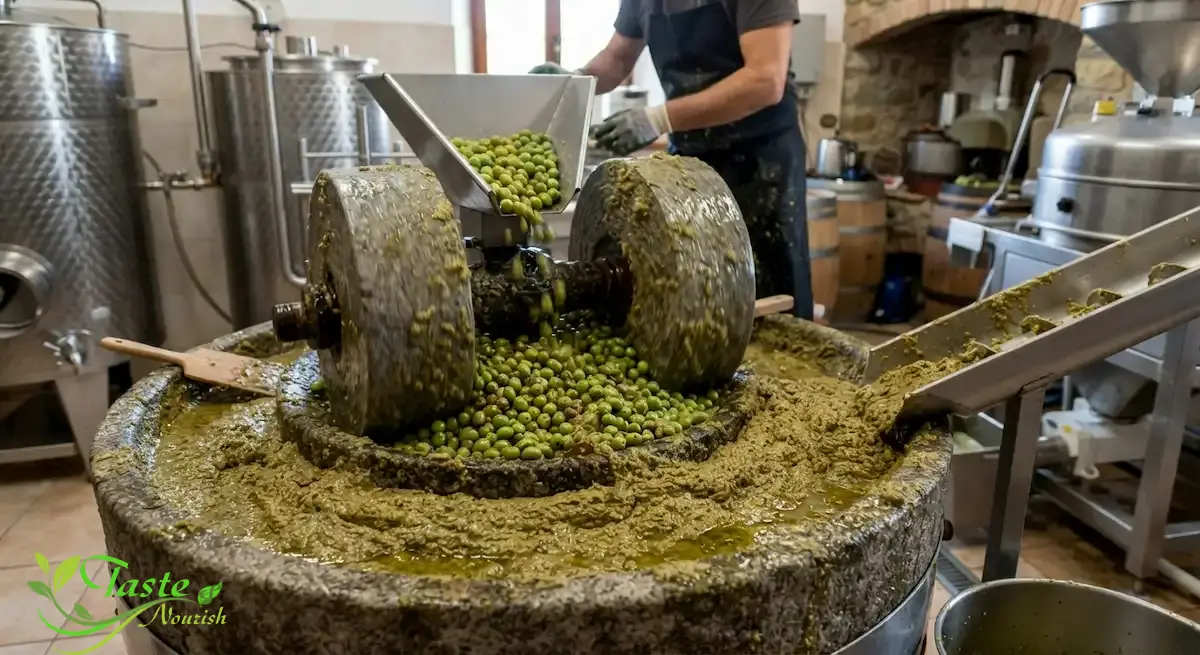
Extra virgin olive oil (EVOO) is the least processed grade of olive oil. It’s extracted from olives using only mechanical pressing or centrifuging, with no heat or chemical solvents involved. That’s what preserves its flavor compounds and polyphenols.
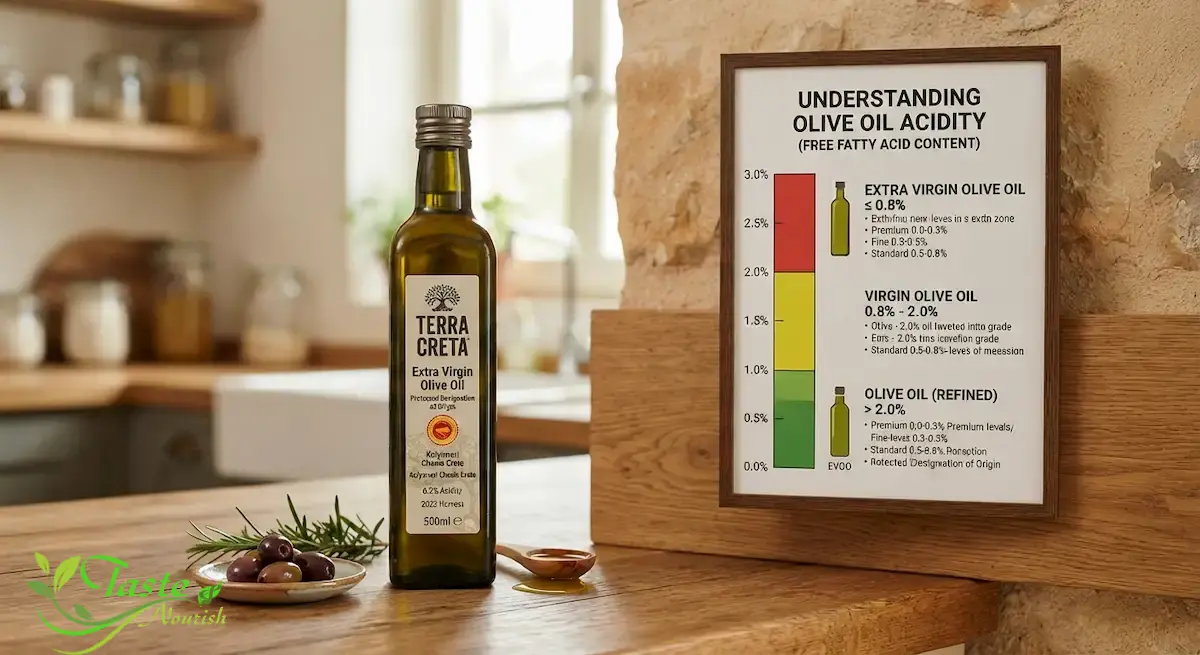
In the United States, the U.S. Department of Agriculture’s Agricultural Marketing Service maintains voluntary grading standards for olive oil. To earn the “U.S. Extra Virgin Olive Oil” designation, an oil must have a free fatty acid content of no more than 0.8 grams per 100 grams, show zero sensory defects, and have some detectable fruitiness. Producers can choose whether to seek this certification, so plenty of genuinely excellent oils never carry the USDA shield.
Because grading is voluntary and the Food and Drug Administration does not yet enforce a mandatory federal standard of identity specifically for olive oil, the label alone can’t guarantee what’s in the bottle. Industry groups have petitioned the FDA for stricter, enforceable rules, but until that happens, the burden falls partly on the shopper to know what to check.
That gap matters in practice. Independent lab testing led by the UC Davis Olive Center found that a large share of top-selling imported oils labeled “extra virgin” failed international sensory panels for rancidity and other defects, while domestically produced California and Australian oils in the same study passed at much higher rates. This doesn’t mean all imported oil is bad — many imported brands are excellent — but it does mean labeling alone isn’t proof of quality.
How to Choose Extra Virgin Olive Oil at the Store
Use these steps in order. You can complete all of them by reading the label, without needing to open the bottle.
Check the container material first. Pick up bottles in dark green or amber glass, or in tin. Skip anything in clear glass, especially if it’s sitting under bright store lighting — light exposure speeds up oxidation before you even get it home.
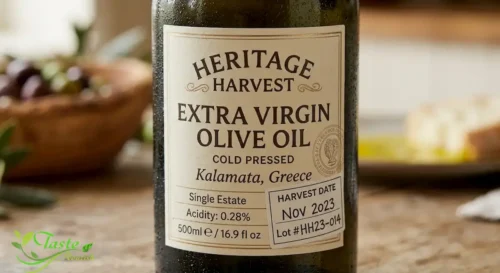
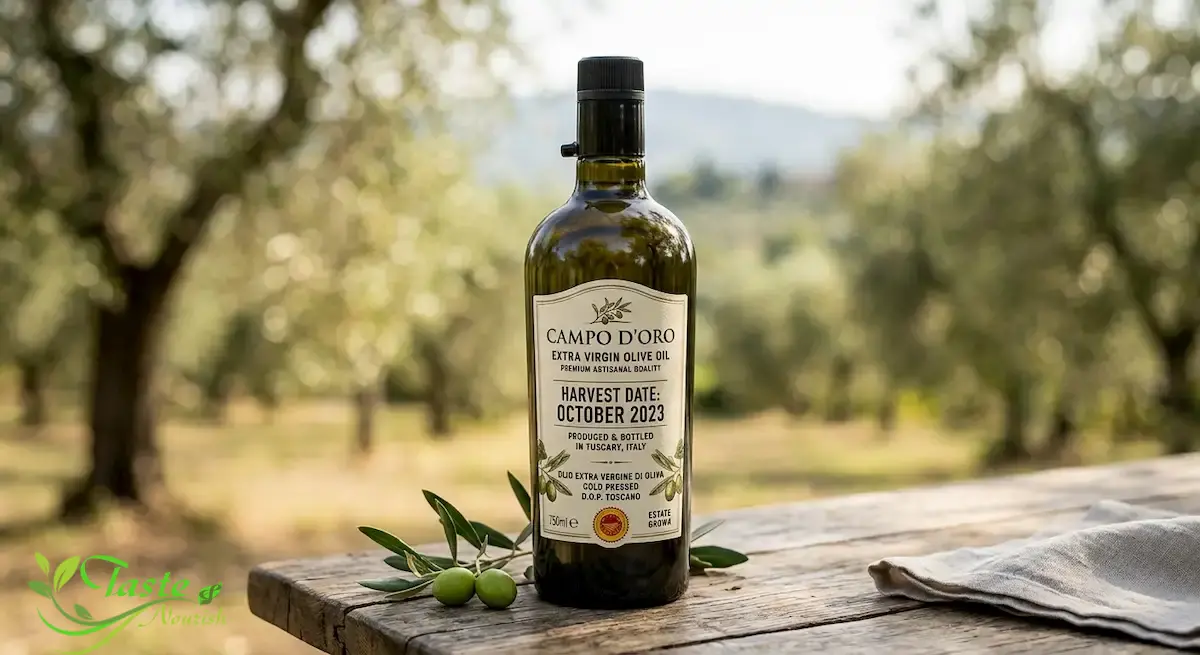
Look for a harvest date, not just a best-by date. A best-by date can legally sit 18 to 24 months out regardless of when the olives were actually pressed. A harvest date tells you the oil’s real age. Aim for oil harvested within the past 12 to 18 months.
Read the origin statement closely. A single country, region, or estate (for example, “Product of Greece” or a named estate) is more traceable than “blend of oils from the EU and non-EU countries,” which can mix oils from many sources and harvest years.
Scan for certification seals. Marks like the USDA grading shield, the California Olive Oil Council (COOC) seal, or the North American Olive Oil Association (NAOOA) certification indicate the oil passed independent chemical and taste-panel testing.
Avoid disqualifying words. “Light,” “extra light,” and “pure olive oil” all signal refined oil, not extra virgin. “Pomace oil” is extracted from the leftover pulp after pressing and is a different, lower grade entirely.
Match the bottle size to your usage. Once opened, EVOO starts losing flavor and antioxidants through oxygen exposure. Buy a size you’ll realistically finish in six to eight weeks rather than a large jug that sits half-full for months.
Taste it if you can. Many specialty grocers and olive oil shops offer tastings. Fresh EVOO should taste grassy, fruity, or peppery, with a noticeable bitterness or throat catch at the finish. Flat, greasy, or waxy flavor is a red flag.
What to Look for in Olive Oil Labels
Beyond the basics above, a few label details separate a well-labeled oil from a vague one:
Estate or single-varietal claims. If a label names a specific olive varietal (like Koroneiki or Arbequina) or an estate, it’s making a more specific, more verifiable claim than a generic blend.
Country of origin versus country of bottling. “Bottled in Italy” doesn’t mean the olives were grown there — Italy imports a significant amount of olive oil for blending and bottling. Look for language that specifies where the olives were actually grown.
Best-if-used-by date support. A shelf-stable, trustworthy label pairs a best-by date with a harvest date, so you can judge freshness independently of the marketing claim.
Lot or batch codes. These support traceability. Their presence is a good sign of a producer that takes quality control seriously, even if you’ll never need to use the code yourself.
Best EVOO Buying Guide Tips for Every Budget
You don’t need to spend a fortune to get real extra virgin olive oil, but your buying strategy should shift depending on your budget and how you’ll use it.
Everyday budget: Store-brand EVOO from retailers with high turnover (large grocery chains, warehouse clubs) is often fresher than a boutique bottle that’s been sitting on a specialty shelf for a year. Check the harvest date the same way you would with any other bottle.
Mid-range: Look for single-origin oils with a COOC or NAOOA seal. These give you documented quality assurance without paying estate prices.
Splurge / finishing oil: Reserve a bolder, single-estate or single-varietal EVOO for finishing dishes — drizzled over soup, dipped with bread, or spooned over roasted vegetables — where its flavor actually gets noticed, rather than using it for high-heat cooking where the nuance is lost.
Cooking Temperature Notes
Extra virgin olive oil has a smoke point generally in the range of roughly 375–410°F, which comfortably covers most home cooking methods, including sautéing, roasting, and pan-searing. It’s a reasonable everyday cooking oil despite the persistent myth that it’s only for cold uses. For very high-heat searing or deep frying, a more refined, higher-smoke-point oil is a more practical (and more economical) choice, saving your best EVOO for finishing.
How to Store Extra Virgin Olive Oil
Storage conditions matter almost as much as what you buy. Research on EVOO shelf life, including a peer-reviewed study published in Heliyon, found that oil packaged in dark glass and kept at cooler temperatures retained far more of its positive flavor characteristics and resisted rancidity better than oil stored in clear containers or at warmer room temperatures. The same research places typical EVOO shelf life at roughly 12 to 18 months under normal conditions.
Room-temperature storage: Keep the bottle in a cool, dark cabinet, ideally between 57–70°F. Avoid storing it next to the stove, oven, or a sunny window — heat and light are the two biggest enemies of oil quality.
Container: Keep oil in its original dark glass or tin container, or decant a small amount into a dark glass cruet for daily use while keeping the main bottle sealed.
Cap tightly after every use. Repeated air exposure accelerates oxidation more than most people expect.
Refrigeration: Not necessary for regular use and can cause the oil to cloud or partially solidify. This isn’t spoilage — the oil returns to normal once it warms back to room temperature. Refrigeration can be useful for extending the life of a large bottle you won’t finish quickly, or in a hot climate without reliable cool storage.
Approximate storage duration: Once opened, aim to use the oil within 6–8 weeks for peak flavor, and within about 3–4 months at the outside. Unopened, properly stored EVOO holds reasonably well for 12–18 months from the harvest date.
Can You Freeze Olive Oil?
You can, though it’s not common practice for a daily-use bottle. Freezing extra virgin olive oil in an airtight, freezer-safe container can extend its usable life if you’ve bought more than you’ll get through in a few months. The oil will turn thick and cloudy in the freezer — that’s expected, not a defect — and it returns to its normal liquid state once thawed at room temperature.
Freezing works well for portioning herb- or garlic-infused oils into small ice-cube-tray portions for later cooking use, since infused oils have their own, shorter safe-storage considerations.
How to Tell If Olive Oil Has Gone Bad
Rancid olive oil isn’t typically a food-safety hazard in the way spoiled meat or dairy can be, but it loses its flavor, aroma, and much of its nutritional benefit, and it can taste unpleasant enough to ruin a dish. Watch for:
A crayon-, putty-, or play-dough-like smell. This is the clearest sign of oxidative rancidity.
Flat, greasy taste with no bitterness or pungency. Fresh EVOO should have some peppery bite; its absence in an oil that should be young suggests it has degraded.
A musty, damp-basement smell. This “fusty” defect points to poor-quality olives or processing, not just age.
Discoloration or an off, overly dark color compared to what you remember at purchase, especially paired with a stale smell.
If the oil smells or tastes off, don’t rely on taste-testing it further to confirm — trust your nose on the first sniff and discard it if it’s clearly rancid.
Common Mistakes to Avoid
Buying oil in clear glass under bright store lighting. Fix: choose dark glass or tin every time.
Trusting the best-by date alone. Fix: look for a harvest date and prioritize oil less than a year or two past harvest.
Assuming higher price always means higher quality. Fix: check for certification seals and origin transparency instead of relying on price as a proxy.
Buying a large jug for occasional use. Fix: match bottle size to how quickly you’ll realistically use it.
Storing the bottle next to the stove. Fix: move it to a cool, dark cabinet away from heat sources.
Assuming a peppery, throat-catching flavor means the oil is defective. Fix: that sensation, caused by a compound called oleocanthal, is a marker of freshness and high polyphenol content, not a flaw.
Choosing “light” or “pure” olive oil expecting mild EVOO. Fix: these are refined oils with a different flavor and nutrient profile, not milder extra virgin oil.
Relying on the fridge test to “prove” authenticity. Some shoppers freeze or chill oil expecting real EVOO to solidify while fake oil stays liquid. This test isn’t reliable — solidification depends on fatty acid composition and temperature, and both genuine and blended oils can behave differently depending on their olive varietals. Use label details and certification instead.
Expert Kitchen Tips
Buy from stores with high olive oil turnover — specialty shops and busy grocery chains typically move stock faster than it can go stale on the shelf.
Decant a small working bottle for daily countertop use and keep your main bottle sealed in a dark cabinet to limit repeated air exposure.
Keep two grades on hand: a solid everyday EVOO for cooking, and a bolder single-origin bottle reserved for finishing and dressings.
Don’t put much weight on “cold-pressed” as a differentiator — nearly all modern EVOO is extracted mechanically without added heat, so the term describes the standard method, not a premium upgrade.
If a recipe calls for “olive oil” without specifying extra virgin, either grade generally works for cooking; save your best EVOO for uses where its flavor will actually be tasted.
Taste new bottles before committing to a large one whenever a store offers samples — flavor varies more between olive varietals and origins than most labels convey.
Variations and Alternatives
Virgin olive oil: Also unrefined and mechanically extracted, but with a higher allowed free fatty acid content (up to 2.0%) and more tolerance for minor flavor defects. A reasonable everyday cooking oil, though less flavorful than EVOO.
Olive oil (“pure” or plain “olive oil”): A blend of refined oil and a small percentage of virgin oil for flavor. More neutral-tasting and shelf-stable, useful for general cooking where EVOO’s flavor isn’t needed, but with far fewer polyphenols.
Olive pomace oil: Extracted from the leftover olive pulp using solvents, then refined. The lowest common grade, mostly used in food service and industrial settings rather than home kitchens.
Other oils as substitutes: Avocado oil is a reasonable substitute for high-heat cooking when you want to preserve your EVOO for finishing; a neutral oil like grapeseed or canola works when olive oil’s flavor would compete with a dish.
Troubleshooting Common Olive Oil Problems
The oil makes me cough or feels sharp in my throat. This is caused by oleocanthal, a compound linked to fresher, higher-polyphenol oil. It’s a good sign, not a defect.
The oil turned cloudy or partly solid in the fridge. Normal cold-weather behavior, not spoilage. Let it sit at room temperature and it will return to its usual clarity and consistency.
The oil tastes like crayons or old paint. That’s rancidity from oxidation. Don’t cook with it — the flavor won’t cook out, and it will affect the whole dish.
The oil smells musty, like a damp basement. This “fusty” defect typically comes from olives that fermented before pressing. It indicates lower processing quality; discard and try a different brand next time.
A finishing oil tastes bland with no bitterness. Either it’s not genuinely extra virgin, or it’s simply old and oxidized. Check the harvest date and consider switching brands.
Quick Reference Table
Grade
Max Free Fatty Acid
Flavor Defects Allowed
Best Use
U.S. Extra Virgin Olive Oil
0.8%
None
Finishing, dressings, everyday cooking
U.S. Virgin Olive Oil
2.0%
Minor, reasonably good flavor
General cooking
Olive Oil (“Pure”)
1.0%
Refined, blended with virgin oil
High-heat, neutral-flavor cooking
Olive Pomace Oil
Varies by sub-grade
Refined from pulp residue
Food service, industrial use
How to Choose Extra Virgin Olive Oil FAQs
How do you choose a good extra virgin olive oil?
Check for a harvest date within the past year or two, buy oil in dark glass or tin, favor a specific country or estate of origin, and look for a certification seal such as USDA, COOC, or NAOOA.
What is the best way to store extra virgin olive oil?
Keep it in a cool, dark cabinet away from the stove and direct sunlight, in its original dark glass or tin container, tightly capped after each use.
How long does extra virgin olive oil last?
Unopened and properly stored, it generally holds good quality for about 12 to 18 months from the harvest date. Once opened, aim to use it within 6 to 8 weeks for the best flavor.
Can you freeze olive oil?
Yes. It turns thick and cloudy in the freezer, which is normal, and returns to its usual liquid state once thawed at room temperature.
Does olive oil need to be refrigerated?
No. Refrigeration isn’t necessary for regular use and can cause temporary clouding or solidifying. A cool, dark cabinet is sufficient for most households.
Why does my olive oil taste bitter or peppery?
That’s oleocanthal, a natural compound linked to fresher oil and higher polyphenol content. It’s a sign of quality, not a defect.
What’s the difference between extra virgin and regular olive oil?
Extra virgin olive oil is unrefined, mechanically extracted, and must meet strict flavor and acidity standards. Regular “olive oil” is a blend of refined oil with a small amount of virgin oil, which makes it more neutral-tasting but lower in polyphenols.
Key Takeaways: How to Choose Extra Virgin Olive Oil
Learning how to choose extra virgin olive oil mainly comes down to checking the harvest date, container material, and origin transparency on the label.
Dark glass or tin packaging protects flavor and antioxidants far better than clear glass.
Certification seals like USDA, COOC, or NAOOA indicate independent testing, though their absence doesn’t automatically mean poor quality.
A peppery, throat-catching finish is a sign of freshness, not a flaw.
Store opened oil in a cool, dark cabinet and use it within 6 to 8 weeks for the best flavor.
Conclusion
You don’t need to be an olive oil sommelier to buy well. Once you know how to choose extra virgin olive oil by checking the harvest date, the bottle material, and the origin statement, the guesswork mostly disappears. Pick a size you’ll use up quickly, store it away from heat and light, and trust a peppery bite as a good sign rather than a flaw. Those few habits will get you a noticeably better bottle than grabbing whatever’s cheapest under the store lights.
Hanan Abo Samra is the founder of Taste & Nourish, sharing trustworthy nutrition guidance and recipes drawn from 20+ years of hands-on cooking experience. When she's not developing new recipes, Hanan is researching the science behind everyday ingredients to bring readers practical, evidence-based guidance for a healthier lifestyle.