
Honey Face Mask: 5 Recipes, How Often & Who Should Skip

A honey face mask is about as simple as skin care gets: a spoonful of honey, ten minutes, a rinse. Whether it does anything beyond leaving your face feeling soft and slightly tacky is a fair question. The honest answer depends on the honey, your skin, and what you expect from it.
I’d treat a honey mask as a low-cost extra rather than a treatment. Below you’ll find what clinical trials actually tested, five recipes for different skin textures, a sensible schedule, and the people who are better off keeping honey off their faces.
Quick Answer
A honey face mask is generally low-risk for most people with healthy, intact skin, and one rinse-off session a week is a sensible place to start. The evidence that it treats acne or other skin conditions is limited, so think of it as a gentle extra, not a treatment. Patch test first.
Key Takeaways: Honey Face Mask
- The trials that found a benefit tested a standardized, medical-grade honey product, so a homemade honey face mask can’t borrow their results.
- Of the two facial conditions studied in randomized trials, rosacea showed a modest benefit and acne did not.
- The best recipes stay simple: honey plus one add-in that changes texture, not strong active ingredients.
- Lemon juice, cinnamon, and essential oils are better left out of the bowl.
- A patch test on your arm matters more than which recipe you pick.
- Skip honey masks, or check with a dermatologist first, if you have a bee-product allergy, open or infected skin, or a flaring skin condition.
What Is a Honey Face Mask?
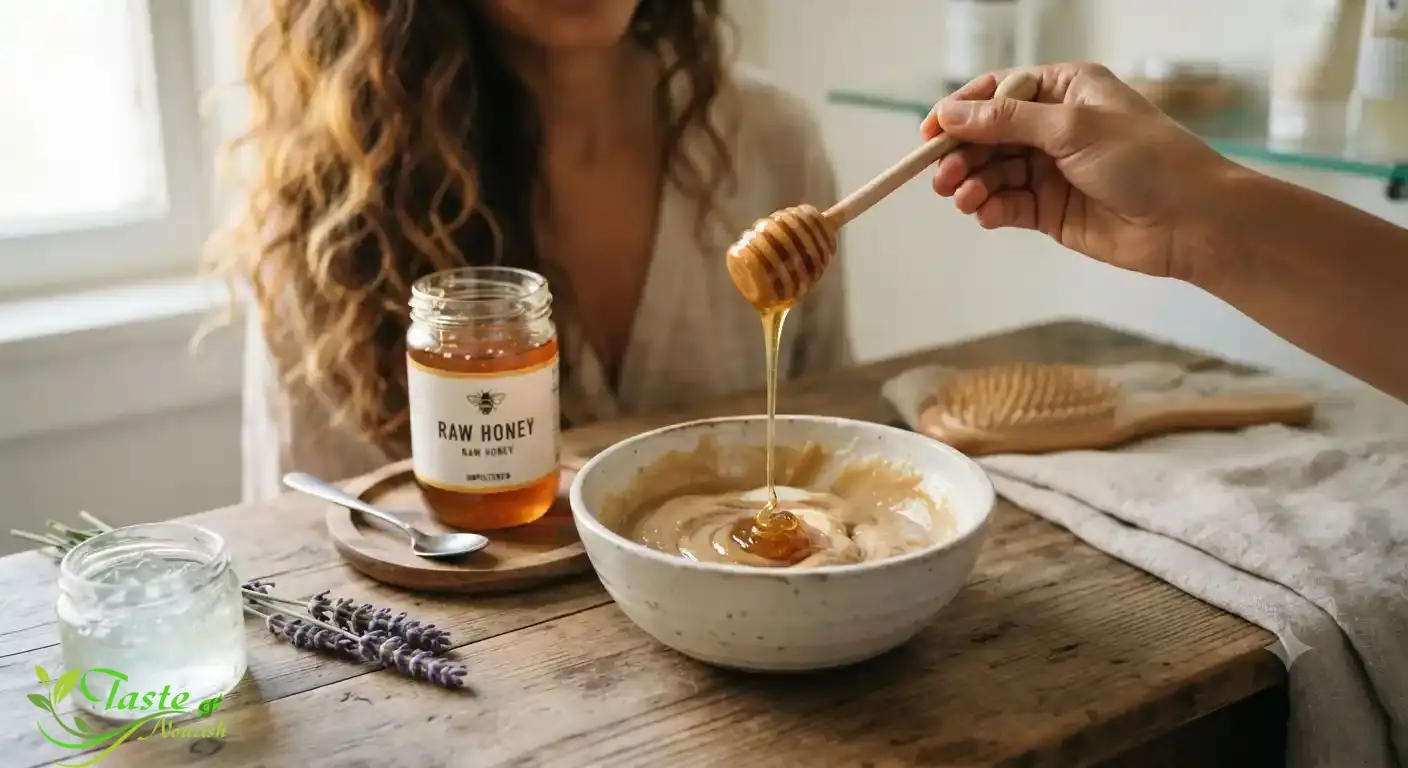
A honey face mask is a rinse-off treatment made from honey, alone or blended with a few kitchen ingredients. You spread it in a thin layer and leave it on for about ten to fifteen minutes. Honey is a supersaturated solution of mostly fructose and glucose, and a review of honey in dermatology and skin care describes it as an emollient and a humectant (an ingredient that holds onto water) in cosmetic formulations.
That moisture-holding quality is the main reason honey shows up in masks. For a wider look at what honey can and can’t do outside the skin-care aisle, see our overview of the benefits of honey.
What the Research Shows About Honey on Facial Skin
The evidence comes in layers, and the layers don’t carry equal weight. Laboratory work and traditional use explain why honey is interesting for skin. A 2024 review of honey therapies in dermatology drew on case reports, clinical trials, and in vitro studies. It described honey as a safe, low-cost option for several skin conditions, with wound care at the center. Two randomized trials on facial conditions are especially relevant here.

Rosacea: One Encouraging Trial
In an 8-week randomized controlled trial of 138 adults with rosacea, 34.3% of people using a 90% medical-grade kanuka honey product improved by at least two points on a clinician-rated severity scale. Among people using a plain emollient cream, 17.4% did. In plain terms, that is a modest advantage, and most people in the honey group did not reach the threshold. Participants could tell which cream they had because honey is unmistakable, though the clinicians scoring the skin were blinded to the assignment.
Acne: No Clear Added Benefit
Acne is where expectations and evidence part ways. In a 12-week randomized trial of 136 people with facial acne, everyone washed with an antibacterial soap, and half also applied the same type of kanuka honey product. By week 12, 7.6% of the honey group and 1.9% of the soap-only group had improved by at least two points on the clinician scale, a difference that was not statistically significant.
People rated their own improvement higher with honey, but they knew which product they were using, so the authors noted this may reflect bias. Skin side effects, including stinging, dryness, and contact dermatitis, were recorded in both groups.
Why the Trial Results Don’t Transfer to a Kitchen Mask
Here is the serving reality check. Both trials tested a product made of 90% medical-grade kanuka honey and 10% glycerine. In the acne trial, people applied it twice daily for 30 to 60 minutes before washing it off with warm water. A homemade honey mask differs on nearly every count. The honey usually isn’t medical-grade, it is often mixed with other ingredients, and it is used less often and for less time. The trials say something about one specific product under study conditions, not about whatever honey is in your cupboard.
The fair reading is that honey is a reasonable ingredient with a plausible rationale, but these trials do not show that a kitchen mask treats acne or rosacea. For what the research says about honey on burns, acne, and dry skin more broadly, see our guide to honey for skin.
5 Simple Honey Face Mask Recipes
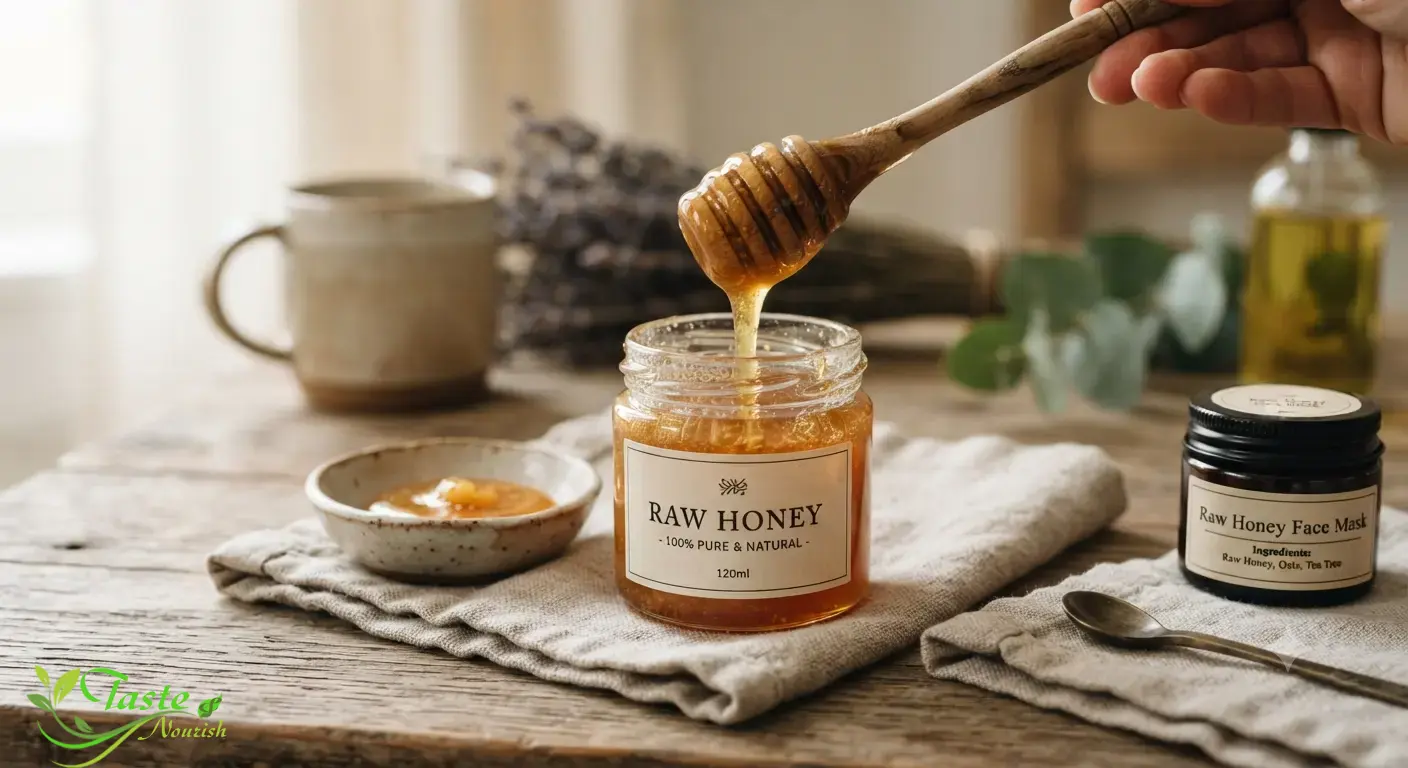
Any pure, single-ingredient honey will work, and the trials above don’t show that one kind beats another in a rinse-off mask. If you want to compare labels, our comparison of raw and regular honey covers processing and what the terms mean. Manuka costs more, and the manuka honey grades guide explains UMF and MGO ratings. I wouldn’t pay a premium for manuka for a mask that goes down the drain after ten minutes.
Each recipe below makes one application. Use level spoons.
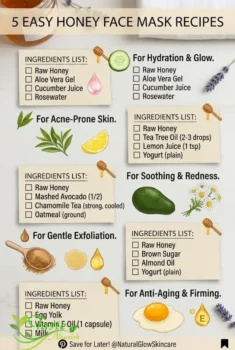
1. Plain Honey Mask
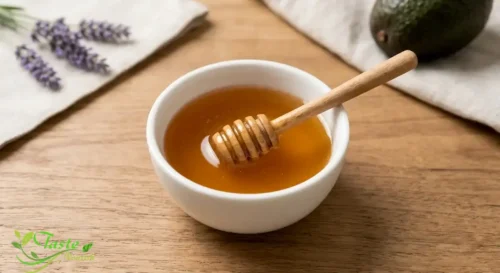
- 1 tablespoon pure honey
Spread a thin layer over clean, dry skin. This is the best first recipe because it shows whether your skin tolerates honey on its own before you add anything else.
2. Honey and Oat Mask
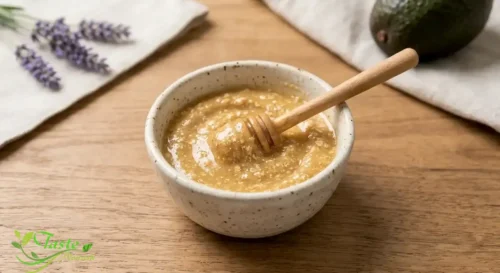
- 1 tablespoon honey
- 1 tablespoon plain oats, ground to a fine powder in a blender or spice grinder
- 1 to 2 teaspoons warm water
Stir into a spreadable paste. The oats thicken the honey so it stays put instead of dripping. Colloidal oatmeal, a finely milled form of oats, is a listed active ingredient in over-the-counter skin protectants under the federal skin protectant labeling rule. Ground kitchen oats aren’t the same ingredient, so think of them here as texture rather than treatment.
3. Honey and Yogurt Mask
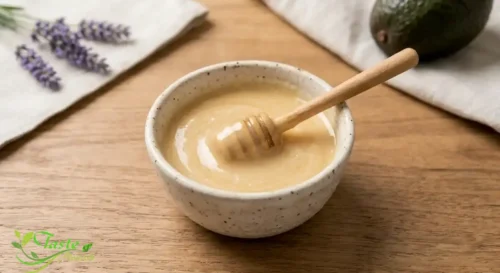
- 1 tablespoon honey
- 1 tablespoon plain, unsweetened yogurt
Whisk until smooth. Yogurt thins honey so it spreads without tugging at your skin, and the mix feels cool if the yogurt comes straight from the fridge. Use plain yogurt with no added sweeteners or flavors, and use the mixture right away.
4. Honey and Avocado Mask
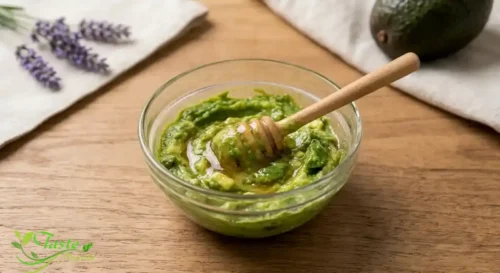
- 1 tablespoon honey
- 2 tablespoons very ripe avocado, mashed smooth
Mash the avocado until no lumps remain, then stir in the honey. This is the richest of the five and suits skin that feels tight after cleansing. It rinses off more slowly, so expect to rinse twice before patting dry.
5. Honey and Aloe Vera Mask
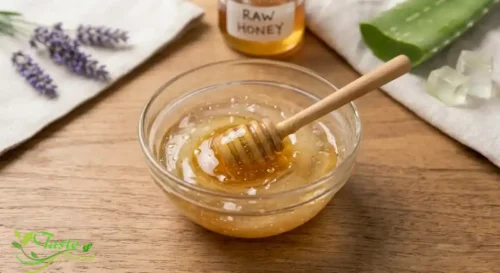
- 1 tablespoon honey
- 1 tablespoon pure aloe vera gel
Stir until the two blend. This is the lightest, least sticky mix, which makes it the easiest to rinse. Choose a gel with a short ingredient list and no added fragrance or alcohol, since the point of a first mask is to keep the variables to a minimum.
How to Apply and Rinse Honey Masks

- Tie your hair back and wash your face with your usual gentle cleanser. Pat dry.
- If the honey is thick or crystallized, set the closed jar in a bowl of warm water for a few minutes until it loosens. Avoid the microwave, which can create hot spots that burn.
- Spread a thin, even layer with clean fingers, staying clear of your eyes. A thicker layer mostly just drips.
- Leave it on for ten to fifteen minutes. That is a common convention for rinse-off masks, not a trial-tested time. Sit upright with a towel over your shoulders.
- Rinse with lukewarm water and your palms. Honey dissolves in water, so there’s no need to scrub. Pat dry and follow with your usual moisturizer.
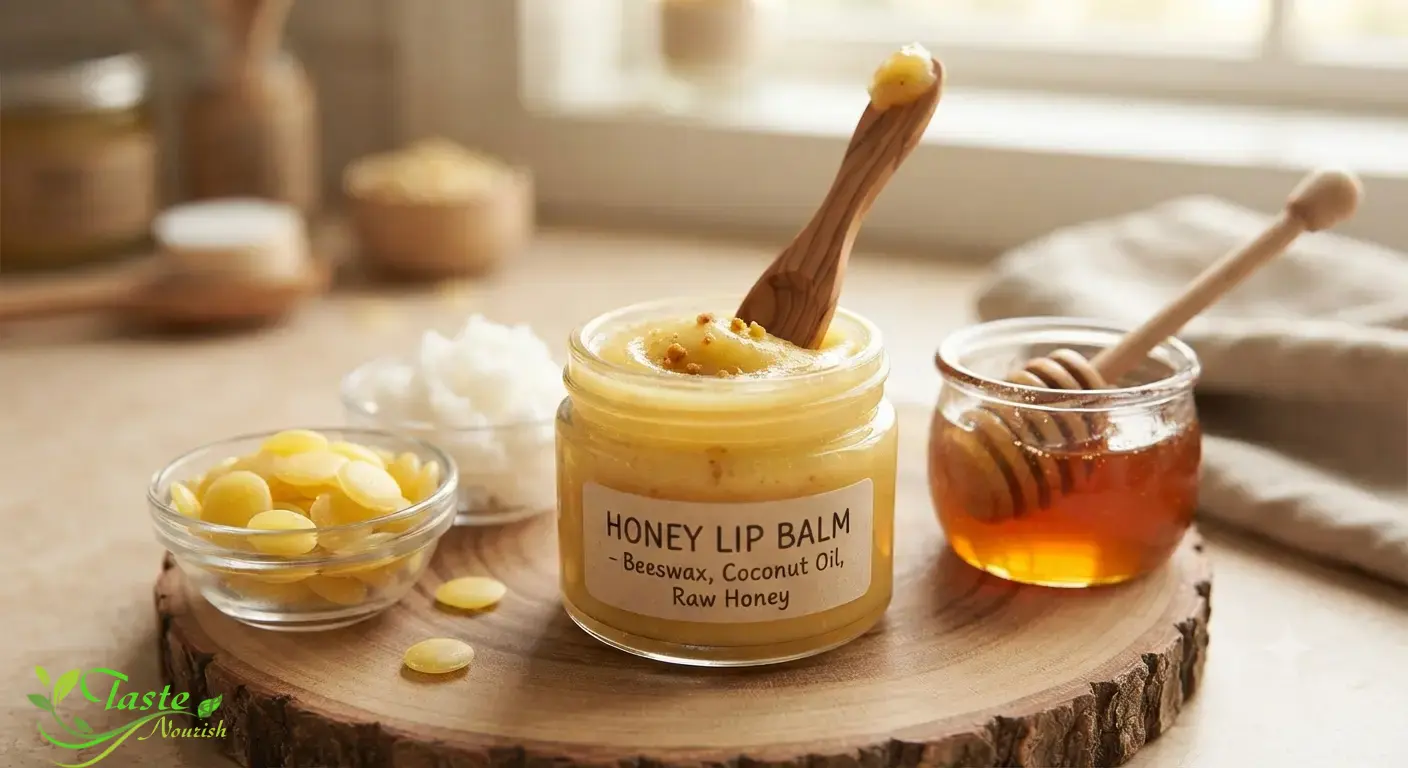
Honey is also popular for chapped lips. For that use, see our guide to honey lip treatments.
What to Leave Out of the Bowl
Skip citrus juice, cinnamon, and essential oils. The first can burn, and the others add scent and irritation risk with no evidence behind them.
- Lemon or lime juice. Citrus juice left on skin that is then exposed to sunlight can cause a phototoxic reaction. A case report in CMAJ describes painful burning redness and large blisters on the hands after exposure to lime and lemon juice and sun. Nothing in the trials above involved adding citrus to honey, so there is no demonstrated benefit to weigh against that risk.
- Cinnamon and essential oils. These are strongly scented plant ingredients. The American Academy of Dermatology’s advice on testing skin care products urges caution with products that contain plant-based botanical ingredients, because they can still contain fragrance-related ingredients that trigger reactions.
How Often to Use a Honey Face Mask
Start with one honey face mask a week for the first month, and move to twice a week only if your skin stays calm. That schedule is a cautious convention, not a trial result. The research discussed above doesn’t establish an ideal frequency for homemade masks, and nothing in it suggests more frequent use works better. I’d stay at once a week if your skin is dry, sensitive, or reactive.
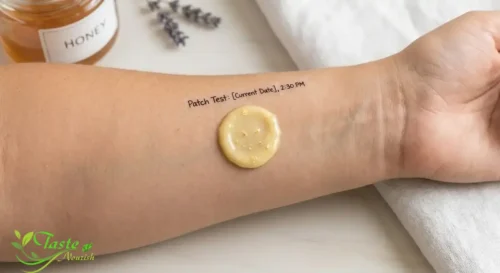
Before the first full-face application, patch test. The AAD’s guidance on testing skin care products recommends applying a new product to a quarter-sized spot, such as the underside of the arm or the bend of the elbow, twice daily for seven to 10 days. That window is long enough for slower reactions to appear. If redness, itching, or swelling develops, wash the product off gently and don’t use it again. For a rinse-off mask, the practical adaptation is to leave the dab on for your usual mask time, then rinse.
Who Should Skip a Honey Face Mask
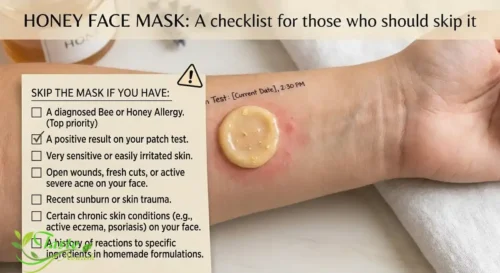
Skip a honey face mask if you have a known allergy to honey or other bee products, if your skin is broken, burned, or infected, or if a skin condition on your face is actively flaring and you haven’t checked with a clinician.
- Allergy to honey or bee products. The acne trial excluded people with a known or suspected honey allergy. Contact allergy to other bee-derived ingredients is also documented. In a patch-test study of 95 patients with lip inflammation, facial eczema, or suspected beeswax allergy, 17 reacted to beeswax and 14 of those also reacted to propolis. These were people already having symptoms, so the figures are not a general-population rate, and honey is neither beeswax nor propolis. Still, they show why a patch test matters for bee-derived ingredients on the face.
- Broken, sunburned, or infected skin. Honey is used in wound care, but that is not the same as spreading a kitchen mask over open skin. Open skin, burns, and signs of infection such as spreading redness, warmth, or pus call for medical care.
- Active rosacea, eczema, or another diagnosed facial skin condition. Reactive skin can flare with any new mixture, so ask your dermatologist before trying one.
- Babies under 12 months. Honey should not be given to infants younger than 12 months because of the risk of infant botulism, according to a University of Florida extension fact sheet on infant botulism and honey. Babies’ hands go straight to their mouths, so the cautious call is to keep honey off their faces too.
Honey Face Mask FAQs
Can I leave a honey face mask on overnight?
No, and nothing in the research above supports it. The trial protocol described earlier had participants wash the honey product off, as a homemade mask should be. Leaving it on adds sticky bedding and hair, plus a longer window for a reaction to develop.
Will a honey face mask fade dark spots or smooth wrinkles?
The research covered here doesn’t establish either. The trials measured rosacea and acne severity, not pigmentation or fine lines, and claims of that kind rest on cosmetic-formulation reviews and laboratory work rather than trials of homemade masks. At most, expect skin that feels a little softer right after rinsing, which is a sensation, not a measured outcome.
Can I make a big batch of honey face mask and store it?
Plain honey needs no mixing, so just scoop what you need with a clean spoon. Blends with yogurt, avocado, aloe, or water are fresh-food mixtures. There is no standard shelf life for improvised blends, so make one portion at a time and discard the leftovers.
The Bottom Line
My practical take is that a honey mask is a pleasant ten-minute ritual, not a fix. If you’re reaching for it because of persistent acne, rosacea, or eczema, the better next step is a dermatologist visit, where treatments with stronger trial support exist.
Conclusion
Whether a honey face mask belongs in your routine comes down to your skin and your expectations. If your skin is calm, intact, and tolerates a patch test, one of the five recipes above is an easy, inexpensive experiment. If it isn’t, or if you hope the mask will clear a stubborn skin problem, a conversation with a dermatologist will serve you better.
Explore Honey Skin Care by Topic
- Honey for skin: Evidence for honey on burns, acne, and dry skin, beyond a single mask.
- Honey for lips: Safe honey lip masks, scrubs, and balms for chapped lips.
- Raw honey vs regular honey: How processing and labels differ, and what actually separates the two jars.
- Manuka honey: UMF and MGO grades explained, plus real benefits and how to buy it.
- Benefits of honey: The full overview of what the evidence supports, and doesn’t, across honey’s many uses.
This article offers general nutrition and skin-care information and is not medical advice. If you have a skin condition or allergies, or you take medication, check with a qualified healthcare professional before putting honey or any new ingredient on your skin.