Few dishes capture warm-weather cooking as well as a good avocado corn salad recipe. Creamy avocado, sweet corn, and a squeeze of lime come together in minutes, with no stovetop required if you use raw or thawed frozen kernels. This easy avocado corn salsa salad works as a side dish, a topping for grilled chicken or fish, or a scoop-friendly dip with tortilla chips.
If you want a simple, colorful summer avocado corn salad recipe that comes together in under 20 minutes, this one delivers on both flavor and nutrition. It’s naturally gluten-free, easy to customize, and forgiving enough for beginner cooks.
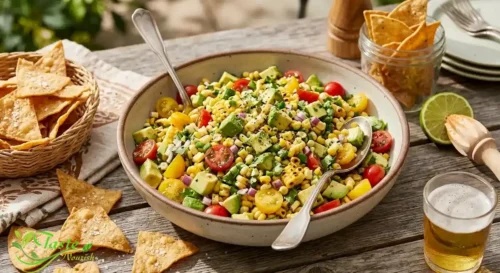
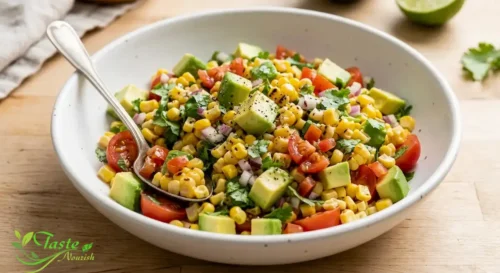
This avocado corn salad recipe combines diced avocado, corn kernels, red onion, tomato, cilantro, and fresh lime juice into a bright, no-cook side dish that’s ready in about 15 minutes. It’s rich in fiber and monounsaturated fat, and it works equally well as a salad, a salsa, or a taco topping. Toss everything together just before serving so the avocado stays green and the vegetables stay crisp.
Key Takeaways
This avocado corn salad recipe takes about 15 to 20 minutes and needs no cooking if you use raw or thawed corn.
Avocado contributes mostly monounsaturated fat and fiber, while corn adds complex carbohydrates, additional fiber, and natural sweetness.
Research from Harvard T.H. Chan School of Public Health and the American Heart Association links regular avocado consumption with favorable heart health markers.
People with a diagnosed latex allergy may need to approach avocado cautiously due to a known cross-reactivity.
Leftovers taste best within a day; a splash of extra lime juice helps slow browning in the fridge.
What Is Avocado Corn Salad?
Avocado corn salad is a chunky, no-cook combination of ripe avocado and sweet corn kernels, usually tossed with onion, tomato, fresh herbs, and citrus juice. It sits somewhere between a chopped salad and a fresh salsa, which is why some cooks call it an avocado corn salsa instead.
The dish draws heavily on Mexican and Southwestern cooking traditions, where charred corn, lime, and cilantro are common pantry staples. You’ll often see it served alongside grilled meats, folded into tacos, or spooned over rice bowls.
Because it requires no cooking beyond an optional quick char on the corn, it has become a go-to warm-weather recipe for people who want something fresh without turning on the oven. It’s also naturally vegetarian, dairy-free, and easy to make vegan by skipping any cheese garnish.
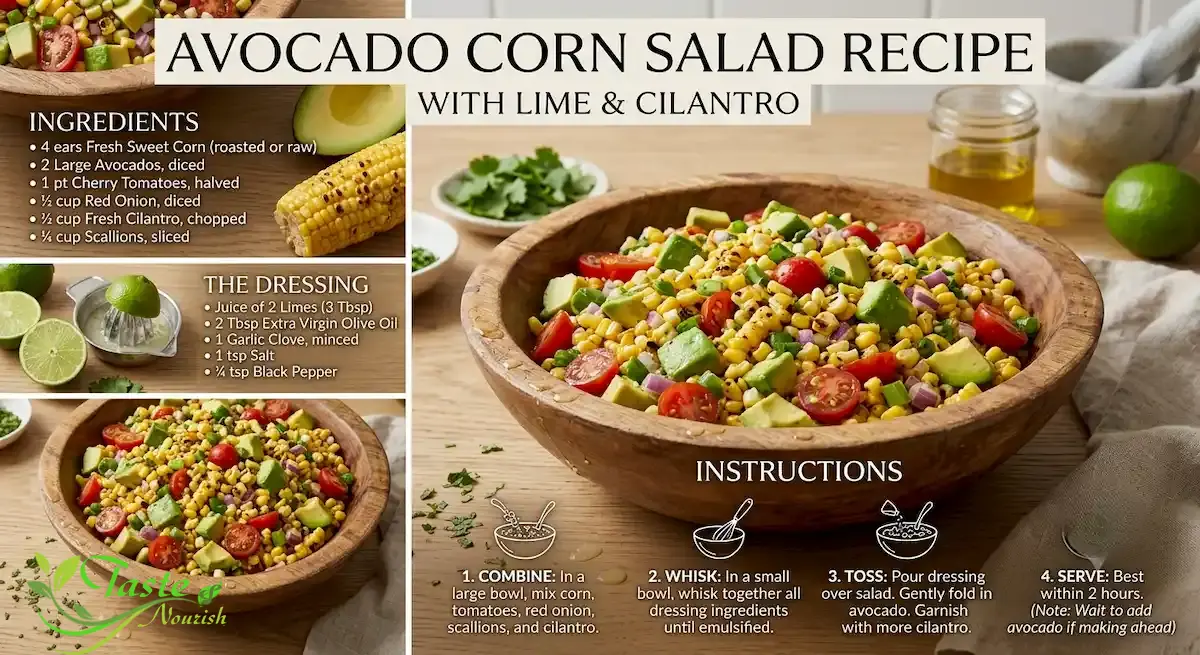
If using fresh corn, cut the kernels off the cob with a sharp knife over a large bowl to catch them.
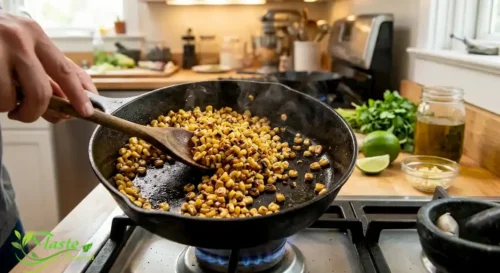
For extra flavor, char the corn kernels in a dry skillet over medium-high heat for 4 to 5 minutes, stirring occasionally, then let them cool slightly.
In a large bowl, combine the corn, tomatoes, red onion, cilantro, and jalapeño if using.
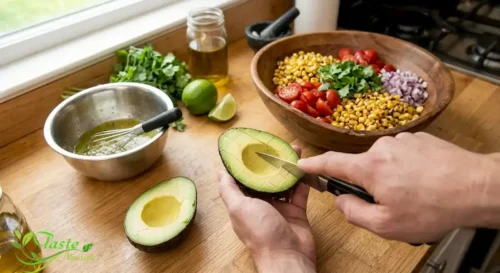
Add the diced avocado to the bowl, being gentle so it doesn’t turn to mush.
Drizzle with lime juice and olive oil, then season with salt and pepper.
Toss everything together gently until just combined, then taste and adjust the seasoning.
Serve immediately, or refrigerate for up to 30 minutes before serving to let the flavors settle.
Expert Tips
Add the avocado last and fold it in gently so the pieces stay intact rather than turning creamy.
Char the corn first if you want a smokier, more complex flavor instead of a purely raw taste.
Taste before adding all the salt, since canned corn and store-bought salsa additions can already carry sodium.
Avocado Corn Salad Recipe Variations to Try
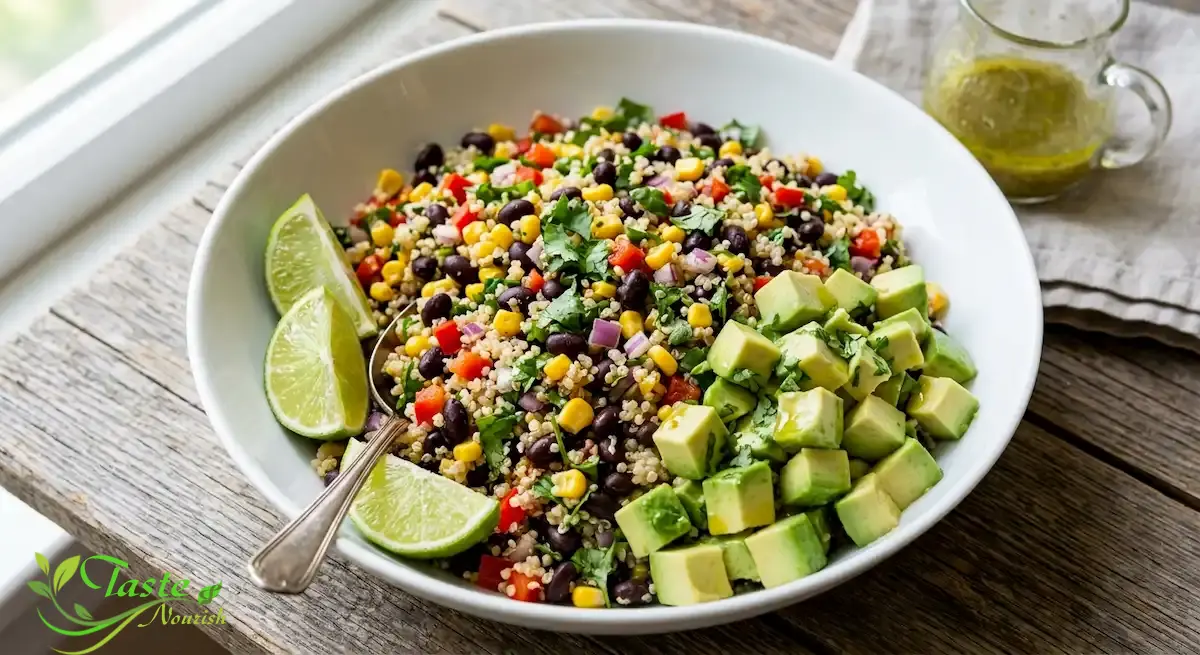
For a black bean and corn version, stir in a drained can of black beans for extra protein and fiber. If you’d rather lean into the salsa side of things, chop everything more finely and add extra lime juice so it’s scoopable with chips, turning it into an easy avocado corn salsa salad instead of a chunkier side dish.
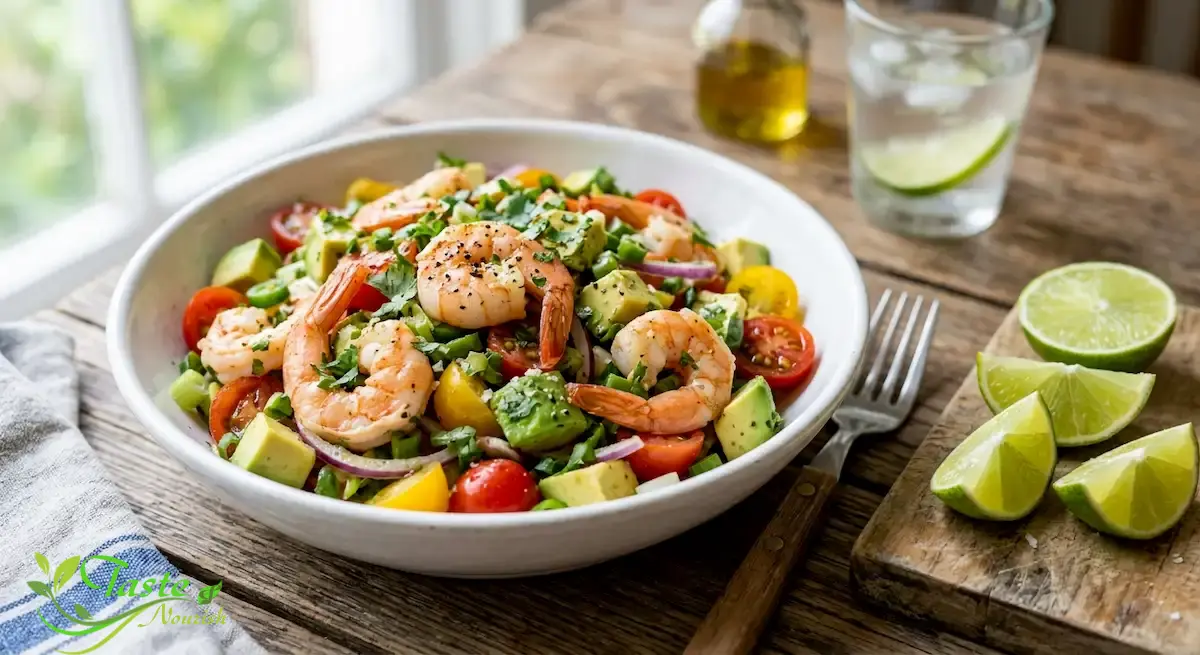
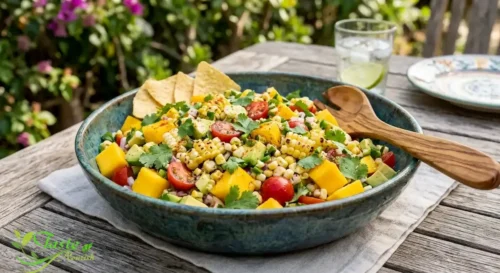
A mango version swaps in diced mango for half the tomatoes, which adds natural sweetness that pairs nicely with the jalapeño’s heat. For a heartier, more filling summer avocado corn salad recipe, toss in cooked quinoa or grilled shrimp and serve it as a full lunch rather than a side.
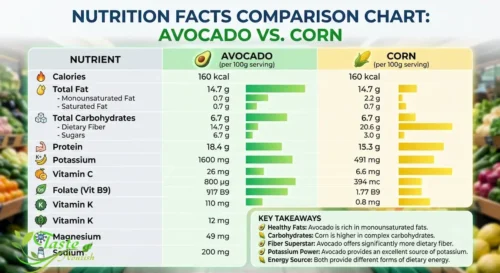
Nutrition Facts: Avocado and Corn Side by Side
Avocado and corn bring different nutritional strengths to the bowl. Avocado is calorie-dense but low in sugar, while corn contributes more carbohydrates along with its own share of fiber and antioxidants, according to the USDA SNAP-Ed Connection’s guide to avocados and its companion guide to corn.
Nutrient (per 100g, raw)
Avocado
Sweet Corn
Calories
160
86
Total Fat
14.7g
1.2g
Saturated Fat
2.1g
0.2g
Total Carbohydrate
8.5g
19g
Dietary Fiber
6.7g
2g
Sugars
0.7g
6.3g
Protein
2g
3.2g
Potassium
485mg
270mg
Vitamin C
10mg
6.8mg
A typical serving of avocado corn salad made with half an avocado and about half a cup of corn lands somewhere in the range of 150 to 220 calories, depending on how much oil or cheese is added.
Health Benefits of Avocado Corn Salad
Heart Health
Avocado is mostly made up of oleic acid, a monounsaturated fat also found in olive oil, and research suggests that swapping saturated fats for this type of fat may support healthier cholesterol levels, according to Harvard Health Publishing. Corn adds its own fiber and potassium, nutrients that are commonly associated with healthy blood pressure.
Digestive Health
Both ingredients are notably fiber-rich, and fiber may help support regular digestion and a feeling of fullness after meals. A single serving of avocado alone can contribute a meaningful share of daily fiber needs, which is part of why nutrition experts often recommend it as a whole-food fat source rather than oil alone.
Eye and Skin Health
Corn contains carotenoid compounds, including lutein and zeaxanthin, which research suggests may support eye health over time. Avocado’s healthy fat content may also help the body absorb fat-soluble nutrients like these carotenoids more efficiently when the two are eaten together.
Blood Sugar Balance
The fiber and fat in avocado tend to slow digestion, which may help moderate blood sugar spikes when it’s paired with a carbohydrate-containing food like corn. This makes the combination a reasonably balanced choice compared to eating refined carbohydrates alone, though portion size still matters for anyone managing blood sugar closely.
Scientific Evidence Behind the Benefits
A large, long-term study conducted by researchers at the Harvard T.H. Chan School of Public Health found that people who ate at least two servings of avocado per week had a lower rate of cardiovascular disease events compared with those who rarely ate avocado, as reported by the American Heart Association. The same research suggested that replacing foods like butter, cheese, or processed meat with avocado was linked to a lower risk of cardiovascular events.
A more recent systematic review and meta-analysis of randomized controlled trials also examined avocado’s effect on cardiovascular risk factors, concluding that its mix of monounsaturated fat, fiber, potassium, and plant compounds may favorably influence blood lipid levels, though the researchers noted that results across individual studies were not always consistent.
This is a good reminder that food-based research often shows patterns and associations rather than guarantees for any one person.
Corn has fewer large human trials specifically tied to it, but its fiber and antioxidant content are well documented, and it’s commonly included in dietary patterns like the Mediterranean-style diet that researchers associate with better long-term health outcomes.
Potential Risks and Side Effects
Avocado is calorie-dense, so eating large amounts regularly without adjusting the rest of your meal can contribute to excess calorie intake over time. Because both avocado and corn are relatively high in fiber, eating an unusually large portion in one sitting may cause temporary bloating or digestive discomfort for some people.
Corn is also a moderately high-glycemic food, so portion size is worth keeping in mind if you’re watching blood sugar. Added salt from seasoning, cheese, or store-bought salsa mixed into the salad can also add up quickly, so it’s worth tasting and adjusting rather than pouring in a full packet of seasoning.
Who Should Avoid It?
People with a diagnosed latex allergy should be cautious with avocado, since research has identified a recognized cross-reactivity between latex proteins and certain avocado proteins, sometimes called latex-fruit syndrome. Anyone who has had a reaction to avocado, banana, or kiwi in the past should talk with an allergist before adding raw avocado to their diet.
People on blood-thinning medication may also want to keep their avocado intake consistent rather than highly variable, since avocado does contain some vitamin K, and anyone managing a potassium-restricted diet due to kidney disease should ask their doctor or dietitian how avocado and corn fit into their personal meal plan.
How Much Should You Eat?
For most healthy adults, about half a medium avocado and roughly half a cup of corn kernels makes a reasonable single serving of this salad as a side dish. If you’re serving it as a main-dish salad with added protein, a full cup of the mixture is a more filling, still-balanced portion.
As with most whole foods, the right amount depends on your overall diet, activity level, and any specific health conditions, so it’s worth adjusting portions based on how the rest of your day’s meals look.
How to Choose the Best Avocados and Corn
Picking Ripe Avocados
Look for avocados that yield slightly to gentle pressure without feeling mushy, which is the selection tip recommended by the USDA’s . If your avocados are still firm, leave them at room temperature for a few days until they soften, then use them right away or refrigerate to slow further ripening.
Picking Sweet Corn
Fresh corn is best when it’s cool to the touch, with bright green husks and silk that hasn’t dried out or turned brown. If you’re buying ears at a farmers market or grocery store, look for kernels that are plump and tightly packed, and avoid ears with soft or discolored spots.
Storage Tips for Your Avocado Corn Salad Recipe
Store leftover avocado corn salad in an airtight container in the refrigerator and plan to eat it within a day for the best texture and color. The lime juice in the recipe helps slow browning, but the avocado will still soften over time, so same-day or next-day eating is ideal.
Following general produce safety guidance from the U.S. Food , keep this cut-produce dish refrigerated at 40°F or below rather than leaving it out at room temperature for extended periods, especially outdoors at summer gatherings.
If you want to prep ahead, you can chop the onion, tomato, and corn a day in advance and store them separately, then add the diced avocado and toss everything together right before serving.
Common Mistakes to Avoid With This Avocado Corn Salad Recipe
One common mistake is adding the avocado too early and stirring too hard, which turns the salad into more of a chunky guacamole than a distinct salad. Another is skipping the lime juice, which does double duty by adding brightness and helping slow down browning on the cut avocado surface.
Using corn straight out of the fridge without letting it come closer to room temperature can also mute the flavor, so a quick char or a few minutes resting at room temperature helps. Finally, over-salting early on is easy to do, especially if you’re also using salted tortilla chips or a store-bought salsa alongside it, so it’s better to season in stages.
Myths vs Facts
Myth
Fact
Avocado is bad for you because it’s high in fat.
Most of that fat is monounsaturated, the same type found in olive oil, which research links to better cholesterol patterns.
Corn is “just sugar” and offers no nutritional value.
Sweet corn contains meaningful fiber, vitamin C, and antioxidants like lutein alongside its natural sugars.
You have to use fresh corn for good flavor.
Frozen corn, thawed and even lightly charred, works well and is convenient outside of peak summer months.
Adding lime juice is only for flavor.
Lime juice also helps slow the browning reaction that happens when cut avocado is exposed to air.
Comparison Table: Avocado Corn Salad vs Guacamole vs Corn Salsa
Feature
Avocado Corn Salad
Guacamole
Corn Salsa
Main Base
Chunky avocado and corn
Mashed avocado
Corn kernels
Texture
Chunky, salad-like
Smooth to slightly chunky
Chunky, no avocado
Typical Use
Side dish or topping
Dip
Topping or dip
Fat Content
Moderate
Higher
Low
Avocado Corn Salad Recipe FAQs
Can I make avocado corn salad ahead of time?
You can chop the corn, tomato, and onion up to a day ahead, but it’s best to add the avocado and toss the salad within an hour or two of serving for the best color and texture.
Should I use fresh, frozen, or canned corn?
Fresh corn in season offers the best flavor, but thawed frozen corn works well year-round. Canned corn is a convenient option too, though it’s worth draining and rinsing it to reduce added sodium.
How do I keep the avocado from turning brown?
Toss the diced avocado with lime or lemon juice as soon as you cut it, and store leftovers in an airtight container with as little air exposure as possible.
Is avocado corn salad healthy?
It can be a nutritious addition to a balanced diet, offering fiber, potassium, and mostly unsaturated fat, though portion size and added ingredients like cheese or extra oil will affect the overall calorie count.
Can I turn this into a full meal?
Yes, adding a protein source like grilled chicken, shrimp, black beans, or quinoa turns this side dish into a more complete, filling meal.
If using fresh corn, cut the kernels off the cob with a sharp knife over a large bowl to catch them.
For extra flavor, char the corn kernels in a dry skillet over medium-high heat for 4 to 5 minutes, then let them cool slightly.
In a large bowl, combine the corn, tomatoes, red onion, cilantro, and jalapeño if using.
Add the diced avocado to the bowl, being gentle so it doesn't turn to mush.
Drizzle with lime juice and olive oil, then season with salt and pepper.
Toss gently until just combined, then taste and adjust the seasoning.
Serve immediately, or refrigerate up to 30 minutes before serving.
Conclusion
An avocado corn salad recipe is one of those rare dishes that’s genuinely quick, flexible, and satisfying without much effort. Whether you serve it as a side, a scoopable salsa, or the base for a full meal, the combination of creamy avocado and sweet corn holds up well across seasons and occasions. With a few smart choices around ripeness, storage, and portion size, it’s a simple way to bring more fiber, healthy fat, and fresh produce to the table.
Hanan Abo Samra is the founder of Taste & Nourish, sharing trustworthy nutrition guidance and recipes drawn from 20+ years of hands-on cooking experience. When she's not developing new recipes, Hanan is researching the science behind everyday ingredients to bring readers practical, evidence-based guidance for a healthier lifestyle.


 Store leftover avocado corn salad in an airtight container in the refrigerator and plan to eat it within a day for the best texture and color. The lime juice in the recipe helps slow browning, but the avocado will still soften over time, so same-day or next-day eating is ideal.