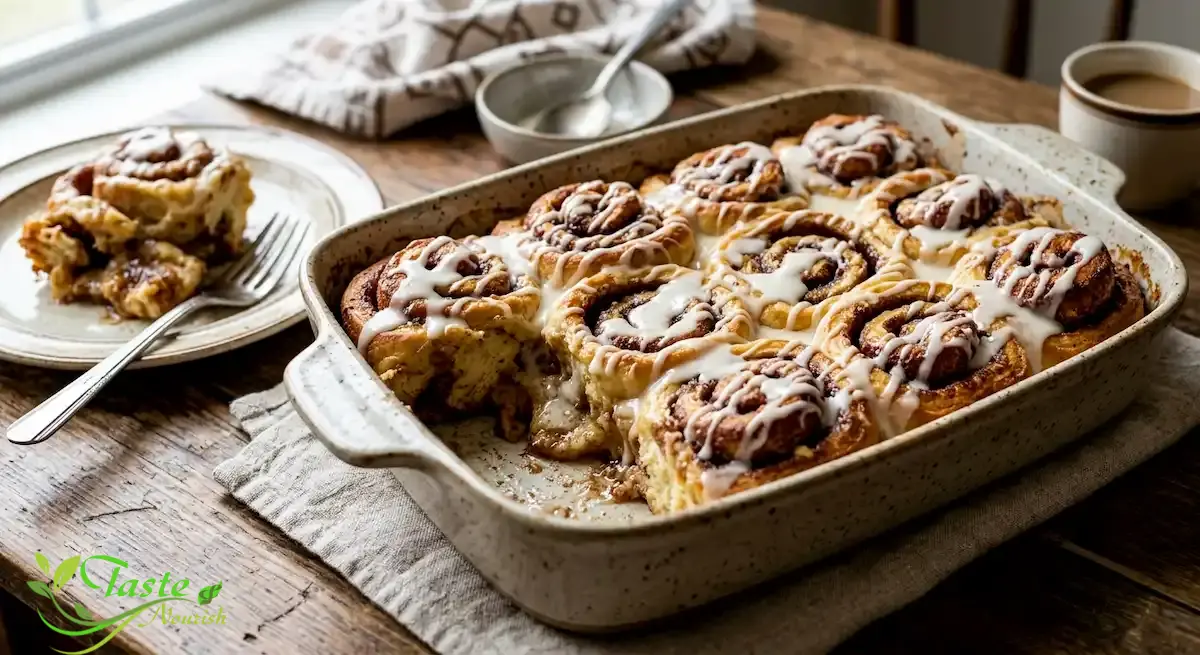
Few smells pull a family into the kitchen faster than cinnamon and butter baking together, and that’s exactly the appeal of a good cinnamon roll casserole recipe: all the gooey, spiced flavor of a fresh-baked cinnamon roll, made in one dish with almost none of the fuss. This version soaks tender pieces of cinnamon roll dough in a rich vanilla custard, bakes until golden and puffed, and finishes with a warm icing drizzle. It’s built for busy mornings, weekend guests, and holiday brunch tables where you want something impressive without babysitting individual rolls.
This cinnamon roll casserole recipe layers pieces of cinnamon roll dough in a baking dish, soaks them in a cinnamon-vanilla egg custard, and bakes until golden, puffed, and set in the center. It serves 9, bakes in about 35–40 minutes, and can be assembled the night before for an easy make-ahead breakfast bake.
Total time: About 1 hour active, or overnight if made ahead
Yield: 9 servings
Difficulty: Easy
Key Takeaways
This cinnamon roll casserole recipe turns canned or homemade cinnamon roll dough into a soft, custardy baked breakfast for a crowd.
A simple egg-and-milk custard, similar to what’s used in a baked cinnamon roll french toast casserole, is what gives the dish its soft, pudding-like center.
It can be fully assembled up to 24 hours ahead and baked fresh the next morning.
The recipe scales easily and reheats well, making it practical for holidays, potlucks, and weekend guests.
Icing is best added after baking, not before, to keep the top from over-browning or pooling.
Why You’ll Love This Cinnamon Roll Casserole Recipe
Unlike rolling and shaping individual cinnamon rolls, this dish comes together in one pan with about 20 minutes of hands-on work. The custard base means every bite stays soft and moist, even around the edges, instead of drying out the way reheated rolls sometimes do. It’s also flexible: bake it right away for a same-day treat, or assemble it the night before so all that’s left in the morning is sliding it into the oven.
Ingredients for the Best Cinnamon Roll Casserole
2 cans (12.4 oz each) refrigerated cinnamon rolls with icing, 8 rolls per can
6 large eggs
1 cup whole milk
1/2 cup heavy cream
1/3 cup granulated sugar
2 teaspoons ground cinnamon
1 teaspoon vanilla extract
1/4 teaspoon salt
2 tablespoons unsalted butter, melted, plus extra for greasing the pan
1/2 cup chopped pecans or walnuts (optional)
Reserved icing from the cinnamon roll cans, for topping
Ingredient Notes & Substitutions
Whole milk gives the custard the richest texture, but 2% milk works fine if that’s what’s on hand; the casserole will be very slightly less creamy. Heavy cream can be swapped for more milk in a pinch, though the cream is what makes the center feel closer to bread pudding than plain baked dough. Ground cinnamon is a concentrated source of manganese, a trace mineral involved in bone formation and metabolism, though the small amount used here contributes only a modest share of daily needs, according to the National Institutes of Health Office of Dietary Supplements.
Homemade cinnamon roll dough, cut into pieces before the second rise, can replace the canned version for a more from-scratch result; it takes longer but deepens the flavor noticeably. Pecans and walnuts are optional but add welcome crunch against the soft custard; toast them first for extra flavor. For a dairy-free version, unsweetened oat milk and dairy-free butter work in equal amounts, though the texture will be a bit less rich.
Kitchen Tools You’ll Need
9×13-inch baking dish
Large mixing bowl and whisk
Kitchen scissors or a sharp knife, for cutting the rolls into pieces
Food thermometer, useful for checking that the egg custard has fully set
How to Make Cinnamon Roll Casserole (Step by Step)
Preheat the oven to 350°F (175°C) and generously butter a 9×13-inch baking dish.
Open the cans of cinnamon rolls and set the icing packets aside. Cut each roll into quarters and scatter the pieces evenly across the prepared dish.
In a large bowl, whisk together the eggs, whole milk, heavy cream, sugar, cinnamon, vanilla extract, and salt until smooth and no streaks of egg remain.
Pour the custard evenly over the cinnamon roll pieces. Press down gently with a spatula so the dough absorbs the liquid, and drizzle the melted butter over the top.
If baking right away, let the dish rest at room temperature for 15 minutes so the pieces soak up more custard. If making ahead, cover tightly and refrigerate for up to 24 hours instead.
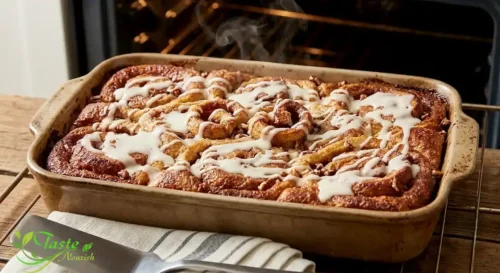
Bake for 35–40 minutes, until the top is deep golden brown, the casserole is puffed, and the center no longer jiggles when the dish is nudged. Casseroles containing eggs should be cooked until they reach 160°F in the center, which you can confirm with a food thermometer, per FDA guidance on egg safety.
Let the casserole rest for 5–10 minutes so it sets slightly and is easier to slice.
Warm the reserved icing packets for a few seconds and drizzle over the top just before serving.
Expert Tips for Cinnamon Roll Casserole Success
Press the dough pieces down into the custard rather than just pouring liquid over the top; this ensures even soaking instead of dry pockets.
If the top is browning faster than the center is setting, tent the dish loosely with foil for the last 10 minutes of baking.
Add icing after baking, not before — baked-in icing tends to caramelize unevenly and can taste scorched in spots.
A slight jiggle in the very center is fine when you first pull it from the oven; it firms up as it rests.
Common Mistakes to Avoid
Mistake
Why It Happens
The Fix
Soggy center
Casserole is pulled from the oven before the custard fully sets
Bake until the center no longer jiggles; tent with foil if the top browns first
Dry, tough texture
Overbaking, or too little custard for the amount of dough
Check at the 35-minute mark and use the full custard amount listed
Icing pools and burns
Icing is added before baking instead of after
Always drizzle reserved icing over the finished, slightly cooled casserole
Rolls stick to the dish
Pan isn’t greased thoroughly enough
Butter the dish generously, including the corners, or line it with parchment
Uneven soaking
Dough goes straight into the oven with no rest time
Let it sit at least 15 minutes before baking, or assemble the night before
Cinnamon Roll Casserole Variations
Cream cheese cinnamon roll casserole: Dot the assembled dish with small spoonfuls of sweetened cream cheese before baking for a cheesecake-like ribbon throughout.
Apple cinnamon roll casserole: Fold 1 cup of small-diced, sautéed apples into the custard for a warm, fall-leaning version.
Pecan praline topping: Sprinkle a mix of brown sugar, chopped pecans, and melted butter over the top before baking for a crunchy, caramelized crust.
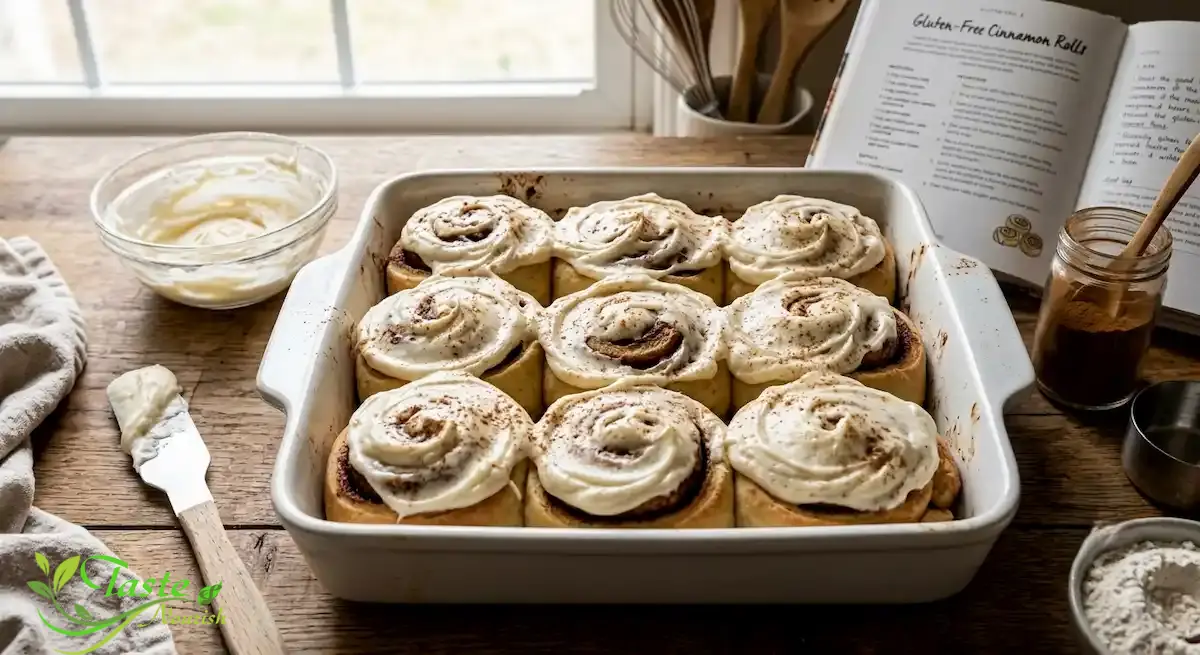
Gluten-free cinnamon roll casserole: Use a gluten-free cinnamon roll dough in place of the standard version; the custard and bake time stay the same.
Serving Suggestions
Balance the sweetness of this casserole with something savory and something fresh: crisp bacon or breakfast sausage on the side, and a bowl of berries or sliced citrus. Because the dish is high in added sugar from both the dough and the icing, the Harvard T.H. notes that treats like this are best enjoyed as part of an otherwise balanced meal rather than a daily habit. Coffee, chai, or a simple glass of milk round out the plate nicely.
Nutrition Information
Values are estimated per serving (1 of 9) and will vary based on brand of cinnamon rolls, milk fat content, and add-ins.
Nutrient
Approximate Amount
Calories
340
Protein
8 g
Carbohydrates
46 g
Sugars
22 g
Fat
14 g
Fiber
1 g
Sodium
480 mg
One teaspoon of ground cinnamon contains only about 6 calories, according to USDA FoodData Central, so the spice itself adds negligible calories or sugar to the dish; most of the nutrition profile above comes from the dough, custard, and icing.
Some peer-reviewed research suggests that cinnamon, taken in concentrated doses, may support healthy blood sugar and antioxidant markers, but those studies use amounts far beyond what’s in a single serving of this casserole, so the spice here should be enjoyed for flavor rather than as a health strategy, per an umbrella review of cinnamon research published in a peer-reviewed journal.
Storage & Reheating Instructions
Cover leftovers and refrigerate within 2 hours of baking; the FDA recommends refrigerating egg-based dishes like this one promptly and using them within 3 to 4 days. Reheat individual portions in the microwave for 30–45 seconds, or warm larger portions in a 300°F oven for about 10 minutes, covered loosely with foil to prevent drying out.
To freeze, bake the casserole without the icing, let it cool completely, then wrap tightly and freeze for up to 2 months. Thaw overnight in the refrigerator, then reheat in a 300°F oven until warmed through before adding fresh icing.
Make-Ahead Tips for an Overnight Cinnamon Roll Casserole
This recipe was made for make-ahead mornings. Assemble the casserole through the custard-pouring step, cover tightly, and refrigerate for up to 24 hours before baking. The extended soak actually improves the texture, giving an even softer, more custardy result — making this an easy cinnamon roll bake recipe for holidays, guests, or any morning you’d rather not cook before coffee.
2 cans (12.4 oz each) refrigerated cinnamon rolls with icing, 8 rolls per can
6 large eggs
1 cup whole milk
1/2 cup heavy cream
1/3 cup granulated sugar
2 teaspoons ground cinnamon
1 teaspoon vanilla extract
1/4 teaspoon salt
2 tablespoons unsalted butter, melted, plus extra for greasing the pan
1/2 cup chopped pecans or walnuts (optional)
Reserved icing from the cinnamon roll cans, for topping
Directions
Preheat the oven to 350°F (175°C) and generously butter a 9x13-inch baking dish.
Open the cans of cinnamon rolls and set the icing packets aside. Cut each roll into quarters and scatter the pieces evenly across the prepared dish.
In a large bowl, whisk together the eggs, whole milk, heavy cream, sugar, cinnamon, vanilla extract, and salt until smooth.
Pour the custard evenly over the cinnamon roll pieces. Press down gently so the dough absorbs the liquid, and drizzle the melted butter over the top.
Let the dish rest 15 minutes at room temperature, or cover and refrigerate up to 24 hours for a make-ahead version.
Bake for 35 to 40 minutes, until deep golden brown, puffed, and the center no longer jiggles.
Let the casserole rest 5 to 10 minutes, then warm the reserved icing and drizzle over the top before serving.
Cinnamon Roll Casserole Recipe FAQs
Can I make cinnamon roll casserole the night before?
Yes. Assemble it completely, cover, and refrigerate for up to 24 hours, then bake straight from the fridge, adding a few extra minutes to the bake time if needed.
Can I use homemade cinnamon roll dough instead of canned?
Yes. Cut the dough into pieces before its second rise and use it in place of the canned rolls; the custard and bake time stay about the same.
Why is my casserole soggy in the middle?
It usually means the custard hasn’t fully set yet. Return it to the oven and check again in 5-minute intervals until the center no longer jiggles.
Can I freeze cinnamon roll casserole?
Yes, once baked and cooled. Freeze without icing for up to 2 months, then thaw and reheat before adding fresh icing.
Is this the same as a baked cinnamon roll french toast casserole?
They’re closely related. Both use an egg custard soaked into bread-like pieces, but this version starts with cinnamon roll dough instead of sliced bread, so it’s sweeter and softer with less need for added cinnamon-sugar topping.
What’s the best pan size for this recipe?
A standard 9×13-inch baking dish works well for two cans of cinnamon rolls. For a deeper, more pudding-like result, an 8×8-inch dish also works, though the bake time will run slightly longer.
Conclusion
This cinnamon roll casserole recipe takes everything satisfying about a fresh-baked cinnamon roll and turns it into a low-effort, feed-a-crowd breakfast. Assemble it the night before, and all that’s left in the morning is a warm oven and a drizzle of icing.
References
USDA FoodData Central. “FoodData Central.” U.S. Department of Agriculture, Agricultural Research Service. https://fdc.nal.usda.gov/
“The Effects of Cinnamon on Patients With Metabolic Diseases: An Umbrella Review of Meta-Analyses of Randomized Controlled Trials.” PMC, National Center for Biotechnology Information. https://pmc.ncbi.nlm.nih.gov/articles/PMC12620228/
Hanan Abo Samra is the founder of Taste & Nourish, sharing trustworthy nutrition guidance and recipes drawn from 20+ years of hands-on cooking experience. When she's not developing new recipes, Hanan is researching the science behind everyday ingredients to bring readers practical, evidence-based guidance for a healthier lifestyle.