Baklava Kunafa: The Ultimate Guide to Two Iconic Middle Eastern Desserts
What makes baklava different from kunafa? Dive into the rich history, unique flavors, regional varieties, and step-by-step recipes of these beloved Middle Eastern sweets.
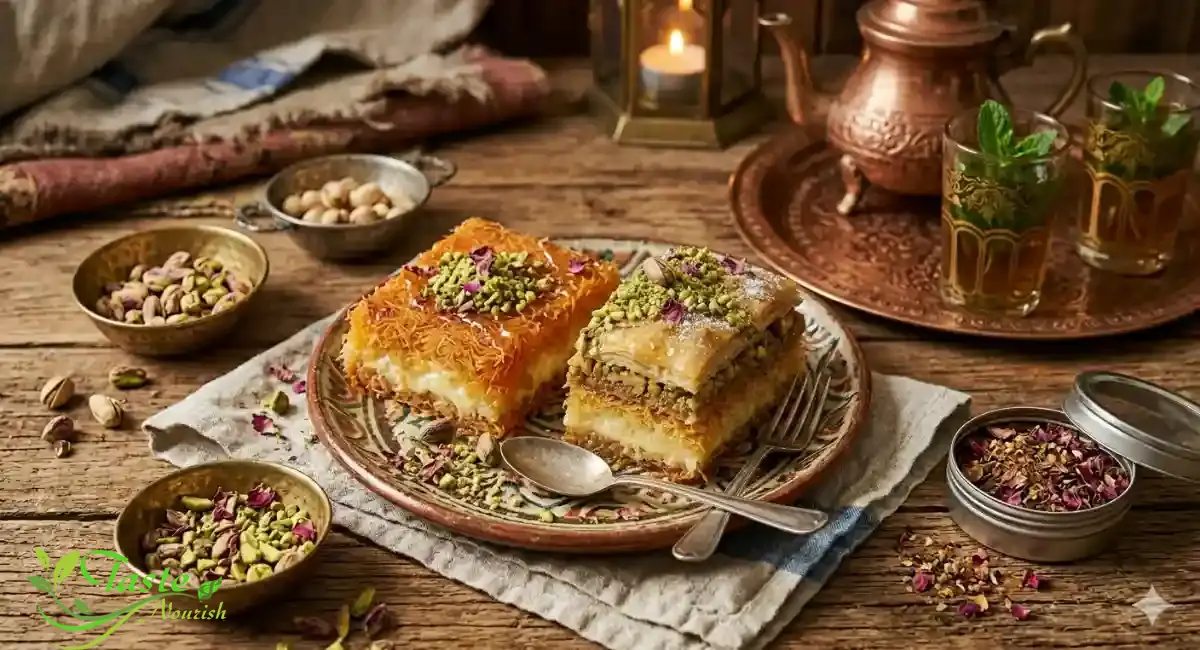
Baklava kunafa — say those two words to anyone from the Middle East, and watch their eyes light up. These two legendary desserts have been delighting taste buds for thousands of years, and yet the debate over which one reigns supreme never gets old.
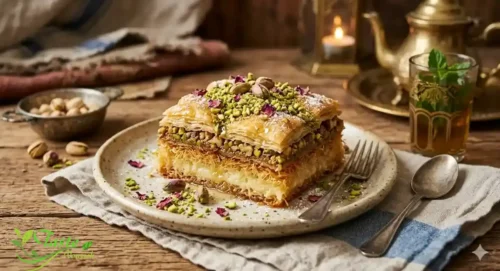
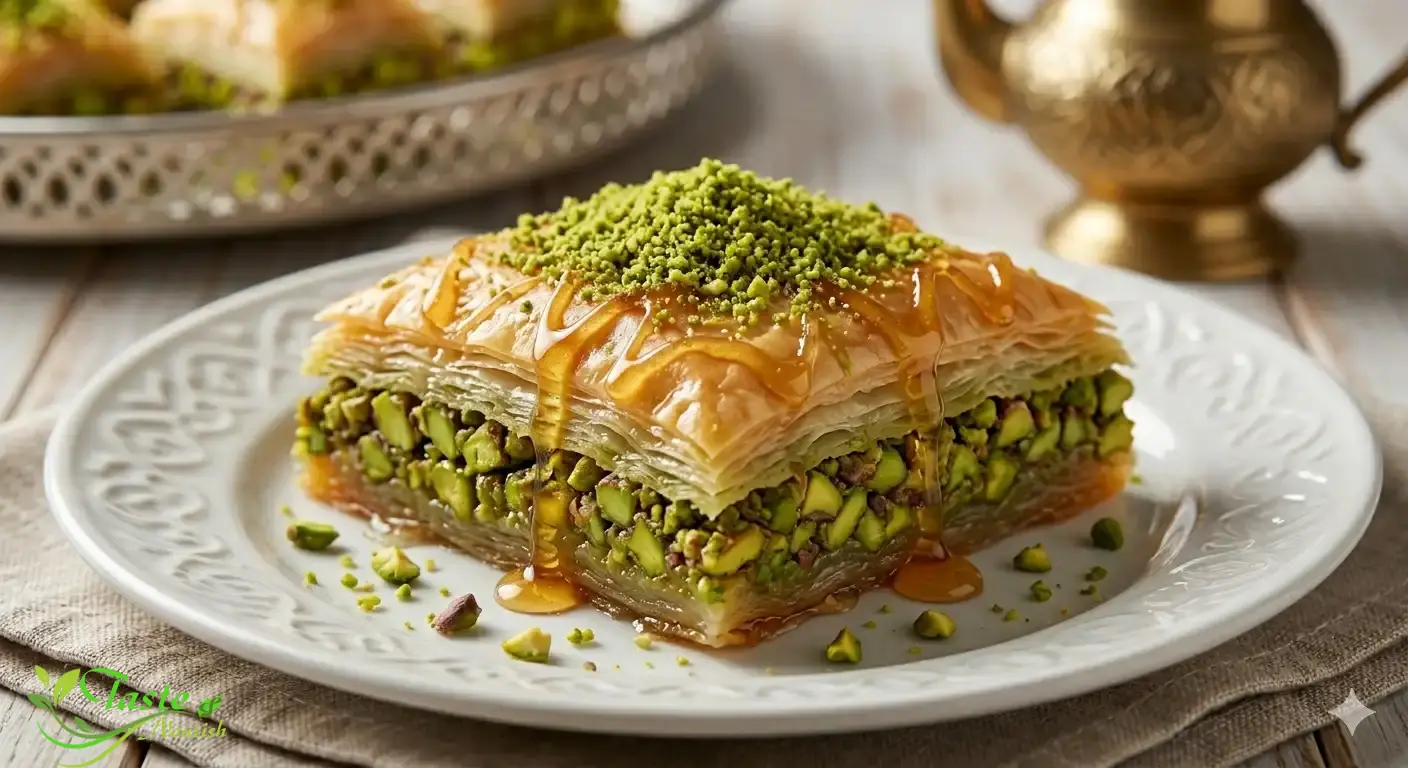
Are you Team Baklava, with its ultra-thin, butter-soaked phyllo layers hiding a treasure chest of fragrant pistachios? Or are you Team Kunafa, seduced by the pull of warm, molten cheese beneath golden shredded pastry drenched in rosewater syrup? Whether you’re a lifelong fan or just discovering kunafa baklava for the first time, you’re in exactly the right place.
This guide covers everything you could possibly want to know about both desserts — from their ancient origins in the Assyrian and Ottoman Empires to the modern-day fusion recipes that have taken the internet by storm. We’ll compare their ingredients, textures, flavors, and nutritional profiles side by side. We’ll explore their regional variations across Turkey, Palestine, Lebanon, Greece, and beyond. And we’ll even walk you through how to make your own kunafa baklava at home, step by step. By the time you reach the end, you won’t just understand these desserts — you’ll feel the culture, history, and warmth baked into every golden, syrup-kissed bite.
Key Differences — Baklava vs Kunafa Side by Side
Ingredients Compared
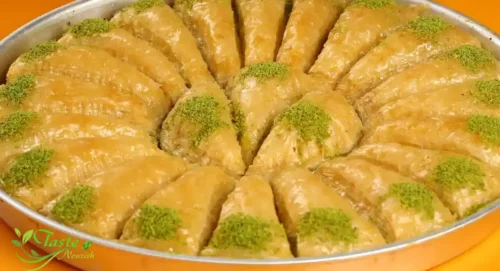
The core distinction between baklava and kunafa comes down to the type of dough and the filling used. Baklava is built on flat, paper-thin sheets of phyllo dough — those ultra-delicate sheets that practically dissolve on contact with heat. Kunafa, on the other hand, uses kataifi, which is a shredded, noodle-like dough that creates an entirely different visual and textural result.
Kunafa is made with shredded phyllo dough, cheese, and sweet syrup, while baklava is made with layers of phyllo dough, nuts, and sweet syrup. Kunafa is crispy on the outside and soft and gooey on the inside, while baklava is crispy on the outside and slightly chewy on the inside. The flavor of kunafa is creamy and slightly salty, due to the cheese, while the flavor of baklava is nutty and sweet, due to the nuts.
Here’s a handy comparison table to summarize the key differences:
Feature
Baklava
Kunafa
Primary Dough
Flat phyllo/filo sheets
Shredded kataifi dough
Main Filling
Crushed nuts (pistachio, walnut, almond)
Cheese (Nabulsi, Akkawi, mozzarella) or cream
Texture
Flaky, crispy, layered
Crispy outside, soft/gooey inside
Flavor Profile
Sweet, nutty, buttery
Sweet, creamy, slightly salty
Serving Temperature
Room temperature
Best served warm/hot
Origin
Assyrian/Ottoman Empire
Levant (Nablus, Jerusalem)
Syrup Base
Honey or sugar syrup
Rosewater or orange blossom syrup
Common Occasions
Weddings, Eid, celebrations
Ramadan, family gatherings
Texture and Flavor Profile
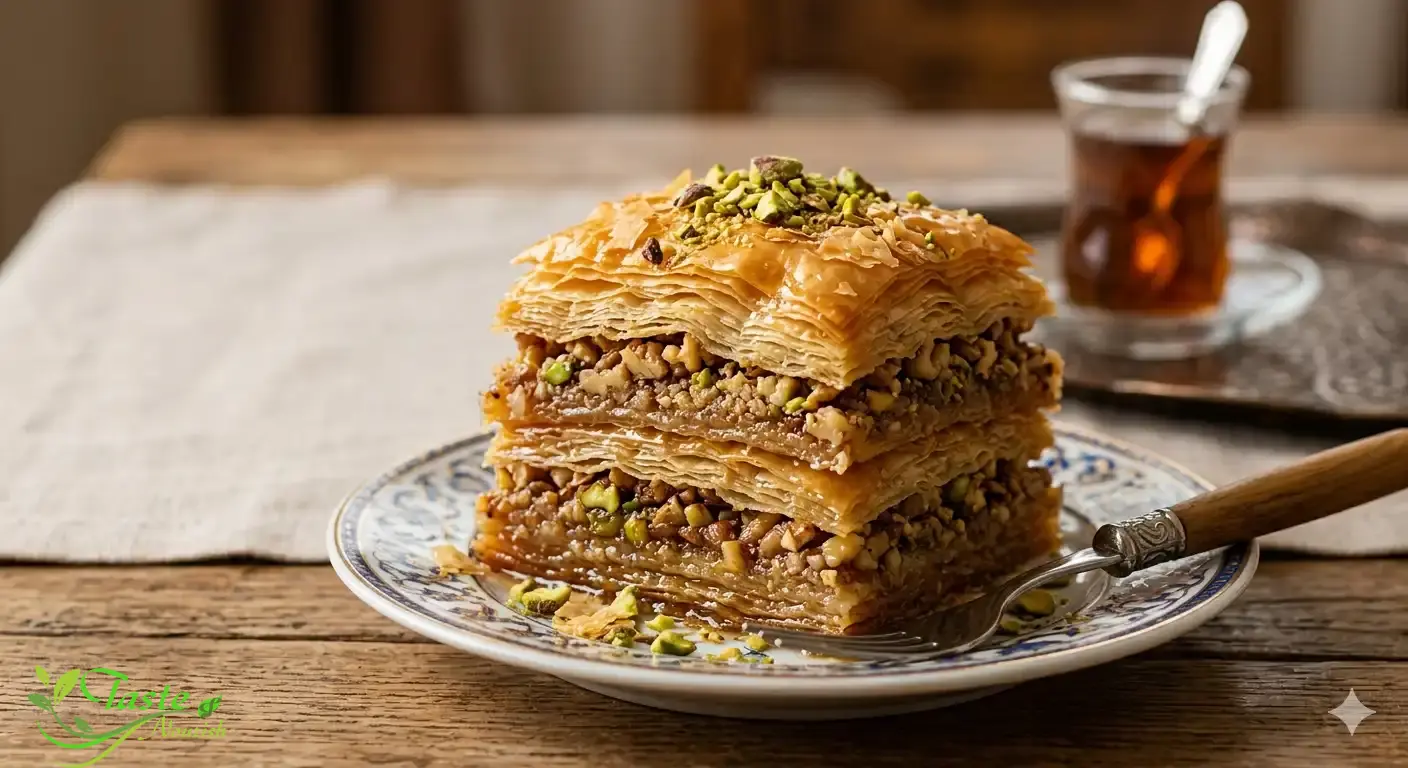
Think of it this way: eating baklava is like biting into a perfectly constructed architectural masterpiece — every layer has a purpose, every crunch tells a story of careful butter-brushing and patient stacking. The filo pastry bakes into thin, golden layers of crispness that shatter gently with every bite.
The nuts inside add earthiness and crunch, while the syrup ties it all together with sweetness that lingers. Kunafa, by contrast, is more like a warm hug on a cold evening — it’s comforting, molten, and deeply satisfying in a way that reaches you on an emotional level as much as a culinary one. The contrast between the crispy strands on the outside and the molten cheese within, drenched in fragrant syrup, is genuinely one of the most memorable eating experiences in world cuisine.
Regional Types of Kunafa You Need to Know
Kunafa isn’t a one-size-fits-all dessert, and part of what makes it so endlessly interesting is how dramatically it changes from one region to the next. There are many regional interpretations of kunafa, but several styles are particularly well known:
Kunafa Khishneh features coarse, shredded pastry for a crisp exterior.
Kunafa Naameh uses finely ground dough for a smoother, more uniform texture.
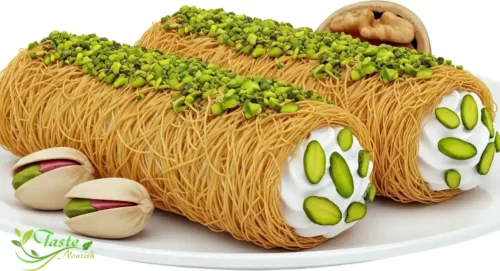
Kunafa Mabroomeh is rolled into cylindrical shapes, often filled with cheese or cream.
and Kunafa Bayn Naraain consists of two layers of pastry with a creamy or cheesy filling in between.
Beyond these structural differences, there are also filling variations that make kunafa incredibly versatile. Classic cheese kunafa (the Nabulsi version) is the most traditional. Cream kunafa, filled with qishta or ashta (a thick, clotted cream), is popular in Egypt and Lebanon. Pistachio kunafa skips the cheese entirely and uses a dense, sweet nut paste as its filling — and this is the version that became globally famous as a key component in the viral Dubai chocolate bar. Then there’s chocolate kunafa, mango kunafa, and Nutella kunafa — modern innovations that have taken this ancient dessert and made it wildly popular with younger generations worldwide.
Regional Types of Baklava Around the World
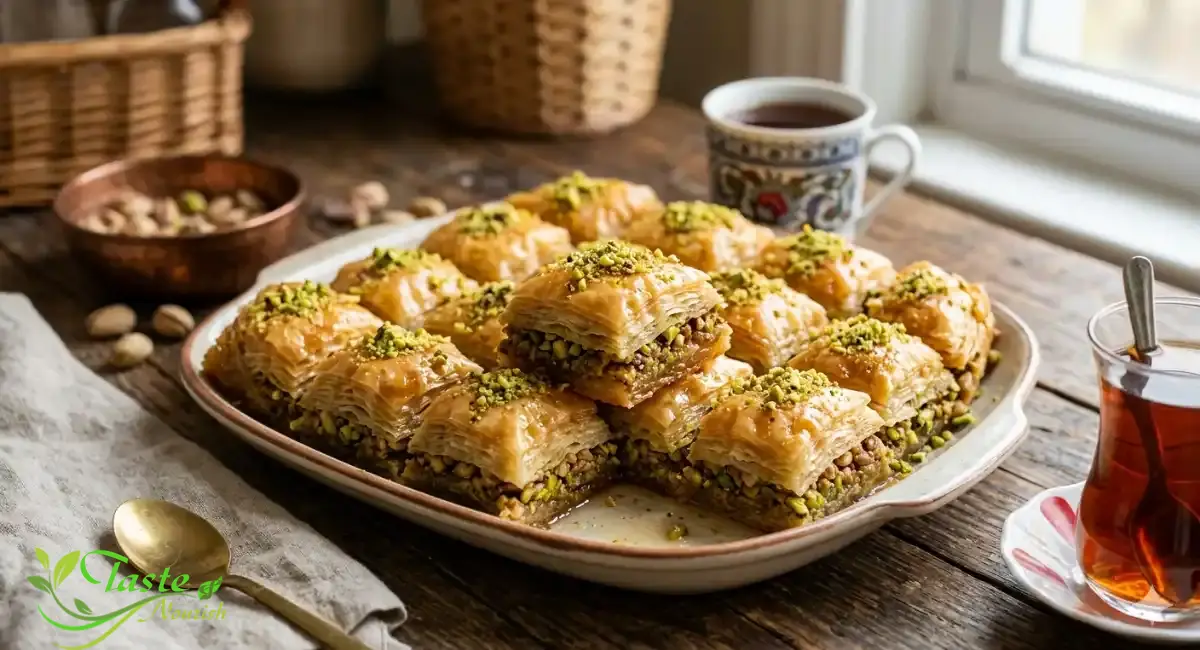
Just as kunafa has its regional personalities, baklava wears many faces depending on where you find it. Turkish baklava from Gaziantep — where it holds a protected geographical indication — is considered by many the gold standard: paper-thin phyllo, fresh pistachios, and a light, clear syrup that lets the nut flavor shine. Lebanese baklava tends to be made in smaller, diamond-shaped pieces with a heavier dose of rosewater in the syrup and a rich mixture of pistachios and cashews.
Greek baklava leans heavily on walnuts and honey with warm spices like cinnamon and cloves. Moroccan bastilla shares some DNA with baklava but incorporates savory spiced chicken or pigeon within its flaky layers — a fascinating divergence of the same basic technique. Iranian baklava is diamond-shaped, cardamom-spiced, and often made with almonds and rosewater, creating a more floral, perfumed sweetness compared to its Turkish counterpart.
How to Make Kunafa Baklava — A Delicious Fusion Dessert
Ingredients for Kunafa Baklava
The kunafa baklava fusion has become one of the most searched dessert recipes online, and for good reason — it delivers a unique texture that neither dessert achieves alone. The Kunafa Baklava filling consists of key ingredients that work together: walnuts as the main filling component (crushed into smaller pieces), cinnamon to enhance the walnut flavor, rosewater for its amazing Middle Eastern fragrance, icing sugar, butter, and sweet condensed milk to hold everything together and add chewiness. For the pastry itself, you’ll need one pack of kataifi/kunafa pastry and a generous amount of unsalted melted butter or clarified ghee. For the syrup, a simple combination of water, sugar, honey, and rosewater does the job beautifully.
Step-by-Step Instructions
Making kunafa baklava at home is a rewarding process that requires patience but pays off enormously. Divide the pastry into two parts to make two rolls. Lay down the kunafa pastry, flat and straightened on your work surface. Place the walnut filling on the pastry and roll it into a tight cylinder. Brush each roll with melted butter over all surfaces, wrap tightly in aluminum foil to secure the shape, and bake at 160°C. Once baked, pour the hot syrup over the pastry immediately.
One pro tip that makes a big difference: freeze the finished roll for at least 20 minutes before cutting it into slices. This prevents the filling from spilling out and gives you those beautiful, clean cross-sections that look absolutely stunning on a serving platter. Garnish with crushed pistachios and dried rose petals for a presentation that rivals anything you’d find in a professional patisserie.
Nutrition: Baklava vs Kunafa — What’s Healthier?
Let’s be honest — neither baklava nor kunafa is a health food, and nobody eating these desserts is pretending otherwise. But understanding their nutritional profiles can help you make informed choices. A typical serving of Kunafa (100g) contains approximately 267 calories, 5.3g of protein, 33.3g of carbohydrates (including 20g of sugar), and 13.3g of fat.
Kunafa is similar to baklava in terms of its high sugar and fat content, but it typically contains more protein due to the cheese in its filling.
Baklava, being nut-heavy, provides a higher dose of heart-healthy monounsaturated fats compared to kunafa, but it also carries a significant caloric load from both the butter-layered phyllo and the sugar syrup. Baklava is nut-heavy, providing protein and healthy fats, though it is also layered with butter and syrup. Kunafa is heavier on dairy, especially when made with cheese, which adds protein but also more saturated fats. Both are luxurious treats designed to celebrate milestones, family gatherings, and special traditions — best enjoyed in moderation.
Here’s a quick nutritional comparison per 100g serving:
Nutrient
Baklava (approx.)
Kunafa (approx.)
Calories
~400 kcal
~267 kcal
Carbohydrates
~45g
~33g
Protein
~5g
~5.3g
Fat
~21g
~13g
Sugar
~25g
~20g
Key Benefit
Healthy fats from nuts
Calcium from cheese
The takeaway? Kunafa is slightly lighter in calories per serving, while baklava offers more of the beneficial fats found in nuts. Neither one is a daily dietary staple — but both are absolutely worth every calorie on a special occasion.
Cultural Significance and Festive Traditions
To fully appreciate baklava kunafa, you have to understand the world these desserts live in. These aren’t just foods — they are acts of cultural expression. Serving baklava to a guest in a Turkish or Lebanese home is a statement: you are worthy of my best effort and most precious ingredients. Bringing a tray of kunafa to a Ramadan gathering in Palestine or Jordan signals generosity and community spirit in the most tangible way possible.
Baklava has long been a dessert of hospitality — offered to guests as a gesture of welcome, gifted to neighbors during festivals, and presented during weddings and joyous events. It is associated with generosity and abundance, as the effort behind each tray reflects care and devotion. Kunafa, on the other hand, became synonymous with Ramadan evenings, when families gathered after breaking their fast. Its warmth and richness symbolized togetherness, while its communal preparation strengthened bonds among families and neighbors.
What’s particularly beautiful is how both desserts have transcended their original geographies. Today, you’ll find world-class kunafa in Kuala Lumpur, London, and New York. Baklava bakeries operate from Sydney to São Paulo. The Dubai chocolate bar — a viral sensation that featured kunafa dough and pistachio cream inside a thick chocolate shell — introduced kunafa to tens of millions of people around the world who had never heard of it before.
Kataifi — the dough used in kunafa — became a key ingredient in knafeh, a Palestinian dish that entered the global limelight thanks to its inclusion in the Dubai chocolate bar. That’s the power of great food: it doesn’t need a passport.
How to Serve, Store, and Pair These Desserts
Knowing how to serve these desserts correctly makes a significant difference in the experience. Kunafa should always be eaten warm — the cheese filling solidifies and loses its magical stretch as it cools, so serve it straight from the oven or pan. Baklava, by contrast, is typically served at room temperature, and in fact many aficionados argue it tastes better the next day, after the syrup has had time to fully soak into every layer.
For storage, kunafa can be kept in an airtight container in the refrigerator for up to three days, but you should always reheat it in an oven (not a microwave) to restore the crispy texture of the pastry. Baklava keeps extraordinarily well at room temperature for up to two weeks, which is one reason why it’s such a popular gift — it travels and stores beautifully.
Both desserts pair wonderfully with unsweetened Arabic coffee (qahwa) or a glass of mint tea, as the bitterness of the coffee cuts through the sweetness of the syrup and cleanses the palate for the next bite. For a modern twist, try pairing baklava with a scoop of vanilla ice cream or serving warm kunafa alongside a dollop of thick clotted cream — transformative combinations that honor tradition while embracing innovation.
♦ The Ancient Origins of Baklava
Baklava’s Journey Through Empires
Few desserts carry as much historical weight as baklava. Baklava’s origin is ancient, dating back nearly 3,000 years to the Assyrian Empire. Early versions of the dessert were layered with bread dough, nuts, and honey, baked over fire to create a rich indulgence reserved for royalty and the wealthy. Over time, as it spread through the Middle East and beyond, it became a dessert of the people — beloved for its combination of crisp filo pastry, fragrant nuts, and sweet syrup. Today, it stands as one of the most recognized Middle Eastern desserts worldwide.
Think of baklava as the aristocrat of the dessert world — it literally began as food for kings and slowly became a treat for everyone. By the time it reached the grand kitchens of the Ottoman Empire, it had been refined into the masterpiece we recognize today — paper-thin sheets of phyllo dough, brushed obsessively with clarified butter, layered with crushed pistachios or walnuts, and flooded with a fragrant honey or sugar syrup after baking.
The name of the dessert is borrowed from the Turkish word bakla, meaning bean, due to the use of crushed nuts that resemble beans. That’s a small linguistic detail that tells a big story about how organic and natural this dessert’s creation truly was.
Regional Variations of Baklava
Baklava isn’t a single dessert — it’s a family of desserts. Two of the most common forms of baklava we know today are the Bosnian and Turkish varieties, which differ both in terms of nuts and the type of syrup used. Bosnian baklava tends to use walnuts and a syrup made from sugar, water, and lemon, while Turkish baklava primarily uses pistachios and uses either a similar syrup or one that includes honey, making it thicker. Then you have Lebanese baklava, often soaked in orange blossom water syrup, giving it an almost floral sweetness.
Greek baklava tends to be more honey-forward, while Iraqi and Syrian versions may incorporate cashews and rosewater. Each variation is a window into the regional identity of its maker — a culinary passport you can eat.
The Rich History of Kunafa (Knafeh)
Kunafa’s Roots in the Levant
If baklava is the aristocrat, then kunafa is the soulful street poet — warm, generous, and unapologetically indulgent. Kunafa emerged in the Levant, with its history tied closely to the cities of Nablus and Jerusalem, where it became a celebratory dish enjoyed especially during Ramadan. Unlike baklava, which was known for its delicate pastry layers, kunafa’s distinction lies in its shredded dough or semolina crust, filled with stretchy cheese or cream. Warm and rich, this treat was always meant to be shared in large gatherings, symbolizing abundance and generosity.
Nabulsi kunafa, in particular, is considered the gold standard — a masterpiece of Palestinian culinary heritage that uses Nabulsi cheese, which has a mild, slightly salty flavor that creates that iconic stretchy, gooey pull when the dessert is cut open. The sight of cheese stretching between a golden crust soaked in rosewater syrup has made kunafa one of the most visually satisfying desserts on the planet, and it’s a big reason why videos of kunafa being sliced go viral on social media every single week.
How Kunafa Got Its Name
The word “kunafa” (also spelled kanafeh, knafeh, or künefe) is used across different cultures with slightly varied pronunciations but the same meaning. In Arabic-speaking countries, it is often called ‘Knafeh’ or ‘Kanafeh.’ In Turkey, it is referred to as ‘Künefe,’ while in Greece, it is known as ‘Kanafi.’ Despite these differences, the essence of this delightful dessert remains the same — a treat made with thin noodle-like pastry soaked in sweet syrup and layered with cheese or cream. The spelling may change depending on which side of the Mediterranean you’re on, but that first warm, sweet, cheesy bite is universally, unmistakably, and memorably kunafa.
The Fascinating Connection Between Baklava and Kunafa
Here’s where things get really interesting — and not many articles talk about this. Did you know that kunafa and baklava may actually share a historical DNA? Food historian Mary Işın, quoted in the Frying Pan Adventures podcast, has an intriguing theory. In the 18th century in Turkey, there was an idea that you could fill baklava with different things, mainly nuts. But there were also substitutes for clotted cream — and one of them was fresh cheese in baklava.
The theory is that baklava made with cheese was essentially transferred into what we now know as kunafa with cheese. This culinary archaeology is fascinating because it suggests that the two desserts didn’t just exist side by side — they may have actually influenced each other’s evolution.
This theory also helps explain the hybrid dessert known as kunafa baklava, a modern fusion treat that takes the shredded kataifi dough of kunafa and shapes or layers it like baklava, filling it with nuts instead of cheese. It’s the best of both worlds — the crunch and fragrance of baklava combined with the distinctive texture of kunafa dough. You’ll find countless recipe tutorials for this fusion dessert online, and it’s become particularly popular during Ramadan as a way to offer something both familiar and new to guests.
Conclusion
Baklava and kunafa are far more than desserts — they are living monuments to the ingenuity, artistry, and hospitality of the cultures that created them. Baklava dazzles with its architectural elegance: dozens of buttery, paper-thin layers hiding a treasure of fragrant nuts, finished with a syrup that whispers of ancient imperial kitchens. Kunafa seduces with warmth and drama: the pull of molten cheese, the crunch of golden kataifi strands, the perfume of rosewater syrup soaking into every fiber of the pastry.
The kunafa baklava fusion, meanwhile, proves that these two dessert traditions are in a constant, beautiful creative dialogue — borrowing from each other and evolving together across centuries.
Whether you’re team baklava, team kunafa, or team “why choose when you can have both,” these desserts deserve a permanent place at your table. Try making them at home, seek out the best versions in your city, or order them from an authentic Middle Eastern bakery. No matter how you encounter them, baklava and kunafa will never fail to remind you of something deeply true: that the best things in life are made with patience, generosity, and the very best ingredients.
Baklava Kunafa FAQs
What is the main difference between baklava and kunafa?
The primary difference lies in the dough and filling. Baklava uses flat, layered phyllo dough with a nut filling, while kunafa uses shredded kataifi dough with a cheese or cream filling. Baklava has a crispy, flaky texture throughout, whereas kunafa is crispy on the outside and warm and gooey on the inside.
What is kunafa baklava, and how is it made?
Kunafa baklava is a fusion dessert that uses kataifi (kunafa) dough shaped and filled in the style of traditional baklava. The shredded pastry is filled with a walnut or pistachio mixture, rolled into cylinders or layered in a pan, baked until golden, and soaked in syrup. It offers the unique texture of kunafa dough with the classic nutty flavor of baklava.
Which is sweeter — baklava or kunafa?
Both desserts are sweet, but they hit differently. Baklava tends to be purely sweet with nutty undertones, while kunafa has a complex sweetness balanced by the slight saltiness of the cheese filling. Many people find kunafa’s sweetness more nuanced and less cloying than baklava.
Can you make kunafa baklava ahead of time?
Yes! Kunafa baklava actually benefits from resting after the syrup is poured — similar to traditional baklava. You can prepare it a day ahead and store it at room temperature or in the refrigerator. For best results, gently reheat it in the oven before serving to revive the crispiness of the pastry.
Is kunafa the same as kanafeh or knafeh?
Yes — kunafa, kanafeh, knafeh, and künefe are all different spellings and pronunciations of the same beloved Middle Eastern dessert. The spelling varies by country and language (Arabic, Turkish, Greek), but the dessert itself — shredded pastry soaked in syrup and filled with cheese or cream — is essentially the same at its core, with regional variations in the type of cheese, syrup flavoring, and finishing garnish used.
Hanan Abo Samra is the founder of Taste & Nourish, sharing trustworthy nutrition guidance and recipes drawn from 20+ years of hands-on cooking experience. When she's not developing new recipes, Hanan is researching the science behind everyday ingredients to bring readers practical, evidence-based guidance for a healthier lifestyle.