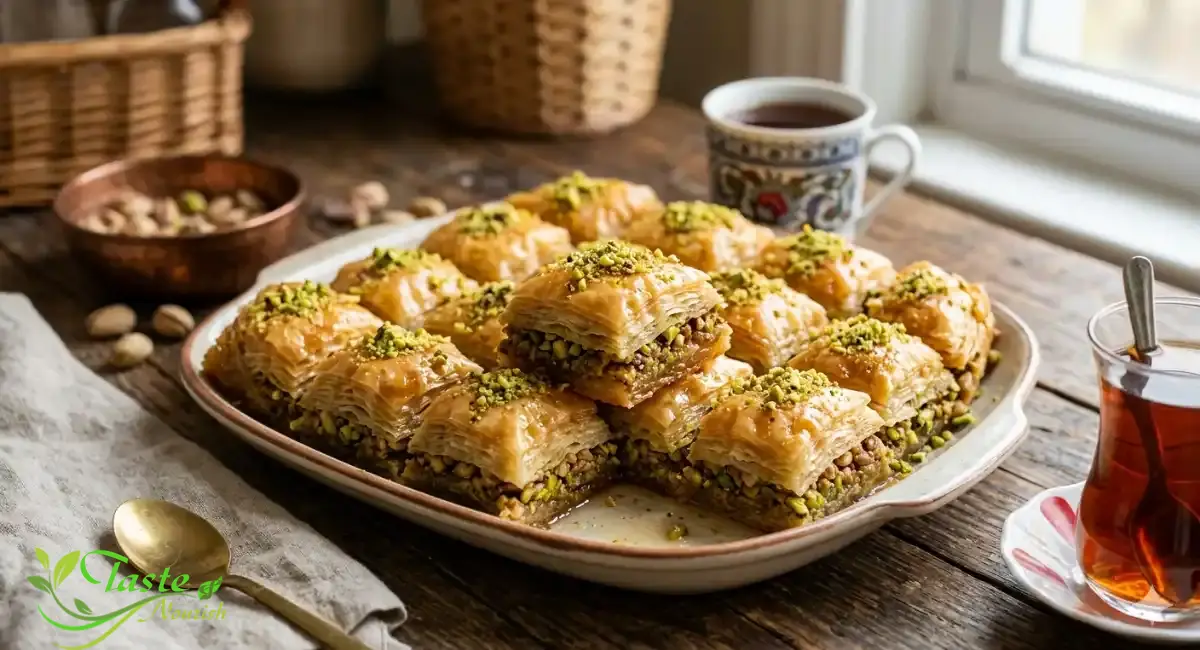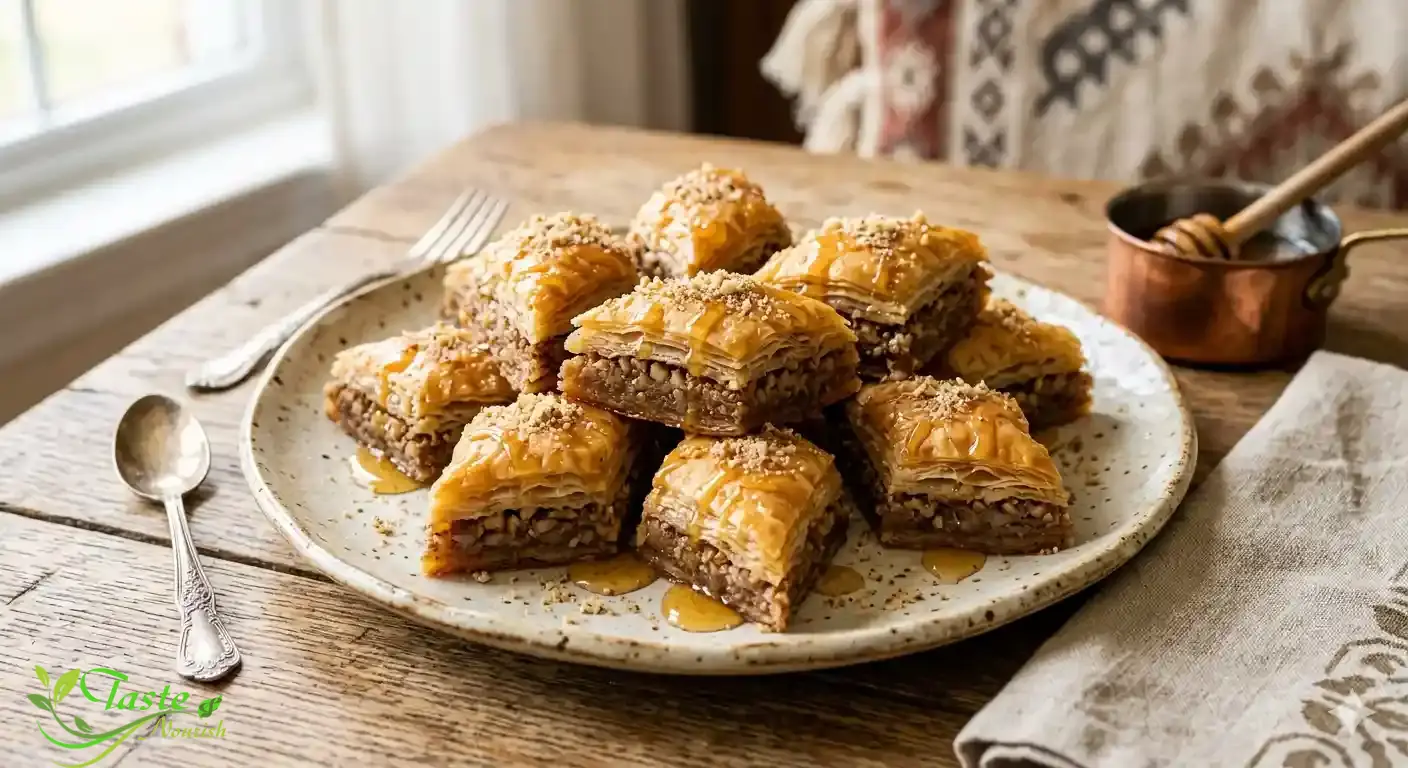

Vegan Baklava: The Ultimate Plant-Based Recipe Guide
Vegan Baklava Recipe | Crispy, Sticky & 100% Plant-Based
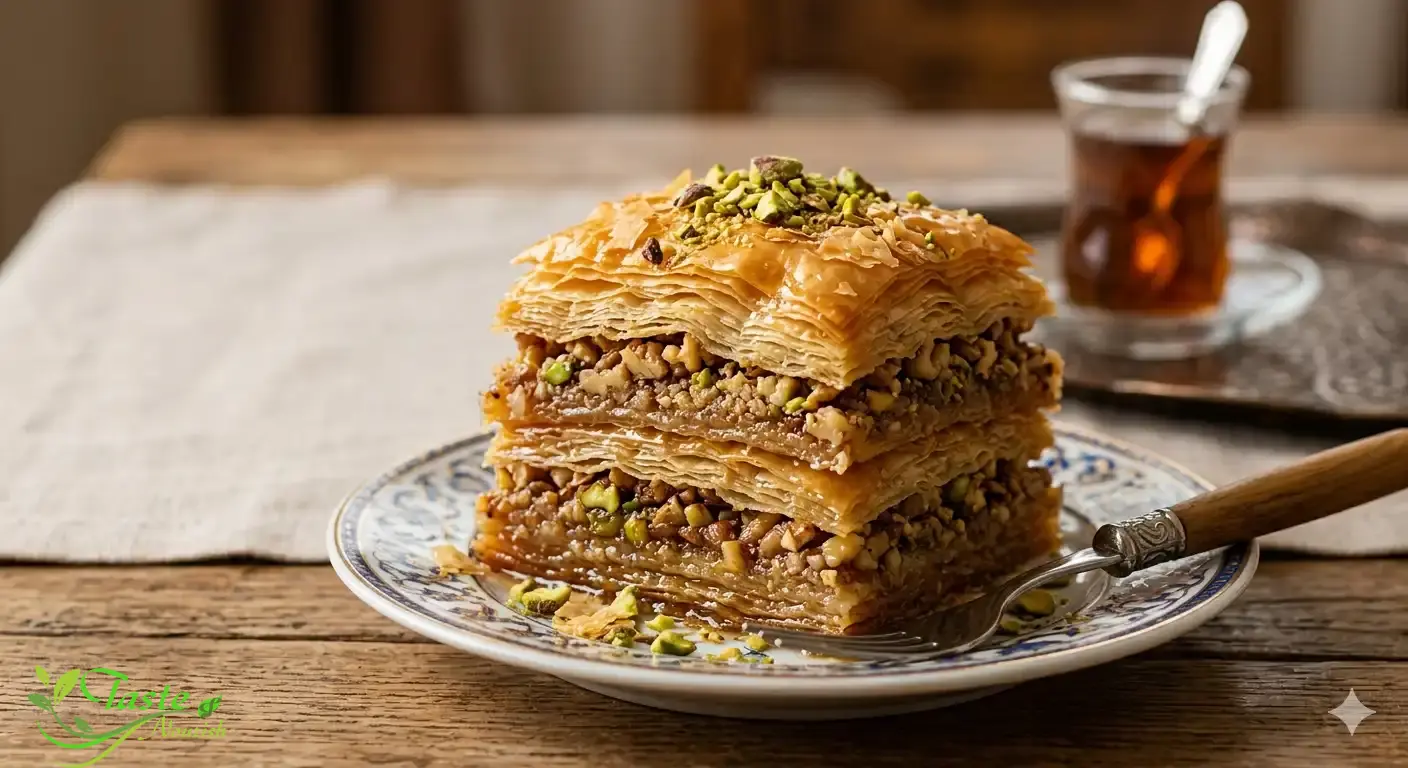
If you’ve ever bitten into a piece of perfectly made baklava — those shattering, honey-drenched layers of crispy pastry packed with fragrant nuts — you already know it’s one of the most dangerously addictive desserts on the planet. But if you follow a plant-based lifestyle, you’ve probably wondered whether this beloved Middle Eastern classic is off the table for you. Spoiler: it absolutely is not.
Vegan baklava is not only possible, it’s arguably just as stunning — and in many cases, even more nuanced in flavor — than the traditional version. This guide covers everything you need to know: the history, the best ingredient swaps, a complete recipe, nutrition facts, regional variations, and expert tips to get it right every single time.
What Is Vegan Baklava — And Why Does It Deserve a Spot on Your Table?
Let’s start with the obvious question. Vegan baklava is simply the plant-based version of one of the world’s most ancient and celebrated pastries, made by replacing two key non-vegan ingredients — butter and honey — with equally delicious plant-derived alternatives. The result is a flaky, sticky, gloriously nutty dessert that carries all of the drama and depth of the original without compromising your dietary values.
What makes this especially exciting is that many of baklava’s core ingredients are already plant-based by nature: the paper-thin phyllo (filo) dough, the spiced nut filling, and the fragrant syrup base are all inherently vegan — only the finishing touches need swapping. This means you’re not reinventing the wheel; you’re simply steering it in a new direction.
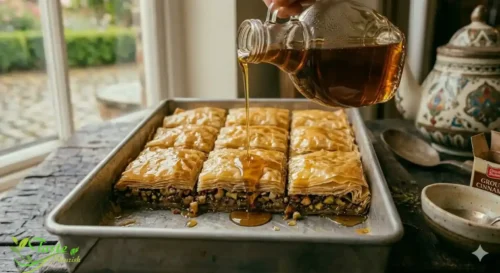
Key Takeaway: The core structure of baklava is already plant-based. Veganizing it requires just two ingredient swaps — butter for a plant-based fat, and honey for a vegan sweetener.
Key Ingredients for the Perfect Vegan Baklava
Getting your ingredients right is honestly 80% of the battle with vegan baklava. The phyllo is delicate, the fats behave differently, and the sweeteners each bring their own personality to the finished dish. Let’s break this down so you know exactly what you’re working with before you start.
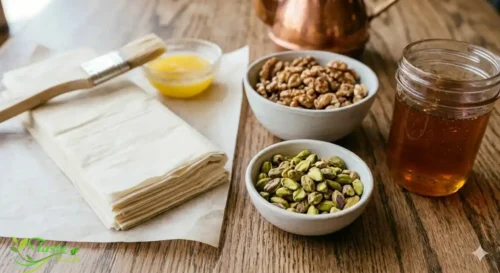
Choosing the Right Phyllo (Filo) Dough
Phyllo dough — also spelled filo — is the foundation of baklava, and the good news is that most commercially available phyllo is already accidentally vegan. It’s made from flour, water, a small amount of oil, and sometimes a touch of vinegar for elasticity.
The major thing to watch out for is that some brands use butter or egg in their formulation, so always read the label carefully before purchasing. You’ll typically find phyllo in the frozen section of most large grocery stores or in specialty Middle Eastern markets.
The most important rule when working with phyllo is to never let it dry out — the moment it’s exposed to air, it becomes brittle and unworkable almost instantly. As soon as you unroll it, make sure to cover the stack of phyllo sheets with a slightly damp (not wet) kitchen towel or plastic wrap. This keeps the dough moist without making it soggy while you build your baklava layers. For those who need a gluten-free option, rice paper spring roll wrappers make a great substitute in a gluten-free version — inspired by the viral TikTok trend of making gluten-free croissants using rice paper — they’re surprisingly easy to work with and create beautiful flaky layers.
The Best Nuts to Use
The nut filling is where you can really express your personality as a baker. You can mix and match pistachios, walnuts, and almonds in whatever ratios you prefer to reach about 2 cups total. Each nut brings something different to the table.
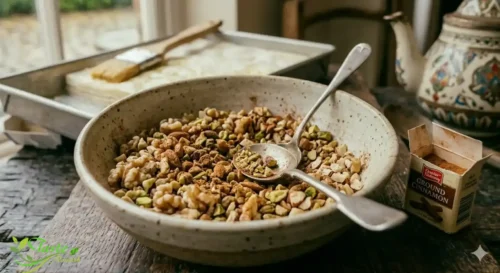
- Walnuts are the most traditional choice in Greek-style baklava, offering an earthy bitterness that beautifully cuts through the sweetness of the syrup.
- Pistachios are preferred in Turkish and Persian traditions, adding a vibrant green color and a slightly buttery, grassy flavor.
- Almonds bring a mild, creamy note that rounds out stronger flavors in a mixed filling.
- Beyond the classics, you can also experiment with pecans, hazelnuts, macadamia nuts, or even cashews for a more contemporary twist.
Whatever you choose, the nuts should be pulsed in a food processor to a coarse, crumbly texture — not a fine powder, not whole pieces — because you want that slightly chunky bite that gives the filling both structure and chew.
Nut Comparison Table:
| Nut | Flavor Profile | Best Used In | Texture in Filling |
|---|---|---|---|
| Walnuts | Earthy, slightly bitter | Greek-style baklava | Medium crumb |
| Pistachios | Buttery, grassy, rich | Turkish/Persian style | Fine-medium crumb |
| Almonds | Mild, creamy, slightly sweet | Mixed fillings | Fine crumb |
| Pecans | Sweet, caramel-like | Modern/American versions | Medium crumb |
| Hazelnuts | Rich, chocolate-adjacent | Contemporary variations | Fine crumb |
Vegan Butter and Oil Substitutes
This is where most beginners stumble, but it’s simpler than it seems. Melted vegan butter brushed on each sheet of phyllo is the most reliable option — without it, the dough will be very dry; extra virgin olive oil also works well. In terms of vegan butter brands, Miyoko’s Creamery Cultured Vegan Butter is widely regarded by plant-based bakers as the gold standard — it melts, browns, and behaves almost identically to dairy butter.
Earth Balance and Violife are excellent budget-friendly alternatives. If you prefer oil over vegan butter, use a light-tasting olive oil rather than a grassy extra-virgin olive oil; if you only have a very flavorful olive oil, use a 50-50 mixture of olive oil and a neutral vegetable oil like grapeseed to tone down its flavor a little bit.
One important note: you cannot replace butter with oil in all cases — while oil works between layers, vegan butter tends to give the most authentic, flaky result.
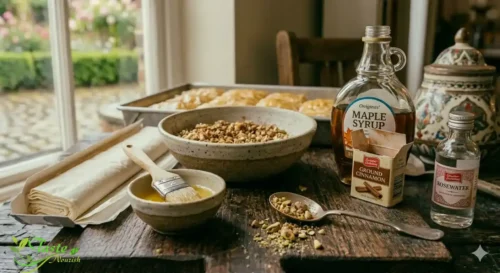
Sweetener Substitutes — Saying Goodbye to Honey
Honey is arguably baklava’s most iconic element — it’s what gives the dessert that viscous, glossy, amber-colored soak that seeps into every layer. Finding a worthy vegan replacement is therefore critical. The good news is that you have several excellent options, each contributing its own flavor personality.
Vegan Sweetener Comparison Table:
| Sweetener | Flavor Notes | Sweetness Level | Best For |
|---|---|---|---|
| Maple Syrup | Warm, caramel, complex | Medium-High | Classic richness |
| Agave Nectar | Mild, neutral, clean | High | Lighter flavor profiles |
| Date Syrup | Deep, molasses-like, fruity | Medium | Traditional Middle Eastern style |
| Coconut Sugar Syrup | Caramel, earthy | Medium | Reduced-sugar versions |
| Vegan Honey (store-bought) | Floral, light, honey-like | High | Closest to traditional |
If you can’t find vegan honey, agave nectar is the simplest substitution; alternatively, dandelion syrup — made with sugar, water, and foraged dandelions — provides a similar floral flavor when in season. Agave is slightly sweeter than maple syrup, so adjust the quantity slightly to accommodate when substituting one for the other.
Step-by-Step Vegan Baklava Recipe
“A crispy, sticky, 100% plant-based version of the classic Middle Eastern baklava made with phyllo dough, mixed nuts, vegan butter, and maple syrup instead of honey — no dairy, no animal products.”
Now that you understand the ingredients and why they work, let’s actually make it. This recipe makes approximately 24 pieces in a standard 9×13 inch baking dish and is designed to be foolproof even for first-time baklava makers.
⏱ Prep Time: 30 minutes • 🔥 Cook Time: 35 minutes • 🍽 Servings: 24 🌱 Vegan
Ingredients:
- 1 lb (450g) phyllo dough, thawed
- ¾ cup (170g) melted vegan butter
- 2 cups mixed nuts (walnuts, pistachios, almonds — your choice)
- 2 tsp ground cinnamon
- ½ tsp ground cardamom
- ¼ tsp ground cloves
- Pinch of salt
For the Vegan Syrup:
- 1 cup water
- 1 cup granulated sugar
- ½ cup maple syrup or agave nectar
- 1 cinnamon stick
- Zest of 1 lemon and 1 orange
- 1 tsp rosewater (optional but incredible)
Preparing the Nut Filling
The first step is building your nut filling, and it’s worth taking your time here because the texture matters enormously. Place your chosen nuts into a food processor and pulse them in short bursts — you’re looking for a coarse, crumbly meal with some variation in size, almost like rough breadcrumbs. Avoid over-processing, because a too-fine powder will make the filling dense and pasty rather than pleasantly textured.
Add your spices and any dates if using, then process again until everything is well combined and the dates are fully incorporated into the nut mixture — then transfer to a bowl near your work station so everything is within reach when you start layering. At this point, taste the filling. It should be fragrant and nutty with a warm spice backbone — if it needs more cinnamon or a pinch of salt, add it now. Correcting the filling at this stage is infinitely easier than trying to adjust flavor once the baklava is assembled and baked.
Layering and Baking
The layering process is where baklava gets its reputation for being intimidating — but here’s thetruth:
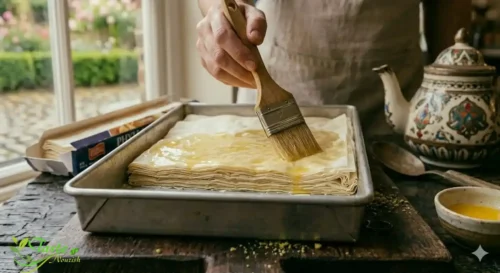
- it’s methodical, not difficult. Think of it like laying tiles. Preheat your oven to 350°F (175°C). Brush your baking dish generously with melted vegan butter to prevent sticking.
- Now begin laying your phyllo sheets one at a time, brushing each sheet with vegan butter before placing the next one on top. After you’ve laid approximately 8–10 sheets, spread an even layer of your nut filling across the surface.
- Continue with more buttered phyllo sheets — around 5–6 more — then another layer of filling, and repeat until you’ve used all your filling. Finish with a top layer of 8–10 buttered phyllo sheets.
- Before baking, use a sharp knife to cut through all the layers in your desired pattern — diamonds are traditional, but rectangles also work beautifully.
- Bake uncovered for approximately 25–28 minutes, or until nicely browned on top.
Step-by-Step Layering Order:
- Brush pan with vegan butter
- Layer 8–10 sheets of phyllo, buttering each one
- Spread ½ of the nut filling evenly
- Layer 5–6 more buttered phyllo sheets
- Spread the remaining nut filling
- Top with final 8–10 buttered phyllo sheets
- Score into diamonds before baking
- Bake at 350°F for 25–28 minutes until golden
Making the Vegan Syrup
The syrup is what transforms baked phyllo-and-nut layers into the sticky, indulgent masterpiece that baklava is known for, so don’t rush it.
- Start by making your syrup so that it has time to cool while the vegan baklava bakes — add all syrup ingredients to a small saucepan, bring to a boil, then immediately reduce to a steady simmer; cook for 15–20 minutes, or until reduced in volume and thick enough to coat the back of a spoon.
- Remove the cinnamon stick and citrus zest, and if you’re using rosewater, stir it in now off the heat — heat destroys the delicate floral aroma.
- The critical timing rule that most beginners get wrong: pour cold syrup over hot baklava, or hot syrup over room-temperature baklava — never hot syrup over hot baklava. When hot meets hot, the phyllo steams and becomes soggy rather than soaking the syrup up cleanly.
- Pour the syrup evenly over the baked baklava immediately after removing it from the oven, getting some into all of the different cuts so that it soaks through to the bottom.
- Then walk away.
- Patience is the final ingredient.
Vegan Baklava Nutrition Facts
Baklava is unquestionably an indulgent treat, but it’s worth understanding what you’re actually eating — because the story is more nuanced than “it’s just sugar.” The nuts at the heart of every piece are genuinely nutritious, providing healthy fats, plant-based protein, and a range of micronutrients. The vegan version also eliminates cholesterol entirely (since there’s no dairy butter or honey), which makes it marginally healthier than its traditional counterpart for those monitoring cardiovascular health.
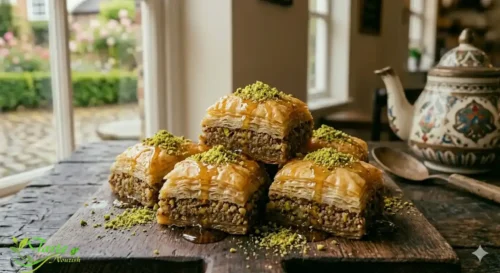
Vegan Baklava Nutrition Facts (Per Piece, approx. 40g):
| Nutrient | Amount Per Piece |
|---|---|
| Calories | ~245 kcal |
| Carbohydrates | 26–31g |
| Protein | 3–4g |
| Total Fat | 13–16g |
| Saturated Fat | 1–3g |
| Fiber | 2g |
| Sugar | 16–17g |
| Sodium | 114–125mg |
| Potassium | ~100–249mg |
| Iron | ~2mg |
| Calcium | 14–29mg |
Reader Note: Nutrition values will vary depending on the nuts you choose and how much syrup you use. Pistachio-heavy versions will be higher in healthy fats, while walnut-dominant recipes provide more omega-3 fatty acids.
The nuts in baklava — such as pistachios or walnuts — are rich in healthy monounsaturated and polyunsaturated fats, which support heart health; baklava also provides a modest amount of iron, aiding in oxygen transport in the body.
That said, you can make baklava healthier by reducing the amount of sugar in the syrup, using a natural sweetener, and using a heart-healthy oil instead of butter. Enjoy it as what it is — a spectacular occasional indulgence with more nutritional depth than most desserts.
Regional Variations of Vegan Baklava
One of the most fascinating things about baklava is how dramatically it transforms from region to region. Each cultural version has its own personality, its own balance of sweet and spice, and its own philosophical approach to the nut filling. Veganizing these regional styles is entirely possible, and exploring them opens up a genuinely exciting range of flavor experiences.
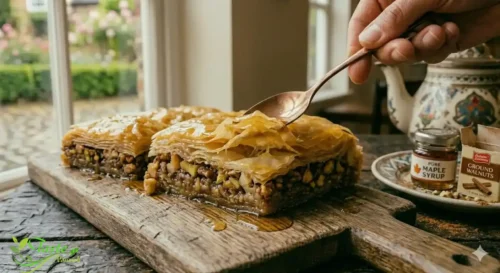
Greek-Style Vegan Baklava
- Greek baklava is perhaps the most familiar version to Western palates, and it leans heavily into walnuts and cinnamon as its defining flavor combination.
- The syrup in Greek versions is typically made with a combination of honey (replaced with maple syrup in the vegan version), sugar, water, and a cinnamon stick, producing a darker, richer, more robustly flavored soak.
- Cloves are another common addition, adding a slightly sharp, warming depth that elevates the whole dessert.
- The traditional Greek way of making baklava uses only walnuts — this is the classic approach, and it produces an earthy, satisfying filling with a pleasantly bitter edge that balances the sweet syrup perfectly.
To make a stunning vegan Greek-style baklava, replace butter with Miyoko’s or Earth Balance vegan butter and swap the honey in the syrup for dark maple syrup — Grade A Dark Robust is ideal — which mirrors honey’s depth without the floral lightness.
Turkish-Style Vegan Baklava
Turkish baklava is a completely different beast — lighter, more delicate, more refined. The filling is almost always pistachios, ground to a much finer texture than the coarser fillings of Greek versions, and the syrup is far lighter, often made with nothing more than sugar and water (no additional flavorings), allowing the pure, clean sweetness to showcase the pistachios without competition.
The phyllo layers in Turkish baklava are also typically thinner and more numerous, creating an almost translucent, glass-like shatter when you bite through them.
For the vegan version, use agave nectar or a light vegan honey product in the syrup to maintain that clean, neutral sweetness that defines the Turkish style.
The pistachios should be unsalted and lightly toasted before processing to bring out their natural oils and intensify their flavor.
Persian Pistachio Vegan Baklava
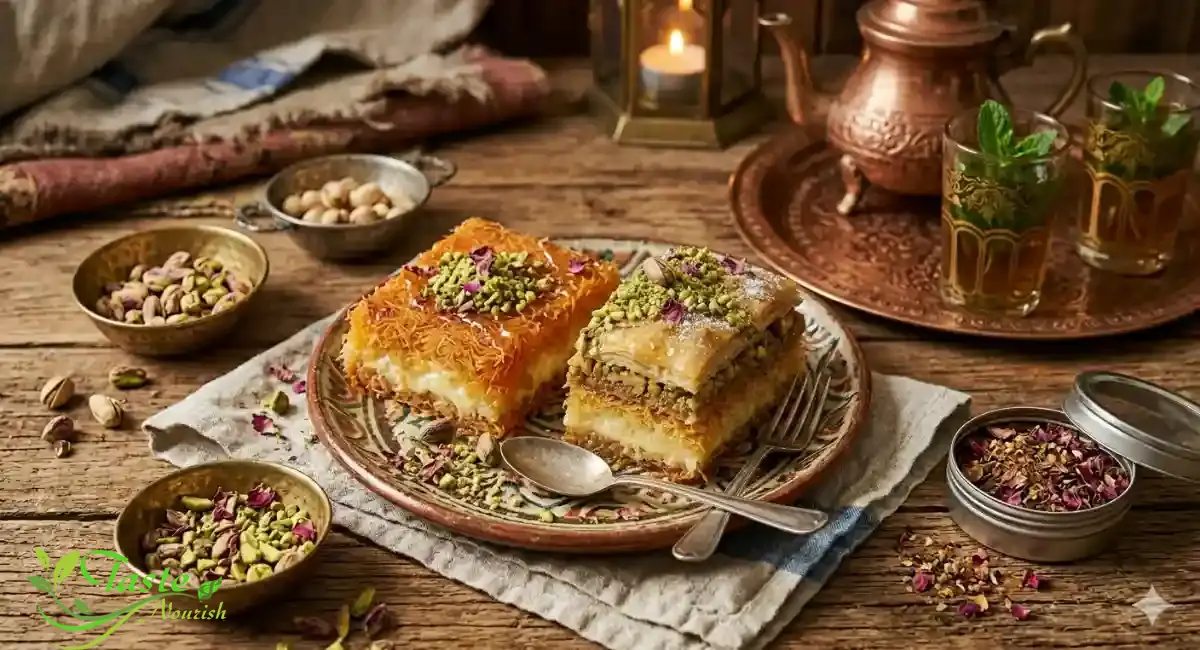
Persian baklava — sometimes called “baklava-e Yazdi” — takes the dessert in an entirely different direction with the generous use of rosewater and cardamom, which transform the flavor profile from simply sweet and nutty into something genuinely perfumed and ethereal.
- The filling typically combines pistachios with almonds, lightly spiced with cardamom, and the syrup is fragrant with rosewater and sometimes saffron, giving the finished pastry a golden hue and an almost intoxicating aroma.
- This version is arguably the easiest to veganize, since the traditional Persian recipe often uses simple sugar syrup rather than honey, and light vegetable oil rather than butter in many regional variations.
If you want to introduce someone to vegan baklava for the first time and genuinely want to impress them, the Persian pistachio version is your best opening argument.
Expert Tips for Baklava That Actually Works
Even the most confident home baker can run into trouble with baklava. Here are the most important practical lessons learned from countless batches — these are the tips that separate good baklava from genuinely great baklava.
4 Essential Tips for Flawless Vegan Baklava:
- Keep phyllo covered at all times. The moment it dries out, it becomes brittle and tears. Use a slightly damp kitchen towel draped over the sheets you’re not currently using, and work quickly and deliberately.
- Score before baking, not after. Cutting through baked baklava cracks and shatters the delicate top layers. Score all the way through — down to the bottom of the pan — before the baklava goes into the oven, then re-trace the cuts once it comes out.
- Be generous with the fat. This is not the time to be cautious about vegan butter. Every single layer of phyllo needs a proper, even brush of fat — skipping this is the most common cause of dry, papery, bland baklava.
- Give it time. Freshly baked baklava soaked in syrup is actually not at its best. It should be soaked in the vegan syrup and left for at least half an hour — but ideally several hours or even overnight — to let the sweet, sticky flavors fully develop and soak in.
4 Common Mistakes to Avoid:
- Using wet hands near the phyllo — moisture causes it to stick and tear
- Pouring hot syrup over hot baklava — this creates steam and sogginess
- Under-buttering the layers — this produces dry, flavorless pastry
- Skipping the resting time — cutting into baklava too early means the syrup hasn’t soaked through fully
Storage, Freezing, and Make-Ahead Tips
Vegan baklava is a genuinely excellent make-ahead dessert, which is part of what makes it so beloved for celebrations and entertaining. Once baked and soaked, it actually improves with time as the flavors meld and the syrup distributes more evenly throughout the layers.
At room temperature in an airtight container, vegan baklava keeps well for up to one week — which means you can make it on Sunday for a Friday dinner party and it will be at peak deliciousness by the time your guests arrive.
Do not refrigerate freshly made baklava unless your kitchen is very warm, as the cold tends to harden the syrup and make the pastry slightly less crispy. Leftovers can keep in an airtight container in the refrigerator for a few days, or can be frozen.
For freezing, wrap individual pieces in plastic wrap and place in a zip-lock bag — they’ll keep for up to 3 months and thaw beautifully at room temperature within 1–2 hours.
Make-Ahead Timeline:
- Up to 1 month before — Make and freeze unbaked assembled baklava (without syrup)
- 2–3 days before — Bake and soak with syrup; store covered at room temperature
- Day before — Ideal — flavors are fully developed and syrup is evenly distributed
- Day of — Garnish with extra crushed pistachios and serve at room temperature
Where to Buy Vegan Baklava
If you’re not up for making it from scratch, vegan baklava is increasingly available both online and in specialty stores. Middle Eastern grocery stores and bakeries are your best starting point — many traditional bakeries use simple sugar syrups and oil-brushed phyllo that are inadvertently vegan, though you should always ask about butter and honey to confirm.
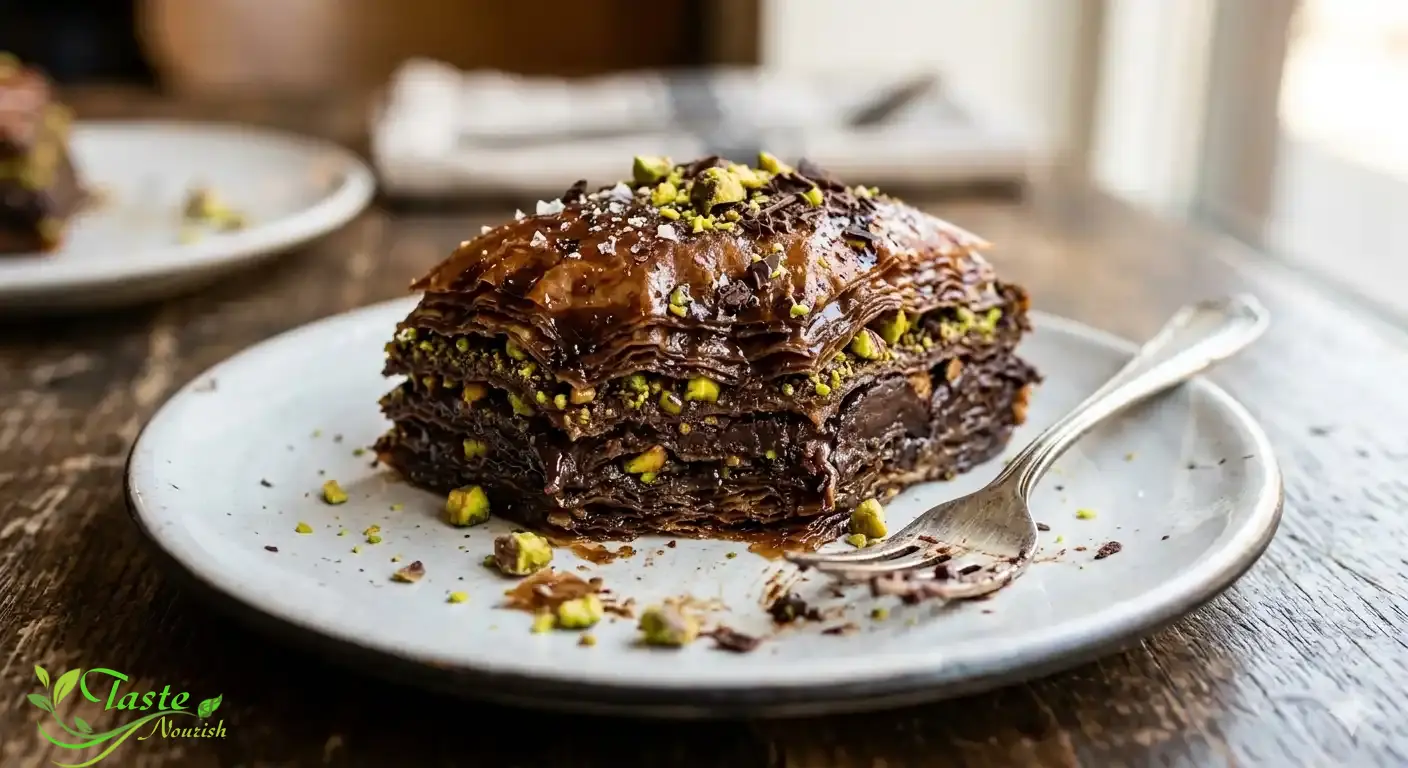
Online, specialty vegan dessert companies and Etsy shops run by small-batch Middle Eastern bakers have become a significant market for plant-based baklava, offering everything from classic walnut-and-cinnamon to pistachio-rosewater to chocolate-hazelnut fusion versions. Whole Foods Market carries several vegan-friendly baklava options in their specialty foods section, particularly in urban locations with large plant-based customer bases. When buying pre-made vegan baklava, always check the ingredient list for clarified butter, ghee, honey, or royal jelly — these are the four animal-derived ingredients most likely to appear in commercial baklava formulations.
The History Behind This Iconic Dessert
Baklava’s origins are passionately debated across multiple cultures — Turkey, Greece, Lebanon, Syria, Iran, and several Balkan nations all claim some ownership over this dessert, and honestly, they all have a point.
The earliest known versions can be traced back to the Ottoman Empire kitchens of the 15th century, where it was reportedly made in imperial palace kitchens and reserved for the wealthy and the military elite.
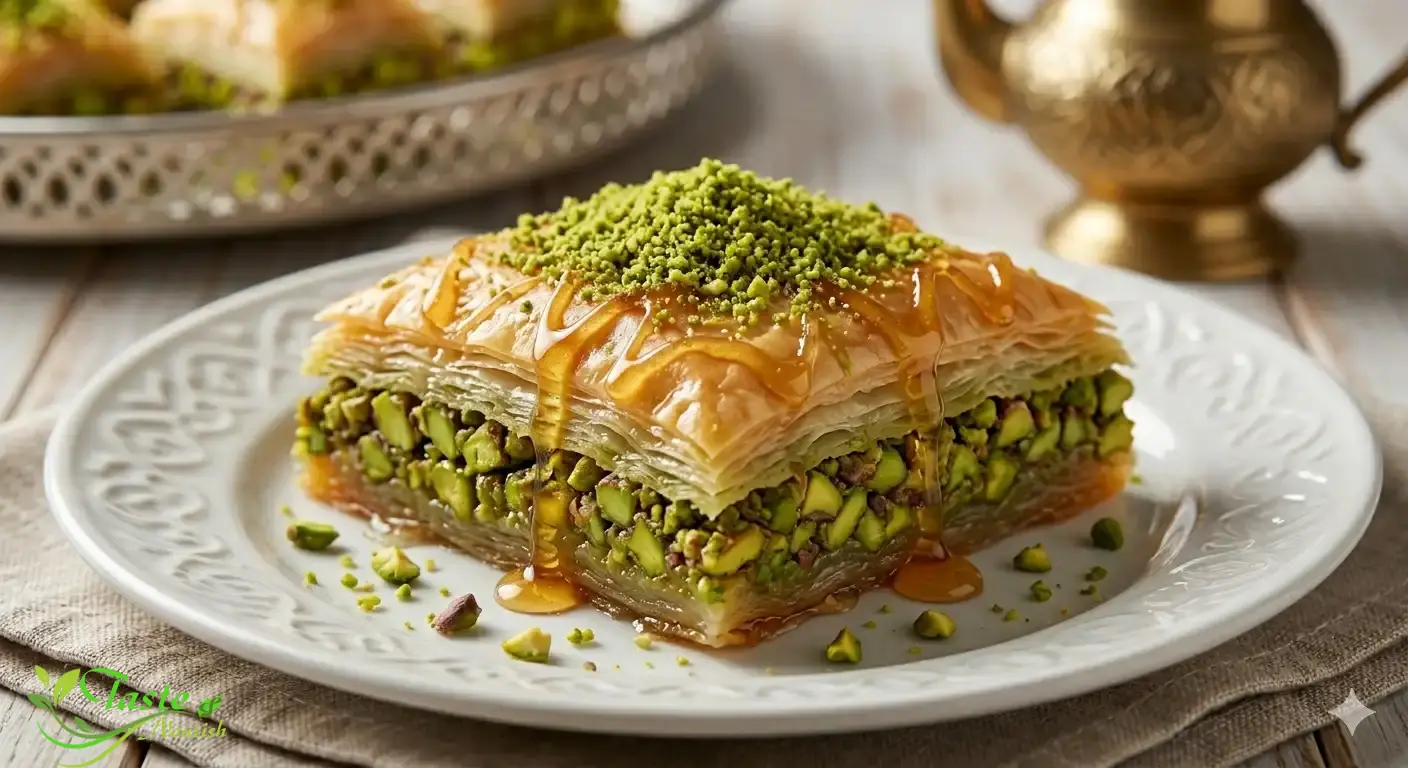
The word “baklava” itself is of Turkish origin, likely derived from the Mongolian word “baγla-” meaning to tie or wrap — a fitting description for its tightly layered structure. Over the centuries, as the Ottoman Empire expanded and contracted, baklava spread across the Middle East, North Africa, and into Southern Europe, with each culture adapting the recipe to its local nuts, spices, and sweeteners. Greek baklava leans toward walnuts and cinnamon, Turkish versions often favor pistachios with a lighter syrup, and Iranian interpretations incorporate rosewater and cardamom for a deeply perfumed experience.
What’s remarkable is that no matter which version you encounter, the fundamental technique — layering ultra-thin pastry sheets with nut filling and finishing it with a sugary soak — has remained essentially unchanged for hundreds of years.
What Makes Traditional Baklava Non-Vegan?
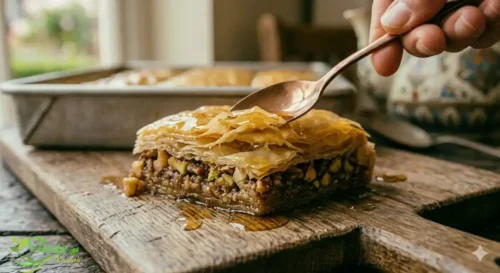
Traditional baklava has two non-vegan elements, and once you understand what they do, you’ll be better equipped to replace them wisely. The first is clarified butter (or regular butter), which is brushed generously between every single layer of phyllo dough. This fat serves a structural and flavor purpose: it prevents the layers from sticking together, helps them crisp up in the oven, and adds a rich, nutty, slightly savory undertone that balances the intense sweetness of the syrup.
The second non-vegan element is honey, which is used as the primary sweetener for the finishing syrup — the liquid that gets poured over the hot-from-the-oven baklava and soaks deep into every crevice. Traditional baklava is not vegan, as it uses dairy butter or ghee and honey — however, vegan-friendly versions can be made with plant-based butter and sweeteners like maple or date syrup. Once you’ve identified these two elements and found appropriate replacements, the rest of the recipe falls into place naturally.
Conclusion
Vegan baklava is one of those rare plant-based adaptations where the result isn’t a pale imitation of the original — it’s genuinely, legitimately, knock-your-socks-off delicious in its own right. By replacing butter with quality vegan alternatives and honey with maple syrup, agave, or date syrup, you preserve everything that makes baklava extraordinary: the architectural layers, the nutty perfumed filling, the deeply sweet soak, and that irreplaceable moment when perfectly crispy pastry shatters between your teeth.
Whether you go Greek with walnuts and cinnamon, Turkish with fine pistachios and light syrup, or Persian with rosewater and cardamom, you’re participating in a centuries-old culinary tradition that was always, at its core, about generosity, celebration, and the simple joy of something beautiful and sweet. Make a pan. Share it with people you love. Let it sit overnight. Then watch it disappear.
Vegan Baklava FAQs
Is regular phyllo dough vegan?
Most commercially available phyllo (filo) dough is accidentally vegan, as it’s typically made from flour, water, oil, and sometimes vinegar. However, some brands do include butter or egg, so always read the ingredient label carefully before purchasing. Brands like Athens and Apollo are generally vegan-friendly, but this can vary by region and production batch.
Can I make vegan baklava without a food processor?
Absolutely. A food processor makes the nut filling faster and more consistent, but you can achieve excellent results by placing the nuts in a zip-lock bag and crushing them with a rolling pin. The key is to aim for a coarse, crumbly texture — some larger pieces are actually desirable, as they give the filling a more interesting bite and visual appeal.
Why is my vegan baklava soggy?
Soggy baklava almost always comes down to one of two problems: either you poured hot syrup over hot baklava (which creates steam and softens the pastry), or you used too much syrup. The golden rule is hot baklava + cold syrup, or room-temperature baklava + warm syrup. Also ensure your baklava was baked long enough to properly golden and crisp up before adding any liquid.
What is the best vegan butter for baklava?
Miyoko’s Creamery Cultured Vegan Butter is widely considered the best option for vegan baklava because it behaves most similarly to dairy butter — it browns, crisps, and flavors the pastry in an almost identical way. Earth Balance Vegan Buttery Sticks are a more affordable and widely available alternative that also produces excellent results. Avoid spreads or whipped vegan butters, as their higher water content can make the phyllo soggy.
Can I make vegan baklava gluten-free?
Yes! Rice paper spring roll wrappers make a surprisingly effective gluten-free substitute for phyllo pastry — inspired by the viral TikTok croissant trend, they create flaky, layered results that hold up beautifully when soaked with syrup. Gluten-free phyllo is also becoming more available in specialist health food stores, though it can be more fragile to work with than rice paper. Rhian’s Recipes