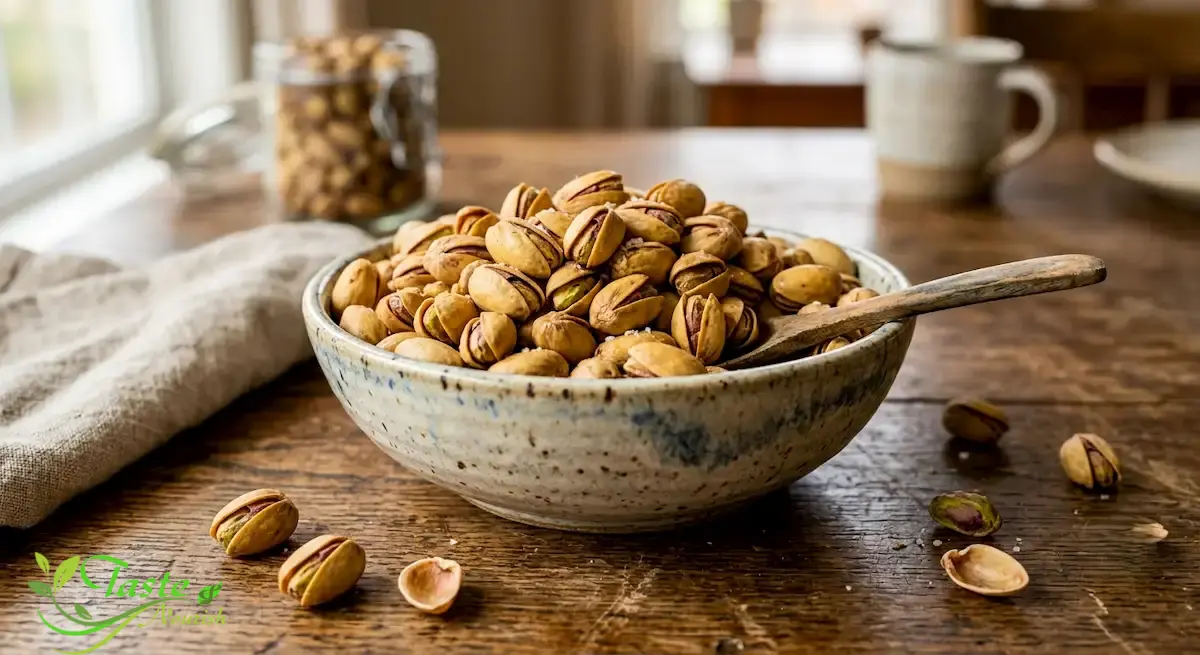
There’s a real difference between the pistachios sitting in a bag at the grocery store and a fresh batch you’ve roasted yourself. Learning how to roast pistachios at home gives you control over the salt level, the toastiness, and the flavor in a way store-bought bags simply can’t match. It also takes less effort than most people expect: a hot oven, a rimmed sheet pan, and about fifteen minutes are all that stand between raw nuts and a warm, fragrant snack.
To roast pistachios, spread raw shelled or in-shell nuts in a single layer on a rimmed baking sheet, toss lightly with oil and salt if desired, and roast at 300°F (150°C) for 12 to 15 minutes, stirring once halfway through. Pull them out when they turn golden and fragrant, then cool completely before serving or storing.
Recipe at a Glance
Detail
Time / Info
Prep Time
5 minutes
Cook Time
12–15 minutes
Total Time
About 20 minutes
Yield
2 cups roasted pistachios (about 8 servings)
Difficulty
Easy
Key Takeaways
The best method for how to roast pistachios at home uses a moderate 300°F oven, since pistachios are high in fat and scorch quickly at higher temperatures.
A light coating of oil helps salt and seasonings stick, but pistachios roast beautifully with no oil at all.
Stirring the nuts halfway through roasting prevents the edges of the pan from browning faster than the center.
Pistachios continue cooking slightly from residual heat after they leave the oven, so it’s better to pull them a shade early than to risk burning them.
Properly roasted and cooled pistachios keep well at room temperature for up to two weeks in an airtight container.
Why You’ll Love This Recipe
Pistachios are already one of the more nutrient-dense nuts you can snack on. A one-ounce serving of raw pistachios delivers roughly 6 grams of protein and about 3 grams of fiber, according to USDA FoodData Central, and they carry more potassium per 100 grams than almonds, cashews, or walnuts, per a nutrient-composition review published in PMC.
Roasting them at home means you decide exactly how much salt goes on, whether you want a plain roast or a spiced one, and you get nuts that taste noticeably fresher than anything that’s been sitting on a shelf for months.
There’s also a practical upside: pre-roasted, pre-salted pistachios from the store are often loaded with more sodium than you’d choose for yourself. Roasting your own lets you season lightly, skip the salt entirely, or lean into a savory or sweet variation instead.
Ingredients
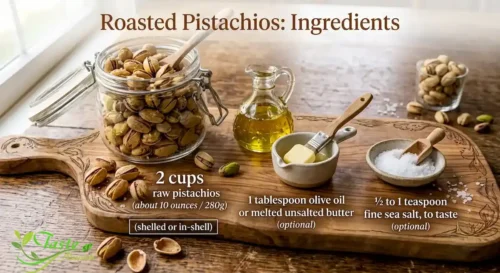
2 cups raw pistachios (about 10 ounces / 280g), shelled or in-shell
1 tablespoon olive oil or melted unsalted butter (optional)
½ to 1 teaspoon fine sea salt, to taste (optional)
Ingredient Notes and Substitutions
Raw, unsalted pistachios give you the most control, but this method also works with pistachios labeled “raw in-shell,” which are common around the holidays. If you only have already-roasted, unsalted pistachios, you can still warm them briefly to refresh their crunch and aroma — just cut the time to 5 to 7 minutes to avoid over-toasting.
The oil is optional and mainly serves two purposes: it helps salt cling to the shells or kernels, and it gives the finished nuts a slightly glossier, richer bite. If you’re avoiding added fat, dry-roasting works fine; pistachios have enough natural oil to toast well on their own. Butter adds a slightly nuttier, more savory flavor than olive oil and pairs especially well with the herb variation below.
Kitchen Tools Needed
Rimmed baking sheet (a rim keeps stray nuts from rolling off)
Parchment paper, for easier cleanup
Large mixing bowl, for tossing with oil and salt
Wire cooling rack
How to Roast Pistachios in the Oven: Step-by-Step Instructions
Preheat your oven to 300°F (150°C). This lower, gentler temperature matters more than it might seem to: pistachios are roughly two-thirds fat by weight, and that fat makes them prone to burning fast at higher heat.
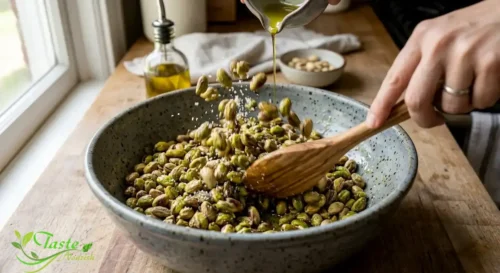
Line a rimmed baking sheet with parchment paper. If you’re using oil and salt, toss the pistachios with them in a mixing bowl first, until each nut is lightly coated. Spread the pistachios in a single, even layer on the sheet — crowding them causes uneven roasting, since the nuts underneath steam instead of toast.
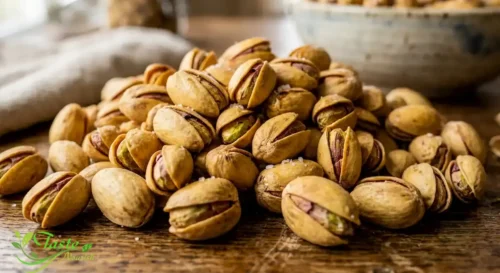
Roast for 12 to 15 minutes, pulling the pan out around the 7-minute mark to stir the nuts and redistribute them. You’re watching for a shift from pale green-gold to a deeper golden-brown, along with a warm, toasty aroma that’s noticeably stronger than when they went in. In-shell pistachios take slightly longer to show visible color change, since the shell insulates the kernel, so rely on smell and the 12- to 15-minute window as your primary cues.
Remove the sheet and let the pistachios cool directly on the pan for 2 to 3 minutes, then transfer them to a wire rack to finish cooling completely, about 15 minutes. If you’re salting after roasting rather than before, do it while the nuts are still warm — the residual oil on the surface helps the salt stick.
Expert Cooking Tips
Taste-test at the 10-minute mark. Ovens vary, and pistachios go from perfectly toasted to bitter faster than most nuts.
Salt after roasting for the cleanest flavor. Salting before can sometimes draw out moisture and slightly soften the exterior; salting warm nuts right out of the oven keeps them crisper.
Use a light hand with oil. A single tablespoon is enough to coat 2 cups of nuts — more than that leaves them greasy rather than crisp.
Let them cool before judging texture. Pistachios firm up as they cool, so a batch that seems slightly soft straight from the oven is often perfectly done once cooled.
Common Mistakes to Avoid
Mistake
Why It Happens
The Fix
Roasting at too high a temperature
Pistachios’ high fat content makes them scorch quickly above 325°F
Stick to 300°F and check a few minutes early
Skipping the mid-roast stir
Nuts near the edges of the pan brown faster than those in the center
Stir or shake the pan once around the halfway point
Crowding the pan
Overlapping nuts trap steam instead of roasting evenly
Spread pistachios in a single, uncrowded layer
Storing them warm
Residual heat creates trapped moisture, which softens the nuts
Cool completely on a rack before sealing in a container
Salting before roasting with no oil
Salt has nothing to cling to and mostly falls off
Toss with a little oil first, or salt immediately after roasting
Recipe Variations
Once you’ve got the base method for how to roast pistachios down, it’s easy to build on it:
Spicy roasted pistachios: Toss with oil, salt, and ¼ teaspoon cayenne or smoked paprika before roasting.
Rosemary-garlic pistachios: Use melted butter instead of oil, and toss with ½ teaspoon finely chopped fresh rosemary and a small pinch of garlic powder before roasting.
Maple-cinnamon pistachios: Skip the oil and salt; toss warm roasted pistachios with 1 tablespoon maple syrup and a pinch of cinnamon, then return to the oven for 2 to 3 minutes to set.
Citrus-salt pistachios: Toss with oil, salt, and ½ teaspoon finely grated lemon or orange zest after roasting, so the zest stays bright rather than drying out in the oven.
Serving Suggestions
Warm, salted roasted pistachios are a natural fit for a cheese board alongside a soft goat cheese or manchego. They also add crunch scattered over an arugula salad with shaved parmesan, stirred into plain yogurt or oatmeal, or crushed and pressed onto the rim of a cocktail glass. For something more substantial, roughly chop them into a pesto in place of pine nuts, or fold them into a batch of granola during the last few minutes of baking.
Nutrition Information
The following values are estimates for roasted, unsalted pistachios and can vary based on the exact amount of oil and salt used. Data is drawn from USDA FoodData Central.
Nutrient
Amount per 1 oz serving (28g, about 49 kernels)
Calories
~162 kcal
Total Fat
13g
Saturated Fat
1.6g
Carbohydrates
8g
Dietary Fiber
2.9g
Sugars
2.2g
Protein
6g
Potassium
286mg
Sodium (unsalted)
~2mg (salted versions run closer to 120mg)
Pistachios are also one of the nuts included in an FDA-recognized qualified health claim, which notes that eating 1.5 ounces of most nuts daily, as part of a diet low in saturated fat and cholesterol, may reduce the risk of heart disease. This is supportive, not conclusive, evidence, and it isn’t a substitute for individualized medical or dietary advice. The Harvard T.H. Chan School of Public Health similarly points to research linking regular nut consumption with a lower risk of heart attack and stroke.
If you’re wondering whether roasting undoes any of these benefits, research is reassuring on that front. A review of nut-roasting studies published in PMC found that while roasting can reduce antioxidant activity in some nuts like hazelnuts and walnuts, pistachios tend to hold their antioxidant activity steady, and in some cases it even increases slightly after roasting.
Storage Instructions
Once fully cooled, store roasted pistachios in an airtight container at room temperature for up to 2 weeks. For longer storage, refrigerate for up to 1 month, or freeze in a sealed bag or container for up to 3 months. Because pistachios are high in unsaturated fat, they can turn rancid faster in warm or humid conditions, so a cool, dry pantry or the refrigerator is a safer bet if you don’t plan to finish them quickly.
To refresh pistachios that have softened slightly in storage, spread them on a baking sheet and warm at 300°F for 3 to 5 minutes, then cool before serving again.
Make-Ahead Tips
Roasted pistachios hold up well as a make-ahead snack or gift. Roast a double batch, divide it once cooled, and store portions in small airtight jars — they’re a natural fit for holiday gifting or grazing boards prepped a day or two in advance. If you’re adding them to a recipe like granola or a salad, roast and cool them fully before folding them in, since warm nuts can wilt greens or clump into baked mixtures.
An easy oven method for roasting pistachios at home, yielding perfectly golden, crunchy nuts in about 15 minutes.
Ingredients
2 cups raw pistachios (about 10 ounces / 280g), shelled or in-shell
1 tablespoon olive oil or melted unsalted butter (optional)
1/2 to 1 teaspoon fine sea salt, to taste (optional)
Directions
Preheat the oven to 300°F (150°C). This gentler temperature helps prevent the pistachios' natural oils from burning.
Toss the pistachios with oil and salt if using, then spread them in a single, even layer on a parchment-lined, rimmed baking sheet.
Roast for 12 to 15 minutes, stirring once around the 7-minute mark, until golden-brown and fragrant.
Let the pistachios cool on the pan for a few minutes, then transfer to a wire rack to cool completely. Add salt now if seasoning after roasting.
How to Roast Pistachios Recipe FAQs
Do I need to roast pistachios if they’re already labeled “roasted” at the store?
No, but a short 5- to 7-minute warm-up at 300°F can revive their crunch and aroma if they’ve been sitting for a while, especially if they’ve softened slightly in storage.
Can I roast pistachios in the shell?
Yes. In-shell pistachios roast the same way, though the shell insulates the kernel slightly, so lean on smell and the full 12- to 15-minute window rather than visible color as your main cue for doneness.
What’s the best oven temperature for roasting pistachios?
300°F (150°C) is the sweet spot. Pistachios’ high fat content means they can go from golden to burnt quickly at higher temperatures, especially past 325°F.
How do I know when roasted pistachios are done?
Look for a shift to a deeper golden-brown color and a strong, warm, toasted aroma. Pistachios also firm up as they cool, so a slightly soft texture straight from the oven is normal and not a sign they need more time.
Can I roast pistachios in an air fryer?
Yes. Air fry raw pistachios at 300°F for 6 to 8 minutes, shaking the basket halfway through, and check a minute or two early since air fryers tend to roast faster than a conventional oven.
Why did my roasted pistachios come out soft instead of crunchy?
This is usually a sign they were pulled from the oven too early, or stored before they’d cooled completely, which traps moisture inside the container. Let them cool fully on a rack before sealing them away.
Conclusion
Once you’ve walked through how to roast pistachios a single time, it becomes one of those simple techniques you’ll return to often — for snacking, for gifting, or for adding crunch to whatever you’re cooking that week. The one detail worth remembering above all else: keep the heat moderate and check early, since pistachios move from perfectly toasted to burnt faster than most nuts.
“The Effect of Roasting on the Health-Promoting Components of Nuts Determined on the Basis of Fatty Acids, Polyphenol Compounds, and Antioxidant Capacity.” PMC, National Library of Medicine. https://pmc.ncbi.nlm.nih.gov/articles/PMC12693215/
Hanan Abo Samra is the founder of Taste & Nourish, sharing trustworthy nutrition guidance and recipes drawn from 20+ years of hands-on cooking experience. When she's not developing new recipes, Hanan is researching the science behind everyday ingredients to bring readers practical, evidence-based guidance for a healthier lifestyle.