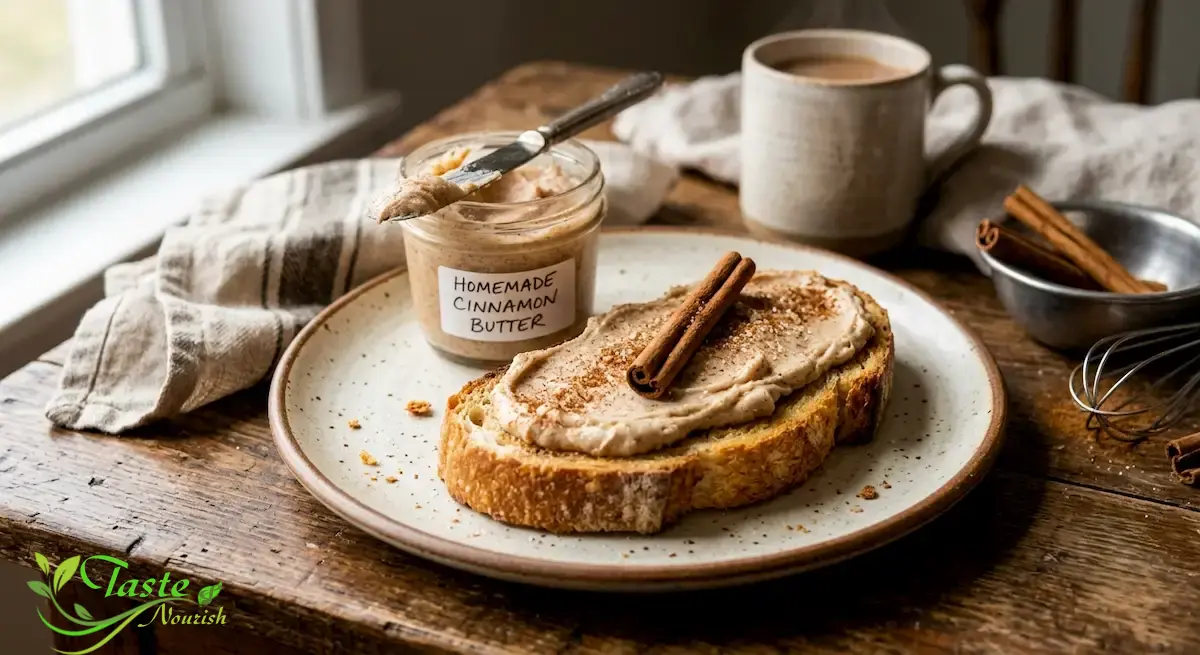
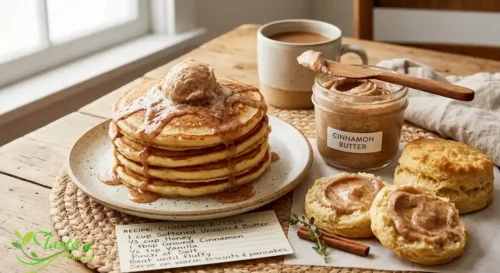
Some recipes earn a permanent spot in the fridge, and this one does it in under ten minutes. This cinnamon butter recipe turns two sticks of softened butter into a warmly spiced, honey-sweetened spread that makes ordinary toast, biscuits, and pancakes taste like something you’d order at a diner known for its bread basket. There’s no cooking involved, no special equipment required, and the ingredient list is short enough to memorize.
What makes this version worth bookmarking is the balance: enough honey to round out the cinnamon without turning the butter into candy, and a pinch of salt that keeps every bite from tasting flat. Once you’ve made it once, you’ll understand why it disappears from the fridge faster than plain butter ever did.
This cinnamon butter recipe blends softened unsalted butter with honey, ground cinnamon, vanilla, and a pinch of salt until smooth and fluffy. It takes about 10 minutes with no cooking required, yields roughly 1½ cups, and keeps well in the refrigerator for spreading on toast, biscuits, pancakes, or cornbread.
Recipe at a Glance
Prep time: 10 minutes
Cook time: None (no-cook recipe)
Total time: 10 minutes (plus optional 30-minute chill)
Yield: About 1½ cups (20 servings, 1 tablespoon each)
Difficulty: Easy
Key Takeaways
This cinnamon butter recipe comes together with just five ingredients and a hand mixer, whisk, or sturdy fork.
Room-temperature butter is the single most important factor for a smooth, lump-free spread.
Honey adds sweetness and moisture, but maple syrup or brown sugar both work as swaps.
Ground cinnamon contains natural antioxidant compounds, though the amount in a single serving of this spread is far smaller than the doses used in clinical research.
Stored airtight in the refrigerator, this spread holds its flavor and texture for about two weeks.
Why You’ll Love This Recipe
Compound butters have a reputation for feeling fussy, but this one isn’t. There’s no chopping, no reduction on the stove, and no waiting for anything to cool. You cream, you mix, you taste, you’re done.
It’s also flexible. The base ratio of butter to honey to cinnamon works whether you’re making a small batch for two people or tripling it for a holiday brunch. And because cinnamon has long been valued in cooking for both flavor and its natural compounds, a spoonful of this butter does more for a slice of toast than sugar alone ever could. Harvard Health Publishing notes that cinnamon is one of the most extensively studied culinary spices, prized for centuries as much for its warmth on the palate as for its place in traditional cooking.
Ingredients
Ingredient
Amount
Notes
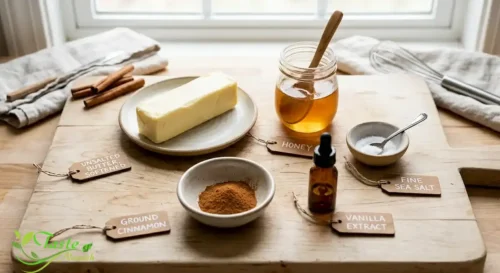
Unsalted butter, softened
1 cup (2 sticks)
Room temperature, about 65–68°F, so it creams smoothly
Honey
1/3 cup
Use a pourable, unstuck honey for easiest mixing
Ground cinnamon
2 teaspoons
Ceylon or cassia both work; see notes below
Vanilla extract
1/2 teaspoon
Rounds out the sweetness
Fine sea salt
1/4 teaspoon
Balances the honey; skip if using salted butter
Ingredient Notes and Substitutions
Butter: Unsalted butter gives you full control over seasoning. If you only have salted butter on hand, that’s fine — just omit the added salt and taste before adjusting.
Honey: Raw or regular honey both work. If your honey has crystallized, warm the jar briefly in a bowl of hot water until it pours smoothly again before measuring.
Cinnamon:Cassia cinnamon (the common grocery-store variety) has a bolder, spicier flavor, while Ceylon cinnamon is milder and slightly citrusy. Either works here, though the National Center for Complementary and Integrative Health notes that cassia cinnamon contains more coumarin than Ceylon cinnamon, a compound that can be a concern in large amounts — not a factor at the small quantities used in a spread like this one.
Sweetener swap:Maple syrup can replace honey in equal amounts for a different flavor profile; this is a genuine equivalent, not a compromise. Brown sugar works too, but it won’t blend in as smoothly and will leave a slightly grainy texture — a trade-off worth knowing before you swap.
Kitchen Tools Needed
Hand mixer or stand mixer (a sturdy fork or whisk works if mixing by hand)
Medium mixing bowl
Rubber spatula
Airtight container or small jar for storage
How to Make Cinnamon Butter
Soften the butter. Let butter sit at room temperature for 45–60 minutes until it gives easily when pressed but hasn’t started to look shiny or greasy. It should hold its shape, not slump.
Beat until fluffy. In a medium bowl, beat the butter alone for about 1 minute, until it lightens in color and looks slightly airy.
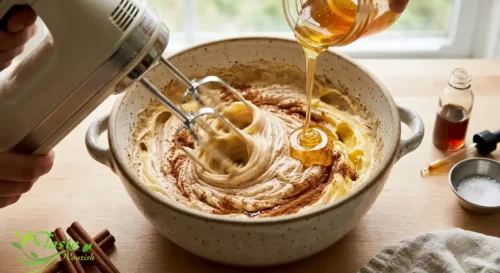
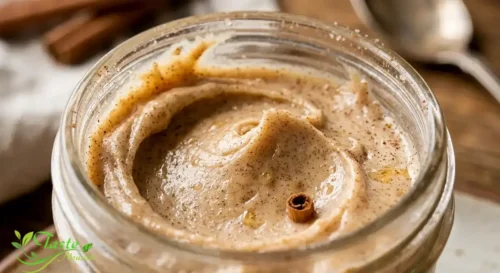
Add the rest. Add the honey, cinnamon, vanilla, and salt. Beat on medium speed for 1–2 minutes, scraping down the sides once, until the mixture is smooth, pale, and streak-free.
Taste and adjust. Take a small taste on a spoon or cracker. Add a pinch more cinnamon or salt if it tastes flat, or a touch more honey if you want it sweeter.
Chill briefly, if needed. If the butter looks loose or soft after mixing, refrigerate it, uncovered, for 20–30 minutes to firm up before transferring to a storage container.
Store. Spoon into an airtight container or roll into a log using parchment paper for easy slicing.
Expert Cooking Tips
Watch the butter’s temperature closely. Butter that’s too cold won’t incorporate the honey evenly, leaving streaks; butter that’s started to melt will turn the mixture oily and separated rather than fluffy.
Sift lumpy cinnamon first. If your cinnamon has clumped in the jar, press it through a fine sieve before adding it — clumps won’t fully break down during mixing and can leave gritty bites.
Whip longer for a lighter texture. An extra minute of beating incorporates more air, giving the spread a lighter, more spreadable texture straight from the fridge.
Taste before you commit to more honey. Honey brands vary widely in sweetness and floral intensity — start with the full amount, taste, then adjust rather than eyeballing extra from the start.
Common Mistakes to Avoid
Mistake
Why It Happens
The Fix
Butter is lumpy and won’t blend
Butter was too cold or unevenly softened
Let it sit longer at room temperature, or microwave in 5-second bursts, checking each time
Mixture looks oily or split
Butter partially melted during softening or mixing
Chill the bowl for 10 minutes, then re-beat; avoid microwaving butter until fully liquid
Spread tastes flat
Salt was skipped or honey was under-measured
Add a small pinch of salt and re-taste before adding more sweetener
Texture is gritty
Cinnamon was clumped or honey had crystallized
Sift cinnamon and gently warm crystallized honey before mixing
Butter is too soft to spread neatly
Over-softened butter or too much honey
Refrigerate 20–30 minutes before serving to firm it back up
Recipe Variations
Maple cinnamon butter: Replace honey with pure maple syrup for a deeper, autumnal flavor that pairs especially well with waffles.
Whipped cinnamon honey butter: Beat the finished mixture for an extra 2–3 minutes on high speed for a lighter, mousse-like texture that spreads even on cold toast.
Brown sugar cinnamon butter: Swap honey for 1/3 cup packed brown sugar for a caramel-toned spread with a bit more texture.
Cream cheese cinnamon butter: Replace half the butter with softened cream cheese for a tangier spread that’s especially good on bagels.
Pumpkin spice butter: Add 1/4 teaspoon pumpkin pie spice along with the cinnamon for a fall-leaning version.
Serving Suggestions
This spread shines anywhere warm bread meets a knife: toast, biscuits, cornbread, dinner rolls, and pancakes or waffles are the obvious starting points. It also melts beautifully over baked sweet potatoes, stirred into hot oatmeal, or spread on a grilled peach half for a quick dessert. For a holiday table, set it out in a small ramekin alongside a bread basket — it tends to disappear before the butter dish does.
Nutrition Information
Values are approximate estimates per 1-tablespoon serving, calculated using standard ingredient data from the USDA FoodData Central database, and will vary based on the specific brands used.
Nutrient
Amount per Serving
Calories
~98 kcal
Total Fat
~9 g
Saturated Fat
~5.5 g
Carbohydrates
~5 g
Sugars
~4.5 g
Sodium
~30 mg
This spread is a source of concentrated fat and natural sugars, so it’s best enjoyed as a flavorful topping rather than a base ingredient. Cinnamon itself contributes negligible calories at these amounts, though research on cinnamon’s effects on blood sugar and lipid markers generally uses supplement-level doses of a gram or more per day — a recent umbrella review of clinical trials found associations between concentrated cinnamon supplementation and improved fasting glucose and lipid profiles, far more than what’s present in a spoonful of this spread.
Storage Instructions
Refrigerator: Store in an airtight container for up to 2 weeks. Because this butter contains honey and no preservatives, refrigeration is recommended rather than leaving it at room temperature for extended periods.
Freezer: Roll into a log in parchment paper, wrap tightly in plastic, and freeze for up to 3 months. Slice off portions as needed — there’s no need to thaw the whole log.
Reheating/Softening: This spread is meant to be served cold or at cool room temperature, not reheated. If it’s too firm to spread straight from the fridge, let it sit out for 10–15 minutes, or microwave a small portion for 5–10 seconds.
Make-Ahead Tips
This cinnamon butter recipe is genuinely better made a day ahead — the flavors settle and the honey distributes more evenly throughout the butter overnight. It also freezes well, so doubling the batch for holiday breakfasts or gifting is a practical option.
This cinnamon butter recipe blends softened unsalted butter with honey, ground cinnamon, vanilla, and a pinch of salt until smooth and fluffy. It takes about 10 minutes with no cooking required and keeps well in the refrigerator for spreading on toast, biscuits, pancakes, or cornbread.
Ingredients
1 cup (2 sticks) unsalted butter, softened
1/3 cup honey
2 teaspoons ground cinnamon
1/2 teaspoon vanilla extract
1/4 teaspoon fine sea salt
Directions
Let butter sit at room temperature for 45–60 minutes until it gives easily when pressed but hasn't started to look shiny or greasy.
In a medium bowl, beat the butter alone for about 1 minute, until it lightens in color and looks slightly airy.
Add the honey, cinnamon, vanilla, and salt. Beat on medium speed for 1–2 minutes, scraping down the sides once, until smooth, pale, and streak-free.
Take a small taste and add a pinch more cinnamon or salt if it tastes flat, or a touch more honey if you want it sweeter.
If the butter looks loose or soft after mixing, refrigerate it, uncovered, for 20–30 minutes to firm up before transferring to a storage container.
Spoon into an airtight container or roll into a log using parchment paper for easy slicing.
Cinnamon Butter Recipe FAQs
Can I use salted butter instead of unsalted?
Yes. Simply omit the added salt in the recipe and taste before serving; you can always add a small pinch back in if it needs it.
Why did my cinnamon butter turn out grainy?
This usually happens when the cinnamon was clumped before mixing or the honey had crystallized. Sift the cinnamon and gently warm crystallized honey before combining.
Can I make this dairy-free or vegan?
Yes. Substitute a plant-based butter stick (not a tub-style spread, which contains more water) and swap honey for maple syrup or agave for a fully vegan version.
Is honey in this recipe safe for babies?
No. Honey should never be given to children younger than 12 months in any form, including baked into food, because of the risk of infant botulism. The CDC advises against feeding honey or products made with it to infants under one year old. This spread is intended for older children and adults.
Can I use a different sweetener?
Maple syrup swaps in at an equal amount with no real trade-off in texture. Brown sugar works too, but expect a slightly grainier finish rather than the same silky consistency.
How long does homemade cinnamon butter last?
About 2 weeks refrigerated in an airtight container, or up to 3 months frozen.
Can I double this recipe?
Yes, this recipe scales easily. Double or triple all ingredients proportionally; mixing time stays about the same.
Conclusion
Once you’ve made this cinnamon butter recipe, plain butter starts to feel like it’s missing something. Keep a batch in the fridge, and toast, biscuits, and pancake mornings get a little better without any extra effort.
National Center for Complementary and Integrative Health. “Cinnamon: Usefulness and Safety.” National Institutes of Health. https://www.nccih.nih.gov/health/cinnamon
“The effects of cinnamon on patients with metabolic diseases: an umbrella review of meta-analyses of randomized controlled trials.” PMC, National Institutes of Health. https://pmc.ncbi.nlm.nih.gov/articles/PMC12620228/
Hanan Abo Samra is the founder of Taste & Nourish, sharing trustworthy nutrition guidance and recipes drawn from 20+ years of hands-on cooking experience. When she's not developing new recipes, Hanan is researching the science behind everyday ingredients to bring readers practical, evidence-based guidance for a healthier lifestyle.