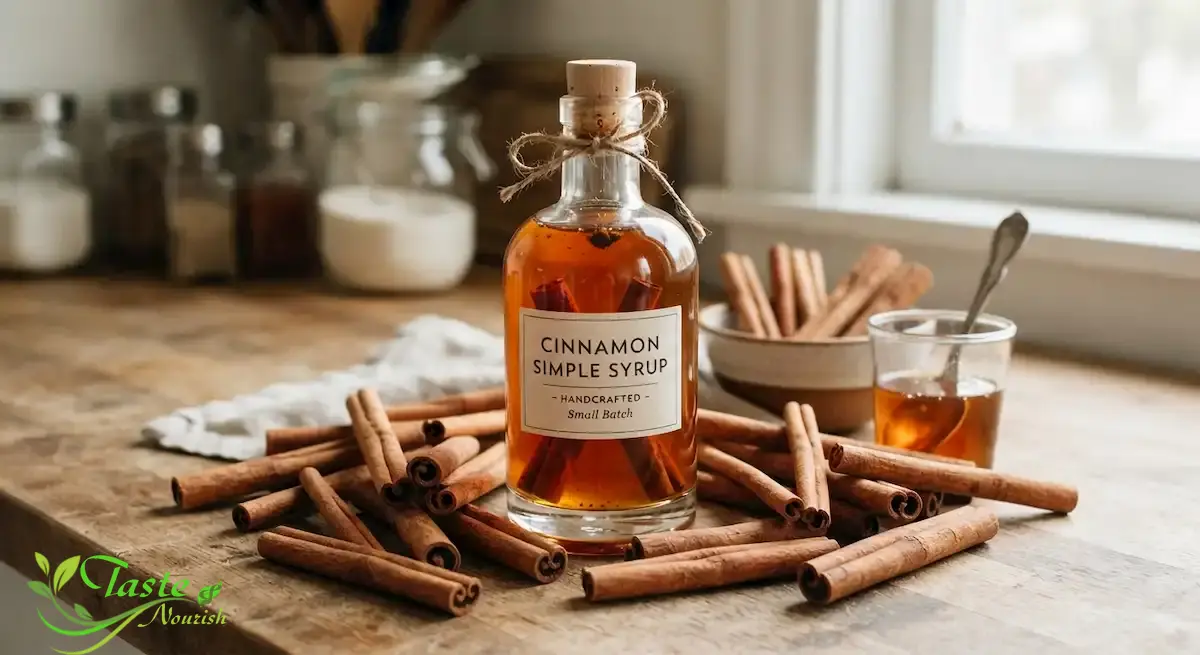
There’s a reason cinnamon simple syrup shows up on so many café menus every fall: it turns an ordinary cup of coffee into something that tastes like it took real effort, for about eight minutes of actual work. This cinnamon simple syrup recipe uses just three ingredients and one pan, and it keeps in the fridge long enough to sweeten a couple of weeks’ worth of drinks. Once you’ve made it, plain sugar in your coffee is going to feel like a step backward.
What makes this version worth bookmarking isn’t a trick ingredient — it’s technique. Simmering whole cinnamon sticks instead of dumping in ground cinnamon gives you a syrup that’s clear, smooth, and free of the gritty sediment that ruins most homemade versions.
This cinnamon simple syrup recipe combines equal parts sugar and water with whole cinnamon sticks, simmered briefly and then steeped off the heat for maximum flavor. Strain out the solids, cool, and refrigerate. The whole process takes under an hour, most of it hands-off, and yields about one cup of syrup — enough for roughly sixteen coffee drinks.
Cinnamon Simple Syrup Recipe at a Glance
Detail
Time / Amount
Prep time
5 minutes
Cook time
8 minutes
Steep time
25 minutes (inactive)
Total time
About 40 minutes
Yield
1 cup (16 tablespoons, about 8 servings)
Difficulty
Easy
Key Takeaways
This cinnamon simple syrup recipe needs only sugar, water, and whole cinnamon sticks — no specialty equipment.
Steeping the cinnamon off the heat, after a brief simmer, pulls out more flavor without turning the syrup bitter.
Whole sticks produce a clear syrup; ground cinnamon works too, but you’ll need to strain it more carefully.
Refrigerated in a sealed glass container, the syrup keeps for about three to four weeks.
A 2:1 sugar-to-water ratio (“rich syrup”) makes a thicker, longer-lasting version for people who go through it fast.
One tablespoon adds meaningful sweetness to hot or iced coffee, so start light and adjust to taste.
Why You’ll Love This Cinnamon Simple Syrup Recipe
It solves a real problem: ground cinnamon doesn’t dissolve in cold or lukewarm drinks, so it either clumps at the bottom of the glass or floats on top. A syrup sidesteps that entirely — the cinnamon flavor is already fully extracted and dissolved, so it blends into iced coffee, cocktails, and lattes without a trace of grit.
It’s also genuinely versatile. The same jar that sweetens your morning coffee works in old fashioneds, hot toddies, oatmeal, pancake batter, and glazes for baked goods. Once it’s in the fridge, you’ll find uses for it that have nothing to do with coffee.
Whole cinnamon sticks give you a cleaner-tasting, clearer syrup than ground cinnamon, and they’re easy to strain out completely. Cracking or snapping the sticks in half before simmering exposes more surface area, so the flavor extracts faster.
Ceylon cinnamon (“true cinnamon”) has a lighter, more citrusy flavor, while cassia cinnamon — the kind most grocery stores sell as plain “cinnamon” — is bolder and spicier. Either works well here; cassia will give you a more assertive, classic “cinnamon roll” flavor, while Ceylon reads as more delicate and floral.
Granulated white sugar dissolves cleanly and produces a syrup with a neutral base flavor that lets the cinnamon lead. Superfine sugar dissolves a little faster if you have it on hand, but it isn’t necessary.
Substitutions
Ground cinnamon can replace the sticks — use about 1 tablespoon and expect to strain the syrup through a fine-mesh sieve lined with cheesecloth or a coffee filter, since ground cinnamon leaves fine sediment that a standard strainer won’t fully catch.
Light or dark brown sugar can substitute for granulated sugar in equal amounts. This is a genuine trade-off, not a straight swap: the syrup will turn darker and pick up a mild molasses note, which pairs nicely with coffee but changes the flavor profile of lighter drinks like tea.
Honey is not a reliable one-to-one substitute here. It has a different sugar composition and won’t behave the same way when heated and cooled, and its own flavor can compete with the cinnamon rather than support it. If you want a honey-cinnamon syrup, that’s a different recipe rather than a simple swap.
Kitchen Tools You’ll Need
A small saucepan, a fine-mesh strainer (or a regular strainer lined with cheesecloth), and a clean glass jar or bottle with a tight lid are really all this recipe requires. A small funnel makes pouring the finished syrup into a narrow bottle easier, but it’s optional.
How to Make Cinnamon Simple Syrup
Combine the sugar and water in a small saucepan over medium heat. Stir occasionally until the sugar fully dissolves — the liquid will go from cloudy to clear, which takes about 3 minutes.
Add the cracked cinnamon sticks and bring the mixture to a gentle simmer, not a rolling boil. Let it simmer for 5 minutes; you’ll notice the syrup start to smell warm and spiced, and it may take on a faint amber tint.
Remove the pan from heat, cover it, and let the cinnamon steep in the hot syrup for 20 to 25 minutes. This off-heat steeping is where most of the flavor develops — tasting the syrup at the 20-minute mark and again at 25 will show you how much stronger it gets in just five extra minutes.
Stir in the vanilla extract and salt, if using, once the steeping time is up.
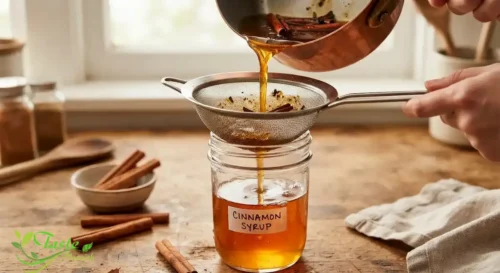
Strain the syrup through a fine-mesh sieve into a clean jar or bottle, pressing gently on the cinnamon sticks to release any remaining liquid. Discard the solids.
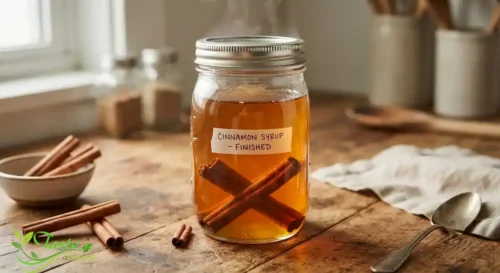
Let the syrup cool to room temperature — this usually takes 20 to 30 minutes — before sealing the container and refrigerating. Sealing it while still warm traps condensation inside, which shortens its shelf life.
Tips for Getting This Cinnamon Simple Syrup Recipe Right Every Time
Taste at the 20-minute steep mark and again at 25. Cinnamon strength varies a lot by brand and freshness, so use that window to judge when it’s strong enough for your taste rather than following the clock exactly.
Crack the sticks in half instead of leaving them whole. More exposed surface area speeds up extraction, so you get a stronger flavor in the same amount of time.
Choose your cinnamon deliberately. Cassia gives a bolder, more familiar “cinnamon roll” flavor; Ceylon reads lighter and more citrusy. Neither is more correct — it’s a matter of what you’re pairing it with.
A splash of vodka (about a tablespoon per cup of finished syrup) extends refrigerator life by a week or two without noticeably changing the flavor, a trick borrowed from bartenders who batch syrups regularly.
Expect the syrup to thicken slightly as it chills. If it seems thin while still warm, that’s normal — resist the urge to simmer it longer to compensate.
Common Mistakes to Avoid
Boiling instead of simmering. A hard boil evaporates water faster than the sugar can dissolve into it, concentrating the syrup unevenly and risking scorched, bitter cinnamon. Keep the heat at a gentle simmer — small, steady bubbles, not a rolling boil.
Skipping the steep. Pulling the cinnamon out right after the 5-minute simmer gives you a syrup that tastes like sweet water with a hint of spice. The extra 20 minutes off the heat is what actually builds the flavor.
Not straining thoroughly. Loose cinnamon bark fragments or ground cinnamon particles left in the syrup will settle at the bottom of the jar and cloud every pour. A fine-mesh strainer, or cheesecloth for ground cinnamon, solves this.
Bottling it warm. Sealing hot syrup traps steam, which condenses inside the jar and creates the moist environment mold and bacteria need to take hold sooner. Always cool to room temperature first.
Storing it at room temperature. Unlike commercial syrups with preservatives, this one is a fresh, unpreserved product. Room-temperature storage can lead to visible spoilage within days rather than weeks.
Cinnamon Simple Syrup Recipe Variations
Rich cinnamon syrup: Use a 2:1 ratio of sugar to water (2 cups sugar to 1 cup water) instead of the standard 1:1. The higher sugar concentration makes the syrup thicker, sweeter per tablespoon, and noticeably longer-lasting in the fridge.
Vanilla-cinnamon syrup: Split a vanilla bean and add it along with the cinnamon sticks during the simmer for a rounder, bakery-style flavor that pairs especially well with lattes.
Brown sugar cinnamon syrup: Swap in light or dark brown sugar for a deeper, molasses-tinted syrup that leans into coffee and dessert applications. Expect a darker color and a less neutral flavor than the classic version.
Citrus-cinnamon syrup: Add a wide strip of orange or lemon peel (avoid the bitter white pith) along with the cinnamon sticks for a brighter, more complex syrup that works well in cocktails and sparkling water.
Warm-spice blend syrup: Add a single star anise pod or two whole cloves alongside the cinnamon for a chai-adjacent flavor. Use a light hand — these spices are much stronger than cinnamon and can easily overpower the syrup.
Serving Suggestions
This is the kind of homemade cinnamon syrup for coffee that earns a permanent spot in the fridge door: stir a tablespoon into hot or iced coffee, lattes, or cold brew, or use it to sweeten chai, hot chocolate, or spiced tea.
Beyond drinks, it works as a cinnamon syrup for pancakes and waffles in place of maple syrup, drizzled over plain yogurt or oatmeal, brushed onto the top of a coffee cake before it cools, or shaken into a whiskey- or rum-based cocktail for a warm-spiced twist on a classic.
Cinnamon’s Reputation in the Kitchen — and What the Research Actually Shows
Cinnamon has a long history as more than just a flavoring, and some of that reputation has research behind it, though the evidence is more preliminary than the health-food headlines suggest. According to the National Center for Complementary and Integrative Health (NCCIH), part of the National Institutes of Health, cinnamon is likely safe in the amounts typically used as a food spice, though research doesn’t clearly support using it to treat any specific health condition, and higher-quality studies are still needed.
Some of the more specific interest around cinnamon involves blood sugar response. A peer-reviewed pilot study published in the National Library of Medicine’s PMC archive found that a single dose of cinnamon added to a typical breakfast reduced the post-meal insulin response in participants who were overweight or obese, though the researchers describe this as an early, exploratory finding rather than a settled result. Cautious phrasing is warranted here — cinnamon may support a healthier post-meal response for some people, but it isn’t a substitute for medical guidance on blood sugar management.
One caution worth knowing: cassia cinnamon, the most common type sold in U.S. grocery stores, contains a compound called coumarin, which in large, concentrated amounts can affect liver health. The NCCIH notes that cinnamon supplementation is generally not considered risky at doses below about 6 grams per day — far more than the amount used in this recipe, since most of the cinnamon stays behind when you strain the syrup.
Nutrition Information
These values are estimates for one tablespoon (15ml) of syrup made with the standard 1:1 ratio, and will vary slightly depending on exact simmer time and evaporation.
Nutrient
Approximate Amount
Calories
50 kcal
Total carbohydrates
13g
Added sugars
13g
Fat
0g
Protein
0g
Sodium
0-5mg (varies if salt is added)
Because this syrup is essentially dissolved sugar, it’s worth using it the way you’d use any other added sweetener. The FDA’s guidance on added sugars recommends keeping added sugar intake under 10% of daily calories — about 50 grams on a 2,000-calorie diet — so a tablespoon or two in a daily coffee fits comfortably within that budget for most adults, even alongside other sources of added sugar.
Nutritionally, the cinnamon itself contributes little beyond flavor at this dilution — most of a cinnamon stick’s manganese, fiber, and calcium content, as tracked by USDA FoodData Central, stays behind in the strained solids rather than dissolving into the syrup.
Storage Instructions
Store the cooled syrup in a sealed glass jar or bottle in the refrigerator, where it will keep well for about 3 to 4 weeks. Always use a clean spoon or pour directly from the bottle rather than dipping in with utensils that have touched other food.
For longer storage, freeze the syrup in an ice cube tray, then transfer the frozen cubes to a freezer bag; it will keep for up to 3 months this way, and a single cube thaws quickly in a warm drink. The syrup won’t freeze completely solid because of its high sugar content, so cubes stay easy to pop out.
Discard the syrup if it turns cloudy, develops mold, smells fermented or sour, or starts bubbling on its own — all signs of microbial growth rather than simple aging.
Make-Ahead Tips
This syrup is inherently a make-ahead ingredient — there’s no reason to make it fresh each time you want a cup of coffee. Doubling or tripling the recipe is straightforward; just use a larger pan and expect the simmer and steep times to stay roughly the same, since they’re driven by the cinnamon’s extraction rate rather than the total volume.
Cinnamon Simple Syrup Recipe FAQs
Can I use ground cinnamon instead of cinnamon sticks?
Yes. Use about 1 tablespoon of ground cinnamon in place of the sticks, and strain the finished syrup through a fine-mesh sieve lined with cheesecloth or a coffee filter to catch the fine sediment that a standard strainer will miss.
How long does cinnamon simple syrup last in the fridge?
About 3 to 4 weeks when stored in a sealed glass container. If you want it to last longer, make the rich (2:1) version or freeze portions in an ice cube tray.
Why is my syrup cloudy instead of clear?
Cloudiness usually comes from incomplete straining, sealing the jar while the syrup was still warm, or early microbial growth. If the syrup smells normal and was properly strained and cooled, mild cloudiness from ground cinnamon residue is likely cosmetic; if it smells off or has been stored more than a month, discard it.
Can I make this with a sugar substitute?
Granulated sugar substitutes that measure cup-for-cup like sugar can generally be used, though the syrup’s texture and shelf life may differ since sugar’s concentration is part of what preserves it. Expect a thinner syrup and a shorter refrigerator life with most substitutes.
Is cinnamon simple syrup the same thing as cinnamon extract?
No. Cinnamon extract is a concentrated flavoring made by steeping cinnamon in alcohol, used in small drops. This syrup is a sugar-and-water base infused with cinnamon, meant to be used in larger amounts as a sweetener.
Can I use this syrup for baking, not just drinks?
Yes — it works well brushed over cakes and quick breads while they’re still warm, stirred into pancake or waffle batter in place of some of the sugar, or swirled into yogurt and oatmeal.
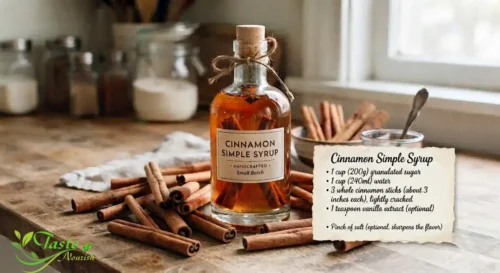
An easy cinnamon simple syrup made with sugar, water, and whole cinnamon sticks, simmered and steeped for a clear, fragrant syrup that sweetens coffee, tea, and cocktails.
Ingredients
1 cup (200g) granulated sugar
1 cup (240ml) water
3 whole cinnamon sticks, lightly cracked
1 teaspoon vanilla extract (optional)
Pinch of salt (optional)
Directions
Combine the sugar and water in a small saucepan over medium heat. Stir occasionally until the sugar fully dissolves, about 3 minutes.
Add the cracked cinnamon sticks and bring to a gentle simmer, not a rolling boil. Simmer for 5 minutes until fragrant.
Remove from heat, cover, and let the cinnamon steep for 20 to 25 minutes. Stir in vanilla and salt, if using.
Strain the syrup through a fine-mesh sieve into a clean jar, pressing gently on the cinnamon sticks, then discard the solids.
Let the syrup cool completely to room temperature before sealing the container and refrigerating.
Conclusion
Once you’ve made this cinnamon simple syrup recipe once, you’ll probably never go back to spooning ground cinnamon into your coffee — the flavor is cleaner, it dissolves instantly even in cold drinks, and one batch covers weeks of mornings. Keep the simmer gentle, give it the full steep time, and strain thoroughly, and you’ll have a jar of it ready every time you need it.
References
Cinnamon: Usefulness and Safety. National Center for Complementary and Integrative Health (NCCIH), National Institutes of Health. https://www.nccih.nih.gov/health/cinnamon
Acute Effects of Cinnamon Spice on Post-prandial Glucose and Insulin in Normal Weight and Overweight/Obese Subjects: A Pilot Study. PubMed Central (PMC), National Library of Medicine. https://www.ncbi.nlm.nih.gov/pmc/articles/PMC7859251/
**Hanan Abo Samra** shares practical cooking insights, delicious recipes, and evidence-based nutrition information. Drawing on more than 20 years of hands-on cooking experience, she creates helpful food content that combines everyday cooking knowledge with information from reliable scientific sources. Her goal is to help readers better understand the foods they eat, explore their nutritional benefits, and prepare delicious meals with confidence.