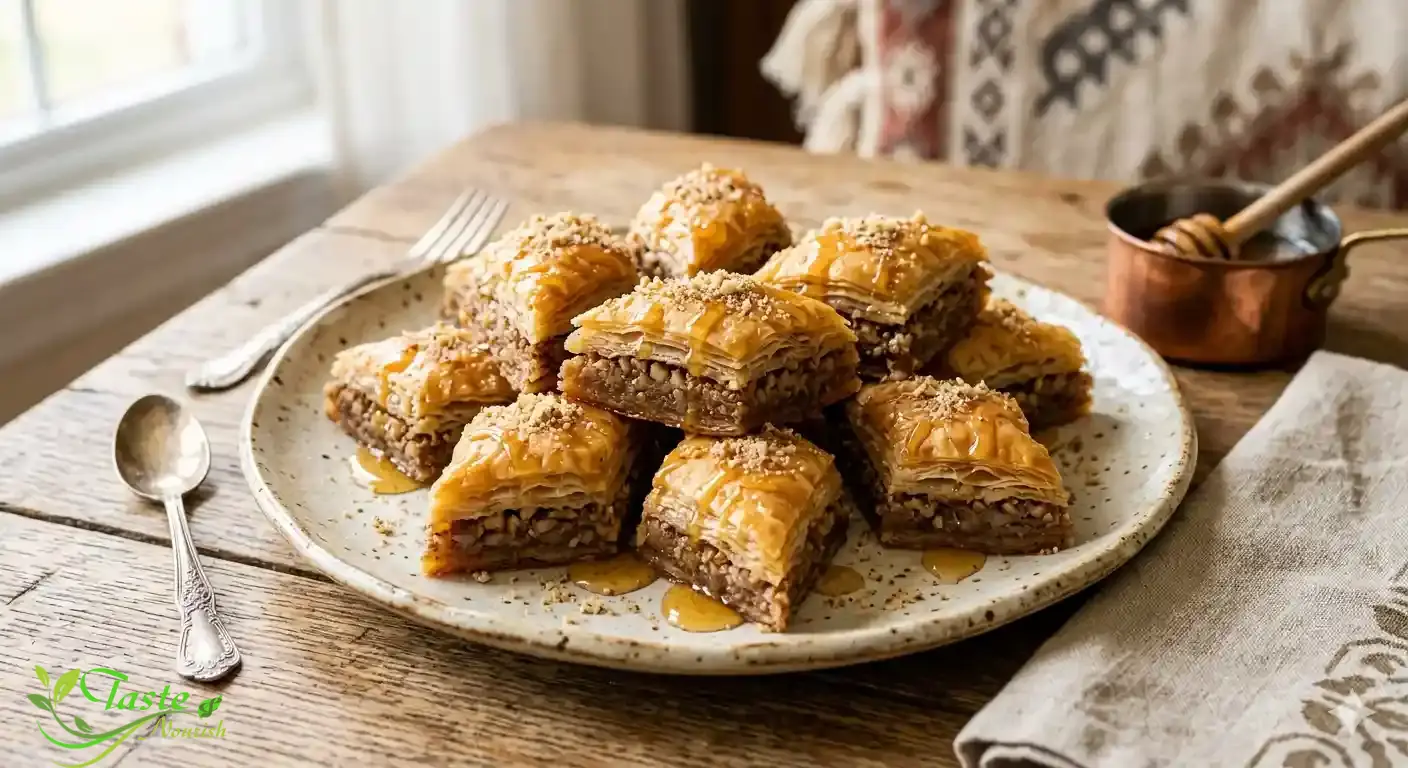

Chocolate Baklava: The Ultimate Guide to Making This Decadent Dessert
Chocolate Baklava — The Decadent Twist on a Timeless Classic
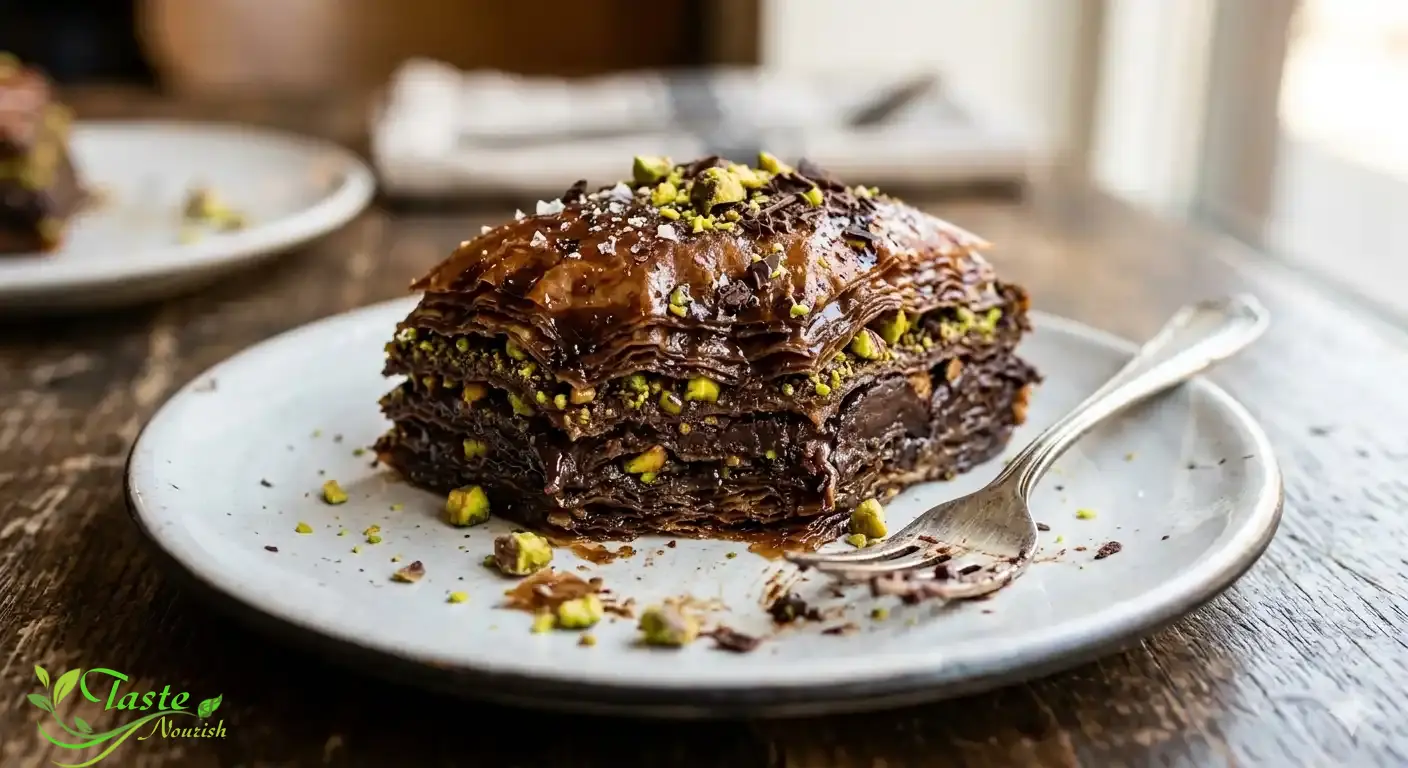
There are some food combinations that feel almost too good to be true — like someone in a kitchen one afternoon thought, what if I took one of the world’s most beloved pastries and made it even more irresistible? That’s exactly what chocolate baklava is. It’s the kind of dessert that makes people do a double-take at a dessert table, lean in a little closer, and then reach for a second piece before they’ve even finished the first.
If you’ve ever fallen in love with the flaky, syrup-soaked perfection of traditional baklava, then getting introduced to its chocolate counterpart is going to feel like meeting a long-lost best friend. Rich, buttery, layered, nutty, and now with a deep, bittersweet chocolate dimension — this is not just a recipe. It’s an experience.
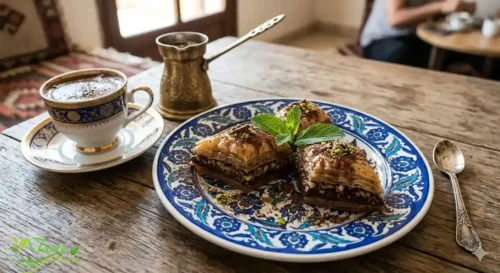
Whether you’re a seasoned baker or someone who’s never handled phyllo dough in your life, this guide is going to walk you through everything you need to know about chocolate baklava — from its roots to its rise as a modern dessert sensation, and all the way through to how you can make it at home with confidence. We’re talking ingredients, techniques, regional variations, pro tips, and more. So grab yourself a cup of Turkish coffee, get comfortable, and let’s dive in.
What Exactly Is Chocolate Baklava?
Chocolate baklava is a creative and indulgent variation of the classic Middle Eastern and Mediterranean pastry, enhanced by the addition of chocolate to the traditional nut filling, the syrup, or even the butter itself.
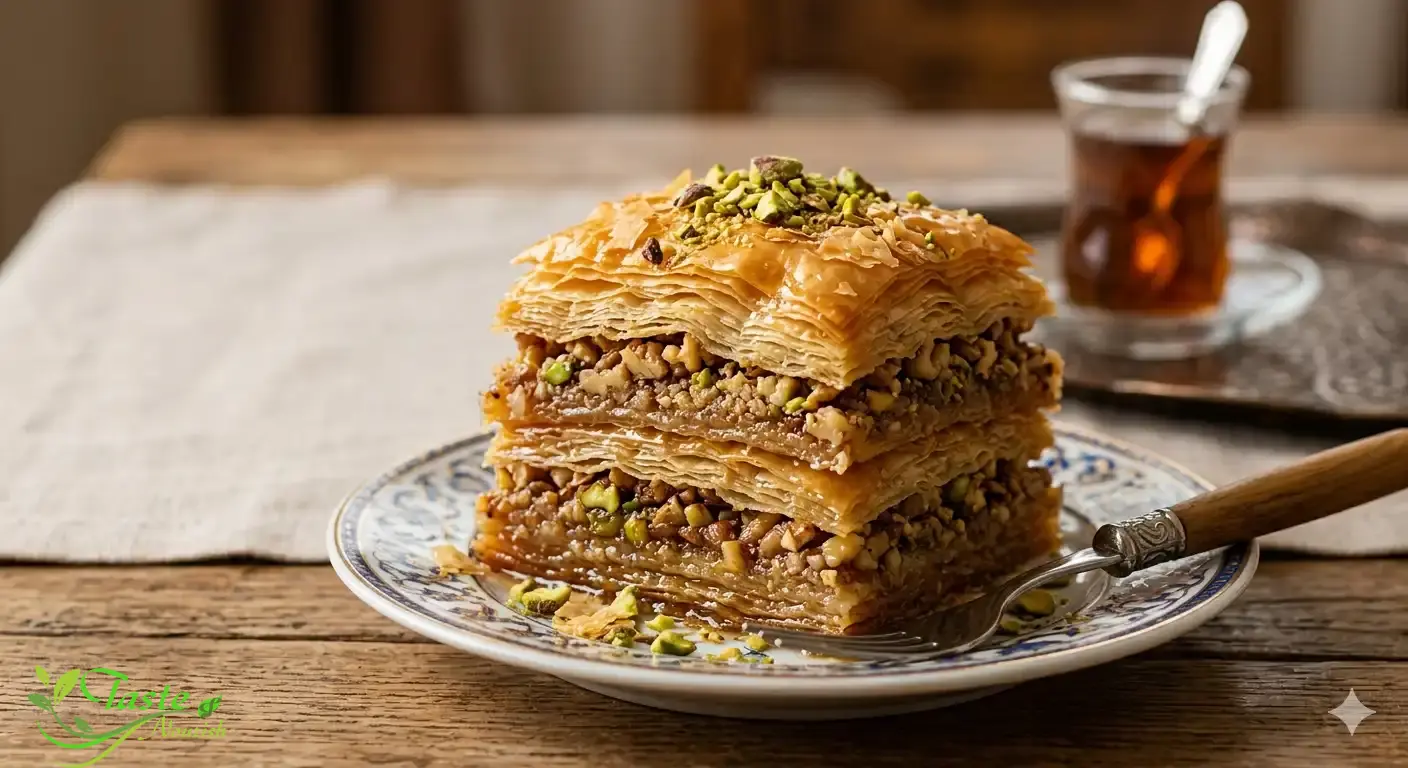
At its core, it still follows the fundamental DNA of great baklava — tissue-thin layers of phyllo dough, brushed generously with melted butter, filled with a spiced nut mixture, baked until golden and crackling, and then drenched in a fragrant syrup.
The magic of the chocolate version lies in how seamlessly the richness of cocoa or dark chocolate integrates into this already luxurious framework, adding depth and complexity without overwhelming the delicate flavors that make baklava so special in the first place. Think of it as the original recipe putting on an evening suit — the same elegance, just turned up a notch.
What makes this dessert stand out on any table is the interplay between textures and flavors. You get the shattering crispness of perfectly baked phyllo, the satisfying crunch of toasted nuts, and then the smooth, slightly bitter undertone of dark chocolate — all of it pulled together by a sweet, fragrant syrup that soaks through every layer.
As consumer interest in global desserts continues to grow, creative interpretations like chocolate-infused baklava have become a standout trend in the modern baking world. It’s fusion at its most elegant — not gimmicky, not overcomplicated, just genuinely better.
How It Differs from Traditional Baklava
Traditional baklava, in its many regional forms, relies almost entirely on the combination of nuts, butter, phyllo, and a honey or sugar-based syrup to deliver its iconic flavor. The spices most commonly used are cinnamon and cloves, and the nuts of choice vary from walnuts in Greek versions to pistachios in Turkish preparations. The result is something sweet, fragrant, and unmistakably rich.
Chocolate baklava takes this foundation and introduces a new flavor axis:
- the dark, slightly bitter, deeply aromatic character of good-quality chocolate.
- The chocolate variation adds a unique depth, transforming this already indulgent treat into a richer, more decadent version.
- Rather than replacing any traditional element, the chocolate amplifies the existing ones — the sweetness of the syrup is counterbalanced, the nuttiness of the filling is deepened, and the overall experience becomes more complex and layered, much like the pastry itself.
- It’s also worth noting that chocolate appears in different ways depending on the recipe. Some bakers fold finely chopped dark chocolate directly into the nut filling.
- Others use cocoa powder to infuse the clarified butter.
And some ambitious recipes, like Lebanese-inspired versions, incorporate chocolate into every single element — the butter, the syrup, and the filling — for a fully immersive chocolate experience. One innovative approach uses chocolate and cocoa powder to flavor all of the baklava elements: the clarified butter, the simple syrup, and the nut filling, which delivers a deeply unified flavor that feels intentional from the very first bite to the very last crumb.
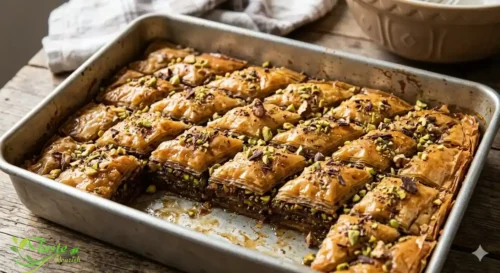
Why Chocolate and Baklava Are a Match Made in Dessert Heaven
Let’s be honest — there’s a reason this combination has gone viral across food blogs, social media, and home kitchens around the world. The pairing of chocolate with baklava isn’t just trending; it makes scientific, gastronomic sense.
Chocolate, particularly dark chocolate, carries hundreds of flavor compounds, including fruity, earthy, roasted, and floral notes. These compounds interact brilliantly with the honey or sugar syrup, the warm spices like cinnamon, and the toasted nuts that define baklava.
The bitterness of a good dark chocolate — ideally one with at least 60% cocoa content — cuts through the sweetness of the syrup in a way that makes each bite feel balanced rather than cloying.
Dark chocolate works especially well because it helps to alleviate the sweetness of the baklava, while milk or white chocolate can make the overall result too sickly sweet. It’s that balance of contrasts — sweet and bitter, crispy and soft, buttery and rich — that makes chocolate baklava so genuinely addictive. Tin and Thyme
Key Ingredients for the Perfect Chocolate Baklava
Type: “Dessert”
Cuisine: “Middle Eastern, Mediterranean”
Keywords: “chocolate baklava, dark chocolate baklava, phyllo dessert”
Recipe Yield: “24 pieces”
Calories: “280 calories”
Preparation Time: “PT45M”
Cooking Time: “PT55M”
Total Time: “PT1H40M”
Making chocolate baklava well starts with understanding your ingredients. This isn’t a recipe where you can substitute low-quality components and expect great results. Every element plays a role, and the beauty of the final product is a direct reflection of the care taken in choosing each one. Let’s break down what you actually need.
Recipe Ingredients:
- “1 lb phyllo dough, thawed”
- “8 oz dark chocolate (70%), finely chopped”
- “2 cups mixed nuts (walnuts, pistachios, hazelnuts), toasted and chopped”
- “1¼ cups clarified butter (ghee), melted”
- “1 tsp ground cinnamon”
- “½ tsp ground cloves”
- “1 cup sugar”
- “½ cup honey”
- “¾ cup water”
- “1 tbsp lemon juice”
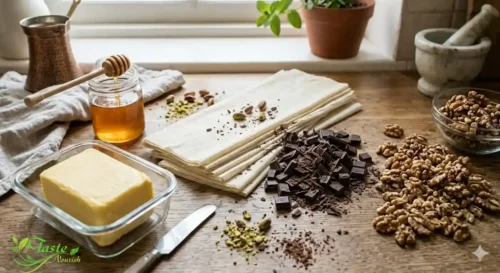
Choosing the Right Chocolate
This is arguably the most important decision you’ll make when baking chocolate baklava, and getting it wrong can throw off the entire dessert. The consensus among experienced bakers is remarkably consistent on this point. Any dark chocolate between 56–72% cocoa would be a good option.
Milk chocolate or white chocolate might be too sweet for this recipe. The reason is straightforward: baklava is already a very sweet dessert, thanks to its syrup-soaked layers. Adding milk chocolate on top of that sweetness tips the balance into cloying territory, leaving you with something that feels heavy rather than indulgent. Dark chocolate, with its natural bitterness and complexity, acts as a counterpoint to the syrup, creating tension and balance in every bite.
Since the recipe doesn’t use much chocolate compared to the nuts and syrup, choosing a chocolate that’s deep and rich — 70% dark chocolate or higher — will really make the flavors stand out. Think of the chocolate as a seasoning here, not the main event. You’re using it to add dimension, not to turn your baklava into a chocolate bar. This is why quality matters enormously — a cheap, low-cocoa chocolate will disappear into the background, contributing little except sweetness, while a high-quality dark chocolate will perfume the entire pastry with its complex, roasted aroma.
| Chocolate Type | Cocoa % | Best For | Sweetness Level |
|---|---|---|---|
| Extra Dark | 70–85% | Classic chocolate baklava | Low — balances syrup perfectly |
| Semi-sweet | 56–69% | Milder chocolate flavor | Medium — still works well |
| Milk Chocolate | 30–45% | Not recommended | High — too sweet with syrup |
| White Chocolate | 0% cocoa solids | Specialty/white chocolate version | Very High — use sparingly |
| Cocoa Powder | N/A | Infusing butter or syrup | Adjustable |
Nuts, Phyllo, and Butter — Getting the Fundamentals Right
Beyond the chocolate, the other three pillars of great baklava are your nuts, your phyllo dough, and your butter. On the nut front, you have glorious freedom. Pistachios, walnuts, hazelnuts, almonds, and pecans all work beautifully with chocolate.
This Turkish-inspired version delivers the perfect balance of crispy buttery pastry with a squidgy, syrupy, nutty middle. Hazelnuts and almonds pair particularly well with chocolate due to their natural affinity for cocoa flavors — think Nutella, think Ferrero Rocher — while walnuts bring a slightly tannic, earthy depth that complements dark chocolate wonderfully.
Phyllo dough is the trickiest ingredient to work with, and it’s the one that intimidates most first-time baklava makers.
The sheets are paper-thin and dry out extraordinarily quickly when exposed to air. The golden rule is simple: keep unused sheets covered with a clean, slightly damp kitchen towel at all times. As for butter, don’t even think about skimping.
Plenty of butter is essential — it’s what makes the phyllo layers super crispy. Many experienced bakers recommend using clarified butter (ghee) rather than regular melted butter, because it has a higher smoke point and delivers a cleaner, purer flavor without any risk of burning during the baking process.
Step-by-Step — How to Make Chocolate Baklava at Home
Let’s get practical. Making chocolate baklava at home is absolutely achievable, even if you’ve never made it before. The process has several steps, but none of them are technically difficult — it’s mostly about patience, organization, and not rushing.
Preparing the Filling
The filling is where your chocolate earns its place. Start by toasting your nuts of choice in a dry pan over medium heat until fragrant — this step is non-negotiable, as toasting intensifies the flavor and keeps the nuts crunchy inside the finished pastry.
A quick toast in the oven or a skillet on the stovetop before chopping the nuts intensifies their flavor and helps them stay crunchy. Once toasted, allow them to cool completely before chopping. The texture of your chopped nuts matters enormously. You want pieces large enough to bite into — not powder, not dust. Use a sharp knife or pulse carefully in a food processor, checking frequently.
Combine the cooled, chopped nuts with your finely chopped dark chocolate, ground cinnamon, a pinch of ground cloves if you like, and a small amount of sugar. Mix well and set aside.
📝 Reader Note: Always let your toasted nuts cool completely before mixing with chocolate. Warm nuts will melt the chocolate and create a sticky paste rather than a crumbly, even filling.
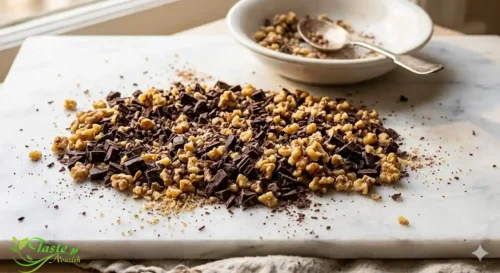
Layering the Phyllo Dough
This is the step that defines the final texture of your baklava, so take your time:
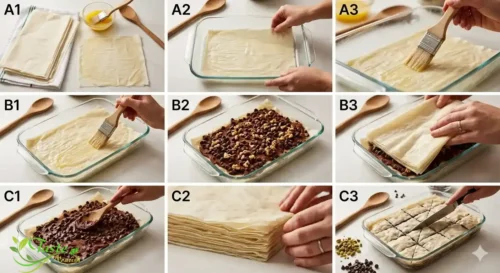
- Brush the bottom of your baking dish (a 9×13 inch pan works well for most recipes) with melted clarified butter.
- Then begin laying phyllo sheets one at a time, brushing each sheet generously with butter before adding the next. Most recipes call for between 8 and 10 base layers before you add any filling.
- Then spread a thin, even layer of the nut-chocolate filling, follow with a few more buttered phyllo sheets, more filling, and continue this pattern until you’ve used up your ingredients.
- Finish with a final stack of 8–10 phyllo sheets, all well-buttered, and press down gently to compact the layers.
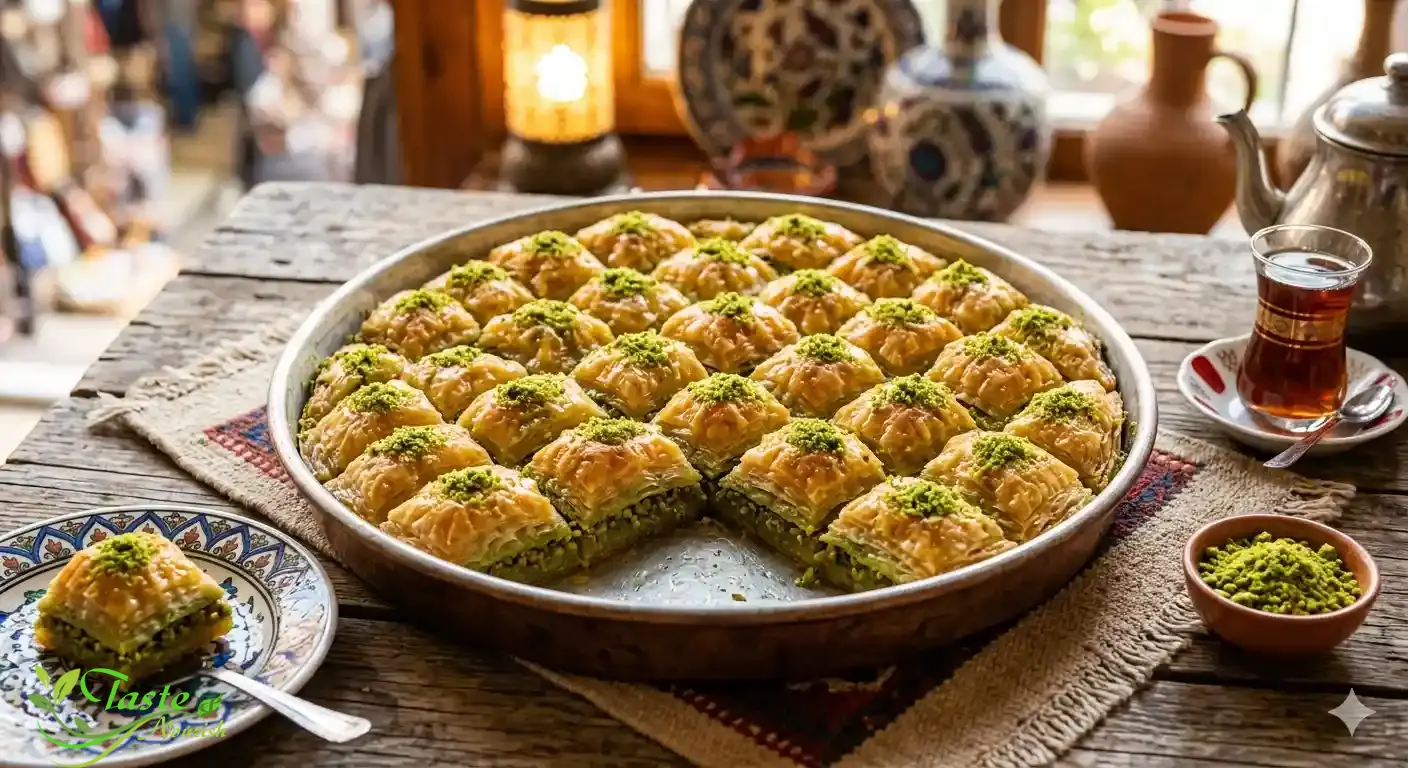
- Before baking, use a sharp knife to cut the baklava into your desired shapes — traditionally diamond or square shapes.
This pre-cutting step is critical: if you try to cut baked baklava, the layers will shatter and crumble rather than cut cleanly.
Making the Syrup
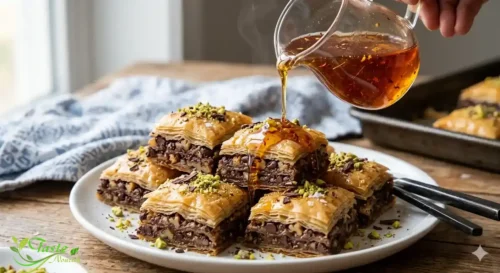
The syrup is the soul of baklava, and getting it right is just as important as any other step. A standard syrup combines water, sugar, and honey, cooked together until the sugar fully dissolves. Some recipes add a cinnamon stick, lemon juice, orange blossom water, or rosewater for fragrance.
For chocolate baklava specifically, some bakers incorporate a touch of instant espresso powder into the syrup, which deepens the chocolate flavor without adding obvious coffee taste. The most important rule about syrup in baklava? Temperature contrast.
Pour hot syrup over hot baklava, or cold syrup over cold baklava — mixing temperatures leads to soggy, uneven absorption. Most professionals use the hot-over-hot method: as soon as the baklava comes out of the oven, the sizzling hot syrup goes straight over it.
♦ Honey Syrup vs. Sugar Syrup — Which One Wins?
This is a genuinely debated topic among baklava enthusiasts, and the honest answer is that both work brilliantly — they just deliver slightly different results. Here’s how they compare:
| Feature | Honey Syrup | Sugar Syrup |
|---|---|---|
| Flavor | Floral, complex, aromatic | Clean, neutral sweetness |
| Texture after soaking | Slightly thicker, stickier | More fluid, penetrates faster |
| Shelf life of finished baklava | Slightly longer | Standard |
| Pairing with chocolate | Excellent — honey’s floral notes complement dark chocolate | Very good — lets chocolate shine more clearly |
| Authenticity | More traditional (Greek, Lebanese) | Standard in Turkish versions |
| Cost | Higher | Lower |
For chocolate baklava specifically, a combination of both — roughly 50% honey and 50% sugar syrup — gives you the best of both worlds: the aromatic complexity of honey and the clean penetrating sweetness of a sugar syrup.
💡 Pro Tip: Allow your finished chocolate baklava to rest for at least 6 hours after adding the syrup before serving. For best results, make your baklava a day before serving — it tastes even better the next day, as the syrup absorbs fully and the flavors deepen.
Popular Chocolate Baklava Variations
One of the most wonderful things about chocolate baklava is that it isn’t a single, fixed recipe — it’s a concept, and that concept has been interpreted beautifully across different culinary traditions. Here are the most popular and beloved regional variations you’ll encounter.
Turkish Chocolate Pistachio Baklava
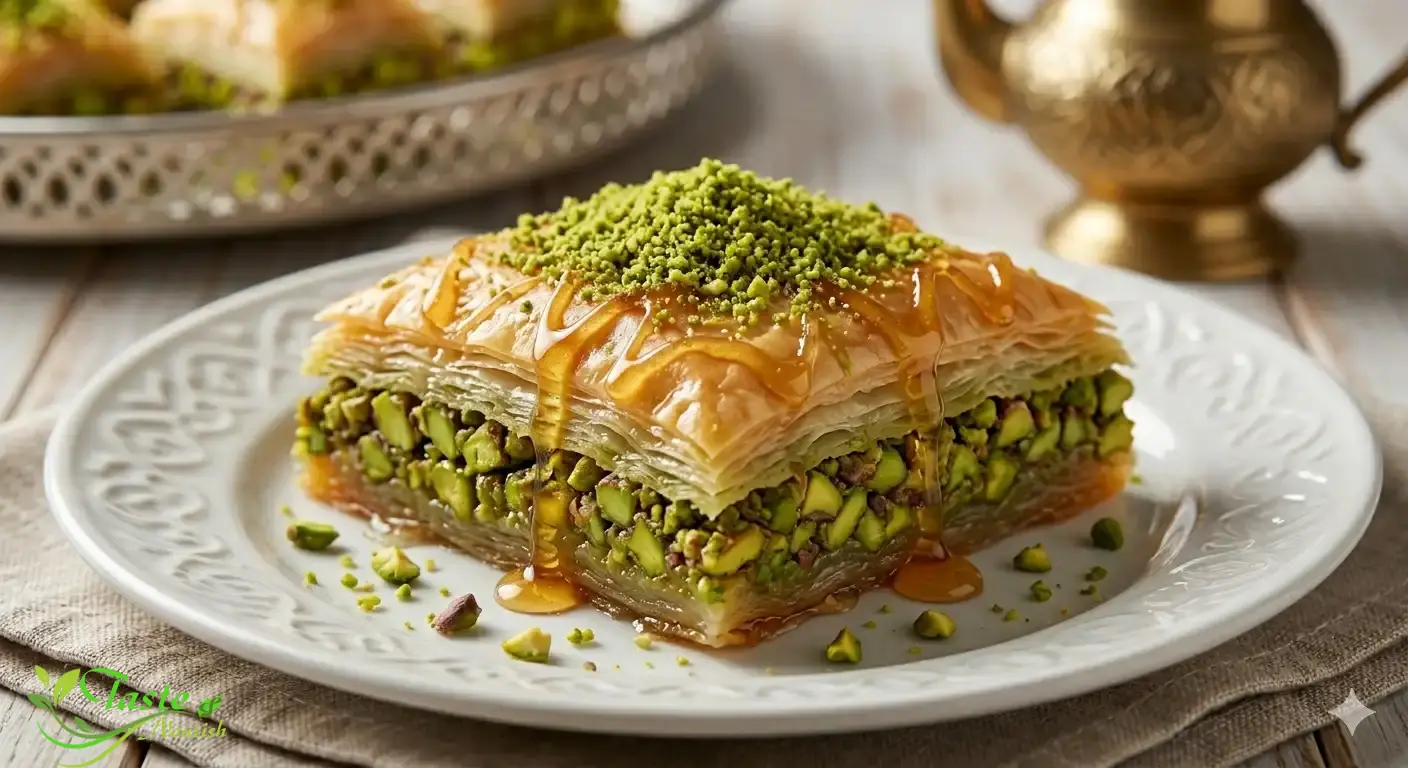
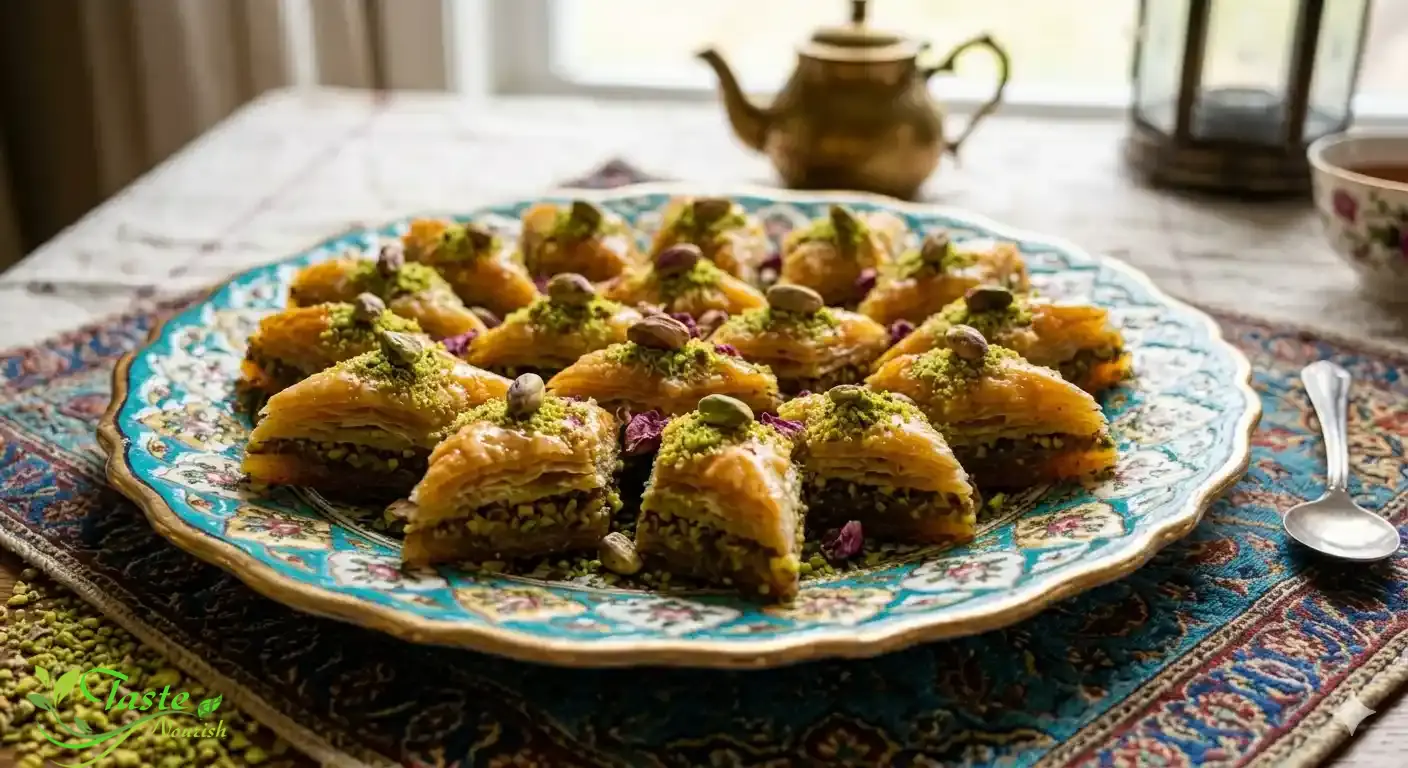
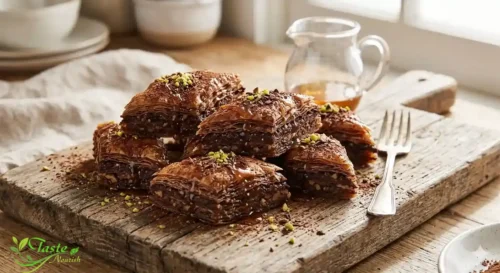
Turkish Chocolate Pistachio Baklava is a twist on the traditional Turkish Baklava known as Fistikli Baklava (Pistachio Baklava), featuring the perfect balance of crispy buttery pastry with an incredibly squidgy, syrupy, nutty middle. In this version, dark chocolate is added to the classic pistachio filling, typically finely chopped or grated so it distributes evenly throughout the layers.
The Turkish approach tends to favor a lighter hand with spices, letting the pistachio and chocolate flavors take center stage. The syrup is usually sugar-based rather than honey-based, which gives the finished baklava a slightly more translucent, crystalline quality.
Greek Chocolate Baklava
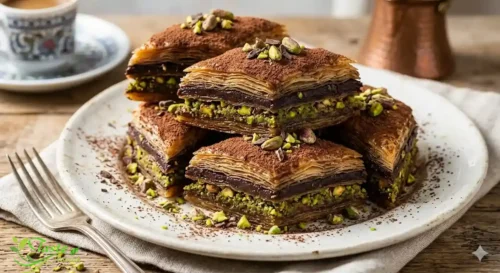
The Greek version of baklava is known for its thin layers of phyllo dough, generously filled with a mixture of crushed nuts, and drenched in a honey-sugar syrup. The chocolate variation adds a unique depth, transforming this already indulgent treat into a richer, more decadent version.
Greek-style chocolate baklava most commonly uses a combination of walnuts and almonds in its filling, combined with finely chopped dark chocolate, cinnamon, and sometimes ground cloves.
The syrup is honey-forward and fragrant, often scented with a little lemon juice and a cinnamon stick.
The Greek version tends to be slightly softer and more syrup-saturated than its Turkish counterpart, and the honey syrup gives it a distinctly floral, amber quality that pairs beautifully with the earthiness of dark chocolate.
Lebanese Chocolate Baklawa
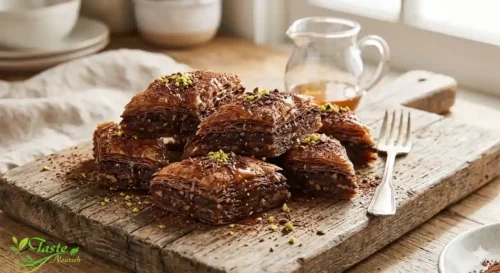
The Lebanese approach — spelled baklawa in Arabic — is perhaps the most adventurous of all when it comes to chocolate integration. One uniquely devised recipe for chocolate baklawa uses chocolate and cocoa powder to flavor all of the baklawa elements:
the clarified butter, the simple syrup, and the nut filling, creating a pastry where chocolate is present in every single layer rather than just the filling.
The result is extraordinarily immersive — every bite resonates with deep, complex cocoa flavor from the first crunch of phyllo to the last sticky note of syrup.
This version pairs wonderfully with a small cup of strong Arabic coffee, where the bitterness of the coffee echoes and amplifies the chocolate notes in the pastry.
| Variation | Primary Nuts | Chocolate Form | Syrup Type | Spices |
|---|---|---|---|---|
| Turkish Chocolate Pistachio | Pistachios | Finely chopped dark chocolate | Sugar-based | Minimal |
| Greek Chocolate Baklava | Walnuts + Almonds | Chopped dark chocolate | Honey-sugar blend | Cinnamon + Cloves |
| Lebanese Chocolate Baklawa | Mixed nuts | Chocolate + Cocoa in all elements | Honey + Orange blossom | Cardamom + Rosewater |
| Nutella Baklava | Hazelnuts | Nutella spread | Sugar or honey | Cinnamon |
| Pecan Dark Chocolate Baklava | Pecans | Dark chocolate + Cocoa | Honey + Orange juice | Cinnamon |
Pro Tips, Storage, and Serving Suggestions
Making chocolate baklava is one thing. Making it extraordinary is another. Here are the professional-level tips that separate good baklava from unforgettable baklava, along with everything you need to know about keeping your hard work fresh.
- Working with phyllo: Keep every unused sheet covered with a damp towel — dry phyllo tears and crumbles, and there is nothing more frustrating mid-assembly than a crumbling stack of sheets. Thaw the phyllo overnight in the refrigerator, or at room temperature for 1.5 to 2 hours before you begin — never try to work with frozen phyllo.
- On the butter: Use clarified butter or ghee. Regular unsalted butter works in a pinch, but clarified butter delivers a purer, richer flavor and prevents any risk of the milk solids burning during the long bake time.
- On the chocolate: Never use milk chocolate or chocolate with less than 60% cocoa content — the excess sugar and fat will negatively affect the final dish. High-quality dark chocolate is your best friend here.
- Cutting: Always cut your baklava before baking. A sharp, serrated knife used in a gentle sawing motion gives you clean, precise cuts through the delicate layers.
Storage:
- At room temperature in an airtight container: up to 1 week
- In the fridge in an airtight container: at least 1 week — you may even find the flavors meld even better after a few days Jo Cooks
- Frozen (wrapped in plastic and stored in an airtight container): up to 3 months. Thaw for 4–5 hours or overnight in the fridge before serving
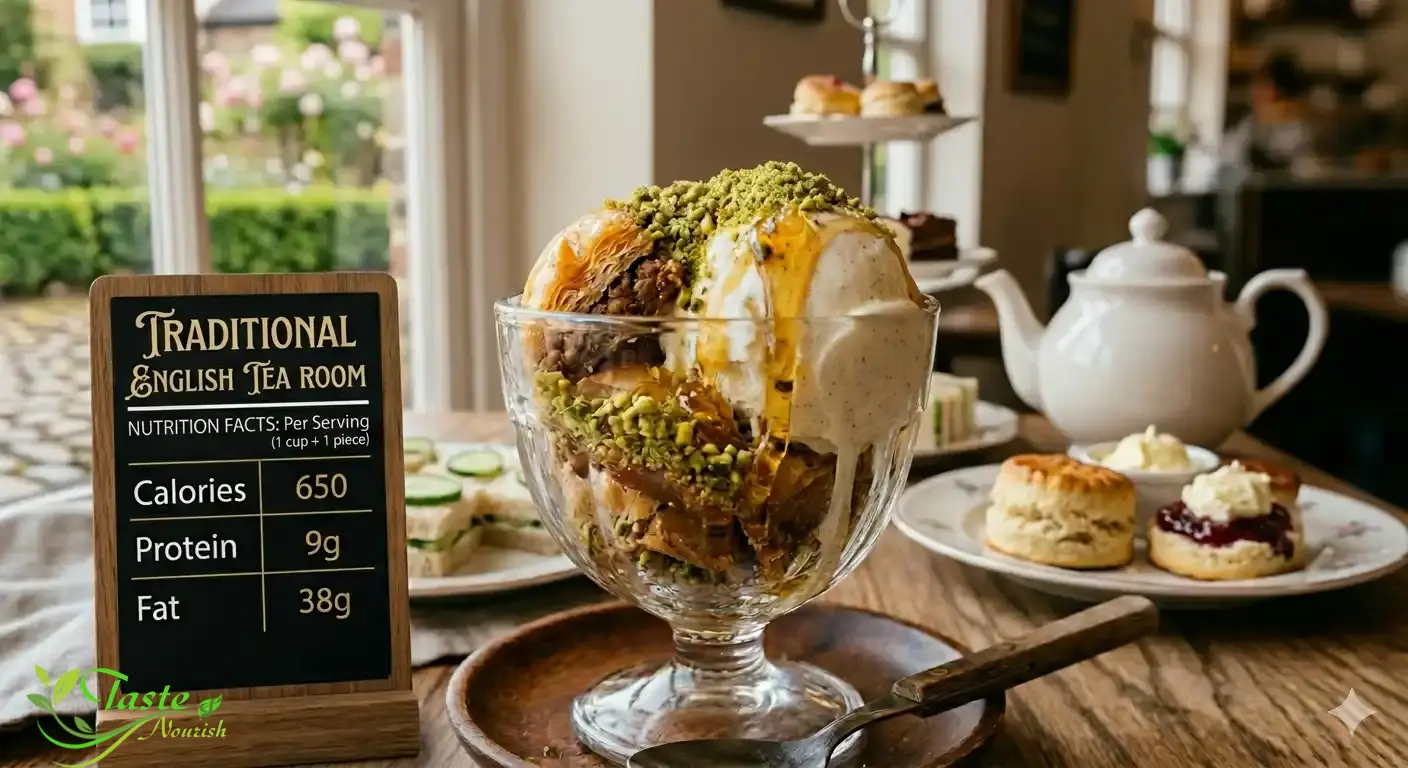
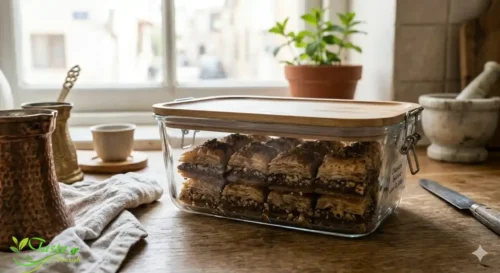
Serving suggestions: Serve at room temperature for maximum crispness. Pair with strong Turkish coffee, mint tea, or — for a more contemporary presentation — a small scoop of vanilla bean ice cream. The cold creaminess of the ice cream against the warm spices and chocolate is genuinely spectacular.
The Rich History Behind Baklava and Its Chocolate Evolution
To understand where chocolate baklava comes from, you need to first appreciate the remarkable history of baklava itself. This isn’t just a dessert with a recipe — it’s a pastry with a legacy that spans thousands of years and dozens of cultures. Understanding that legacy helps you appreciate just how significant it is that bakers today are still finding creative ways to evolve it.
From Ancient Mesopotamia to Modern Kitchens
Baklava’s history dates back to ancient Mesopotamia, where the Assyrians and Babylonians used to layer dough with nuts and honey to create a sweet dessert. Over the centuries, this humble sweet traveled along the trade routes of the ancient world, absorbing influences from Persian, Byzantine, Ottoman, and Arab culinary traditions along the way.
By the time of the Ottoman Empire, baklava had been elevated to an art form, prepared in palace kitchens and gifted to soldiers as a symbol of wealth and generosity. Baklava’s history spans centuries, with roots tracing back to the Byzantine Empire and Middle Eastern influences.
In Greece, baklava is a symbol of festivity and celebration, often prepared during religious holidays and special occasions.
The dessert carries cultural weight wherever it appears — in Turkish households, Greek bakeries, Lebanese pastry shops, and Egyptian sweet stalls — and that cultural weight is precisely what makes modernizing it with chocolate feel like such a bold and meaningful act.
What’s fascinating is that for all of baklava’s incredible history, chocolate was never part of the original picture. Of all the stunning beauty that is Lebanese pastry, from delicate phyllos to meltaway cookies, there is not one that is traditionally made with chocolate, which is part of what makes the chocolate version feel so daring and new.
The introduction of chocolate into this ancient pastry is a genuinely modern innovation — one that respects tradition while boldly stepping into new culinary territory. Maureen Abood
The Rise of Fusion Baklava in Contemporary Baking
The global food culture of the past decade has been defined by one powerful force:
fusion. Everywhere you look, bakers and chefs are taking beloved traditional recipes and reinterpreting them through a modern lens. Even in today’s dessert scene, baklava continues to shine with new variations popping up everywhere, as some bakers experiment with chocolate, matcha, or even fusion flavors that give it a modern edge. These creative spins keep it exciting while still respecting its roots.
Chocolate baklava sits at the heart of this movement. It has surged in popularity not just among home bakers, but on food social media platforms, in artisan dessert shops, and at international food festivals. The reason for this popularity is simple: it takes something people already love and makes it even more approachable, more indulgent, and more surprising — the holy trinity of a viral food trend.
Conclusion
Chocolate baklava is more than just a trend — it’s proof that some of the world’s greatest food traditions have infinite room for creative evolution. It respects the ancient, painstaking craft of traditional baklava while boldly stepping into the modern world of bold, layered, complex flavors. From the Turkish pistachio version to the Greek honey-soaked iteration to the all-chocolate Lebanese baklawa that infuses cocoa into every single layer, there is a version of chocolate baklava out there for every taste, every skill level, and every occasion.
The key is quality ingredients, patience with the phyllo, and the confidence to let the chocolate be what it is — not the loudest flavor in the room, but the one that makes every other flavor better. So go ahead: make it, share it, and bask in the very reasonable pride of having created one of the most spectacular desserts in the world.
Chocolate Baklava FAQs
Can I use Nutella instead of chopped chocolate in chocolate baklava?
Yes, absolutely — Nutella is a popular and delicious substitute that adds both chocolate and hazelnut flavor simultaneously. Spread it thinly between phyllo layers rather than mixing it into a dry filling, and keep in mind that Nutella is already very sweet, so you may want to reduce the amount of sugar in your syrup to compensate.
Why did my chocolate baklava turn out soggy?
Soggy baklava usually comes down to one of three culprits: too much syrup, syrup that was added at the wrong temperature (mixing hot and cold creates uneven absorption), or baklava that wasn’t baked long enough to develop truly crispy layers. Always bake until deep golden, pour hot syrup over hot baklava, and use the correct amount of syrup for the quantity you’ve made.
How far in advance can I make chocolate baklava?
This is actually one of the great advantages of baklava as a dessert — it genuinely improves with time. Making it one or even two days ahead allows the syrup to fully permeate every layer and the flavors to meld and deepen. Store it at room temperature in an airtight container, and it will be at peak flavor by day two.
What is the best nut combination for chocolate baklava?
There’s no single correct answer, but a combination of toasted walnuts and hazelnuts is exceptionally well-suited to chocolate, thanks to the natural affinity between hazelnuts and cocoa. Pistachios add beautiful color and a slightly more delicate flavor, while pecans bring a buttery, caramel-like depth. Experiment with combinations to find your personal favorite.
Is chocolate baklava appropriate for special dietary needs?
Standard chocolate baklava contains gluten (phyllo dough), dairy (butter), and often tree nuts. Gluten-free phyllo dough is available in specialty stores and online, and dairy-free versions can be made using high-quality vegan butter or coconut oil. Always check your chocolate for dairy content if baking for someone with a dairy allergy, as many dark chocolates are processed in facilities that also handle milk.