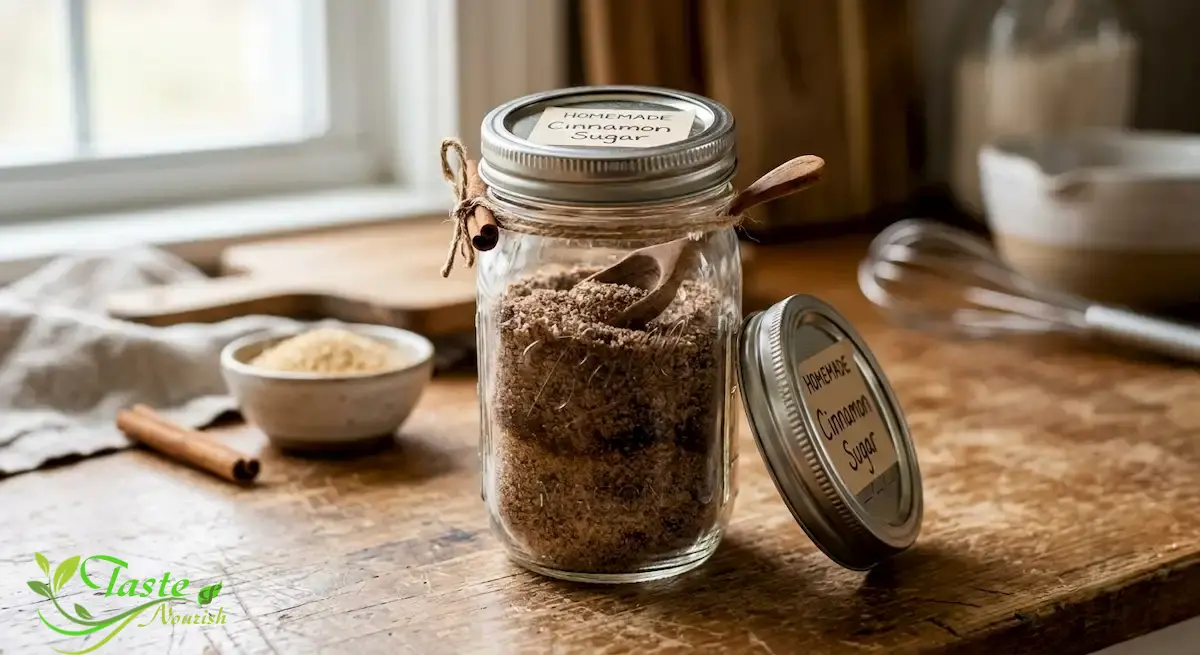
Few pantry staples pull their weight like a jar of cinnamon sugar sitting by the toaster. This cinnamon sugar recipe takes five minutes, uses two ingredients you already own, and turns plain toast, oatmeal, or roasted squash into something you’ll actually look forward to eating. The trick isn’t a secret ingredient — it’s getting the ratio right.
Once you’ve made a batch and tasted the difference fresh cinnamon makes, the pre-mixed grocery store version is hard to go back to.
This cinnamon sugar recipe combines granulated sugar and ground cinnamon at a 4:1 ratio — four parts sugar to one part cinnamon — whisked together and stored in an airtight jar. It takes about five minutes with no cooking required, keeps for months, and works on toast, oatmeal, baked goods, roasted vegetables, and coffee drinks.
Recipe at a Glance
Detail
Info
Prep Time
5 minutes
Cook Time
0 minutes (no cooking required)
Total Time
5 minutes
Yield
About 10 tablespoons (approximately 30 one-teaspoon servings)
Difficulty
Easy
Category
Condiment / Pantry Staple
Key Takeaways
The classic cinnamon sugar recipe ratio is 4 parts granulated sugar to 1 part ground cinnamon.
No cooking or special equipment is needed — just a bowl, a whisk, and an airtight jar.
Fresh, fragrant cinnamon makes a noticeably bigger difference than the exact ratio does.
It keeps well for about six months when stored away from heat, light, and moisture.
The base ratio adjusts easily for snickerdoodles, oatmeal, roasted vegetables, or drink rims.
Why You’ll Love This Cinnamon Sugar Recipe
It solves a real problem: store-bought cinnamon sugar blends are often stale by the time you buy them, and the cinnamon-to-sugar balance rarely matches how you actually like to use it. Making your own means you control both.
It’s also endlessly useful. One jar covers breakfast (toast, oatmeal, pancakes), baking (snickerdoodles, pie crust, muffin tops), and even savory-leaning uses like roasted sweet potatoes, without needing a separate spice blend for each.
Ingredients for This Homemade Cinnamon Sugar Mix Recipe
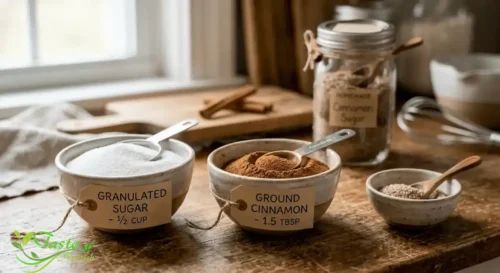
1/2 cup (100g) granulated sugar
1½–2 tablespoons (about 15 g) ground cinnamon
Ingredient Notes
Granulated sugar is the standard choice because its fine, even crystals coat food evenly and dissolve predictably when heated, which matters for baking applications like snickerdoodles or pie crusts.
Most cinnamon sold in U.S. grocery stores is cassia cinnamon, which has a bold, slightly spicy flavor. Ceylon cinnamon is milder and sweeter, with citrus-like undertones. Either works here; the choice comes down to taste preference and how often you use cinnamon in your diet, since the two types differ in their natural compound profile, as the National Center for Complementary and Integrative Health explains. Whichever you choose, freshness matters more than species: cinnamon that’s been open for over a year will taste flat no matter how you dose it.
Substitutions
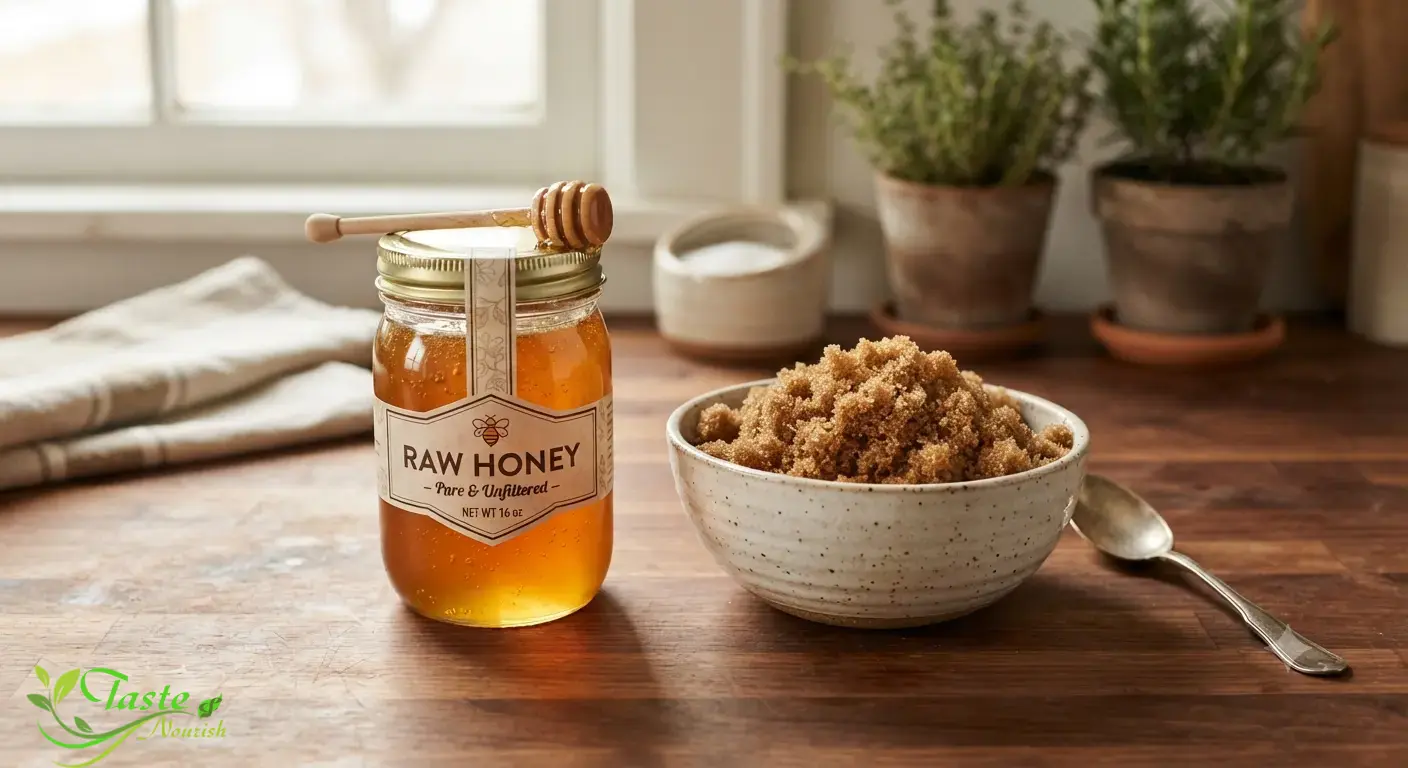
Light brown sugar can replace half or all of the granulated sugar for a deeper, more caramel-like flavor — this works especially well for oatmeal. The trade-off is that brown sugar’s added moisture makes the mix clump faster, so plan to use it within a few weeks rather than months.
Coconut sugar is a workable substitute in a pinch, though it shifts the color toward tan-brown and reads as slightly less sweet. A granulated monk fruit or erythritol blend can replace some of the sugar for a lower-sugar version, but it won’t caramelize the same way in baking, so it’s better suited to sprinkling on toast or fruit than to snickerdoodle dough.
Kitchen Tools Needed
You don’t need anything specialized: a small mixing bowl, a whisk or fork, and a jar with a tight-fitting lid. A jar with a shaker top (an old spice jar works well) makes it much easier to apply an even layer instead of dumping on too much at once.
How to Make This Cinnamon Sugar Recipe: Step-by-Step
Add the granulated sugar and ground cinnamon to a small mixing bowl.
Whisk continuously for about 30 seconds, until the mixture is a uniform reddish-brown with no streaks of white sugar or darker cinnamon clumps remaining.
If the cinnamon was clumpy to begin with, press the mixture through a fine-mesh sieve with the back of a spoon, then whisk again.
Transfer to an airtight jar and seal. It’s ready to use immediately.
The Classic Cinnamon Sugar Ratio Explained
The 4:1 sugar-to-cinnamon ratio is the traditional starting point used in most homestyle and bakery cinnamon sugar recipes, because it lets the cinnamon come through clearly without turning bitter or chalky, which can happen when the cinnamon-to-sugar ratio gets too heavy. That said, it’s a starting point, not a rule.
For something more cinnamon-forward, like a snickerdoodle coating, many bakers shift toward 3:1. For a gentler mix meant for delicate fruit like sliced pears, 5:1 keeps the cinnamon from overpowering. Once you’ve made the base ratio once, adjusting it to your own taste takes one more batch.
Expert Cooking Tips
Whisk longer than feels necessary — cinnamon clumps stubbornly, and a rushed 5-second stir leaves pockets of straight cinnamon that taste bitter.
Taste-test on buttered toast, not straight off the spoon. Dry mix tastes far sweeter and more one-note than it does once it’s melting into butter.
Do a fresh-cinnamon check before you start: rub a pinch between your fingers. It should smell strong and warm immediately. If it smells faint or dusty, the flavor of the finished mix will be flat regardless of ratio.
Make a double batch. Since it keeps for months, there’s little reason to remeasure this every few weeks.
Common Mistakes to Avoid
Most problems with homemade cinnamon sugar come down to a handful of avoidable habits.
Using the wrong ratio for the use case. A 1:1 or 2:1 mix, common in some online recipes, tastes overwhelmingly spicy and slightly bitter on plain toast. Stick closer to 4:1 for everyday use and adjust from there.
Skipping the whisk step. Simply stirring with a spoon a few times leaves uneven pockets. A full 30 seconds of whisking (or a quick pass through a sieve) fixes this.
Storing it near the stove. Heat and humidity cause the mix to clump and lose aroma faster. A cool, dark cabinet works far better than a shelf above the range.
Using cinnamon that’s past its prime. Ground cinnamon loses potency gradually, and no ratio adjustment compensates for cinnamon that’s already gone flat.
No shaker top. Without one, it’s easy to dump on far more than intended, especially on delicate items like popcorn or fruit.
Recipe Variations
The base ratio adapts easily once you know it.
Vanilla Cinnamon Sugar: Whisk in 1/2 teaspoon vanilla bean powder (not liquid extract, which adds moisture and causes clumping) for a rounder, bakery-style flavor.
Brown Sugar Cinnamon: Replace half the granulated sugar with light brown sugar for a deeper, more caramel-forward flavor that’s especially good stirred into oatmeal.
Pie Spice Cinnamon Sugar: Add 1/4 teaspoon each of ground nutmeg and allspice for topping pie crusts or roasted squash.
Ceylon Cinnamon Sugar: Swap in Ceylon cinnamon for a milder, slightly citrusy flavor — a good option for anyone who uses cinnamon sugar daily and prefers a gentler taste.
Lower-Sugar Version: Replace up to half the sugar with a granulated monk fruit or erythritol blend. It works well for sprinkling but won’t caramelize the same way in baked goods.
Serving Suggestions
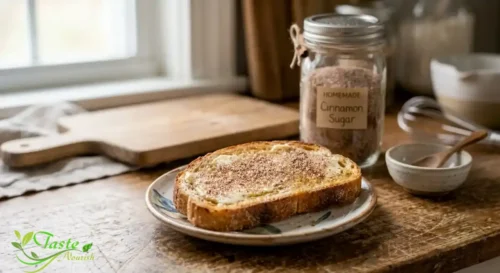
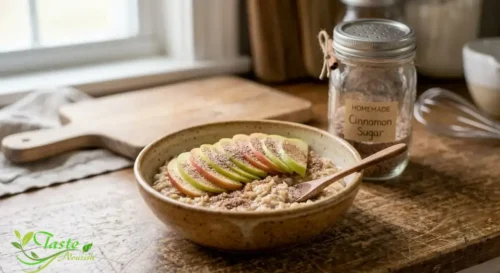
Buttered toast is the obvious pairing, but this mix earns its keep well beyond breakfast. Stir it into oatmeal or yogurt, sprinkle it over pancakes, waffles, or French toast, or dust it on roasted sweet potatoes and butternut squash for a sweet-savory finish. It’s also a natural fit for popcorn, sliced apples, baked apples, churros, and the sugared rim of a mug of hot cider or a latte.
Nutrition Information
These values are estimated for one teaspoon of the finished mix (roughly the amount used per slice of toast) and are meant as a general guide rather than a precise clinical measurement, based on standard nutrient data for granulated sugar and ground cinnamon from USDA FoodData Central.
Nutrient
Approximate Amount
Calories
~15 kcal
Total Carbohydrate
~4g
Sugars
~3g
Fiber
Less than 1g
Fat / Protein
Trace amounts
Cinnamon itself contributes small amounts of minerals such as manganese and calcium, along with plant compounds researchers have studied for antioxidant and anti-inflammatory activity, though in the small quantity used per serving here, the practical nutritional impact is minor. Because this mix is mostly sugar, it’s worth counting it toward your daily added sugar total; the FDA recommends limiting added sugars to under 10% of daily calories.
Storage Instructions
Store cinnamon sugar in an airtight glass jar in a cool, dark cabinet, away from the stove or any direct heat and light. Kept this way, it stays fresh and fragrant for about six months, though it remains safe to eat well beyond that since both ingredients are shelf-stable on their own — it simply loses aroma and flavor intensity over time.
If you’ve made the brown sugar variation, expect it to clump sooner due to the added moisture; use it within a few weeks for the best texture. If any version hardens, a few seconds of gentle warmth (lid off, jar uncovered near — not in — a warm oven that’s been turned off) can loosen it. Discard the mix if you notice any off odors, discoloration, or moisture contamination.
Make-Ahead Tips
Because it keeps so well, cinnamon sugar is an easy make-ahead project for the holidays: multiply the recipe, divide it into small jars, and tie on a ribbon and a handwritten tag with serving suggestions for an easy homemade gift. Making one large batch each fall also means it’s ready for the whole baking season without a mid-December scramble.
Cinnamon Sugar Recipe FAQs
What is the classic cinnamon sugar ratio?
Four parts granulated sugar to one part ground cinnamon (4:1) is the traditional starting ratio, though it’s common to adjust between 3:1 and 5:1 depending on the intended use.
Can I use brown sugar instead of granulated sugar?
Yes. It adds a deeper, caramel-like flavor, but the extra moisture makes it clump faster, so plan to use it within a few weeks.
Does cinnamon sugar go bad?
Not in the sense of spoiling, since both ingredients are shelf-stable, but it does lose aroma and flavor strength over time. For the best flavor, use it within about six months.
What’s the difference between Ceylon and cassia cinnamon here?
Cassia, the type most commonly sold in U.S. grocery stores, has a bold, spicy flavor. Ceylon is milder and sweeter. According to the National Center for Complementary and Integrative Health, cassia also contains higher levels of a compound called coumarin than Ceylon does; typical culinary amounts are considered fine for most people, but it’s a reasonable factor to weigh if you use cinnamon heavily and daily.
Is cinnamon sugar good for blood sugar management?
Not really, and it’s worth being clear-eyed about this. Some research on cinnamon and blood glucose has suggested modest effects in people with type 2 diabetes, but results across studies have been inconsistent, according to a systematic review and meta-analysis published in Annals of Family Medicine. More importantly, this mix is mostly sugar, so it adds to daily added sugar intake rather than reducing it. It’s a flavor booster, not a blood sugar tool.
How much cinnamon sugar should I use per serving?
About 1 teaspoon per slice of toast, or 1 to 2 teaspoons stirred into a bowl of oatmeal, is a good starting point — you can always add more.
Can I double or triple the recipe?
Yes, the ratio scales cleanly. Multiply both ingredients by the same factor and store the larger batch in a bigger airtight jar.
This classic cinnamon sugar recipe combines granulated sugar and ground cinnamon at a 4:1 ratio. No cooking required, ready in 5 minutes, and keeps for months.
Ingredients
1/2 cup (100g) granulated sugar
2 tablespoons (about 15g) ground cinnamon
Directions
Add the granulated sugar and ground cinnamon to a small mixing bowl.
Whisk continuously for about 30 seconds, until the mixture is a uniform reddish-brown with no streaks of white sugar or darker cinnamon clumps remaining.
If the cinnamon was clumpy to begin with, press the mixture through a fine-mesh sieve with the back of a spoon, then whisk again.
Transfer to an airtight jar and seal. It's ready to use immediately.
Conclusion
This cinnamon sugar recipe is one of those rare kitchen projects that takes almost no effort and pays off almost every day after. Whisk up a double batch, keep it in a shaker jar by the toaster, and you’ll reach for it far more than you’d expect.
References
National Center for Complementary and Integrative Health. “Cinnamon: Usefulness and Safety.” National Institutes of Health. https://www.nccih.nih.gov/health/cinnamon
U.S. Department of Agriculture, Agricultural Research Service, Beltsville Human Nutrition Research Center. “FoodData Central.” https://fdc.nal.usda.gov/
Pagliari S, Forcella M, Lonati E, et al. “Antioxidant and Anti-Inflammatory Effect of Cinnamon (Cinnamomum verum J. Presl) Bark Extract after In Vitro Digestion Simulation.” Foods, National Library of Medicine (PMC). https://pmc.ncbi.nlm.nih.gov/articles/PMC9914695/
Allen RW, Schwartzman E, Baker WL, et al. “Cinnamon Use in Type 2 Diabetes: An Updated Systematic Review and Meta-Analysis.” Annals of Family Medicine, National Library of Medicine (PMC). https://pmc.ncbi.nlm.nih.gov/articles/PMC3767714/
**Hanan Abo Samra** shares practical cooking insights, delicious recipes, and evidence-based nutrition information. Drawing on more than 20 years of hands-on cooking experience, she creates helpful food content that combines everyday cooking knowledge with information from reliable scientific sources. Her goal is to help readers better understand the foods they eat, explore their nutritional benefits, and prepare delicious meals with confidence.