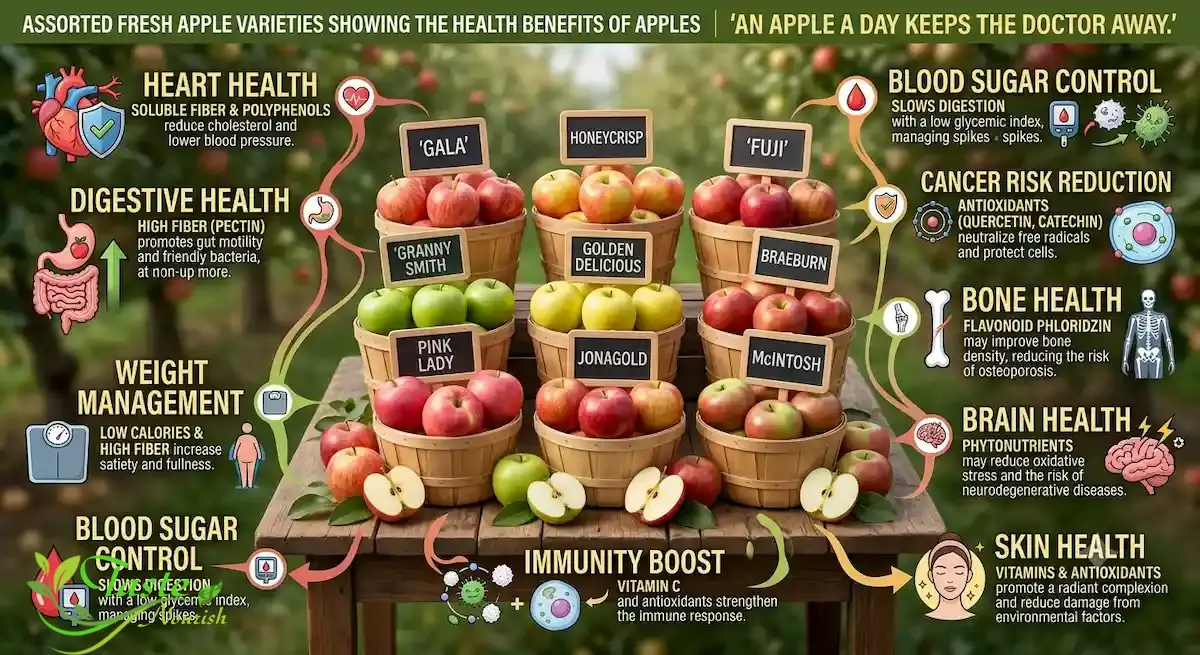

Do Apples Help You Lose Weight? Benefits & Science
Apples and Weight Loss: Benefits, Facts & Myths

Apples can be a genuinely helpful addition to a weight loss plan, mainly because of their fiber and water content, which may support feelings of fullness and lower overall calorie intake compared with less filling snacks. No single food causes weight loss on its own, but swapping processed snacks for a whole apple is a simple, evidence-backed habit that supports a calorie-controlled diet.
Apples are one of the most widely eaten fruits in the world, and for good reason: they’re portable, inexpensive, naturally sweet, and require no prep. That convenience matters more than people realize when it comes to weight management, since the easiest healthy choice is usually the one that actually gets made. This article looks at what apples offer nutritionally, what the research says about apples and weight loss specifically, and how to fit them into a realistic eating pattern.
Key Takeaways
- A medium apple has about 95 calories and 4.4 grams of fiber, making it a low-calorie, high-fiber choice that supports apples for weight loss goals.
- Fiber and water give apples low energy density, meaning you get more food volume for fewer calories.
- Pectin, a soluble fiber concentrated in apple skin, may support satiety and a healthier gut microbiome.
- Whole apples are far more filling than apple juice, which strips out the fiber and concentrates the sugar.
- No fruit works in isolation; apples support weight loss best as part of an overall reduced-calorie, balanced diet.
What Is an Apple, Nutritionally Speaking?
Botanically, an apple is a pome fruit from the Malus domestica tree, but nutritionally, what matters most is its composition: roughly 85% water, a meaningful dose of fiber concentrated in and just beneath the skin, and natural sugars packaged with that fiber rather than stripped away. That combination is what separates a whole apple from processed, sugar-sweetened snacks that deliver calories without the volume or slow digestion that help you feel satisfied.
Apple Nutrition Facts
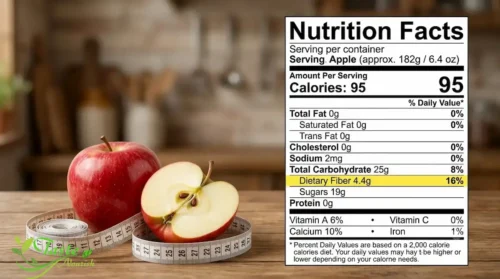
The figures below reflect one medium apple (about 182 grams) with the skin on, based on USDA FoodData Central’s entry for raw apples with skin.
| Nutrient | Amount | % Daily Value |
|---|---|---|
| Calories | 95 kcal | — |
| Total Fat | 0.3 g | <1% |
| Total Carbohydrate | 25 g | 9% |
| Dietary Fiber | 4.4 g | 16% |
| Total Sugars | 19 g | — |
| Protein | 0.5 g | 1% |
| Vitamin C | 8.4 mg | 9% |
| Potassium | 195 mg | 4% |
That 4.4 grams of fiber accounts for roughly 16% of a typical daily target in a single piece of fruit, and it comes bundled with about 155 grams of water. Together, fiber and water are what make an apple filling relative to its modest calorie count.
Health Benefits of Apples for Weight Loss

High Fiber May Support Feelings of Fullness
Soluble fiber, including the pectin found in apples, slows gastric emptying and the rate at which sugar enters the bloodstream, which can help you feel satisfied for longer after eating. Harvard Health Publishing notes that fiber-rich foods can support weight management by helping people feel fuller and eat less overall. Reaching for an apple instead of a low-fiber snack is a small, repeatable way to work more fiber into the day.
Low Energy Density May Help Reduce Overall Calorie Intake
Energy density refers to how many calories a food packs into a given weight; foods high in water and fiber, like apples, have low energy density, so you can eat a satisfying portion for relatively few calories.
In a year-long clinical trial published in the American Journal of Clinical Nutrition, researchers found that participants advised to add water-rich foods like fruit to a reduced-fat diet lost more weight and reported less hunger than those who only cut fat. Apples fit squarely into that low-energy-density category.
Pectin May Support Gut Health Linked to Weight Regulation
Apple pectin is a fermentable fiber that feeds beneficial gut bacteria as it moves through the digestive tract. Research summarized by the National Institutes of Health’s PMC database indicates that fiber fermentation supports gut microbiota composition and can aid weight management alongside its role in promoting satiety. A healthier gut environment is increasingly linked to how the body regulates appetite and stores fat.
Naturally Sweet Without Added Sugar
The 19 grams of sugar in a medium apple occur naturally and are eaten alongside fiber, water, and micronutrients, unlike added sugars in packaged snacks, which the FDA distinguishes from naturally occurring sugars on the Nutrition Facts label because of how they contribute empty calories without the same nutritional package.
Choosing a whole apple over a cookie or granola bar satisfies a sweet craving without the same calorie density or blood sugar spike.
High Water Content Adds Volume for Few Calories
At roughly 85% water by weight, apples add bulk to a meal or snack without adding many calories. This volume effect is part of why apples show up so often in “eat more, weigh less” style recommendations from registered dietitians: the fruit takes up stomach space and chewing time relative to its calorie count, both of which play into how satisfied you feel after eating.
What the Science Actually Says About Apples and Weight Loss
The research on apples for weight loss centers on mechanism more than magic. Fiber and water reliably increase satiety and reduce energy density, and both are established, well-studied levers for eating fewer calories without feeling deprived. Clinical trial data on fruit-rich, reduced-fat diets shows real, if modest, weight-loss benefits over standard reduced-fat approaches alone, particularly when fruit displaces higher-calorie snacks rather than getting added on top of an unchanged diet.
What the evidence does not support is the idea that apples burn fat or trigger weight loss independent of overall calorie balance; their role is to make a calorie deficit easier to sustain, not to create one automatically.
Potential Risks and Side Effects
Apples are well tolerated by most people, but a few things are worth knowing. Eating several apples in one sitting can cause bloating or gas in people sensitive to fructose or FODMAPs, since apples are relatively high in both. The acidity in apples can also contribute to enamel erosion over time, especially if apple juice or cider is sipped frequently.
Apple seeds contain trace amounts of a compound that releases cyanide when broken down, but the amount in the seeds of a few apples is far too small to pose a real risk unless consumed in large, deliberately crushed quantities.
Who Should Be Cautious With Apples?
- People with oral allergy syndrome linked to birch pollen may experience itching or swelling in the mouth after eating raw apples.
- Those following a low-FODMAP diet for IBS are often advised to limit apples, since their fructose and sorbitol content can trigger symptoms.
- People on blood-thinning medication should keep apple intake consistent day to day, since large fluctuations in fiber and vitamin K intake can subtly affect medication response.
How Many Apples Should You Eat for Weight Loss?
One to two medium apples a day fits comfortably within general fruit intake guidance and is a reasonable target if weight management is the goal. Eating an apple 20 to 30 minutes before a meal is a commonly used strategy to take the edge off hunger without significantly affecting how much you enjoy the meal itself. There’s no evidence that eating more than that accelerates weight loss; past a couple of servings, the extra fiber and sugar are just extra calories.
How to Choose the Best Apples
Look for apples that feel firm and heavy for their size, with tight, unblemished skin and no soft spots. A slightly duller sheen than what you see under grocery store lighting is normal, since many apples are lightly waxed after harvest. If you’re choosing a variety specifically for weight-conscious snacking, tarter varieties like Granny Smith tend to have a bit less sugar than sweeter varieties like Honeycrisp or Fuji, though the difference in calories is small either way.
Storage Tips
Apples last only about a week at room temperature but can keep for four to six weeks in the refrigerator’s crisper drawer, ideally in a perforated plastic bag to manage humidity. Keep them away from ethylene-sensitive produce like leafy greens, since apples release ethylene gas that speeds up spoilage in nearby items. Soft spots, a mealy texture, or a fermented smell are signs an apple has gone past its prime and should be composted rather than eaten.
Best Ways to Eat Apples for Weight Loss

Eat the skin on whenever possible, since a meaningful share of the fiber and antioxidants are concentrated there. Slicing an apple and pairing it with a source of protein, like a tablespoon of natural peanut butter or a handful of nuts, extends satiety further than the apple alone. Apples also work well diced into a savory salad, baked with cinnamon as a lower-sugar dessert stand-in, or simply eaten whole as a between-meal snack.
Skip apple juice and dried apple chips if weight loss is the goal; both concentrate the sugar and calories while losing most or all of the fiber that makes whole apples filling.
Common Mistakes People Make With Apples
- Peeling the apple before eating it, which removes a significant portion of the fiber and polyphenols.
- Drinking apple juice as a substitute for whole fruit, which offers little of the same satiety benefit.
- Treating apples as a “free food” and stacking them on top of an otherwise unchanged diet rather than using them to replace higher-calorie snacks.
- Pairing apple slices with high-calorie dips like caramel sauce, which can undo much of the calorie savings.
Myths vs. Facts About Apples and Weight Loss
| Myth | Fact |
|---|---|
| Apples burn fat directly. | No food burns fat on its own; apples support weight loss indirectly through fiber, volume, and satiety. |
| An apple a day guarantees weight loss. | Weight change depends on total calorie balance; apples are a helpful tool, not a stand-alone solution. |
| Apple juice offers the same benefits as whole apples. | Juice lacks the fiber of whole fruit and is far less filling per calorie. |
| Green apples have fewer calories than red apples. | Calorie content is nearly identical across varieties; the main differences are sweetness and tartness. |
Apples vs. Other Common Fruits for Weight Loss
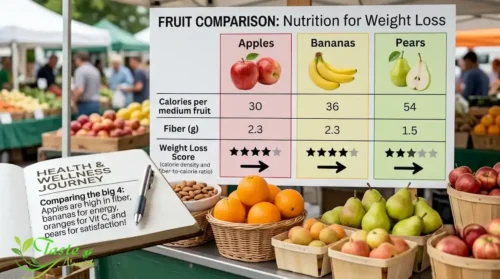
| Fruit (medium serving) | Calories | Fiber |
|---|---|---|
| Apple | ~95 kcal | ~4.4 g |
| Banana | ~105 kcal | ~3.1 g |
| Orange | ~62 kcal | ~3.1 g |
| Pear | ~101 kcal | ~5.5 g |
Pears edge out apples on fiber per serving, and oranges are lower in calories, but apples strike a practical balance of low calories, high fiber, and easy portability that makes them an easy default choice for weight-conscious snacking.
apples weight loss FAQs
Do apples help you lose weight?
Apples can support weight loss as part of a balanced, calorie-controlled diet, mainly by promoting fullness through fiber and water content. They aren’t a weight-loss food on their own, but replacing less filling snacks with apples is a practical habit.
What’s the best time to eat an apple for weight loss?
Eating an apple about 20 to 30 minutes before a meal is a common strategy to reduce hunger and may lead to eating somewhat less at that meal. There’s no single required time; consistency matters more than timing.
Is it better to eat apples with or without the skin?
With the skin. A meaningful portion of an apple’s fiber and antioxidant content is concentrated in and just beneath the skin, so peeling reduces the fruit’s satiety and nutritional value.
Can eating too many apples be bad for weight loss goals?
Yes, in the sense that any food eaten in excess adds calories. A few apples a day is reasonable, but treating them as unlimited or stacking them on top of an already sufficient diet won’t accelerate weight loss.
Are certain apple varieties better for weight loss than others?
The differences between varieties are minor. Tarter apples like Granny Smith tend to be slightly lower in sugar, but calorie counts across common varieties are close enough that personal preference is a reasonable way to choose.
Bottom Line
Apples aren’t a shortcut to weight loss, but they’re one of the more useful everyday tools for supporting one. Their fiber and water content help fill you up for relatively few calories, and swapping an apple in for a less filling snack is a small change that adds up over time. Used consistently, alongside an overall reduced-calorie eating pattern, apples can genuinely make weight management easier to sustain.
References
- U.S. Department of Agriculture, FoodData Central. “Apples, raw, with skin.” https://fdc.nal.usda.gov/food-details/171688/nutrients
- National Institutes of Health, National Center for Biotechnology Information (PMC). “Dietary fiber influence on overall health, with an emphasis on cardiovascular disease, diabetes, obesity, colon cancer, and inflammation.” https://pmc.ncbi.nlm.nih.gov/articles/PMC11671356/
- Harvard Health Publishing, Harvard Medical School. “Foods high in fiber: Boost your health with fiber-rich foods.” https://www.health.harvard.edu/diet-and-nutrition/foods-high-in-fiber-boost-your-health-with-fiber-rich-foods
- U.S. Food and Drug Administration. “How to Understand and Use the Nutrition Facts Label.” https://www.fda.gov/food/nutrition-education-resources-materials/how-understand-and-use-nutrition-facts-label
- Ello-Martin JA, Roe LS, Ledikwe JH, Beach AM, Rolls BJ. “Dietary energy density in the treatment of obesity: a year-long trial comparing 2 weight-loss diets.” American Journal of Clinical Nutrition, via PubMed Central (National Institutes of Health). https://pmc.ncbi.nlm.nih.gov/articles/PMC2018610/