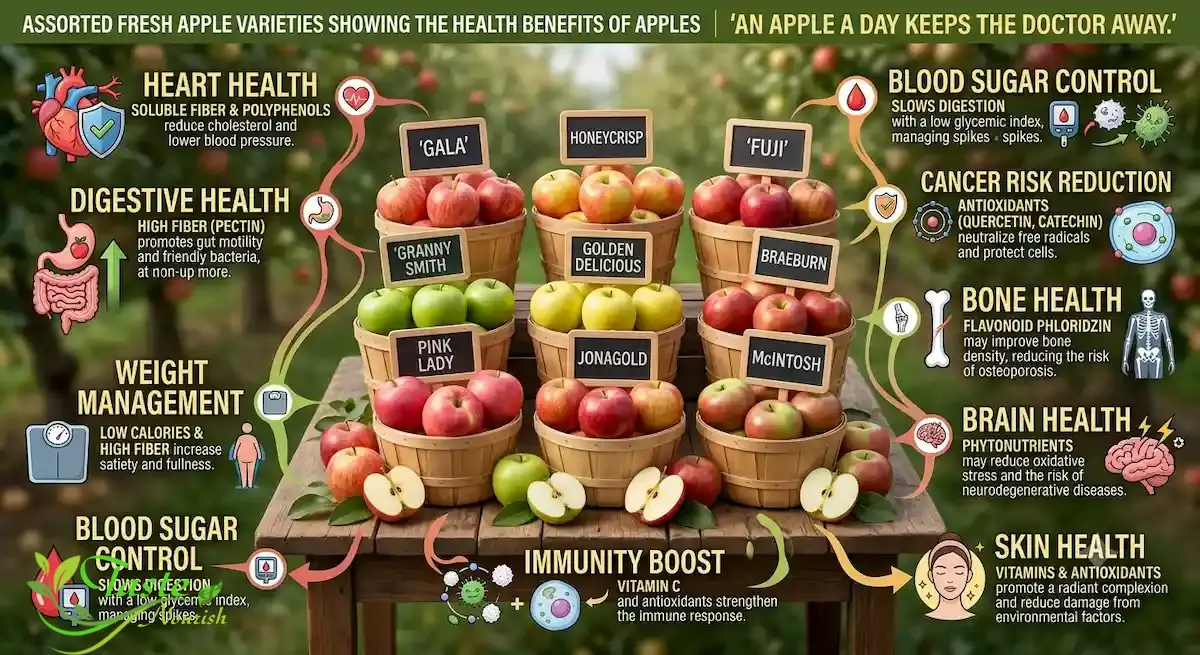
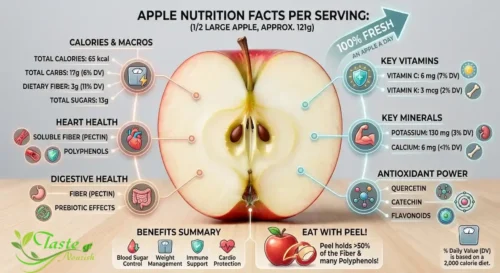
The health benefits of apples come from a rare combination of soluble fiber, vitamin C, and polyphenols like quercetin, all packed into a low-calorie, water-rich fruit. Research links regular apple consumption to better heart health, more stable blood sugar, and a more diverse gut microbiome. A single medium apple delivers roughly 4.4 grams of fiber and meaningful antioxidant activity for about 95 calories, making it one of the most nutrient-dense snacks available at any grocery store.
Apples have been a kitchen staple for thousands of years, and for good reason: they’re portable, inexpensive, and genuinely nutritious. Whether sliced into a lunchbox, baked into a dessert, or eaten straight off the tree, apples pull double duty as both a convenient snack and a legitimate contributor to long-term health. This guide breaks down exactly what’s in an apple, which health benefits of apples are backed by science, and how to choose, store, and eat them to get the most out of every bite.
A medium apple has about 95 calories and 4.4 grams of fiber, most of it concentrated in the skin.
The health benefits of apples are tied largely to quercetin and other polyphenols, which have antioxidant and anti-inflammatory properties.
Regular apple consumption is associated with better cholesterol levels and lower markers of inflammation linked to heart disease.
Women who ate at least one apple a day showed a measurably lower risk of type 2 diabetes compared with those who ate none, in long-term cohort research.
Apple pectin acts as a prebiotic fiber, feeding beneficial gut bacteria and supporting digestive regularity.
People with birch pollen allergies may experience oral itching or swelling after eating raw apples, a reaction known as oral allergy syndrome.
What Is an Apple?
An apple is the pome fruit of the Malus domestica tree, part of the rose family and native to Central Asia before spreading across Europe and eventually the Americas. Thousands of cultivars exist today—Gala, Fuji, Honeycrisp, Granny Smith, and Red Delicious among the most common in U.S. grocery stores—each with its own balance of sweetness, tartness, and texture.
Despite their variety, all apples share the same basic structure: a thin skin rich in fiber and polyphenols, a crisp, water-dense flesh, and a core holding a handful of seeds. That skin isn’t just texture; it’s where a large share of the fruit’s fiber and antioxidant content is concentrated, which is why nutrition guidance consistently favors eating apples unpeeled.
Apple Nutrition Facts
A medium apple (about 182 grams, roughly 3 inches in diameter, with skin) provides the following, according to the USDA FoodData Central database:
Nutrient
Amount
% Daily Value
Calories
95
—
Total Fat
0.3 g
0%
Sodium
2 mg
0%
Total Carbohydrate
25 g
9%
Dietary Fiber
4.4 g
16%
Total Sugars
19 g
—
Protein
0.5 g
—
Vitamin C
8.4 mg
9%
Potassium
195 mg
4%
That fiber content alone covers roughly 16% of a typical adult’s daily needs, and because it’s concentrated in the skin, an unpeeled apple delivers close to double the fiber of a peeled one. The natural sugar in apples comes packaged with fiber and water, which slows digestion and blunts the blood sugar spike you’d get from an equivalent amount of sugar consumed on its own.
Health Benefits of Apples
May Support Heart Health
Apples are one of the richest dietary sources of quercetin, a flavonoid with antioxidant and anti-inflammatory properties. According to a comprehensive review of apple research, regular apple consumption has been linked to improved lipid profiles, including higher HDL (“good”) cholesterol and lower levels of C-reactive protein, a marker of inflammation tied to cardiovascular disease.
The combination of soluble fiber, which can help lower LDL cholesterol, and polyphenols that support healthy blood vessel function, may help explain why apple eaters tend to show better cardiovascular markers than non-eaters.
May Help Support Healthy Blood Sugar Levels
Despite their natural sweetness, apples have a relatively low glycemic index, and the fiber and polyphenols in the fruit appear to blunt post-meal blood sugar swings.
In a large long-term study following tens of thousands of U.S. men and women, participants who ate apples and pears most frequently had a notably lower risk of developing type 2 diabetes compared with those who rarely ate them, an association researchers attributed in part to the fruit’s anthocyanin and flavonol content.
Supports Digestive Health
An apple’s fiber isn’t just bulk—it’s largely pectin, a soluble fiber that acts as a prebiotic in the colon. Laboratory research modeling human digestion has shown that fermenting apple fiber encourages the growth of beneficial gut bacteria while producing short-chain fatty acids that help maintain the gut lining. That prebiotic effect, combined with the fruit’s insoluble fiber, is part of why apples are traditionally recommended for both constipation and general digestive regularity.
May Support Weight Management
At roughly 95 calories with 4.4 grams of fiber and high water content, apples are exactly the kind of low-calorie-density food that nutrition researchers associate with better satiety. Eating a whole apple takes longer and requires more chewing than drinking juice or eating applesauce, which gives the body more time to register fullness.
Research reviewed in the same comprehensive apple analysis found associations between apple intake and improved weight management outcomes compared with other snack choices of similar calorie counts.
Delivers Antioxidants That May Help Protect Cells
Beyond vitamin C, apples—especially the skin—contain a mix of polyphenols, including quercetin, catechin, and chlorogenic acid, that neutralize free radicals implicated in cellular damage.
Research has linked higher intake of these apple-derived antioxidants to reduced markers of oxidative stress, and population studies have associated regular fruit intake, including apples, with lower rates of certain cancers, although researchers note that whole dietary patterns, not any single fruit, are likely responsible for that protective effect.
What the Scientific Evidence Shows About the Health Benefits of Apples
Much of what’s known about the health benefits of apples comes from a mix of observational cohort studies, laboratory research, and small randomized trials.
A systematic review and meta-analysis of randomized controlled trials found that participants who consumed whole apples or apple polyphenol extracts saw measurable improvements in HDL cholesterol and reductions in C-reactive protein compared with control groups—evidence that carries more weight than observational data alone, since participants were randomly assigned rather than self-selecting into “apple eaters” and “non-apple eaters.”
At the same time, large prospective studies that followed tens of thousands of participants over decades provide strong population-level evidence linking apple and pear intake to a reduced risk of type 2 diabetes, even after adjusting for other lifestyle factors. Laboratory and in vitro research adds a mechanistic layer, showing how apple fiber and polyphenols behave once they reach the gut.
Together, these different types of evidence point in the same direction: real, measurable apple health benefits, even though no single study proves that apples alone prevent disease.
Potential Risks & Side Effects
Apples are safe for the vast majority of people, but eating large quantities can cause digestive discomfort. The fiber and natural sugar alcohols in apples—sorbitol in particular—can cause bloating, gas, or loose stools if you eat several apples in one sitting, especially on an empty stomach. The natural acids in apples can also contribute to enamel erosion over time if you’re snacking on them frequently without rinsing your mouth afterward.
Apple seeds contain a compound that releases small amounts of cyanide when broken down, but accidentally swallowing a seed or two poses no real danger; you’d need to chew and consume a large quantity of crushed seeds for it to matter.
Who Should Avoid It?
People with a birch pollen allergy, who may experience oral allergy syndrome—itching or mild swelling of the mouth and throat—after eating raw apples.
People with IBS or fructose malabsorption who are following a low-FODMAP diet, since apples are relatively high in fermentable sugars.
Anyone on a medically prescribed low-fiber diet, such as after certain digestive surgeries, who should check with their care team before adding whole apples back in.
How Much Should You Eat?
One to two medium apples a day fits comfortably within general dietary guidance, which recommends about 1.5 to 2 cups of fruit daily for most adults. There’s no special therapeutic dose for apples—the benefits described above are tied to regular, moderate intake as part of a varied diet, not to eating unusually large amounts.
♦ If you’re new to eating more fiber, working up gradually and drinking enough water can help your digestive system adjust comfortably.
How to Choose the Best Apples
Look for apples that feel firm and heavy for their size with taut, unblemished skin—soft spots or wrinkling are early signs of moisture loss and mealiness. Color alone isn’t a reliable freshness cue since it varies by variety, but a dull or faded skin tone within a variety usually signals an apple that’s been sitting too long. Smell the stem end; a faint, sweet apple aroma is a good sign, while no scent at all often means the apple was picked underripe.
♦ If you like a tart, firm apple for baking, look for Granny Smith or Honeycrisp; for eating fresh, Gala, Fuji, and Envy tend to be sweeter and juicier.
How to Store Apples
Apples last far longer in the refrigerator than on the counter—up to 4 to 6 weeks in the crisper drawer versus about a week at room temperature—because cold slows the ripening process. Store them away from other produce when possible, since apples release ethylene gas that speeds ripening (and spoilage) in nearby fruits and vegetables. A soft, mealy texture, brown spots that spread past the surface, or a fermented smell are signs an apple has gone bad and should be discarded.
Best Ways to Eat or Cook Apples
Apples are as versatile raw as they are cooked. Sliced and eaten fresh with the skin on, they deliver the most fiber and polyphenols per bite—pair them with a spoonful of nut butter or a handful of nuts to slow the natural sugar’s absorption even further.
Grated into oatmeal or folded into a quick sauté with cinnamon, apples soften into a naturally sweet topping that needs little to no added sugar. Baking whole apples stuffed with oats and a touch of maple syrup makes a simple dessert that keeps most of the fruit’s fiber intact, unlike apple juice, which strips most of it away.
When apples are cooked, some heat-sensitive vitamin C is lost, but the fiber and much of the polyphenol content remain stable, so a baked or sautéed apple still carries most of the benefits discussed above.
Common Mistakes to Avoid
Peeling off the skin before eating, which removes a large share of the fiber and antioxidants.
Storing apples at room temperature next to other produce, which speeds up spoilage for everything nearby.
Relying on apple juice as a substitute for whole apples, since juicing removes nearly all of the fiber that delivers many of the benefits of eating apples in the first place.
Buying apples that feel soft or give easily under light pressure, a sign they’re already past peak freshness.
Myths vs. Facts
Myth
Fact
Apple seeds are highly poisonous.
Seeds contain a compound that releases trace amounts of cyanide, but you’d need to chew and eat a large quantity for it to pose any risk—swallowing one or two whole is harmless.
Green or tart apples have less sugar than red ones.
Tartness comes from acidity, not sugar content; a Granny Smith and a Red Delicious have similar total sugar per serving.
Browning apple flesh means the apple has spoiled.
Browning is oxidation from exposure to air, not spoilage—the apple is still safe to eat, and a squeeze of lemon juice slows the reaction.
Whole Apple vs. Apple Juice
Whole apples and apple juice come from the same fruit, but they behave very differently once you eat or drink them.
Whole Apple (medium, 182 g)
Apple Juice (1 cup, unsweetened)
Calories
95
~115
Fiber
4.4 g
0.2–0.5 g
Sugar
19 g (naturally bound in fruit)
~24 g (concentrated, no fiber)
Satiety
High—requires chewing, slows digestion
Low—quickly consumed, faster blood sugar rise
Health Benefits of Apples FAQs
Is it better to eat apples with or without the skin?
With the skin. Apple skin contains most of the fruit’s fiber and a large share of its polyphenols, so peeling an apple significantly reduces its nutritional value.
How many apples should I eat per day?
One to two medium apples a day comfortably fits general fruit intake guidelines for most adults and is enough to gain the benefits associated with regular apple consumption.
Can people with diabetes eat apples?
Yes. Apples have a relatively low glycemic index, and research has actually linked regular apple consumption to a lower risk of developing type 2 diabetes, though portion size and pairing with protein or fat still matter for blood sugar control.
Do apples cause weight gain?
No. Whole apples are low in calorie density and high in fiber, a combination generally associated with satiety and weight management rather than weight gain.
Are apple seeds dangerous if swallowed?
Not in the amounts anyone would realistically swallow. A seed or two passed through whole poses no danger; only large quantities of crushed seeds carry any theoretical risk.
Bottom Line
The health benefits of apples hold up well under scientific scrutiny: this humble fruit delivers meaningful fiber, vitamin C, and polyphenols for very few calories, with research connecting regular apple intake to better heart health, more stable blood sugar, and a healthier gut microbiome. Eat them whole, skin on, and don’t overthink the variety—any apple you’ll actually enjoy eating regularly is the right one.
For most people, an apple a day isn’t a guarantee against illness, but it’s a genuinely smart, low-effort addition to a healthy diet.
References
U.S. Department of Agriculture, Agricultural Research Service. “FoodData Central.” National Agricultural Library. https://fdc.nal.usda.gov/
Hyson, D.A. “A Comprehensive Review of Apples and Apple Components and Their Relationship to Human Health.” Advances in Nutrition, National Center for Biotechnology Information (PMC), National Institutes of Health. https://pmc.ncbi.nlm.nih.gov/articles/PMC3183591/
“Dietary Flavonoid Intakes and Risk of Type 2 Diabetes in US Men and Women.” American Journal of Clinical Nutrition, National Center for Biotechnology Information (PMC), National Institutes of Health. https://pmc.ncbi.nlm.nih.gov/articles/PMC3302366/
“Effects of Commercial Apple Varieties on Human Gut Microbiota Composition and Metabolic Output Using an In Vitro Colonic Model.” National Center for Biotechnology Information (PMC), National Institutes of Health. https://www.ncbi.nlm.nih.gov/pmc/articles/PMC5490512/
Hanan Abo Samra is the founder of Taste & Nourish, sharing trustworthy nutrition guidance and recipes drawn from 20+ years of hands-on cooking experience. When she's not developing new recipes, Hanan is researching the science behind everyday ingredients to bring readers practical, evidence-based guidance for a healthier lifestyle.