If you’ve searched for a natural way to support your goals, you’ve probably come across claims about beetroot weight loss benefits all over social media and grocery store shelves. This vibrant root vegetable is often marketed as a metabolism-boosting superfood, but does the science actually back that up?
The short answer is more nuanced than most headlines suggest. Beetroot is low in calories, rich in fiber, and packed with water, which can make it a smart addition to a weight-conscious diet. It isn’t a magic fat burner, though, and beet juice in particular comes with a few caveats worth understanding before you rely on it.
Beetroot may support weight loss as part of a balanced, calorie-controlled diet because it’s low in calories, high in fiber and water, and can help you feel full without eating a lot of energy. That said, no research shows that beetroot weight loss happens on its own — the vegetable works best alongside regular activity, adequate protein, and an overall reduced-calorie eating pattern.
Beet juice, since it lacks most of the fiber found in whole beets, tends to be less filling per serving and shouldn’t be treated as a stand-alone weight loss drink.
Key Takeaways
Beetroot is low in calories and high in fiber, water, folate, and potassium.
Beetroot weight loss benefits are linked mainly to its fiber content and low energy density, not to any unique fat-burning compound.
Beet juice provides far less fiber than whole beetroot, so it may be less satisfying per serving.
Small pilot studies suggest beetroot juice combined with calorie restriction and exercise may support metabolic and vascular health, but evidence for weight loss specifically is limited and mixed.
People with a history of calcium oxalate kidney stones or low blood pressure should check with a doctor before regularly drinking beet juice.
Whole, roasted, or boiled beetroot is generally a better choice for weight management than juice because it keeps the fiber intact.
What Is Beetroot?
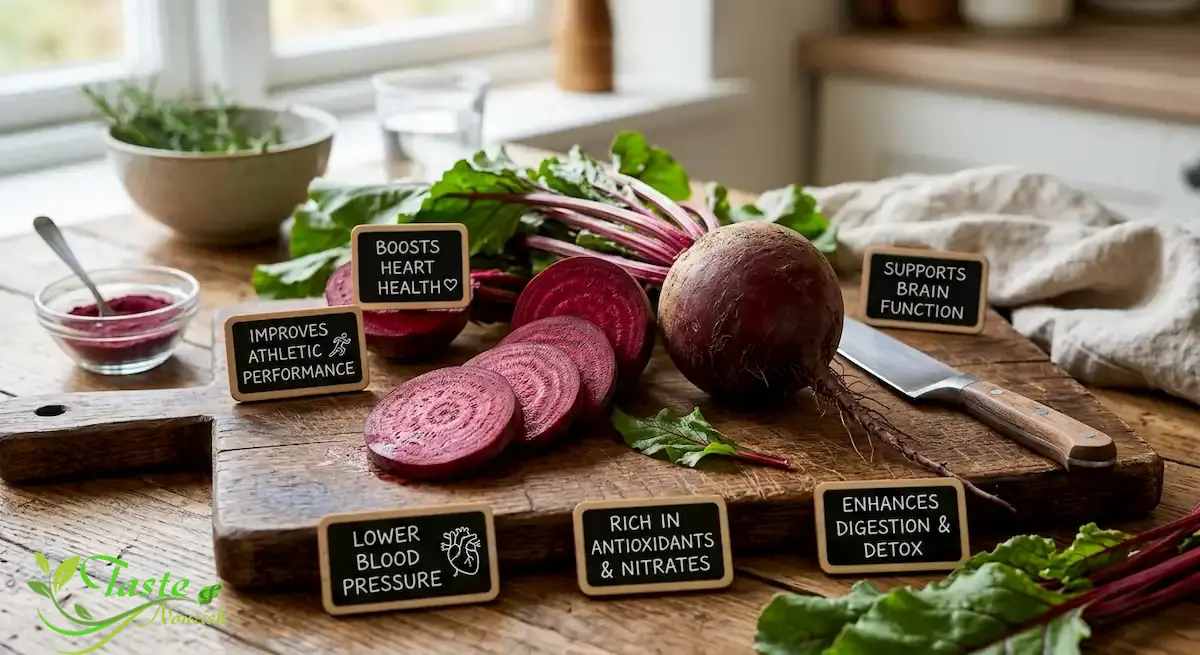
Beetroot (Beta vulgaris) is the round, deep-colored root of the beet plant, a relative of Swiss chard and sugar beet. Its signature crimson color comes from pigments called betalains, though golden and candy-striped varieties also exist.
People eat beetroot in many forms: raw and shredded, roasted, boiled, pickled, juiced, powdered into supplements, or as tender beet greens sautéed like spinach. Each preparation has a slightly different nutrition profile, which matters when you’re eating it for weight management.
Beetroot Nutrition Facts
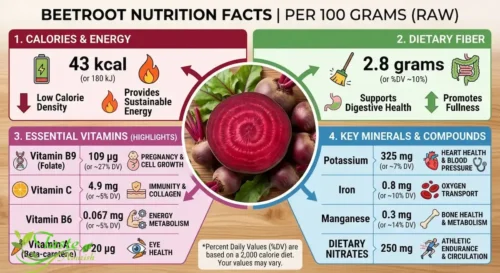
According to USDA, a 100-gram serving (about two-thirds of a cup) of raw beetroot contains roughly the following:
Nutrient
Amount per 100g (raw)
Approximate % Daily Value
Calories
43 kcal
—
Water
~88 g
—
Protein
1.6 g
—
Carbohydrates
9.6 g
—
Dietary fiber
2.8 g
10%
Natural sugars
6.8 g
—
Fat
0.2 g
—
Folate
109 mcg
27%
Potassium
325 mg
7%
Manganese
0.3 mg
14%
Vitamin C
4.9 mg
5%
Beetroot is also one of the richest dietary sources of naturally occurring nitrates, compounds the body can convert into nitric oxide, along with antioxidant betalain pigments that give it its color.
Health Benefits
Beyond its role in weight management, beetroot offers a nutrient profile that supports several areas of health.
Beetroot for Weight Loss: How It May Support Your Goals
Beetroot for weight loss mainly comes down to basic nutrition math. It’s a low-calorie, high-volume food, meaning you can eat a satisfying portion without taking in many calories.
The fiber in whole beetroot slows digestion and may help you feel fuller for longer, a mechanism well documented for dietary fiber in general, according to a clinical review published on the National Library . Swapping a higher-calorie side dish for roasted or boiled beets is a simple way to reduce overall calorie intake without feeling deprived.
Heart Health and Blood Pressure
The nitrates in beetroot are converted in the body to nitric oxide, a compound that helps blood vessels relax. Research on beetroot juice and vascular function, including trials conducted in overweight and older adults, has explored this pathway as a way to support healthy circulation and blood pressure.
Exercise Performance and Stamina
Some athletes use beetroot juice before workouts because dietary nitrate may improve oxygen efficiency during exercise. Better stamina can indirectly support weight management by making it easier to stay consistent with physical activity, though this effect on performance is separate from any direct effect on body fat.
Antioxidant and Digestive Support
Betalains, the pigments responsible for beetroot’s color, act as antioxidants that may help reduce oxidative stress in the body. The fiber in whole beetroot also supports regular digestion and feeds beneficial gut bacteria.
Does Beet Juice Help You Lose Weight?
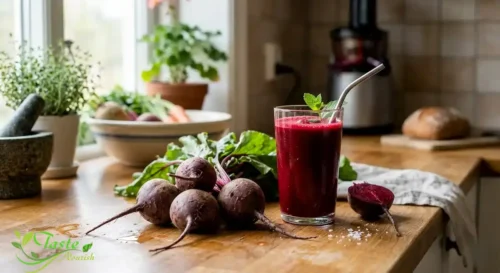
This is one of the most common questions people ask, and the honest answer is: it’s complicated. A cup of beet juice typically has around 100 calories, mostly from natural sugars, and very little of the fiber found in whole beets, since juicing removes most of the plant’s solid matter.
A pilot randomized controlled trial in overweight and obese older adults, published on PubMed Central (National Institutes of Health), tested different doses of beetroot juice mainly to assess feasibility and vascular and cognitive outcomes, not weight loss as the primary goal. A separate 14-day pilot trial combining beetroot juice with calorie restriction, also archived on PubMed Central, found that beetroot juice did not interfere with the metabolic effects of calorie restriction and supported vascular and cognitive function, but the weight loss in that study came from the calorie deficit itself, not from the juice.
Based on current research, beet juice alone is unlikely to cause meaningful weight loss. It may be a reasonable addition to an already balanced, calorie-controlled diet, but it shouldn’t be treated as a shortcut.
Scientific Evidence: The Research Behind Beetroot Weight Loss
Most human research on beetroot has focused on blood pressure, vascular function, and exercise performance rather than weight loss as a primary outcome. The pilot trials mentioned above are small, short in duration, and often designed to test feasibility rather than to prove significant fat loss.
What’s better established is the broader science of fiber and satiety. Reviews of dietary fiber research indicate that soluble fiber can slow gastric emptying and promote fullness, which may help reduce overall calorie intake over time, according to the clinical guide on the NCBI Bookshelf. Since whole beetroot contains meaningful fiber, this general mechanism likely applies, even though beetroot-specific weight-loss trials remain limited.
In short: research suggests beetroot may help support weight management as part of a nutrient-dense, fiber-rich diet, but larger, longer-term studies focused specifically on body weight are still needed.
Potential Risks & Side Effects
Beeturia: Pink or red-tinted urine or stool after eating beets. It’s harmless and simply due to pigment compounds.
Kidney stone risk: Beetroot and beet juice are high in oxalates, which may contribute to calcium oxalate kidney stones in susceptible people.
Low blood pressure: The nitrate content may lower blood pressure further in people already prone to hypotension or taking blood pressure medication.
Digestive upset: Adding a lot of fiber-rich beetroot too quickly can cause bloating or gas in some people.
Who Should Avoid It?
People with a history of calcium oxalate kidney stones may need to limit high-oxalate foods like beets, according to guidance from the National Kidney Foundation. Pairing beets with a calcium source at meals, and staying well hydrated, may help reduce oxalate absorption for those who still want to include them.
People with low blood pressure, those taking nitrate-based or blood pressure medications, and anyone with a known beet allergy should also talk to a healthcare provider before adding beet juice to their routine. People on potassium-restricted diets for kidney disease should discuss beetroot portions with their care team as well.
How Much Should You Eat?
For most healthy adults, about half a cup to one cup of cooked beetroot (roughly 75 to 150 grams) most days is a reasonable amount to include as part of overall vegetable intake. If you enjoy beet juice, 4 to 8 ounces (about 120 to 240 milliliters) occasionally, rather than daily, is a moderate approach.
For weight management specifically, prioritizing whole or cooked beetroot over juice makes more sense, since you’ll get the fiber that supports fullness along with the same vitamins and minerals.
How to Choose the Best Beetroot
Look for firm, smooth roots without soft spots, cracks, or wrinkled skin.
Small to medium beets tend to be more tender than very large ones, which can be woody.
If the leafy tops are still attached, they should look fresh and vibrant, not wilted, which is a good sign of overall freshness.
Choose beets that feel heavy for their size, which usually indicates good moisture content.
Storage Tips
Trim the greens off before storing the roots, since the leaves pull moisture from the beet. Store the greens separately in the refrigerator and use them within a few days.
Unwashed, untrimmed beet roots keep well in a perforated plastic bag in the refrigerator crisper for two to three weeks. Cooked or roasted beets keep in an airtight container in the fridge for about five days, and they also freeze well for several months if you want to prep them in advance.
Best Ways to Eat or Cook Beetroot
Beetroot is versatile enough to fit into almost any meal pattern, which makes it easier to stick with over time.
Roasted: Toss wedges with a small amount of olive oil and roast until tender for a naturally sweet side dish.
Raw and shredded: Add to salads or slaws for crunch and color without extra cooking.
Boiled: A simple, low-fat preparation that works well in salads or grain bowls.
Blended: Add a small amount of whole beetroot to smoothies for fiber, color, and natural sweetness.
Pickled: A tangy option, though store-bought versions can be higher in added sugar and sodium, so check labels.
Sample Beetroot Weight Loss Meal Ideas
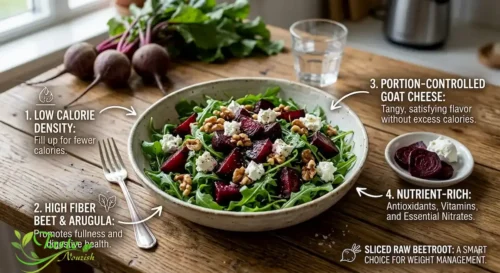
Roasted beet and arugula salad with a light vinaigrette and a small portion of feta.
Shredded raw beet and carrot slaw with lemon juice as a low-calorie side.
Beet, berry, and spinach smoothie with a scoop of protein powder for staying power.
Beet and lentil grain bowl with roasted vegetables and a simple herb dressing.
Warm borscht-style soup made with beets, cabbage, and lean protein.
Common Mistakes That Undermine Beetroot Weight Loss Goals
Relying only on beet juice while skipping the fiber found in whole beetroot.
Adding sugary juices or syrups to beet juice, which cancels out its low-calorie advantage.
Assuming pickled beets are always low-calorie, when many store-bought versions are high in added sugar.
Expecting quick results without adjusting overall calorie intake or activity level.
Eating beetroot alone without protein, which can lead to hunger returning quickly.
Beetroot Weight Loss: Myths vs Facts
Myth
Fact
Beetroot burns fat directly.
No single food burns fat. Beetroot may support weight loss by being low-calorie and filling.
Beet juice is essentially calorie-free.
Beet juice contains natural sugars and calories, roughly 100 per cup.
Juicing keeps all the nutrients of whole beets.
Juicing removes most of the fiber, which is important for fullness.
Dietary nitrates in beets are unsafe.
Nitrates from vegetables are generally considered different from those in processed meats and are not linked to the same health concerns.
Comparison Table: Beetroot vs Other Weight-Loss-Friendly Vegetables
Vegetable (100g, raw)
Calories
Fiber
Natural Sugar
Beetroot
43 kcal
2.8 g
6.8 g
Carrots
41 kcal
2.8 g
4.7 g
Broccoli
34 kcal
2.6 g
1.7 g
Cucumber
15 kcal
0.5 g
1.7 g
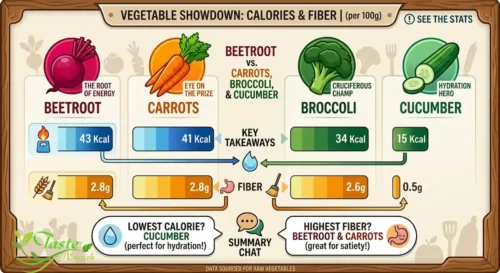
Beetroot is comparable in calories to carrots but stands out for its nitrate content and antioxidant betalains, which most other low-calorie vegetables don’t provide.
Beetroot Weight Loss FAQs
How many calories are in beetroot?
Raw beetroot has about 43 calories per 100 grams, according to USDA data, making it a relatively low-calorie vegetable.
Can I eat beetroot every day if I’m trying to lose weight?
For most people, daily beetroot in reasonable portions is fine and can be part of a varied, fiber-rich diet, though those with kidney stone history or blood pressure concerns should check with a doctor first.
Is beetroot better raw or cooked for weight loss?
Both retain most of their fiber and are low in calories. Cooking softens texture and may make beets easier to eat in larger, more satisfying portions.
Does beetroot reduce belly fat specifically?
No food targets fat loss in one specific area. Beetroot may support overall weight management as part of a calorie-controlled diet, but spot reduction isn’t supported by current research.
What’s the best time to eat beetroot for weight loss?
There’s no research-backed “best” time. What matters more is total daily calorie balance, so including beetroot at whatever meal fits your routine is reasonable.
Can beet juice replace a meal?
Beet juice lacks the protein and fiber needed to make it a satisfying meal replacement and is better used as a small addition to meals rather than a substitute for them.
Conclusion
Beetroot can be a genuinely useful addition to a weight-conscious diet. It’s low in calories, high in fiber and water, and brings along nitrates, antioxidants, and key micronutrients that support broader health. What it isn’t, based on current evidence, is a stand-alone solution: the research behind beetroot and beet juice mostly points to modest, supportive effects rather than dramatic fat loss.
If you enjoy beetroot, there’s little downside to including it regularly as part of a balanced, calorie-aware diet, ideally in whole or cooked form rather than juiced. As always, anyone with kidney stone history, blood pressure concerns, or other health conditions should check with a healthcare provider before making major dietary changes.
References
FoodData Central — U.S. Department of Agriculture, Agricultural Research Service
Hanan Abo Samra is the founder of Taste & Nourish, sharing trustworthy nutrition guidance and recipes drawn from 20+ years of hands-on cooking experience. When she's not developing new recipes, Hanan is researching the science behind everyday ingredients to bring readers practical, evidence-based guidance for a healthier lifestyle.