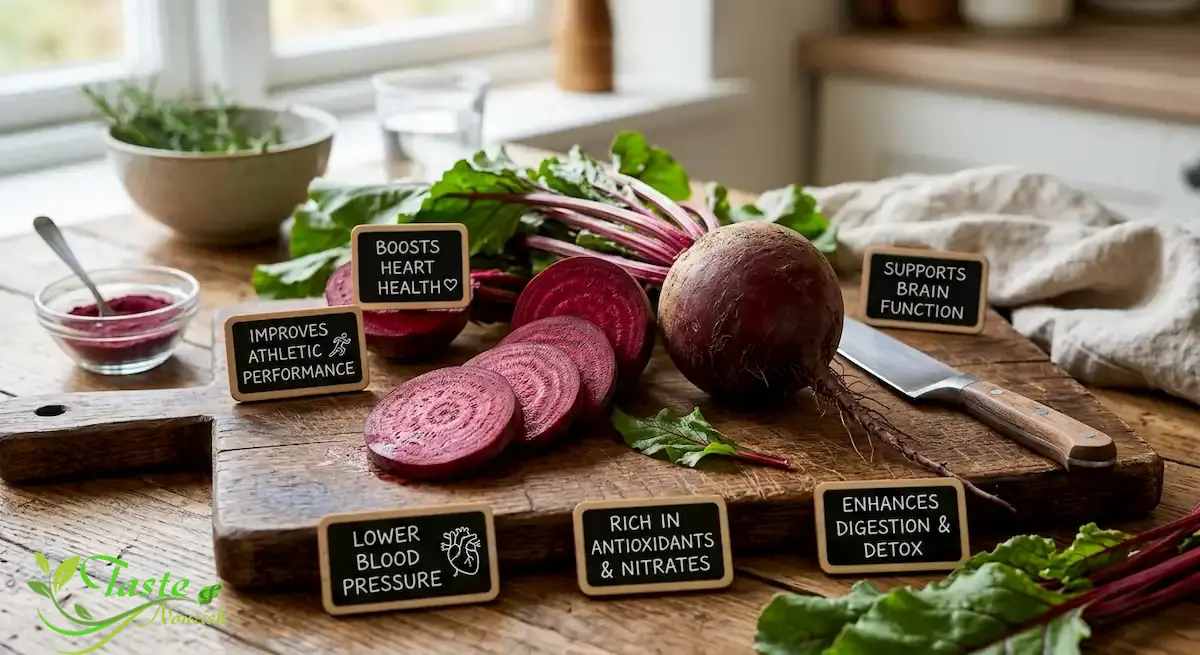
Beetroot has gone from a borscht ingredient to a staple in smoothies, salads, and pre-workout drinks, and for good reason. The health benefits of beetroot are backed by a growing body of research on nitrates, antioxidants, and fiber. This deep-red root vegetable may support healthy blood pressure, improve exercise stamina, and provide a solid dose of folate and manganese. This guide breaks down what beetroot actually does for your body, what the research shows, potential downsides, and practical ways to add it to your plate.
The health benefits of beetroot come mainly from its natural nitrates, betalain antioxidants, and fiber. Research suggests beetroot and beetroot juice may help support healthy blood pressure, improve blood flow, and enhance exercise performance, while also providing folate, potassium, manganese, and vitamin C. It’s low in calories and can be eaten raw, roasted, boiled, or juiced, though people prone to kidney stones or on blood pressure medication should talk to a doctor before eating it in large amounts.
Key Takeaways
Beetroot is low in calories and rich in folate, manganese, potassium, and vitamin C.
The health benefits of beetroot are largely linked to its natural nitrate content, which the body converts into nitric oxide.
Research suggests beetroot juice may modestly and temporarily lower blood pressure and support exercise performance.
Beetroot is high in oxalates, so people with a history of calcium oxalate kidney stones may need to limit it.
Beeturia, or pink to red urine after eating beets, is harmless and fairly common.
What Is Beetroot?
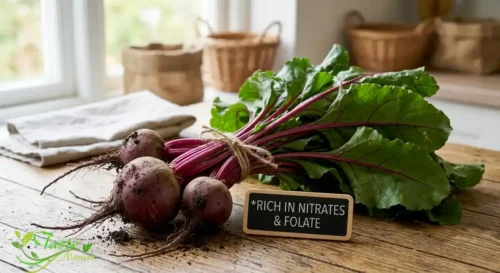
Beetroot (Beta vulgaris) is the round, deep-red taproot of the beet plant, related to chard and spinach. It’s also known as table beet, garden beet, or simply “beet,” and comes in red, golden, and striped varieties like Chioggia.
Beets have been cultivated for centuries and appear in dishes such as borscht, roasted vegetable salads, and pickles. Both the root and the leafy tops, known as beet greens, are edible.
Beetroot Nutrition Facts
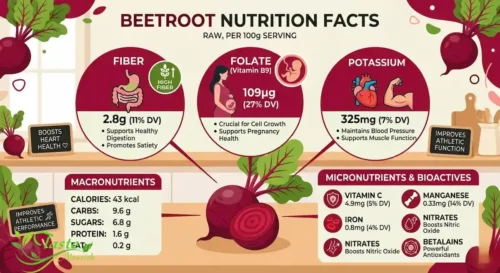
Beetroot is naturally low in fat and calories but delivers a meaningful amount of fiber, folate, and minerals. According to USDA FoodData Central, a 100-gram, roughly 3.5-ounce, serving of raw beetroot contains approximately:
Nutrient
Amount per 100g raw beetroot
Calories
43 kcal
Protein
1.6 g
Carbohydrates
10 g
Fiber
2.8 g
Folate
109 mcg, about 27% of the Daily Value
Potassium
325 mg
Vitamin C
4.9 mg
Iron
0.8 mg
Manganese
0.3 mg
Beets are also one of the richest dietary sources of inorganic nitrates and contain betalains, the pigments responsible for their deep red color. Folate needs and safe upper limits are outlined by the NIH Office of Dietary Supplements.
Health Benefits of Beetroot
Most of the beetroot health benefits researchers have studied relate to its nitrate content, fiber, and antioxidant pigments. Here’s what the evidence actually shows.
Heart Health and Blood Pressure
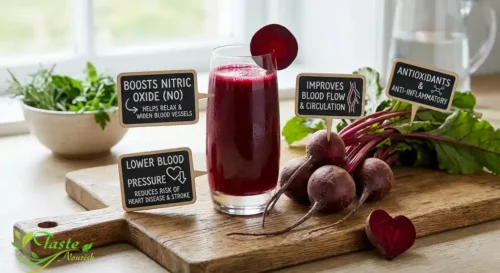
Beetroot’s nitrates convert into nitric oxide in the body, a compound that helps relax and widen blood vessels. In a randomized, placebo-controlled crossover study, healthy adults who drank nitrate-rich beetroot juice showed a measurable drop in aortic systolic blood pressure within 30 minutes.
Other trials in older adults and people with elevated blood pressure have reported similar, modest reductions. These effects tend to be short-term and are generally more noticeable in people who already have higher blood pressure.
Exercise Performance and Stamina
Nitric oxide may also improve oxygen efficiency during exercise, which is one reason beetroot juice is popular among endurance athletes. A systematic review and meta-analysis found that dietary nitrate supplementation, largely from beetroot juice, was associated with improved endurance exercise performance and a lower oxygen cost during submaximal exercise in healthy adults.
The effect appears strongest in recreational exercisers, while elite endurance athletes may see smaller or less consistent benefits.
Digestive Health
A single cup of beetroot provides a solid amount of fiber, which supports regular digestion and feeds beneficial gut bacteria. Fiber-rich vegetables like beetroot may also support healthy cholesterol levels as part of an overall balanced diet.
Antioxidant and Anti-Inflammatory Support
Betalains, the pigments that give beets their color, act as antioxidants in lab studies and may help reduce oxidative stress. Some research suggests betalains have mild anti-inflammatory properties, though much of this evidence still comes from cell and animal studies rather than large human trials.
Brain Health and Blood Flow
Because nitrates support blood flow, researchers have also studied whether beetroot juice can improve blood flow to the brain. Early studies suggest a possible modest benefit for cognitive performance in older adults, but this research is still limited and shouldn’t be treated as a proven benefit yet.
Blood Sugar and Weight Management
Beetroot has a moderate glycemic index but a relatively low glycemic load per typical serving, meaning it’s unlikely to cause major blood sugar swings when eaten in normal portions. Its fiber and water content also make it a filling, low-calorie addition to meals for people watching their weight.
The Science Behind the Health Benefits of Beetroot
Much of what we know about the health benefits of beetroot comes from small, short-term clinical trials rather than large, long-term studies, which is common in nutrition research generally.
The blood pressure research is some of the strongest available. A double-blind, placebo-controlled crossover trial found that beetroot juice containing dietary nitrate lowered aortic blood pressure compared with a nitrate-depleted placebo, with effects lasting several hours.
Exercise-performance research is more mixed. A systematic review and meta-analysis on dietary nitrate supplementation noted meaningful improvements in time-trial performance and oxygen efficiency among recreational exercisers, alongside smaller or inconsistent effects in elite athletes.
Because most trials use concentrated beetroot juice rather than whole cooked beets, it isn’t yet clear whether eating beetroot as food produces the same magnitude of effect as juice or supplements do.
Potential Risks and Side Effects of Eating Beets
Beeturia: Pink or red urine, and sometimes stool, after eating beets. It’s harmless and happens because some people don’t fully break down betalain pigments during digestion.
Kidney stone risk: Beets are high in oxalates, which can contribute to calcium oxalate kidney stones in people who are prone to them.
Low blood pressure: Because beetroot may lower blood pressure, combining it with blood pressure medication could cause blood pressure to drop too low in some people.
Digestive upset: Large amounts of beetroot juice or concentrated supplements have caused stomach cramping, gas, or diarrhea in some study participants.
Allergic reactions: Uncommon, but possible, particularly with raw beet juice.
Who Should Avoid Beetroot?
Beetroot is safe for most people in normal food amounts, but a few groups may want to be more cautious:
People with a history of calcium oxalate kidney stones, since beets are a high-oxalate food according to the National Institute of Diabetes and Digestive and Kidney Diseases.
People taking blood pressure medication, who should check with a doctor before regularly drinking concentrated beetroot juice.
People with low blood pressure or a history of fainting spells.
Anyone with a known beet or chard allergy.
People managing potassium intake for a medical condition, since beets contain a moderate amount of potassium.
If you have a chronic health condition or take daily medication, it’s worth checking with a doctor or registered dietitian before adding concentrated beetroot juice to your routine. This information is educational and isn’t a substitute for personalized medical advice.
How Much Beetroot Should You Eat?
There’s no official government-recommended daily amount specifically for beetroot. Most clinical studies on blood pressure and exercise performance have used around 250 to 500 ml, roughly 1 to 2 cups, of beetroot juice, or the nitrate equivalent of one to two medium beets.
For general health, one to two servings of cooked or raw beetroot a few times a week fits comfortably within a balanced, vegetable-rich diet. There’s no need to eat beets daily to see some benefit, and more isn’t automatically better, especially with juice or concentrated supplements.
Expert tip: If you’re new to beet juice, start with a small amount, about a quarter cup, to see how your digestion responds before working up to a full serving.
How to Choose the Best Beetroot
Look for beets that feel firm and heavy for their size, with smooth, unblemished skin.
Smaller to medium beets, about the size of a golf ball to a tennis ball, tend to be more tender than very large ones.
If the leafy greens are still attached, they should look fresh rather than wilted, which is a good sign of overall freshness.
Avoid beets that feel soft or shriveled or have significant cuts or bruises.
Storage Tips
Trim the greens off, leaving about an inch of stem, and store greens separately since they draw moisture from the root.
Store unwashed raw beets in a breathable bag in the refrigerator crisper drawer for up to two to three weeks.
Refrigerate cooked beets in a sealed container and use them within three to five days.
Cooked, cooled beets can be frozen for longer storage, up to about eight months for best quality.
Best Ways to Eat or Cook Beetroot
Beetroot is versatile and holds up well to several cooking methods:
Roasting: Wrap whole beets in foil and roast until fork-tender for a naturally sweet, caramelized flavor.
Boiling or steaming — A quicker method that keeps beets tender for salads, soups, or purees.
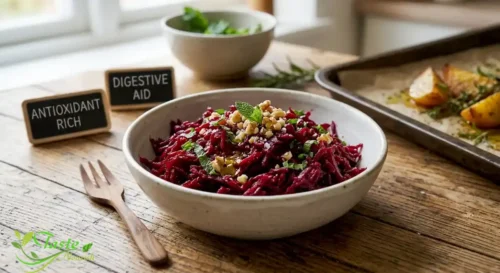
Raw — Grated or thinly shaved raw beets add crunch and color to salads.
Juicing or blending — A common way to get a concentrated dose of nitrates, often mixed with citrus or apple to balance the earthy flavor.
Pickling — A traditional way to preserve beets while adding tangy flavor.
Beet greens — Sauté the leafy tops like chard for an extra vegetable serving with less food waste.
Common Mistakes People Make With Beetroot
Peeling before roasting: This dries the beet out and increases nutrient and color loss. Roast with the skin on, then peel once cooked, since it slips off easily.
Throwing out the greens: Beet greens are edible and nutritious, so discarding them wastes part of the plant’s nutritional value.
Overcooking: Boiling beets too long can leach nutrients and color into the water and leave the texture mushy.
Not protecting hands and clothing: Beet juice stains easily, so gloves and an apron are worth using when peeling or juicing.
Relying only on juice: Whole beets provide fiber that juice lacks, so it’s worth eating the whole vegetable and not just drinking the juice.
Myths vs Facts About the Health Benefits of Beetroot
Myth
Fact
Beeturia means something is wrong with your kidneys.
Pink or red urine after eating beets is usually a harmless pigment effect, not a sign of kidney disease.
Beetroot juice is a proven cure for high blood pressure.
Research shows modest, short-term blood pressure reductions in some studies. It may support heart health but isn’t a replacement for medication or medical care.
You need to drink beet juice daily to get any benefit.
Whole cooked or raw beetroot eaten a few times a week can also contribute nitrates, fiber, and antioxidants.
Beetroot is bad for everyone with kidney concerns.
It’s specifically the oxalate content that matters for people prone to calcium oxalate stones, not a concern for most healthy people.
Beetroot vs Other Root Vegetables
Here’s how beetroot compares nutritionally to two other common root vegetables, per 100-gram raw serving.
Nutrient, per 100g raw
Beetroot
Carrot
Sweet Potato
Calories
43 kcal
41 kcal
86 kcal
Fiber
2.8 g
2.8 g
3 g
Folate
109 mcg
19 mcg
11 mcg
Notable compound
Nitrates, betalains
Beta-carotene
Beta-carotene
Beetroot stands out for its folate and nitrate content, while carrots and sweet potatoes are richer sources of beta-carotene.
FAQs About the Health Benefits of Beetroot
What are the benefits of eating beets every day?
Eating beets regularly may help support healthy blood pressure, provide fiber for digestion, and add folate and antioxidants to your diet. That said, there’s no requirement to eat them daily. A few servings a week is enough for most people to enjoy the benefits of eating beets as part of a varied diet.
How quickly do beetroot’s effects on blood pressure show up?
In clinical studies, blood pressure changes have been observed within 30 minutes to a few hours after drinking nitrate-rich beetroot juice, with effects generally fading within about a day.
Can beetroot help with anemia?
Beetroot contains a modest amount of iron and folate, both important for red blood cell production, but it isn’t a significant enough source of iron on its own to treat anemia. Anyone with suspected anemia should talk to a doctor about proper testing and treatment.
Is beetroot good for weight loss?
Beetroot is low in calories and contains fiber and water, which may help with fullness. It’s not a weight-loss food on its own, but it can fit well into a balanced, calorie-conscious diet.
Can I eat beetroot raw?
Yes. Raw beetroot is safe to eat and is often grated into salads or slaws. It has a firmer, earthier taste than cooked beetroot.
Does cooking destroy beetroot’s nitrate content?
Boiling can cause some nitrate loss into the cooking water, while roasting and steaming tend to preserve more of it. Using the cooking liquid in soups or sauces can help retain some of what’s lost during boiling.
Conclusion
The health benefits of beetroot are grounded in real, if still developing, science, particularly around blood pressure, blood flow, and exercise performance. It’s also a genuinely nutritious vegetable on its own, offering fiber, folate, potassium, and antioxidant pigments for relatively few calories.
As with most single foods, beetroot works best as part of a varied, balanced diet rather than as a stand-alone fix for any health condition. If you’re managing blood pressure, kidney stones, or take regular medication, it’s worth checking with your doctor or a registered dietitian before making beetroot juice a daily habit.
Hanan Abo Samra is the founder of Taste & Nourish, sharing trustworthy nutrition guidance and recipes drawn from 20+ years of hands-on cooking experience. When she's not developing new recipes, Hanan is researching the science behind everyday ingredients to bring readers practical, evidence-based guidance for a healthier lifestyle.