Almond flour pancakes turn an ordinary breakfast into something worth waking up for. This almond flour pancakes recipe swaps wheat flour for finely ground almonds, producing a stack that’s naturally gluten-free, noticeably higher in protein, and every bit as satisfying as the version you grew up with. No boxed mixes, no odd gums or fillers — just real ingredients that behave predictably once you understand a few key techniques.
Almond flour doesn’t act like wheat flour. It has no gluten to trap air, it absorbs liquid differently, and it browns faster in a hot pan. This recipe is built around those differences instead of fighting them, which is why the batter looks thicker than you’re used to and why the cooking temperature matters more than usual.
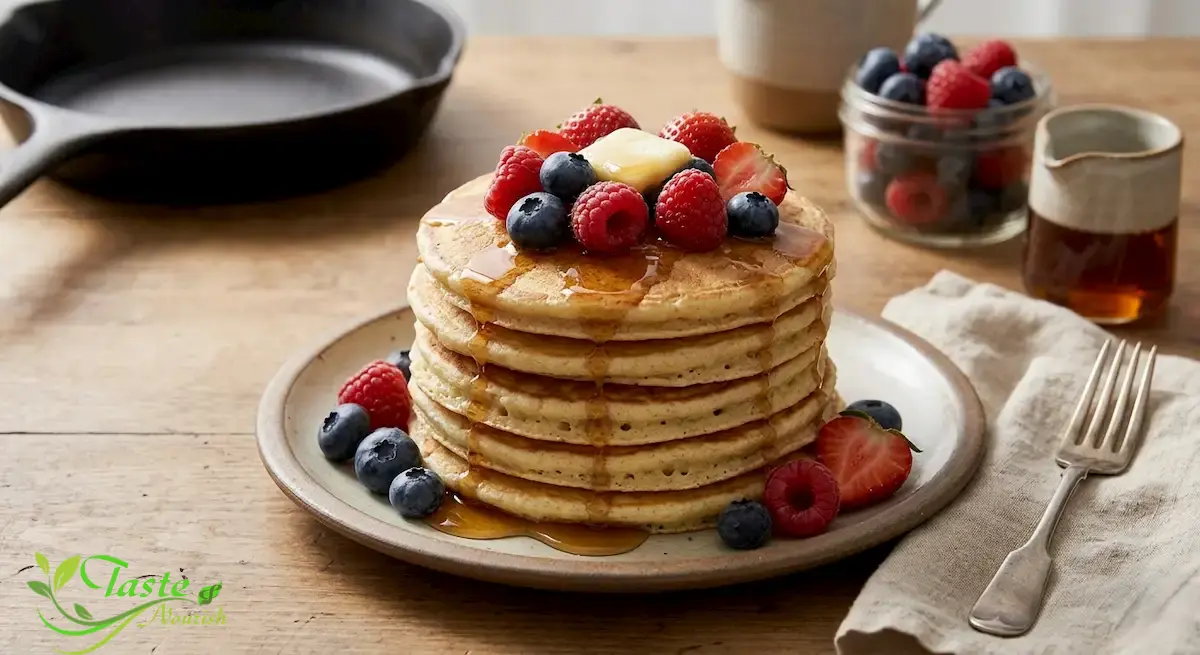
This almond flour pancakes recipe combines blanched almond flour, eggs, milk, and a touch of honey for a naturally gluten-free stack that’s fluffy, protein-rich, and ready in under 25 minutes. Cook the batter low and slow on a lightly greased skillet, and let each pancake set fully before flipping to prevent breaking.
Almond Flour Pancakes Recipe at a Glance
Detail
Time / Info
Prep Time
10 minutes
Cook Time
15 minutes
Total Time
25 minutes
Yield
12 pancakes (about 4 servings)
Difficulty
Easy
Key Takeaways
This almond flour pancakes recipe uses just eight ingredients and comes together in one bowl.
Finely ground blanched almond flour creates a tender, nutty crumb without wheat flour or gums.
Resting the batter for five minutes lets the almond flour hydrate, so the pancakes hold together better.
Cooking over medium-low heat is the single biggest factor in avoiding pancakes that scorch or fall apart.
Each serving delivers meaningfully more protein and fewer net carbohydrates than a traditional wheat-flour pancake.
Why You’ll Love This Almond Flour Pancakes Recipe
These pancakes are naturally gluten-free without relying on xanthan gum or a store-bought gluten-free blend — almond flour does the work on its own. They’re also more filling than a typical short stack. Almonds are a good source of protein, fiber, and monounsaturated fat, and research on almond consumption suggests it may support steadier post-meal blood sugar and greater fullness compared with a carbohydrate-only meal, according to a randomized controlled trial published via the National Library of Medicine.
They also reheat well, freeze beautifully, and take about the same total time as a regular pancake recipe — no specialty equipment or hard-to-find ingredients required.
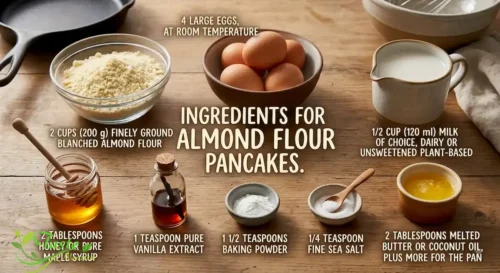
1/2 cup (120 ml) milk of choice, dairy or unsweetened plant-based
2 tablespoons honey or pure maple syrup
1 teaspoon pure vanilla extract
1 1/2 teaspoons baking powder
1/4 teaspoon fine sea salt
2 tablespoons melted unsalted butter or coconut oil, plus more for the pan
Ingredient Notes
Use finely ground blanchedalmond flour, not almond meal. Almond meal is coarser and made with the skins left on, which produces a gritty, crumbly pancake instead of a smooth one. According to USDA, almond flour is naturally higher in protein and fat and lower in carbohydrates than wheat flour, which is part of why the batter behaves so differently and why the finished pancakes are more filling per serving.
Eggs are doing structural work here that gluten would normally handle, so don’t scale them back. Room-temperature eggs whip more evenly into the batter and help the pancakes rise slightly as they cook.
Substitutions
Any milk works interchangeably — dairy, oat, soy, or unsweetened almond milk — without meaningfully changing the result. Granulated sugar can replace the honey or maple syrup at a 1:1 ratio, though the batter will be slightly less moist since honey and maple syrup also contribute liquid.
Egg substitutes are a genuine trade-off, not an equivalent swap: since there’s no gluten network to hold the pancakes together, a flax egg (1 tablespoon ground flaxseed plus 3 tablespoons water per egg) will work, but expect a denser pancake that’s more prone to breaking when you flip it.
How to Make Almond Flour Pancakes
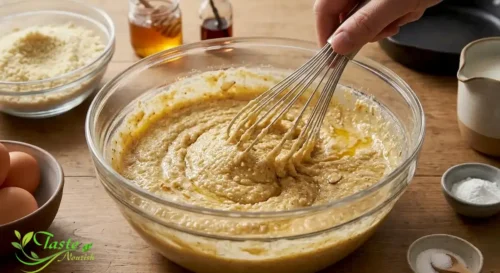
In a medium bowl, whisk together the almond flour, baking powder, and salt until no lumps remain.
In a separate bowl, whisk the eggs, milk, honey, and vanilla until the mixture lightens slightly in color, about 30 seconds.
Pour the wet ingredients into the dry ingredients and whisk just until combined. The batter will be noticeably thicker than a wheat-flour pancake batter, closer to a soft cake batter — that’s correct, not a mistake. Fold in the melted butter.
Let the batter rest for 5 minutes at room temperature. The almond flour continues absorbing liquid during this time, and the batter thickens slightly, which helps the pancakes hold their shape in the pan.
Heat a nonstick skillet or griddle over medium-low heat and lightly grease it with butter or oil.
Once a drop of water sizzles on contact, spoon 1/4-cup portions of batter onto the pan, gently spreading each into a 4-inch round with the back of the spoon.
Cook for 2 1/2 to 3 minutes, until the edges look matte and set and small bubbles appear across the surface. Almond flour pancakes show fewer surface bubbles than wheat-flour ones, so the matte, dry-looking edge is your most reliable cue to flip.
Flip carefully with a wide, thin spatula and cook for another 1 1/2 to 2 minutes, until the center springs back gently when touched and the underside is deep golden.
Transfer to a plate and tent loosely with foil while you cook the remaining batter.
Expert Tips for Fluffy Almond Flour Pancakes
Keep the heat at medium-low the entire time. Almond flour’s natural fat content browns faster than wheat flour at the same temperature, so a pan hot enough for a regular pancake will scorch the outside before the inside sets.
Don’t skip the rest period. Batter that goes straight into the pan spreads thinner and is more likely to tear when flipped, since the almond flour hasn’t had time to fully hydrate.
Keep each pancake around 4 inches across rather than diner-sized. Smaller pancakes flip cleanly with a single motion, which matters more here since almond flour pancakes are more delicate than wheat-flour ones until they’re fully cooked through.
If the batter thickens too much after resting, loosen it a tablespoon of milk at a time rather than all at once.
Common Mistakes to Avoid
Mistake
Why It Happens
Fix
Pancakes fall apart when flipping
Batter wasn’t rested, or the heat was too high, so the surface never fully set
Rest the batter 5 minutes and wait for matte, set edges before flipping
Pancakes taste eggy
Almond flour was scooped rather than spooned into the measuring cup, throwing off the ratio
Spoon almond flour into the cup and level it, or weigh 200 g for accuracy
Centers stay undercooked
Heat too high browns the outside before the inside finishes cooking
Lower the heat and cook longer at medium-low, keeping pancakes smaller
Pancakes turn out gritty
Almond meal was used instead of finely ground blanched almond flour
Use finely ground blanched almond flour specifically, not almond meal
Batter spreads into thin, flat cakes
Too much milk was added, or almond flour was measured inconsistently
Add milk gradually, a tablespoon at a time, until the batter is scoopable but thick
Recipe Variations
Lemon-blueberry: fold in 1/2 cup fresh blueberries and 1 teaspoon lemon zest along with the melted butter.
Cinnamon-spiced: add 1 teaspoon ground cinnamon and a pinch of nutmeg to the dry ingredients.
Chocolate chip: fold in 1/3 cup mini chocolate chips just before cooking.
Savory version: omit the honey and vanilla, add a pinch of black pepper and 2 tablespoons chopped chives, and serve alongside eggs instead of syrup.
Serving Suggestions
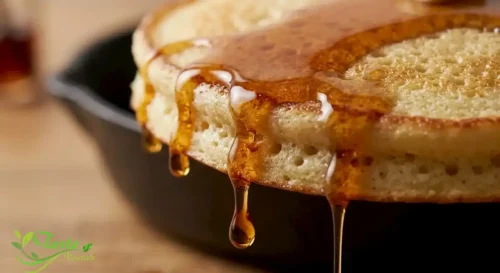
Warm maple syrup and fresh berries are the simplest pairing, but a dollop of plain Greek yogurt adds protein and a pleasant tang that plays well against the honey in the batter. A light drizzle of almond or peanut butter, thinned slightly with warm water, echoes the nutty flavor of the pancakes themselves. For a heartier brunch, serve alongside scrambled eggs or turkey bacon.
Nutrition Information
The following values are estimates for one serving (3 pancakes out of 12 total) and will vary depending on the exact brands and milk used.
Calories: approximately 320
Protein: approximately 14 g
Fat: approximately 24 g
Carbohydrates: approximately 12 g
Fiber: approximately 5 g
Sugar: approximately 5 g
Almonds are a well-documented source of vitamin E, a fat-soluble antioxidant, according to the Vitamin E fact sheet from the NIH Office. Regular nut consumption, including almonds, is also associated with favorable cardiovascular outcomes in large observational studies, according to the Harvard T.H. Chan School of Public Health’s Nutrition Source, though these findings reflect population-level associations rather than a guarantee for any individual.
Storage Instructions
Refrigerator
Store cooled pancakes in an airtight container in the refrigerator for up to 4 days.
Freezer
Freeze in a single layer until solid, then transfer to a freezer bag with parchment between layers, for up to 2 months.
Reheating
A toaster oven or a dry skillet over medium heat restores the pancakes’ texture and lightly crisps the edges. The microwave works in a pinch but tends to leave them slightly rubbery, so it’s best used only when short on time.
Make-Ahead Tips
The batter can be mixed and refrigerated up to 24 hours ahead; it will thicken further as it sits, so thin it with a tablespoon or two of milk before cooking. Cooked pancakes also make an easy make-ahead breakfast when frozen individually and reheated straight from the freezer on busy mornings.
This almond flour pancakes recipe delivers a fluffy, naturally gluten-free stack in under 25 minutes — protein-rich, kid-approved, and freezer-friendly.
1/2 cup (120 ml) milk of choice, dairy or unsweetened plant-based
2 tablespoons honey or pure maple syrup
1 teaspoon pure vanilla extract
1 1/2 teaspoons baking powder
1/4 teaspoon fine sea salt
2 tablespoons melted unsalted butter or coconut oil, plus more for the pan
Directions
In a medium bowl, whisk together the almond flour, baking powder, and salt until no lumps remain.
In a separate bowl, whisk the eggs, milk, honey, and vanilla until slightly lightened in color.
Pour the wet ingredients into the dry ingredients and whisk just until combined, then fold in the melted butter.
Let the batter rest for 5 minutes at room temperature to allow the almond flour to hydrate.
Heat a nonstick skillet or griddle over medium-low heat and lightly grease it.
Spoon 1/4-cup portions of batter onto the pan and gently spread into 4-inch rounds.
Cook 2 1/2 to 3 minutes until the edges look matte and set and small bubbles appear.
Flip carefully and cook 1 1/2 to 2 minutes more until the center springs back.
Transfer to a plate and tent loosely with foil while cooking the remaining batter.
Almond Flour Pancakes Recipe FAQs
Are almond flour pancakes really gluten-free?
Almond flour itself contains no gluten. However, if celiac disease or a medical gluten restriction is a concern, check that your baking powder and any add-ins are labeled gluten-free and meet the FDA’s gluten-free labeling standard, and be mindful of cross-contact if shared kitchen equipment is used.
Can I use almond meal instead of almond flour?
It’s not recommended. Almond meal is coarser and includes the skins, which makes the pancakes noticeably gritty and less likely to hold together.
Why is my batter so much thicker than a regular pancake batter?
That’s expected. Almond flour has no gluten and absorbs liquid differently than wheat flour, so the batter will always be thicker and won’t spread on its own the way wheat-based batter does.
Can I make this recipe dairy-free?
Yes. Any unsweetened plant-based milk can replace dairy milk without meaningfully changing the texture or flavor.
Why do almond flour pancakes brown so quickly?
Almond flour’s natural fat content causes faster browning at the same pan temperature as wheat flour. Lowering the heat to medium-low solves this.
Can I double this recipe?
Yes, all ingredients scale proportionally. Cook in batches and keep finished pancakes warm in a low oven while the rest finish.
Conclusion
Once you get comfortable with the thicker batter and the lower cooking temperature, this almond flour pancakes recipe becomes second nature — and it’s worth keeping in regular rotation for anyone who wants a gluten-free breakfast that doesn’t feel like a compromise. The technique that matters most: rest the batter, keep the heat at medium-low, and wait for the edges to set before you flip.
References
U.S. Department of Agriculture, Agricultural Research Service, Beltsville Human Nutrition Research Center. “FoodData Central.” https://fdc.nal.usda.gov/
Tan SY, Mattes RD. “Appetitive, dietary and health effects of almonds consumed with meals or as snacks: a randomized, controlled trial.” European Journal of Clinical Nutrition, via PMC. https://pmc.ncbi.nlm.nih.gov/articles/PMC3898316
Hanan Abo Samra is the founder of Taste & Nourish, sharing trustworthy nutrition guidance and recipes drawn from 20+ years of hands-on cooking experience. When she's not developing new recipes, Hanan is researching the science behind everyday ingredients to bring readers practical, evidence-based guidance for a healthier lifestyle.