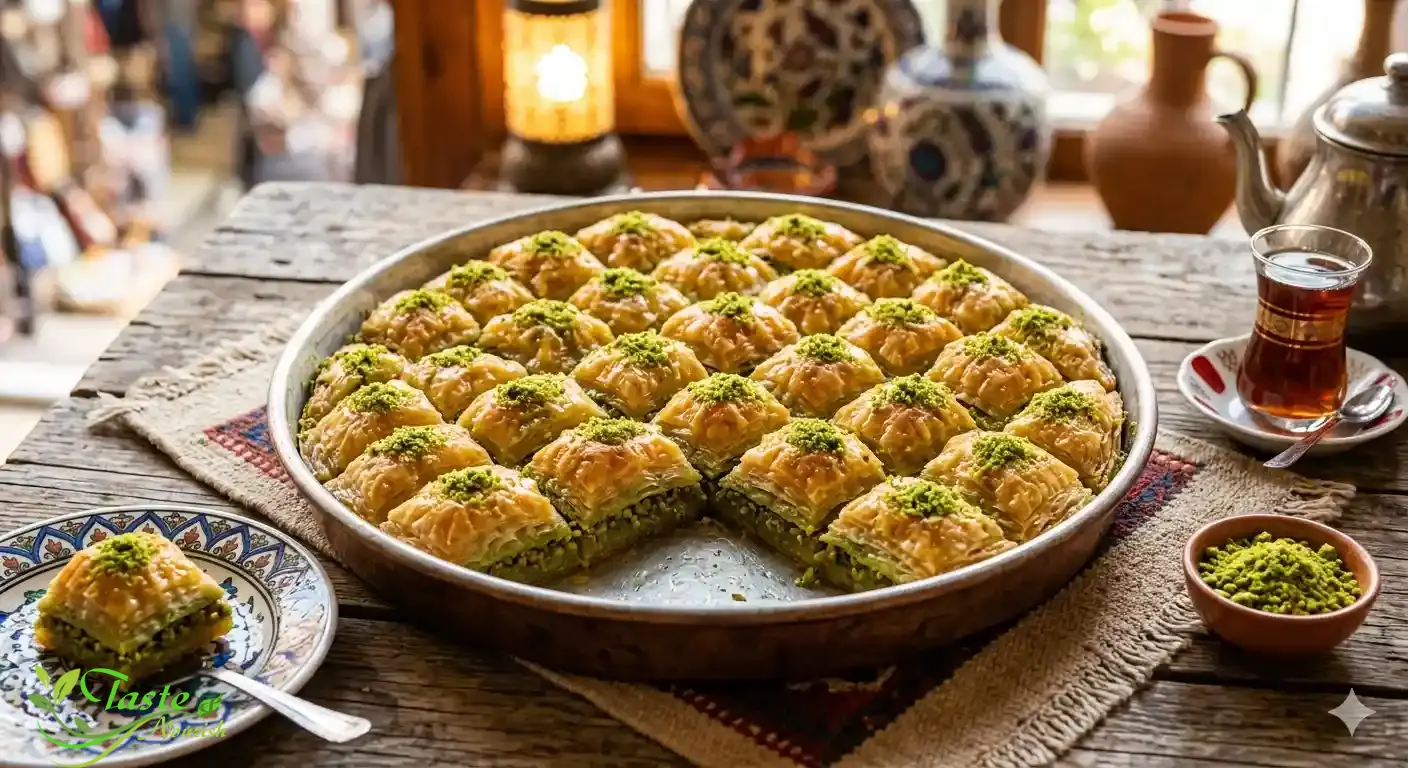
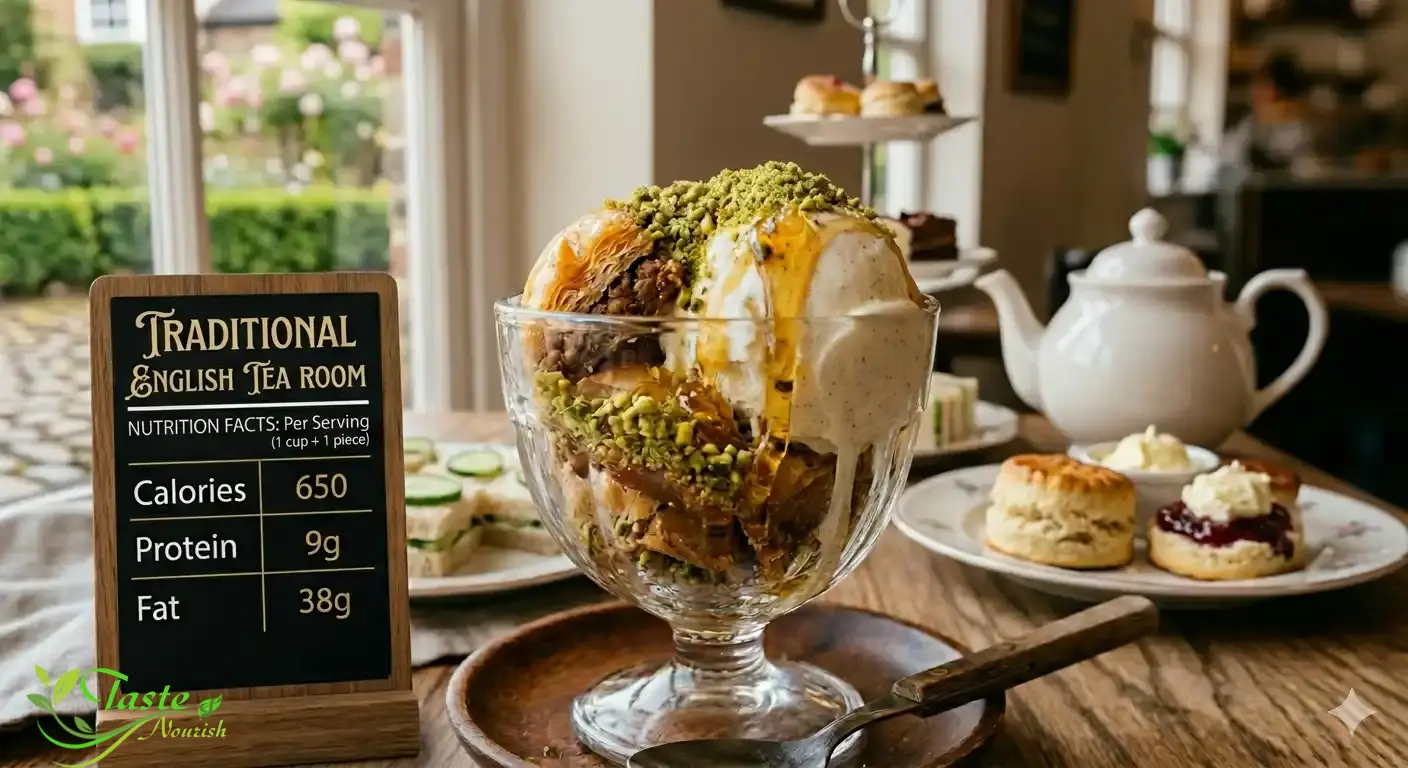
Have you ever bitten into a piece of pistachio baklava and felt like the whole world just stopped for a moment? That shattering crunch of golden phyllo, followed by a rush of sweet syrup and the earthy richness of finely chopped pistachios — it’s one of those rare culinary experiences that genuinely transcends culture and geography. Whether you first tasted it at a Greek festival, a Middle Eastern bakery, or your grandmother’s kitchen, pistachio baklava has a way of leaving a permanent impression. It’s not just dessert; it’s a centuries-old tradition baked into every single layer.
In this comprehensive guide, we’re going to cover absolutely everything you need to know about pistachio baklava — its fascinating history, how it varies across cultures, how to make it from scratch at home, its nutritional profile, and even the pro tips that separate a good baklava from a legendary one. Whether you’re a seasoned home baker or a total beginner who just fell in love with this pastry, you’re in the right place. So let’s dive in, shall we?
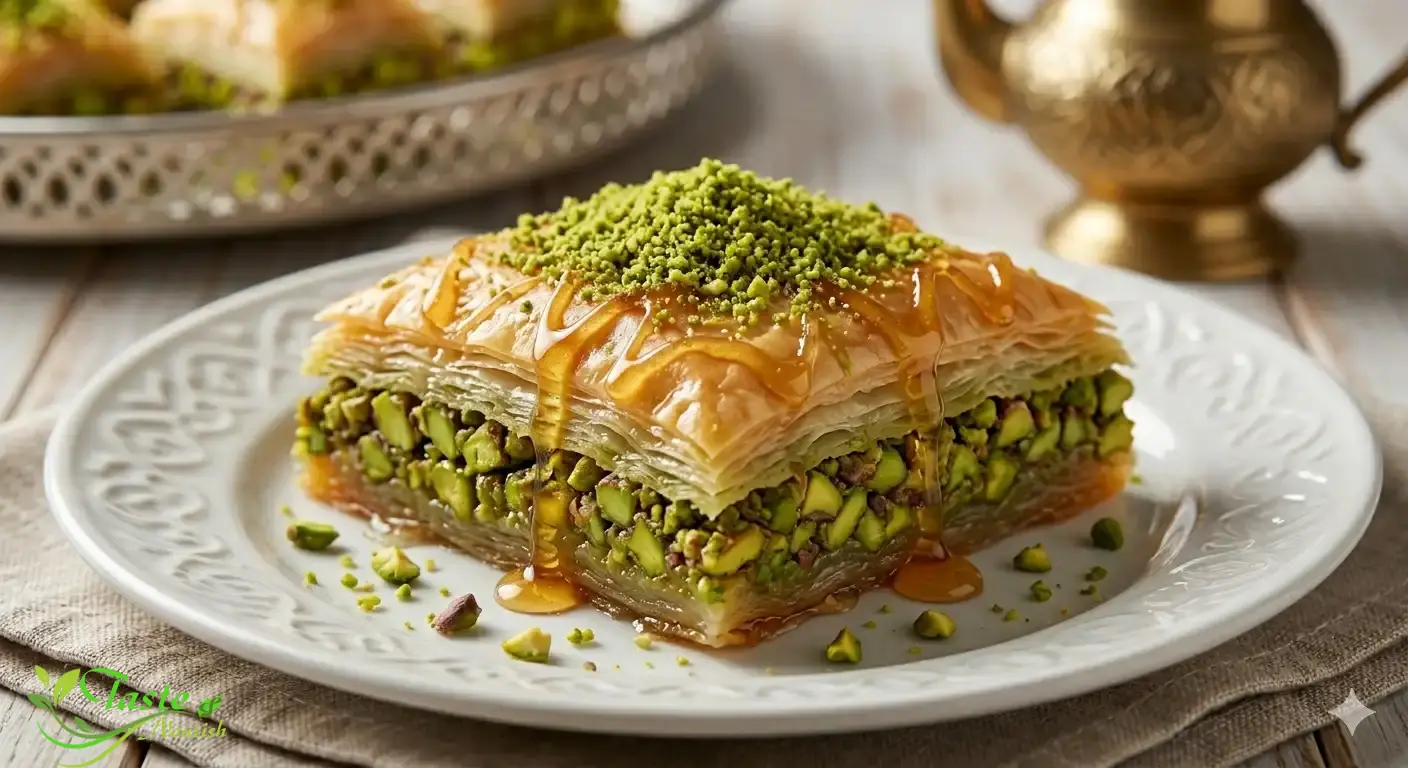
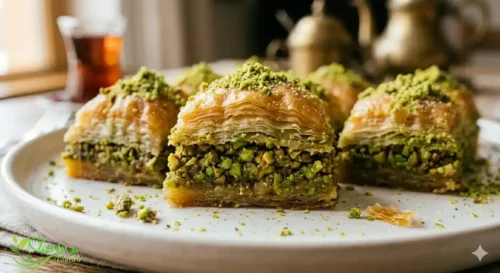
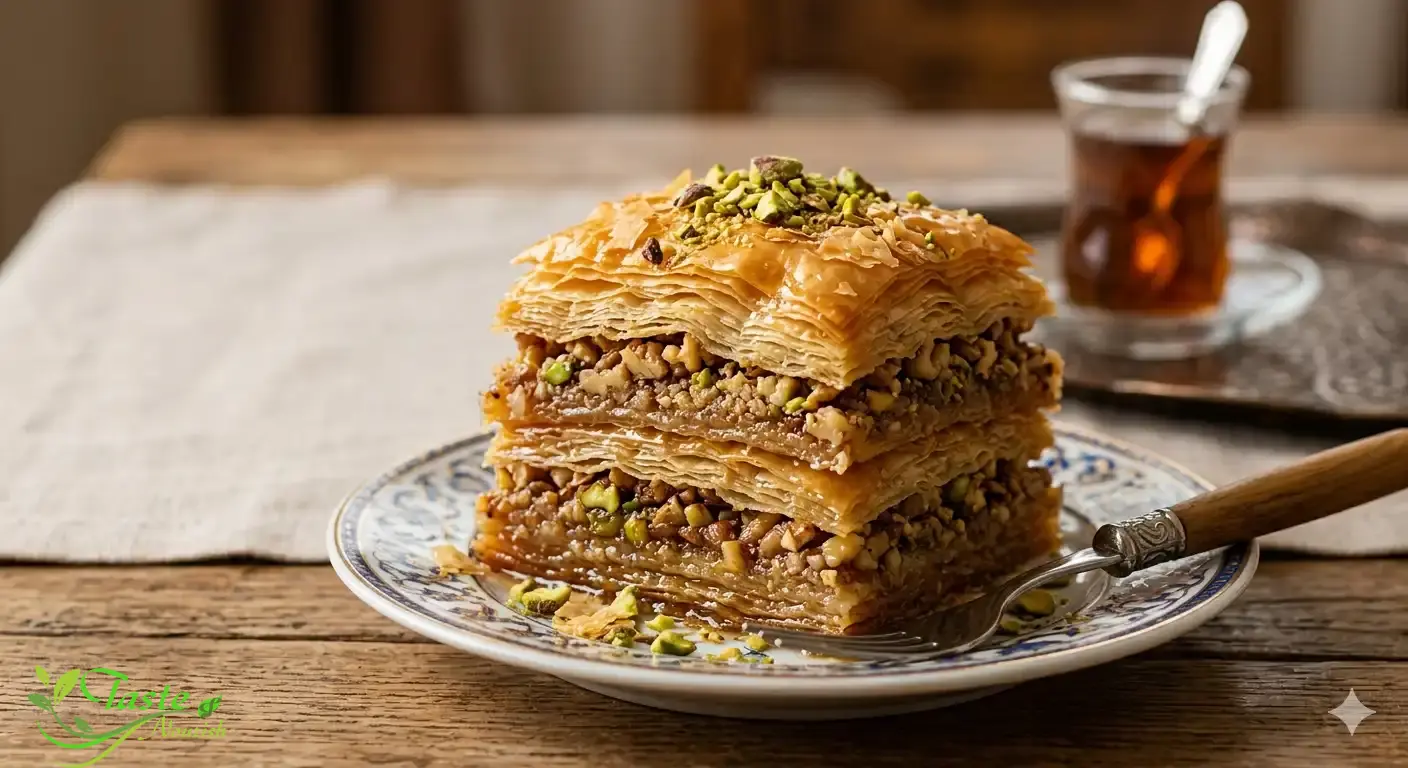
At its heart, pistachio baklava is a layered pastry dessert made from ultra-thin sheets of phyllo dough, generously brushed with melted butter or ghee, filled with finely chopped pistachios, and then soaked in a fragrant sweet syrup after baking. The result is a dessert that manages to be simultaneously crispy, chewy, nutty, and syrupy — a combination that’s genuinely hard to beat.
Imagine layers upon layers of buttery phyllo dough, generously filled with a fragrant blend of finely chopped pistachios, sugar, and warm spices, with each bite offering a delightful crunch of golden perfection, made even more irresistible when drenched in a sweet, aromatic syrup infused with lemon and cinnamon. That’s pistachio baklava in a single, beautiful sentence.
What separates pistachio baklava from its walnut or almond counterparts is the distinctive character that pistachios bring to the table. Their vivid green color creates a visually striking contrast against the golden phyllo, while their naturally buttery, slightly sweet flavor pairs perfectly with the richness of clarified butter and the fragrance of syrup.
Pistachios are also more delicate in texture than walnuts, which means they integrate into the pastry layers with an almost silky quality. If baklava is the crown jewel of Middle Eastern and Mediterranean desserts, then pistachio baklava is the version with the most diamonds on it.
The Core Elements That Make It Special
Every great pistachio baklava is built on four non-negotiable pillars:
Phyllo dough — paper-thin pastry sheets that create the signature flaky texture
Pistachios — finely chopped (not ground to dust) for the ideal textural balance
Clarified butter or ghee — brushed generously between every single layer
Sweet syrup — poured hot over the freshly baked pastry to lock in moisture and flavor
💡 Key Takeaway: The magic of pistachio baklava is all about contrast — the crunch of phyllo against the softness of nuts, and the richness of butter against the brightness of citrus-infused syrup.
The ratio of these elements, and the technique behind applying them, is what distinguishes a mediocre baklava from an unforgettable one. Bakers across Turkey, Greece, Lebanon, and Egypt have been debating the “right” ratios for centuries, and honestly, that debate is part of what makes this dessert so culturally alive and endlessly fascinating.
How to Make Pistachio Baklava at Home — Step-by-Step
Making pistachio baklava at home sounds intimidating, but it’s genuinely one of those recipes where the difficulty is more about patience and care than technical skill. You don’t need to be a pastry chef — you just need to take your time, stay organized, and trust the process. Think of it like building a very buttery, very delicious house of cards. Each layer matters, but the whole structure is more forgiving than it looks.
“A traditional Middle Eastern and Mediterranean pastry made with ultra-thin phyllo dough layers brushed with clarified butter, filled with finely chopped pistachios, and soaked in a sweet lemon sugar syrup. Crispy, nutty, and irresistibly fragrant — this is the ultimate pistachio baklava recipe.”,
Type: dessert
Cuisine: “Middle Eastern”
Recipe Yield: “24 pieces”
Calories: “197 calories”
Preparation Time: “PT30M”
Cooking Time: “PT55M”
Total Time: “PT1H25M”
Ingredients You’ll Need
For a standard 9×13 inch pan (approximately 24–30 pieces):
Phyllo dough — 1 lb (two sleeves), thawed overnight in the refrigerator
Clarified butter or ghee — 1 cup (about 2 sticks), melted
Granulated sugar — 2 tablespoons (to mix with the pistachios)
For the syrup: 1 cup water, 1 cup sugar, 1 tablespoon lemon juice, optional rose water or orange blossom water
📝 Reader Note: Always thaw your phyllo dough properly — at least 8 hours in the refrigerator, then 2 hours at room temperature before using. Rushing this step leads to cracked, unusable sheets.
The Layering Technique
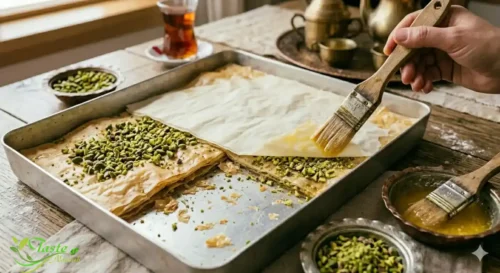
Preheat the oven to 350°F. Brush the bottom of a 9×13 pan with ghee. In a large bowl, stir together the pistachios and granulated sugar until well combined.
Unroll the two sleeves of phyllo sheets and cut off an inch at the end to make them fit into the pan.
Lay one sleeve (about 20 phyllo sheets) in the prepared pan, then add about 10 more phyllo sheets on top.
Spread the nut mixture over the phyllo in one even layer, then lay the remaining phyllo sheets over the nuts.
Between every single sheet of phyllo, brush a thin but thorough coat of melted butter.
This is the most time-consuming part of the process, but it’s also the most important — those butter layers are what create the signature flaky, golden texture that makes pistachio baklava so irresistible.
The key is keeping the phyllo covered with a slightly damp kitchen towel while you work, because phyllo dries out and cracks extraordinarily quickly when exposed to air. Work efficiently and methodically — grab a sheet, place it, brush it with butter, grab the next sheet. Get into a rhythm and you’ll be done faster than you think.
Cutting, Baking, and Soaking in Syrup
Before baking, cut the baklava all the way through to the bottom of the pan in your desired pattern. The classic diamond shape is achieved by making parallel cuts lengthwise and then diagonal cuts across those. Pour the melted ghee over the baklava and tilt the pan carefully to spread it all over.
Cut the baklava into diamonds by making 4 cuts lengthwise. This pre-cutting step is critical — once the pastry bakes into a crispy, solid mass, cutting through it will shatter the layers.
Bake at 350°F for 45–55 minutes, until the top is deeply golden and the layers are visibly crispy. While the baklava bakes, prepare your syrup by combining sugar and water in a saucepan, bringing to a boil, then simmering for 10 minutes before adding lemon juice.
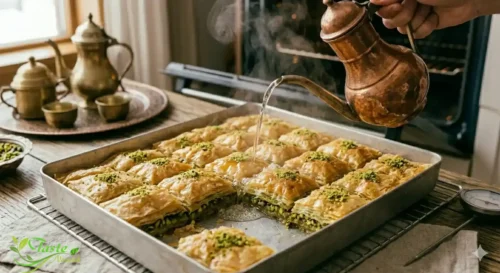
The golden rule of baklava syrup: hot baklava gets cold syrup, or cold baklava gets hot syrup. Never combine hot with hot — it makes the pastry soggy rather than crispy and syrup-soaked. Pour the syrup slowly and evenly over the baklava the moment it comes out of the oven, and then — this is the hardest part — leave it completely alone for at least 2 hours before serving. Cool at room temperature for at least 2 hours before serving.
The Secret to the Perfect Syrup
If there’s one element of pistachio baklava that separates the good from the transcendent, it’s the syrup. The pastry is forgiving in many ways, but a poorly made syrup — too thin, too thick, too sweet, or wrong in flavor — will undermine even the most beautifully layered baklava. Getting the syrup right is non-negotiable, and fortunately, it’s also entirely achievable once you understand the science behind it.
“Make the Syrup”:
“Combine 1 cup sugar, 1 cup water, and 1 tablespoon of lemon juice in a small saucepan. Bring to a boil over medium-high heat, stirring until the sugar dissolves. Reduce heat and simmer for 10 minutes until slightly thickened. Add rose water or orange blossom water if using. Remove from heat and let cool completely before using.”
Simple Syrup vs. Honey vs. Rose Water Syrup
The choice of syrup style is where your pistachio baklava develops its cultural identity. Simple syrup (equal parts sugar and water, boiled and reduced) gives you the cleanest canvas — the pistachio flavor takes center stage, and the sweetness is bright and uncomplicated.
This is the Turkish approach, and for pistachio-forward baklava, it’s often the best choice precisely because of that clarity.
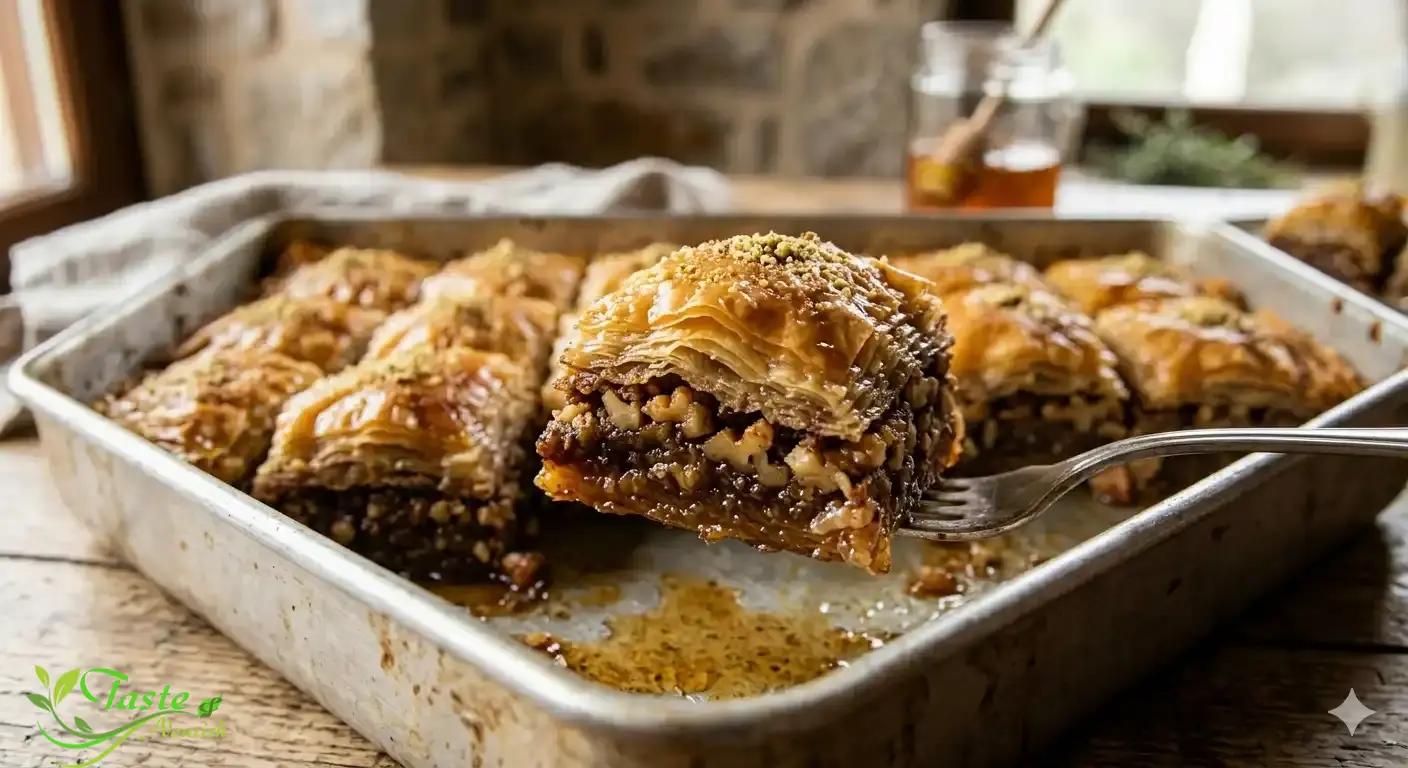
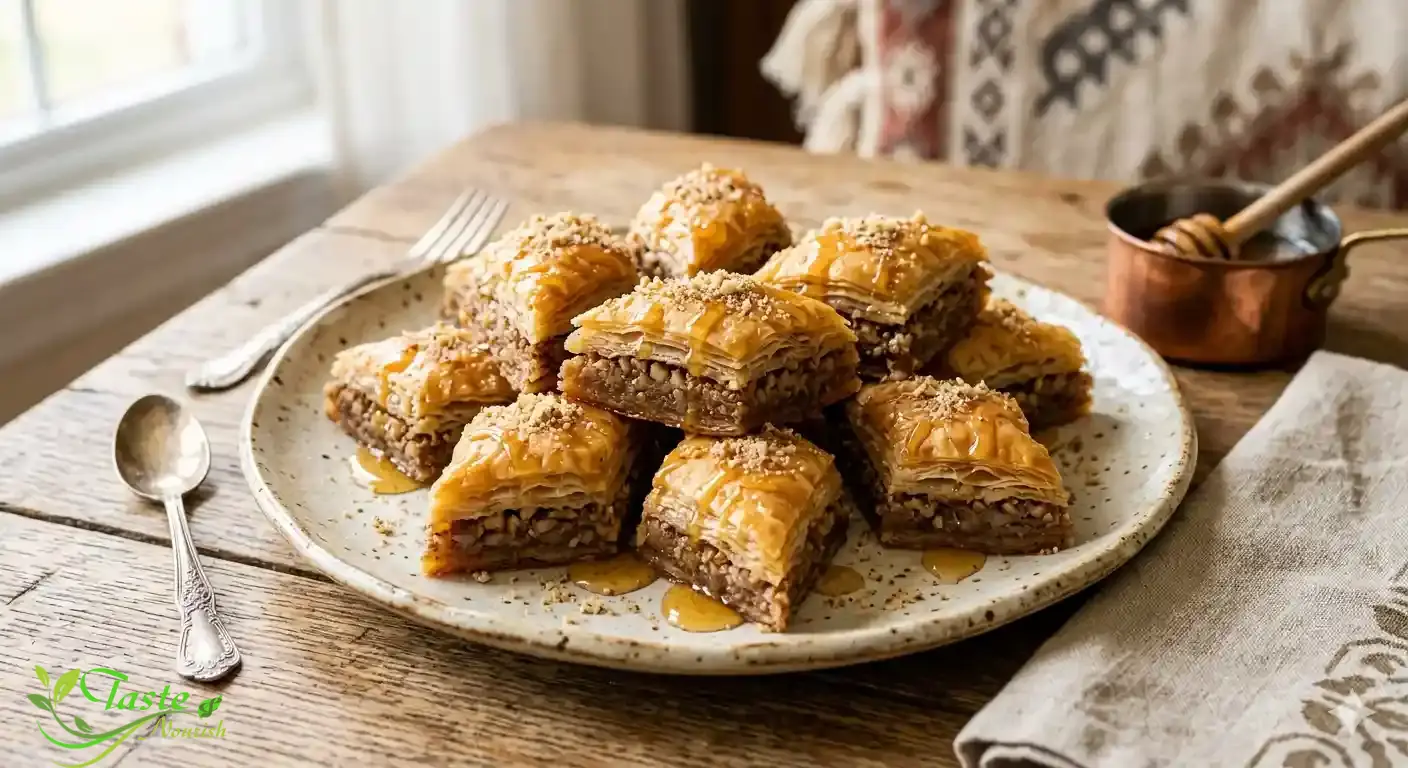
Honey-based syrups, used prominently in Greek-style baklava, add a complex, slightly caramelized sweetness along with a distinctive viscosity that clings to the phyllo layers differently than plain sugar syrup. The result is a richer, more opulent bite.
Rose water and orange blossom water syrups, favored in Lebanese and Egyptian traditions, transform the dessert into something genuinely perfumed — the floral notes dance alongside the pistachio in a way that can feel almost intoxicating. If you want to use rose water or orange blossom water, remember to use them sparingly — too much rose water will make the dessert bitter. A teaspoon or two per cup of syrup is plenty; this is not the place to be heavy-handed.
Syrup Comparison Table
Syrup Type
Flavor Profile
Best Paired With
Shelf Life Impact
Simple Sugar Syrup
Clean, bright, neutral
Turkish/Lebanese style
Neutral
Honey Syrup
Rich, caramelized, complex
Greek style
Extends freshness
Rose Water Syrup
Floral, fragrant, delicate
Egyptian/Lebanese style
Neutral
Orange Blossom Syrup
Citrus-floral, bright
Lebanese style
Neutral
Cinnamon-Honey Syrup
Warm, spiced, aromatic
Greek style
Best within 5 days
Pistachio Baklava Nutrition Facts
Let’s talk numbers, because understanding the nutritional profile of pistachio baklava helps you enjoy it mindfully rather than feeling guilty about indulging. Baklava is undeniably a rich, calorie-dense dessert — but it’s made from real, whole-food ingredients, and the pistachios themselves bring genuine nutritional value to the equation.
Nutritional values vary based on recipe, portion size, and regional variation. Values sourced from Egyptian and Greek recipe calculations.
It’s worth noting that a single piece of pistachio baklava (roughly the size of a diamond-cut portion) sits at around 200 calories, which is perfectly manageable as an occasional treat within a balanced diet. The protein content (4g per piece) is actually higher than you might expect for a pastry, thanks entirely to those pistachios.
Health Benefits of Pistachios in Baklava
Now, let’s be clear: pistachio baklava is a dessert, not a health food. But the pistachio component deserves serious credit, because these little green nuts are genuinely impressive from a nutritional standpoint. When you’re eating pistachio baklava, you’re also consuming one of the most nutrient-dense nuts on the planet, and that’s worth appreciating.
A 1-ounce serving of pistachios brings 159 calories, almost 6 grams of protein, and 3 grams of fiber. These three nutrients work together to support fullness and muscle maintenance. Nearly 40% of their carbohydrates come from fiber, and most of their fat comes from heart-healthy monounsaturated and polyunsaturated fats. That healthy fat profile is significant — the same fats that make pistachios so delicious are also the ones that support cardiovascular health and healthy cholesterol levels.
Pistachios have been shown to have cholesterol-lowering effects. These nuts have fiber and high quantities of polyunsaturated and monounsaturated fats, all of which are linked to healthy cholesterol levels and reduced risk of heart disease. They’re also rich in vitamin B6, which promotes blood flow by helping carry oxygen through your bloodstream to cells, and also supports immune and nervous system health.
Beyond cardiovascular benefits, a 2020 review of six studies concluded that pistachios could significantly reduce fasting blood sugar and improve insulin resistance in people with type 2 diabetes, prediabetes, or metabolic syndrome. So while the sugar content in baklava syrup is something to be mindful of, the pistachios themselves are actively working in your favor from a metabolic perspective. Balance, as always, is the key.
Expert Tips for the Best Pistachio Baklava
After everything we’ve covered, here are the absolute must-know tips that will transform your pistachio baklava from good to genuinely outstanding. These are the details that experienced bakers rarely put in recipes because they’ve become second nature — but they make all the difference.
Use raw, unsalted pistachios — Roasted or salted pistachios will alter the flavor profile and introduce unwanted bitterness or excess saltiness.
Chop, don’t food-process — A knife gives you more control over the texture. You want small, distinct pieces, not pistachio paste.
Butter every single layer — Even if it feels excessive. The butter between layers is what creates separation and crunch after baking.
Don’t skimp on the syrup — The baklava should absorb the syrup, not swim in it. Pour steadily and let it soak in naturally.
Let it rest overnight — Pistachio baklava actually tastes better on day two. Overnight resting allows the syrup to fully penetrate every layer and the flavors to meld beautifully.
Store uncovered — Covering baklava traps moisture and destroys the crunch. Leave it at room temperature, uncovered, and it will stay crispy.
Use a sharp knife for cutting — A dull knife will drag and shatter your phyllo layers. Score it before baking and re-cut after cooling.
💡 Pro Tip: Some bakers use melted clarified butter instead of regular melted butter for longer storage — it adds an extra layer of richness and keeps the pastry crispy for several more days.
Storing and Serving Pistachio Baklava
One of the great things about pistachio baklava is that it’s a make-ahead champion. Unlike many pastries that deteriorate quickly, properly made baklava actually improves with age — up to a point. Store baklava in an airtight container at room temperature for up to 7 days. The syrup acts as a natural preservative, keeping the pastry moist inside while the exposed surfaces stay delightfully crispy.
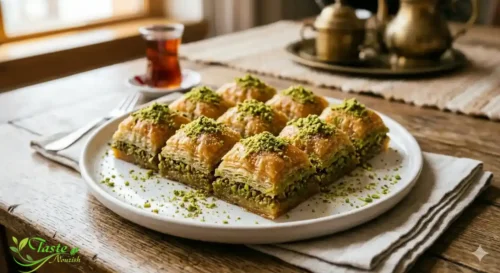
For serving, pistachio baklava is traditionally served at room temperature, which is when the butter and syrup have settled into the phyllo layers to create that perfect ratio of crunch and chew. You can serve it with a strong cup of Turkish coffee, Greek coffee, or mint tea — the slight bitterness of the coffee creates an extraordinary contrast with the sweetness of the baklava. A garnish of finely crushed pistachios on top is both traditional and visually stunning, reinforcing the pistachio identity of the dessert.
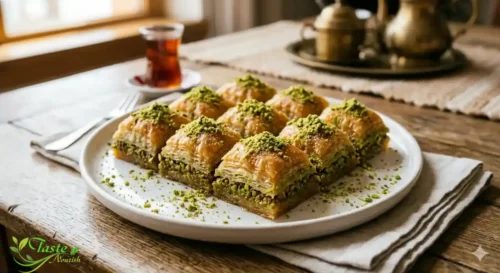
If you’re making baklava for a special occasion or gifting, arrange the diamond pieces in a single layer on a decorative tray. The visual impact of a full tray of golden, pistachio-studded baklava pieces is genuinely spectacular — it’s the kind of thing that makes guests go quiet for a second before reaching for a piece.
The Rich History of Pistachio Baklava
If you want to truly appreciate pistachio baklava, you have to understand where it came from — and the story is far older and more complex than most people realize. We’re not talking about a recipe that appeared in a cookbook fifty years ago. We’re talking about a culinary lineage that stretches back thousands of years, shaped by empires, trade routes, and the quiet genius of palace kitchens.
Ancient Roots and Ottoman Refinement
The origins of baklava date back to ancient times. Around the eighth century B.C.E., people in the Assyrian Empire, which spread across parts of modern-day Iraq, Iran, Kuwait, Syria, and Turkey, arranged unleavened flatbreads in layers, with chopped nuts in between, to be enjoyed during special events. This was a primitive but recognizable ancestor of the dessert we know today.
Over the following centuries, as civilizations rose and fell and traded with one another, the concept of layered nut pastry was refined, enriched, and passed from culture to culture like a treasured heirloom.
The name “baklava” was first used in the Ottoman Empire in the 15th century, and it was during this era that the dessert truly became the masterpiece we recognize today.
Ottoman chefs are credited with developing the baklava creation process into an art form, introducing variations such as the sultan pistachio baklava and the triangular pistachio baklava design. They enhanced the thinness of the phyllo dough, perfected layering techniques, and diversified fillings. The imperial kitchens of Top kapi Palace were essentially the world’s first test kitchen for this dessert, and what emerged from those kitchens set the standard for every pistachio baklava made since.
Baklava’s reputation as a dish of importance meant that it was spread far and wide by bureaucrats along trade routes and pilgrimages during the zenith of the Ottoman Empire in the 16th century, making the dessert a staple across Middle Eastern and Mediterranean cultures, from Algeria to Afghanistan. Think of it like the viral food trend of its era — except instead of spreading via Instagram, it spread via the most powerful empire on earth. Not a bad distribution network, honestly.
How Pistachio Became the King of Baklava Fillings
The dominance of pistachios in baklava is not a random accident of culinary history. It’s deeply tied to geography and the culture of the Turkish city of Gaziantep, which sits in southeastern Turkey and produces some of the world’s finest pistachios. “Gaziantep is a region famous for pistachios,” says one baklava artisan from the region.
“My great-grandfather used pistachios in his baklava.” Across Turkey, others began to follow suit. The Gaziantep pistachio — small, vibrant green, intensely flavored — became the gold standard for pistachio baklava, and the city itself earned the nickname “baklava capital of the world.”
In Turkey, baklava is often made with pistachios, particularly those from the southeastern region of Gaziantep, which are prized for their vibrant green color and intense flavor. This regional specialization created a feedback loop where the quality of Gaziantep pistachios elevated the quality of Turkish baklava, which elevated the global reputation of pistachio as the premium baklava filling, which drove further demand for Gaziantep pistachios. It’s a beautiful, delicious circle of culinary economics.
Pistachio Baklava Variations Across Cultures
One of the most exciting things about pistachio baklava is that it’s not one dessert — it’s many desserts, each shaped by the culture, ingredients, and traditions of its home region. Once you understand the variations, you’ll never look at a tray of baklava the same way again. You’ll start noticing the subtle signals — the color of the syrup, the thickness of the phyllo layers, the fineness of the nut grind — that tell you exactly where a piece of baklava is from.
Turkish Pistachio Baklava (Gaziantep Style)
Turkish-style pistachio baklava is widely considered the benchmark by which all other versions are judged. The phyllo sheets are extraordinarily thin — sometimes up to 40 layers are used — and the pistachio filling is positioned in the middle of the pastry stack rather than scattered throughout.
Turkish baklava uses a simple syrup (sugar and water), and bakers use anywhere from 15 to 18 sheets of phyllo, carefully brushing each layer with melted butter or ghee. The simplicity of the syrup is intentional: it lets the natural flavor of the Gaziantep pistachios shine without being masked by honey or floral waters. The result is a cleaner, crisper, more intensely pistachio-forward experience.
Greek Pistachio Baklava
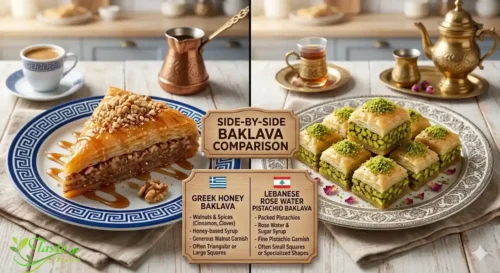
Greek pistachio baklava takes a slightly different approach that reflects the Greek love of honey and warm spices. Greeks use cinnamon and honey in their syrup for baklava. This creates a richer, more complex sweetness compared to Turkish-style, with a darker color and a more pronounced aromatic character. Greek baklava also tends to use a higher ratio of nuts to phyllo, giving it a denser, more substantial bite.
Modern baklava may have originated in Turkey during the Ottoman Empire and was then modified in Greece — the Constantinople (Istanbul) version is particularly celebrated. For many Greek families, baklava with pistachios is reserved for special occasions like Easter and Christmas, making it a dessert loaded with emotional and cultural significance.
Lebanese and Egyptian Pistachio Baklava
Lebanese pistachio baklava is arguably the most fragrant of the major regional styles, thanks to the generous use of orange blossom water or rose water in the syrup. Lebanese syrup is infused with orange blossom water, which gives the finished baklava a floral, almost perfume-like quality that’s immediately distinctive on the palate.
Egyptian-style pistachio baklava, as prepared in many Egyptian households, also uses rose water, though the emphasis tends to be on achieving an incredibly crispy top layer — a technique often passed down through family traditions rather than written recipes.
If you want to use rose water or orange blossom water, remember to use them sparingly — too much rose water will make the dessert bitter. This is one of those critical insider tips that separates people who’ve made baklava a hundred times from people who are making it for the first time.
Regional Comparison Table
Feature
Turkish (Gaziantep)
Greek
Lebanese/Egyptian
Syrup Base
Simple sugar syrup
Honey + cinnamon
Orange blossom or rose water
Pistachio Type
Gaziantep (vibrant green)
Mixed/local
Local varieties
Phyllo Thickness
Ultra-thin, many layers
Moderate layers
Moderate layers
Flavor Profile
Clean, nutty, crisp
Rich, spiced, aromatic
Floral, fragrant, sweet
Nut Placement
Center layer
Throughout layers
Throughout layers
Butter Type
Clarified butter
Regular or clarified
Ghee preferred
Conclusion
Pistachio baklava is so much more than a dessert. It’s a living piece of culinary history, a cross-cultural conversation that has been ongoing for over three thousand years, and one of the most genuinely satisfying things you can make — or eat — in a kitchen. From the ancient Assyrian Empire to the grand kitchens of the Ottoman Palace, from the pistachio orchards of Gaziantep to home ovens around the world, this remarkable pastry has traveled far and changed much, while somehow remaining exactly itself: layers of buttery phyllo, fragrant pistachios, and sweet syrup in perfect harmony.
Whether you’re making it for the first time this weekend, perfecting a family recipe, or just deepening your appreciation of a dessert you’ve always loved, we hope this guide gives you everything you need. Now go make some baklava — and don’t forget to let it rest overnight.
Pistachio Baklava FAQs
What type of pistachio is best for pistachio baklava?
Raw, unsalted pistachios are the gold standard for pistachio baklava. If you can source Gaziantep pistachios from Turkey, you’ll get the most vibrant green color and intensely nutty flavor. California pistachios are an excellent widely available alternative — just make sure they’re unsalted and unroasted.
Can I make pistachio baklava without phyllo dough?
Traditional pistachio baklava genuinely requires phyllo dough for its signature texture. Some recipes substitute puff pastry, which produces a different (puffier, less layered) result. It’s still delicious but is not technically baklava in the traditional sense. Frozen phyllo is widely available and works beautifully.
Why did my pistachio baklava turn out soggy?
Soggy baklava is almost always caused by either pouring hot syrup over hot baklava, using too much syrup, or covering the baklava while it’s still warm. Remember: hot baklava gets cold syrup (or vice versa), and always let baklava cool completely uncovered so steam can escape.
How long does pistachio baklava last?
Stored uncovered at room temperature, pistachio baklava lasts 5–7 days and actually tastes best on days 2–3 as the flavors develop. It can be refrigerated for up to 2 weeks, though this slightly affects the texture. Freezing is possible for up to 3 months in an airtight container.
Is pistachio baklava gluten-free?
Traditional pistachio baklava is not gluten-free because phyllo dough is made from wheat flour. However, gluten-free phyllo alternatives are available in specialty stores and online, making it possible to recreate the dessert for those with gluten sensitivities. Always check individual ingredient labels.
Hanan Abo Samra is the founder of Taste & Nourish, sharing trustworthy nutrition guidance and recipes drawn from 20+ years of hands-on cooking experience. When she's not developing new recipes, Hanan is researching the science behind everyday ingredients to bring readers practical, evidence-based guidance for a healthier lifestyle.