Few side dishes reward so little effort with so much flavor. This roasted beets recipe turns humble root vegetables into something sweet, earthy, and almost caramelized at the edges, using nothing more than olive oil, salt, and a hot oven. Whether you’re serving them alongside a weeknight dinner or building a salad around them, roasted beets are one of those recipes worth having on repeat.
This method works for red, golden, or Chioggia beets, and it’s forgiving enough for a first attempt yet precise enough to satisfy anyone who’s roasted a hundred trays of vegetables before.
The best roasted beets recipe wraps trimmed, oiled beets individually in foil and roasts them at 400°F (204°C) for 45 to 60 minutes, until a knife slides in with no resistance. Cool slightly, then the skins rub off easily by hand. Finish with salt, pepper, and a splash of vinegar or good olive oil.
Recipe at a Glance
Detail
Time or Amount
Prep time
10 minutes
Cook time
45–60 minutes
Total time
About 1 hour 10 minutes
Yield
6 servings
Difficulty
Easy
Key Takeaways
This roasted beets recipe needs just three ingredients: beets, olive oil, and salt.
Wrapping beets individually in foil traps steam and keeps them tender without drying out.
Roasting concentrates the natural sugars in beets, giving them a deeper flavor than boiling.
Beets are done when a paring knife slides in with no resistance, usually 45 to 60 minutes at 400°F.
Peeling is easiest while the beets are still warm — the skins slip off with a paper towel.
Why You’ll Love This Roasted Beets Recipe
Roasting is simply the best way to cook beets. Unlike boiling, which can leach out color, sweetness, and water-soluble nutrients, dry-oven heat concentrates the beet’s natural sugars and deepens its flavor. The result is a side dish that’s tender, slightly caramelized, and genuinely sweet without any added sugar.
Beets are also a nutritional standout among root vegetables. They’re one of the richest natural dietary sources of nitrates, compounds the body converts into nitric oxide, a molecule involved in relaxing blood vessels.
A randomized, placebo-controlled study published in Frontiers in Physiology found that a single serving of nitrate-rich beetroot juice measurably lowered aortic systolic blood pressure within 30 minutes in healthy adults, an effect researchers link to beets’ natural nitrate content. Beets also owe their deep color to betalains, plant pigments that recent pharmacological reviews describe as having antioxidant and anti-inflammatory properties across a range of laboratory and clinical studies.
None of that requires beets to taste like medicine. This recipe is built around flavor first — the health notes are simply a bonus.
Ingredients for This Roasted Beets Recipe
6 medium beets (about 2 pounds), any color, trimmed
2 tablespoons olive oil, divided
½ teaspoon kosher salt, plus more to taste
¼ teaspoon freshly ground black pepper
2–3 sprigs fresh thyme or rosemary (optional)
1 tablespoon balsamic vinegar, for finishing (optional)
Ingredient Notes
Choose beets that are firm and roughly the same size so they finish cooking at the same time. Smaller beets (golf ball–sized) will roast faster than large ones, so sort them by size if your bunch is uneven.
If your beets still have their greens attached, don’t discard them — beet greens sauté much like Swiss chard and are worth saving for another meal.
Substitutions
Golden or Chioggia beets can replace red beets with no change to the method, though golden beets tend to taste slightly milder and won’t stain your cutting board. Avocado oil or melted butter both work in place of olive oil. If you don’t have balsamic vinegar, apple cider vinegar or fresh lemon juice make a reasonable finishing swap, though the flavor will lean brighter and less sweet.
How to Make This Roasted Beets Recipe: Step-by-Step Instructions
Preheat the oven to 400°F (204°C). A fully preheated oven is what gives roasted beets their caramelized edges, so don’t skip this step even if it feels slow.
Trim and scrub the beets. Cut off the leafy tops, leaving about an inch of stem, and trim the root tail. Scrub off any dirt under cold running water; there’s no need to peel beets before roasting.
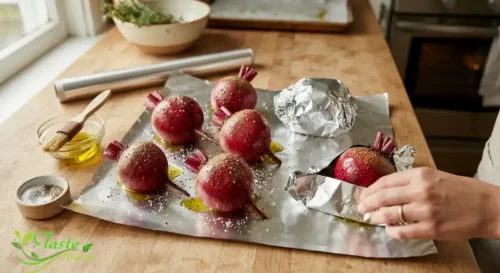
Rub with oil and season. Pat the beets dry, then rub each one all over with olive oil. Season lightly with salt and pepper, tucking in a sprig of thyme or rosemary if using.
Wrap and roast. Wrap each beet individually in aluminum foil, or place all the beets in a covered baking dish with a few tablespoons of water. Roast for 45 to 60 minutes, checking the largest beet at the 45-minute mark.
Check for doneness. Beets are ready when a paring knife or skewer slides into the center with no resistance. You should also notice a faint, sweet, earthy aroma coming from the oven.
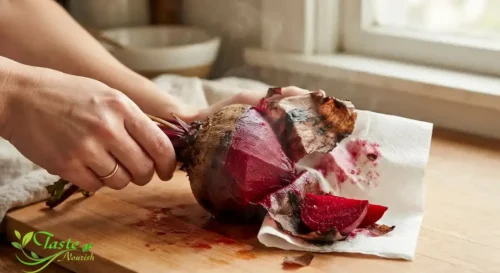
Cool slightly, then peel. Let the beets rest until cool enough to handle, about 10 minutes. Hold each one in a paper towel and rub firmly; the skin should slip off easily. Wearing kitchen gloves keeps your hands from staining if you’re working with red beets.
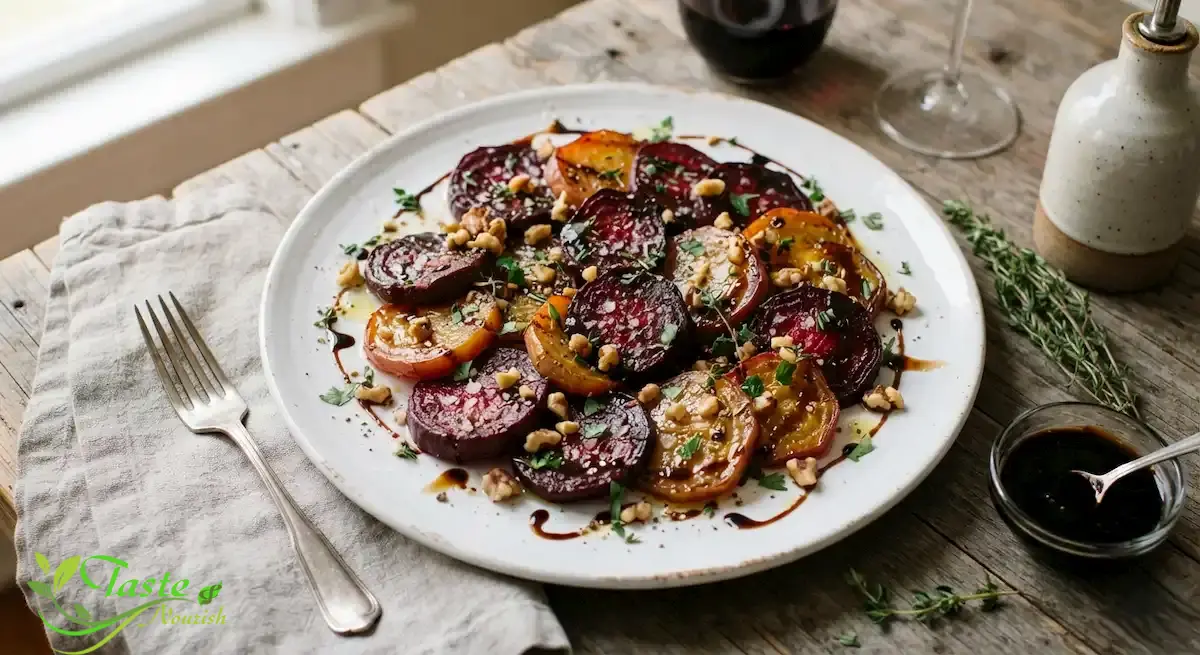
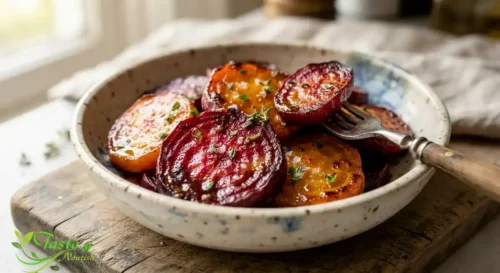
Slice and finish. Cut the peeled beets into wedges or rounds, then toss with a drizzle of good olive oil, a splash of balsamic vinegar, and a final pinch of salt before serving.
Expert Tips for the Best Roasted Beets
Roast beets on the middle oven rack, where heat circulates most evenly; a rack that’s too low can scorch the foil packets before the centers cook through.
Group beets of similar size together, and if a few stragglers are much larger than the rest, give them a five- to ten-minute head start before adding the smaller ones to the same tray.
Season beets while they’re still warm. Salt and acid both penetrate more easily into warm vegetables than cold ones, so finishing right after peeling gives the best flavor.
Common Mistakes to Avoid When Roasting Beets
Peeling before roasting. Raw beet skin protects moisture and color during cooking. Peeling first dries out the exterior and causes more color and nutrients to leach out, so always peel after roasting instead.
Crowding beets loose on a sheet pan without foil or a cover. Uncovered beets lose moisture quickly in a hot oven and can turn leathery on the outside before the center is tender. Wrapping in foil or covering the dish traps steam and keeps them moist.
Pulling beets too early. Beets that still resist a knife will only get tougher as they cool, not softer. When in doubt, give them another 10 minutes rather than serving underdone beets.
Recipe Variations
Herb and garlic roasted beets: Add a smashed garlic clove and a sprig of rosemary to each foil packet before sealing for a more savory, aromatic result.
Maple-glazed roasted beets: Toss the sliced, roasted beets with a tablespoon of maple syrup and a pinch of flaky salt for a sweeter finish that pairs well with roasted meats.
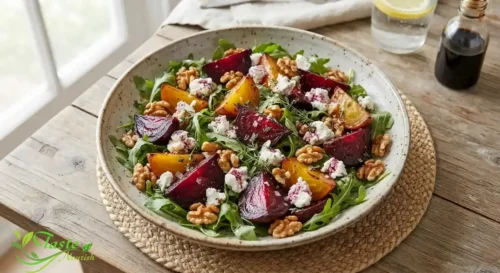
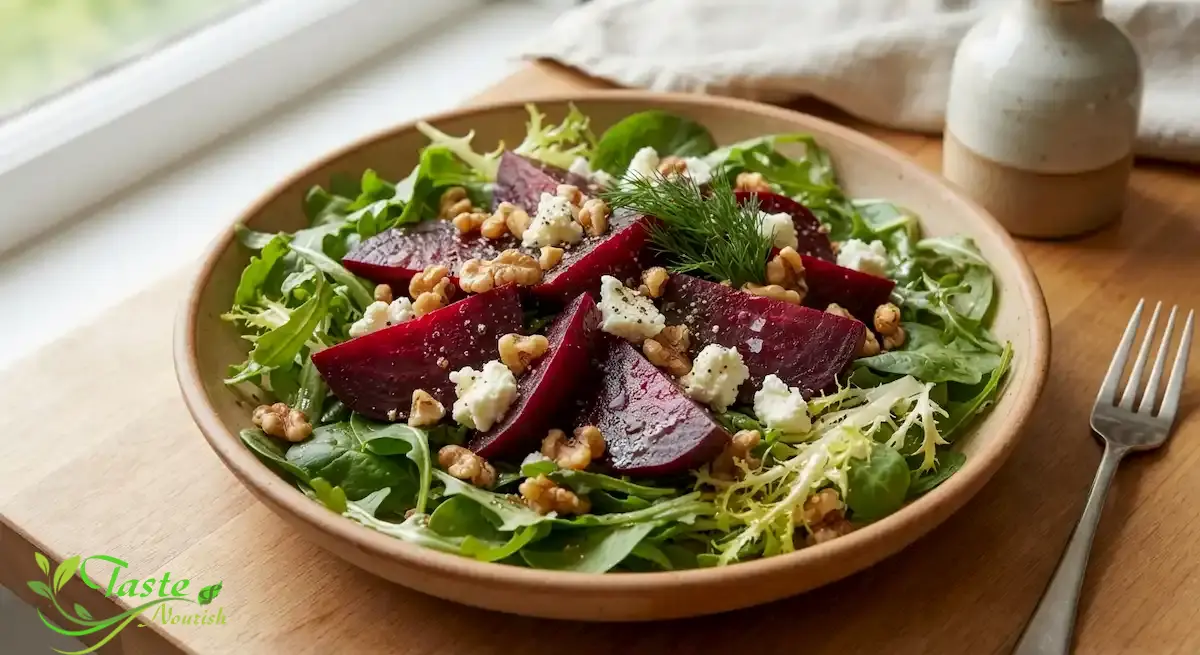
Roasted beet and citrus salad: Layer sliced roasted beets with orange segments, thinly sliced red onion, and crumbled goat cheese over arugula.
Serving Suggestions: What to Serve with Roasted Beets
Roasted beets pair naturally with tangy, creamy, or peppery flavors that balance their sweetness. A few reliable pairings:
The following values are approximate estimates for one serving (about 100g, roughly ¾ cup sliced roasted beets), based on USDA FoodData Central reference data for cooked beets. Actual values will vary depending on beet size and how much oil is used.
Nutrient
Amount per Serving
Calories
~44 kcal
Carbohydrates
~10 g
Fiber
~2 g
Protein
~1.7 g
Fat
~0.2 g (before added oil)
Folate
~80 mcg (about 20% DV)
Potassium
~305 mg (about 6% DV)
Vitamin C
~3.6 mg
Beets are one of the more concentrated whole-food sources of folate, a B-vitamin the body needs for normal cell division, according to the NIH Office. They’re also a useful source of potassium, a mineral the same office notes plays a role in normal muscle, kidney, and heart function, as detailed in its potassium fact sheet. This information is for general education and isn’t a substitute for personalized dietary advice.
Storage Instructions
Store cooled roasted beets in an airtight container in the refrigerator for up to 5 days. For longer storage, freeze cooled, peeled beets in a freezer-safe bag for up to 3 months; they’ll soften slightly in texture after thawing, so frozen beets work best in soups or purees rather than salads.
To reheat, warm sliced beets in a covered skillet over medium-low heat for a few minutes, or microwave in short 20-second bursts. Reheating gently helps them keep their texture better than a hot, dry oven does.
Make-Ahead Tips
Beets can be roasted whole and refrigerated, unpeeled, up to 5 days ahead. Leaving the skins on until you’re ready to serve helps them stay moist and makes peeling just as easy days later as it is right out of the oven.
This Roasted Beets Recipe: FAQs
Do I need to peel beets before roasting?
No. Peeling before cooking dries out the beet and causes more color to bleed out. Roast beets whole with the skin on, then peel once they’re cool enough to handle.
How long does it take to roast beets at 400°F?
Most medium beets take 45 to 60 minutes at 400°F (204°C). Very large beets can take closer to 75 minutes, while small beets may be done in as little as 35 minutes.
Can I roast beets without foil?
Yes, though the beets will need a covered baking dish with a splash of water to trap steam, since uncovered beets tend to dry out and toughen in a hot oven.
Why are my roasted beets still hard after an hour?
This usually means the beets were unusually large, the oven wasn’t fully preheated, or they weren’t wrapped tightly enough to trap steam. Give them additional time in 10-minute increments and test again with a knife.
How do I keep my hands from turning red when peeling beets?
Wear disposable kitchen gloves, or rub your hands with a little oil before peeling; the color rinses off more easily afterward.
Can I roast beets and potatoes together?
It’s better to roast them separately, or at least on different areas of the tray. Beet juice will stain everything nearby, and beets generally take longer to cook through than most potato pieces of the same size.
A simple roasted beets recipe using whole beets wrapped in foil and roasted at 400°F until tender, then peeled and finished with olive oil and balsamic vinegar.
Ingredients
6 medium beets (about 2 pounds), any color, trimmed
2 tablespoons olive oil, divided
1/2 teaspoon kosher salt, plus more to taste
1/4 teaspoon freshly ground black pepper
2-3 sprigs fresh thyme or rosemary (optional)
1 tablespoon balsamic vinegar, for finishing (optional)
Directions
Preheat the oven to 400°F (204°C) so the beets caramelize properly.
Cut off the leafy tops, leaving about an inch of stem, trim the root tail, and scrub off dirt under cold water. No need to peel before roasting.
Pat the beets dry, rub each one with olive oil, and season with salt and pepper, adding a sprig of thyme or rosemary if using.
Wrap each beet individually in foil, or place all beets in a covered baking dish with a few tablespoons of water. Roast 45 to 60 minutes.
Beets are ready when a paring knife slides into the center with no resistance.
Let the beets cool for about 10 minutes, then rub off the skins with a paper towel.
Cut the peeled beets into wedges or rounds and toss with olive oil, balsamic vinegar, and a pinch of salt.
Conclusion
This roasted beets recipe proves that a vegetable often overlooked in the produce aisle can become one of the easiest, most reliable dishes in your rotation. Roast a few extra beets next time — they keep well in the fridge and turn a five-minute lunch salad into something that tastes like you planned ahead.
References
U.S. Department of Agriculture, Agricultural Research Service, Beltsville Human Nutrition Research Center. “FoodData Central.” https://fdc.nal.usda.gov/
Kukadia, S., Dehbi, H.M., Tillin, T., Coady, E., Chaturvedi, N., Hughes, A.D. “A Double-Blind Placebo-Controlled Crossover Study of the Effect of Beetroot Juice Containing Dietary Nitrate on Aortic and Brachial Blood Pressure Over 24 h.” Frontiers in Physiology, National Center for Biotechnology Information. https://pmc.ncbi.nlm.nih.gov/articles/PMC6369216/
“Betalains: A Narrative Review on Pharmacological Mechanisms Supporting the Nutraceutical Potential Towards Health Benefits.” National Center for Biotechnology Information, PubMed Central. https://pmc.ncbi.nlm.nih.gov/articles/PMC11640225/
Hanan Abo Samra is the founder of Taste & Nourish, sharing trustworthy nutrition guidance and recipes drawn from 20+ years of hands-on cooking experience. When she's not developing new recipes, Hanan is researching the science behind everyday ingredients to bring readers practical, evidence-based guidance for a healthier lifestyle.