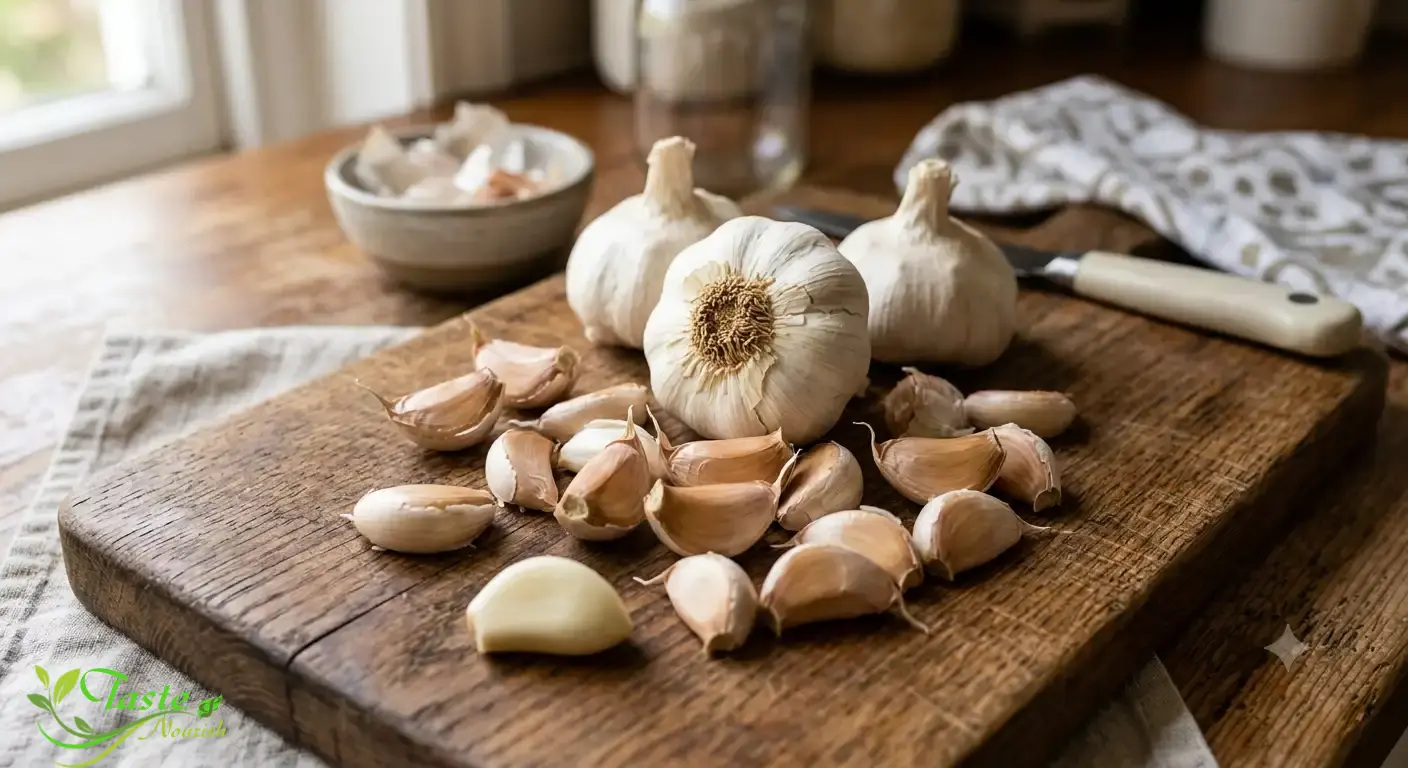

Garlic on an Empty Stomach: Benefits, Risks, and What the Science Actually Says
Garlic on an Empty Stomach: Real Benefits vs. Risks
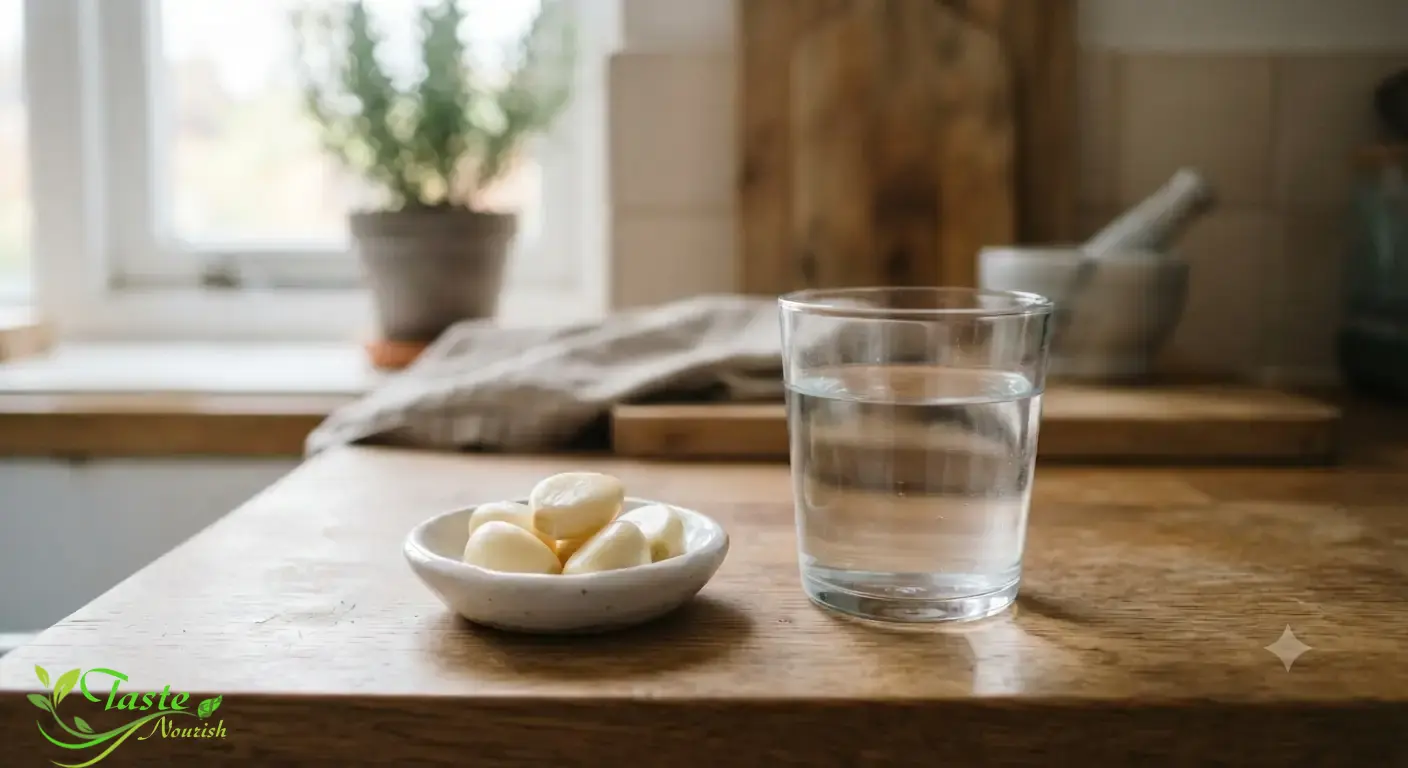
Eating a raw clove of garlic before breakfast has become one of those wellness habits that shows up everywhere, from family kitchens to social media feeds. Some people swear it clears their sinuses, sharpens their energy, or keeps colds away. Others try it once, regret it within the hour, and never touch raw garlic again.
So what’s actually going on here? Garlic is a genuinely well-studied food, and researchers have looked closely at its effects on the heart, the immune system, and the gut. What’s much less studied is the specific practice of eating it on an empty stomach. This article walks through what garlic is, what happens in your body when you eat it first thing in the morning, who should be cautious, and how to approach the habit sensibly if you want to try it.
What Happens When You Eat Garlic on an Empty Stomach?
Eating garlic on an empty stomach doesn’t change what garlic is, but it can change how quickly and intensely you feel its effects. Without food to buffer it, raw garlic’s active sulfur compounds, especially allicin, reach your stomach lining more directly. For some people, this means a stronger sense of the herb’s traditional benefits, such as support for heart health and immune function. For others, particularly those with a sensitive digestive tract, it means a faster onset of heartburn, gas, or stomach discomfort.
In short: an empty stomach doesn’t add new benefits that garlic doesn’t otherwise have. It mostly amplifies whatever response your body already has to garlic, good or uncomfortable.
Key takeaway: Garlic on an empty stomach isn’t a special formula. It’s simply raw garlic, consumed without the cushioning effect of other food, which can make both its benefits and its side effects more noticeable.
Garlic 101: Origin, Taste, and Why the Empty-Stomach Habit Caught On
Where Garlic Comes From
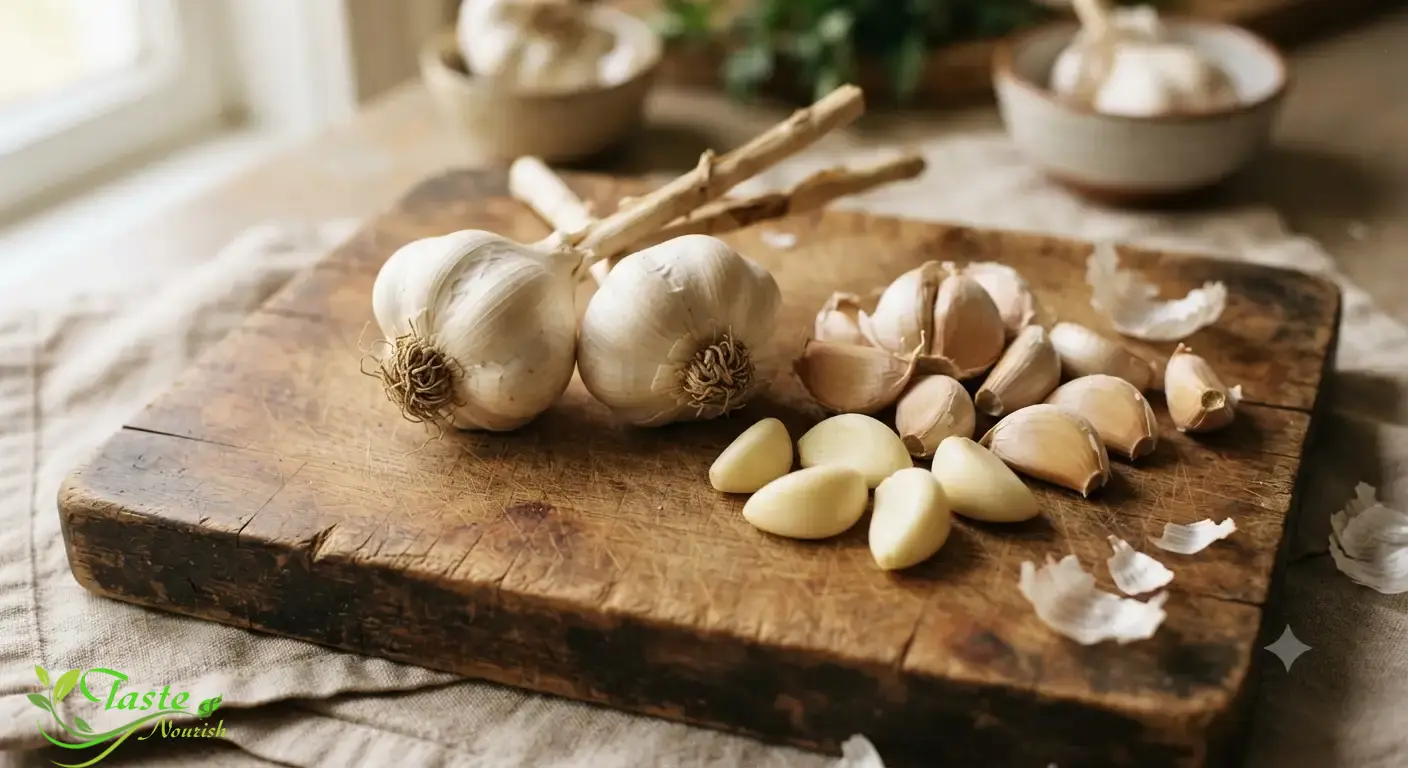
Garlic (Allium sativum) belongs to the same plant family as onions, leeks, and shallots. It’s believed to have originated in Central Asia thousands of years ago before spreading through Mediterranean, Middle Eastern, and Asian cuisines, where it became both a food staple and a folk remedy. Ancient Egyptian, Greek, and Chinese texts all reference garlic as something closer to medicine than seasoning, and that reputation is part of why the empty-stomach ritual persists today.
What Raw Garlic Tastes and Feels Like on an Empty Stomach
Raw garlic is pungent, sharp, and noticeably spicier than its cooked counterpart. Chopping, crushing, or chewing a clove triggers an enzymatic reaction that produces allicin, the compound largely responsible for garlic’s smell and bite. Cooking deactivates much of this enzyme, which is part of why roasted garlic tastes sweet and mellow while raw garlic can feel like it’s burning your tongue. On an empty stomach, that intensity is magnified.
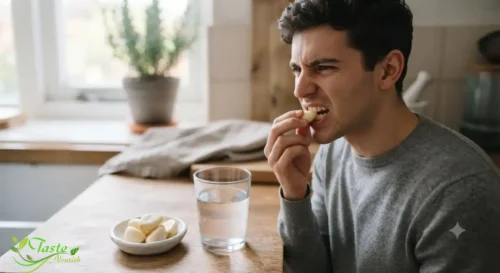
♦ Many people describe a warming or slightly burning sensation in the throat and stomach that fades within a few minutes but can linger longer if you’re prone to reflux.
Garlic Nutrition Facts
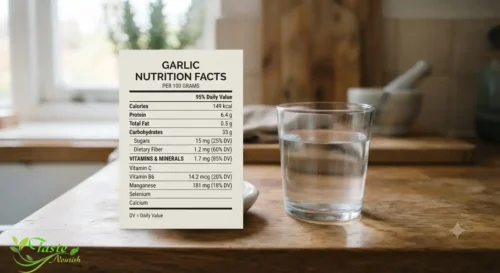
Garlic is low in calories and fat but carries a surprisingly dense nutrient profile for something usually eaten in small amounts. Here’s how raw garlic breaks down, based on U.S. Department of Agriculture data.
| Nutrient | Per 100 g Raw Garlic | Per 1 Average Clove (~3 g) |
|---|---|---|
| Calories | ~143 kcal | ~4.5 kcal |
| Protein | ~6.6 g | ~0.2 g |
| Carbohydrates | ~28.2 g | ~1 g |
| Fiber | ~2.7 g | ~0.1 g |
| Fat | ~0.4 g | negligible |
| Calcium | ~181 mg | ~5 mg |
| Iron | ~1.7 mg | ~0.05 mg |
| Vitamin C | ~10 mg | ~0.3 mg |
A single clove is a tiny amount of food, which is exactly why garlic is generally discussed in terms of its concentrated bioactive compounds, particularly allicin and other organosulfur compounds, rather than its vitamin and mineral content alone.
Potential Benefits of Eating Garlic on an Empty Stomach
Cautious phrasing matters here. Most of the research on garlic looks at regular intake over weeks or months, not the specific act of eating it before breakfast. Still, the underlying benefits associated with garlic generally apply whether it’s eaten on an empty stomach or with a meal.
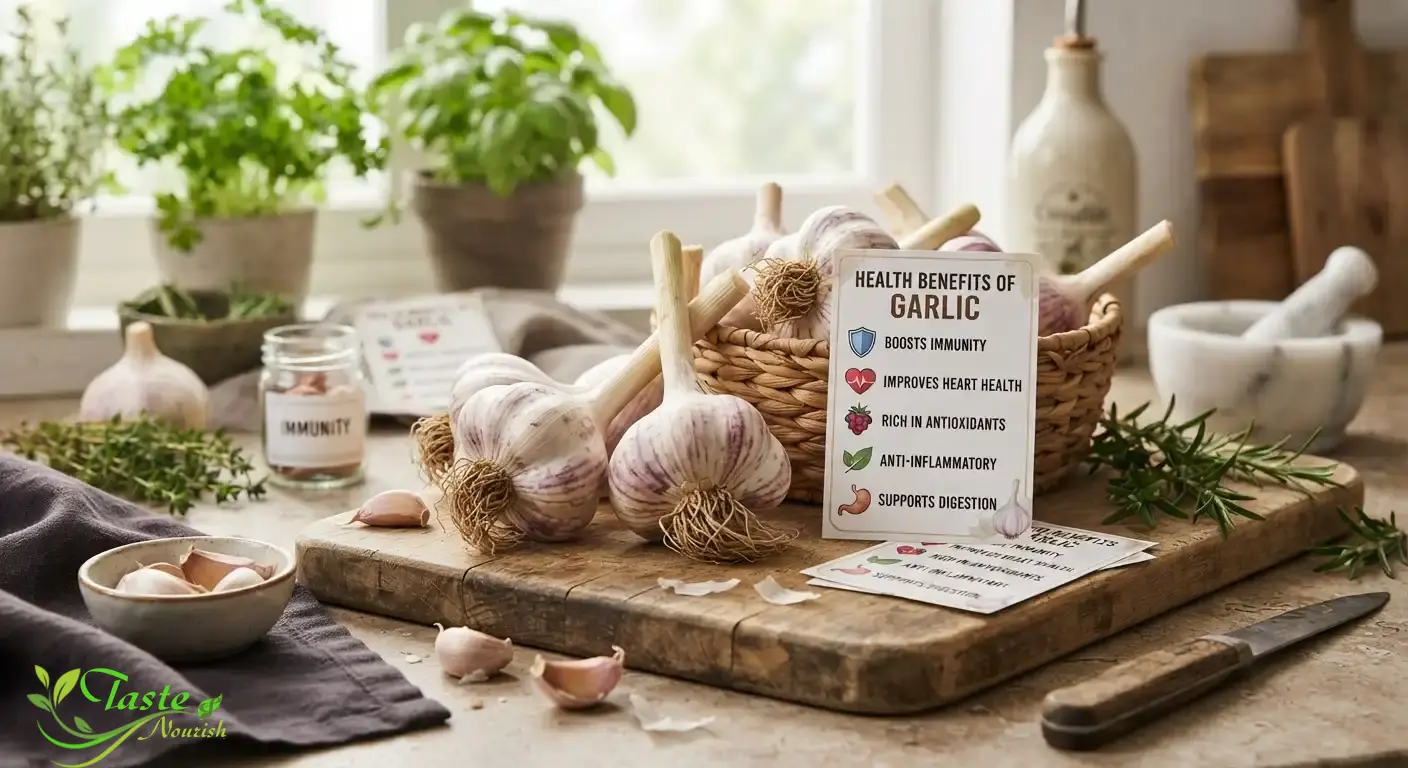
Heart and Blood Pressure Support
Garlic is one of the more studied natural products when it comes to cardiovascular health. According to the (NCCIH), part of the National Institutes of Health, some evidence suggests garlic preparations may modestly lower blood pressure in people with hypertension, although the underlying studies are often small or of limited quality.
Garlic supplements have also been associated with a modest reduction in total and LDL cholesterol when taken consistently for more than two months, though the effect is smaller than what prescription cholesterol medications typically produce.
Immune System Support
Garlic has a long folk history as a cold-and-flu remedy, and there’s some limited clinical support behind that reputation. Research reviewed by NCCIH found a single clinical trial suggesting garlic supplementation may reduce the frequency of common colds, though the evidence base is still considered thin and more trials are needed before firm conclusions can be drawn.
Blood Sugar and Metabolic Effects
Some research suggests garlic may modestly influence blood sugar and lipid markers in people with diabetes, but this is an area where individual results vary widely and garlic should never be treated as a substitute for prescribed diabetes management. Anyone managing blood sugar with medication should talk with their healthcare provider before making garlic a regular habit, since the metabolic effects could compound with certain medications.
Antibacterial Effects, Including on H. pylori
One of the more interesting areas of garlic research involves its activity against Helicobacter pylori, the bacteria linked to many stomach ulcers.
A small clinical trial published on PubMed Central gave 15 patients with confirmed H. pylori infection two cloves of raw garlic twice daily for three days and measured bacterial activity using a urease breath test. The researchers found a significant reduction in bacterial markers after garlic consumption and concluded that raw garlic may have a supportive role alongside standard treatment. That said, this was a very small, short-term study, and it doesn’t mean garlic can replace antibiotics or standard H. pylori treatment protocols.
Side Effects and Risks You Should Know
Garlic’s downsides are just as well documented as its benefits, and they tend to show up more quickly when it’s eaten on an empty stomach.
Digestive Irritation and Acid Reflux
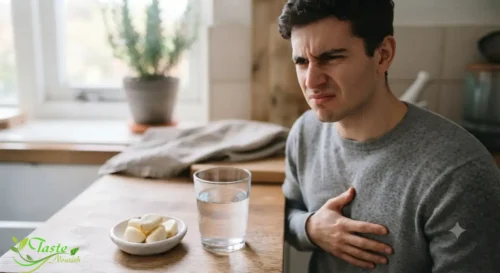
Garlic is a recognized trigger food for some people with acid reflux. The Cleveland Clinic lists garlic, alongside chocolate, coffee, alcohol, and mint, among foods that may relax the lower esophageal sphincter in higher doses, which can allow stomach acid to travel back up into the esophagus. On an empty stomach, raw garlic has direct contact with the stomach lining without other food to buffer it, which is why heartburn, bloating, or a gnawing stomach ache are among the most commonly reported side effects of this specific habit.
Bad Breath and Body Odor
This one is unavoidable and worth setting expectations for. Garlic’s sulfur compounds are absorbed into the bloodstream and released through the breath and skin for hours after eating, not just from lingering food particles in the mouth. Brushing your teeth helps only marginally, since the odor is partly a metabolic byproduct rather than purely a mouth issue.
Bleeding Risk and Medication Interactions
Garlic has natural antiplatelet properties, meaning it can mildly interfere with normal blood clotting. A case discussion published in the Annals of the Royal College of Surgeons of England, available via PubMed Central, described how garlic supplement use contributed to poor bleeding control during colorectal surgery, reinforcing existing guidance that patients should stop garlic supplements before surgical procedures. This effect is generally considered mild with normal culinary use of garlic, but it becomes more relevant for anyone taking blood-thinning medications such as warfarin, aspirin, or clopidogrel.
Who Should Avoid Garlic on an Empty Stomach
The habit isn’t right for everyone, and a few groups in particular should approach it with real caution or skip it altogether:
- People with GERD, gastritis, or peptic ulcers, since raw garlic on an empty stomach may worsen acid-related symptoms
- Anyone taking blood thinners or anticoagulant medications, due to garlic’s mild effect on platelet function
- People scheduled for surgery or dental procedures, since garlic may need to be paused beforehand
- Anyone with a known garlic or allium allergy, which can range from mild digestive upset to skin reactions
- People managing diabetes with medication, given garlic’s potential influence on blood sugar
- Pregnant or breastfeeding individuals considering garlic supplements (as opposed to normal culinary amounts) without first checking with their doctor
If any of these apply to you, it’s worth having a conversation with a healthcare provider before making raw garlic on an empty stomach a daily routine.
How to Eat Garlic on an Empty Stomach More Safely
If you want to try the habit and don’t fall into one of the higher-risk groups above, a gradual, informed approach tends to work better than diving in with several raw cloves on day one.
- Start with a small amount. A single small clove is plenty to gauge your tolerance.
- Chew or crush it rather than swallowing it whole. This helps release allicin, though it also means a stronger taste and smell.
- Pair it with a small glass of water or warm lemon water to help ease it down and dilute some of the intensity.
- Wait at least 15–20 minutes before eating breakfast, since eating immediately after can dull some of the effect people are seeking, though this timing isn’t strictly required for safety.
- Watch how your body responds for a few days before deciding whether to continue, and stop if you notice heartburn, stomach pain, or unusual bruising or bleeding.
Pro tip: If straight raw garlic feels too intense, try mincing it finely and mixing it into a small amount of honey or plain yogurt. This softens the sharpness without cooking away the allicin the way heat does.
Buying and Storing Garlic
What to Look for When Buying
Choose garlic bulbs that feel firm and heavy for their size, with tight, unbroken skin. Avoid bulbs with soft spots, visible mold, or green sprouts pushing through the cloves, all of which signal the garlic is past its prime. Fresher garlic tends to have a cleaner, sharper bite, which matters more when you’re eating it raw than when it’s going into a simmered sauce.
How to Store It
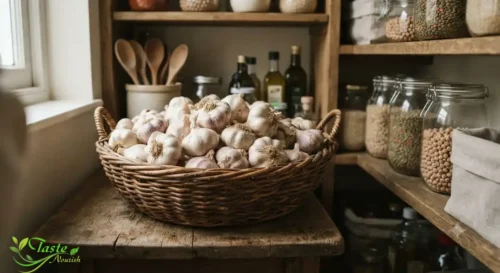
Whole, unpeeled garlic bulbs keep best in a cool, dry, dark place with good air circulation, such as a pantry basket, rather than the refrigerator, where humidity can encourage sprouting or mold. Once a bulb is broken into individual cloves, use them within about a week or two for the best flavor. Peeled or chopped garlic should go in the refrigerator in a sealed container and used within a few days, since cut garlic loses potency and can spoil faster than whole cloves.
Cooking and Culinary Uses Beyond the Morning Clove
Raw garlic on an empty stomach is just one small use case for an ingredient that shows up in nearly every cuisine on earth. Roasted garlic turns sweet and spreadable, making it a natural addition to mashed potatoes, bread, or dressings. Sautéed or sizzled garlic forms the aromatic base of countless dishes, from Italian sauces to Southeast Asian stir-fries.
Garlic can also be fermented into black garlic, pickled whole for a milder snackable clove, or dried and ground into powder for a shelf-stable pantry staple. Each preparation method changes the flavor and, to some degree, the concentration of specific compounds like allicin, which is most potent in raw, freshly crushed garlic and diminishes with heat and time.
What the Scientific Evidence Actually Shows
It’s worth being honest about the state of the research. Garlic has a genuinely strong body of evidence behind some of its general health associations, particularly around modest cholesterol and blood pressure support, but the research specifically testing garlic on an empty stomach versus garlic eaten with food is very limited. Much of what circulates online about empty-stomach garlic draws more on tradition and anecdote than on controlled clinical trials.
That doesn’t mean the practice is unfounded, but it does mean the strongest, most consistent evidence applies to garlic as a regular dietary habit generally, not to the empty-stomach timing specifically. Where research does exist, such as the small H. pylori breath test study or the surgical bleeding-risk case reports, it tends to be either preliminary, based on small sample sizes, or focused on supplement doses rather than a single culinary clove.
♦ Treating garlic as a helpful addition to an overall healthy diet, rather than a cure-all consumed on an empty stomach, reflects what the current evidence actually supports.
Common Myths About Garlic on an Empty Stomach
| Myth | What the Evidence Actually Suggests |
|---|---|
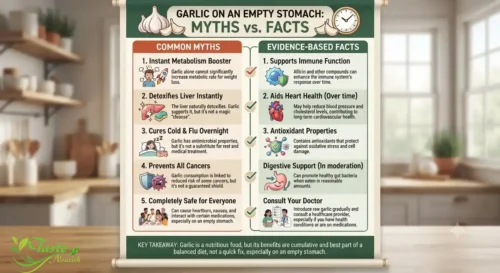
| Garlic on an empty stomach “detoxifies” your body overnight | The liver and kidneys already handle detoxification continuously; there’s no clinical evidence that raw garlic accelerates or enhances this process |
| Raw garlic on an empty stomach cures infections instantly | Some lab and small clinical studies show antibacterial activity, but this doesn’t replace medical treatment for an active infection |
| More garlic always means more benefit | Higher raw garlic intake increases the likelihood of digestive irritation and bleeding risk without a guaranteed increase in benefit |
| Everyone should be doing this daily | People with reflux, ulcers, bleeding disorders, or certain medications may need to avoid or limit raw garlic, especially on an empty stomach |
| Cooked garlic offers no health value | Cooking reduces some heat-sensitive compounds like allicin but garlic retains other beneficial nutrients and compounds even when cooked |
Key Takeaways
- Garlic on an empty stomach doesn’t add new benefits beyond what garlic normally offers; it mainly intensifies the response, positive or negative.
- The strongest evidence supports garlic’s modest role in cardiovascular and immune support as part of a regular diet, not a specific empty-stomach ritual.
- Raw garlic on an empty stomach is more likely to cause heartburn or stomach discomfort in people prone to reflux.
- Anyone on blood thinners, preparing for surgery, or managing GERD should check with a healthcare provider before making this a habit.
- Starting small, chewing rather than swallowing whole, and watching how your body responds is a safer way to try it than jumping in with several cloves.
Conclusion
Garlic earns its reputation as one of the more genuinely useful ingredients in the kitchen, and there’s real, if modest, evidence behind some of its cardiovascular and immune-related benefits. Eating it on an empty stomach doesn’t unlock hidden powers, but it does mean you’ll feel its effects, good and uncomfortable, more directly and more quickly.
For people with a resilient digestive system and no underlying health conditions that raise a red flag, a small clove in the morning is a low-risk experiment. For anyone with reflux, ulcers, bleeding risk, or medication concerns, garlic is still worth enjoying, just perhaps with a meal rather than on its own first thing in the morning.
Garlic on an Empty Stomach FAQs
Q1. Is it safe to eat raw garlic on an empty stomach every day?
For most healthy adults, a single small clove daily is generally considered safe as a dietary habit. People with acid reflux, ulcers, bleeding disorders, or those on blood-thinning medication should check with a healthcare provider first, since daily raw garlic may be more likely to cause irritation or interact with medications in these situations.
Q2. How many garlic cloves should I eat on an empty stomach?
There’s no officially established dose for this specific practice. Most sources discussing culinary garlic intake suggest one to two small cloves is a reasonable starting point, with any adjustment based on how your body tolerates it.
Q3. Can garlic on an empty stomach cause stomach pain?
Yes, this is one of the more commonly reported effects, particularly in people prone to acid reflux or a sensitive stomach. Without other food to buffer it, raw garlic’s compounds have more direct contact with the stomach lining, which can trigger burning, bloating, or nausea in sensitive individuals.
Q4. Does eating garlic on an empty stomach help with weight loss?
There isn’t strong clinical evidence that garlic, on an empty stomach or otherwise, directly causes weight loss. Garlic is low in calories and may modestly support metabolic markers as part of an overall healthy diet, but it isn’t a proven weight-loss tool on its own.
Q5. What’s the best time of day to eat garlic for maximum benefit?
No research has established that morning or empty-stomach consumption produces measurably greater health benefits than eating garlic with meals. The timing that matters most is consistency and tolerance, so the “best” time is genuinely whichever time you can stick with comfortably.
References
- National Center for Complementary and Integrative Health, National Institutes of Health. “Garlic: Usefulness and Safety.” https://www.nccih.nih.gov/health/garlic
- Cleveland Clinic. “Acid Reflux & GERD.” https://my.clevelandclinic.org/health/diseases/17019-acid-reflux-gerd
- U.S. Department of Agriculture, Agricultural Research Service, Beltsville Human Nutrition Research Center. “FoodData Central – Garlic, Raw.” https://fdc.nal.usda.gov/fdc-app.html#/food-details/169230/nutrients
- Zardast M, Namakin K, Esmaelian Kaho J, Hashemi SS. “Assessment of Antibacterial Effect of Garlic in Patients Infected with Helicobacter pylori Using Urease Breath Test.” National Library of Medicine, PubMed Central. https://www.ncbi.nlm.nih.gov/pmc/articles/PMC5052411/
- Lawn A, Sains P. “Not Just a Vampire Repellent: The Adverse Effects of Garlic Supplements in Surgery.” Annals of the Royal College of Surgeons of England, National Library of Medicine, PubMed Central. https://www.ncbi.nlm.nih.gov/pmc/articles/PMC3954349/