
Honey for Energy: Does It Really Boost Performance?
Is Honey Good for Energy? The Research-Backed Answer

Is honey for energy good? There’s something almost old-fashioned about reaching for a spoonful of honey when you’re dragging through the afternoon. No flashy packaging, no caffeine jitters, just a jar that’s probably been sitting in your pantry since the last time you made tea for a cold. But that simplicity is exactly why honey keeps showing up in conversations about natural energy, from marathon training groups to parents packing school lunches.
The interesting part is that this isn’t just nostalgia talking. Researchers have actually put honey through its paces in exercise labs, comparing it to sports gels, dextrose, and plain sugar. The results are more nuanced than “honey is magic,” but they’re also more encouraging than you might expect from a food that’s mostly sugar and water.
This guide walks through what honey actually does in your body, what the research supports (and doesn’t), how it stacks up against other energy sources, and how to use it sensibly if you’re a home cook, a weekend athlete, or just someone who wants steadier energy without leaning on caffeine all day.
What Makes Honey an Energy Food in the First Place
Honey earns its “energy food” reputation because of simple chemistry. It’s almost entirely carbohydrate, and carbohydrates are the body’s preferred, fastest-access fuel source. When you eat honey, your digestive system doesn’t need to break down complex starches first — the sugars are already in a form your body can absorb quickly.
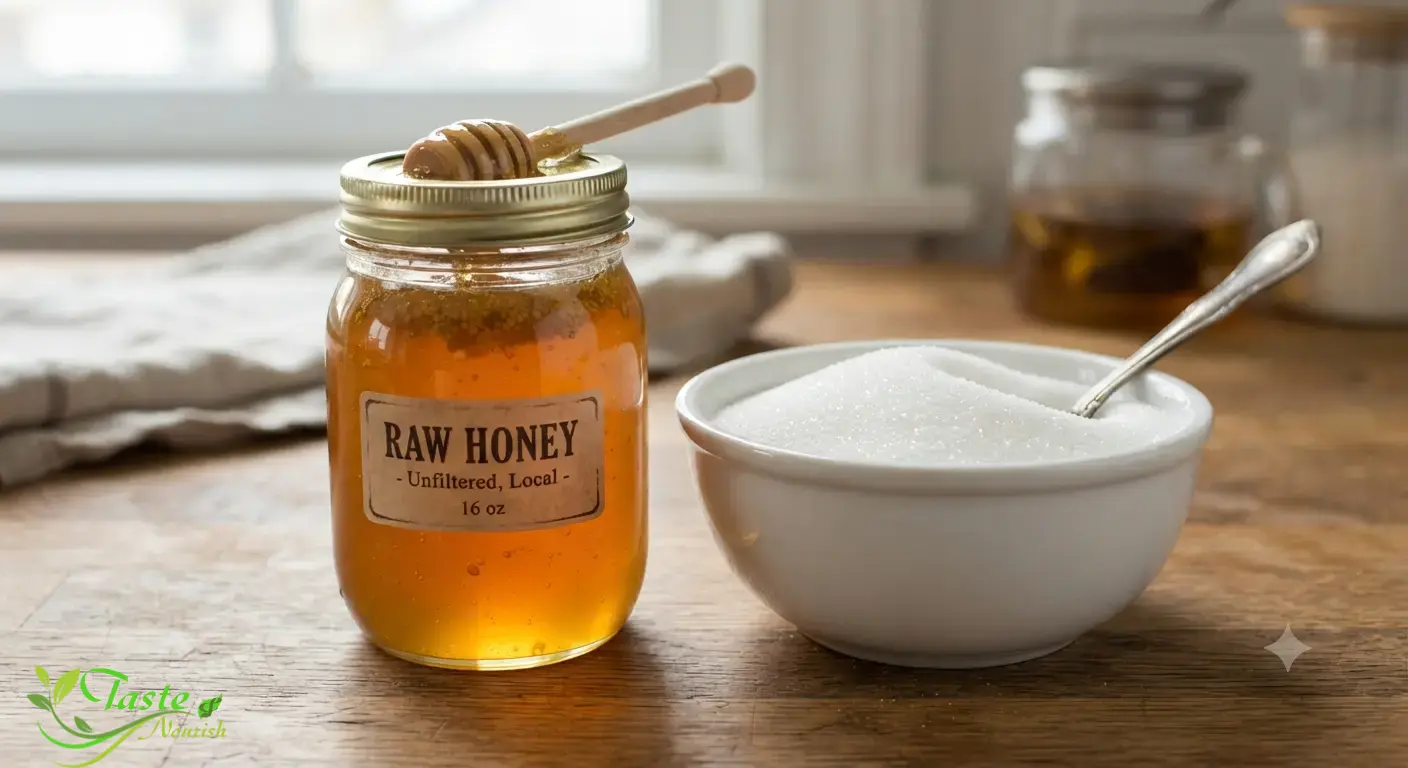
What separates honey from a spoonful of white sugar, though, is its sugar composition. Table sugar (sucrose) is a bonded pair of glucose and fructose that your gut has to split apart before absorbing. Honey already contains free glucose and free fructose sitting side by side, roughly in a near-even split, which changes how your body handles the load.
The Glucose-Fructose Combination That Sets Honey Apart
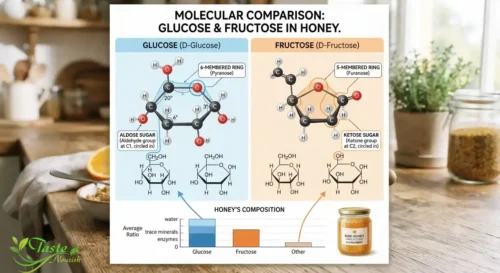
Glucose and fructose don’t travel through your intestinal wall using the same doorway. Glucose uses one transporter, fructose uses another, and when both are present together, your body can absorb carbohydrate faster overall than if you consumed a single sugar type alone. These sugars are absorbed through different pathways in the gut, allowing them to be used simultaneously, which increases the amount of carbohydrates absorbed and puts less strain on the gut while helping sustain energy delivery to working muscles during exercise.
This “multiple transportable carbohydrate” effect is why sports scientists have taken an interest in honey beyond its taste. Because of its high carbohydrate content, honey may be a suitable energy source for exercising populations, and when consumed around exercise, it may provide the multiple transportable carbohydrates recommended for endurance athletes. In plain terms: your gut can process honey’s sugar mix efficiently, without necessarily causing the stomach discomfort that a single concentrated sugar sometimes does.
Honey’s Glycemic Index vs. Other Sweeteners
Glycemic index (GI) measures how quickly a food raises blood sugar compared to pure glucose. Honey typically sits in the moderate range, generally lower than table sugar, though the exact number shifts depending on the floral source of the honey. A lower GI means the sugar releases into your bloodstream a bit more gradually, which can translate to steadier energy rather than a sharp spike followed by a crash.
This matters for two very different audiences. Athletes care about GI because a moderate release can help sustain blood glucose during a long workout without the “sugar high, sugar crash” pattern. Everyday eaters care about it because steadier blood sugar tends to feel less like a rollercoaster and more like, well, actual energy you can use.
Honey Nutrition Facts — The Numbers Behind the Buzz
Before getting into performance claims, it helps to know exactly what you’re consuming. Honey is calorie-dense and carbohydrate-heavy, with only trace amounts of anything else. It’s not a multivitamin in disguise — it’s a concentrated source of quick fuel with a few bonus compounds along for the ride.
Calories, Carbs, and Micronutrients Per Serving
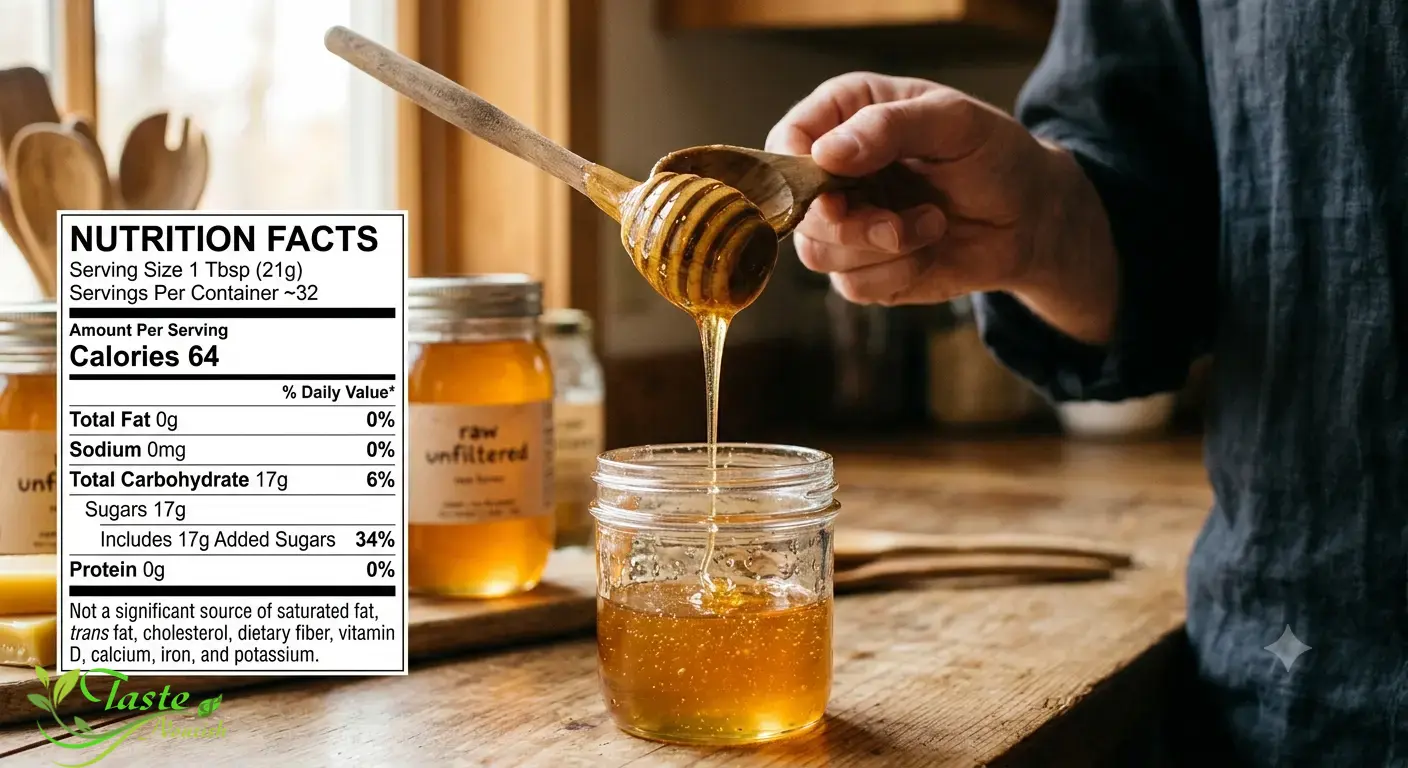
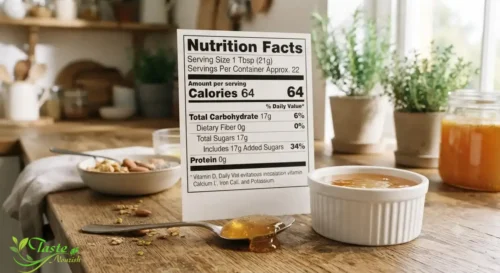
According to the USDA Food Data Central database, honey provides about 304 calories per 100 grams, with 82.4 grams of carbohydrates and essentially zero protein or fat. Scaled down to a more realistic serving, one tablespoon (about 21 grams) works out to roughly 64 calories and 17 grams of carbohydrate, almost entirely sugar.
| Nutrient (per 1 tbsp / 21g) | Amount |
|---|---|
| Calories | ~64 kcal |
| Total carbohydrates | ~17 g |
| Sugars (glucose + fructose) | ~17 g |
| Protein | ~0.1 g |
| Fat | 0 g |
| Fiber | ~0 g |
| Sodium | ~1 mg |
Honey’s micronutrient contribution is small at typical serving sizes — trace iron, potassium, calcium, and a few B vitamins — but the amounts are too minor to meaningfully affect your daily nutrient targets. The real reason people reach for honey isn’t its vitamin content; it’s the way its sugar profile behaves once it’s in your system, plus the trace antioxidant compounds (mostly flavonoids and phenolic acids) that vary by floral source and darkness of the honey.
Pro tip: Darker honeys, like buckwheat or manuka, tend to carry more antioxidant compounds than light, delicate varieties like clover honey. If antioxidant content matters to you, darker isn’t just prettier on toast — it’s often more nutritionally active.
Can Honey Really Boost Exercise Performance?
This is where honey’s reputation gets tested against actual data, and the picture is genuinely interesting rather than a straightforward yes or no.
What the Research on Athletes Shows
A well-cited set of trials conducted at a university exercise and sport nutrition laboratory compared honey against other common carbohydrate sources used by athletes. The initial trial found that honey caused only slight increases in blood sugar and insulin levels, performing better than dextrose and maltodextrin and matching a well-known commercial carbohydrate gel. A separate trial with competitive cyclists found that honey significantly enhanced power and speed compared to a placebo, matching the performance of dextrose, leading the lead researcher to conclude that honey can support endurance exercise capacity.
More recent research backs up the “roughly comparable to sports gels” conclusion rather than an outright superiority claim. In a study of trained cyclists consuming 90 grams of honey per hour across three hours of cycling, performance was comparable to traditional sports gels, suggesting honey may not outperform other carbohydrates but can work just as well.
Where honey may have a genuine edge is in recovery: research has shown that a honey-based drink consumed after exercise helps maintain higher blood glucose levels afterward, which can affect subsequent performance, particularly when the body is under added stress such as heat.
A broader systematic review of honey and exercise reached a measured conclusion, noting that while possible gastric tolerance issues remain to be confirmed, honey’s lower glycemic index compared with most commercially available sports drinks has potential applications for athletes engaged in intermittent sports.</cite> That’s the honest scientific summary: promising, food-first, and worth trying, but not a guaranteed performance edge over well-formulated sports products.
Key takeaway: Honey performs comparably to commercial sports gels and dextrose in several controlled studies, with a possible edge in post-exercise blood sugar recovery — but it isn’t proven to outperform them outright.
Before, During, or After — When Honey Works Best
Timing changes what you’re actually getting out of honey. Eaten roughly 30 to 45 minutes before a workout, it can top off readily available blood glucose without requiring digestion of complex carbohydrates, which is part of why it’s popular as a pre-workout snack. Research on food-first approaches to pre-exercise fueling has gained traction, with honey often mentioned as a practical, inexpensive whole-food option compared to processed gels.

During longer efforts — generally anything over an hour — small, repeated doses of honey (diluted in water or eaten directly) can help maintain blood glucose without the gut discomfort that concentrated sugar sometimes causes. After exercise, pairing honey with a protein source appears to support glycogen replenishment and steadier blood sugar in the recovery window, which is one reason you’ll see it paired with protein shakes or yogurt in athlete recovery routines.
Honey vs. Sports Gels, Sugar, and Energy Drinks
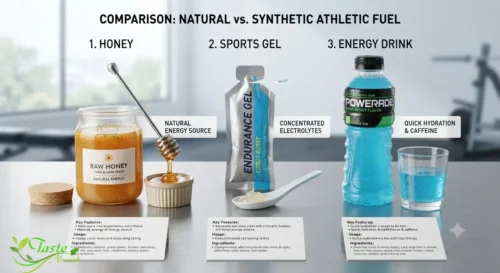
For everyday cooks and casual exercisers, the more useful question usually isn’t “is honey scientifically superior” — it’s “what should I actually reach for.” Here’s how honey compares on the factors people care about most.
Comparison Table: Honey and Common Energy Sources
| Factor | Honey | Table Sugar | Sports Gel | Energy Drink |
|---|---|---|---|---|
| Sugar composition | Glucose + fructose (free) | Sucrose (bonded) | Usually maltodextrin + fructose | Usually sucrose/glucose syrup |
| Glycemic response | Moderate, gradual | Higher, faster spike | Formulated for fast release | Fast spike, often with caffeine |
| Added ingredients | None (pure honey) | None | Electrolytes, flavorings | Caffeine, artificial additives |
| Cost per serving | Low | Very low | Higher | Moderate to high |
| Gut tolerance | Generally good | Can vary | Generally engineered for tolerance | Can cause jitters/crash |
| Whole-food status | Yes | No | No | No |
Honey’s real advantage for most people isn’t raw performance data — it’s that it’s a single, minimally processed ingredient that does a reasonably good job of what more expensive, more processed products are designed to do. That’s a meaningful selling point if you’re cooking and fueling from your own kitchen rather than a sports nutrition aisle.
Common Mistakes People Make When Using Honey for Energy
Even a simple ingredient gets misused. A few patterns show up again and again among people trying to use honey strategically for energy:
- Treating it as calorie-free or “healthy” without limit. Honey is still added sugar. It contributes real calories and counts against daily added-sugar limits, regardless of its natural origin.
- Eating too much, too fast, right before intense exercise. A large dose of any concentrated sugar close to a hard effort can cause stomach upset. Smaller, earlier doses tend to sit better.
- Expecting a dramatic energy “boost” like caffeine. Honey’s effect is steady fuel delivery, not stimulation. If you’re looking for alertness, that’s a different mechanism entirely.
- Using it as a substitute for hydration. Honey provides carbohydrate, not fluid balance. During longer exercise, it needs to be paired with adequate water intake.
- Assuming all honey is nutritionally identical. Heavily processed, blended honey and raw, single-source honey can differ in antioxidant content, even though calorie and carb counts are similar.
Who Should Be Cautious With Honey
Honey isn’t appropriate for everyone, and this is one area where caution matters more than enthusiasm. Infants under 12 months should never be given honey in any form. Honey can contain the bacteria that cause botulism, and health authorities are clear that it should not be fed to a child younger than 1 year old, including in baked goods, on pacifiers, or mixed into food or formula.
People managing diabetes or insulin resistance should treat honey the same as any other concentrated sugar and account for it in their carbohydrate planning, ideally with guidance from a healthcare provider or registered dietitian.
Anyone monitoring total added-sugar intake should also factor honey in carefully. The Dietary Guidelines for Americans recommend limiting calories from added sugars to less than 10 percent of total daily calories, which works out to about 50 grams of added sugars per day on a 2,000-calorie diet. A few tablespoons of honey can use up a meaningful chunk of that allowance on their own.
People with pollen or bee-product allergies should also approach honey cautiously, and anyone with irritable bowel syndrome or fructose malabsorption may find that honey’s high fructose content triggers digestive discomfort, since it’s considered a high-FODMAP food in larger servings.
How to Use Honey for Energy in Everyday Life
You don’t need a training plan to benefit from thinking a little more intentionally about how you use honey. The goal is steady fuel, not sugar overload, which mostly comes down to portion size and timing rather than any special preparation.
Simple Ways to Add Honey to Your Routine
A teaspoon or tablespoon stirred into warm water with lemon before a morning walk or workout can provide a light, easily digested carbohydrate hit without the heaviness of a full meal. Mixed into plain yogurt with a handful of nuts, honey pairs a fast carbohydrate with protein and fat, which slows absorption and extends the energy release rather than spiking it. Drizzled over oatmeal, it adds sweetness while contributing to the meal’s overall carbohydrate content for sustained morning energy.

For longer workouts or hikes, a small honey packet or a honey-water mixture in a squeeze bottle can serve as a homemade alternative to commercial gels, especially useful for people who find synthetic gels hard on their stomach. After a workout, a spoonful of honey stirred into a protein shake or paired with Greek yogurt is a straightforward way to support glycogen replenishment during recovery.
Pro tip: If you’re experimenting with honey before a workout for the first time, test it during a lower-stakes training session rather than race day or a big event. Gut tolerance to any new fuel source is individual, and it’s worth learning your own response ahead of time.
Buying and Storing Honey for Maximum Freshness
Not all honey on the shelf is created equal, and a little label literacy goes a long way. Raw honey has been minimally filtered and not heat-processed, which tends to preserve more of the natural enzymes and antioxidant compounds, though the calorie and carbohydrate content is nearly identical to processed honey. Look for labels that specify a single floral source (like clover, wildflower, or manuka) if you want more predictable flavor and color.

Honey doesn’t need refrigeration and, stored properly in a sealed container away from direct sunlight, can last indefinitely without spoiling — its low moisture content makes it naturally resistant to bacterial growth. If it crystallizes over time, that’s a normal process, not spoilage; a warm water bath around the jar will typically return it to liquid form. Avoid storing honey near heat sources like a stove, since repeated heat exposure can degrade some of its beneficial compounds over time.
Key Takeaways
- Honey’s near-even mix of glucose and fructose allows for faster, more comfortable carbohydrate absorption than single-sugar sources.
- Controlled studies suggest honey performs comparably to sports gels and dextrose for exercise performance, with a possible edge in post-exercise blood sugar maintenance.
- One tablespoon of honey provides about 64 calories and 17 grams of carbohydrate, almost entirely from natural sugars.
- Honey still counts as added sugar and should be factored into daily added-sugar limits.
- Honey must never be given to infants under 12 months due to botulism risk.
- Pairing honey with protein or fat slows absorption and can extend energy release.
Conclusion
Honey’s appeal as an energy source isn’t hype — it’s grounded in genuine, if modest, exercise science, plus a favorable sugar composition that your gut can process efficiently. It’s not a miracle performance enhancer, and it won’t replace a well-planned diet or proper hydration, but as a simple, whole-food carbohydrate source, it holds its own against far more processed alternatives. Used thoughtfully, in reasonable portions and at sensible times, honey earns its long-standing reputation as one of the more practical natural fuels sitting in your kitchen.
Honey for Energy FAQs
Does honey give you an instant energy boost like caffeine?
No. Honey provides carbohydrate-based fuel that raises blood glucose gradually rather than stimulating the nervous system the way caffeine does. Its effect is steadier and slower to build, and it doesn’t produce the alertness or jitteriness associated with stimulants.
How much honey should I eat before a workout?
Most research on honey and exercise uses roughly one to two tablespoons consumed 30 to 45 minutes beforehand. Individual tolerance varies, so it’s worth testing smaller amounts during practice sessions before relying on it for a race or event.
Is raw honey better than regular honey for energy?
Raw and regular honey have nearly identical calorie and carbohydrate content, so their energy contribution is essentially the same. Raw honey may retain slightly more antioxidant compounds due to minimal processing, but this doesn’t meaningfully change its role as a carbohydrate fuel source.
Can honey replace sports drinks during long exercise?
Honey diluted in water can serve as a homemade alternative to some sports drinks for carbohydrate fueling, but it doesn’t contain the electrolytes that many commercial sports drinks add for fluid balance during prolonged, sweaty exercise. For very long or hot-weather efforts, pairing honey with an electrolyte source may work better than honey alone.
Is honey safe for people with diabetes who want more energy?
Honey is a concentrated source of sugar and affects blood glucose similarly to other sweeteners, so people with diabetes should account for it within their carbohydrate plan rather than treating it as a free pass. A healthcare provider or dietitian can help determine an appropriate amount based on individual blood sugar goals.
References
- Honey Supplementation and Exercise: A Systematic Review — International Journal of Environmental Research and Public Health / PMC, National Institutes of Health. https://pmc.ncbi.nlm.nih.gov/articles/PMC6683082/
- FoodData Central: Honey — U.S. Department of Agriculture, Agricultural Research Service. https://fdc.nal.usda.gov/fdc-app.html#/food-details/169640/nutrients
- Get the Facts: Added Sugars — Centers for Disease Control and Prevention, Division of Nutrition, Physical Activity, and Obesity. https://www.cdc.gov/nutrition/php/data-research/added-sugars.html
- Botulism Prevention — Centers for Disease Control and Prevention. https://www.cdc.gov/botulism/prevention/index.html
- Added Sugars on the Nutrition Facts Label — U.S. Food and Drug Administration. https://www.fda.gov/food/nutrition-facts-label/added-sugars-nutrition-facts-label