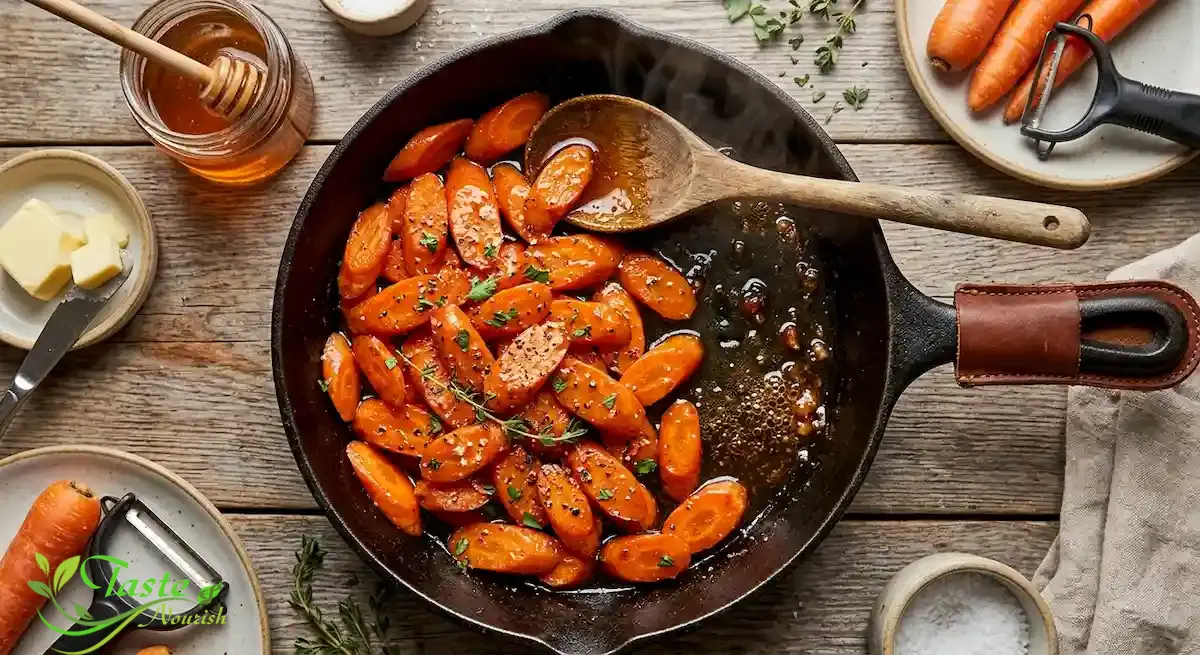
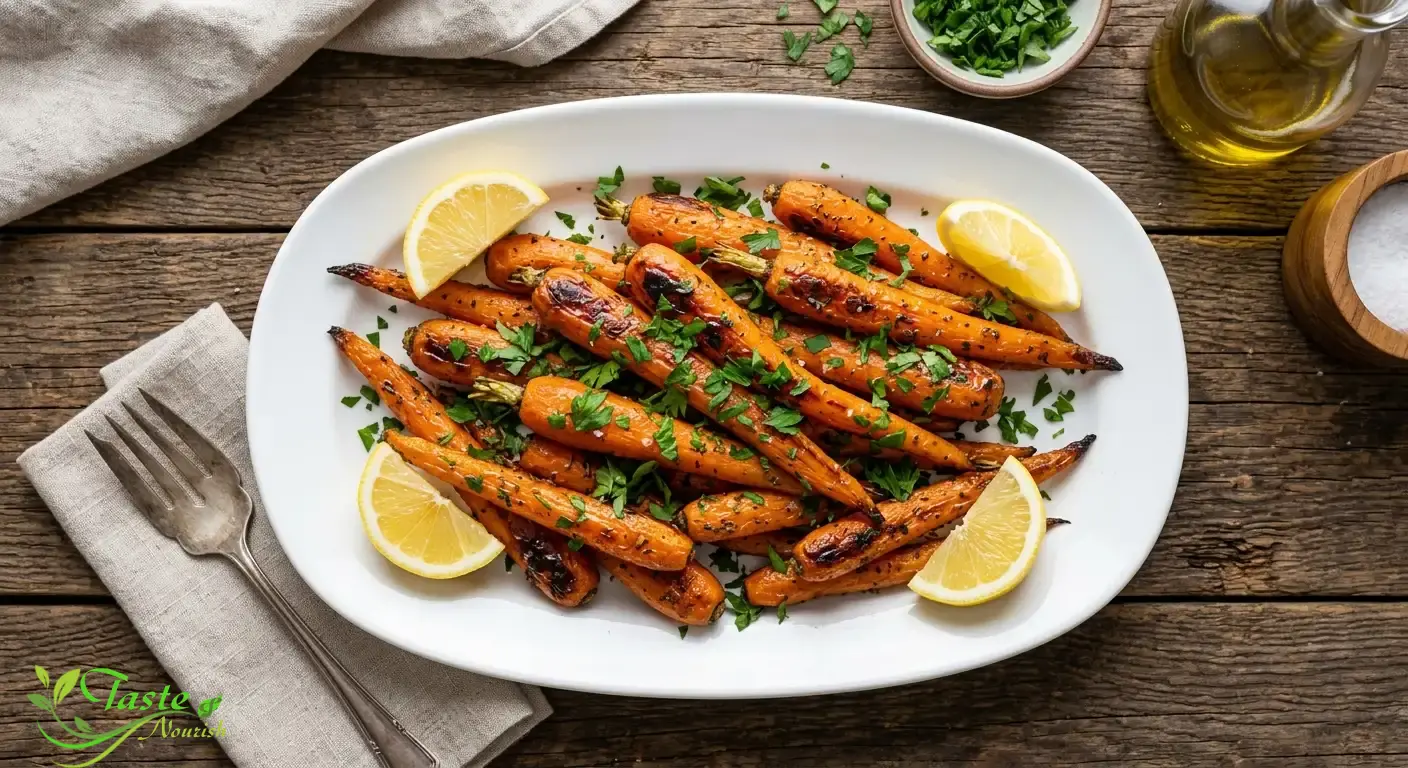
Few side dishes pull off sweet, savory, and glossy all at once quite like this honey glazed carrots recipe. Tender carrots simmer briefly, then finish in a butter-and-honey glaze that reduces into a shiny, clingy coating in about 20 minutes total. It’s a weeknight-friendly recipe that also holds its own on a holiday table.
What makes this version reliable is timing: carrots go in just until crisp-tender, then the glaze is reduced separately so it thickens without turning the carrots mushy or the honey bitter.
This honey glazed carrots recipe cooks sliced carrots until crisp-tender, then tosses them in a simmered butter-honey glaze with salt and pepper until the sauce thickens and coats each piece. The full process takes about 25 minutes, uses one skillet, and yields a naturally sweet, buttery side dish that pairs with almost any main course.
Recipe at a Glance
Detail
Time / Info
Prep Time
10 minutes
Cook Time
15 minutes
Total Time
25 minutes
Servings
4 side-dish servings
Difficulty
Easy
Key Takeaways for This Honey Glazed Carrots Recipe
This honey glazed carrots recipe uses just five core ingredients and one skillet.
Carrots are cooked crisp-tender first, so they don’t turn mushy in the glaze.
The glaze is a simple reduction of butter, honey, salt, and pepper — no cornstarch needed.
It’s ready in about 25 minutes, making it realistic for both weeknights and holiday menus.
A splash of acid (lemon juice or orange juice) at the end balances the sweetness.
Why You’ll Love This Easy Honey Carrot Side Dish
Carrots caramelize beautifully because their natural sugars concentrate as they cook, and honey amplifies that effect without needing a long roasting time. The result is a side dish that tastes indulgent but comes together almost entirely hands-off once the glaze starts reducing.
It’s also a practical way to work more vegetables into a meal. According to the Harvard T.H. Chan School of Public Health’s Nutrition Source, a diet built around a wide variety of vegetables is associated with better long-term health outcomes, including lower risk of cardiovascular disease.
Ingredients
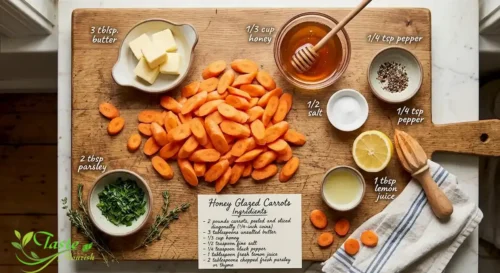
2 pounds carrots, peeled and sliced diagonally into 1/4-inch coins
3 tablespoons unsalted butter
1/3 cup honey
1/2 teaspoon fine salt, plus more to taste
1/4 teaspoon black pepper
1 tablespoon fresh lemon juice (optional, added at the end)
2 tablespoons chopped fresh parsley or thyme, for garnish (optional)
Ingredient Notes and Substitutions
Whole carrots sliced on the diagonal cook more evenly and glaze more attractively than pre-cut baby carrots, though baby carrots work as a faster substitute — just add a couple of minutes to the initial cook time since they’re denser.
Carrots are a good source of dietary fiber and beta-carotene, according to USDA FoodData Central, which the body can convert into vitamin A.
Honey is the ingredient doing the most work here: beyond sweetness, it contains natural antioxidant compounds. A comprehensive review published in PMC notes that honey’s phenolic and flavonoid content is linked to antioxidant and anti-inflammatory activity, though the review is clear that most of this evidence comes from lab and animal studies rather than large human trials, so honey should be treated as a flavorful sweetener rather than a treatment for any condition.
If you want a lower-sugar version, cut the honey to 3 tablespoons and add a pinch of cinnamon to keep the flavor rounded — this is a genuine trade-off, not an equivalent swap, since the glaze will be thinner and less sticky.
Maple syrup can replace honey in equal amounts for a different, slightly earthier sweetness; the glaze will set up a bit less glossy.
How to Make This Honey Glazed Carrots Recipe: Step-by-Step Instructions
Cook the carrots. Bring a large pot of salted water to a boil. Add the carrots and cook for 5 to 7 minutes, until a fork slides in with slight resistance — you want crisp-tender, not fully soft. Drain well and set aside.
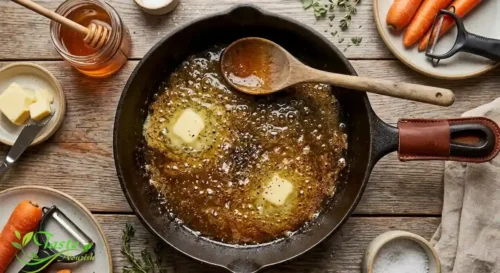
Build the glaze. In a large skillet over medium heat, melt the butter. Once it stops foaming, stir in the honey, salt, and pepper. Let it simmer for 1 to 2 minutes, swirling the pan, until the mixture looks glossy and slightly thickened.
Add the carrots. Tip the drained carrots into the skillet. Toss to coat, then cook for 5 to 8 minutes, stirring occasionally, until the glaze reduces further and clings to the carrots rather than pooling in the pan. The carrots should look shiny and lightly caramelized at the edges.
Finish and serve. Remove from heat, stir in the lemon juice if using, and taste for salt. Transfer to a serving dish and scatter with fresh herbs.
Expert Cooking Tips
Slice carrots to a consistent thickness so they finish cooking at the same time; uneven pieces mean some will be mushy while others are still firm.
Don’t skip draining the carrots well after boiling — extra water dilutes the glaze and keeps it from thickening properly.
Keep the heat at medium once the carrots go back in; too high and the honey can scorch and turn bitter before the carrots finish glazing.
A splash of acid at the end (lemon or orange juice) cuts the sweetness and makes the dish taste brighter rather than one-note.
Common Mistakes to Avoid
Overcooking the carrots in the first step. This happens when they’re boiled until fully fork-tender before glazing — they’ll fall apart once they hit the hot skillet. Pull them at crisp-tender instead.
Reducing the glaze too fast on high heat. Honey contains sugars that burn quickly at high temperatures, turning acrid rather than caramelized. Medium heat gives a controlled reduction.
Crowding the skillet. If the carrots are piled too deep, they steam instead of glazing evenly. Use a wide skillet, or work in two batches for a large quantity.
Recipe Variations for Sweet Honey Glazed Carrots
Orange-honey glazed carrots: Replace the lemon juice with orange juice and add a pinch of orange zest for a citrus-forward version.
Spiced honey glazed carrots: Stir in 1/4 teaspoon ground cinnamon or a pinch of ground ginger with the honey for warmth, especially good for a fall or holiday table.
Herb-forward version: Add fresh thyme sprigs to the glaze while it simmers, then discard before serving, for a more savory finish.
Spicy-sweet version: A pinch of cayenne or red pepper flakes in the glaze balances the sweetness with gentle heat.
Serving Suggestions
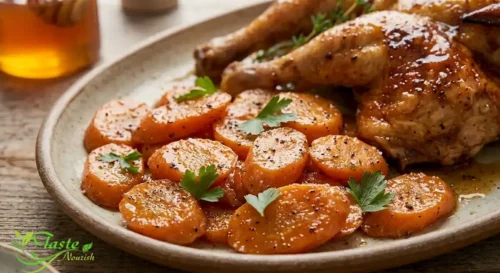
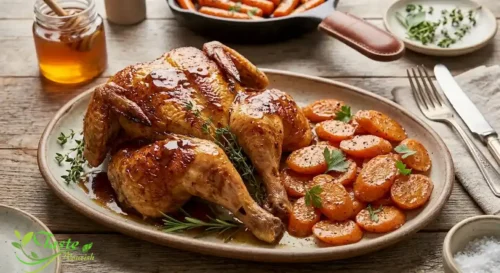
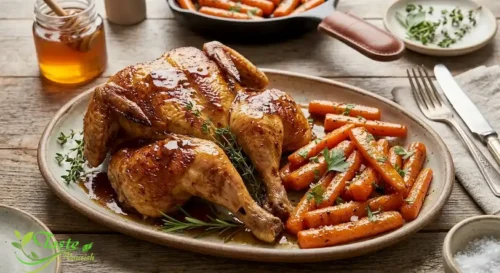
This dish pairs naturally with roasted or pan-seared proteins — think roast chicken, baked salmon — since the sweetness balances savory, well-seasoned mains. For a full plate, serve alongside a simple green salad or garlicky sautéed greens to offset the richness of the glaze.
Nutrition Information
The following values are estimated per serving (about 1/4 of the recipe) and will vary based on exact carrot size and how much glaze clings to each portion. This information is provided as a general estimate, not a precise clinical figure.
Nutrient
Approximate Amount
Calories
150 kcal
Total Fat
6 g
Carbohydrates
25 g
Sugars
19 g
Fiber
3 g
Protein
1 g
Most of the sugar in this dish comes from the added honey rather than the carrots themselves; the FDA classifies sugars from honey and syrups as “added sugars” on nutrition labels, distinct from the sugars naturally present in whole vegetables.
Carrots also contribute beta-carotene, a plant compound the body can convert into vitamin A. The NIH Office of Dietary Supplements notes that vitamin A supports normal vision, immune function, and healthy skin, and that most people who eat a varied diet meet their needs through food rather than supplements.
Storage Instructions
Refrigerate leftover carrots in an airtight container for up to 4 days. For longer storage, they can be frozen for up to 2 months, though the texture will soften slightly upon thawing since carrots have a high water content.
To reheat, warm gently in a skillet over medium-low heat with a splash of water, stirring occasionally, until heated through — this keeps the glaze from separating. A microwave works in a pinch; heat in 30-second bursts, stirring between each, to avoid overcooking the edges.
Make-Ahead Tips
Carrots can be peeled and sliced up to 2 days in advance and stored in the refrigerator in a sealed container or bag. Cook and glaze them close to serving time, since the glaze is best fresh and doesn’t reheat quite as glossy.
This honey glazed carrots recipe cooks sliced carrots until crisp-tender, then tosses them in a simmered butter-honey glaze with salt and pepper until the sauce thickens and coats each piece.
Ingredients
2 pounds carrots, peeled and sliced diagonally into 1/4-inch coins
3 tablespoons unsalted butter
1/3 cup honey
1/2 teaspoon fine salt, plus more to taste
1/4 teaspoon black pepper
1 tablespoon fresh lemon juice (optional)
2 tablespoons chopped fresh parsley or thyme, for garnish (optional)
Directions
Bring a large pot of salted water to a boil. Add the carrots and cook for 5 to 7 minutes, until a fork slides in with slight resistance. Drain well and set aside.
In a large skillet over medium heat, melt the butter. Stir in the honey, salt, and pepper. Simmer for 1 to 2 minutes, swirling the pan, until glossy and slightly thickened.
Add the drained carrots to the skillet. Toss to coat, then cook for 5 to 8 minutes, stirring occasionally, until the glaze clings to the carrots and they look shiny and lightly caramelized.
Remove from heat, stir in lemon juice if using, and taste for salt. Transfer to a serving dish and scatter with fresh herbs.
Honey Glazed Carrots Recipe FAQs
Can I make this honey glazed carrots recipe with baby carrots?
Yes. Baby carrots work well and save prep time, though they’re denser than sliced whole carrots, so add 2 to 3 extra minutes to the initial boiling step.
Why is my glaze thin instead of thick and glossy?
The glaze usually needs a few more minutes of active simmering. Make sure the carrots are well-drained before adding them, since excess water dilutes the reduction.
Can I roast the carrots instead of boiling them?
Yes — roast sliced carrots at 425°F for about 20 minutes, then toss with a separately simmered honey-butter glaze for the last 5 minutes in the oven or in a skillet on the stovetop.
Is this recipe gluten-free?
Yes, as written, all the ingredients in this honey glazed carrots recipe are naturally gluten-free.
Can I make a larger batch for a holiday meal?
Yes — the recipe scales well. Double the ingredients and use a wide skillet or two pans so the carrots have room to glaze evenly instead of steaming in a crowded pot.
Conclusion
This honey glazed carrots recipe earns its place on a regular rotation because it takes basic pantry staples and turns them into a side dish that looks and tastes intentional. The one habit worth keeping: cook the carrots and reduce the glaze as two separate steps, then combine them at the end for that glossy, evenly coated finish.
“Honey as a Natural Flavorful Product: A Comprehensive Review of Its Potential Biological Activities and Recent Studies.” PMC, National Library of Medicine. https://pmc.ncbi.nlm.nih.gov/articles/PMC13088292/
Hanan Abo Samra is the founder of Taste & Nourish, sharing trustworthy nutrition guidance and recipes drawn from 20+ years of hands-on cooking experience. When she's not developing new recipes, Hanan is researching the science behind everyday ingredients to bring readers practical, evidence-based guidance for a healthier lifestyle.