Carrots are one of the most affordable, versatile vegetables you can keep in your kitchen, and they carry a nutritional reputation that actually holds up under scrutiny. The health benefits of carrots range from supporting healthy vision to providing fiber that helps keep digestion on track, and most of that comes from a short ingredient list: water, fiber, and a dense dose of plant compounds called carotenoids. This guide breaks down what carrots actually offer nutritionally, what the research says, and how to get the most out of them in your everyday cooking.
The health benefits of carrots come mainly from beta-carotene (which your body converts to vitamin A), fiber, potassium, and antioxidant plant compounds. Regularly eating carrots may support eye health, heart health, digestion, and immune function, and observational research links higher carrot intake with a lower risk of certain cancers. One medium raw carrot has about 25 calories, making it an easy, low-calorie way to add nutrients to meals.
Key Takeaways
The health benefits of carrots are largely driven by beta-carotene, fiber, and potassium, not any single “superfood” compound.
One cup of raw carrots provides well over 100% of the daily value for vitamin A, mostly from beta-carotene.
Cooking carrots (especially with a little fat) can increase how much beta-carotene your body absorbs.
Large observational studies associate higher carrot intake with lower rates of certain cancers, though this is not proof of cause and effect.
Carrots are generally very safe, but very high intakes can cause a harmless orange skin tint called carotenemia.
What Is a Carrot?
The carrot (Daucus carota) is a root vegetable in the same plant family as parsley, celery, and fennel. While orange carrots are the most common in U.S. grocery stores, carrots also come in purple, yellow, white, and red varieties, each with a slightly different mix of plant pigments.
Carrots are typically eaten raw, cooked, juiced, or fermented, and they show up in everything from soups and stews to cakes and baby food. Because they store well and grow in a wide range of climates, they’re a staple vegetable in cuisines around the world.
Carrot Nutrition Facts
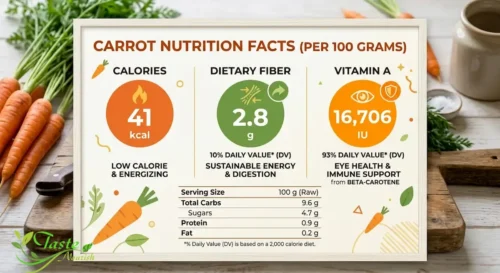
Nutrition data below reflects raw carrots per 100 grams (about ¾ cup chopped), based on USDA FoodData Central.
Nutrient
Amount per 100g Raw
% Daily Value
Calories
41 kcal
—
Water
~88%
—
Carbohydrates
9.6 g
—
Dietary Fiber
2.8 g
10%
Sugars
4.7 g
—
Protein
0.9 g
—
Fat
0.2 g
—
Vitamin A
835 mcg RAE
93%
Vitamin K
13.2 mcg
11%
Vitamin C
5.9 mg
7%
Potassium
320 mg
7%
Folate
19 mcg
5%
Carrots contain no cholesterol and are naturally very low in sodium and fat, which is part of why they fit easily into most eating patterns.
Health Benefits of Carrots
Research on the health benefits of carrots points mainly to their fiber content and their unusually high concentration of provitamin A carotenoids. Below is what current evidence suggests, using cautious language where the research is observational rather than conclusive.
Supports Eye Health and Vision
This is the benefit carrots are best known for, and it has real science behind it. Vitamin A is essential for maintaining the light-sensing cells in the retina, and a deficiency can lead to night blindness and other vision problems. According to the National Institutes of Health, vitamin A also plays a role in normal vision, immune function, and cell communication, which is why food sources of it, like carrots, are considered important for eye health.
To be clear: eating carrots won’t give you superhuman night vision, and having normal vitamin A status won’t reverse conditions like nearsightedness. The benefit is mainly about preventing deficiency-related vision issues.
May Support Heart Health
Carrots contain potassium and fiber, two nutrients tied to cardiovascular health. The National Institutes of Health notes that adequate potassium intake is associated with healthy blood pressure levels, partly by helping the body manage sodium balance. Fiber-rich vegetables like carrots are also part of dietary patterns, such as the DASH diet, that are commonly recommended for heart health.
May Support Immune Function
Vitamin A plays a documented role in maintaining the barrier tissues of the body, including the lining of the respiratory and digestive tracts, which serve as a first line of defense against pathogens. Adequate vitamin A status supports normal immune cell activity, making carrots a reasonable contributor to overall immune health as part of a varied diet.
May Support Digestive Health
A single cup of chopped raw carrots provides a meaningful amount of fiber, which adds bulk to stool and can support regular bowel movements. Fiber-rich vegetables are also linked to a healthier gut microbiome, since fiber serves as fuel for beneficial gut bacteria.
May Support Skin Health
Beta-carotene is an antioxidant, meaning it can help neutralize unstable molecules called free radicals that contribute to cellular damage. While carrots alone won’t clear up skin conditions, a diet with adequate antioxidant intake is generally considered supportive of overall skin health.
May Support Healthy Blood Sugar Levels
Despite their natural sweetness, carrots have a relatively low glycemic impact, largely thanks to their fiber content, which slows the absorption of natural sugars. This is one of the more practical benefits of eating carrots for people watching their blood sugar, since they add volume and nutrients to a meal without a large glucose spike.
May Support Cancer Risk Reduction
This is where some of the more compelling long-term research exists. Large observational studies have found associations between higher carrot intake and reduced risk of certain cancers, including lung, gastric, and colorectal cancer. Researchers believe this may be linked not just to beta-carotene but also to other plant compounds in carrots, such as polyacetylenes. It’s important to note these are observational associations, not proof that carrots directly prevent cancer.
May Support Weight Management
Carrots are low in calories and high in water and fiber, both of which contribute to a feeling of fullness. Swapping higher-calorie snacks for raw carrots is a simple, practical strategy many dietitians recommend for people working on weight management.
Scientific Evidence Behind the Health Benefits of Carrots
Several types of research inform what we know about carrot health benefits:
Nutrient composition data from USDA FoodData Central confirms carrots’ high vitamin A and fiber content.
Large cohort studies, such as a Danish study following more than 57,000 adults, found that people who regularly ate raw carrots had a lower incidence of colorectal cancer over an 18-year follow-up period compared to those who ate none.
Meta-analyses pooling multiple observational studies have reported associations between higher carrot intake and reduced risk of lung and gastric cancers.
Nutrient fact sheets from the NIH Office of Dietary Supplements describe the documented biological roles of vitamin A and potassium in vision, immunity, and blood pressure regulation.
Taken together, this evidence is strong for carrots as part of a nutrient-dense diet, but it stops short of showing that carrots alone treat or prevent any disease.
Potential Risks and Side Effects of Carrots
Carrots are considered safe for most people, but a few things are worth knowing:
Carotenemia: Eating very large amounts of carrots over time can cause a harmless yellow-orange tint to the skin, especially on the palms and soles. It resolves once intake is reduced.
Allergic reactions: Some people with birch pollen allergy experience oral allergy syndrome, with mild itching or tingling in the mouth after eating raw carrots.
Choking risk: Raw carrots, especially baby carrots and carrot sticks, are a known choking hazard for young children and should be cut appropriately or cooked until soft.
Blood-thinning medication interactions: Carrots contain vitamin K, which plays a role in blood clotting, so people on warfarin or similar medications should keep their intake consistent rather than sporadic.
Who Should Avoid or Limit Carrots?
Most people don’t need to avoid carrots, but a few groups may want to pay closer attention:
People on warfarin or other vitamin K–sensitive medications, who should keep vitamin K intake consistent day to day.
People with a known birch pollen or carrot allergy.
People with kidney disease who have been told to monitor potassium intake, since carrots contribute a moderate amount of potassium.
Parents of infants and toddlers, who should serve carrots cooked, mashed, or cut into thin, non-round pieces to reduce choking risk.
How Many Carrots Should You Eat a Day?
There’s no official “carrot quota,” but carrots count toward the general vegetable recommendations in the Dietary Guidelines for Americans, which suggest adults aim for 2 to 3 cups of vegetables per day from a variety of sources. A reasonable, sustainable amount is 1 to 2 medium carrots or about 1 cup chopped as part of a varied vegetable intake, rather than relying on carrots alone to meet your needs.
How to Choose the Best Carrots
Look for carrots that are firm, smooth, and free of soft spots or cracks.
Choose carrots with a deep, even color, which usually signals higher carotenoid content.
If the leafy tops are attached, they should look fresh and green, not wilted.
Smaller to medium carrots are often more tender than very large ones, which can develop a woody core.
How to Store Carrots for Freshness
Remove the leafy tops before storing, since they pull moisture from the roots.
Store unwashed carrots in a perforated bag in the refrigerator crisper drawer.
Whole carrots typically keep for 3 to 4 weeks; cut or peeled carrots are best used within a week.
For longer storage, blanch and freeze carrots, which preserves texture better than freezing them raw.
Expert Tip: Store carrots away from apples and other ethylene-producing fruits, since the gas can cause carrots to turn bitter faster.
Best Ways to Eat and Cook Carrots
Raw: Sliced into sticks for snacking or shredded into salads and slaws.
Roasted: Tossed with a little olive oil, which helps with absorption of fat-soluble beta-carotene.
Steamed or boiled: A simple side dish that softens texture while retaining most nutrients.
Pureed: Blended into soups, sauces, or baby food for a smooth texture.
Juiced: A concentrated source of nutrients, though it lacks the fiber of whole carrots.
Expert Tip:Cooking carrots with a small amount of healthy fat, such as olive oil, can improve absorption of beta-carotene compared to eating them completely fat-free.
Common Mistakes to Avoid With Carrots
Peeling away too much: Much of a carrot’s flavor and some nutrients sit just under the skin; a light scrub is often enough.
Overcooking: Boiling carrots for too long can leach out water-soluble nutrients like vitamin C.
Skipping the fat: Eating carrots with zero fat reduces how much beta-carotene your body can absorb.
Storing them with the tops on: This causes carrots to go limp faster.
Myths vs Facts About the Health Benefits of Carrots
Myth
Fact
Carrots can dramatically improve your eyesight.
Carrots support normal vision by preventing vitamin A deficiency, but they can’t correct nearsightedness or give you “super vision.”
Cooking destroys all the nutrients in carrots.
Cooking reduces some heat-sensitive vitamins like vitamin C, but it can actually increase the absorption of beta-carotene.
Carrots are too high in sugar to eat regularly.
Carrots have a relatively low glycemic impact due to their fiber content, and one medium carrot has only about 3 grams of natural sugar.
Orange carrots are nutritionally superior to other colors.
Purple, yellow, and red carrots contain different beneficial plant compounds; no single color is definitively “best.”
Raw vs Cooked Carrots: A Quick Comparison
Factor
Raw Carrots
Cooked Carrots
Vitamin C content
Higher
Somewhat reduced by heat
Beta-carotene absorption
Lower
Higher, especially with added fat
Fiber content
Slightly higher per gram
Still substantial
Texture
Crisp, crunchy
Soft, easier to digest for some people
Best for
Snacking, salads
Soups, purees, roasted sides
FAQs About the Health Benefits of Carrots
Do carrots really improve eyesight?
Carrots support normal vision because vitamin A is essential for retinal function, but they won’t improve vision beyond a normal, healthy baseline or fix existing eye conditions.
Are cooked carrots healthier than raw carrots?
Neither form is definitively “healthier.” Cooked carrots offer better beta-carotene absorption, while raw carrots retain slightly more vitamin C. Including both in your diet is a reasonable approach.
Can eating too many carrots be harmful?
Very high, sustained intake can cause carotenemia, a harmless orange skin discoloration. Otherwise, carrots are considered safe in typical dietary amounts.
Are carrots good for diabetes?
Carrots have a relatively low glycemic impact thanks to their fiber, which may make them a reasonable vegetable choice for people managing blood sugar, though individual meal planning should be discussed with a healthcare provider or dietitian.
How many carrots should I eat per day?
There’s no strict number, but 1 to 2 medium carrots or about 1 cup chopped fits comfortably within general daily vegetable recommendations.
Do baby carrots have the same health benefits as regular carrots?
Yes. Baby carrots are typically just regular carrots cut and shaped, so their nutrition profile is very similar.
Conclusion
The health benefits of carrots hold up well against the evidence: they’re a low-calorie, fiber-rich vegetable that delivers an outsized dose of vitamin A along with potassium and antioxidant plant compounds. From supporting eye health to being linked with lower cancer risk in long-term studies, the benefits of eating carrots are broad, even if no single vegetable is a cure-all. Whether you prefer them raw, roasted, or blended into a soup, working carrots into your regular rotation is a simple, low-risk way to support overall nutrition.
Hanan Abo Samra is the founder of Taste & Nourish, sharing trustworthy nutrition guidance and recipes drawn from 20+ years of hands-on cooking experience. When she's not developing new recipes, Hanan is researching the science behind everyday ingredients to bring readers practical, evidence-based guidance for a healthier lifestyle.