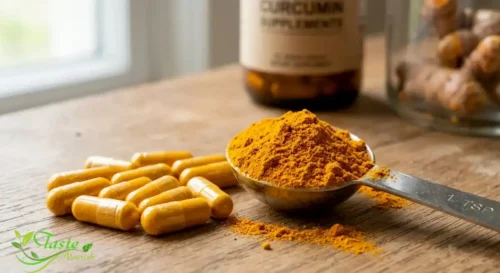
If you’ve spent any time in the wellness aisle lately, you’ve probably noticed turmeric everywhere — capsules, lattes, gummies, even skincare. The buzz isn’t new, but the science behind it has grown up a lot.
Turmeric and Inflammation has attracted growing scientific interest beyond its popularity in wellness products. Research suggests that curcumin, turmeric’s active compound, may help reduce inflammation, particularly in certain joint conditions. However, its effectiveness is limited by absorption challenges, varying study quality, and important safety considerations. This article explores what current research shows, where the evidence is strongest, and what to know before adding turmeric to your routine.
What Is Turmeric, and Why Does It Matter for Inflammation?
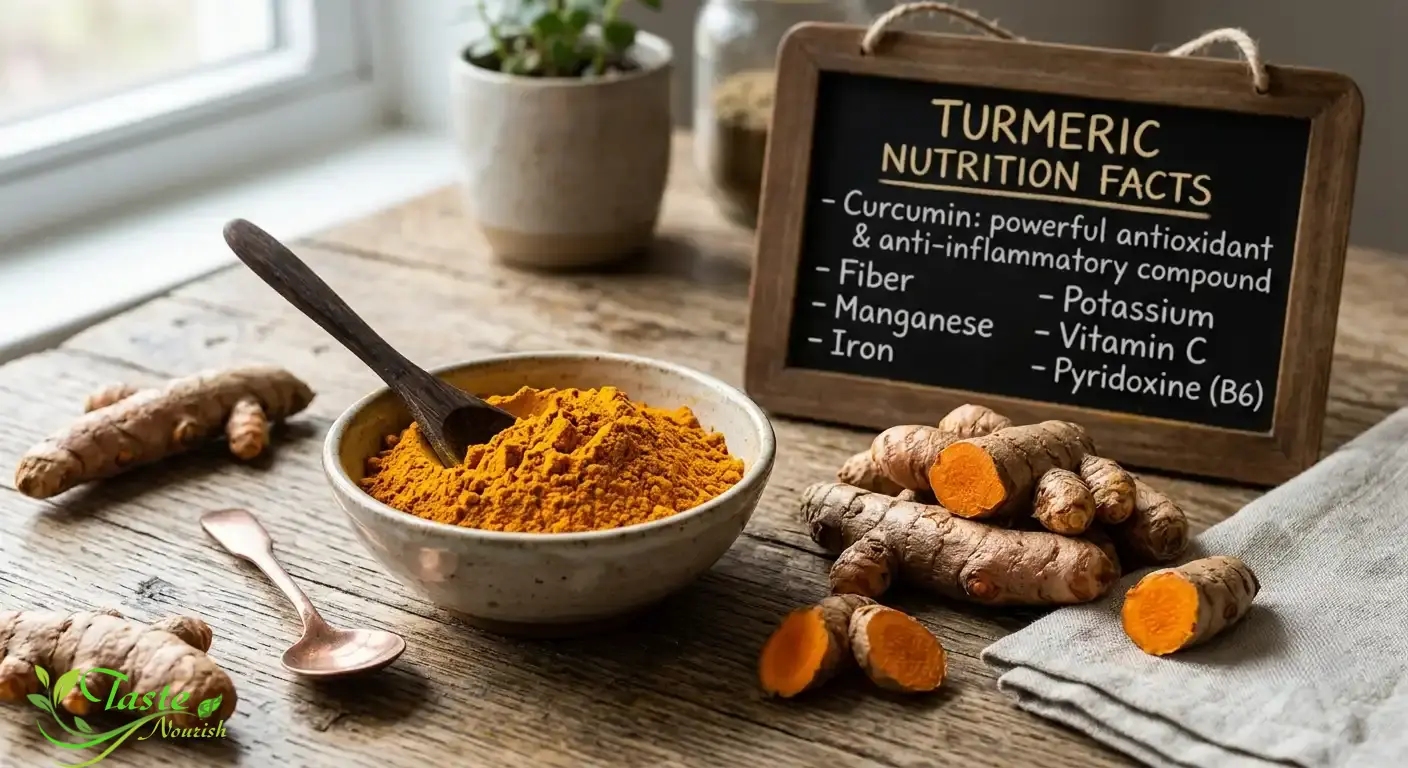
Turmeric (Curcuma longa) is a bright yellow-orange rhizome in the ginger family, native to South and Southeast Asia. It’s been a kitchen staple in Indian, Sri Lankan, and Southeast Asian cooking for thousands of years, and it’s just as central to Ayurvedic medicine, where it’s traditionally used for everything from digestive complaints to skin conditions.
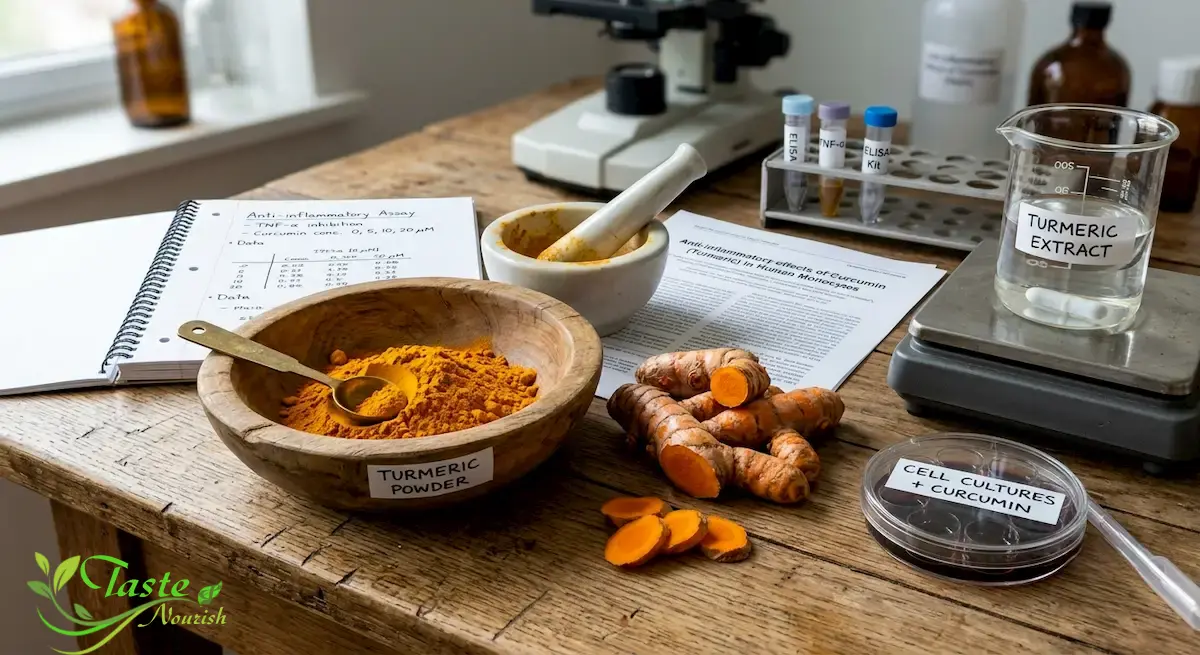
The compound getting all the research attention is curcumin, one of several curcuminoids found in the turmeric root. Curcumin makes up roughly 2 to 8 percent of turmeric powder by weight, which is a smaller amount than most people assume. That distinction matters a lot once you start comparing turmeric as a cooking spice to turmeric as a concentrated supplement — they’re really two different conversations.
Most of the anti-inflammatory research you’ll see cited isn’t studying turmeric powder sprinkled on rice. It’s studying isolated, often specially formulated curcumin extracts, usually at doses far higher than what you’d realistically consume through food. Keeping that distinction in mind will help the rest of this article make a lot more sense.
Understanding Inflammation: The Body’s Double-Edged Sword
Inflammation gets a bad reputation, but it’s not inherently a problem. It’s your immune system’s response to injury, infection, or irritation, and in the short term, it’s doing exactly what it’s supposed to do. Without inflammation, a cut wouldn’t heal and an infection wouldn’t get fought off.
The trouble starts when inflammation doesn’t switch off. Chronic, low-grade inflammation has been linked to a long list of conditions, including heart disease, type 2 diabetes, autoimmune disorders, and some cancers. One recent pharmacology review noted that inflammatory-related diseases now account for more than 60 percent of deaths worldwide, which helps explain why researchers are so motivated to find safe, well-tolerated compounds that can help regulate this process.
Acute vs. Chronic Inflammation
Acute inflammation is the fast, localized response you get from a sprained ankle or a splinter — redness, swelling, heat, and pain that resolve once the tissue heals. It’s protective, temporary, and generally not something you’d want to suppress entirely, since it’s part of how your body repairs itself.
Chronic inflammation is a different animal. It’s low-grade, persistent, and often silent, meaning you might not feel obvious symptoms even as it contributes to tissue damage over months or years. This is the type of inflammation researchers are usually referring to when they study curcumin, since it’s the version most closely tied to conditions like osteoarthritis, rheumatoid arthritis, and metabolic disease.
♦ Understanding this distinction is genuinely useful, because it explains why “anti-inflammatory” claims about turmeric are typically about long-term modulation, not shutting down your immune response entirely.
How Curcumin Works Against Inflammation
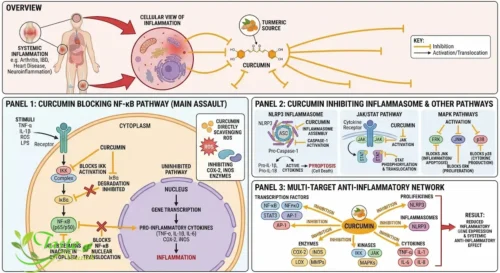
Curcumin’s anti-inflammatory reputation comes down to its effect on specific biological pathways rather than one single mechanism. Researchers describe it as “multi-target,” meaning it interacts with several different processes involved in the inflammatory response, which is part of why it’s attracted so much scientific interest compared to single-target compounds.
Blocking Inflammatory Signaling Pathways
A significant part of curcumin’s activity involves NF-κB, a protein complex that acts like a master switch for inflammatory gene expression. When NF-κB is activated, it turns on the production of pro-inflammatory cytokines — signaling molecules that amplify the inflammatory response throughout the body. A 2025 pharmacology review described curcumin as capable of suppressing this pathway, along with related ones, which is thought to be a central mechanism behind its effects in chronic inflammatory conditions.
Curcumin has also been shown in laboratory and animal research to influence the balance between regulatory T cells and Th17 cells, two immune cell populations that play opposing roles in inflammation. Shifting this balance toward a more regulated state, along with increasing anti-inflammatory signaling molecules like IL-10, may help explain curcumin’s effects in conditions like inflammatory bowel disease, where this mechanism has shown particular promise in early research.
Antioxidant Effects That Support Inflammation Control
Inflammation and oxidative stress are closely linked — one tends to feed the other. Curcumin is a potent antioxidant, meaning it helps neutralize free radicals and reduce oxidative damage at the cellular level. This matters for inflammation because oxidative stress can itself trigger inflammatory signaling, creating a feedback loop that curcumin appears to help interrupt at multiple points.
Some research also points to curcumin’s interaction with Nrf2, a protein that regulates the body’s own antioxidant defense systems. By supporting this pathway, curcumin may help the body produce its own protective enzymes rather than simply acting as an external antioxidant. This dual action — direct antioxidant effects plus support for the body’s internal defenses — is one reason researchers describe curcumin as having a broader mechanism than many single-purpose anti-inflammatory compounds.
What the Clinical Research Actually Shows
Mechanism studies are interesting, but they don’t tell you whether something actually works in real people. This is where the evidence gets more nuanced — strong in some areas, thinner in others, and worth looking at condition by condition rather than as one blanket claim.
Curcumin and Joint Pain (Osteoarthritis)
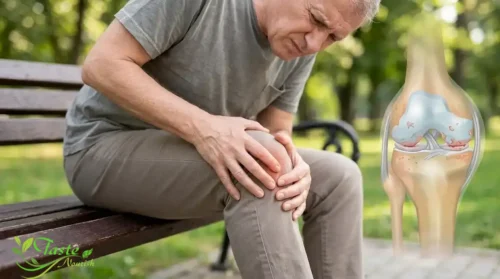
Joint health is where curcumin has the most robust clinical trial evidence. A widely cited systematic review and meta-analysis published on PubMed pooled seven randomized controlled trials with 797 participants and found that curcuminoids significantly reduced knee pain and improved quality-of-life scores compared with placebo.
The same analysis noted an important caveat: curcumin appeared less effective than ibuprofen for pain relief, though it came with a more favorable short-term safety profile.
More recent meta-analyses have reinforced this pattern. A 2025 systematic review in BMC Complementary Medicine and Therapies looked specifically at inflammatory biomarkers in knee osteoarthritis patients and found measurable improvements associated with curcumin supplementation, though the authors also flagged inconsistencies in study quality across the field. Taken together, joint pain — especially knee osteoarthritis — is the condition where curcumin’s anti-inflammatory reputation is best supported by human trial data.
Curcumin and Rheumatoid Arthritis
Rheumatoid arthritis (RA) research tells a similarly encouraging but cautious story. A meta-analysis published in Frontiers in Immunology in early 2026 pooled placebo-controlled randomized trials and reported that curcumin was associated with improved disease activity scores and several inflammatory biomarkers in RA patients. The authors were careful to note that questions around long-term efficacy and safety remain, given the field’s reliance on smaller trials.
A separate study summary of seven RCTs involving 333 participants with RA, ages 30 to 60, similarly found that curcumin supplementation was associated with improvements in disease activity and inflammatory markers. What’s consistent across this body of research is the direction of the effect — curcumin tends to help, not harm — even as researchers agree that larger, longer trials are needed before it can be considered a frontline therapy.
Curcumin and Other Inflammatory Conditions
Beyond joints, curcumin has been studied for a surprisingly wide range of inflammatory conditions. A comprehensive review in PMC covering curcumin’s therapeutic applications describes research spanning inflammatory bowel disease, periodontitis, wound healing, and cardiometabolic risk factors. A 2025 systematic review of curcumin-piperine combinations similarly found associations with improved markers of inflammation and oxidative stress in cardiometabolic contexts.
Wound healing is another area gaining traction — a 2025 scoping review identified 19 qualifying clinical trials, most of them randomized and controlled, examining curcumin’s effects on wound recovery, with generally positive but preliminary findings. None of this amounts to curcumin being a cure for these conditions. What it does suggest is a consistent, biologically plausible pattern across very different inflammatory processes, which is part of why research interest in this compound keeps expanding rather than fading.
Key Takeaway: The strongest clinical evidence for curcumin’s anti-inflammatory effects is in knee osteoarthritis and rheumatoid arthritis. Evidence in other areas — gut health, cardiometabolic risk, wound healing — is promising but still considered preliminary by most researchers.
The Bioavailability Problem: Why Turmeric Alone May Not Be Enough
Here’s the part that gets left out of a lot of turmeric marketing: curcumin is poorly absorbed by the human body. It’s broken down quickly in the gut and liver, and very little of it actually makes it into the bloodstream in an active form. This is arguably the single biggest gap between turmeric’s lab-based promise and its real-world effects.
This absorption problem is exactly why so many of the positive clinical trials use specially formulated curcumin extracts rather than plain turmeric powder. If you’re eating turmeric in curry or golden milk, you’re very likely getting a meaningful dose of flavor and color, but a comparatively small dose of bioavailable curcumin — nowhere near what’s used in most of the studies described above.
Why Piperine (Black Pepper) Matters
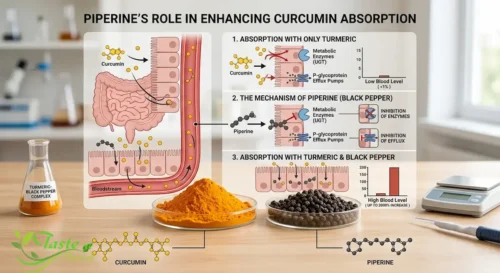
Piperine, the compound responsible for black pepper’s bite, has become the go-to bioavailability enhancer in curcumin supplements. Research reviewed in a 2026 systematic analysis in Frontiers in Nutrition found that curcumin-piperine combinations were associated with improvements in inflammatory and oxidative stress markers, along with cardiometabolic risk indicators, across multiple randomized controlled trials.
The mechanism is fairly well understood: piperine appears to slow the rate at which the liver and intestines break curcumin down, allowing more of it to circulate in active form. This is why so many curcumin supplements list “BioPerine” or “black pepper extract” on the label — it’s not a filler ingredient, it’s doing functional work.
That said, not every study agrees piperine helps every outcome equally, and a small amount of research suggests curcumin alone may offer benefits in specific contexts, such as cardioprotection, without needing piperine at all.
Other Ways to Boost Absorption
Piperine isn’t the only bioavailability strategy on the market. Phospholipid complexes (often branded as Meriva), nanoparticle formulations, and lipid-based delivery systems are all designed to help curcumin survive digestion and reach the bloodstream more effectively. Some of these formulations report absorption increases many times higher than standard curcumin powder.
Pro Tip: If you’re cooking with turmeric at home, pairing it with black pepper and a source of fat — like olive oil or coconut milk — is a simple, food-based way to support absorption, even without a supplement. It won’t match the dose used in clinical trials, but it’s a reasonable, low-risk habit for everyday cooking.
Turmeric Spice vs. Curcumin Supplements: Which Should You Choose?
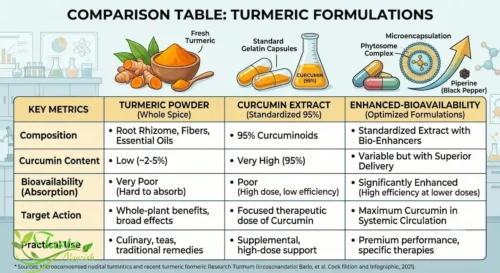
This is one of the most common points of confusion, and it’s worth laying out directly. Turmeric the spice and curcumin the supplement are related, but they’re not interchangeable in terms of what the research actually supports.
Feature
Turmeric Powder (Culinary)
Standard Curcumin Extract
Enhanced-Bioavailability Curcumin
Curcumin content
Low (2–8% of weight)
High, but poorly absorbed alone
High, formulated for absorption
Typical clinical trial use
Rarely studied directly
Sometimes studied
Most commonly studied for inflammation
Absorption
Very low
Low
Significantly higher
Best for
Flavor, general dietary variety
Budget-conscious supplementation
Targeted anti-inflammatory support
Cost
Low
Moderate
Higher
Neither option is universally “better” — it depends on your goal. If you’re simply trying to eat a more varied, plant-forward diet, cooking with turmeric is a reasonable habit with essentially no downside. If you’re specifically trying to replicate the kind of anti-inflammatory effects seen in clinical research, a supplement with an absorption enhancer is what the evidence actually points to.
How Much Turmeric or Curcumin Do You Actually Need?
Dosing in the research varies widely, which makes it hard to give one universal number. Most clinical trials showing benefits for joint pain used curcumin doses somewhere between 500 mg and 1,500 mg per day, typically split into two or three doses, and usually formulated with an absorption enhancer.
For context, that’s a dose you would not realistically reach through cooking alone — a teaspoon of turmeric powder contains only a small fraction of that amount of actual curcumin. The NCCIH notes that conventionally formulated oral turmeric or curcumin appears to be safe in typical amounts for up to two to three months, based on the current body of research, but also stresses that more rigorous, longer-term studies are still needed before firm dosing guidelines can be established.
♦ If you’re considering a supplement for a specific health goal, this is a conversation worth having with a healthcare provider rather than guessing based on a product label.
Safety, Side Effects, and Who Should Be Cautious
Turmeric has a long history of dietary use and a generally reassuring safety profile at culinary doses. At the higher doses used in supplements, though, the picture gets a bit more complicated, and it’s worth taking seriously rather than assuming “natural” automatically means “risk-free.”
Digestive side effects are usually mild. Clinical trials most commonly report nausea, diarrhea, or stomach discomfort, especially when turmeric or curcumin is taken in high doses.
High-bioavailability supplements may carry additional risks. The NIH’s LiverTox database has documented a small number of acute liver injury cases linked to certain turmeric and curcumin supplements, particularly enhanced-absorption formulations. Greater absorption does not necessarily mean greater safety.
Use caution with concentrated formulations. Medical experts generally recommend avoiding the assumption that high-dose, enhanced-absorption products are automatically superior, as they may involve important safety trade-offs.
Some people should be especially careful. Individuals who are pregnant or breastfeeding, have gallbladder disease, or have a history of kidney stones should consult a healthcare professional before using turmeric supplements, as turmeric contains oxalates that may increase the risk of stone formation in susceptible people.
Current evidence has limitations. According to Randy Horwitz, MD, PhD, of the University of Arizona’s Andrew Weil Center for Integrative Medicine, turmeric has a long history of traditional use and a generally favorable safety profile, but botanical supplements have not been studied as extensively or as rigorously as pharmaceutical medications.
Possible Drug and Supplement Interactions
Curcumin can interact with several medication categories, and this is one of the most overlooked safety issues. Because curcumin has mild blood-thinning properties, it may amplify the effects of anticoagulant or antiplatelet medications, increasing bleeding risk. It’s also been shown to affect how the liver metabolizes certain drugs, which can alter the levels of medications processed through similar pathways.
Blood thinners (warfarin, aspirin, clopidogrel)
Diabetes medications, due to potential blood sugar–lowering effects
Medications broken down by the liver’s CYP450 enzyme system
Anyone on prescription medication should talk to a pharmacist or doctor before starting a concentrated curcumin supplement, especially one with an absorption enhancer, since that’s exactly the formulation most likely to produce a clinically meaningful interaction.
Common Myths About Turmeric and Inflammation
A lot of confusion around turmeric comes from oversimplified claims that don’t hold up against the actual research. One persistent myth is that turmeric and curcumin are essentially the same thing — as covered earlier, they’re related but functionally quite different when it comes to dosing and evidence.
Another common misconception is that “natural” automatically means risk-free, which the liver injury data referenced above clearly complicates. There’s also a tendency to treat curcumin as a cure-all, sometimes billed as an alternative to prescribed anti-inflammatory medication for serious conditions. The research doesn’t support that framing — even the most favorable meta-analyses describe curcumin as less effective than NSAIDs like ibuprofen for pain relief, positioning it more reasonably as a complementary approach than a replacement.
Finally, there’s a widespread assumption that more turmeric in your diet automatically means more anti-inflammatory benefit. Given how little curcumin actual culinary turmeric contains, and how poorly it’s absorbed without enhancers, doubling up on curry powder isn’t likely to move the needle much on its own, even if it’s a perfectly healthy habit for other reasons.
Practical Tips for Adding Turmeric to Your Routine
If you’re interested in incorporating more turmeric into your life, there are a few sensible ways to go about it depending on your goals. For general dietary variety, cooking with fresh or dried turmeric root is low-risk and adds genuine culinary value beyond any inflammation-related benefit.
Pair it with fat and black pepper when cooking, since this combination supports better absorption than turmeric alone.
Store turmeric powder in a cool, dark, airtight container, since light and moisture degrade its active compounds over time.
Check labels carefully on supplements, looking specifically for curcuminoid content and an absorption enhancer like piperine or a phospholipid complex, rather than just “turmeric” on the front of the bottle.
Start with a lower dose if trying a new supplement, to gauge digestive tolerance before working up to a studied dose.
Talk to your doctor first if you take blood thinners, diabetes medication, or have gallbladder or kidney stone history.
None of these tips guarantee a specific outcome, and that’s an honest reflection of where the science currently stands — genuinely promising, reasonably safe for most people at sensible doses, but not yet a substitute for medical treatment when it comes to diagnosed inflammatory conditions.
Conclusion
Turmeric’s anti-inflammatory reputation is backed by a real and growing body of clinical research, particularly for joint conditions like knee osteoarthritis and rheumatoid arthritis, where multiple meta-analyses point in a consistently positive direction. At the same time, the evidence comes with meaningful caveats: absorption is a genuine obstacle, most positive trials use concentrated extracts rather than culinary turmeric, and safety data — while generally reassuring — includes real considerations around liver health and drug interactions that are worth taking seriously.
The most reasonable takeaway is that turmeric and curcumin are worth informed interest, not blind faith. If you’re exploring it for a specific health goal, doing so with a healthcare provider in the loop will get you further than any product label promise.
FAQs About Turmeric and Inflammation
Q1. Does turmeric really reduce inflammation?
Research on curcumin, turmeric’s active compound, shows it may help reduce markers of inflammation in conditions like knee osteoarthritis and rheumatoid arthritis, based on multiple clinical trials and meta-analyses. The effect appears real but generally more modest than prescription anti-inflammatory medications.
Q2. How long does it take for turmeric to help with inflammation?
Most clinical trials showing benefits ran for 8 to 12 weeks of consistent use, so meaningful effects, if they occur, are more likely to show up gradually rather than immediately. Short-term or inconsistent use is unlikely to reflect what the studies actually measured.
Q3. Is turmeric better than ibuprofen for inflammation?
Not according to current evidence. Meta-analyses on knee osteoarthritis found curcumin less effective than ibuprofen for pain relief, though it was associated with a more favorable short-term side-effect profile in some studies.
Q4. Can you take turmeric every day safely?
The NCCIH notes that conventionally formulated turmeric or curcumin appears likely safe in typical amounts for up to two to three months, though highly bioavailable formulations may carry additional liver-related risk. Long-term daily use should ideally be discussed with a healthcare provider.
Q5. Why doesn’t turmeric in food work as well as supplements?
Culinary turmeric contains a relatively small amount of curcumin by weight, and curcumin itself is poorly absorbed by the body without an enhancer like piperine. Most positive clinical trials use concentrated, specially formulated extracts at doses far higher than what’s realistic through cooking alone.
This guide is for informational purposes only and should not replace professional medical or nutritional advice. Always consult with healthcare providers regarding specific dietary needs and health conditions.
References
National Center for Complementary and Integrative Health. “Turmeric: Usefulness and Safety.” National Institutes of Health. https://www.nccih.nih.gov/health/turmeric
National Institute of Diabetes and Digestive and Kidney Diseases. “Turmeric.” LiverTox: Clinical and Research Information on Drug-Induced Liver Injury, NCBI Bookshelf, National Institutes of Health. https://www.ncbi.nlm.nih.gov/books/NBK548561/
“Effectiveness of Curcuminoids in the Treatment of Knee Osteoarthritis: A Systematic Review and Meta-Analysis of Randomized Clinical Trials.” PubMed, National Library of Medicine. https://pubmed.ncbi.nlm.nih.gov/28470851/
“Curcumin in Inflammatory Complications: Therapeutic Applications and Clinical Evidence.” PMC, National Center for Biotechnology Information, National Institutes of Health. https://pmc.ncbi.nlm.nih.gov/articles/PMC12524702/
Hanan Abo Samra is the founder of Taste & Nourish, sharing trustworthy nutrition guidance and recipes drawn from 20+ years of hands-on cooking experience. When she's not developing new recipes, Hanan is researching the science behind everyday ingredients to bring readers practical, evidence-based guidance for a healthier lifestyle.