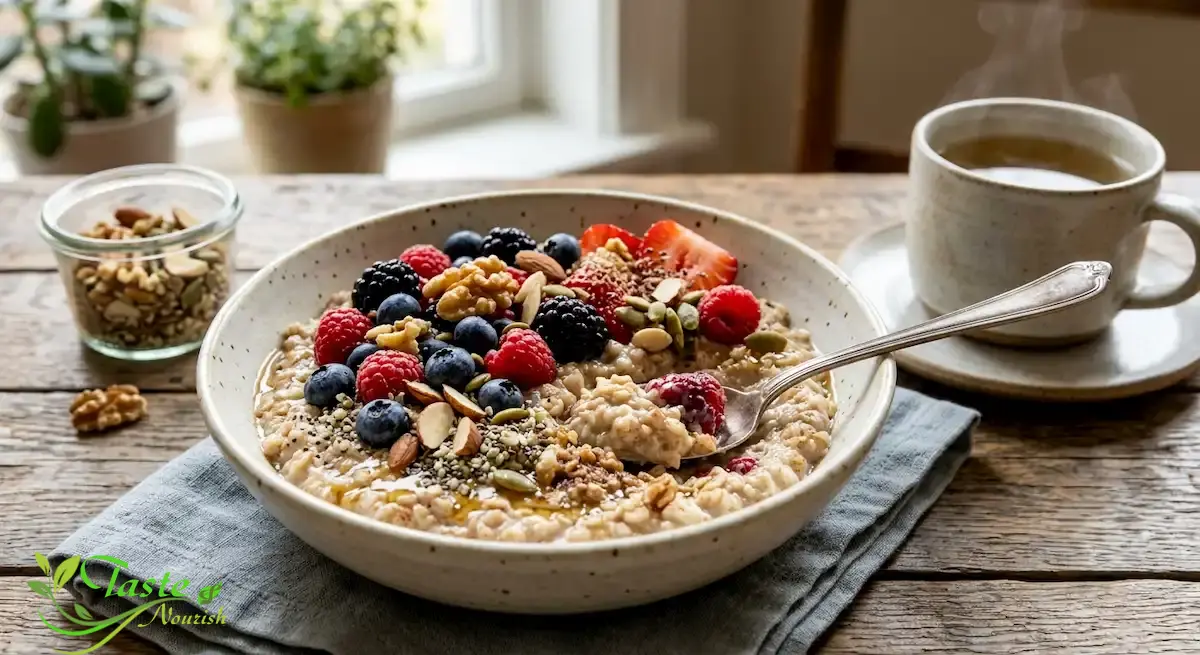
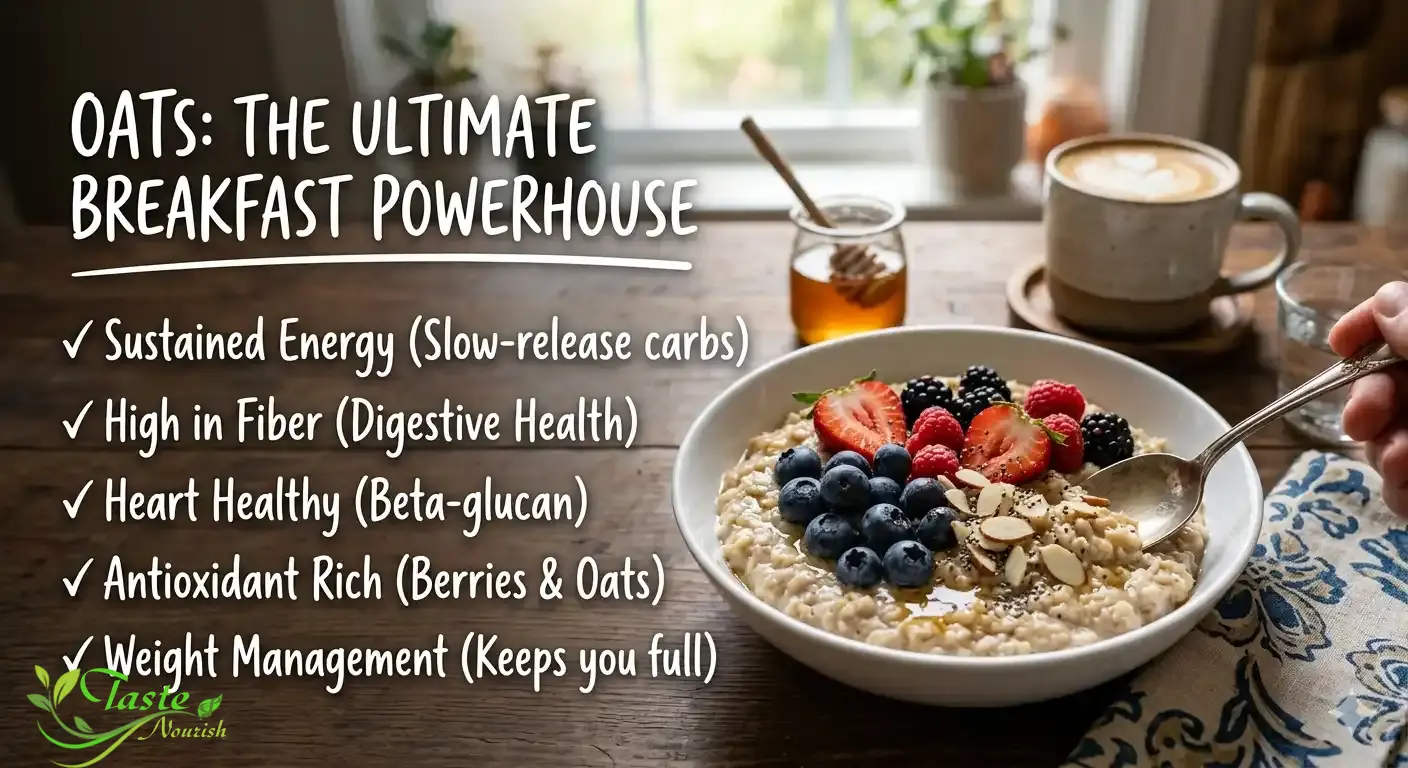
Few breakfast staples get talked about as much as oats, and for good reason. That simple bowl of oatmeal isn’t just comfort food — it’s one of the most well-studied fiber sources for digestive health. If you’ve ever wondered why nutritionists keep pointing back to oats when the topic of gut health comes up, the answer lives in a single compound most people have never heard of: beta-glucan.
This article breaks down exactly how oat fiber interacts with your digestive system, what the research actually shows, and how to eat oats in a way that supports — rather than upsets — your gut.
Think of your digestive system as a garden. Fiber isn’t the flower — it’s the compost. It doesn’t get absorbed the way sugar or fat does, but it shapes almost everything that happens downstream, from how your gut bacteria behave to how comfortably you digest your next meal. Oats happen to be one of the more forgiving ways to add that “compost” to your plate, which is part of why they show up in so many gut-health conversations.
What Makes Oats a Gut-Health Powerhouse?
Oats aren’t just “a source of fiber.” They’re a source of a very specific type of fiber that behaves differently from what you’d get in a slice of whole-wheat bread or a handful of raw vegetables. That difference is what makes oats worth a closer look if digestion is on your mind.
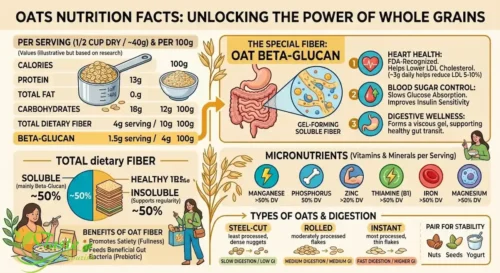
A single cup of cooked oatmeal delivers roughly 4 grams of dietary fiber, and about half of that is soluble fiber. That ratio matters. Most Americans fall well short of daily fiber targets, and government data show the average U.S. diet provides only about 8.1 grams of fiber per 1,000 calories — barely half of the 14 grams per 1,000 calories recommended in the Dietary Guidelines for Americans. Oats offer an easy, palatable way to close some of that gap.
Beta-Glucan: The Star Fiber in Oats
Beta-glucan is the soluble fiber responsible for most of oats’ reputation. When it mixes with water in your stomach and intestines, it forms a thick, gel-like substance. That gel slows down how quickly food moves through your digestive tract, which has a ripple effect on everything from blood sugar to cholesterol to how full you feel after a meal.
The evidence behind beta-glucan is strong enough that the U.S. Food and Drug Administration authorizes a specific health claim connecting it to heart health. Foods containing oat beta-glucan soluble fiber, as part of a diet low in saturated fat and cholesterol, may be labeled as supporting reduced risk of coronary heart disease — a claim the FDA formally reviewed and amended after concluding the scientific evidence was strong enough to support it.
That heart-health claim is really a downstream effect of what beta-glucan does in the gut first. Before it ever influences cholesterol, it has already thickened the contents of your stomach and small intestine, slowed how quickly sugars are absorbed, and set the stage for fermentation further down the digestive tract.
♦ In other words, the cardiovascular benefit and the digestive benefit share the same starting point — a fiber that behaves more like a sponge than a passive filler.
Soluble vs. Insoluble Fiber in Oats
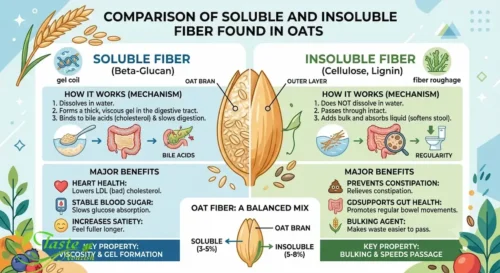
Oats contain both fiber types, and each plays a distinct digestive role. Soluble fiber dissolves in water and forms that gel-like texture, which helps slow digestion and feed gut bacteria. Insoluble fiber doesn’t dissolve — it adds bulk to stool and helps material move through the intestines more efficiently.
Fiber Type
Found In Oats As
Main Digestive Role
Soluble (beta-glucan)
~2g per cup cooked
Feeds gut bacteria, slows digestion, softens stool
Insoluble
~2g per cup cooked
Adds bulk, speeds transit time
Key Takeaway: Oats aren’t a one-trick fiber source. The combination of soluble and insoluble fiber is what lets them support both regularity and a healthier gut microbiome at the same time.
How Oat Fiber Supports Digestion, Step by Step
Understanding what beta-glucan is only tells half the story. What actually happens once oats reach your gut is where things get interesting — and where the research has expanded considerably in the past few years.
Feeding Your Gut Bacteria: The Prebiotic Effect
Your gut is home to trillions of bacteria, and like any living population, they need food. Beta-glucan can’t be digested by human enzymes, so it travels largely intact to the large intestine, where resident bacteria ferment it. That fermentation process produces short-chain fatty acids (SCFAs) like butyrate, acetate, and propionate — compounds associated with a healthier gut lining and reduced inflammation.
A controlled clinical trial published in the peer-reviewed journal Foods found that oat beta-glucan intake was associated with favorable shifts in digestive hormones and gut function in healthy volunteers, including slower orocecal transit time and reduced post-meal hunger signals, though the same study noted that three weeks of daily intake at 3 grams wasn’t enough to meaningfully shift overall fecal microbiota composition — a reminder that consistency and dose both matter.
That last point deserves emphasis, since it’s easy to assume more fermentable fiber automatically means faster microbiome change. In practice, benefits tend to build gradually, and a single bowl of oatmeal is one contribution among many — sleep, stress, medication use, and the rest of your diet all shape the gut microbiome alongside fiber. Oats work best as a consistent habit rather than an occasional fix.
Regulating Bowel Movements and Stool Quality
This is the benefit most people notice first. Soluble fiber from oats absorbs water as it moves through the intestines, softening stool and making it easier to pass. Insoluble fiber, meanwhile, adds the bulk that helps stimulate the muscle contractions that move waste along.
Together, this one-two effect is why oats show up so often on lists of foods recommended for regularity. It’s less about any single mechanism and more about the fiber blend working from two directions at once.
It’s also worth noting what oats don’t do. They aren’t a laxative in the medical sense, and they won’t produce the fast, dramatic effect of an over-the-counter product. What they offer instead is a gentler, more sustainable shift in stool consistency over days and weeks — the kind of change that’s easier on the gut long term, even if it’s less immediately noticeable than a stimulant laxative.
Slowing Digestion for Steadier Blood Sugar
Because beta-glucan’s gel slows gastric emptying, glucose from a meal enters the bloodstream more gradually. This doesn’t just matter for blood sugar management — a slower, steadier digestive pace also means less of the rapid “food coma” and hunger rebound that can come with fast-digesting refined carbohydrates.
Slower transit through the upper digestive tract also gives the small intestine more time to absorb nutrients efficiently.
💡 Pro Tip: If you want the fullest digestive benefit, pair oats with a protein or healthy fat (like nut butter or Greek yogurt). This further slows digestion and extends the fiber’s gel-forming effect.
Oats and Specific Digestive Conditions
Fiber affects different digestive conditions in different ways, and oats are no exception. Here’s how the research breaks down for three of the most common concerns people bring up.
Oats for Constipation
Fiber is a first-line recommendation for constipation, and oats fit squarely into that guidance. The National Institute of Diabetes and Digestive and Kidney Diseases notes that fiber may improve constipation because it makes stool softer and easier to pass, and it points to the Dietary Guidelines for Americans’ recommendation of 22 to 34 grams of fiber daily as a general target for most adults.
♦ Oats alone won’t hit that number, but a daily bowl paired with fruit, vegetables, and legumes goes a long way.
Oats and IBS
For people with irritable bowel syndrome, fiber is a bit more nuanced. Soluble fiber — the kind that dominates in oats — tends to be better tolerated than insoluble fiber, which can sometimes worsen bloating or cramping in sensitive individuals.
Oats are also considered a low-to-moderate FODMAP food in typical serving sizes, which is part of why they’re often suggested as a gentler starting point for people easing fiber back into an IBS-friendly diet.
That said, individual tolerance varies widely, and anyone managing IBS should introduce oats gradually and track their own response.
Portion size tends to matter more than the food itself here. A half-cup serving that sits comfortably may turn into a problem at a full cup, simply because FODMAP load in oats scales with quantity. Keeping a simple food-and-symptom journal for a few weeks is often the most reliable way to find a personal threshold, rather than relying on general guidance alone.
Oats, Gluten, and Celiac Disease
Oats are naturally gluten-free, but that’s not the whole story. Most conventional oats are grown, transported, or processed alongside wheat, barley, or rye, creating a real risk of cross-contact. For people with celiac disease, only oats specifically labeled “certified gluten-free” are considered safe.
A cross-sectional study of celiac patients found that long-term daily oat consumption — a median of 20 grams per day for up to eight years — did not result in small-bowel mucosal damage, inflammation, or digestive symptoms, and oat-consumers actually had significantly higher overall fiber intake than those avoiding oats entirely .
Even so, a small subset of celiac patients may react to avenin, the protein naturally found in oats, so introducing gluten-free oats is generally best done with a doctor or dietitian’s guidance.
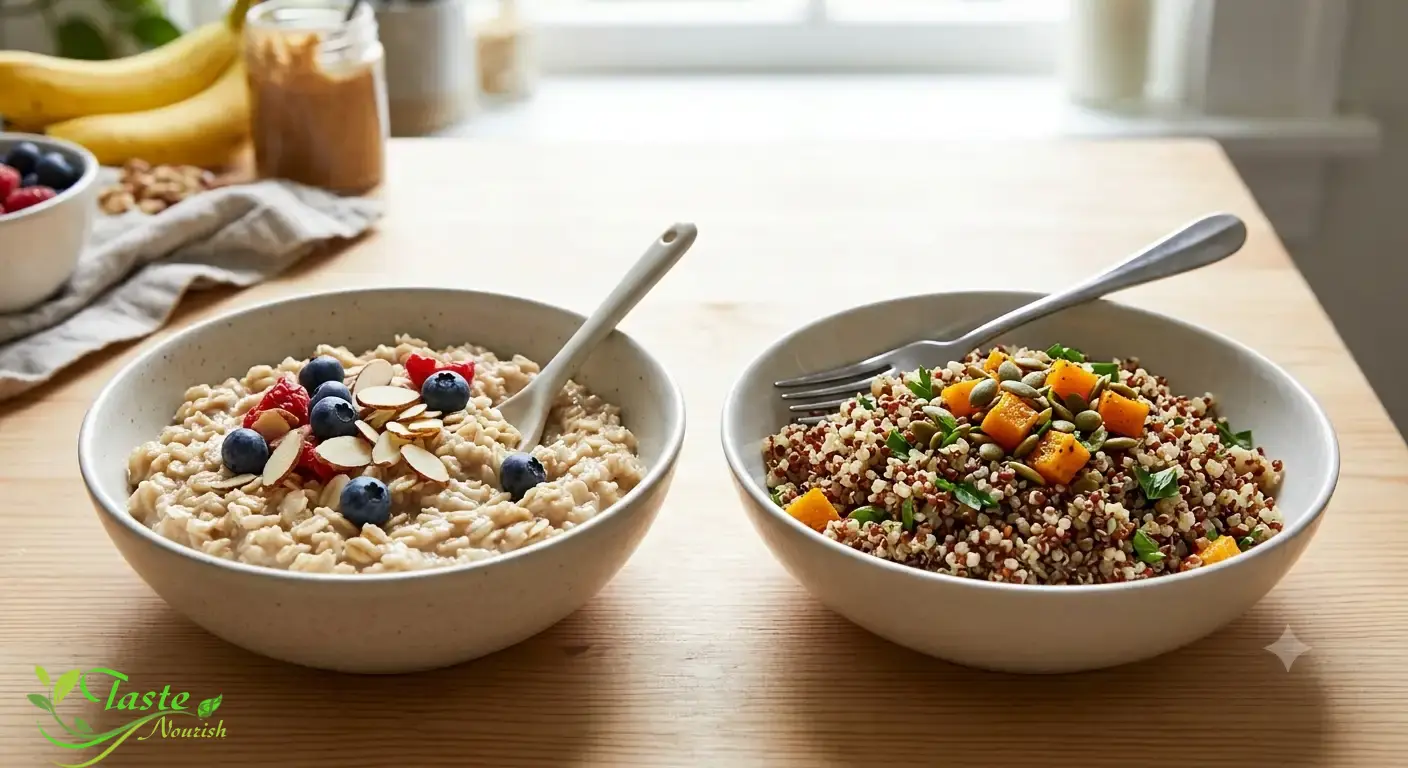
Oats aren’t the only gut-friendly fiber source, and they’re not always the highest-fiber option per serving. What sets them apart is the balance of soluble fiber, mild taste, and easy daily use.
Food (typical serving)
Total Fiber
Soluble Fiber Share
Notes for Digestion
Oats, 1 cup cooked
~4g
~50%
Gentle, well-tolerated, prebiotic
Chia seeds, 2 tbsp
~10g
~40%
Very high fiber, absorbs a lot of water
Lentils, 1 cup cooked
~15g
~25%
High protein and fiber, can be gas-forming
Psyllium husk, 1 tbsp
~5g
~70%
Mostly soluble, used therapeutically for regularity
Key Takeaway:Oats aren’t the fiber “champion” by volume, but they’re one of the easiest sources to eat daily without digestive discomfort — which matters more than raw fiber counts for most people building a sustainable habit.
How to Add Oats to Your Diet for Better Digestion
Getting the gut-health benefits of oats isn’t complicated, but a few small choices make a real difference in how your digestive system responds.
Choosing the Right Oats
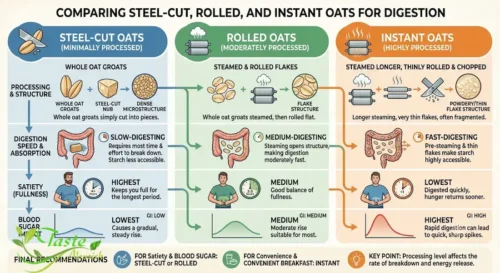
Steel-cut, rolled, and instant oats all come from the same grain, but processing changes texture and digestion speed. Steel-cut oats are the least processed and digest more slowly, which some people find gentler and more satiating. Rolled (old-fashioned) oats are a solid middle ground — quicker to cook, still minimally processed.
Instant oats are the most processed and tend to digest fastest, meaning less of a sustained fiber effect. Oat bran, the outer layer of the grain, is the most concentrated source of beta-glucan if you’re specifically targeting fiber intake.
None of these forms are “wrong,” and the fiber content across steel-cut, rolled, and plain instant oats is fairly similar gram for gram. The bigger practical difference comes down to what you pair them with.
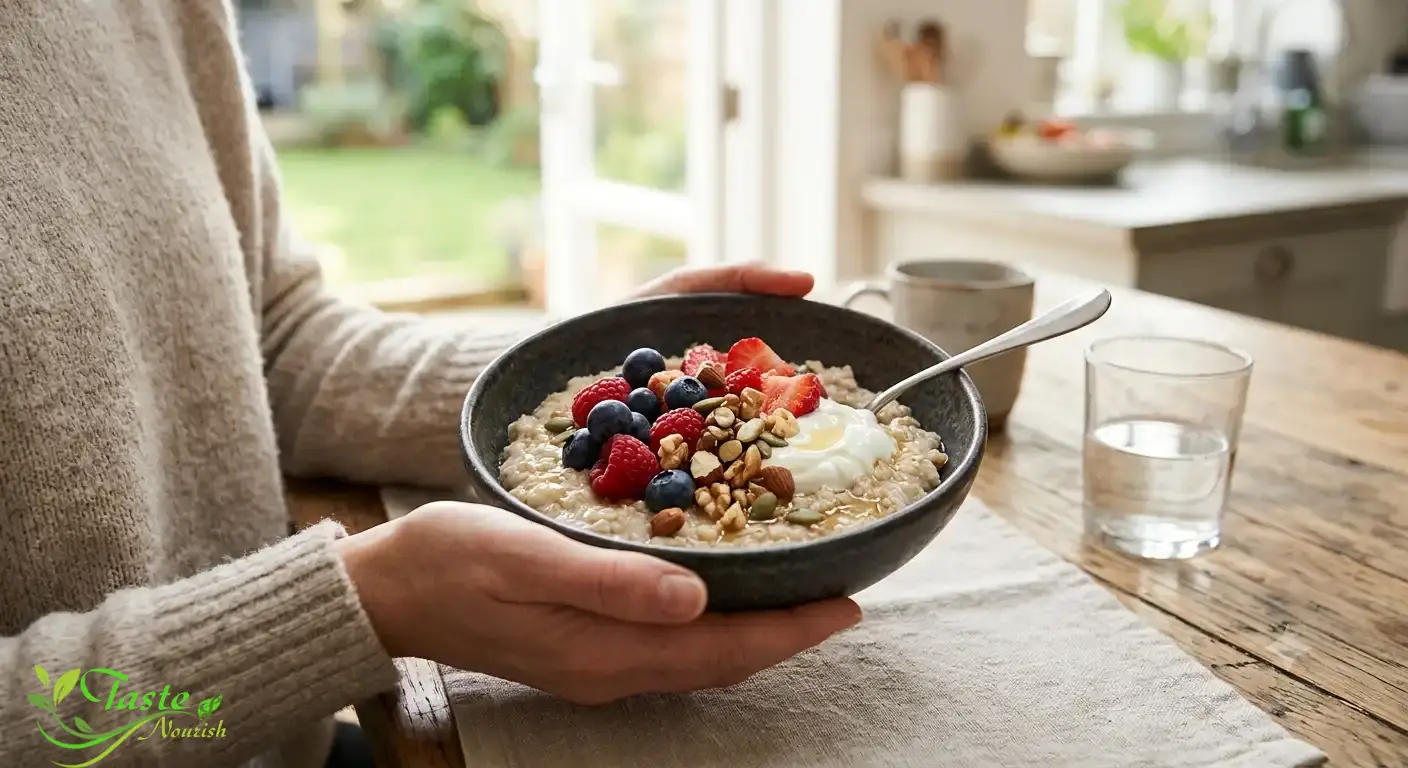
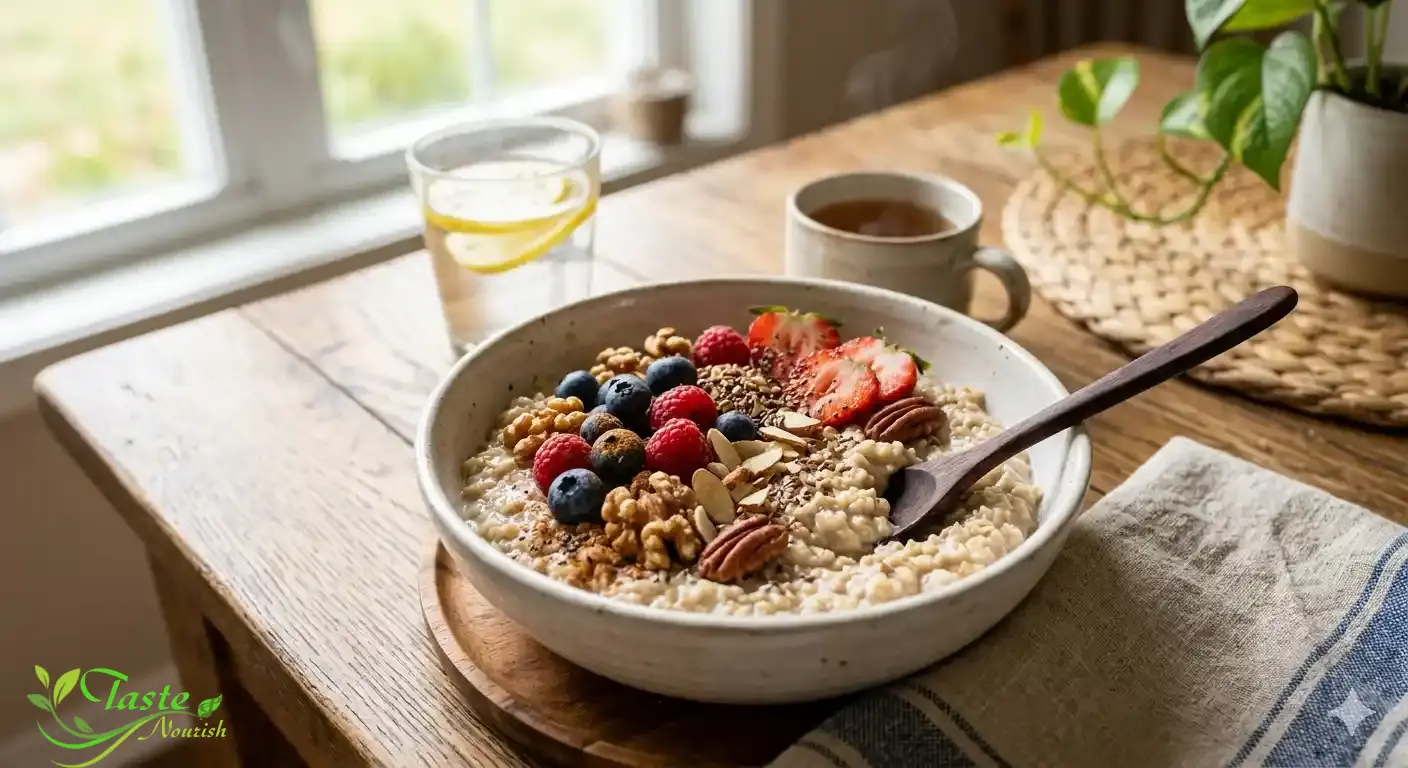
A packet of flavored instant oatmeal often carries several grams of added sugar and little else, while a bowl of steel-cut oats topped with fruit and nuts adds extra fiber, polyphenols, and healthy fats that support digestion even further.
The oats are the foundation; what goes on top often determines how gut-friendly the final bowl really is.
Common Mistakes That Cause Bloating
Even a genuinely gut-friendly food can cause discomfort if it’s introduced the wrong way. A few missteps are especially common:
Increasing fiber too fast. Jumping from a low-fiber diet straight to a large daily bowl of oats can cause gas and bloating simply because your gut bacteria need time to adjust.
Not drinking enough water. Soluble fiber needs fluid to do its job; without it, oats can have the opposite of the intended effect.
Relying only on instant, sugar-added varieties. These digest quickly and often bring added sugars that don’t support the same gut benefits as whole rolled or steel-cut oats.
Skipping variety. Oats are one piece of a fiber-rich diet, not a replacement for vegetables, fruit, and legumes.
Who Should Be Cautious With Oats
Oats are well-tolerated by most people, but a few groups should approach them thoughtfully:
People with celiac disease should use only certified gluten-free oats and introduce them gradually under medical guidance.
People with a diagnosed avenin sensitivity may need to avoid oats altogether, even gluten-free ones.
People with active IBS flares may do better starting with smaller portions of oats, since any new fiber source can temporarily increase gas.
People on certain medications, including some diabetes or cholesterol drugs, should talk to a doctor about timing, since fiber can affect how some medications are absorbed.
Conclusion
Oats earn their reputation as a gut-friendly food honestly. The beta-glucan they contain slows digestion, feeds beneficial gut bacteria, and softens stool — a combination that few everyday foods can match in one simple bowl. The research consistently points in the same direction: regular, moderate oat intake is associated with better digestive regularity and a more favorable gut environment, though it works best as part of a broader high-fiber diet rather than a stand-alone fix.
♦ Start slow, drink enough water, choose minimally processed varieties when you can, and let your gut adjust at its own pace.
FAQs About Oats for Gut Health
How much oatmeal should I eat daily for gut health?
Most research uses servings in the 3- to 6-gram beta-glucan range, which is roughly 1 to 1.5 cups of cooked oats. Starting with a smaller portion and increasing gradually tends to be more comfortable for the gut.
Can oats cause bloating instead of helping digestion?
Yes, especially if fiber intake increases too quickly or fluid intake stays low. Bloating is usually temporary and improves as gut bacteria adjust to the added fiber.
Are overnight oats as good for gut health as cooked oatmeal?
Soaking oats overnight doesn’t significantly change the beta-glucan content, so the digestive benefits are largely comparable. Some people find soaked oats gentler on digestion since the soaking process softens the fiber structure.
Is oat milk as beneficial for gut health as whole oats?
Not quite. Oat milk is typically strained, which removes much of the fiber, including beta-glucan. Whole oats remain the better choice if digestive support is the goal.
Can I eat oats every day without any digestive downsides?
For most people, yes — daily oats are well-tolerated and considered part of a healthy long-term eating pattern. Anyone with celiac disease, avenin sensitivity, or an active digestive condition should check with a healthcare provider first.
Gotteland, M., Zazueta, A., Pino, J.L., et al. “Modulation of Postprandial Plasma Concentrations of Digestive Hormones and Gut Microbiota by Foods Containing Oat β-Glucans in Healthy Volunteers.” Foods, 2023. https://www.ncbi.nlm.nih.gov/pmc/articles/PMC9955387/
This guide is for informational purposes only and should not replace professional medical or nutritional advice. Always consult with healthcare providers regarding specific dietary needs and health conditions.
Hanan Abo Samra is the founder of Taste & Nourish, sharing trustworthy nutrition guidance and recipes drawn from 20+ years of hands-on cooking experience. When she's not developing new recipes, Hanan is researching the science behind everyday ingredients to bring readers practical, evidence-based guidance for a healthier lifestyle.