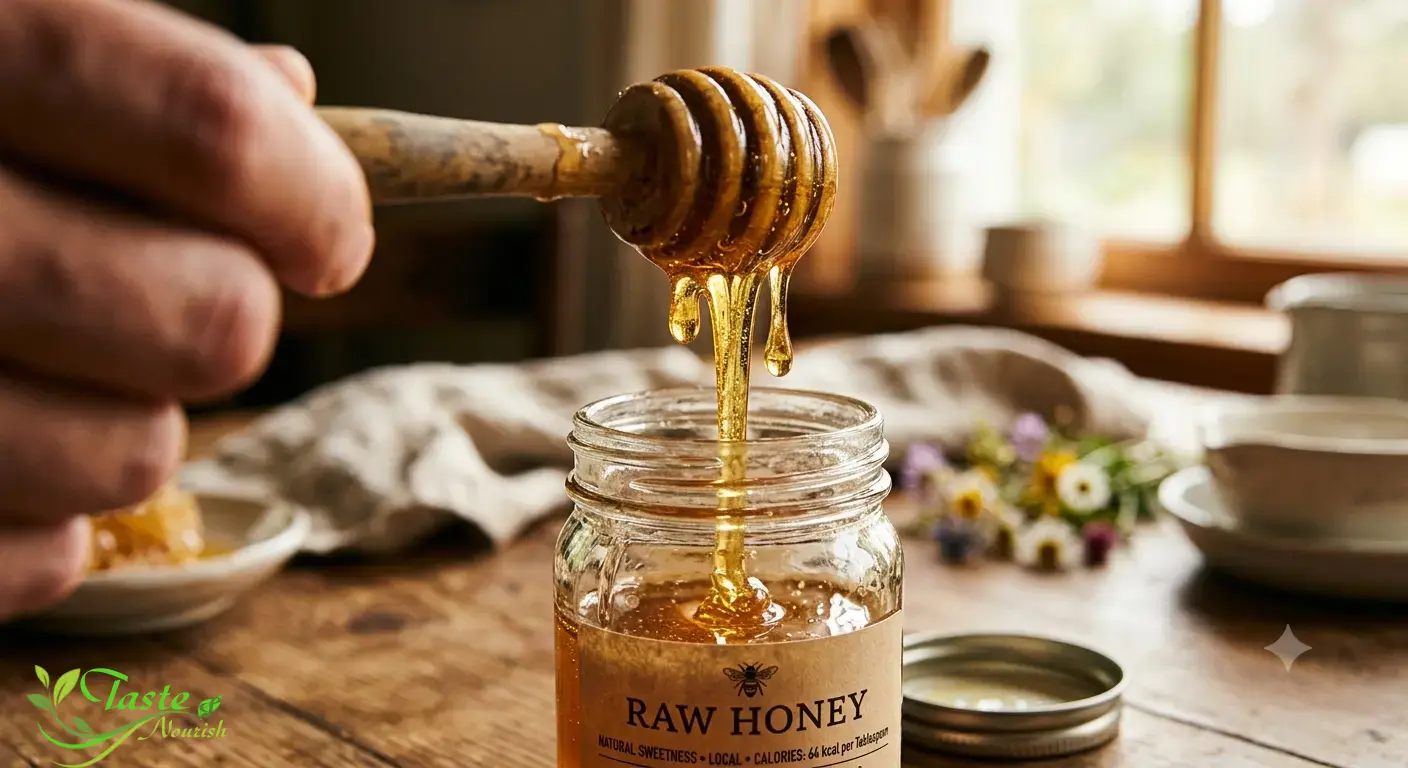
You’re standing in front of your pantry, spoon in hand, staring at the honey jar and the sugar bowl. One promises “natural goodness.” The other just… sweetens. But does that marketing halo around honey actually hold up under scientific scrutiny?
The short answer: honey has a slight nutritional edge, but it’s not the health miracle food labels suggest. Both are still added sugars your body processes in strikingly similar ways. Below, we break down exactly where honey pulls ahead, where it falls short, and how to use either sweetener without sabotaging your health goals.
Key takeaway: Honey offers a modest antioxidant and glycemic advantage over table sugar, but the difference is too small to justify unlimited use — moderation remains the deciding factor for both.
What Makes Honey and Sugar Different at a Molecular Level
At first glance, honey and sugar look like nutritional twins — both are carbohydrate-dense, both taste sweet, and both raise blood glucose. But their composition tells a more nuanced story. Table sugar, or sucrose, comes from sugarcane or sugar beets and is a disaccharide built from exactly 50% fructose and 50% glucose bonded together. It’s a single, uniform molecule with nothing else riding along for the ride.
Honey, by contrast, is a far messier — and arguably more interesting — mixture. Bees collect flower nectar and enzymatically break it down, producing a substance that’s roughly 38% fructose, 31% glucose, 17% water, and 7% maltose, along with trace amounts of pollen, amino acids, enzymes, and other micronutrients. That water content matters practically — because honey is a liquid rather than a dry crystal, it behaves differently in recipes and in your bloodstream.
This compositional difference is the entire foundation of the “honey is healthier” argument. It’s not that honey lacks sugar — it’s still overwhelmingly sugar — but the small percentage that isn’t sugar carries some genuine nutritional value that refined white sugar simply doesn’t have.
Honey vs. Sugar: Nutrition Facts Comparison
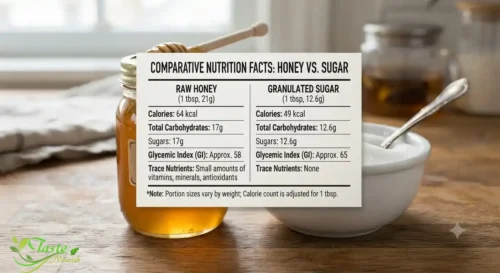
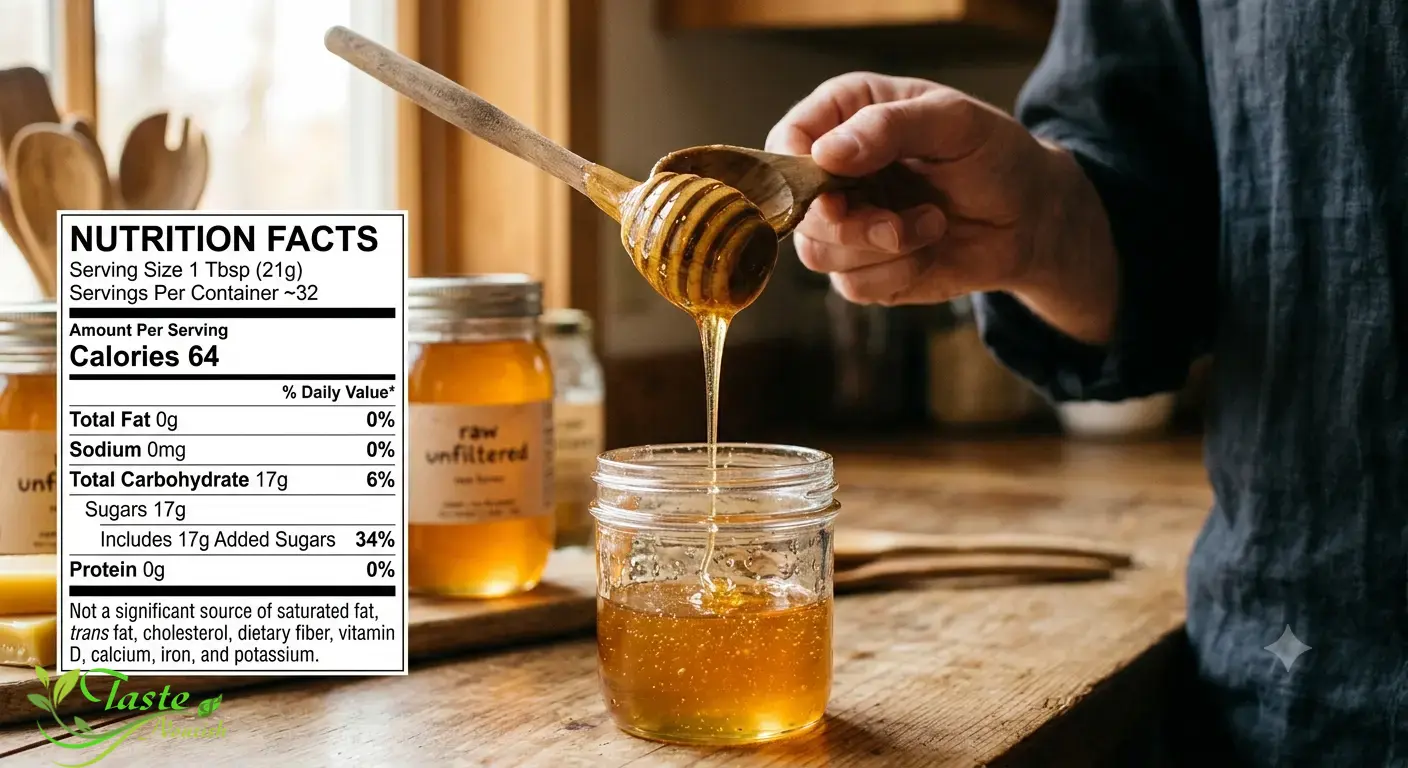
Numbers settle arguments better than opinions do. Here’s how the two sweeteners stack up per 100 grams and per tablespoon, the two most useful measurements for everyday cooking decisions.
Interestingly, honey has more calories per tablespoon than sugar despite having fewer calories per 100 grams. That’s because a tablespoon of honey is denser and heavier than a tablespoon of sugar, which is a looser, drier substance. This is exactly the kind of nuance competitor articles often gloss over — the “per gram” and “per tablespoon” comparisons tell almost opposite stories, and both are technically accurate.
Calories and Weight Management
If your goal is fat loss or maintaining a calorie deficit, neither honey nor sugar does you any favors on a per-tablespoon basis. Honey actually contains more calories per spoonful, not fewer, which contradicts a persistent myth floating around wellness blogs. Even though honey has a lower glycemic index and a few nutrients, your body treats all added sugars similarly when it comes to metabolism and weight.
That said, there’s a practical nuance worth understanding here, and it’s one of the few genuine advantages honey brings to the table.
Why Honey’s Sweetness Intensity Matters
Honey’s fructose-heavy composition makes it taste noticeably sweeter than an equivalent amount of table sugar. Because of this, honey’s higher sweetness intensity means you might use less overall when sweetening coffee, tea, or a batch of muffins. In practice, this can translate into a small net calorie savings — not because honey is inherently “lighter,” but because your taste buds are satisfied with a smaller quantity.
This is a subtle but genuinely useful takeaway: swapping sugar for honey only helps your calorie count if you actually reduce the amount used, teaspoon for teaspoon. Pouring honey with the same heavy hand you’d use for sugar erases any potential benefit and can leave you consuming more calories than before.
Reader note: Try replacing sugar with roughly two-thirds the amount of honey in recipes. Start small, taste as you go, and adjust — your palate will usually tell you honey needs less volume to hit the same sweetness target.
Glycemic Index and Blood Sugar Impact
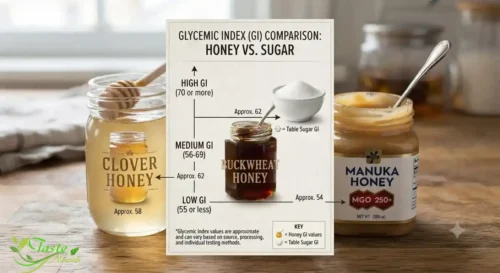
The glycemic index (GI) measures how quickly a food spikes your blood sugar after eating it, on a scale where pure glucose sits at 100. This is where honey earns its most legitimate bragging rights. Table sugar carries a GI of around 65, while honey’s GI generally falls between 45 and 60 depending on the variety.
Research indicates honey causes a more gradual blood sugar rise than refined sugar, and studies show honey produces a lower plasma glucose increase in diabetic patients compared to dextrose. That’s a meaningful physiological difference — a slower glucose rise generally means fewer energy crashes and less strain on insulin response over time.
How Different Honey Types Compare on GI
Not all honey behaves the same way once it hits your bloodstream. Clover honey sits around 58 on the glycemic index, placing it in the moderate range, while darker, more mineral-rich varieties like buckwheat honey tend to score somewhat lower. The variation comes down to the exact fructose-to-glucose ratio and the presence of other compounds that slow digestion.
Here’s a quick reference for common honey varieties and how they generally compare:
Clover honey — moderate GI, mild flavor, most widely available in grocery stores
Buckwheat honey — darker, richer in antioxidants, generally lower GI
Manuka honey — prized for antibacterial compounds, moderate GI
Wildflower honey — GI varies by season and floral source
Acacia honey — very light flavor, tends to sit on the lower end of the GI range
Orange blossom honey — floral, moderate GI, popular in baking
Vitamins, Minerals, and Antioxidants in Honey
This is the category where honey most clearly separates itself from sugar. Refined table sugar is a pure source of energy with no vitamins, minerals, or antioxidants whatsoever, while honey carries a small but real nutritional payload. Honey contains trace amounts of vitamins, minerals, and antioxidants that sugar simply doesn’t have.
To be clear-eyed about this: the amounts are genuinely small. You’d need to eat unreasonable quantities of honey to meet daily vitamin or mineral requirements from it alone. But “some nutrients” still beats “zero nutrients” when everything else about the two sweeteners is roughly comparable.
The antioxidant content specifically comes from flavonoids and phenolic compounds that originate in the flower nectar bees collect. These compounds help neutralize free radicals in the body, and darker honeys — like buckwheat — generally test higher in antioxidant concentration than lighter varieties like clover or acacia.
Potential Health Benefits of Honey
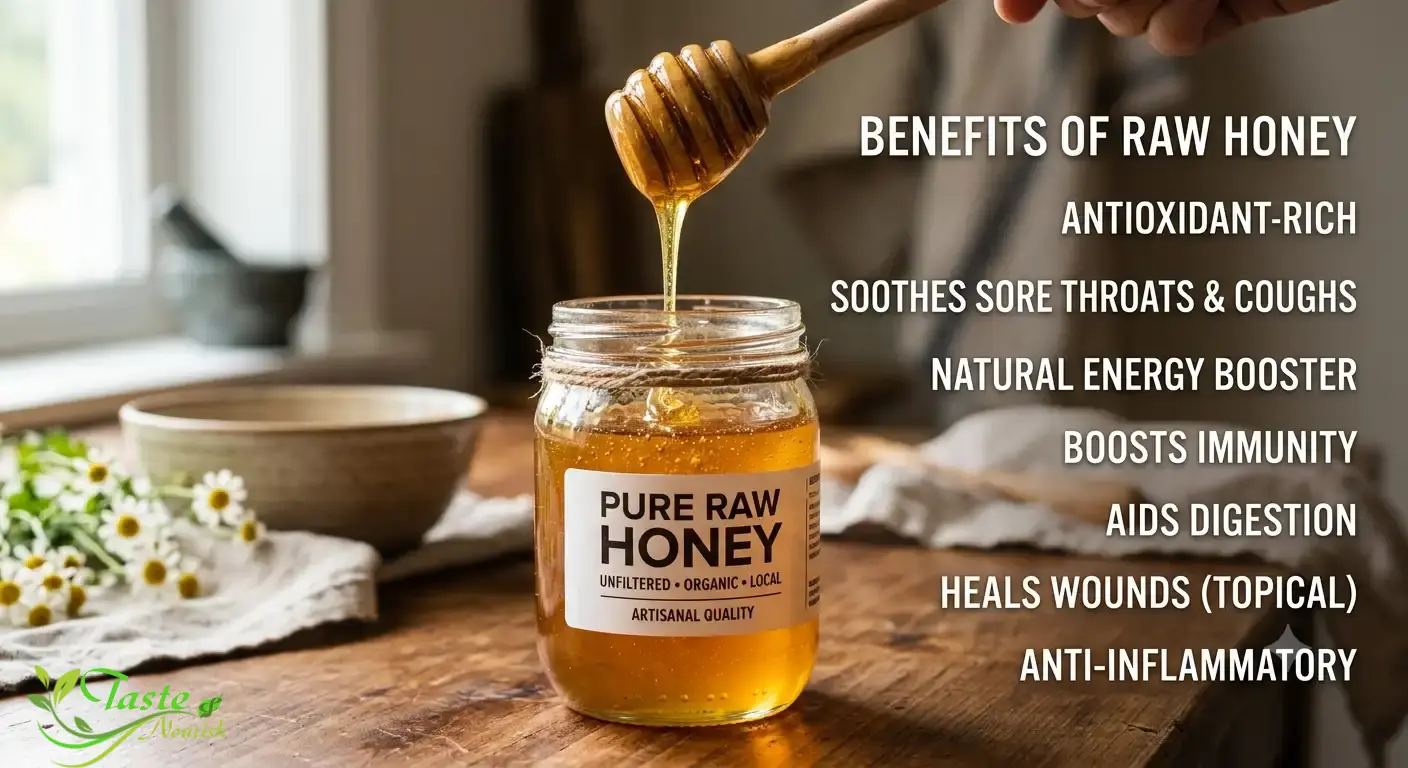
Beyond raw nutrition numbers, honey has accumulated a reputation for functional health benefits that go beyond simply sweetening food. Some of this reputation is well-earned; some of it is inflated by wellness marketing.
Honey may support wound healing when applied topically, particularly medical-grade Manuka varieties
It has documented antimicrobial and antibacterial properties in laboratory studies
Raw honey may soothe throat irritation and suppress cough more effectively than some over-the-counter remedies
Its antioxidant content may contribute modestly to reducing oxidative stress
Some research links honey consumption to improved lipid profiles compared to sucrose
It has a long shelf life and natural preservative qualities due to low moisture and high acidity
Heart Health Markers
Cardiovascular health is one of the more promising areas of honey research. Studies suggest honey may benefit heart health markers by decreasing total cholesterol, triglycerides, and LDL cholesterol while increasing HDL cholesterol in healthy individuals. This effect appears linked to honey’s flavonoid content, which may help reduce arterial inflammation over time.
It’s worth noting these studies typically compare honey to sucrose directly, not to a sugar-free baseline. That distinction matters — the finding is that honey is less harmful than sugar for these markers, not that honey actively improves them beyond a no-added-sugar diet.
Antibacterial Properties and Cough Relief
Honey’s natural hydrogen peroxide production and low pH give it genuine antibacterial characteristics, which is why it’s occasionally used in wound care settings under medical supervision. For everyday use, many people turn to a spoonful of raw honey to calm a scratchy throat or suppress a nagging cough, and some clinical comparisons have found it performs comparably to common over-the-counter cough suppressants for short-term symptom relief.
Downsides and Risks of Choosing Honey
Honey isn’t without genuine drawbacks, and a fair comparison has to include them rather than just the flattering data points.
Honey contains more calories per tablespoon than sugar
It’s still classified as an added sugar and counts toward daily added-sugar limits
Commercial honey can be diluted or adulterated with cheaper syrups
Raw honey isn’t safe for infants under 12 months
It can still spike blood sugar significantly, just somewhat less than sucrose
Overconsumption contributes to the same weight gain and metabolic risks as sugar
Infant Botulism Risk
This is a non-negotiable safety point. Honey can contain dormant spores of Clostridium botulinum, which an infant’s immature digestive system may not be able to neutralize the way an adult’s can. Pediatric guidance is unambiguous: never give honey, in any form, to a child under 12 months old — including in baked goods or cough remedies.
Commercial Honey Adulteration
The best form of honey is organic, raw, and unpasteurized since it contains the highest amount of nutrients, though this type isn’t safe for everyone. A significant portion of mass-market honey sold in supermarkets has been ultra-filtered and, in some documented cases, cut with cheaper corn or rice syrups to reduce production costs. This practice strips out much of the pollen and antioxidant content that makes honey nutritionally distinct from sugar in the first place — meaning cheap honey may offer barely any advantage over the sugar bowl at all.
Honey vs. Sugar for People With Diabetes
This is where nuance really matters, and where a lot of content online oversimplifies. Honey’s lower glycemic index sounds like good news for blood sugar management, but whether honey is genuinely beneficial for diabetics remains a complex question, since it still contains sugar that will raise blood glucose levels regardless of its GI ranking.
“No sweetener is inherently ‘bad’ on its own — it’s your overall eating pattern that matters most for blood sugar and weight goals.” — paraphrased from registered dietitian commentary on honey vs. sugar
People managing diabetes or insulin resistance shouldn’t interpret honey’s lower GI as a green light for unlimited use. The safest approach is treating honey the same way you’d treat sugar: as an occasional addition, portioned carefully, and factored into total daily carbohydrate counts rather than swapped in freely because it “sounds healthier.”
How to Choose and Use Honey Wisely
If you’ve decided honey’s modest advantages are worth pursuing, how you buy and use it changes how much benefit you actually get.
Raw Honey vs. Processed Honey
Raw honey is minimally filtered and never heated to high temperatures, which preserves more of its pollen, enzymes, and antioxidant compounds. Processed or “commercial” honey is typically pasteurized and heavily filtered for a smoother, longer-shelf-life product — but that processing degrades many of the beneficial compounds that separate honey from sugar nutritionally. If nutritional advantage is your goal in choosing honey, raw and minimally processed varieties deliver meaningfully more value than the squeeze-bottle version sitting on most grocery shelves.
Practical tip: Look for labels that specify “raw” and list a single-origin floral source (like “raw wildflower honey” or “raw buckwheat honey“). Blended honeys pooled from multiple unknown sources are more likely to be heavily processed or diluted.
Practical Tips for Cutting Back on Added Sugar
Regardless of which sweetener you prefer, the biggest health lever isn’t honey-versus-sugar — it’s total added sugar intake. Most Americans consume closer to 17 teaspoons of added sugar per day, well above recommended limits.
Measure sweeteners with a spoon instead of eyeballing pours
Gradually reduce the amount added to coffee or tea over several weeks
Choose plain yogurt and add fresh fruit instead of pre-sweetened varieties
Read ingredient labels for hidden sugar sources like “honey-sweetened” cereals
Use spices like cinnamon or vanilla to boost perceived sweetness without added sugar
Track your added sugar intake for a few days to build awareness of hidden patterns
Honey Healthier Than Sugar FAQs
Q1. Does honey raise blood sugar less than sugar?
Yes, generally. Honey’s glycemic index sits lower than table sugar’s, meaning it typically causes a more gradual rise in blood glucose, though it still raises blood sugar meaningfully and isn’t a safe substitute without portion control.
Q2. Can diabetics use honey instead of sugar?
Honey isn’t automatically safer for diabetics just because of its lower GI — it still contains carbohydrates that affect blood glucose. Anyone managing diabetes should consult a healthcare provider before substituting honey for sugar in their diet.
Q3. Is raw honey healthier than regular store-bought honey?
Yes. Raw honey retains more pollen, enzymes, and antioxidants because it skips the heavy pasteurization and filtering that commercial honey typically undergoes, which can strip out much of its nutritional value.
Q4. How much honey is safe to eat per day?
There’s no universal number, but treating honey like any other added sugar — roughly one to two tablespoons a day at most within a balanced diet — is a reasonable, moderate guideline for most healthy adults.
Q5. Why can’t babies eat honey?
Honey can contain dormant botulism spores that an infant’s digestive system isn’t developed enough to neutralize. Children under 12 months should never be given honey in any form, including in food, drinks, or cough remedies.
Conclusion
Honey edges out sugar in a few measurable ways: a slightly lower glycemic index, trace vitamins and minerals, antioxidant content, and some evidence of heart-health benefits sugar simply can’t offer. But it’s not a free pass — honey carries more calories per tablespoon, still counts as added sugar, and offers no advantage at all when the honey in question has been heavily processed or diluted.
The realistic takeaway is that honey is the marginally better choice when you’re already reaching for something sweet, provided you choose raw, minimally processed varieties and use less of it than you would sugar. But neither sweetener earns a spot as a health food, and both deserve the same moderation you’d apply to any added sugar in your diet.
This guide is for informational purposes only and should not replace professional medical or nutritional advice. Always consult with healthcare providers regarding specific dietary needs and health conditions.
Hanan Abo Samra is the founder of Taste & Nourish, sharing trustworthy nutrition guidance and recipes drawn from 20+ years of hands-on cooking experience. When she's not developing new recipes, Hanan is researching the science behind everyday ingredients to bring readers practical, evidence-based guidance for a healthier lifestyle.