Staring at a bag of oats and wondering exactly how many calories you’re about to eat? You’re not alone. Oats are one of the most searched breakfast foods online, yet the calorie answer depends entirely on which form you’re measuring — dry, cooked, rolled, steel-cut, or loaded with toppings. This guide breaks down every variation with verified nutrition data, so you can stop guessing and start tracking with confidence.
Dry, raw oats contain about 389 calories per 100 grams, according to USDA nutrition data, which lists oats as having 389 calories per 100 grams along with 16.89g of protein and 55.67g of net carbs. That number drops dramatically once you cook them, because oats absorb water during cooking and roughly triple in volume.
Key takeaway: A typical serving isn’t 100g of dry oats — it’s closer to 40g, which works out to roughly 150–156 calories before any milk or toppings.
Here’s the quick breakdown most people are actually searching for:
100g dry oats = approximately 389 calories
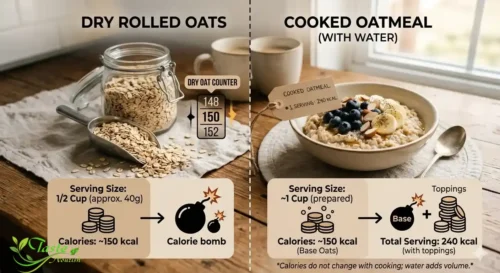
40g dry oats (a standard serving) = approximately 150–156 calories
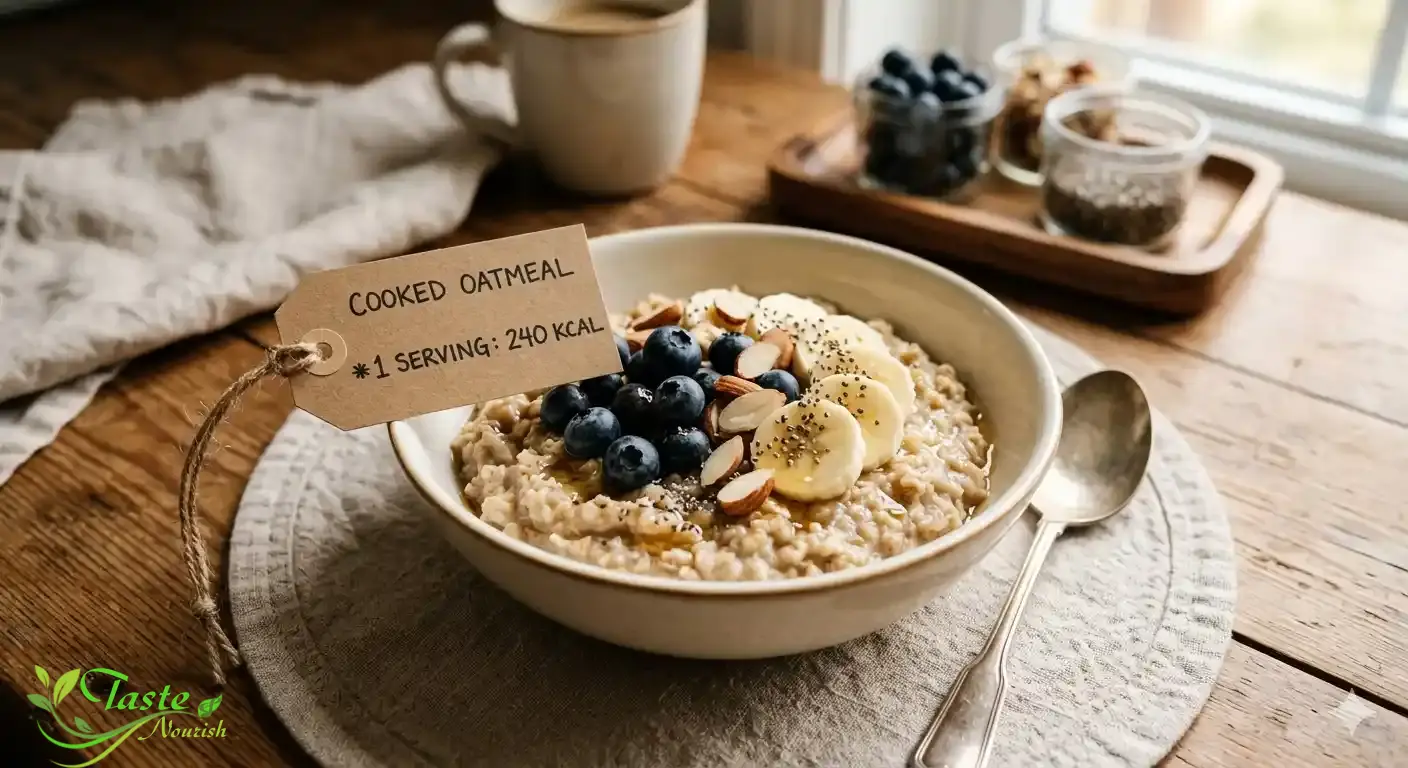
1 cup cooked oatmeal (water) = approximately 166 calories
1 cup cooked oatmeal (milk) = approximately 234 calories
100g cooked oatmeal = approximately 68–70 calories
1/2 cup dry oats = approximately 150 calories
Oats Calories by Type
Not all oats are created equal in the calorie department, though the differences are smaller than most people assume. Processing method changes texture and cooking time far more than it changes calorie content.
Rolled Oats Calories
Rolled oats, sometimes called old-fashioned oats, average around 389 kcal per 100g of dry weight. They’re steamed and flattened, which is why they cook faster than steel-cut oats while keeping a chewy, hearty texture.
Steel-Cut Oats Calories
Steel-cut oats sit at a similar calorie level to rolled oats, but their density per cooked cup differs slightly. A typical 1/4 cup dry serving of steel-cut oats contains about 150–170 calories, and because steel-cut oats expand more and become denser, one dry serving usually produces about 3/4 to 1 cup once cooked.
Instant Oats Calories
Instant oats are processed further, which slightly lowers their raw calorie count. Quick oats sit a touch lower than rolled oats at about 371 kcal per 100g dry. The bigger calorie risk with instant oats isn’t the oats themselves — it’s the flavored packets loaded with sugar, which can add 50–100 extra calories per packet. Alibaba
Dry Oats vs. Cooked Oats: Why the Numbers Look So Different
This is the single biggest source of confusion when people search “oats calories.” A 389-calorie figure and a 68-calorie figure can both be technically correct for the exact same oats — the difference is just water weight.
Form
Calories per 100g
Dry, raw oats
~389
Cooked oatmeal (water)
~68–70
Cooked oatmeal (milk)
~95–100
Cooked plain oatmeal comes in at about 68 calories per 100g, simply because of water absorption during cooking. If you’re tracking macros, always check whether a nutrition label is showing dry or cooked weight — mixing the two up is the easiest way to misjudge your intake by 5x.
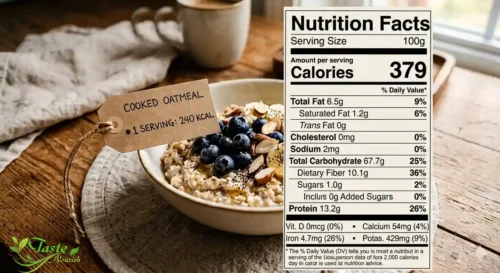
Complete Oats Nutrition Facts (Per 100g)
Beyond calories, oats pack in a genuinely impressive nutrient profile. Here’s the full picture based on USDA data for 100 grams of oats.
Nutrient
Amount per 100g
% Daily Value
Calories
389
—
Total Fat
6.9g
11%
Saturated Fat
1.2g
5.5%
Total Carbohydrate
66g
22%
Dietary Fiber
11g
42%
Total Sugars
0g
—
Protein
17g
—
Iron
4.7mg
59%
Magnesium
—
15%
Potassium
429mg
13%
Oats are especially rich in manganese, providing 214% of the daily value, and phosphorus at 75% of the daily value per 100g. That fiber number deserves a second look too — oats contain 3–4g of beta-glucan per 100g, a soluble fiber shown to lower LDL cholesterol by 5–10%.
Oats Calories by Preparation Method
How you cook your oats matters almost as much as which oats you buy. Liquid choice alone can swing your final calorie count by 70 calories or more per serving.
Oatmeal Cooked with Water
One cup (8.3 oz) of regular or instant oats cooked with water comes to 166 calories. This is the calorie-efficient baseline most nutrition trackers use, since cooking with water adds no extra calories at all.
Oatmeal Cooked with Milk
Swap water for milk and the numbers climb. One cup of instant oatmeal cooked with milk (no added fat) contains 234 calories, with 6.29g fat, 32.67g carbs, and 12.26g protein. That extra 68 calories buys you significantly more protein and calcium, which is a fair trade for many people.
Reader note: If you’re choosing milk for protein but watching calories, unsweetened almond milk or skim milk are worth comparing — both deliver benefits without the full calorie load of whole milk.
How Toppings Change Your Oatmeal Calorie Count
Plain oats rarely stay plain. Here’s how popular liquid additions stack up, based on standard per-cup values:
Water: 0 added calories — the calorie-neutral baseline
Skim milk: adds protein with minimal fat calories
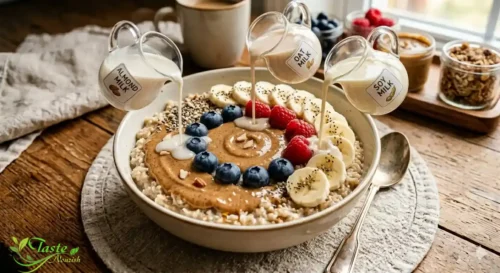
Unsweetened almond milk: about 30–40 calories per cup
Unsweetened soy milk: about 80–100 calories per cup, with more added protein than most plant-based milks
Oat milk: averages 100–120 calories per cup depending on brand and fortification
Carton coconut milk: around 40–50 calories per cup (canned coconut milk runs far higher)
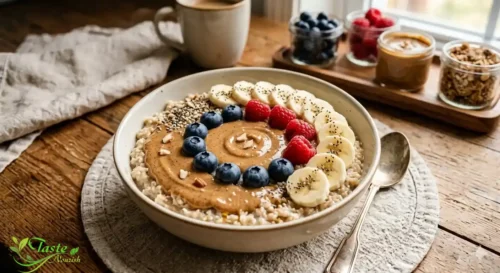
Beyond liquids, toppings like banana, berries, nut butter, or honey can add anywhere from 20 to 200 calories depending on portion size — nut butter being the biggest swing factor by far.
Are Oats Good for Weight Loss?
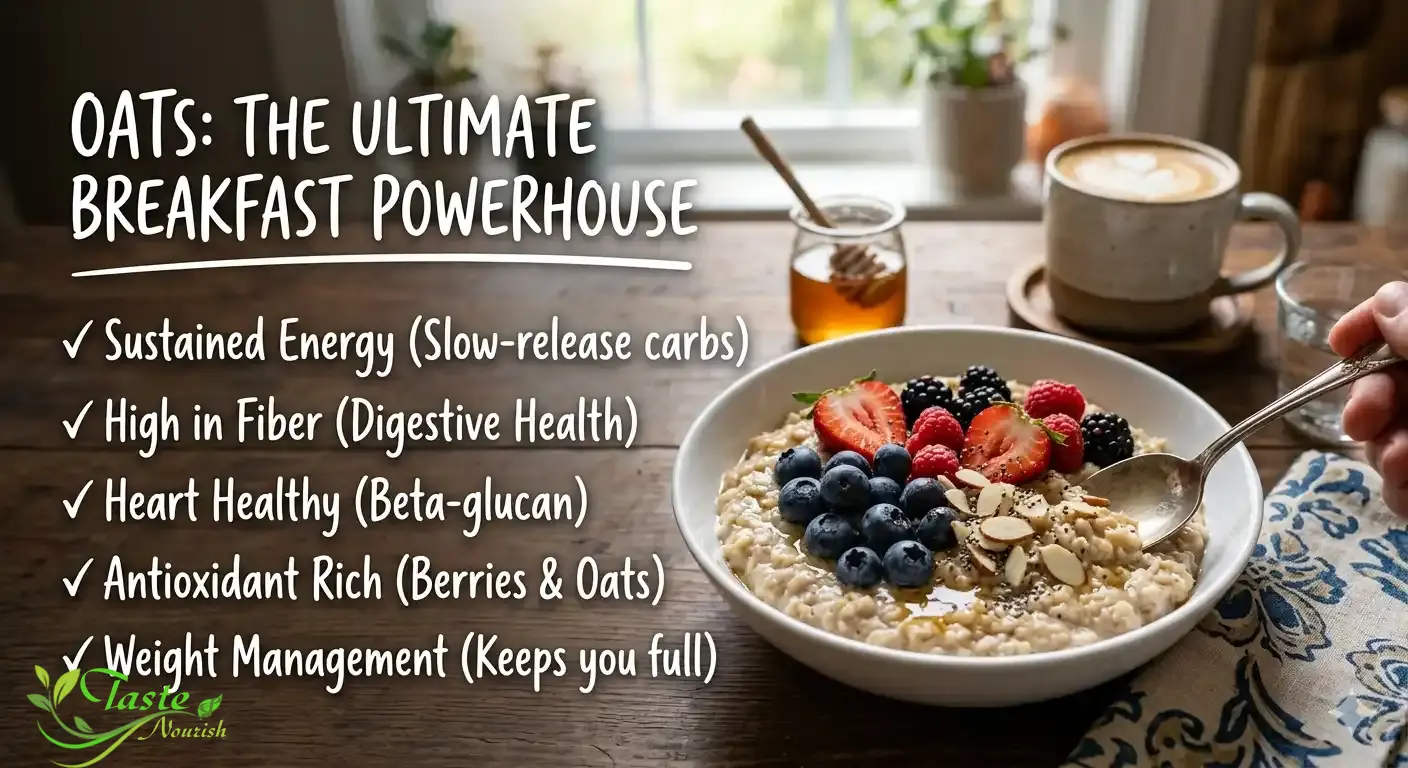
This is where oats genuinely earn their reputation, and the science behind it goes deeper than “high fiber, good for you.”
The Beta-Glucan Satiety Effect
A 50g cooked serving of oats delivers 175 to 190 kcal and, for most people, sustains appetite suppression for three to four hours.
The mechanism is specific: beta-glucan forms a viscous gel in the small intestine that binds bile acids and impairs their reabsorption, while fiber delays gastric emptying and keeps the stomach fuller for longer. Recent research even suggests beta-glucan can enhance GLP-1 release — the same hormone mimicked by weight-loss medications — supporting appetite control and adherence to a calorie deficit.
Animal research backs this up at a mechanistic level. Researchers comparing pectin, beta-glucan, wheat dextrin, starch, and cellulose found that beta-glucan stood out for fighting obesity, and mice fed a 10% beta-glucan diet showed much lower weight gain and fat mass alongside higher lean mass compared to other fiber-supplemented groups.
As nutrition researcher Frank Duca’s team noted in The Journal of Nutrition, “It’s interesting to see such a distinct advantage for beta-glucan over the others in this particular study,” a sentiment echoed by registered dietitian Susan Bowerman, who called the finding notable given that other soluble fibers were tested too.
Smart Portioning for a Calorie Deficit
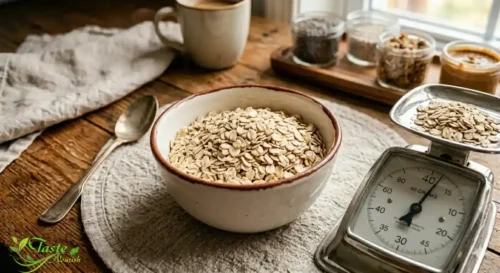
Measure dry oats with a kitchen scale or measuring cup — don’t eyeball it
Stick to a 40–50g dry serving as your baseline
Add 20–30g of protein (Greek yogurt, protein powder, or egg whites)
Choose fruit over syrup or sugar for sweetness
Use water or a low-calorie milk alternative as your base liquid
Pre-portion overnight oats in containers to avoid “eyeball creep”
Half a cup of dry oats becomes about 1 to 1.5 cups of cooked oatmeal after absorbing water, meaning you get a generous, visually satisfying portion for only around 150 calories — compare that to a typical bagel at roughly 270 calories for far less volume.
Oats Calories vs. Other Breakfast Foods
Seeing oats next to common breakfast alternatives makes the calorie efficiency argument clearer.
Breakfast Food
Approx. Calories
Approx. Fiber
Oatmeal, cooked with water (1 cup)
166
4g
Bagel, plain (1 medium)
~270
2g
Granola (1/2 cup)
300+
3–4g
Cold cereal with milk (1 cup)
200–250
1–3g
Two scrambled eggs
~180
0g
Oats clearly aren’t the lowest-calorie option on this list, but their fiber-to-calorie ratio and satiety value are difficult for most processed alternatives to match.
How to Lower the Calorie Count of Your Oatmeal
Swap whole milk for skim milk or unsweetened almond milk
Skip flavored instant packets and add your own fresh fruit instead
Use cinnamon, vanilla extract, or stevia instead of sugar or honey
Measure portions instead of free-pouring from the container
Choose plain steel-cut or rolled oats over pre-sweetened varieties
Add volume with water-rich fruit like berries instead of dense toppings like granola
Common Mistakes That Quietly Add Calories
Most oatmeal calorie surprises don’t come from the oats — they come from what gets added on top. Flavored instant packets are a major culprit, since added sugar and oil can quietly double the calorie count of an otherwise modest serving.
Over-pouring milk instead of measuring it is another common slip, especially with richer options like whole milk or full-fat oat milk.
Heavy-handed nut butter, dried fruit, or maple syrup additions can also turn a 160-calorie bowl into a 400-calorie one without anyone noticing, simply because these toppings are calorie-dense in small volumes.
⇒Being mindful of these additions — without eliminating them entirely — is usually enough to keep oatmeal calories in check.
Oats Calories FAQs
How many calories are in 1 cup of dry oats?
One cup of dry rolled oats weighs roughly 80–90g, putting it at approximately 310–350 calories before cooking or any added liquid.
Is oatmeal high in calories compared to other breakfasts?
Not particularly — a cup of oatmeal cooked with water (166 calories) is lower in calories than a plain bagel or a half-cup of granola, while offering significantly more fiber.
Do steel-cut oats have fewer calories than rolled oats?
The calorie difference is minimal; both types are calorie-similar per gram, though steel-cut oats are denser and may feel more filling per cooked cup.
How can I make oatmeal lower in calories without losing flavor?
Use water or unsweetened almond milk instead of whole milk, sweeten with cinnamon or fresh fruit instead of sugar, and measure your dry oats rather than free-pouring.
Are instant oats unhealthy because of their calorie count?
Plain instant oats have a calorie count similar to rolled oats; the concern is usually the added sugar in flavored packets, not the oats themselves.
A simple, low-calorie base oatmeal recipe made with water, using 40g of dry oats per serving.
Ingredients
40g rolled oats
180ml water
Pinch of salt (optional)
Directions
Combine oats and water in a small saucepan over medium heat.
Bring to a gentle simmer, stirring occasionally, for about 5 minutes.
Remove from heat once the oats reach your desired thickness and serve.
Conclusion
Oats calories aren’t a single fixed number — they shift dramatically depending on whether you’re measuring dry or cooked weight, which type you choose, and what you add to the bowl. As a baseline, expect 389 calories per 100g dry, 166 calories per cup cooked with water, and 234 calories per cup cooked with milk.
Beyond the numbers, oats bring genuine fiber, protein, and satiety advantages that make them one of the more efficient breakfast choices available, particularly for anyone managing a calorie deficit or watching cholesterol. Measure your portions, choose your liquid and toppings deliberately, and oats can fit comfortably into almost any nutrition goal.
Hanan Abo Samra is the founder of Taste & Nourish, sharing trustworthy nutrition guidance and recipes drawn from 20+ years of hands-on cooking experience. When she's not developing new recipes, Hanan is researching the science behind everyday ingredients to bring readers practical, evidence-based guidance for a healthier lifestyle.




Hi friends, its fantastic article regarding teachingand fully defined, keep
it up all the time.