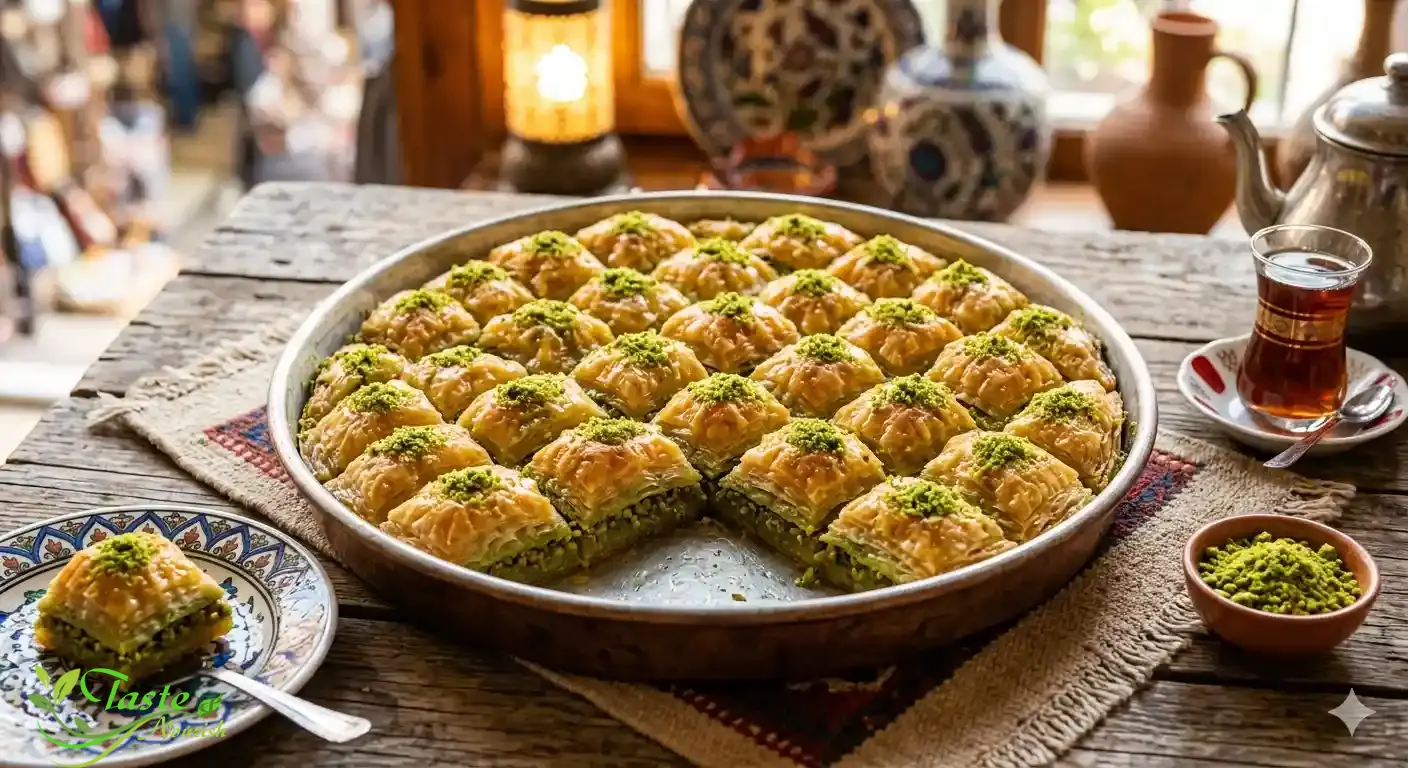
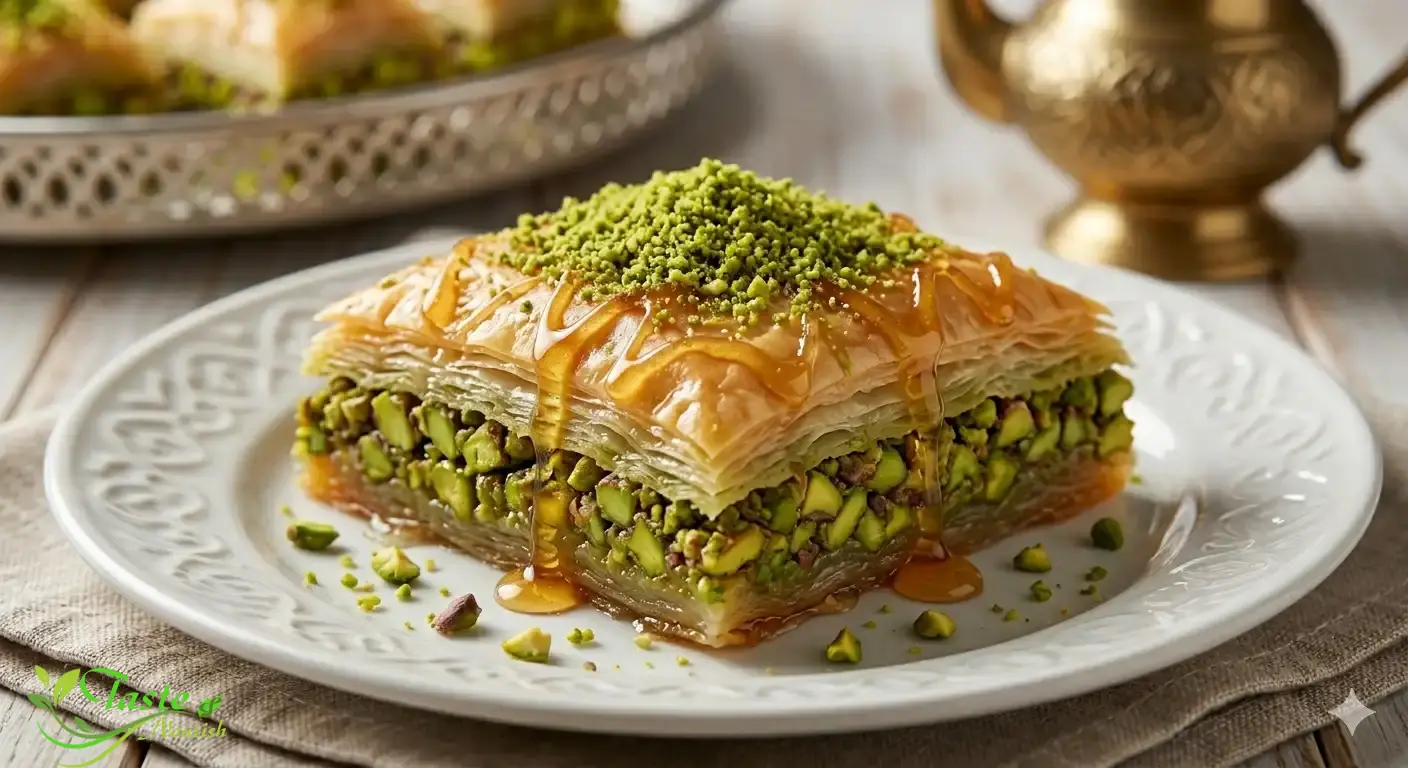
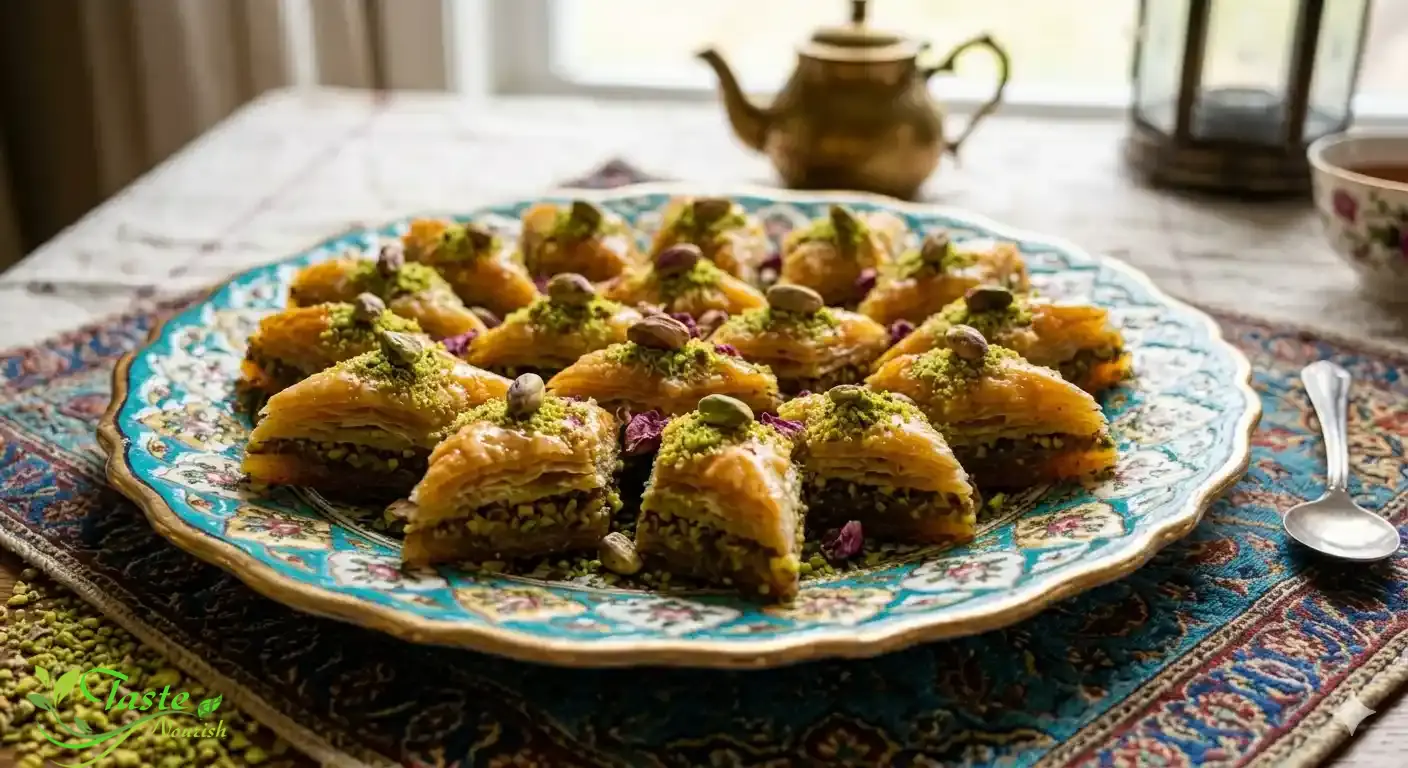
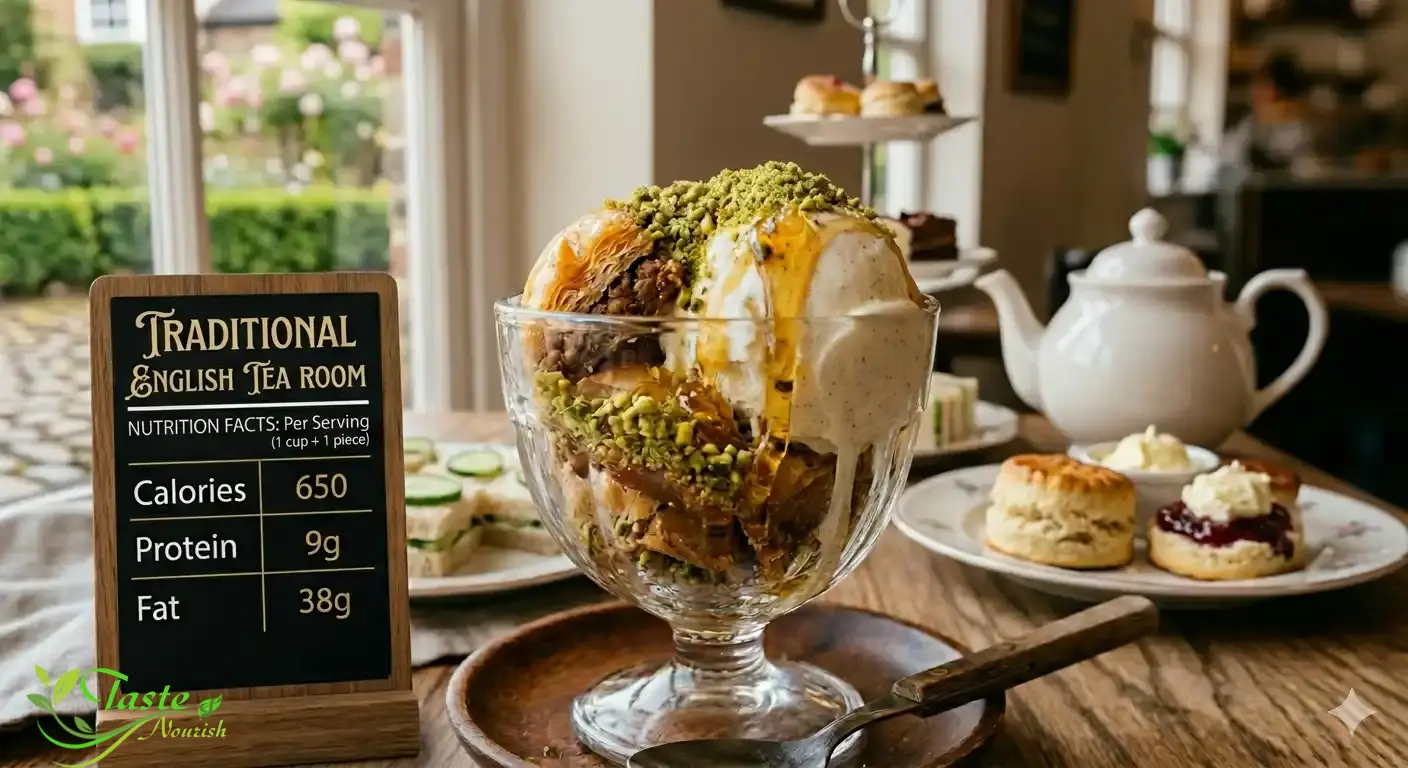
If you’ve ever bitten into a perfectly made piece of walnut baklava — that golden, shatteringly crisp pastry soaked in fragrant honey syrup, layered with toasted, spiced walnuts — you already understand why this dessert has survived empires, crossed continents, and won over practically every culture it’s touched. It’s not just a sweet treat.
It’s a sensory experience wrapped in centuries of culinary tradition. Whether you’re a seasoned home baker trying to perfect your layering technique, a food enthusiast curious about its storied origins, or someone who simply wants to know where to find the best slice, this guide covers everything you need to know about walnut baklava — from its ancient roots to practical baking tips, nutrition facts, storage advice, and beyond.
What Is Walnut Baklava?
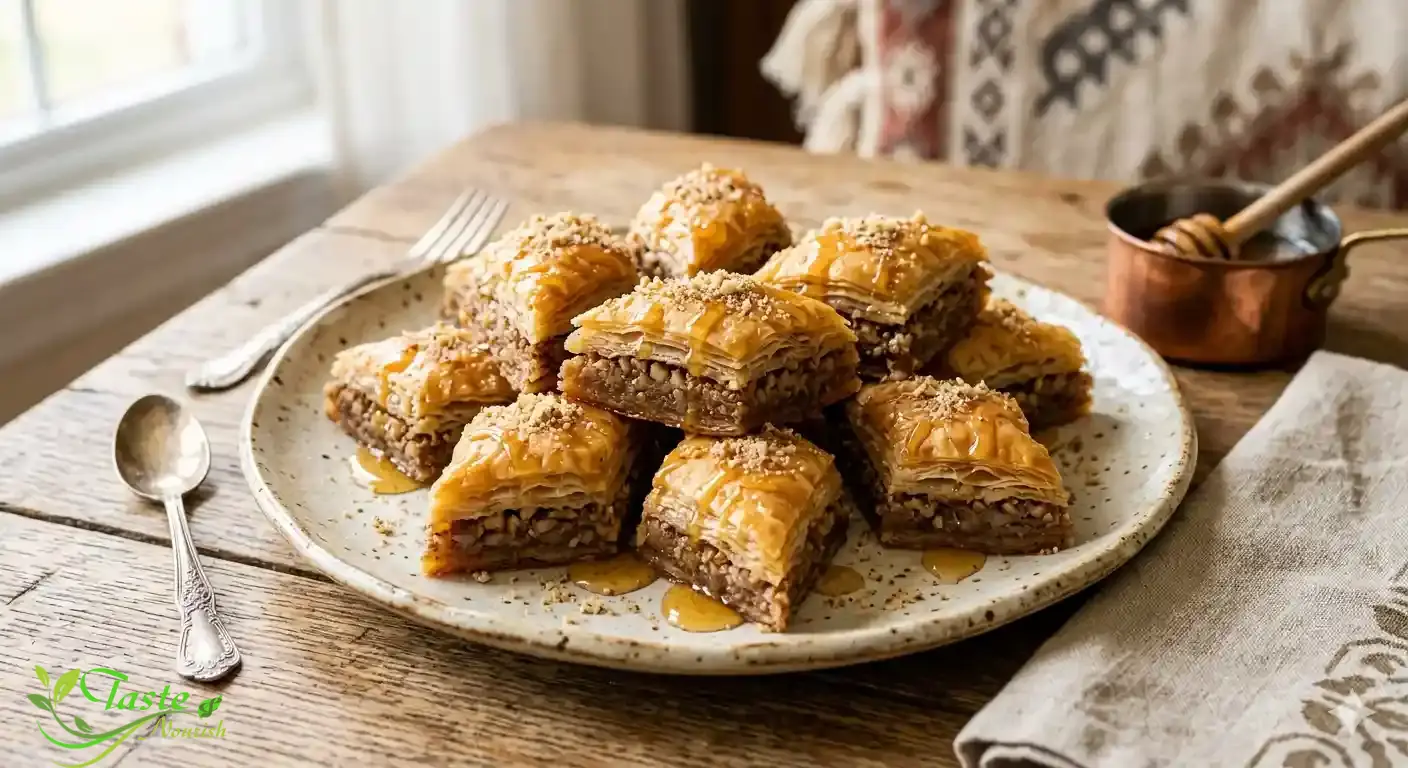
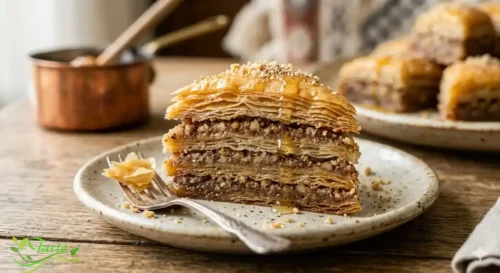
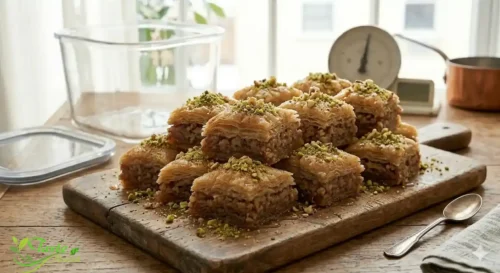
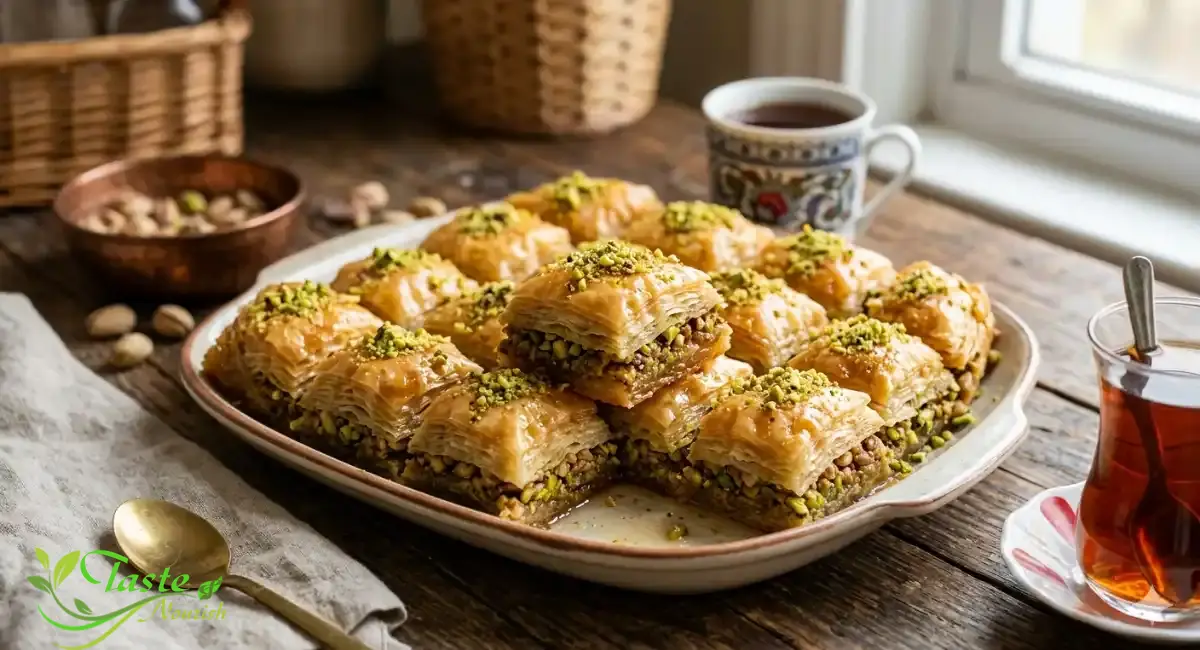
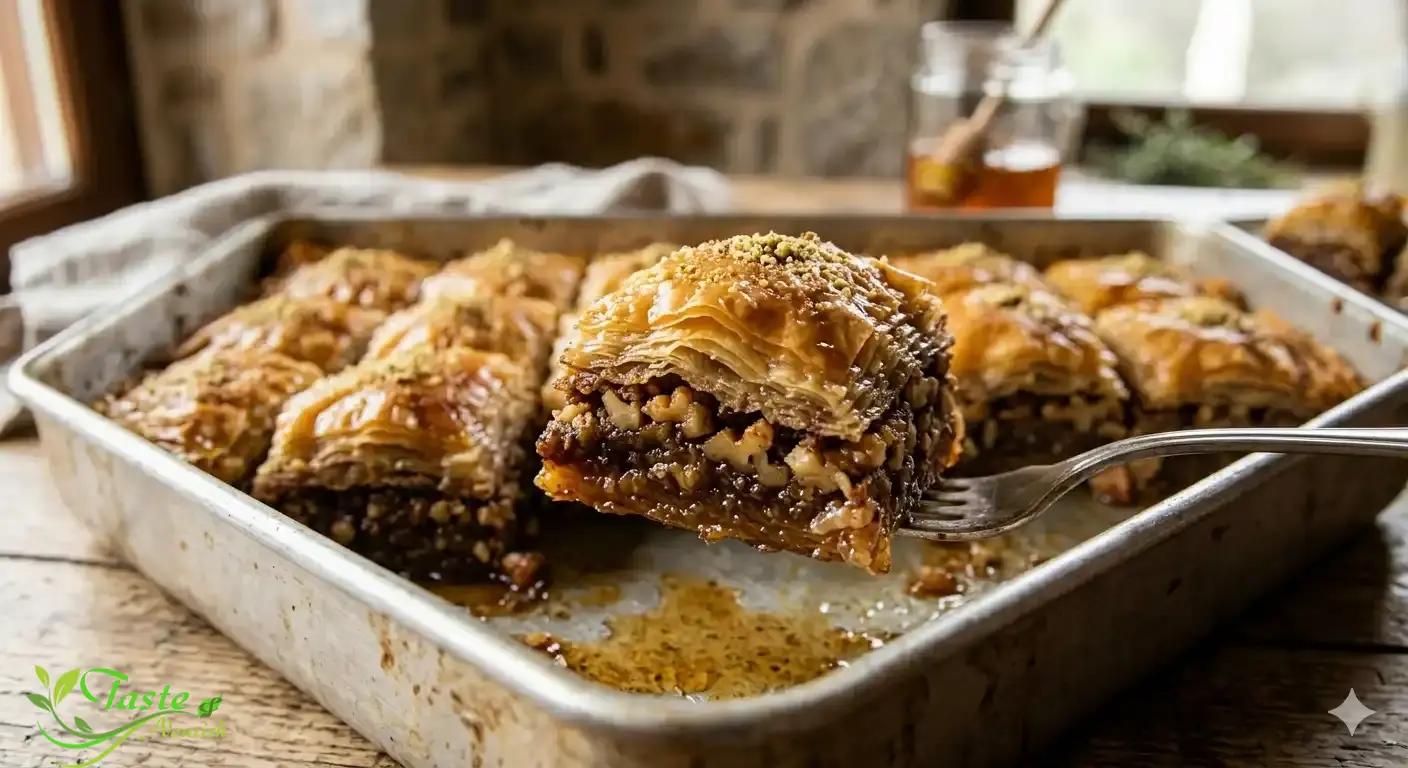
Walnut baklava is a rich, sweet pastry made by layering paper-thin sheets of phyllo dough with a generously spiced walnut filling, then baking the whole thing until golden and immediately drenching it in a fragrant sugar or honey syrup.
The result is a dessert that somehow manages to be simultaneously crispy and moist, sweet but not cloying, simple in concept but impossibly satisfying in execution.
It belongs to the broader baklava family — a collection of layered nut pastries celebrated across the Middle East, Mediterranean, Central Asia, and the Balkans — but walnut baklava holds a uniquely beloved place, particularly in Greek, Lebanese, and Levantine culinary traditions. If baklava is a masterpiece, then its walnut version is the original canvas on which that masterpiece was first painted.
What sets this dessert apart from its cousins isn’t just the nut filling — it’s the entire harmony of textures and flavors working together.
The walnuts bring an earthy richness and a slightly bitter undertone that plays beautifully against the sweetness of the syrup.
The cinnamon and sometimes cloves mixed into the walnut filling add warmth and depth.
And the honey or sugar syrup, often perfumed with orange blossom water or rose water, ties everything together into something you truly can’t stop eating.
Every element has a role to play, and when they come together correctly, walnut baklava is nothing short of magical.
The Core Ingredients That Define Walnut Baklava
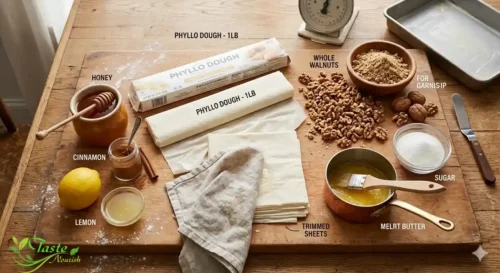
The genius of walnut baklava lies in its simplicity. You need remarkably few core ingredients, but the quality of each one matters enormously. Here’s what forms the backbone of this legendary pastry:
Phyllo dough — paper-thin pastry sheets that create those iconic flaky, crispy layers
Walnuts — coarsely chopped and mixed with spices to form the rich, nutty filling
Unsalted butter — clarified or regular, brushed between every single phyllo layer
Sugar or honey — the base of the soaking syrup that gives baklava its signature sweetness
Cinnamon — the most important spice, adding warmth and complexity to the walnut filling
Orange blossom water or rose water — optional but transformative aromatic addition to the syrup
Key takeaway: The quality of your walnuts and the freshness of your phyllo dough are the two biggest determinants of walnut baklava quality. Never compromise on either.
Why Walnuts Are a Popular Choice for Baklava
Walnuts have traditionally been one of the most widely used nuts in baklava throughout Greece, Lebanon, the Levant, and parts of Turkey due to their availability and affordability.
Their rich, earthy flavor and slight bitterness provide a pleasant contrast to the sweetness of the syrup, creating a well-balanced dessert.
Walnuts are naturally rich in antioxidants and omega-3 fatty acids, adding nutritional value to this classic pastry.
Thanks to their softer texture, walnuts blend easily between the delicate layers of phyllo dough, resulting in a smooth and cohesive filling.
The combination of flavor, texture, and tradition has made walnuts a staple ingredient in many authentic baklava recipes.
Walnut Baklava vs. Other Baklava Types — A Complete Comparison
Not all baklava is created equal, and if you’re trying to decide which version is right for you — or trying to understand where walnut baklava fits in the broader landscape — this comparison table lays it all out clearly.
Type
Primary Nut
Syrup Base
Flavor Profile
Regional Origin
Walnut Baklava
Walnuts
Honey or sugar
Earthy, warm, rich
Greece, Lebanon, Levant
Pistachio Baklava
Pistachios
Light sugar syrup
Buttery, delicate, sweet
Turkey, Gaziantep
Mixed Nut Baklava
Walnuts + Almonds
Honey or sugar
Balanced, complex
Middle East, Egypt
Cashew Baklava
Cashews
Sugar syrup
Creamy, mild
Iran, Gulf states
Hazelnut Baklava
Hazelnuts
Sugar or chocolate
Deep, nutty, bold
Turkey, Balkans
Almond Baklava
Almonds
Honey or rosewater
Light, floral, crisp
Morocco, North Africa
The key takeaway from this comparison is that walnut baklava offers the most complex, multi-dimensional flavor experience of any variety. Where pistachio baklava is celebrated for its elegance and delicacy, walnut baklava earns its place through depth and warmth — qualities that make it the perfect companion for a strong cup of Turkish coffee or a glass of mint tea.
The Step-by-Step Walnut Baklava Recipe
Now let’s get into the part you’ve probably been waiting for. Making walnut baklava at home is genuinely achievable — it requires patience and attention to detail more than any advanced culinary skill. Think of it less like baking and more like an art project that rewards methodical effort. The layering process is meditative, the aroma while it bakes is intoxicating, and the first bite you take after all your effort will be one of the most rewarding cooking moments you’ve ever experienced.
Here’s what you need to make approximately 24 pieces of authentic walnut baklava:
For the Baklava:
1 package (450g / 16 oz) phyllo dough, thawed overnight in the refrigerator
400g (about 4 cups) walnuts, coarsely chopped in a food processor
225g (1 cup) unsalted butter, melted and clarified
3 tablespoons granulated sugar
2 teaspoons ground cinnamon
½ teaspoon ground cloves (optional but recommended)
A pinch of salt
For the Syrup:
300g (1½ cups) granulated sugar
180ml (¾ cup) water
120ml (½ cup) pure honey
1 tablespoon fresh lemon juice
1 teaspoon orange blossom water (or rose water)
1 cinnamon stick
Step-by-Step Instructions
Follow these steps carefully, and you’ll produce baklava that would make any Greek grandmother proud:
Prepare the nut filling — Pulse walnuts in a food processor until coarsely chopped (not a paste). Mix with sugar, cinnamon, cloves, and a pinch of salt. Set aside.
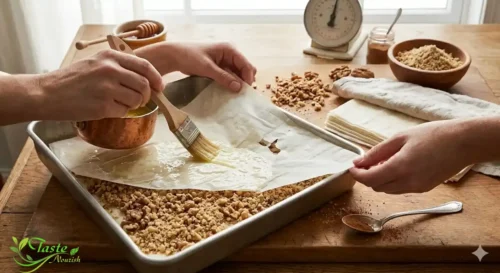
Prepare your pan and butter — Brush a 9×13 inch baking pan generously with melted butter. Preheat your oven to 180°C (350°F).
Begin layering the phyllo — Place one sheet of phyllo in the pan, brush with butter, and repeat this process until you have 8 layered and buttered sheets forming the base. Work quickly and keep unused phyllo covered with a damp towel to prevent drying.
Add the walnut filling — Spread half the walnut mixture evenly over the base phyllo layers.
Continue layering — Add 6 more buttered phyllo sheets, then spread the remaining walnut filling. Finish with a final layer of 8 buttered phyllo sheets on top.
Score the baklava — Using a sharp knife, cut the baklava into diamond or square shapes all the way through. Slice into diamonds or squares before baking, then bake for 30–35 minutes until golden and crisp.
Bake — Bake at 180°C for 35–40 minutes until the top is a deep, even golden brown.
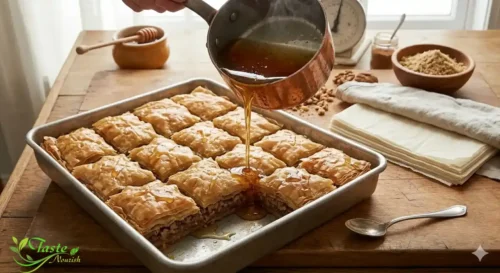
Immediately after removing the baklava from the oven, pour the cold syrup evenly over it. The sizzle you hear is the sound of perfection happening.
The Syrup — The Soul of the Dessert
The syrup plays a crucial role in walnut baklava, providing the sweetness, moisture, and flavor that define the final texture of the pastry.
To prepare the syrup, combine sugar, water, honey, and a cinnamon stick in a saucepan and bring the mixture to a boil.
Reduce the heat and let the syrup simmer for about 10 minutes, or until it slightly thickens.
Add lemon juice during the final minute of cooking to help prevent sugar crystallization.
Stir in orange blossom water for a delicate floral aroma, then remove and discard the cinnamon stick.
For the best results, always match the temperatures of the syrup and baklava—or best results, always ensure a contrast in temperature between the syrup and the baklava: pour hot syrup over cold baklava, or cold syrup over hot baklava..
This technique allows the phyllo layers to absorb the syrup evenly while maintaining their crisp texture.
Allow the baklava to cool completely in the baking tray before serving, giving the syrup enough time to soak into every layer.
Pro Tips for Perfect Walnut Baklava Every Time
Even experienced bakers can struggle with baklava, because phyllo dough is notoriously temperamental and the layering process has no shortcuts. Here are the most important tips that separate good walnut baklava from truly great walnut baklava:
Thaw phyllo properly — Always thaw frozen phyllo overnight in the refrigerator, never at room temperature. This prevents condensation that tears the delicate sheets.
Use clarified butter — Removing the milk solids from butter gives you a cleaner, more golden result and prevents the phyllo from browning too quickly.
Don’t skip layers — Skimping on phyllo layers to save time is the most common rookie mistake. Those layers are what create the architecture of the pastry.
Let it rest — Walnut baklava needs at least 4–6 hours to rest after the syrup is applied before you serve it. Overnight is even better. Patience here is non-negotiable.
Toast your walnuts — Lightly toasting walnuts in a dry pan before chopping them deepens their flavor dramatically and is worth the extra 5 minutes every single time.
Work in a cool kitchen — Warm rooms soften the butter and cause phyllo to stick. A cool, dry environment makes the layering process significantly easier.
Common Mistakes to Avoid
Mistake
Why It Happens
How to Fix It
Soggy layers
Pouring hot syrup over hot baklava
Always match temperatures
Torn phyllo
Working too slowly, sheets dry out
Keep phyllo covered with damp towel
Under-sweetened result
Not enough syrup
Use the full recipe amount
Pale, soft top layer
Oven too low or under-baked
Bake until deep golden brown
Filling falls out
Walnuts chopped too coarsely
Use food processor, not knife
Crystallized syrup
Forgot to add lemon juice
Always include lemon juice
Reader Note: If your baklava looks a little darker than you expected after baking, don’t panic. A deep golden-brown color is exactly what you’re aiming for — pale baklava is under-baked baklava, and under-baked phyllo is chewy rather than crispy.
Nutrition Facts and Health Considerations
Let’s address the elephant in the room. Walnut baklava is not diet food, and it doesn’t pretend to be. It’s a rich, buttery, syrup-drenched pastry that belongs in the “enjoy with intention” category of eating. That said, understanding its nutritional profile helps you appreciate it more fully and incorporate it into your diet sensibly.
A single piece of walnut baklava contains approximately 200 calories, with 4g of protein, 25g of carbohydrates, 10g of fat, and 15g of sugar. These numbers vary based on piece size and recipe specifics, but they give you a solid baseline. Here’s a more detailed nutritional breakdown:
Nutrient
Per 1 Piece (~50g)
% Daily Value
Calories
200–270 kcal
10–13%
Total Fat
10–20g
13–26%
Saturated Fat
3–6g
15–30%
Total Carbohydrates
21–27g
8–10%
Dietary Fiber
2g
7%
Total Sugars
10–15g
—
Protein
3–4g
6–8%
Potassium
107–120mg
3%
Iron
1mg
6%
Calcium
30–33mg
2%
Are Walnuts Actually Good for You?
This is where walnut baklava earns a surprising amount of nutritional credibility despite being a dessert. Walnuts are genuinely one of the most nutritionally impressive nuts available. Walnut baklava is notably higher in antioxidants and omega-3 fatty acids compared to other varieties, and baklava in general provides valuable vitamins and minerals including Vitamin E from the nuts, potassium from both nuts and honey, and magnesium involved in energy production and muscle function.
Omega-3 fatty acids are essential for cardiovascular health and brain function, and walnuts are one of the very few plant sources that provide them in meaningful quantities. The butter and sugar content of baklava do add significant saturated fat and calories, which is why moderation is key — but the walnuts themselves are doing genuine nutritional work in every bite. Think of walnut baklava not as junk food but as an indulgent treat that happens to carry real nutritional value within its richness.
How to Store Walnut Baklava the Right Way
One of the most common questions people have about walnut baklava — whether they’ve made it at home or received it as a gift — is how to keep it fresh without sacrificing that incredible texture. Storage might seem like a minor detail, but handle it wrong and you’ll turn a masterpiece into a soggy disappointment within days.
Here are the storage methods ranked from best to worst for maintaining quality:
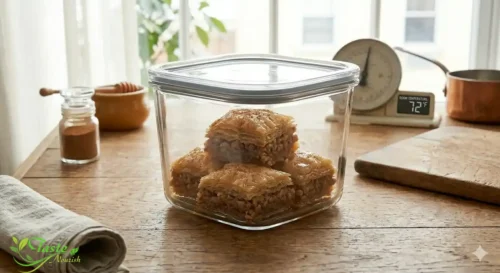
Room temperature (best for short-term) — Baklava is best kept at room temperature in an airtight container, stored in a cool, dry place away from sunlight, with baking paper between layers to prevent sticking, lasting up to 6–10 days for fresh baklava.
Refrigerator (medium-term) — Refrigeration can extend baklava’s shelf life to 1–2 weeks, but it may soften the phyllo layers; to counteract this, wrap tightly in plastic wrap and let it sit at room temperature for about an hour before serving.
Freezer (long-term) — Baklava can last over 6 months in the freezer when stored in an airtight container. Wrap individual pieces in plastic wrap before placing in a freezer-safe container. Thaw overnight in the refrigerator for best results.
Practical Tip: Never store walnut baklava in the refrigerator uncovered. The moisture from the cold air will seep into the phyllo layers and destroy that characteristic crunch almost overnight. Airtight is non-negotiable regardless of which storage method you choose.
Regional Variations of Walnut Baklava Worth Knowing
One of the most beautiful things about walnut baklava is how it shapeshifts across cultures and geographies, each region adding its own personality while preserving the soul of the original. Understanding these variations helps you appreciate just how culturally significant this dessert really is — and it might inspire you to experiment in your own kitchen.
Greek Baklava (Baklava) is probably the most internationally recognized walnut version. It uses honey instead of simple sugar syrup, incorporates cinnamon and cloves into the walnut filling, and often adds a citrus note to the syrup. The result is darker, more aromatic, and more intensely flavored than most other versions.
Lebanese Walnut Baklava tends to use a lighter sugar syrup scented with orange blossom water rather than honey, giving it a more delicate, floral character. The walnut filling is typically less spiced than the Greek version, allowing the natural earthiness of the walnuts and the fragrance of the syrup to dominate.
Syrian Walnut Baklava often features a combination of walnuts and a touch of cinnamon, with a simple sugar syrup that’s lighter in viscosity than Greek versions. Syrian bakers are also known for their incredibly precise cutting techniques, producing diamond shapes of almost mathematical perfection.
Persian-influenced Walnut Baklava introduces rose water and saffron into the equation, creating a version that is more perfumed and exotic, with a golden hue from the saffron that makes it visually stunning alongside its already impressive flavor profile.
Walnut and Orange Blossom Baklava — a variation gaining popularity in contemporary recipe spaces — uses orange blossom water as a secret ingredient that perfumes the baklava perfectly, while a mix of walnuts and almonds forms the rich, nutty filling seasoned with cinnamon and citrus zest.
Where to Buy the Best Walnut Baklava
If making baklava from scratch feels too ambitious right now — or if you just want to benchmark your homemade version against the best commercially available product — knowing where to look matters enormously. Not all store-bought baklava is equal. The quality gap between mass-produced supermarket baklava and authentic artisan baklava from a reputable Middle Eastern bakery is staggering.
Here’s where to look for truly excellent walnut baklava:
Greek or Middle Eastern bakeries — Your single best option. These establishments often follow family recipes passed down for generations, use quality ingredients, and sell baklava fresh rather than pre-packaged.
Turkish sweet shops and specialty confectioners — Even though Turkish baklava typically features pistachios, many Turkish confectioners produce excellent walnut versions for markets where walnuts are preferred.
Online specialty retailers — Several reputable Middle Eastern sweet shops now ship internationally with careful packaging designed to preserve freshness and texture. This is an excellent option if you don’t have local access to authentic baklava.
Greek festivals and cultural events — Seasonal but worth seeking out. Greek community organizations often produce baklava for fundraising events using authentic family recipes, and the quality is typically outstanding.
Supermarket specialty sections — A distant last option for genuine quality, but packaged walnut baklava from reputable Mediterranean food brands is a reasonable everyday option when fresh isn’t available.
A Rich History — From Ancient Civilizations to Modern Tables
To truly appreciate walnut baklava, you need to understand where it came from — and that journey stretches back much, much further than most people expect. This is not a dessert invented in a modern bakery or a trendy patisserie. Its story involves ancient empires, royal palace kitchens, trade routes spanning continents, and centuries of cultural exchange that make its exact origin genuinely contested to this day. What we do know is that baklava — in all its forms — represents one of the most fascinating culinary lineages in human history.
The Assyrian Roots and Ottoman Refinement
Baklava’s history traces back to the Assyrians in 800 BCE, who made a dish with nuts and honey, while the name “baklava” was first formally used in the Ottoman Empire in the 15th century. That’s a remarkable timeline — nearly 3,000 years of continuous evolution.
Think about that for a second. People were layering nuts with dough and honey long before the Roman Empire rose and fell. The dessert as we know it today, however, took its definitive shape in Istanbul’s royal kitchens.
In the 15th century, chefs at Istanbul’s Topkapi Palace mastered rolling phyllo into paper-thin sheets, allowing for hundreds of delicate layers, and baklava became a symbol of wealth and festivity, often reserved for special occasions — the famous Baklava Procession even saw sultans gifting trays of the dessert to the Janissaries during Ramadan. This was not humble street food. Baklava was a statement of power, prestige, and generosity.
Baklava’s reputation as a dish of importance meant it was spread far and wide by bureaucrats along trade routes and pilgrimages during the zenith of the Ottoman Empire in the 16th century, making the dessert a staple across Middle Eastern and Mediterranean cultures, from Algeria to Afghanistan.
How Greece Made Walnut Baklava Its Own
While the Ottoman Empire spread baklava across the known world, it was Greece that most decisively embraced the walnut as its nut of choice and made it central to national identity.
Greek baklava became distinct through the use of walnuts, warm spices like cinnamon, and honey-based syrup, while Turkish versions often highlight pistachios and lighter sugar syrup. This regional differentiation wasn’t arbitrary — it reflected what was locally abundant and culturally preferred. Greek walnut trees had been producing nuts for millennia, and Greek cooks understood intuitively that walnuts paired beautifully with the dark floral sweetness of local honey.
In Greece, walnuts became the nut of choice, with cinnamon used to flavor the filling, creating a flavor profile that is warmer, more rustic, and arguably more complex than the pistachio-forward Turkish style. Today, Greek-style walnut baklava is arguably the most widely recognized version in Western countries, particularly in the United States where Greek-American communities helped popularize it through restaurants, bakeries, and festivals for generations.
Conclusion
Walnut baklava is far more than a dessert. It’s a living artifact of culinary history, a celebration of simple ingredients elevated through skill and patience, and a genuinely universal pleasure that transcends cultural boundaries. From its earliest ancestors in ancient Assyrian kitchens to the refined phyllo mastery of the Ottoman palace and the warm, honey-soaked Greek tradition that brought it to the Western world, walnut baklava has earned every bit of its legendary status.
Whether you’re baking it for the first time, exploring its regional variations, or simply looking for the best place to buy a perfect piece, understanding the craft and history behind this iconic pastry makes every bite taste even better. Toast your walnuts, layer your phyllo with care, pour that syrup hot and generous — and enjoy one of the world’s greatest sweet gifts.
Walnut Baklava FAQs
What is the difference between walnut baklava and pistachio baklava?
The primary difference lies in the nut filling and flavor profile. Walnut baklava delivers a deeper, earthier, and more robust flavor with warm spices like cinnamon, and typically uses honey-based syrup. Pistachio baklava offers a lighter, more buttery sweetness with a brighter green color and is more commonly associated with Turkish tradition. Both are exceptional, but walnut baklava tends to be richer and more complex in flavor.
Can I make walnut baklava ahead of time?
Absolutely — and in fact, walnut baklava is one of those rare desserts that genuinely improves with time. Making it 24–48 hours before serving allows the syrup to fully penetrate the layers and the flavors to meld beautifully. Store it at room temperature in an airtight container and it will be in peak condition by the time you serve it.
Why did my walnut baklava turn out soggy instead of crispy?
Sogginess almost always comes from one of two causes: pouring cold syrup over hot baklava (or vice versa), or using too much syrup. Always match syrup temperature to baklava temperature, and allow the baklava to rest uncovered for the first 30 minutes after syrup application so steam can escape before you cover it.
Is walnut baklava gluten-free?
Traditional walnut baklava is not gluten-free because it uses phyllo dough made from wheat flour. However, gluten-free phyllo dough alternatives are increasingly available at specialty health food stores, and these can be substituted in any walnut baklava recipe with good results, though the texture may differ slightly from the wheat original.
How many layers of phyllo should walnut baklava have?
Most authentic recipes recommend between 18 and 22 total phyllo layers — typically 8 layers on the bottom, 6 in the middle (between walnut filling layers), and 8 on top. The bottom layers provide structural support, the middle layers separate the filling, and the top layers create that iconic golden, flaky crust. Fewer layers will produce a less structured, less satisfying result.
Hanan Abo Samra is the founder of Taste & Nourish, sharing trustworthy nutrition guidance and recipes drawn from 20+ years of hands-on cooking experience. When she's not developing new recipes, Hanan is researching the science behind everyday ingredients to bring readers practical, evidence-based guidance for a healthier lifestyle.