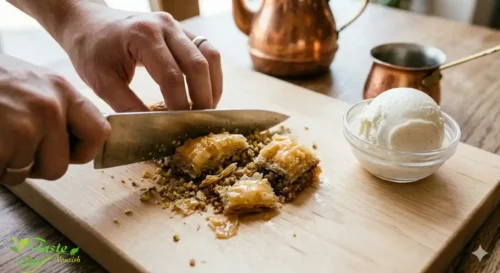
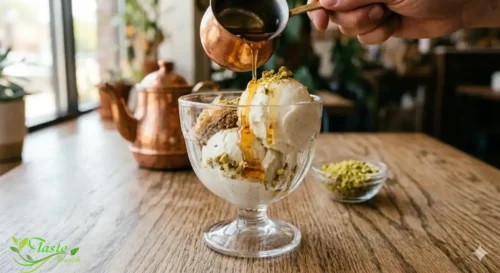
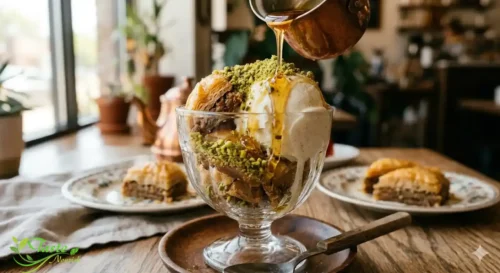
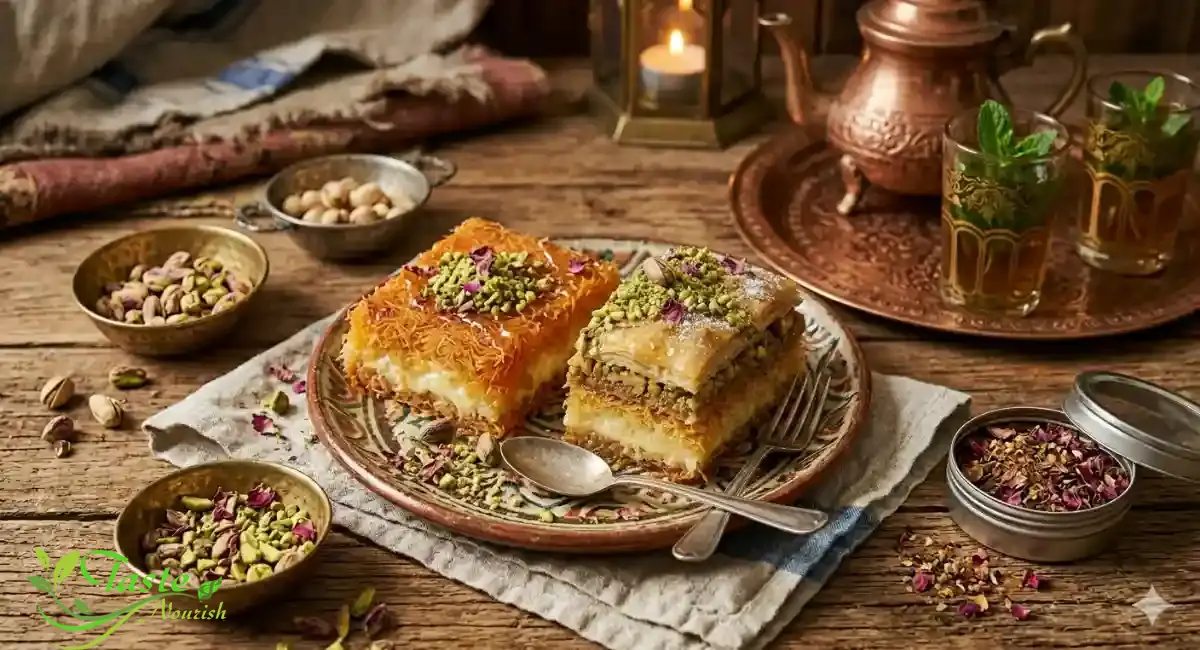
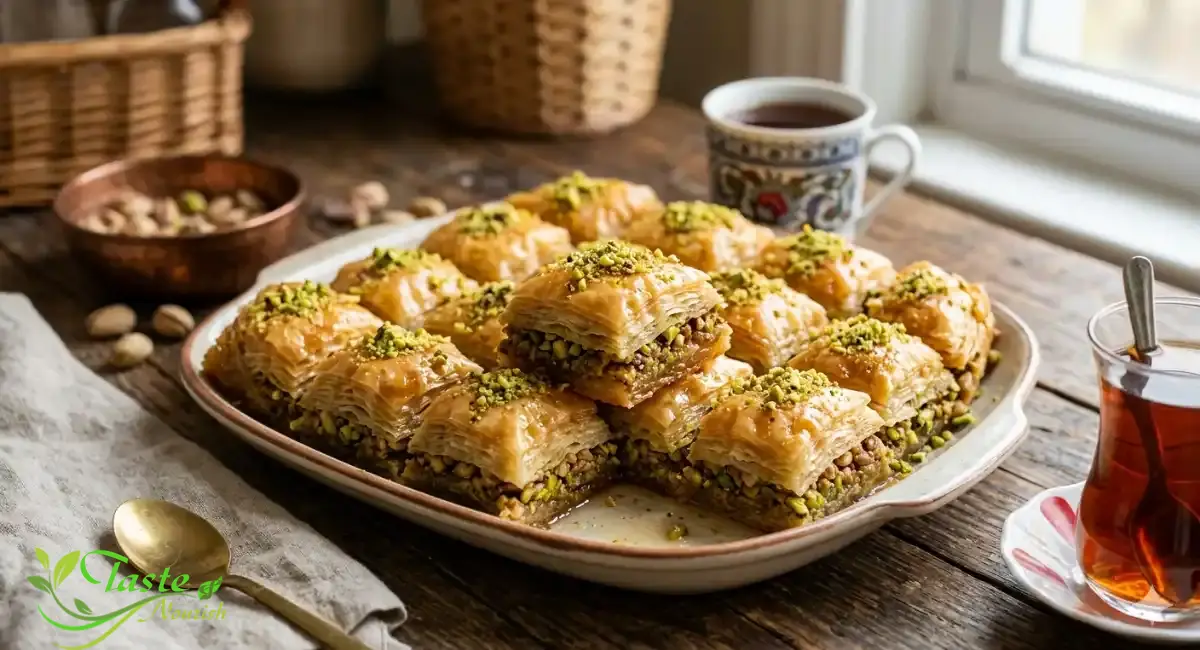
Have you ever taken a bite of something and immediately thought, why didn’t someone invent this sooner? That’s exactly what happens the moment baklava and ice cream meet in the same bowl. It sounds almost too indulgent — layers of flaky, honey-drenched phyllo pastry loaded with crushed pistachios and walnuts, sitting right next to a scoop of creamy, cold ice cream — but somehow, the combination just works.
It works in a way that feels both familiar and completely revelatory at the same time. Whether you’re a lifelong baklava devotee or someone discovering Middle Eastern desserts for the first time, this fusion is the kind of thing that makes you rethink what dessert can actually be.
The trend of pairing baklava with ice cream has been picking up real momentum across food blogs, restaurants, and home kitchens alike. People have figured out what Greek festival vendors and Lebanese pastry shops have long known: warm, syrup-soaked pastry and cold, rich ice cream create a sensory experience that neither can deliver alone. This article dives deep into everything you need to know about this extraordinary dessert pairing — from its cultural roots and flavor science, to step-by-step recipes, nutrition facts, creative variations, and expert serving tips. Get ready, because your dessert game is about to change permanently.
Best Ice Cream Flavors to Pair With Baklava
Classic Vanilla — The Gold Standard
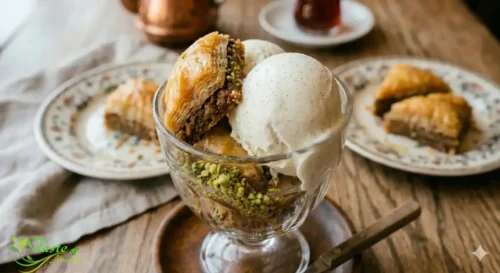
When it comes to pairing ice cream with baklava, vanilla ice cream is the undisputed champion — and for good reason. Vanilla’s clean, floral sweetness doesn’t compete with baklava’s complex honey-and-nut flavors; instead, it provides a neutral, creamy backdrop that lets every other element shine.
Vanilla ice cream lets the baklava flavor shine without competition, though you can experiment with other ice cream flavors based on personal preference and taste. It’s the dessert equivalent of choosing a white canvas — the simplicity is the point, because it gives the boldness of the baklava somewhere to land. This is especially true when you’re working with a high-quality, full-fat vanilla ice cream that has a genuine depth of flavor rather than a synthetic sweetness.
That said, “vanilla” doesn’t have to mean boring. A Madagascar vanilla bean ice cream, a Tahitian vanilla with its slight cherry-and-anise notes, or even a vanilla ice cream infused with a dash of cinnamon can transform the pairing from straightforward to spectacular. The key is that whatever ice cream you choose, it should complement the baklava rather than overwhelm it.
Think of the ice cream as the supporting actor — it’s there to make the baklava look and taste even better than it would on its own.
Pistachio, Honey, and Cinnamon Ice Cream Pairings
If vanilla is the safe and brilliant choice, then pistachio ice cream is the adventurous one — and arguably even more exciting. Since pistachios are one of baklava’s primary nut fillings, pairing the pastry with pistachio ice cream creates an intensified echo of the same flavor profile.
Cinnamon, honey, praline, butter pecan, pistachio, and mastic ice cream flavors all pair perfectly with baklava, offering different ways to complement the pastry’s warm, aromatic spice notes.
Honey ice cream is another natural pairing that amplifies baklava’s most defining flavor — the golden syrup that soaks every layer.
A cinnamon ice cream, meanwhile, introduces warmth that mirrors the spicing inside the pastry itself, creating a harmonious resonance between the two components rather than contrast.
Butter pecan deserves a special mention here because its caramel-edged nuttiness works beautifully with the walnut and almond fillings common in many baklava varieties. The slight saltiness of butter pecan ice cream also helps cut through the intense sweetness of the honey syrup, providing a balance that vanilla alone can’t always achieve.
Whatever nut-forward or spice-forward flavor you choose, you’re really just doubling down on what makes baklava great — and that’s never a bad strategy.
Exotic Options: Rose Water, Mastic, and Orange Blossom
For those who want to take the pairing to its most authentic cultural expression, ice creams flavored with rose water, orange blossom water, or mastic are the way to go.
Vanilla, pistachio, coffee, maple walnut, honey vanilla, and flavors laced with rose or orange blossom water would all be great pairings for baklava, with even more adventurous options like lemon lavender basil ice cream pairing surprisingly well.
Mastic ice cream — a Greek specialty known as “kaimaki” — has a uniquely resinous, slightly pine-like flavor that is deeply traditional in the Levant and pairs with baklava in a way that feels almost ceremonially correct.
Rose water ice cream, popular in Turkish and Persian cuisine, brings a floral delicacy that echoes the aromatic syrups poured over many regional baklava varieties.
These exotic pairings aren’t just about novelty — they’re about honoring the cultural heritage of the dessert. When you serve Lebanese-style pistachio baklava alongside a scoop of rose water ice cream drizzled with honey, you’re not just making a delicious dessert. You’re creating an edible love letter to an entire culinary tradition that stretches back centuries. That’s the kind of depth that takes a dessert from a snack to an experience.
Ice Cream Flavor Pairing Guide for Baklava
Ice Cream Flavor
Pairing Strength
Best Baklava Type
Flavor Notes
Vanilla Bean
★★★★★
Any variety
Neutral, lets baklava shine
Pistachio
★★★★★
Pistachio or mixed nut
Amplifies nut flavors
Honey Vanilla
★★★★☆
Walnut or almond baklava
Deepens honey notes
Cinnamon
★★★★☆
Walnut baklava
Warm spice harmony
Mastic (Kaimaki)
★★★★☆
Greek or Turkish style
Traditional, resinous
Rose Water
★★★★☆
Lebanese pistachio baklava
Floral, aromatic
Coffee
★★★☆☆
Dark walnut baklava
Bitter contrast
Butter Pecan
★★★☆☆
Mixed nut baklava
Caramel-salt balance
How to Make Baklava Ice Cream from Scratch
The French Custard Base Method
Making homemade baklava ice cream from scratch is a project, but it’s one that rewards you with something truly extraordinary — a frozen dessert that captures every nuance of the original pastry in creamy, scoo pable form.
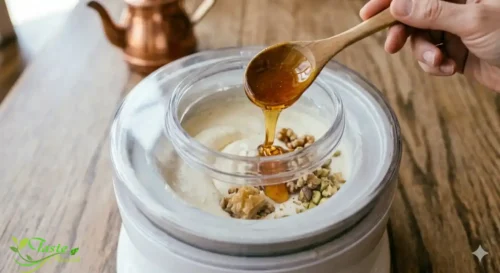
A classic French-style ice cream base that starts with a rich and thick custard is the ideal foundation for baklava ice cream, with honey added to sweeten the recipe while contributing richness and authentic baklava flavor throughout the custard.
The custard base method involves creating a cooked egg yolk and cream mixture (called a crème anglaise), which, once chilled and churned in an ice cream maker, produces an incredibly smooth, dense, and luxurious ice cream that can carry the bold flavors of baklava without getting lost.
The key ingredients include phyllo dough, nuts (walnuts and pistachios), honey, and a simple ice cream base of heavy cream, milk, and sugar; the baklava is baked to a golden crisp, followed by a sweet syrup pour, with the cooled baklava then mixed into the ice cream base before churning, with the ice cream maker being crucial for achieving a creamy texture and requiring at least 4 hours of freezing for firm consistency.
The most important detail at this stage is patience — rushing the freezing process produces icy, grainy ice cream rather than the silky, creamy result you’re after. Make the custard the day before, chill it overnight, then churn and freeze for best results.
The No-Churn Method for Beginners
Not everyone has an ice cream maker, and that’s perfectly okay — because the no-churn baklava ice cream method is nearly as delicious and dramatically simpler.
The no-churn method involves pouring whipping cream into a large bowl, mixing with a hand mixer on medium-high speed until soft peaks form, then using a spatula to fold in sweetened condensed milk and vanilla extract before pouring the ice cream base into a freezer-safe container, slowly adding chopped baklava and pistachio when the ice cream is almost completely done, and sealing the container to freeze for at least 6 hours.
The beauty of this method is its simplicity — there’s no cooking, no tempering, no special equipment. The sweetened condensed milk handles both the sweetness and the structure, while the whipped cream provides air and lightness. The result is a soft-serve-style ice cream with a slightly denser texture than churned versions, but the flavor? Absolutely phenomenal.
♦ Tips for Getting the Perfect Texture
Getting the texture right is where most homemade ice cream attempts either soar or stumble. Here are the most important tips to keep in mind:
Freeze your ice cream maker bowl for at least 24 hours before churning — a partially frozen bowl produces grainy ice cream.
Cool your baklava pieces completely before folding them in; warm baklava melts the ice cream base and creates uneven chunks.
Use full-fat dairy — this is not the place for reduced-fat cream or skimmed milk. Fat is what creates that smooth, creamy texture.
Add orange blossom water or rose water sparingly — a teaspoon or two is enough to perfume the entire batch; too much creates a soapy flavor.
Press parchment paper directly onto the surface of the ice cream before sealing to prevent freezer burn and ice crystal formation.
The Baklava Ice Cream Sundae: A 10-Minute Showstopper
“A quick and stunning 10-minute dessert that layers crispy phyllo dough, vanilla ice cream, spiced pistachios and walnuts, and warm honey drizzle — all the flavors of traditional baklava in sundae form.”
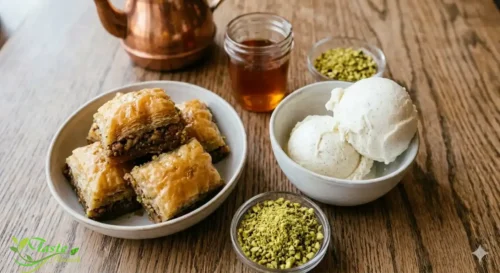
Here’s where things get really exciting — and really accessible. You don’t need to make ice cream from scratch or spend hours baking baklava to experience this magical combination. The Baklava Ice Cream Sundae captures the traditional flavors of the iconic Middle Eastern pastry with absolutely no fuss required, delivering layers of crispy phyllo dough, store-bought vanilla ice cream, aromatic spiced nuts, and warmed honey in just 10 minutes.
This is the kind of dessert you can pull together on a Tuesday night when you want something extraordinary but don’t have the energy for a full baking project. It delivers about 95% of the experience of homemade baklava ice cream with maybe 5% of the effort — and that ratio is pretty hard to argue with.
The assembly is almost meditative in its simplicity — and following the right order makes all the difference:
Add a base of crispy phyllo to the bottom of four small serving cups, creating a crunchy foundation that supports everything above it.
Top with one scoop of ice cream, placing it directly over the phyllo so the cold cream begins to contrast with the crispy layers beneath.
Add a tablespoon of the spiced nut mixture over the ice cream, followed by a generous drizzle of warmed honey to replicate that authentic baklava sweetness.
Repeat the layers — more crispy phyllo, another scoop of ice cream, more nuts, and a final drizzle of honey — ensuring every spoonful contains a bit of everything: crispy pastry, cold cream, warm honey, and crunchy nuts.
Serve immediately the moment assembly is complete; the phyllo starts to soften the instant it meets the ice cream, so this is a dessert that truly rewards speed — and rewards eating without hesitation.
Baklava Ice Cream Sundae — Quick Assembly Guide
Layer
Component
Purpose
Base
Crispy fried or baked phyllo
Crunch foundation
First
1 scoop vanilla ice cream
Creamy coolness
Second
Spiced nut mixture (cinnamon + sugar)
Warmth and texture
Third
Warm honey drizzle
Authentic baklava sweetness
Repeat
More phyllo + ice cream + nuts
Layered complexity
Top
Final honey drizzle + optional rose water
Finishing aromatic touch
Nutrition Facts and Health Considerations
What’s Actually in Your Baklava Ice Cream Dessert?
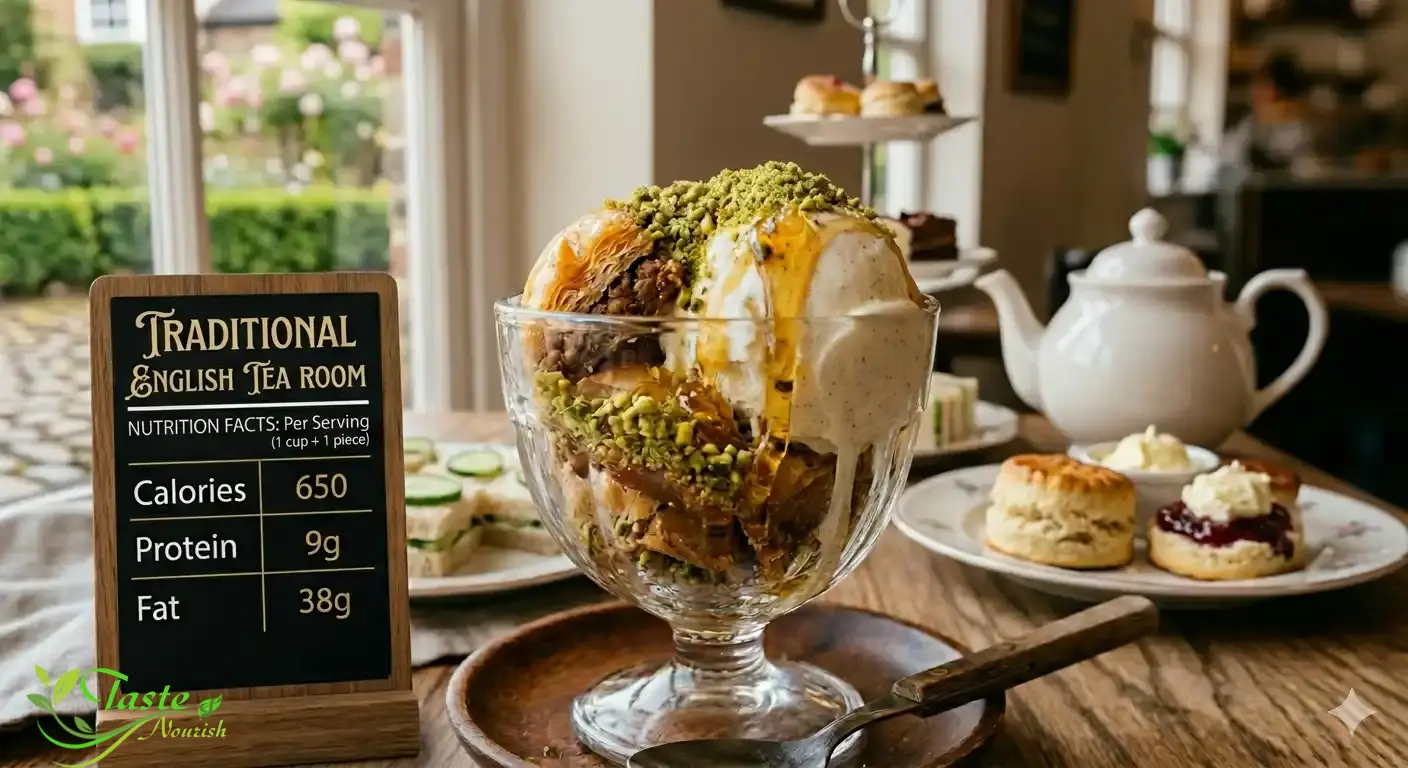
Let’s be honest about what baklava and ice cream is: it’s an indulgence, and there’s no nutritional spin that changes that fundamental fact. But indulgences can still be understood, and understanding the nutrition helps you enjoy this dessert mindfully rather than guiltily.
One cup of baklava with ice cream weighs approximately 238 grams and contains around 714 calories, with 9.5 grams of protein, 34.9 grams of fat, and 87.3 grams of carbohydrates — a decadent combination that merges the nutritional profiles of both desserts into one rich serving.
That’s a significant caloric load, but it’s worth noting that it comes with genuine nutritional content — not just empty calories.
While baklava and ice cream is undeniably an indulgence, it does come with some genuine nutritional value worth knowing about:
Nuts in baklava deliver real nutrients — the walnuts, pistachios, and almonds packed into every layer provide healthy monounsaturated and polyunsaturated fats that actively support cardiovascular health and help maintain healthy cholesterol levels.
Walnut baklava is particularly rich in antioxidants and omega-3 fatty acids, making it one of the most nutritionally valuable nut varieties you can choose when selecting or preparing your baklava.
Pistachio baklava brings its own nutritional strengths, being notably high in vitamin B6 and copper — two essential micronutrients that support energy metabolism, immune function, and nervous system health.
Honey baklava is higher in carbohydrates but delivers the natural benefits of pure honey, including enzymes, trace minerals, and antioxidant compounds that refined sugar simply cannot offer.
The ice cream component adds calcium, dairy protein, and fat-soluble vitamins such as vitamins A, D, E, and K — nutrients that support bone health, immunity, and overall body function.
None of this makes baklava ice cream a health food — but it does mean that when you treat yourself, you’re getting something genuinely substantive rather than purely empty calories.
Baklava and Ice Cream — Nutrition Facts Table
Nutrient
Baklava (100g)
Vanilla Ice Cream (100g)
Combined Serving (238g)
Calories
433 kcal
~207 kcal
~714 kcal
Protein
6.6g
3.5g
9.5g
Total Fat
29g
11g
34.9g
Carbohydrates
37.8g
24g
87.3g
Sugar
~25g
~21g
~46g
Calcium
Moderate
High
High
Values are approximate and vary based on recipe and serving size.
Variations, Toppings, and Creative Twists
The world of baklava ice cream doesn’t begin and end with the classic combination — there are dozens of ways to riff on the theme and make it your own. Rose water can be swapped for orange blossom water for a subtle floral twist, while lemon zest offers a citrusy kick that levels out the sweetness and makes for a truly unique ice cream experience. These aromatic additions cost almost nothing but deliver enormous flavor dividends. They’re the kind of small details that separate a good dessert from an unforgettable one.
When it comes to toppings and presentation, the options are genuinely exciting — here are the best ways to take your baklava and ice cream to the next level:
Nut crumbles made from finely crushed pistachios, almonds, or walnuts are the most natural topping choice, enhancing both the visual appeal of the dessert and delivering that satisfying crunch that makes every spoonful more interesting.
A drizzle of warm honey over the assembled dessert is non-negotiable — the golden, sticky sweetness creates a luscious combination with the cold, creamy ice cream and ties the whole dish back to its baklava roots.
Caramel sauce adds a rich, buttery twist that deepens and enhances the nuttiness of the baklava, offering a slightly different sweetness profile that works especially well with walnut or almond varieties.
Dried edible rose petals sprinkled over the top add instant visual drama and a subtle floral aroma that echoes the rose water used in many traditional Middle Eastern baklava recipes.
A dusting of ground cardamom introduces gentle warmth and spice, complementing the cinnamon notes already present in the baklava filling without overwhelming the other flavors.
A few shards of dark chocolate provide a bittersweet counterpoint to all that honey and sweetness, adding sophistication and a modern twist to what is otherwise a very traditional dessert combination.
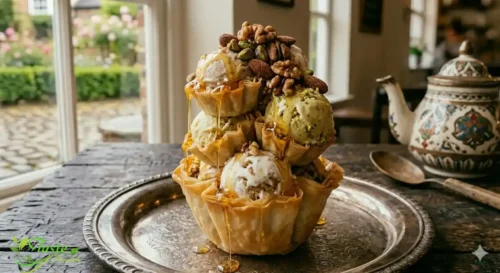
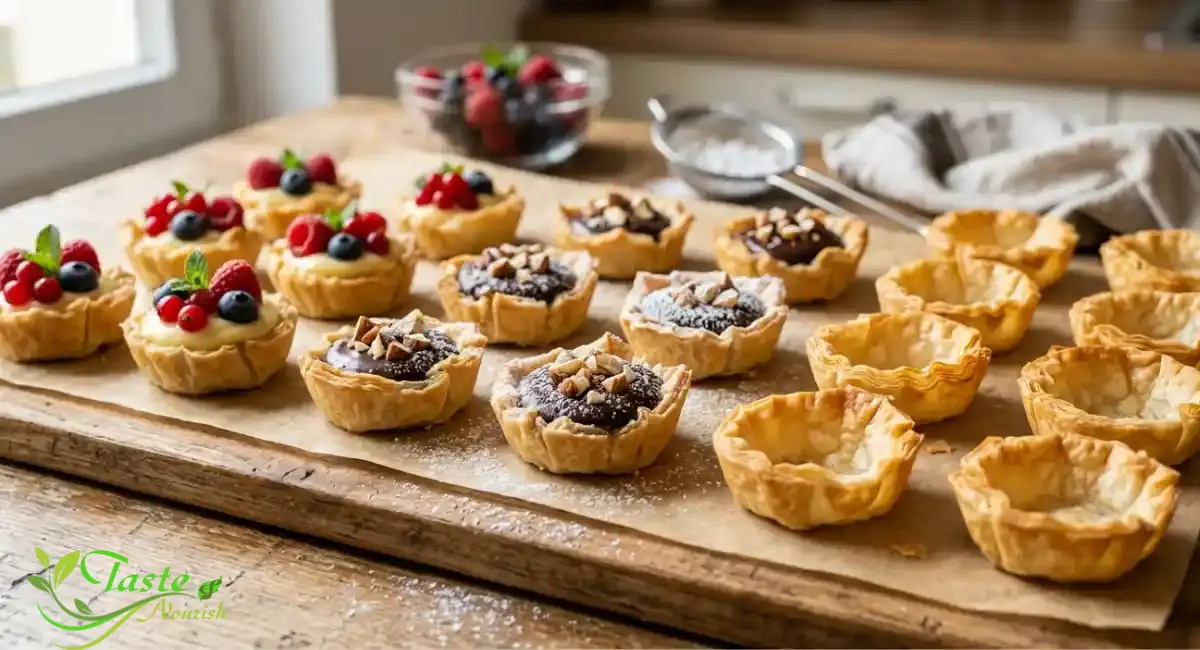
Mini phyllo cups — available pre-made at most grocery stores — are the ultimate presentation hack, turning the dessert into a self-contained, single-serve showpiece that looks like it took far more effort than it actually did.
One creative variation worth highlighting is the healthy baklava ice cream approach, which makes the dessert accessible to those watching their calorie intake. A healthy baklava ice cream version can be created with just 170 calories and 6 grams of fat per serving while delivering 14 grams of protein, using Greek yogurt, evaporated milk, raw honey, and whole grain crispbreads broken into pieces as a substitute for phyllo, along with chopped pistachios for authentic flavor.
It’s not identical to the traditional version, but it’s a remarkably satisfying alternative that lets you enjoy the essential experience of the pairing without quite as much nutritional consequence.
What Makes Baklava and Ice Cream Such a Perfect Match?
The Magic of Contrasting Temperatures and Textures
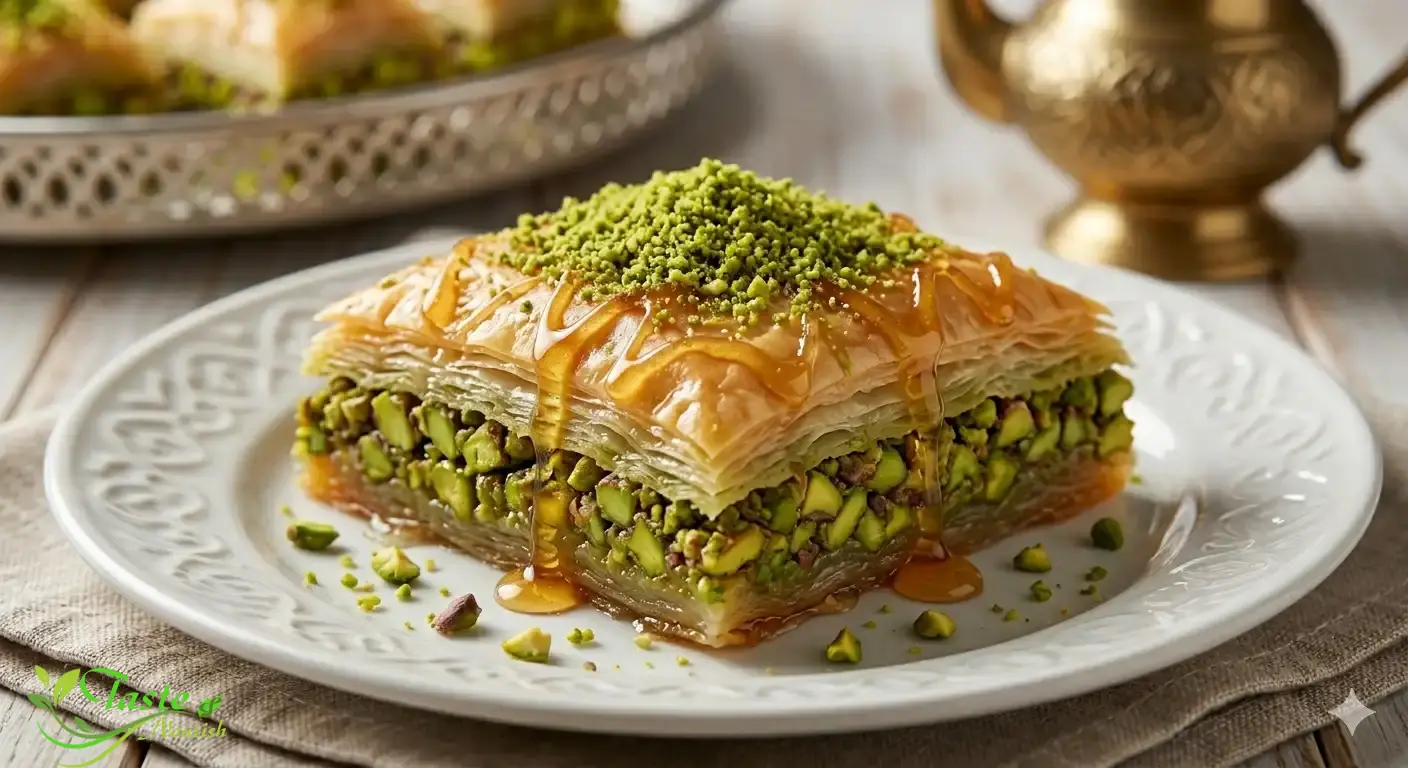
Think about what baklava brings to the table on its own: shattering layers of crispy phyllo dough, dense and earthy chopped nuts, and a syrup so sweet and fragrant it practically perfumes the room. It’s an experience that’s deeply satisfying, but also intensely rich. Now imagine that richness cut by the cold, airy creaminess of ice cream — suddenly, every single element is elevated.
The temperature contrast between warm or room-temperature baklava and cold ice cream is one of the most underrated pleasures in the dessert world, similar to how a warm chocolate lava cake next to a scoop of vanilla ice cream turns a simple dish into something extraordinary. The contrast is not just physical; it’s psychological. Your palate gets excited because it’s receiving two completely opposite sensations at once.
The creamy ice cream paired with sweet and nutty baklava pieces creates a delightful flavor combination that is sure to impress guests and elevate the dessert experience beyond what either treat offers alone. The texture interplay is equally important — the crunch of phyllo against the silk of ice cream, the chew of syrup-soaked nuts against cold cream — it’s a multi-layered experience that keeps every bite interesting.
There’s a reason food scientists call this kind of layering “textural contrast,” and it’s one of the foundational principles behind why certain dishes become iconic. Baklava ice cream takes that principle and pushes it to its logical, delicious extreme.
A Cultural Fusion That Works
We live in an era where dessert fusion is everywhere, but not all combinations survive contact with reality. Baklava and ice cream is one of the rare fusions that doesn’t feel forced — it feels like these two desserts were quietly meant for each other all along.
From Egypt throughout the Middle East and across the Mediterranean, baklava is a world favorite, shaped by influences from Armenian cinnamon and cloves, Arab rose water and orange blossom, Persian diamond-cut techniques, and Lebanese pistachio fillings.
Ice cream, on the other hand, is the universal dessert language — virtually every culture has its own version. When these two culinary traditions collide, you don’t get confusion; you get complexity. You get a dessert that tells a story with every single bite.
The History Behind Baklava: A Dessert Born From Empires
How Baklava Traveled the World
To truly appreciate baklava with ice cream, it helps to understand what baklava actually is — and where it came from. Baklava is one of the world’s oldest surviving desserts, with origins tracing back to the kitchens of the Ottoman Empire. Some culinary historians believe its earliest forms were baked in the imperial kitchens of Topkapi Palace in Istanbul, where royal chefs layered paper-thin dough with nuts and honey to impress sultans and visiting dignitaries.
Over centuries, the dessert spread across the Middle East, the Balkans, the Caucasus, and into Greece, with each culture adding its own signature touch — rose water here, cardamom there, pistachios instead of walnuts, or a syrup flavored with orange blossom instead of plain honey. By the time baklava reached the modern era, it had become a dessert that belongs equally to a dozen different culinary traditions, each claiming it passionately as their own.
What’s remarkable about baklava’s staying power is how well it has adapted. It doesn’t need much reinvention to feel relevant — its core combination of flaky pastry, crushed nuts, and honey syrup is essentially timeless.
Baklava is a unique treat found in Greece and various Middle Eastern countries, where crisp layers of phyllo dough mingle with sweet honeyed walnuts in what has proven to be an irresistible combination across centuries of dessert history.
Pairing it with ice cream is, in many ways, just the latest chapter in a very long story of adaptation and reinvention — and it’s arguably one of the best chapters yet.
Storing and Serving Baklava Ice Cream Like a Pro
Storing homemade baklava ice cream properly is the difference between a frozen dessert that tastes incredible a week later and one that develops the texture of flavored ice chips.
The most important rule: always press a layer of plastic wrap or parchment paper directly against the surface of the ice cream before sealing the container.
This eliminates the air gap where ice crystals form, keeping your ice cream smooth and scoopable.
Store it in the coldest part of your freezer — usually the back, not the door — and aim to consume it within two weeks for peak quality, though it will technically keep for up to a month.
Baklava pieces can be prepared in advance and stored in an airtight container at room temperature for up to 2 days or frozen for up to 1 month, giving you the flexibility to prepare components separately and assemble the dessert when ready to serve. This make-ahead approach is particularly useful when entertaining — you can have everything prepped and portioned, then assemble individual sundaes at the table for a moment of dessert theater that guests absolutely love.
When it comes to serving, remove the ice cream from the freezer about 5 minutes before scooping; it should yield to a scoop with slight resistance rather than being rock solid.
Pro tip: Warm your baklava pieces very slightly in the microwave (10-15 seconds) right before serving alongside the ice cream. The contrast between the warm, syrupy pastry and the cold cream is at its most dramatic and delicious when the temperature difference is maximized. This one small step transforms a good dessert combination into a genuinely memorable experience.
Conclusion
Baklava and ice cream is one of those rare dessert combinations where the whole genuinely exceeds the sum of its already extraordinary parts. It brings together centuries of pastry-making tradition from the Middle East and Mediterranean with the universal appeal of cold, creamy ice cream — and the result is something that feels both ancient and completely modern.
Whether you’re crafting a full homemade baklava ice cream from scratch using a French custard base, throwing together a 10-minute sundae with store-bought ingredients, or experimenting with rose water and mastic flavors to honor the dessert’s cultural roots, the pairing delivers every single time.
The beauty of this combination is also its flexibility. There’s a version for every skill level, every occasion, and every budget — from an elegant dinner party dessert served in phyllo cups to a casual weeknight treat assembled in minutes. The nutritional reality is that this is an indulgence best enjoyed occasionally, but when you do indulge, you might as well indulge in something extraordinary. And baklava with ice cream? That qualifies, without a single reservation.
Baklava and Ice Cream FAQs
What is the best ice cream to serve with baklava?
Vanilla bean ice cream is the most popular and universally praised pairing because its neutral sweetness allows the complex flavors of baklava — honey, nuts, and butter — to take center stage. However, pistachio, honey vanilla, cinnamon, and rose water ice cream are all excellent options that intensify or complement baklava’s flavor profile in different and equally delicious ways.
Can I make baklava ice cream without an ice cream maker?
Absolutely. The no-churn method requires only heavy whipping cream, sweetened condensed milk, vanilla extract, and your baklava add-ins. Whip the cream to soft peaks, fold in the condensed milk and flavorings, stir in the chopped baklava pieces, and freeze for at least 6 hours. The texture is slightly denser than churned ice cream but the flavor is genuinely outstanding.
How long does homemade baklava ice cream last in the freezer?
Homemade baklava ice cream keeps well for up to 2-3 weeks when stored in an airtight container with parchment paper pressed directly against its surface. After this point, ice crystals tend to form and the texture degrades. The baklava pieces inside may also soften over time, so the ice cream is at its textural best within the first 7-10 days.
What nuts work best in baklava ice cream?
Pistachios and walnuts are the most traditional choices, each bringing distinct character — pistachios are buttery and mild with a beautiful green color, while walnuts are earthier and slightly bitter, which balances the sweetness of honey. Almonds and cashews also work well. For the most complex flavor, use a mixture of two or three nut varieties rather than relying on a single one.
Is baklava ice cream suitable for people with dietary restrictions?
Traditional baklava ice cream contains gluten (phyllo dough), dairy (cream and milk), eggs (in custard-based recipes), and tree nuts — making it unsuitable for people with those specific allergies or intolerances. However, modifications are absolutely possible: gluten-free phyllo alternatives or crushed gluten-free crispbreads can replace phyllo dough, and coconut cream can substitute for dairy cream to create a dairy-free version. Always check ingredient labels carefully when accommodating dietary needs.
Hanan Abo Samra is the founder of Taste & Nourish, sharing trustworthy nutrition guidance and recipes drawn from 20+ years of hands-on cooking experience. When she's not developing new recipes, Hanan is researching the science behind everyday ingredients to bring readers practical, evidence-based guidance for a healthier lifestyle.