Meal-prepped a big batch of quinoa on Sunday and now it’s Thursday? You’re probably asking the same question thousands of home cooks type into Google every week: how long does cooked quinoa last before it’s no longer safe to eat. The short answer is a few days in the refrigerator, but the real answer depends on how you cooled it, how you stored it, and how careful you were during that first two-hour window after cooking.This guide breaks down the exact timelines, the food-safety reasoning behind them, and the habits that make quinoa one of the easiest whole grains to prep ahead of time.
How long does cooked quinoa last? Properly stored cooked quinoa lasts about 3 to 4 days in the refrigerator at 40°F (4°C) or below, and roughly 2 months in the freezer for best texture and flavor. It should never sit out at room temperature for more than 2 hours. These timelines follow standard USDA guidance for cooked grains and other cooked leftovers.
Key Takeaways: How Long Does Cooked Quinoa Last?
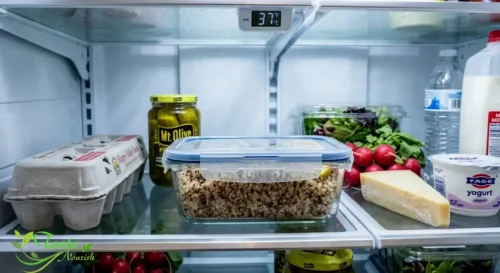
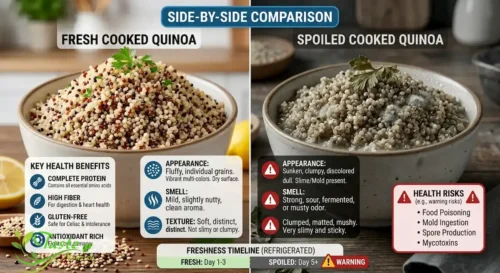
How long does cooked quinoa last? Plan on 3 to 4 days in the fridge, stored in an airtight container at or below 40°F.
Cool cooked quinoa within 2 hours of cooking to slow bacterial growth before it goes in the fridge.
Frozen cooked quinoa keeps its texture best for about 2 months, though it stays safe well beyond that if kept solidly frozen.
Skip the smell test alone — some spoilage bacteria don’t change the way food looks, smells, or tastes.
Quinoa is a complete protein and naturally gluten-free, which makes it worth batch-cooking correctly in the first place.
What Is Quinoa?
Quinoa (pronounced “keen-wah”) isn’t technically a grain at all — it’s the edible seed of a flowering plant related to spinach and beets. It’s been cultivated in the Andean region of South America, including present-day Bolivia, Peru, Ecuador, and Chile, for thousands of years. Because it’s cooked and eaten the same way as rice or couscous, it’s commonly grouped with whole grains in nutrition guidance, including Harvard T.H. Chan School .
Raw quinoa seeds are coated in saponins, a bitter, soap-like compound that acts as a natural pest deterrent. Most packaged quinoa sold in the U.S. is pre-rinsed, though a quick rinse before cooking never hurts.
Quinoa Nutrition Facts
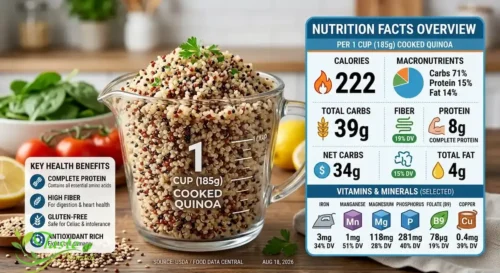
Nutrient values below are for 1 cup (185g) of cooked quinoa, based on data from USDA FoodData Central.
Nutrient
Amount per Cup Cooked
% Daily Value
Calories
222 kcal
11%
Protein
8.1 g
16%
Carbohydrates
39.4 g
14%
Dietary Fiber
5.2 g
19%
Total Fat
3.6 g
5%
Iron
2.8 mg
15%
Magnesium
118 mg
28%
Phosphorus
281 mg
22%
Folate
78 mcg
19%
Manganese
1.2 mg
51%
Health Benefits of Quinoa
Quinoa’s nutritional reputation is well earned, though it’s worth keeping the claims proportionate to what the evidence actually shows.
Complete plant protein: Quinoa contains all nine essential amino acids, which is unusual for a plant food and makes it a useful protein source for vegetarian and vegan diets.
Fiber for digestion and fullness: At 5 grams of fiber per cooked cup, quinoa may help support regularity and steadier blood sugar compared with refined grains.
Naturally gluten-free: Quinoa is safe for people with celiac disease or non-celiac gluten sensitivity, as long as it’s prepared without cross-contact with gluten-containing grains.
Mineral density: It’s a meaningful source of magnesium, phosphorus, manganese, and folate, nutrients many Americans don’t get enough of.
Scientific Evidence
According to the Nutrition Source , quinoa’s status as a complete protein sets it apart from most other plant-based staples, which typically fall short on one or more essential amino acids. Its fiber and protein combination is also consistent with research on whole grains more broadly, which suggests that replacing refined grains with intact, minimally processed grains may help support healthy blood sugar and cardiovascular markers over time.
Research on quinoa specifically is still smaller in scope than research on staples like rice or wheat, since it’s a relatively recent addition to the mainstream American diet. Most of the strongest evidence for grains in general — including quinoa — comes from studies on whole-grain intake patterns rather than quinoa in isolation, so it’s reasonable to view quinoa as one solid piece of a balanced diet rather than a cure-all.
Potential Risks & Side Effects
Saponin residue — Unrinsed quinoa can taste bitter and may cause mild digestive upset in sensitive people.
Oxalates — Quinoa contains oxalates, compounds that may contribute to kidney stone formation in people who are prone to them.
Phytic acid — Like most whole grains and legumes, quinoa contains phytic acid, which can modestly reduce absorption of iron and zinc from the same meal.
Foodborne illness from improper storage — Cooked starchy foods, including rice, pasta, and grains like quinoa, can support the growth of Bacillus cereus if left at room temperature too long. A well-documented CDC-investigated outbreak linked to improperly cooled rice at two child day care centers illustrates how quickly this can happen with starchy cooked foods that sit out.
Who Should Be Cautious With Quinoa?
Quinoa is well tolerated by most people, but a few groups may want to check with a healthcare provider or registered dietitian before eating it regularly:
People with a history of calcium oxalate kidney stones
Infants and toddlers, who need it well-cooked, soft, and appropriately sized to reduce choking risk
Anyone with a known grain or seed allergy, though true quinoa allergies are rare
People managing chronic kidney disease, since quinoa is relatively high in phosphorus and potassium
How Much Should You Eat?
There’s no official quinoa-specific serving recommendation, but it fits neatly into general grain guidance. A typical serving is about ½ to 1 cup cooked, which lines up with the standard “quarter of your plate” grains portion used in USDA and Harvard plate models. Most healthy adults can comfortably include quinoa several times a week as part of a varied diet without any special limits.
How to Choose the Best Quinoa
Look for dry quinoa in a tightly sealed, moisture-free package.
Check whether it’s labeled “pre-rinsed” — if not, plan to rinse it yourself before cooking.
White quinoa cooks fastest and has the mildest flavor; red and black varieties hold their shape better and taste slightly earthier.
If buying pre-cooked, refrigerated quinoa, check the sell-by date and make sure the packaging is cold and unopened.
Storage Tips: How Long Does Cooked Quinoa Last?
This is the part most people are really here for, so let’s get specific. If you searched for cooked quinoa shelf life fridge information, here’s the number that matters most: 3 to 4 days at 40°F or below.
How Long Does Cooked Quinoa Last in the Fridge?
Cooked quinoa is a perishable, moisture-rich food, so it follows the same rule as most cooked leftovers. Per USDA , cooked leftovers — including grains — should be eaten within 3 to 4 days when refrigerated at 40°F or below. Some quality-focused sources stretch that to 5 days, but sticking to the shorter, safety-based window is the more cautious choice, especially for anyone who is pregnant, elderly, very young, or immunocompromised.
How Long Does Cooked Quinoa Last in the Freezer?
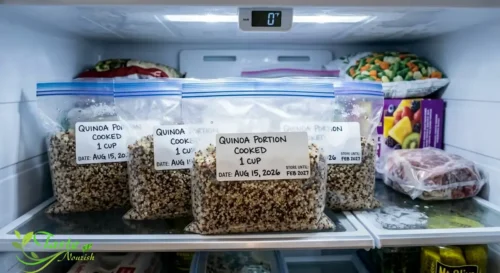
Freezing pauses bacterial growth almost entirely, so frozen cooked quinoa stays technically safe far longer than in the fridge. For the best texture and flavor, aim to use it within about 2 months. Portion it into flat, airtight freezer bags or containers before freezing, and thaw overnight in the fridge or reheat directly from frozen.
How Long Does Cooked Quinoa Last at Room Temperature?
Not long at all. Under USDA’s “Danger Zone” guidelines, bacteria multiply fastest between 40°F and 140°F, and cooked food left in that range for more than 2 hours should be discarded. If your kitchen or the outdoor temperature is above 90°F, cut that window down to 1 hour.
How Many Days Is Quinoa Good For, Exactly?
Storage Method
How Long It Lasts
Room temperature
Up to 2 hours (1 hour above 90°F)
Refrigerator (40°F or below)
3 to 4 days
Freezer (0°F)
About 2 months for best quality; safe longer if kept solidly frozen
Signs Cooked Quinoa Has Gone Bad
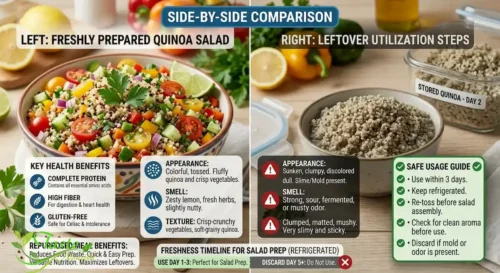
Sour, off, or fermented smell
Slimy or sticky texture on the surface
Visible mold, including fuzzy spots or unusual discoloration
A container that’s been open in the fridge for more than 4 days, even if it looks fine
Bacteria that cause food poisoning don’t always change how food looks or smells, so when in doubt, it’s safer to toss it than to taste-test it.
Best Practices for Storing Cooked Quinoa
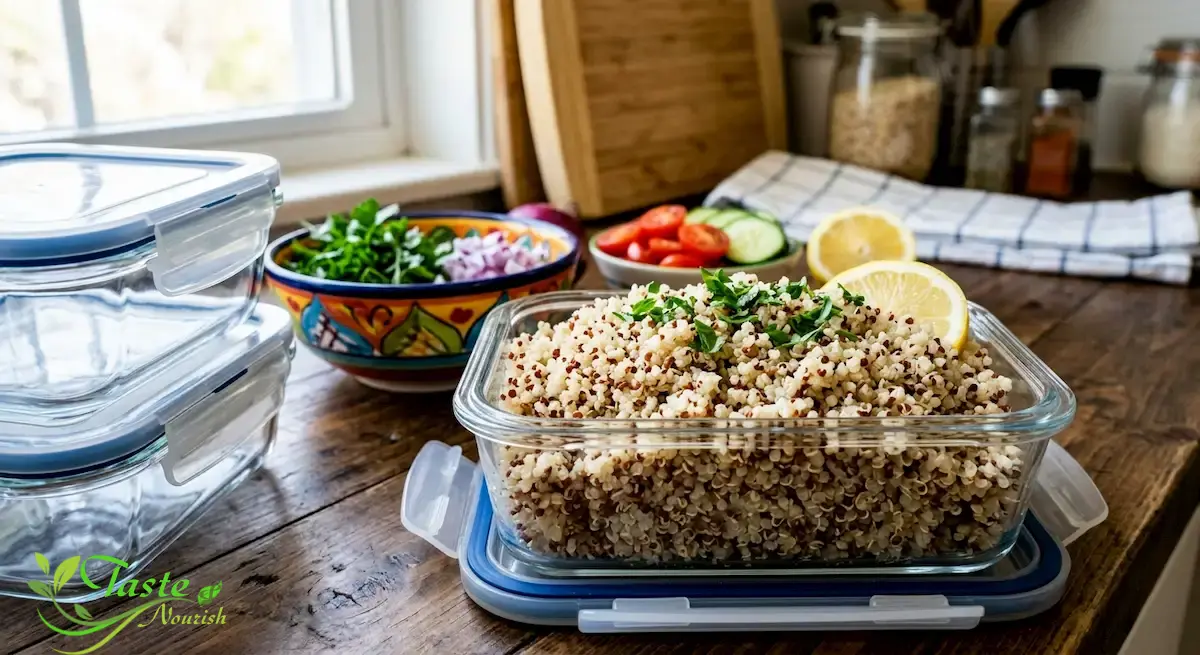
Cool it quickly. Spread hot quinoa in a shallow container instead of leaving it in a deep pot to cool.
Refrigerate within 2 hours of cooking.
Store in an airtight container, not loosely covered.
Label containers with the date you cooked it.
Keep your fridge at 40°F or below and check it occasionally with an appliance thermometer.
Reheat only the portion you plan to eat, to an internal temperature of 165°F.
Expert Tip: Cook a double batch and freeze half in single-serving portions right away. You’ll skip the fridge countdown entirely and always have quinoa ready for a quick bowl or salad.
Best Ways to Eat or Cook Quinoa
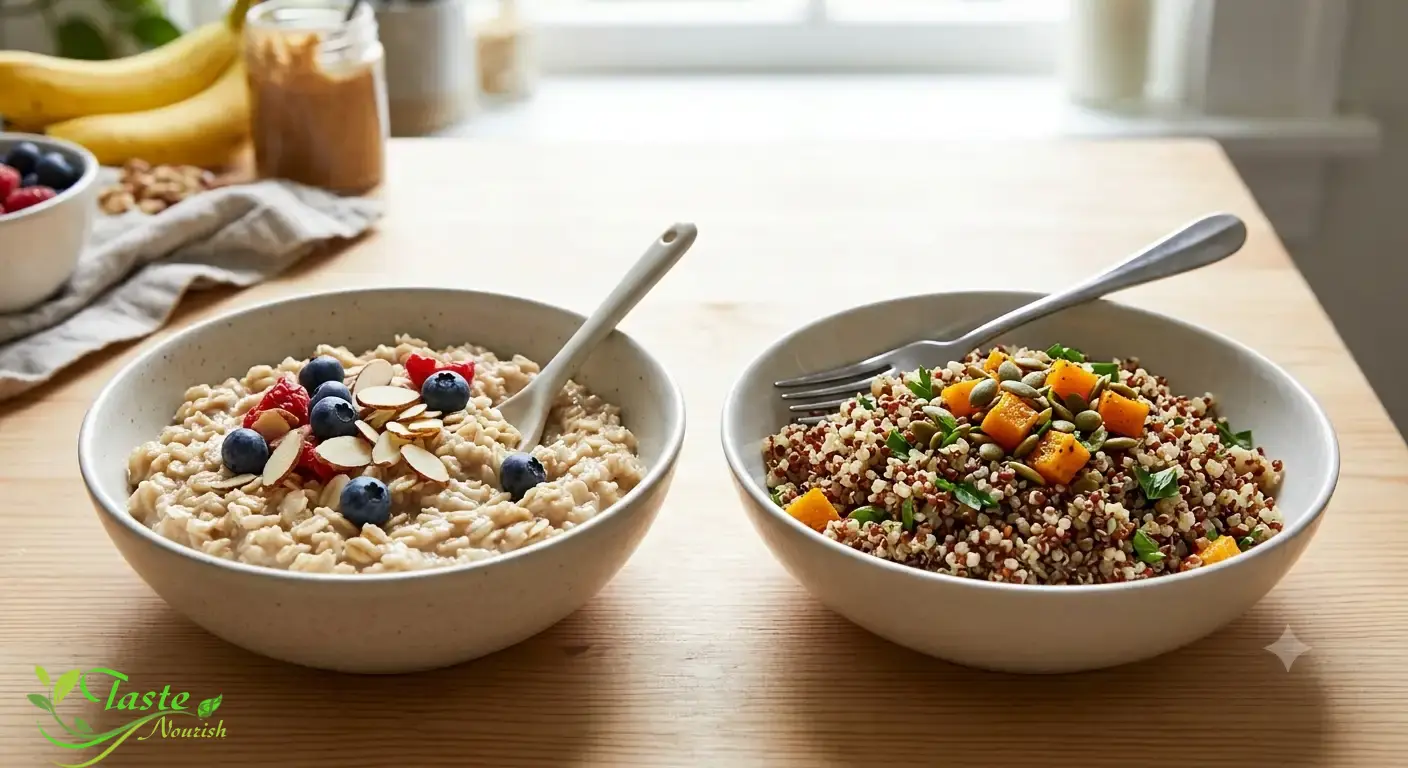
As a warm breakfast cereal with milk, fruit, and cinnamon
Tossed cold into grain salads with vegetables and a vinaigrette
Swapped in for rice in stir-fries, grain bowls, or stuffed peppers
Simmered into soups for extra body and protein
Popped like popcorn in a dry, hot pan for a crunchy snack
Common Mistakes
Skipping the rinse: Leaves a bitter, soapy aftertaste from residual saponins.
Using too much water: Leads to mushy, gluey quinoa instead of light, fluffy grains.
Sealing it while still warm: Traps steam and speeds up bacterial growth and condensation.
Losing track of time: Forgetting when a batch was cooked is one of the most common reasons people accidentally eat quinoa past its safe window.
Reheating more than once: Repeated reheating increases the opportunity for bacteria to multiply between temperature swings.
Myths vs Facts
Myth
Fact
Quinoa is a grain.
It’s technically a seed, though it’s cooked and used like a whole grain.
If it smells fine, it’s safe to eat.
Some bacteria that cause food poisoning don’t noticeably change smell, taste, or appearance.
Freezing ruins quinoa’s texture.
Properly portioned and sealed, frozen quinoa reheats well with minimal texture loss.
A week in the fridge is fine if it’s in a sealed container.
The container helps, but time and temperature still drive bacterial growth after about 3 to 4 days.
Cooked Quinoa vs Other Cooked Grains
Grain
Fridge Shelf Life
Protein per Cooked Cup
Quinoa
3 to 4 days
~8 g
White rice
3 to 4 days
~4 g
Couscous
3 to 4 days
~6 g
Brown rice
3 to 4 days
~5 g
How Long Does Cooked Quinoa? FAQs
How long does cooked quinoa last in the fridge?
About 3 to 4 days when stored in an airtight container at 40°F or below.
How many days is quinoa good for after it’s been frozen?
For the best flavor and texture, use frozen cooked quinoa within about 2 months, though it remains safe well beyond that as long as it stays solidly frozen.
Can you eat cooked quinoa after 7 days in the fridge?
It’s not recommended. By day 7, cooked quinoa is well past the USDA-recommended window for cooked leftovers, and the risk of bacterial contamination rises even if it looks and smells normal.
Can you freeze cooked quinoa?
Yes. Cool it completely, portion it into airtight bags or containers, and freeze flat for easy stacking and faster thawing.
Does rinsing quinoa before cooking affect how long it lasts once cooked?
No. Rinsing affects flavor by removing bitter saponins, but it doesn’t change how quickly cooked quinoa spoils once it’s refrigerated or frozen.
Is it safe to reheat cooked quinoa more than once?
It’s best to reheat only the portion you’ll eat in one sitting. Repeatedly cooling and reheating the same batch increases the chances for bacteria to build up.
The Bottom Line: How Long Does Cooked Quinoa Last?
Cooked quinoa lasts about 3 to 4 days in the refrigerator and roughly 2 months in the freezer when it’s cooled quickly, stored in an airtight container, and kept at a consistently cold temperature. It’s a nutrient-dense, complete-protein grain worth batch-cooking, but like any cooked starch, it needs to be handled with the same care you’d give rice or pasta. When a batch is getting close to its window, freeze what’s left instead of pushing your luck.
Hanan Abo Samra is the founder of Taste & Nourish, sharing trustworthy nutrition guidance and recipes drawn from 20+ years of hands-on cooking experience. When she's not developing new recipes, Hanan is researching the science behind everyday ingredients to bring readers practical, evidence-based guidance for a healthier lifestyle.