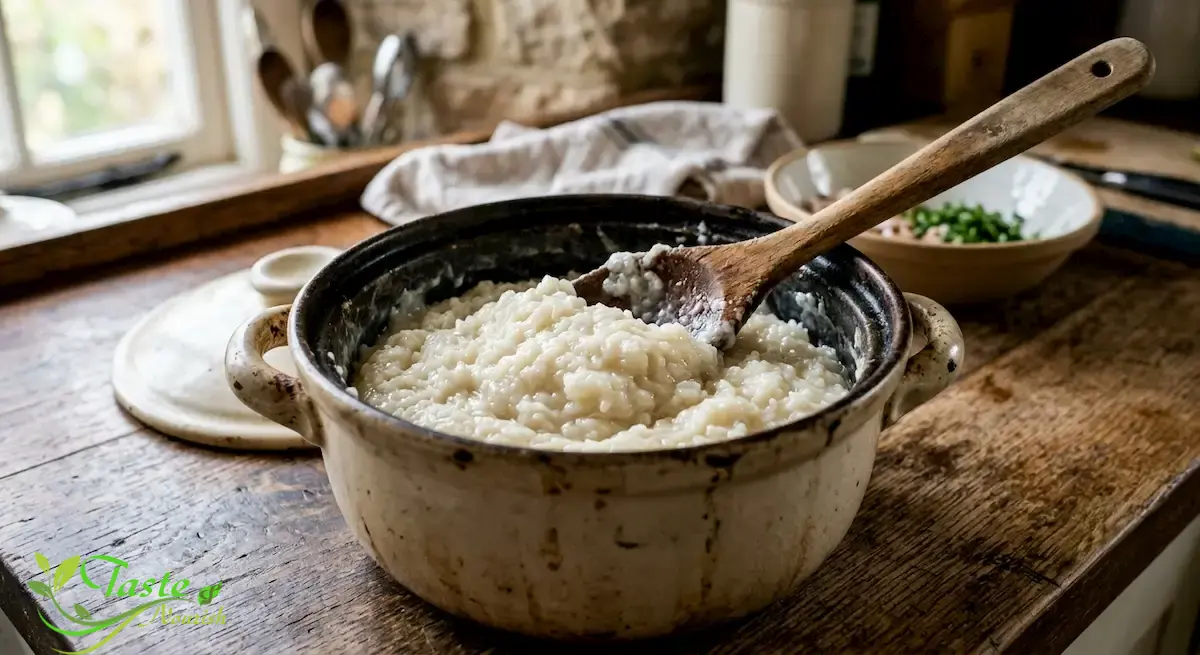
You lift the lid, expecting fluffy, separate grains, and instead find a sticky, gluey clump staring back at you. It happens to everyone — even people who’ve made rice a hundred times. The good news is that mushy rice is almost never a lost cause. If you’re wondering how to fix mushy rice, the solution is often simpler than you think. Once you understand why it happened, you can usually rescue tonight’s dinner and avoid the same mistake next time.
This guide walks through the most effective fixes for rice that’s too wet, along with what to do when the opposite problem strikes and you’re left troubleshooting undercooked rice instead.
Rice doesn’t turn to mush by accident. It’s almost always the result of one (or a combination) of three things: too much water, too much heat or time, or too much handling. Once you know which culprit is at play, the fix becomes obvious instead of a guessing game.
Too Much Water Is the #1 Cause
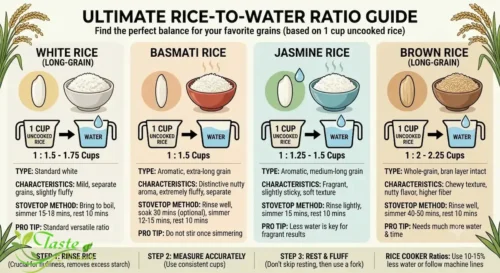
Every rice variety has an ideal water-to-grain ratio, and it’s tighter than most people assume. Long-grain white rice generally wants somewhere between 1.25 and 1.5 cups of water per cup of rice, while short-grain and sushi rice need even less because the grains absorb liquid more efficiently. Pour in “just a splash more to be safe,” and you’ve already tipped the balance toward a soggy pot.
This is the single most common reason home cooks end up needing a rice too wet fix in the first place, and it’s also the easiest mistake to correct going forward with a proper measuring cup instead of an eyeballed pour.
The Starch Science Behind Gummy Rice
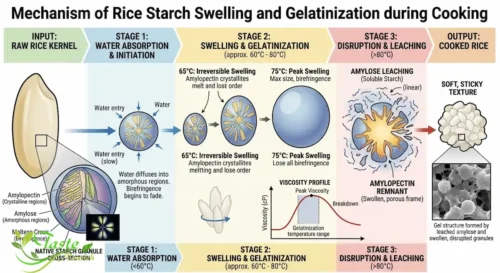
Rice is essentially a tightly packed bundle of starch granules wrapped in a thin protein layer. As it cooks, those granules absorb water and swell in a process called gelatinization. When the ratio is right, the swelling stops at the right point, the grain holds its shape, and you get separate, tender rice. When there’s excess water in the pot, the swelling goes too far, the outer layer of the grain ruptures, and starch bleeds out into the cooking liquid.
That loose starch is exactly what makes the whole pot feel sticky and paste-like rather than light and fluffy, and it’s why even a small amount of extra water can push a good pot of rice into mushy territory.
Carryover Steam After the Heat Turns Off
Rice keeps cooking even after you take it off the burner. The residual heat and trapped steam inside a covered pot continue to soften the grains for several minutes, sometimes longer if the rice sits untouched on a “keep warm” setting. Leave it there too long, especially without fluffing, and you’ll open the lid to find rice that was perfectly done ten minutes ago and is now overly soft.
This is one reason rice cookers with an extended warm cycle can quietly ruin a batch that was actually finished cooking on time.
How to Fix Mushy Rice: 6 Practical Fixes
Before you toss the pot, know that most mushy rice is salvageable, especially if the grains are still mostly intact and just carrying too much moisture. Here are the methods that actually work, roughly in order of how well they preserve the rice’s original texture.
1. Drain and Re-Steam on Low Heat
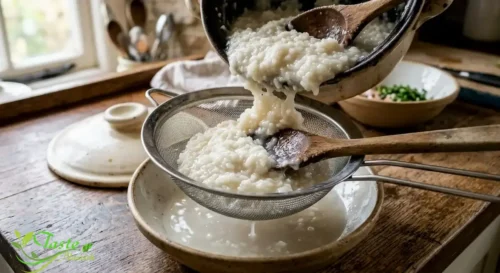
If there’s visible standing water in the pot, start by draining as much of it off as you can through a fine-mesh strainer. Return the rice to the pot, set the heat to its lowest setting, and leave the lid slightly ajar so excess steam can escape instead of recirculating back into the grains. Give it three to five minutes this way and check again — this simple step alone resolves a lot of borderline-mushy situations.
2. Spread It Out in the Oven
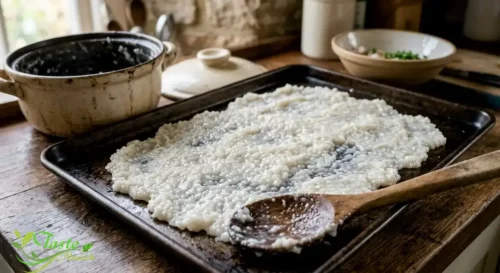
For rice that’s noticeably wet but hasn’t fully turned to paste, spreading it in a thin, even layer on a baking sheet works remarkably well. Slide the sheet into an oven preheated to around 350°F for five to seven minutes, which lets surface moisture evaporate without further cooking the interior of each grain. Because the rice is spread thin instead of piled in a pot, the moisture has somewhere to go instead of just steaming itself right back into the grains.
3. Try the Bread Slice Trick
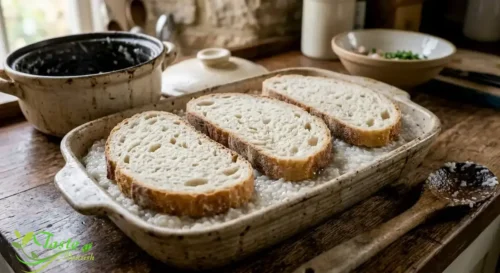
This is an old trick, but it genuinely works: after draining off excess liquid, lay two or three slices of plain bread — slightly stale is even better — directly on top of the rice, cover, and set the pot on low heat for a couple of minutes. The bread acts like a sponge, pulling extra moisture up and away from the grains below. Discard the bread once it’s done its job, fluff the rice, and you’ll often notice a real difference in texture.
4. Turn It Into Fried Rice
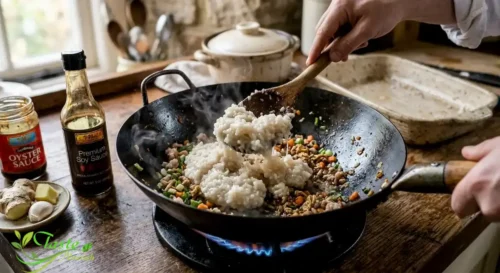
Sometimes the smartest fix isn’t trying to reverse the mush — it’s changing the dish entirely. Mushy rice that’s cooled and had a chance to dry out slightly in the fridge is actually a reasonable starting point for fried rice, since the high heat of a hot wok or skillet drives off residual moisture while the oil and seasonings add texture and flavor back in.
This won’t produce restaurant-quality separate grains, but it turns what felt like a failure into a completely usable meal.
5. Blend It Into Rice Pudding or Soup
If the rice has genuinely gone past the point of texture rescue and is closer to porridge than pilaf, lean into it rather than fighting it. Overly soft rice is a natural base for rice pudding, congee-style porridge, or a hearty soup where a creamy, broken-down texture is actually desirable.
Add milk, a little sugar, and warm spices like cinnamon for a quick dessert, or simmer it into chicken broth with shredded chicken and vegetables for a comforting bowl that hides the original mistake entirely.
6. Start Over With a Better Ratio
Occasionally the rice really is too far gone — a solid, gluey mass with no separation between grains — and no amount of oven-drying or bread slices will bring it back to a plate-ready side dish. In that case, it’s often faster and less frustrating to start a fresh, smaller batch using an accurate measuring cup and a timer, while saving the mushy batch for one of the repurposing ideas above instead of a dinner plate.
Pro Tip: Keep a kitchen timer running the moment the lid goes on. More pots of rice are ruined by “just one more minute to be safe” than by an actual bad recipe.
Undercooked Rice Troubleshooting
Not every rice problem is about too much moisture — sometimes it’s the opposite, and you’re stuck doing undercooked rice troubleshooting instead of drying anything out. Interestingly, both problems can even show up in the same pot at once, with mushy, blown-out grains on the outside and a hard, chalky center underneath.
How to Tell If Rice Is Undercooked
Undercooked rice has a firm, almost crunchy bite at the center of the grain, and it often looks slightly opaque or chalky rather than translucent. You may also notice the grains sitting on top of a layer of water that hasn’t fully absorbed, which is a sign the rice simply hasn’t had enough time or heat to finish the job.
This is common when the heat gets turned down too early, when the lid is lifted too many times (letting steam escape that the rice needed to finish cooking), or when a larger batch is cooked in the same time as a smaller one without adjusting for it.
How to Finish Cooking Without Adding Mush
The instinct to just “add more water and cook longer” is exactly how undercooked rice turns into mushy rice, so it pays to be more precise than that. Add only a small amount of water — a couple of tablespoons per cup of rice remaining — cover tightly, and let it steam on low heat for another five minutes before checking again.
If there’s no standing water left but the grains are still firm, sometimes all that’s needed is a longer rest off the heat with the lid on, since the residual steam alone can finish softening the centers without any added liquid at all.
How to Prevent Mushy Rice Next Time
The best fix for mushy rice is never needing one. Nailing the ratio, the rinse, and the pot you use solves the vast majority of texture problems before they start.
Water-to-Rice Ratios by Variety
Different rice varieties absorb water at different rates, so a single “one ratio fits all” approach is part of why so many pots go wrong. Use the table below as a starting baseline and adjust slightly depending on your stove, altitude, and pot.
Rinsing rice until the water runs mostly clear washes away loose surface starch left over from milling, which is one of the biggest hidden contributors to a gummy finished texture. Soaking basmati or jasmine rice for 20 to 30 minutes before cooking helps the grains hydrate more evenly, which usually means a shorter, more predictable cook time once it hits the heat.
A heavy-bottomed pot with a tight-fitting lid also matters more than people expect, since thin pots create hot spots that cook the bottom layer of rice faster than the top, pushing you toward stirring — which, in turn, releases even more starch and worsens the very stickiness you’re trying to avoid.
Is Mushy Rice Safe to Eat? Storage & Reheating Rules
Texture aside, mushy rice that’s freshly cooked and still warm is perfectly safe to eat — softness alone isn’t a food-safety issue. The real risk with rice, mushy or not, comes from how it’s handled after cooking, not from how it turned out on the stove.
Cooked rice can carry heat-resistant spores of Bacillus cereus, a bacterium that survives normal cooking temperatures and can multiply if rice is left in the “danger zone” for too long. The two recognized forms of the resulting illness include a fast-acting version that causes vomiting within one to six hours of eating contaminated food, and a slower diarrheal form that shows up six to twenty-four hours later.
It’s the same bacterium behind a well-documented outbreak the CDC investigated after a 1993 incident where fried rice served at two Virginia child day care centers made both children and staff sick, later traced back to rice held too long without proper refrigeration.
USDA’s Food Safety and Inspection Service is direct about the timing that matters most: cooked food needs to go into the refrigerator within two hours of cooking, or within one hour if the room is warmer than 90°F. Food-safety guidance from FoodSafety. adds that leftovers should go into the fridge or freezer as soon as possible, and that reheated food should reach at least 165°F, checked with a food thermometer rather than guessed by feel.
Extension specialists put it simply, too — the safest approach is to keep rice either hot, above 135°F, or cold, below 41°F, since the temperature range in between is exactly where Bacillus cereus spores wake up and start multiplying.
Key Takeaway: A mushy texture is a cooking problem you can usually fix on the spot. A rice pot left out on the counter for hours is a food-safety problem no amount of reheating can undo — when in doubt, toss it.
If you’re curious about the exact calorie, carbohydrate, or protein content of the specific rice variety you’re cooking, USDA’s FoodData Central search tool provides nutrient data for food components based on individually researched samples, which is a more precise resource than a general estimate for anyone tracking macros closely.
Common Rice-Cooking Mistakes to Avoid
A handful of habits are responsible for the majority of rice texture complaints, whether that’s mush, crunch, or both at once.
Common Mistake
Why It Backfires
Quick Fix
Eyeballing the water
Most frequent cause of over-hydrated, gluey rice
Measure with a cup; follow the ratio table above
Skipping the rinse
Surface starch dust gels into a sticky coating
Rinse until the water runs mostly clear
Lifting the lid repeatedly
Releases steam and extends cook time unevenly
Trust the timer; keep the lid on until it’s done
Boiling hard the whole time
Tumbles and breaks grains, cooking them unevenly
Boil briefly, then drop to the lowest simmer
Leaving rice on “keep warm” too long
Carryover steam keeps softening the grains
Fluff and transfer to a container once it’s done
Conclusion
Mushy rice feelslike a small kitchen disaster in the moment, but it’s rarely the end of the meal. Whether the fix is draining and re-steaming, a quick trip through the oven, or simply repurposing the batch into fried rice or a comforting soup, there’s almost always a way to save what’s in the pot.
Pay attention to your water ratio, resist the urge to lift the lid every few minutes, and give rice a proper rest once it’s done, and you’ll find yourself needing these rescue tricks less and less.
And when the opposite problem shows up — grains that are still a little firm at the center — a small splash of water and a few more minutes of steam, rather than a full do-over, is usually all it takes.
How to Fix Mushy Rice FAQs
Q1. Can you fix mushy rice after it’s already cooked?
Yes, in most cases. Draining excess liquid and gently re-steaming on low heat, spreading it thin in a warm oven, or using the bread-slice trick to pull out moisture can all improve the texture of rice that’s turned out too wet.
Q2. Why is my rice mushy on the outside but still hard in the middle?
This usually points to uneven heat or too much stirring, which breaks down the outer layer of the grains while the centers haven’t fully absorbed water yet. Lowering the heat, keeping the lid on, and letting the rice steam undisturbed for a few extra minutes typically resolves both issues at once.
Q3. Is it safe to eat mushy rice?
Softness alone doesn’t make rice unsafe — a mushy texture is a cooking issue, not a bacterial one. Safety instead depends on how quickly the rice was refrigerated after cooking and how it was reheated, since rice can harbor heat-resistant Bacillus cereus spores if left at room temperature too long.
Q4. Can reheating fix mushy rice?
Reheating won’t undo excess moisture on its own, but a quick pass in a dry skillet or hot oven can help evaporate some of that extra water while warming the rice through, especially if you’re turning it into fried rice.
Q5. What’s the best water-to-rice ratio to avoid mushy rice?
It depends on the variety: long-grain white rice generally does best around 1.5 cups of water per cup of rice, while short-grain or sushi rice needs closer to a 1:1 ratio. Measuring carefully, rather than estimating, prevents most texture problems before they start.
References
“Bacillus cereus Food Poisoning Associated with Fried Rice at Two Child Day Care Centers — Virginia, 1993,” Centers for Disease Control and Prevention (CDC), MMWR — https://www.cdc.gov/mmwr/preview/mmwrhtml/00025744.htm
Hanan Abo Samra is the founder of Taste & Nourish, sharing trustworthy nutrition guidance and recipes drawn from 20+ years of hands-on cooking experience. When she's not developing new recipes, Hanan is researching the science behind everyday ingredients to bring readers practical, evidence-based guidance for a healthier lifestyle.