If you’ve swapped white rice for a fluffier, nuttier grain lately, there’s a good chance it was quinoa. This ancient seed has earned its spot in grocery store aisles for good reason. The health benefits of quinoa go beyond trendy marketing — research points to real advantages for heart health, blood sugar management, digestion, and getting enough plant-based protein.This guide breaks down what quinoa actually offers nutritionally, what the science says, and how to work it into your meals without overthinking it.
The health benefits of quinoa come mainly from its unusual nutrient combination: it’s one of the few plant foods with all nine essential amino acids, it’s naturally gluten-free, and it delivers a solid dose of fiber, magnesium, iron, and antioxidant plant compounds in a single serving. Research suggests regular quinoa consumption may support heart health, help with blood sugar and weight management, and improve digestion, though most human studies are still small and researchers continue to call for larger clinical trials.
Key Takeaways
Quinoa is technically a seed, not a grain, but it’s cooked and eaten like one.
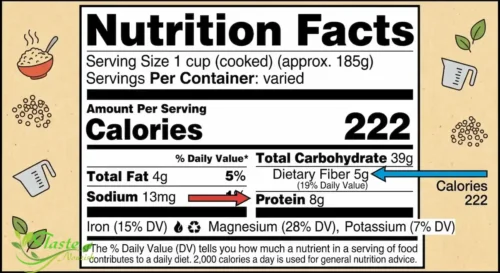
One cup of cooked quinoa provides about 222 calories, 8 grams of protein, and 5 grams of fiber.
The health benefits of quinoa include a complete amino acid profile, fiber for digestion, and minerals like magnesium and iron.
Quinoa is naturallygluten-free, making it a useful option for people with celiac disease or gluten sensitivity.
Rinsing quinoa before cooking removes its natural bitter coating (saponins) and improves flavor.
Most people can eat quinoa daily as part of a varied diet, though those prone to kidney stones may want to moderate intake due to its oxalate content.
What Is Quinoa?
Quinoa (pronounced KEEN-wah) is the seed of the Chenopodium quinoa plant, a relative of spinach and beets rather than wheat or rice. It originated in the Andean regions of South America, where it was a staple crop for thousands of years before gaining popularity worldwide.
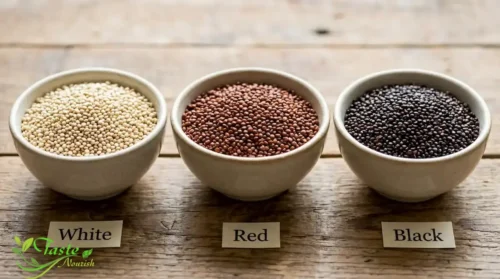
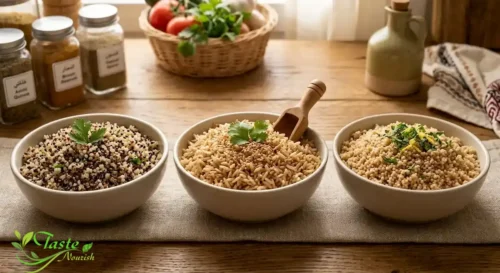
Although it’s botanically a seed, quinoa cooks up light and fluffy with a mild, slightly nutty flavor, so it’s used in the kitchen — and nutritionally classified — like a whole grain. It comes in several varieties, including white (or ivory), red, and black quinoa, each with a slightly different texture and cooking time.
Quinoa Nutrition Facts
Nutrition values below are based on one cup (about 185 grams) of cooked quinoa, according to USDA .
Nutrient
Amount per Cooked Cup (185g)
Calories
About 222
Protein
About 8 grams
Carbohydrates
About 39 grams
Dietary Fiber
About 5 grams
Fat
About 4 grams
Manganese
Good source
Magnesium
Good source
Iron
Good source
Phosphorus
Good source
Folate
Good source
According to Harvard Health Publishing, quinoa is also a good source of copper, making it a nutrient-dense addition to a plant-forward plate.
Health Benefits of Quinoa
Here’s a closer look at the quinoa health benefits that researchers and nutrition experts point to most often.
1. A Complete Source of Plant Protein
Most plant foods are missing at least one essential amino acid, but quinoa contains all nine, according to the Harvard T.H. Chan School . That makes it one of the relatively few complete plant proteins, which is especially useful for people eating vegetarian, vegan, or reduced-meat diets.
2. Naturally Gluten-Free
Quinoa doesn’t contain gluten, so it’s often recommended as a swap for wheat, barley, or rye in gluten-free diets. Research published in the American Journal of Gastroenterology found that quinoa was generally well tolerated by people with celiac disease when eaten in moderate amounts as part of a gluten-free diet.
3. Supports Digestive Health
With roughly 5 grams of fiber per cooked cup, quinoa may help support regular digestion and feed beneficial gut bacteria. Fiber-rich whole grains like quinoa are consistently linked to better digestive and metabolic health in nutrition research.
4. May Support Heart Health
Quinoa’s fiber, magnesium, and unsaturated fat content may help support cardiovascular health. The Harvard Nutrition Source notes that replacing refined grains with whole grains such as quinoa is associated with a lower risk of heart disease. Its plant compounds, including quercetin and kaempferol, are also being studied for their antioxidant properties.
5. May Help With Blood Sugar Management
Quinoa has a lower glycemic impact than many refined grains, meaning it tends to raise blood sugar more slowly. A dose-response meta-analysis of randomized clinical trials found that quinoa intake was associated with improvements in fasting blood glucose, though researchers noted the effect was strongest at moderate daily amounts and called for more large-scale trials to confirm the findings.
6. May Support Healthy Weight Management
The same combination of fiber and protein that supports blood sugar control may also help with satiety, or feeling fuller for longer after a meal. That same meta-analysis of clinical trials found modest associations between quinoa consumption and reductions in body weight and BMI, though results varied across studies.
7. Rich in Antioxidant Plant Compounds
Quinoa contains polyphenols and flavonoids, including quercetin and kaempferol, which act as antioxidants in the body. Preliminary research suggests these compounds may help reduce oxidative stress and inflammation, though most of this evidence comes from lab and animal studies rather than large human trials.
8. Provides Key Minerals for Bone and Muscle Function
Quinoa is a good source of magnesium, phosphorus, and manganese — minerals that play a role in bone strength, muscle function, and energy metabolism. It also contributes iron, which is particularly useful for people following plant-based diets.
Scientific Evidence Behind the Health Benefits of Quinoa
Quinoa research has grown substantially over the past decade, but it’s worth being clear-eyed about what the evidence actually shows.
A systematic review and dose-response meta-analysis of seven randomized clinical trials, involving 258 adults, found that quinoa intake of 15 to 50 grams per day over 28 to 180 days was associated with improvements in fasting blood glucose, body weight, and BMI, with a nonlinear relationship that appeared strongest around 25 grams per day.
Research on quinoa’s bioactive compounds points to anti-inflammatory, antioxidant, and gut-microbiota-supporting effects in preclinical (lab and animal) studies, though human clinical trials remain limited.
Clinical research on celiac patients found that quinoa was generally well tolerated in moderate daily amounts, supporting its use as a gluten-free grain alternative.
Overall, the evidence for quinoa health benefits is promising but still developing. Many findings come from smaller trials or animal studies, so researchers generally describe the effects as “may help” rather than guaranteed outcomes.
Potential Risks and Side Effects
Saponins: Quinoa’s outer coating contains bitter compounds called saponins. Most packaged quinoa is pre-rinsed, but unrinsed quinoa can taste bitter or cause mild stomach upset in sensitive individuals.
Oxalates: Quinoa contains oxalates, compounds that can contribute to kidney stone formation in people who are prone to them.
Digestive discomfort: Because of its fiber content, eating large amounts of quinoa quickly, especially if your gut isn’t used to high-fiber foods, may cause bloating or gas.
Allergic reactions: True quinoa allergy is rare but has been reported in a small number of cases.
Who Should Avoid It?
Quinoa is safe for most people, but a few groups may want to be more cautious:
People with a diagnosed quinoa or Chenopodium family allergy.
Individuals with a history of calcium oxalate kidney stones, who may benefit from limiting high-oxalate foods, including quinoa, spinach, and beets.
People with celiac disease should choose quinoa labeled “certified gluten-free” to avoid cross-contamination from shared processing facilities.
Anyone with IBS or a sensitive digestive system may want to introduce quinoa gradually rather than eating a large portion right away.
If you have a chronic health condition or take medication, it’s a good idea to check with a doctor or registered dietitian before making significant dietary changes.
How Much Should You Eat?
There’s no official recommended daily amount specific to quinoa. As a general guide, a serving of about half a cup to one cup of cooked quinoa fits comfortably into most meal plans as a whole-grain portion. Clinical research studying quinoa’s effects on blood sugar and weight typically used daily amounts in the range of 15 to 50 grams (roughly 2 to 6 tablespoons of dry quinoa), so you don’t need to eat large quantities to potentially benefit.
How to Choose the Best Quinoa
Check the color: White, red, black, and tri-color blends all offer similar nutrition; choose based on texture preference (red and black hold their shape better in salads).
Look for “pre-rinsed” or “ready to cook” labels if you want to skip the rinsing step.
Buy from brands with good turnover to ensure freshness, since quinoa’s natural oils can turn rancid over time.
Read ingredient labels on quinoa blends, since some pre-seasoned or boxed mixes include added sodium, sugar, or gluten-containing ingredients.
Choose certified gluten-free quinoa if you have celiac disease or a diagnosed gluten sensitivity.
Storage Tips
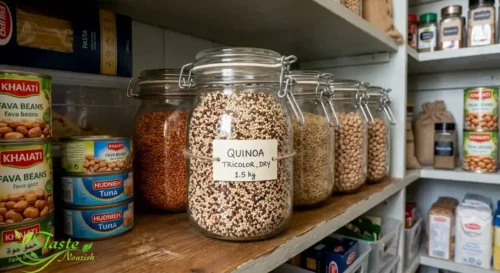
Dry quinoa: Store in an airtight container in a cool, dry pantry, away from direct sunlight.
Cooked quinoa: Refrigerate in a sealed container and use within about 5 days for best quality and food safety.
Freezing: Cooked quinoa freezes well in airtight containers or freezer bags; for best texture, use within a couple of months.
Best Ways to Eat or Cook Quinoa
Rinse dry quinoa under cold water for about a minute to remove any remaining saponins.
Use a 1:2 ratio of quinoa to water or broth.
Bring to a boil, then reduce heat, cover, and simmer for about 15 minutes.
Remove from heat and let it rest, covered, for 5 minutes before fluffing with a fork.
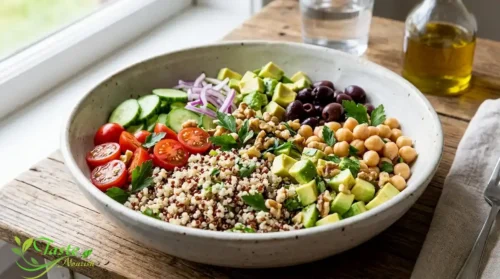
Once cooked, quinoa works well in grain bowls, salads, soups, stuffed vegetables, veggie burgers, and even warm breakfast porridge with fruit and cinnamon. Toasting dry quinoa in a dry pan for a couple of minutes before boiling can also deepen its nutty flavor.
Common Mistakes
Skipping the rinse: This is the most common reason people describe quinoa as “soapy” or bitter tasting.
Using too much water: This leads to mushy, waterlogged quinoa instead of light, separate grains.
Overcooking: Quinoa is done once the germ separates and you see the little white spiral (the germ) around each seed; cooking longer than necessary makes it mushy.
Treating it as calorie-free: Quinoa is nutritious, but portions still matter, especially if you’re managing calorie or carbohydrate intake.
Myths vs Facts
Myth
Fact
Quinoa is a grain.
It’s technically a seed, though it’s prepared and used nutritionally like a whole grain.
Quinoa is a “miracle food” that can replace a balanced diet.
Quinoa is nutrient-dense, but no single food provides everything the body needs. It works best as part of a varied diet.
All quinoa is automatically safe for celiac disease.
Quinoa is naturally gluten-free, but cross-contamination during processing can occur. Certified gluten-free labeling offers more assurance.
Quinoa has more protein than almost any plant food.
Legumes like lentils and chickpeas often contain more protein per serving. Quinoa’s distinction is that it’s a complete protein, not that it has the highest amount.
Quinoa vs Other Grains: A Quick Comparison
Food (1 cup cooked)
Calories
Protein
Fiber
Gluten-Free
Complete Protein
Quinoa
~222
~8g
~5g
Yes
Yes
Brown Rice
~216
~5g
~3.5g
Yes
No
White Rice
~205
~4g
~0.6g
Yes
No
Couscous
~176
~6g
~2g
No
No
Health Benefits of Quinoa FAQs
What are the main health benefits of quinoa?
The main health benefits of quinoa include its complete plant protein profile, fiber content that supports digestion, and minerals like magnesium and iron. Research also suggests it may help support heart health, blood sugar management, and healthy weight, though more large-scale human studies are needed.
Is quinoa healthier than rice?
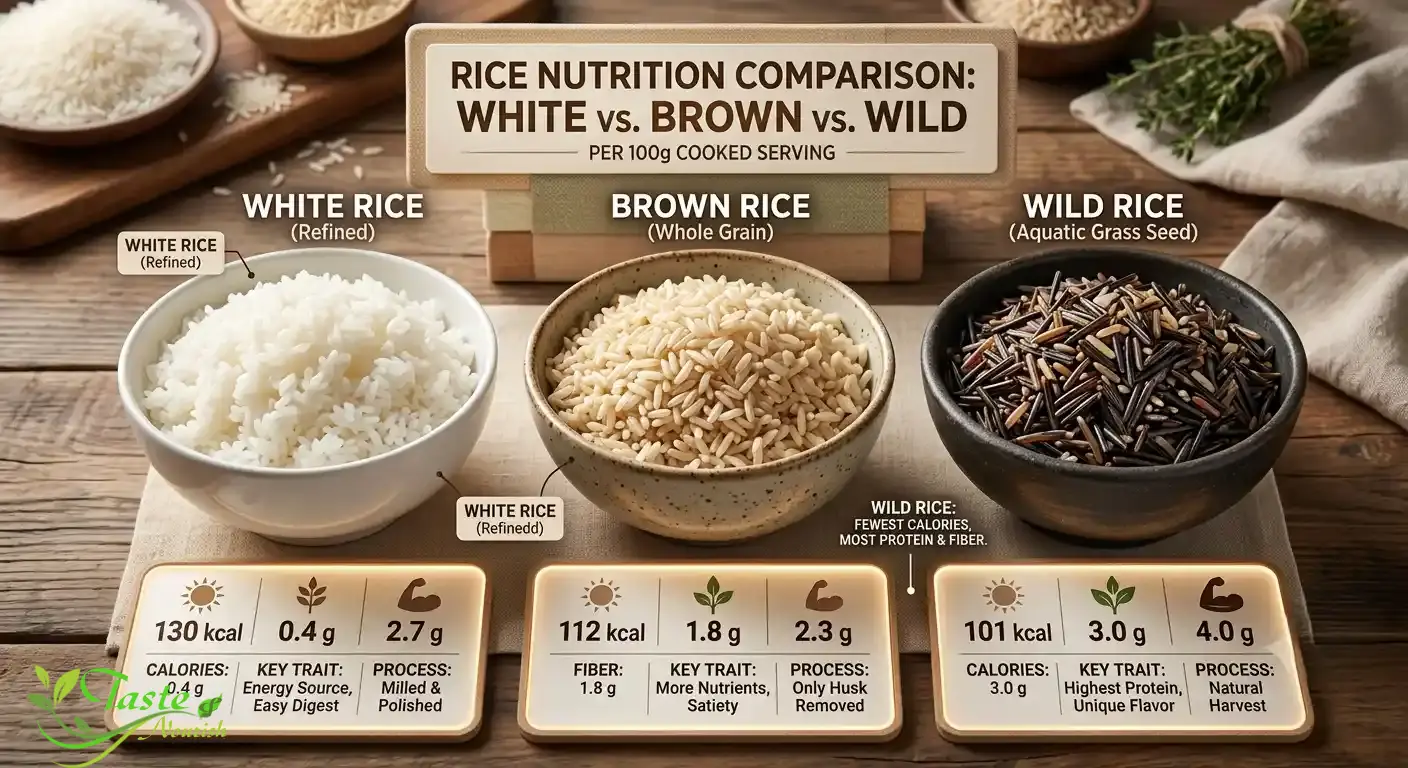
Quinoa generally has more protein and fiber than white or brown rice, along with a complete amino acid profile that rice lacks. That said, “healthier” depends on your individual needs; both can fit into a balanced diet.
Can I eat quinoa every day?
Most people can eat quinoa daily as part of a varied diet. As with any single food, variety matters, so it’s a good idea to rotate quinoa with other whole grains and vegetables.
Is quinoa good for weight loss?
Its fiber and protein content may help with feelings of fullness, and some clinical research has linked moderate quinoa intake to modest reductions in body weight and BMI. It’s not a stand-alone weight-loss solution, but it can support a balanced eating pattern.
Does quinoa raise blood sugar?
Quinoa has a lower glycemic impact than many refined grains, and some research suggests it may help support healthier fasting blood glucose levels when eaten regularly in moderate amounts. People with diabetes should still monitor portion sizes and overall carbohydrate intake.
Final Thoughts on the Health Benefits of Quinoa
Quinoa isn’t a miracle food, but it earns its reputation as a smart addition to most diets. It offers a rare combination of complete plant protein, fiber, and key minerals, all in a naturally gluten-free package that’s easy to cook and versatile enough for breakfast, lunch, or dinner.
The research on quinoa health benefits is encouraging, especially around heart health, blood sugar, and weight management, even though scientists agree that larger, longer human trials would strengthen the evidence. For most people, the simplest takeaway is also the most practical one: quinoa is a nutritious whole-food swap worth keeping in regular rotation.
References
U.S. Department of Agriculture, Agricultural Research Service. “FoodData Central.” https://fdc.nal.usda.gov/
Zamani M, et al. “Does Quinoa (Chenopodium quinoa) Consumption Improve Blood Glucose, Body Weight and Body Mass Index? A Systematic Review and Dose-Response Meta-Analysis of Clinical Trials.” PubMed, National Library of Medicine. https://pubmed.ncbi.nlm.nih.gov/36847233/
Hanan Abo Samra is the founder of Taste & Nourish, sharing trustworthy nutrition guidance and recipes drawn from 20+ years of hands-on cooking experience. When she's not developing new recipes, Hanan is researching the science behind everyday ingredients to bring readers practical, evidence-based guidance for a healthier lifestyle.