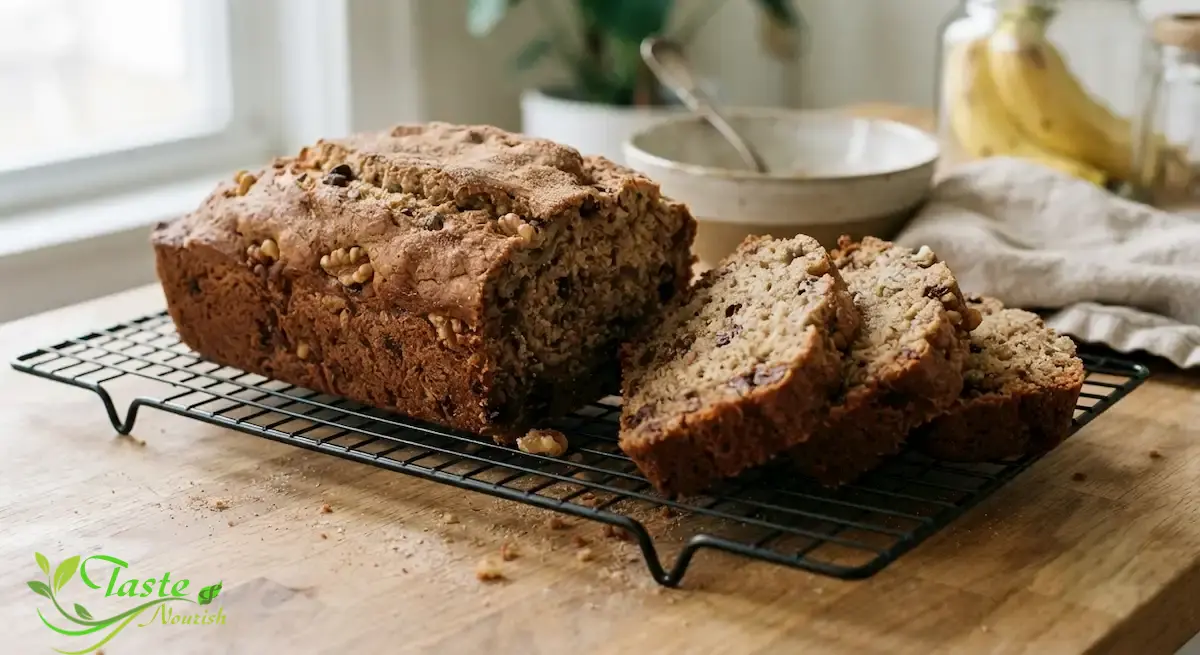
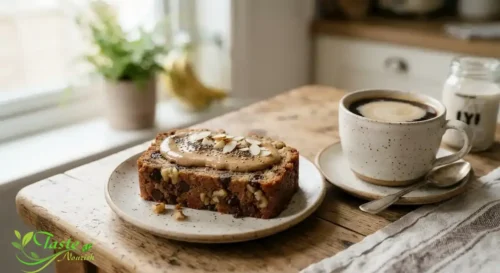
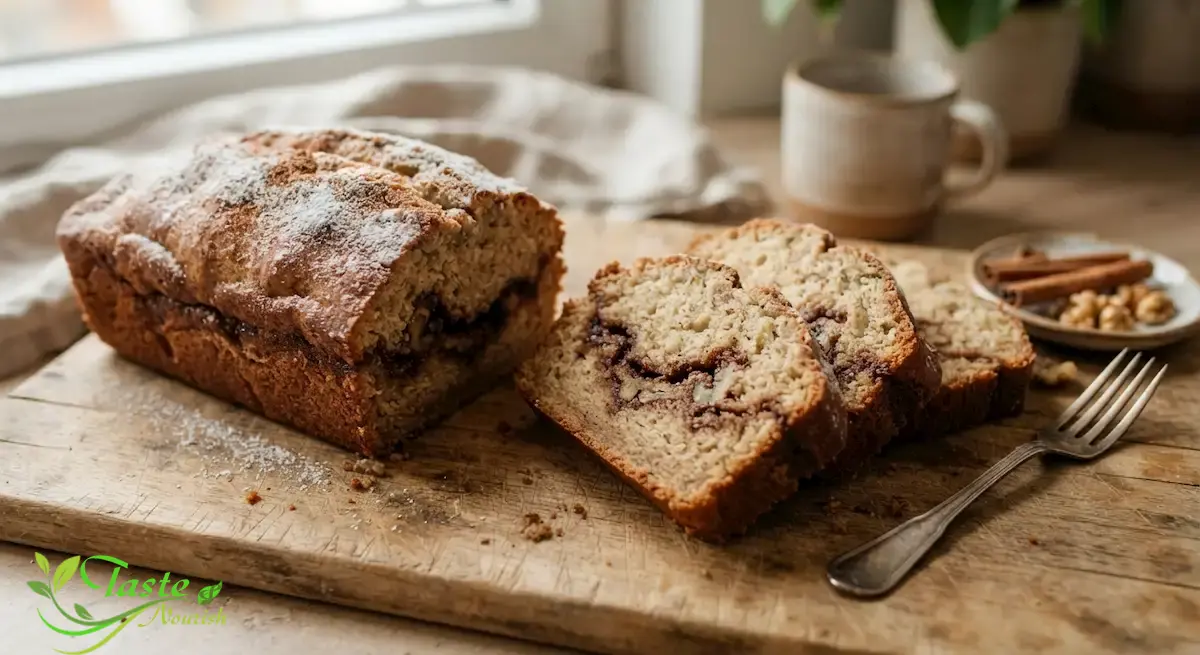
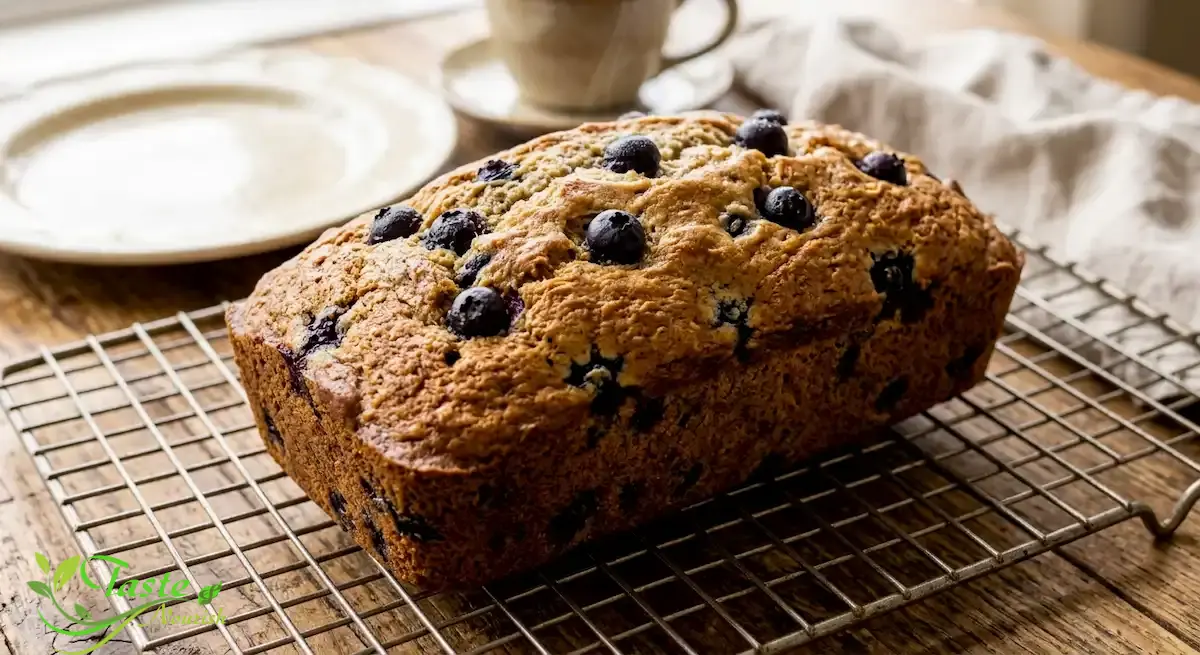
Few baking projects reward you as quickly as a good vegan banana bread recipe. There’s no egg to whip, no butter to soften, and no dairy milk to track down — just ripe bananas, pantry staples, and one bowl doing most of the work. This version turns out a moist, tender loaf with a deep banana flavor and a golden, slightly crackled top, and it holds up just as well as any traditional recipe.
Whether you’re baking for a dairy allergy, an egg sensitivity, or simply want a lighter way to use up spotted bananas on the counter, this loaf delivers without asking you to hunt down specialty ingredients.
This vegan banana bread recipe combines mashed ripe bananas, a flaxseed “egg,” oil, plant milk, and warm spices with flour and baking soda, then bakes at 350°F for about an hour. No eggs, no dairy, no substitutes that compromise flavor — just a moist, classic-tasting loaf ready to slice once cooled.
Recipe at a Glance
Detail
Time / Info
Prep Time
15 minutes
Cook Time
55–65 minutes
Total Time
About 1 hour 20 minutes (plus cooling)
Yield
1 loaf (10 slices)
Difficulty
Easy
Key Takeaways
This easy vegan banana bread recipe uses a flax egg instead of a real egg, so there’s no need for an egg replacer you don’t already own.
Very ripe, heavily spotted bananas give the best flavor and natural sweetness, letting you use less added sugar.
Neutral oil (not vegan butter) keeps the crumb consistently moist for several days.
Overmixing the batter is the single most common reason banana bread turns out dense or gummy.
The loaf freezes well, whole or in slices, for up to three months.
Why You’ll Love This Recipe
This loaf tastes like classic banana bread, not a “healthier” stand-in for it. The bananas do double duty as sweetener and binder, so the crumb stays soft rather than crumbly. It’s also flexible: swap in whole wheat pastry flour, add walnuts or chocolate chips, or adjust the sweetness up or down without throwing off the texture.
For anyone baking around an egg or dairy allergy, this egg free dairy free banana bread also sidesteps two of the most common allergens without relying on a store-bought substitute blend.
Ingredients
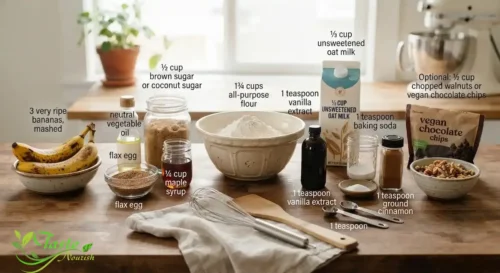
3 large very ripe bananas, mashed (about 1½ cups)
2 tablespoons ground flaxseed + 5 tablespoons water (flax egg)
⅓ cup neutral vegetable oil or melted coconut oil
½ cup packed brown sugar or coconut sugar
¼ cup maple syrup
1 teaspoon vanilla extract
⅓ cup unsweetened plant milk (oat, soy, or almond)
½ cup chopped walnuts or vegan chocolate chips (optional)
Ingredient Notes
Ground flaxseed mixed with water forms a gel that mimics the binding role an egg normally plays in quick breads. Research on plant-based egg replacers in baked goods has found that flaxseed’s mucilage improves moisture retention and helps hold the crumb together in muffins and cakes, which is exactly the job it does here (PMC).
Bananas themselves bring more than sweetness. A medium banana is a meaningful source of potassium, a mineral the body needs for normal muscle and nerve function, which is one more reason overripe bananas are worth baking with rather than tossing (NIH Office ).
Because this recipe contains no eggs or dairy, it avoids two of the nine allergens the FDA requires U.S. food labels to identify — useful context if you’re baking for someone with a known allergy, though cross-contact in a shared kitchen is still worth considering (FDA).
Substitutions
Flour: Whole wheat pastry flour works cup-for-cup and adds more fiber, though the crumb will be slightly denser than with all-purpose flour.
Oil: Melted coconut oil gives a faint coconut note; a neutral oil like avocado or canola keeps the flavor purely banana. Applesauce can replace up to half the oil, but the loaf will be noticeably less rich — a real trade-off, not an equivalent swap.
Sweetener: Maple syrup can be fully replaced with brown sugar (use ¾ cup total) if you don’t keep syrup on hand.
Flax egg: A store-bought vegan egg replacer can be substituted 1:1 if you prefer, though the flax version adds fiber the replacer won’t.
Kitchen Tools Needed
9×5-inch loaf pan
Two mixing bowls (one for wet ingredients, one for dry)
Fork or potato masher, for the bananas
Whisk and rubber spatula
How to Make Vegan Banana Bread — Step-by-Step
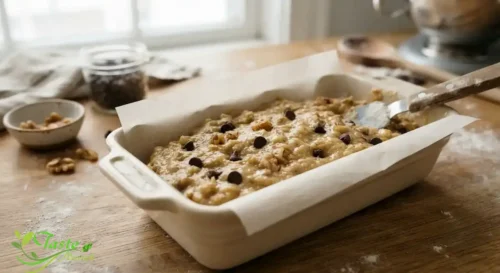
Preheat the oven to 350°F (175°C). Grease a 9×5-inch loaf pan or line it with parchment paper, leaving an overhang on the long sides for easy removal.
Stir the ground flaxseed and water together in a small bowl. Set it aside for 5–10 minutes, until it thickens into a gel with an egg-white-like consistency.
In a large bowl, mash the bananas with a fork until mostly smooth, with just a few small lumps remaining.
Whisk the oil, brown sugar, maple syrup, vanilla, plant milk, and the flax egg into the mashed bananas until combined and glossy.
In a separate bowl, whisk together the flour, baking soda, salt, and cinnamon.
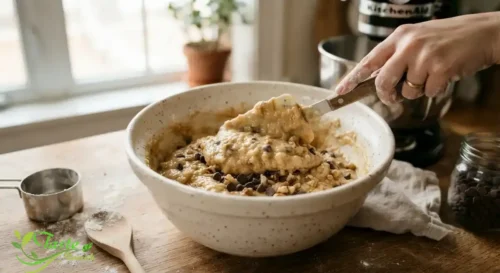
Add the dry ingredients to the wet ingredients. Fold gently with a spatula just until no streaks of flour remain — the batter should look thick and slightly lumpy, not perfectly smooth. Fold in walnuts or chocolate chips now, if using.
Pour the batter into the prepared pan and smooth the top. Bake for 55–65 minutes, until the top is deep golden brown, the loaf springs back lightly when pressed, and a toothpick inserted in the center comes out clean or with a few moist crumbs.
Cool the loaf in the pan for 10 minutes, then lift it out using the parchment overhang and transfer it to a wire rack. Let it cool for at least 30 minutes before slicing, so the crumb has time to set.
Expert Cooking Tips
Use bananas that are heavily speckled with brown, or even mostly black — they’re sweeter and mash more smoothly than yellow, firm ones.
Measure flour by spooning it into the measuring cup and leveling it off, rather than scooping directly from the bag, which can pack in up to 25% more flour and dry out the loaf.
Stop mixing as soon as the flour disappears. A few lumps in the batter are fine and actually protect the texture.
Tent the loaf loosely with foil after 35–40 minutes if the top is browning faster than the center is cooking through.
Let the loaf cool most of the way before slicing — cutting it warm makes it seem gummy even when it’s fully baked.
Common Mistakes to Avoid
Overmixing the batter. This develops gluten in the flour, which makes the loaf tough and rubbery instead of tender. Fold just until the flour is incorporated.
Using underripe bananas. Yellow, firm bananas are starchier and less sweet, so the bread ends up bland and less moist. Wait for heavy speckling or even black skins.
Skipping the flax egg’s resting time. Without 5–10 minutes to gel, the flaxseed mixture won’t bind the batter properly, and the loaf can fall apart when sliced.
Slicing too soon. Cutting into a hot loaf lets steam escape unevenly and can make the center seem underdone. Give it the full cooling time.
Underbaking. Because banana bread browns quickly on top, it’s easy to pull it before the center is set. Always confirm doneness with a toothpick near the center, not just visual color.
Recipe Variations
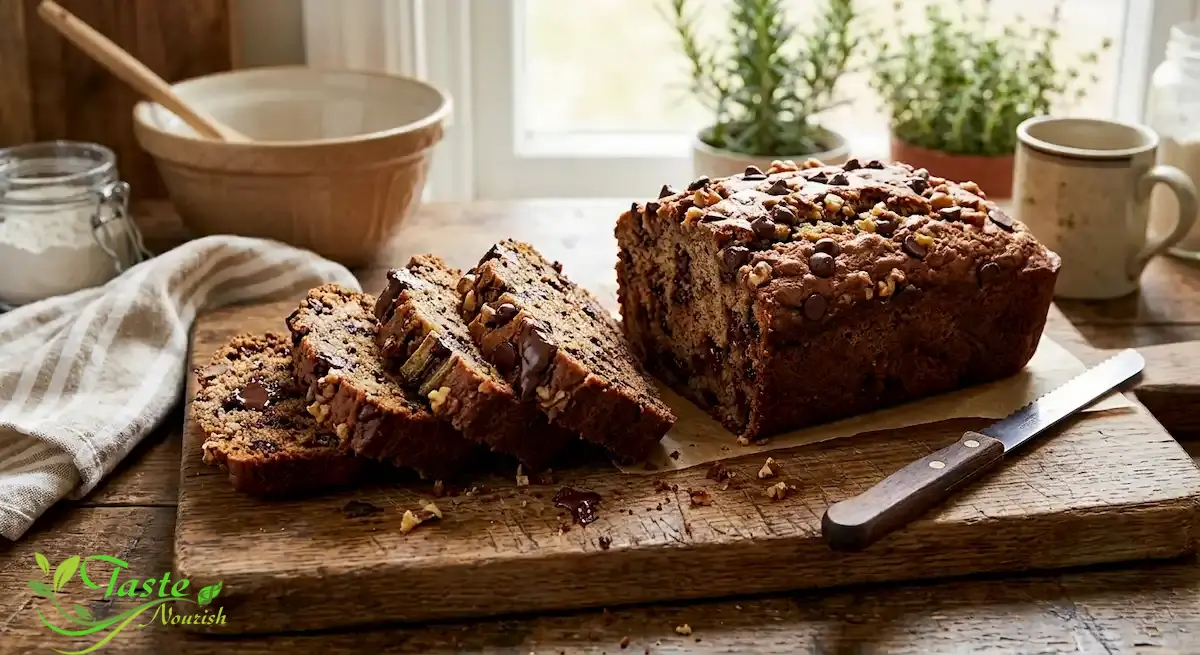
Chocolate chip banana bread: Fold in ½ cup of dairy-free chocolate chips along with, or instead of, the walnuts.
Cinnamon-swirl version: Mix 2 tablespoons brown sugar with 1 teaspoon cinnamon and swirl it through the batter with a knife before baking.
Nut-free loaf: Simply omit the walnuts — the recipe doesn’t rely on them structurally, so no adjustment is needed elsewhere.
Streusel-topped: Combine 3 tablespoons flour, 2 tablespoons brown sugar, 1 tablespoon vegan butter, and a pinch of cinnamon; sprinkle over the batter before baking for a crunchier top.
Gluten-free adaptation: A 1:1 gluten-free baking blend that includes xanthan gum can replace the flour; expect a slightly more delicate crumb.
Serving Suggestions
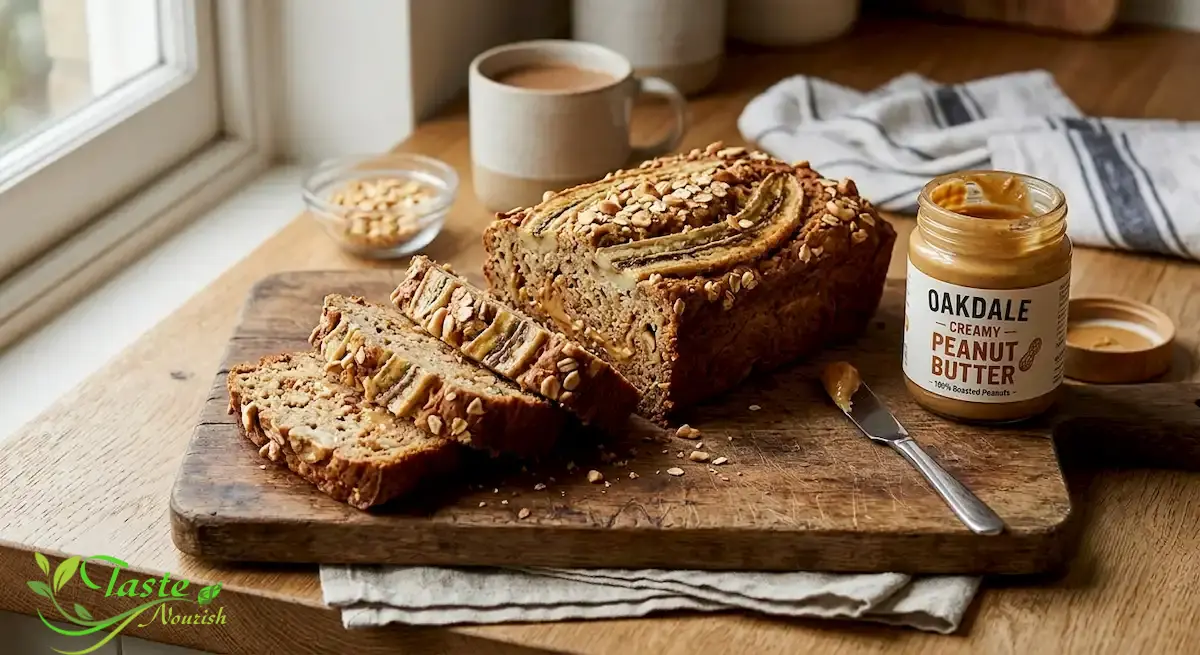
Serve slices plain while still faintly warm, or toast leftover slices lightly and spread with almond butter, peanut butter, or a smear of dairy-free cream cheese. A drizzle of maple syrup turns a slice into dessert. For breakfast, pair it with fresh berries or a bowl of oatmeal; for an afternoon snack, it’s good alongside coffee or chai.
Nutrition Information
The following values are an approximate estimate per slice, based on a loaf cut into 10 slices using the ingredients listed above. They will vary depending on the exact bananas, brands, and optional add-ins used, so treat this as a general guide rather than a precise figure.
Nutrient
Approximate Amount per Slice
Calories
~210 kcal
Total Fat
~8 g
Carbohydrates
~32 g
Dietary Fiber
~2 g
Sugars
~15 g
Protein
~3 g
Choosing whole wheat pastry flour in place of all-purpose flour can help increase the fiber content of the loaf, since whole grains retain the bran and germ that refined flour strips out (USDA). This nutrition information is provided as a general estimate and isn’t a substitute for personalized dietary advice.
Storage Instructions
Once fully cooled, store the loaf in an airtight container at room temperature for up to 3 days, or in the refrigerator for up to a week — refrigeration extends freshness but can slightly firm up the crumb. Bring refrigerated slices to room temperature, or warm them for 10–15 seconds in the microwave, before serving for the best texture.
For longer storage, wrap the whole loaf or individual slices tightly in plastic wrap, then foil, and freeze for up to 3 months. Thaw at room temperature for a few hours, or microwave a frozen slice in 20-second bursts until warmed through.
Make-Ahead Tips
The batter itself doesn’t hold well unbaked, since the baking soda starts reacting as soon as it hits the wet ingredients, so bake it the same day you mix it. The loaf itself, though, is an excellent make-ahead option: it actually tastes better on day two, once the flavors have had time to settle, and it freezes cleanly for whenever you need it.
Vegan Banana Bread Recipe FAQs
Can I use frozen bananas for this recipe?
Yes. Thaw them fully first and drain off any excess liquid before mashing, or the batter can end up too wet.
Why is my vegan banana bread gummy in the middle?
This is almost always underbaking or slicing too early. Check doneness with a toothpick near the center, and let the loaf cool for at least 30 minutes before cutting.
Can I replace the flax egg with something else?
A chia egg (1 tablespoon chia seeds plus 3 tablespoons water) works the same way, or you can use ¼ cup unsweetened applesauce, though the crumb will be a little less structured.
Do I need to refrigerate this banana bread?
No, room temperature storage in an airtight container is fine for the first few days. Refrigerate only if you want it to last closer to a week.
Can I reduce the sugar in this recipe?
Yes, especially if your bananas are very ripe. You can cut the brown sugar by up to a third without major changes to texture, though the loaf will be less sweet and slightly less moist.
Is this recipe nut-free?
It is, as long as you skip the optional walnuts and confirm your plant milk and any chocolate chips are processed in a nut-free facility if that matters for your household.
Why didn’t my loaf rise very much?
This usually points to old baking soda, which loses potency over time, or bananas that weren’t ripe enough to provide adequate natural sugar and acidity for the reaction. Fresh baking soda and well-spotted bananas both matter here.
This vegan banana bread recipe combines mashed ripe bananas, a flaxseed egg, oil, plant milk, and warm spices for a moist, egg-free, dairy-free loaf.
Ingredients
3 large very ripe bananas, mashed (about 1½ cups)
2 tablespoons ground flaxseed
5 tablespoons water
⅓ cup neutral vegetable oil or melted coconut oil
½ cup packed brown sugar or coconut sugar
¼ cup maple syrup
1 teaspoon vanilla extract
⅓ cup unsweetened plant milk
1¾ cups all-purpose flour
1 teaspoon baking soda
½ teaspoon salt
1 teaspoon ground cinnamon
½ cup chopped walnuts or vegan chocolate chips (optional)
Directions
Preheat the oven to 350°F (175°C). Grease a 9x5-inch loaf pan or line it with parchment paper.
Stir the ground flaxseed and water together and let sit 5–10 minutes until gelled.
Mash the bananas in a large bowl until mostly smooth.
Whisk the oil, brown sugar, maple syrup, vanilla, plant milk, and flax egg into the mashed bananas.
In a separate bowl, whisk together the flour, baking soda, salt, and cinnamon.
Fold the dry ingredients into the wet ingredients just until no flour streaks remain. Fold in walnuts or chocolate chips if using.
Pour the batter into the prepared pan and bake 55–65 minutes, until a toothpick inserted in the center comes out clean.
Cool in the pan 10 minutes, then transfer to a wire rack and cool at least 30 minutes before slicing.
Conclusion
Once you’ve made this vegan banana bread recipe a time or two, the steps become second nature — mash, mix, fold, bake. Keep a stash of overripe bananas in the freezer and you’ll always be a flax egg away from a fresh loaf.
References
USDA FoodData Central. U.S. Department of Agriculture, Agricultural Research Service. https://fdc.nal.usda.gov/
Evaluation of Plant-Based Egg Substitutes in Vegan Muffins: Functional, Structural, and Nutritional Characterization. PMC, National Center for Biotechnology Information. https://pmc.ncbi.nlm.nih.gov/articles/PMC12428069/
Hanan Abo Samra is the founder of Taste & Nourish, sharing trustworthy nutrition guidance and recipes drawn from 20+ years of hands-on cooking experience. When she's not developing new recipes, Hanan is researching the science behind everyday ingredients to bring readers practical, evidence-based guidance for a healthier lifestyle.