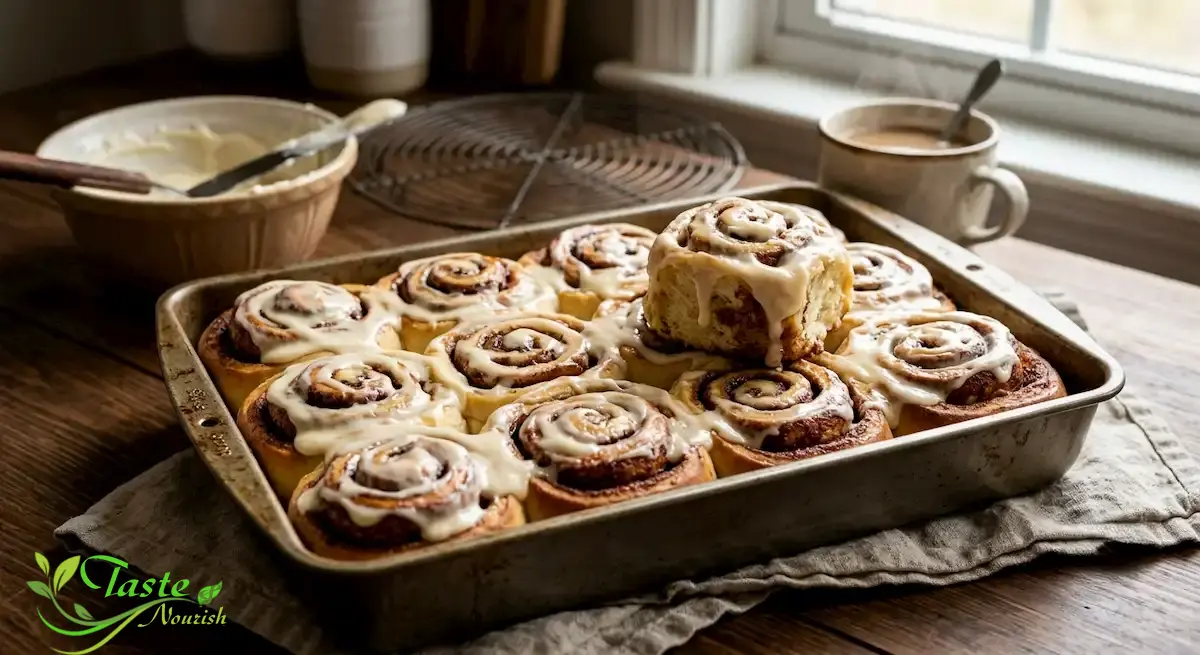
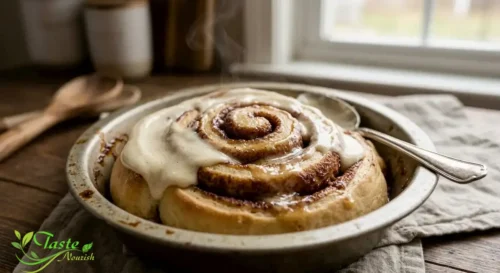
There’s a particular kind of magic in waking up to the smell of cinnamon and warm dough without having touched a mixing bowl that morning. This overnight cinnamon rolls recipe lets you do all the work the night before — mixing, filling, rolling, and cutting — so all that’s left in the morning is a short rise and a hot oven. The dough proofs slowly in the refrigerator overnight, which actually improves the flavor and texture instead of just saving you time.
Quick answer:This overnight cinnamon rolls recipe uses a cold, slow refrigerator rise to develop flavor while you sleep. Mix and shape the dough the night before, refrigerate it covered for 8 to 16 hours, then let it warm up for 30 to 45 minutes before baking at 350°F for 25 to 28 minutes.
This overnight cinnamon rolls recipe splits the work across two days: shape everything the night before, bake fresh the next morning.
A cold, slow overnight rise in the refrigerator develops deeper flavor than a same-day rise, since the yeast has more time to break down starches into flavorful compounds.
Warm milk between 105–110°F activates the yeast without killing it — check with a thermometer if you’re unsure.
Let the pan sit at room temperature for 30–45 minutes before baking so the rolls aren’t going into the oven cold.
The dough and filling can be assembled up to 16 hours ahead; beyond that, the rise can overproof and the rolls lose structure.
Why You’ll Love This Recipe
Cinnamon rolls have a reputation for being a project, and honestly, they are one — but this overnight method moves the bulk of that project to the night before, when you have time to enjoy it. There’s no early alarm to mix dough, no standing around waiting for a first rise before you’ve had coffee. You wake up, pull the pan from the fridge, and let the oven do the rest.
The slower fermentation also means better flavor. Cold, extended proofing gives the yeast more time to work, which produces a more complex, slightly tangy depth that a rushed one-hour rise can’t match. The rolls bake up tender, with a soft crumb and a filling that turns glossy and caramelized against the pan.
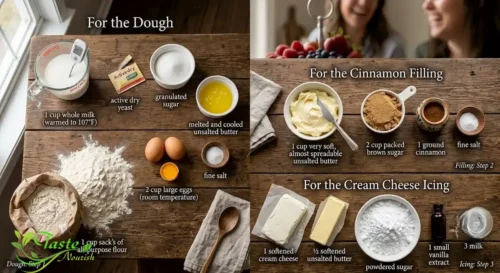
Ingredients for Overnight Cinnamon Rolls Recipe
For the Dough
1 cup whole milk, warmed to 105–110°F
2¼ teaspoons (1 packet) active dry yeast
⅓ cup granulated sugar
⅓ cup unsalted butter, melted and slightly cooled
2 large eggs, room temperature
1 teaspoon fine salt
4¼ cups all-purpose flour, plus more for dusting
For the Cinnamon Filling
½ cup unsalted butter, very soft (almost spreadable)
¾ cup packed brown sugar
2½ tablespoons ground cinnamon
Pinch of fine salt
For the Cream Cheese Icing
4 ounces cream cheese, softened
¼ cup unsalted butter, softened
1½ cups powdered sugar
½ teaspoon vanilla extract
1–2 tablespoons milk, to thin
Ingredient Notes and Substitutions
Whole milk gives the dough the richest texture, but 2% works fine if that’s what’s on hand; skim milk will produce a slightly less tender roll. Active dry yeast needs to be dissolved in warm liquid first, but instant yeast can be swapped in at the same quantity and mixed directly into the flour — just skip the proofing step and expect a slightly faster rise.
Ground cinnamon, along with many other spices, is naturally a source of manganese, a trace mineral involved in bone formation and metabolism, according to the National Institutes of Health Office of Dietary Supplements. That’s a nice nutritional footnote, though at the amount used in a filling it’s more about flavor than nutrition.
Some smaller, peer-reviewed studies have also looked at cinnamon’s antioxidant and blood sugar–related properties, though a systematic review of the research notes that most of the strongest evidence so far comes from lab and animal studies rather than large human trials, so it’s worth treating those benefits as promising rather than proven.
Bread flour can replace all-purpose for a slightly chewier roll, though the difference is subtle in an enriched dough like this one. Cream cheese icing can be swapped for a simple powdered sugar glaze (powdered sugar, milk, vanilla) if you want something lighter and less tangy — it’s a fair trade, not a downgrade.
Kitchen Tools Needed
Stand mixer with a dough hook (or a large bowl and clean hands for kneading)
9×13-inch baking pan
Rolling pin
Bench scraper or unflavored dental floss for cutting clean rolls
Instant-read or candy thermometer, for checking milk temperature
Plastic wrap or a reusable silicone cover for the overnight rise
How to Make Overnight Cinnamon Rolls: Step-by-Step Instructions
The Night Before
Activate the yeast. Warm the milk to 105–110°F and stir in the yeast and a pinch of the sugar. Let it sit for 5–8 minutes until foamy on top. If it doesn’t foam, the yeast is likely dead — start over with a fresh packet.
Mix the dough. In a stand mixer bowl, combine the yeast mixture, remaining sugar, melted butter, eggs, and salt. Add the flour one cup at a time, mixing with the dough hook until the dough pulls away from the sides of the bowl and feels smooth but still slightly tacky.
Knead. Knead with the dough hook (or by hand) for 6–8 minutes, until the dough is elastic and springs back slowly when poked.
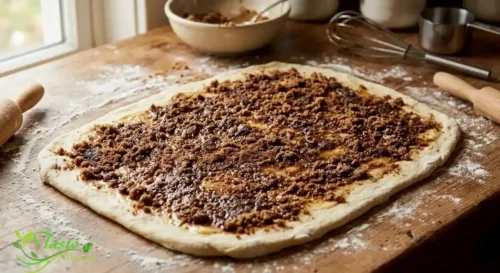
Roll and fill. On a lightly floured surface, roll the dough into a rectangle roughly 16×12 inches. Spread the very soft butter evenly to the edges, then sprinkle the brown sugar, cinnamon, and salt mixture over the top, pressing it gently into the butter.
Roll and cut. Starting from the long edge, roll the dough into a tight log. Use a bench scraper or a length of floss slid underneath and crossed on top to cut 12 even rolls without squashing them.
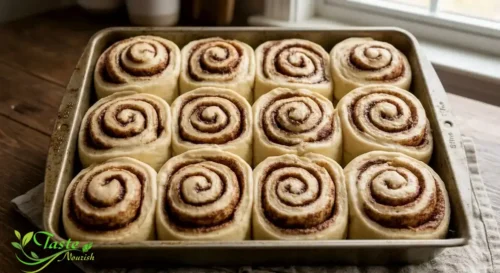
Arrange and refrigerate. Place the rolls cut-side up in a buttered 9×13-inch pan, cover tightly with plastic wrap, and refrigerate for 8 to 16 hours.
The Next Morning
Bring to room temperature. Remove the pan from the fridge and let it sit, still covered, for 30–45 minutes while the oven preheats to 350°F. The rolls should look visibly puffier before they go in.
Bake. Bake for 25–28 minutes, until the tops are golden brown and the centers reach about 190°F on an instant-read thermometer. Tent loosely with foil partway through if the tops are browning faster than the centers are cooking.
Cool slightly. Let the rolls rest in the pan for 5–10 minutes — icing them while too hot will cause the icing to melt off entirely rather than cling to the surface.
Ice and serve. Beat the cream cheese, butter, powdered sugar, and vanilla until smooth, thinning with milk to a spreadable consistency. Spread generously over the warm rolls.
Expert Cooking Tips
Room-temperature eggs incorporate more evenly into the dough than cold eggs straight from the fridge — set them out while the milk warms.
Very soft (not melted) butter for the filling spreads without tearing the rolled-out dough, which keeps the swirl distinct once baked.
A tight roll matters more than most people expect: a loose roll bakes into rolls with gaps that fall apart when sliced.
If your kitchen is cold, tuck the covered dough near (not on top of) the fridge’s warmest spot, or simply add an extra hour to the overnight window.
Common Mistakes to Avoid
Milk too hot. Above about 120°F, milk can kill active dry yeast outright, leaving the dough dense and flat. Use a thermometer rather than guessing by touch.
Skipping the morning proof. Baking the rolls straight from the fridge, without letting them warm and puff for 30–45 minutes, results in a denser, less airy roll since the cold dough hasn’t had a chance to finish rising.
Overworking the flour. Adding too much flour while kneading makes for a tough, bready roll instead of a soft one. Stop as soon as the dough is smooth and only slightly tacky.
Icing while too hot. Icing melts into a thin puddle instead of sitting on top if the rolls haven’t cooled for at least 5 minutes.
Letting the dough go past 16 hours in the fridge. Extended proofing beyond that window can overproof the yeast, leading to a collapsed structure and a sour, over-fermented flavor.
Recipe Variations
Maple pecan: Swap 2 tablespoons of the brown sugar for maple syrup in the filling, and scatter ½ cup chopped pecans over the filling before rolling.
Apple cinnamon: Fold ¾ cup finely diced, well-drained apple into the filling for a softer, fruit-studded roll (pat the apple dry first to avoid excess moisture).
Orange-cinnamon: Add 1 tablespoon of orange zest to the dough and a teaspoon to the icing for a brighter, citrus-forward version.
Dairy-light swap: Use a neutral oil in place of melted butter in the dough and a simple vanilla glaze instead of cream cheese icing for a lighter finish.
Serving Suggestions
These rolls hold their own as the centerpiece of a brunch spread, but they pair naturally with something savory and something fresh to balance the sweetness — think scrambled eggs or a vegetable frittata alongside a bowl of berries or citrus. A strong cup of coffee or a pot of tea rounds things out well, especially since the rolls are rich enough that a smaller portion often satisfies.
Nutrition Information
Values are estimated per roll (based on 12 rolls per batch, including icing) using standard ingredient data from the U.S. Department of Agriculture’s FoodData Central database, and should be treated as an approximation rather than an exact figure, since brands and measuring techniques vary.
Nutrient
Approximate Amount
Calories
360 kcal
Protein
6 g
Carbohydrates
52 g
Sugars
24 g
Fat
15 g
Saturated Fat
8 g
Fiber
1 g
Sodium
220 mg
Cinnamon rolls are a treat food more than an everyday one, largely because of the added sugar in both the filling and icing. The Harvard T.H. notes that added sugars contribute calories without much nutritional value beyond taste, which is a reasonable way to think about a roll like this one: worth making well, and worth enjoying without needing to justify it nutritionally.
Storage Instructions
Baked rolls keep at room temperature, covered, for up to 2 days. For longer storage, refrigerate baked rolls (without icing, if possible) in an airtight container for up to 5 days, or freeze for up to 2 months. Reheat in a 300°F oven for 8–10 minutes, or microwave individual rolls for 20–25 seconds, then add fresh icing.
If you’re keeping the shaped, unbaked dough in the fridge longer than an hour or two before it goes overnight, make sure the pan is tightly covered and the refrigerator itself is holding at or below 40°F, the threshold the FDA recommends for slowing bacterial growth in refrigerated foods generally. An inexpensive fridge thermometer takes the guesswork out of it.
Make-Ahead Tips
Beyond the standard overnight method, the shaped, unbaked rolls can be frozen for longer-term make-ahead planning: arrange them in the pan, cover tightly, and freeze for up to 1 month. Move the pan to the fridge the night before you want to bake, then let it follow the same overnight rise and morning proof as usual. The icing can also be made up to 3 days ahead and stored in the refrigerator — just let it soften at room temperature for 15 minutes before spreading.
This overnight cinnamon rolls recipe lets you mix, fill, and shape the dough the night before, then refrigerate it for 8 to 16 hours before baking soft, gooey rolls fresh the next morning.
Ingredients
1 cup whole milk, warmed to 105–110°F
2¼ teaspoons (1 packet) active dry yeast
⅓ cup granulated sugar
⅓ cup unsalted butter, melted and slightly cooled
2 large eggs, room temperature
1 teaspoon fine salt
4¼ cups all-purpose flour, plus more for dusting
½ cup unsalted butter, very soft, for filling
¾ cup packed brown sugar
2½ tablespoons ground cinnamon
Pinch of fine salt, for filling
4 ounces cream cheese, softened
¼ cup unsalted butter, softened, for icing
1½ cups powdered sugar
½ teaspoon vanilla extract
1–2 tablespoons milk, to thin icing
Directions
Warm the milk to 105–110°F and stir in the yeast and a pinch of sugar. Let sit 5–8 minutes until foamy.
Combine the yeast mixture, remaining sugar, melted butter, eggs, and salt. Add flour gradually until the dough pulls away from the bowl.
Knead for 6–8 minutes until smooth and elastic.
Roll the dough into a 16x12-inch rectangle, spread with soft butter, and sprinkle with the brown sugar and cinnamon mixture.
Roll into a tight log and cut into 12 even rolls.
Arrange rolls in a buttered 9x13-inch pan, cover tightly, and refrigerate 8 to 16 hours.
Let the covered pan sit at room temperature for 30–45 minutes while the oven preheats to 350°F.
Bake for 25–28 minutes until golden and the centers reach about 190°F.
Let rolls rest 5–10 minutes before icing.
Beat cream cheese, butter, powdered sugar, and vanilla until smooth, then spread over the warm rolls.
Overnight Cinnamon Rolls Recipe FAQs
Can I use instant yeast instead of active dry yeast?
Yes. Skip the proofing step and mix instant yeast directly into the flour; the dough will rise slightly faster, so keep an eye on it during the overnight rest.
Can the dough rise overnight on the counter instead of in the fridge?
It’s not recommended. A room-temperature overnight rise typically overproofs the yeast and can bring the dough into food-safety concerns, since it sits well past the two-hour window generally advised for perishable, egg-and-dairy-enriched dough at room temperature.
How long can the rolls sit in the fridge before baking?
Between 8 and 16 hours works best. Much beyond 16 hours, the dough risks overproofing, which can cause it to collapse or turn noticeably sour.
Why did my rolls turn out dense?
The most common causes are yeast that didn’t activate properly (check the milk temperature), too much added flour during kneading, or skipping the morning proof before baking.
Can I double this recipe?
Yes — use two 9×13-inch pans rather than one larger pan, since overcrowding rolls in a single pan leads to uneven baking.
Should I use all-purpose flour or bread flour?
All-purpose flour gives a tender, classic roll. Bread flour produces a slightly chewier texture; either works well in this recipe.
Conclusion
Once you’ve tried this overnight cinnamon rolls recipe, the appeal of doing the work the night before is hard to give up — the flavor benefits from the slow rise, and the morning is simply about baking and icing. Keep the fridge at or below 40°F, don’t skip the morning proof, and you’ll have warm, tender rolls with almost none of the usual morning effort.
**Hanan Abo Samra** shares practical cooking insights, delicious recipes, and evidence-based nutrition information. Drawing on more than 20 years of hands-on cooking experience, she creates helpful food content that combines everyday cooking knowledge with information from reliable scientific sources. Her goal is to help readers better understand the foods they eat, explore their nutritional benefits, and prepare delicious meals with confidence.