
Grilled Broccoli Recipe: Easy, Charred & Ready in 15 Min
Grilled Broccoli Recipe: An Easy, Charred Side Dish You'll Make All Summer
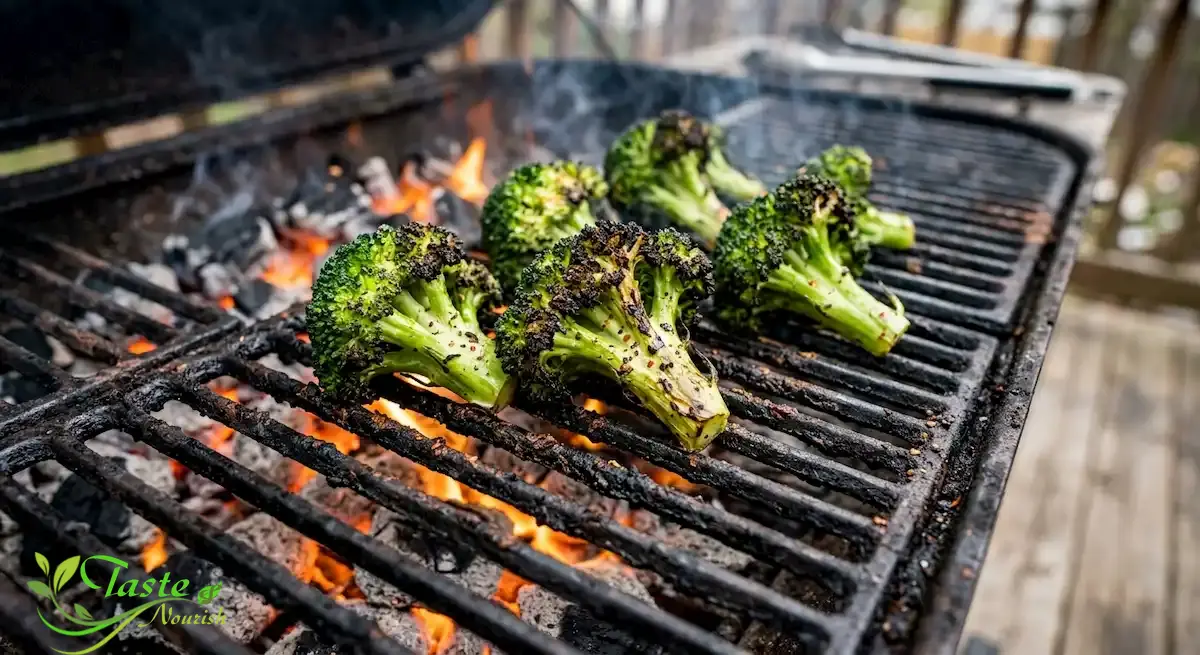
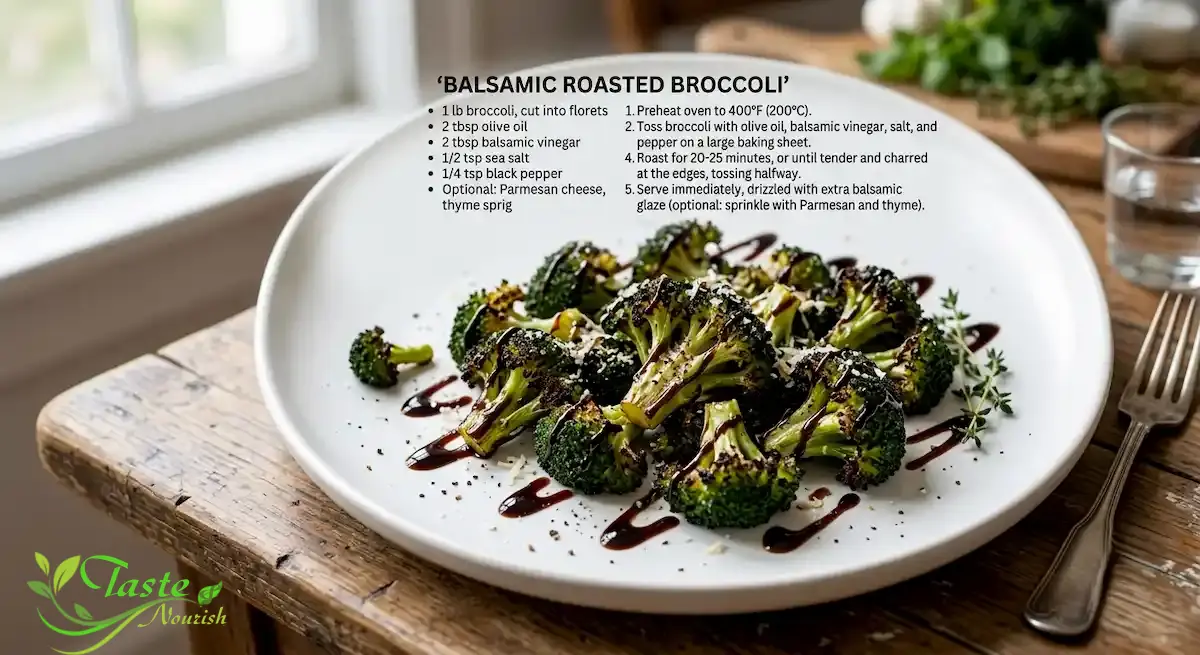
If you’ve only ever steamed or roasted broccoli, a good grilled broccoli recipe might change your mind about this vegetable entirely. The high heat of a grill caramelizes the edges of each floret, turning slightly bitter raw broccoli into something smoky, nutty, and genuinely craveable. It only takes about 10 minutes on the grates, which makes it one of the easiest sides to throw together while your main dish cooks.
This guide walks through everything you need to know: how to prep broccoli so it doesn’t fall through the grates, two simple methods for getting it right, and the nutrition science behind why broccoli earns its reputation as a genuinely healthy vegetable rather than just a diet cliché.
Quick Answer
The fastest path to a good grilled broccoli recipe: cut a head of broccoli into large, flat florets, toss with olive oil, salt, and pepper, then grill over medium-high heat (400–450°F) for 6 to 8 minutes, turning once, until the edges are charred and the stems are fork-tender. A quick 1 to 2 minute blanch before grilling helps the broccoli cook through without burning on the outside.
Key Takeaways: Grilled Broccoli Recipe
- A basic grilled broccoli recipe takes about 15 minutes from start to finish, including prep.
- Blanching broccoli briefly before grilling helps it cook evenly and keeps the outside from charring before the inside is tender.
- One cup of raw broccoli provides more vitamin C than a medium orange, based on USDA nutrient data.
- Grilling is a dry-heat method, so it generally causes less nutrient loss than boiling, where water-soluble vitamins leach into the cooking water.
- Cutting or chewing broccoli triggers the enzyme reaction that produces sulforaphane, its most-studied plant compound, so letting cut broccoli sit for a few minutes before cooking may help.
What Is Broccoli?
Broccoli is a cruciferous vegetable in the species Brassica oleracea, the same plant family that gives us cabbage, cauliflower, kale, and Brussels sprouts. What we eat are actually the plant’s immature flower buds, clustered tightly on top of an edible stalk.
It grows best in cool weather, which is why the best fresh broccoli tends to show up at farmers markets in spring and fall. Two main types are sold in U.S. grocery stores: the familiar large-headed Calabrese broccoli, and broccolini, a milder, longer-stemmed hybrid of broccoli and Chinese kale.
How to Make the Best Grilled Broccoli Recipe
Grilling broccoli comes down to two things: cutting it so it won’t fall through the grates, and managing the heat so the outside chars without leaving the inside raw and tough. A short blanch handles the second problem, and cutting flat, wide florets handles the first.
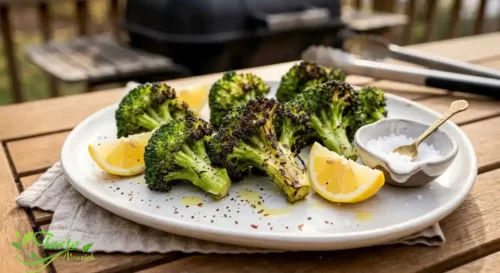
Easy Grilled Broccoli Side Recipe
This is the version to make on a weeknight, no special equipment required.
Ingredients:
- 1 large head broccoli (about 1 pound), cut into large, flat florets
- 3 tablespoons olive oil
- 2 cloves garlic, minced
- 1 teaspoon kosher salt
- 1/2 teaspoon black pepper
- 1 lemon, halved
Instructions:
- Preheat the grill to medium-high, around 400 to 450°F.
- Bring a pot of salted water to a boil and blanch the florets for 1 to 2 minutes, then drain and pat completely dry.
- Toss the florets with olive oil, garlic, salt, and pepper.
- Place the florets directly on the grates or in a grill basket and grill for 6 to 8 minutes, turning once, until charred in spots and tender when pierced with a fork.
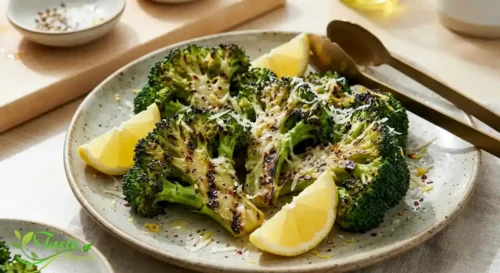
- Transfer to a platter and squeeze the lemon halves over the top before serving.
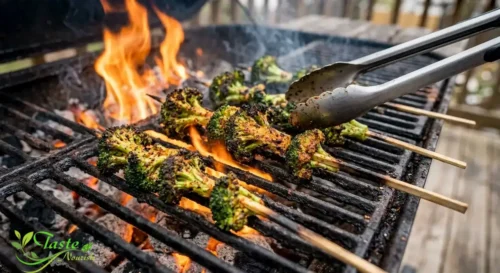
Charred Grilled Broccoli Skewers
Skewers are a good option for cookouts, since they’re easy to portion and look great on a platter.
Ingredients:
- 1 large head broccoli, cut into bite-sized florets
- Wooden or metal skewers
- 2 tablespoons olive oil
- 1/2 teaspoon smoked paprika
- 1/2 teaspoon salt
Instructions:
- If using wooden skewers, soak them in water for 30 minutes so they don’t burn.
- Blanch the florets for 2 to 3 minutes, then drain and cool slightly.
- Thread the florets onto skewers, packing them fairly close together.
- Brush with olive oil and sprinkle with smoked paprika and salt.
- Grill over direct heat for 4 to 5 minutes per side, until the edges are visibly charred.
Grilled Broccoli Recipe Nutrition Facts
Broccoli is low in calories and carbohydrates but dense in fiber, vitamin C, vitamin K, and a range of minerals. Grilling doesn’t change the basic macronutrient profile much, though a light coating of oil adds some fat and calories to the raw numbers below.
| Nutrient | Per 100g Raw | Per 1 Cup Chopped (91g) |
|---|---|---|
| Calories | 34 kcal | 31 kcal |
| Protein | 2.8 g | 2.6 g |
| Carbohydrates | 6.6 g | 6 g |
| Dietary Fiber | 2.6 g | 2.4 g |
| Vitamin C | ~89 mg | ~81 mg |
| Potassium | 316 mg | 288 mg |
| Calcium | 47 mg | 43 mg |
Figures are based on raw broccoli data from the USDA FoodData . Vitamin C content drops somewhat with any cooking method, since it’s sensitive to both heat and time.
Health Benefits of Grilled Broccoli
Broccoli’s fiber content supports regular digestion and may help maintain healthy blood sugar levels, since fiber slows how quickly sugar enters the bloodstream. A single cup also covers a meaningful share of daily vitamin C needs, which supports immune function and collagen production.
Research on cruciferous vegetables, broccoli included, has linked regular intake to better cardiovascular markers. One analysis summarized by Harvard Health Publishing found that people eating more cruciferous vegetables had less calcified plaque buildup in a major blood vessel compared with those eating less, though this kind of observational research can’t prove cause and effect on its own.
Broccoli is also one of the richest food sources of sulforaphane, a sulfur-containing plant compound that forms when the vegetable is cut, chewed, or lightly cooked. Sulforaphane and related compounds have shown antioxidant and anti-inflammatory activity in laboratory research, which is part of why cruciferous vegetables get so much attention from nutrition scientists.
Scientific Evidence
A research review published through the National Library of Medicine describes sulforaphane as broccoli’s most extensively studied bioactive compound, with laboratory and animal research pointing to a range of cancer-preventive mechanisms tied to this phytochemical.
Much of this evidence comes from cell and animal studies rather than large human trials, so the findings are promising but not conclusive proof of an effect in people.
Human population research adds another layer. A 2025 analysis pooling data from more than 97,000 people, covered by Harvard Health Publishing, found that those eating 20 to 40 grams of cruciferous vegetables daily had a 17% lower rate of colon cancer diagnosis than those eating the least, with benefits leveling off beyond that amount.
Cooking method matters for how many of these compounds actually make it to your plate. A study on broccoli cooking methods, indexed on PubMed through , found that steaming preserved the most vitamin C and glucosinolates, while boiling and stir-frying caused the greatest losses. Grilling wasn’t tested directly in that study, but because it’s a short, dry-heat method with no water for nutrients to leach into, it likely falls somewhere between steaming and pan-frying in terms of nutrient retention.
Potential Risks & Side Effects
Broccoli is generally well tolerated, but its fiber and natural sulfur compounds can cause gas or bloating in some people, especially when eaten in large amounts or introduced quickly into the diet. Cooking broccoli, including grilling it, tends to make it easier to digest than eating it raw.
Broccoli also contains vitamin K, a nutrient involved in blood clotting. This matters mainly for people managing their intake for medical reasons rather than the general population.
Who Should Avoid It?
People taking warfarin or other vitamin K–sensitive blood thinners are usually advised to keep their vitamin K intake consistent day to day rather than avoiding broccoli altogether, so this is a conversation for a prescribing doctor rather than a reason for blanket avoidance. People with active digestive flare-ups, such as an IBS episode, may want to scale back cruciferous vegetables temporarily, since they contain fermentable fibers that can worsen symptoms for some individuals.
How Much Should You Eat?
Federal dietary guidance recommends adults fill about half their plate with fruits and vegetables, with no specific broccoli quota. The colon cancer research mentioned earlier found benefits starting around 20 to 40 grams of cruciferous vegetables a day, roughly a quarter to a third of a cup cooked, which is a modest and easy target for most people to hit a few times a week.
How to Choose the Best Broccoli for Grilling
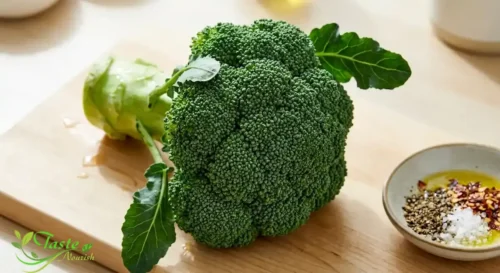
Look for tight, compact florets in a deep, even green, with no yellowing or visible flowering. The buds should feel firm and dense rather than soft or rubbery.
Check the stalk, too. A fresh stalk snaps cleanly rather than bending, and thicker stalks are actually good news for grilling, since they hold up better on the grates than delicate, thin ones.
Storage Tips
Store unwashed broccoli in the refrigerator crisper drawer, ideally in a perforated bag that lets some air circulate. Used this way, it typically stays fresh for three to five days.
For longer storage, blanch florets for about two minutes, cool them in ice water, drain thoroughly, and freeze in a sealed bag. Frozen broccoli holds up well for several months and works fine in a grilled broccoli recipe if thawed and patted dry first.
Common Mistakes in a Grilled Broccoli Recipe
Skipping the blanch is the most common misstep, and it usually results in florets that are charred outside and crunchy-raw inside. Cutting the florets too small is another issue, since small pieces slip through the grates and either fall into the fire or burn before the rest of the batch is done.
Using too little oil leads to broccoli sticking and tearing when you try to flip it, while walking away from the grill for too long tends to turn a nice char into an actual burn. A grill basket solves several of these problems at once if you’d rather not fuss with placement.
Myths vs Facts
| Myth | Fact |
|---|---|
| Cooking broccoli destroys all its nutrients | Cooking reduces some heat-sensitive nutrients like vitamin C, but it can also make certain compounds easier for the body to absorb. |
| Frozen broccoli is nutritionally inferior to fresh | Frozen broccoli is typically blanched and frozen shortly after harvest, so its nutrient levels are often comparable to fresh. |
| You must boil broccoli before grilling | A brief blanch helps but isn’t required; thinner florets can go straight on the grill with close attention. |
| Broccoli stems should be thrown away | Stems are edible and nutritious once the tough outer layer is peeled away, and they grill well. |
Grilling vs. Other Cooking Methods
| Method | Typical Time | Flavor | Nutrient Retention |
|---|---|---|---|
| Grilling | 6–8 minutes | Smoky, charred | Moderate to high; dry heat, no water leaching |
| Steaming | 4–5 minutes | Mild, fresh | Highest in most cooking studies |
| Boiling | 5–7 minutes | Soft, mild | Lowest; water-soluble nutrients leach out |
| Roasting | 15–20 minutes | Caramelized, nutty | Moderate; longer heat exposure than grilling |
| Stir-frying | 3–5 minutes | Savory, slightly charred | Lower; high heat and oil over time reduce some compounds |
Grilled Broccoli Recipe
4
servings10
minutes8
minutes150
kcalAn easy grilled broccoli side recipe with charred edges and tender stems, ready in about 15 minutes on a hot grill.
Ingredients
1 large head broccoli (about 1 pound), cut into large florets
3 tablespoons olive oil
2 cloves garlic, minced
1 teaspoon kosher salt
1/2 teaspoon black pepper
1 lemon, halved
Directions
- Preheat the grill to medium-high, around 400 to 450°F.
- Bring a pot of salted water to a boil and blanch the florets for 1 to 2 minutes, then drain and pat completely dry.
- Toss the florets with olive oil, garlic, salt, and pepper.
- Place the florets directly on the grates or in a grill basket and grill for 6 to 8 minutes, turning once, until charred in spots and tender when pierced with a fork.
- Transfer to a platter and squeeze the lemon halves over the top before serving.
Grilled Broccoli Recipe FAQs
How long does a grilled broccoli recipe take from start to finish?
Plan on about 15 minutes total: 5 minutes to prep and blanch, plus 6 to 8 minutes on the grill.
Do I need to boil broccoli before grilling?
It’s not strictly required, but a quick 1 to 2 minute blanch makes it much easier to get a good char without leaving the inside undercooked.
Can I grill frozen broccoli?
Yes, though it’s best to thaw it first and pat it very dry, since excess moisture prevents good browning on the grill.
What temperature should the grill be for broccoli?
Medium-high heat, around 400 to 450°F, works well. This is hot enough to char the edges quickly without burning the florets before the inside cooks through.
Is grilled broccoli healthy?
Yes. Grilling adds minimal calories beyond the oil used, and because it’s a dry, relatively quick cooking method, it retains more of broccoli’s vitamin C and other heat-sensitive nutrients than boiling does.
Conclusion
A grilled broccoli recipe doesn’t need to be complicated to be genuinely good. Cut it into flat pieces, give it a quick blanch, season it simply, and let the grill do the rest. Whether you go with loose florets or charred grilled broccoli skewers, you’ll end up with a side dish that holds its own next to whatever’s cooking on the main grates.
References
- Broccoli, Raw. USDA FoodData Central, U.S. Department of Agriculture, Agricultural Research Service. https://fdc.nal.usda.gov/fdc-app.html#/food-details/170379/nutrients
- Sulforaphane: A Broccoli Bioactive Phytocompound with Cancer Preventive Potential. National Library of Medicine, National Institutes of Health. https://pmc.ncbi.nlm.nih.gov/articles/PMC8508555/
- How Many Servings of Cruciferous Vegetables Should You Eat to Fight Colon Cancer? Harvard Health Publishing, Harvard Medical School. https://www.health.harvard.edu/cancer/how-many-servings-of-cruciferous-vegetables-should-you-eat-to-fight-colon-cancer
- Effects of Different Cooking Methods on Health-Promoting Compounds of Broccoli. PubMed, National Library of Medicine. https://pubmed.ncbi.nlm.nih.gov/19650196/
- Vitamin C: Fact Sheet for Health Professionals. Office of Dietary Supplements, National Institutes of Health. https://ods.od.nih.gov/factsheets/VitaminC-HealthProfessional/