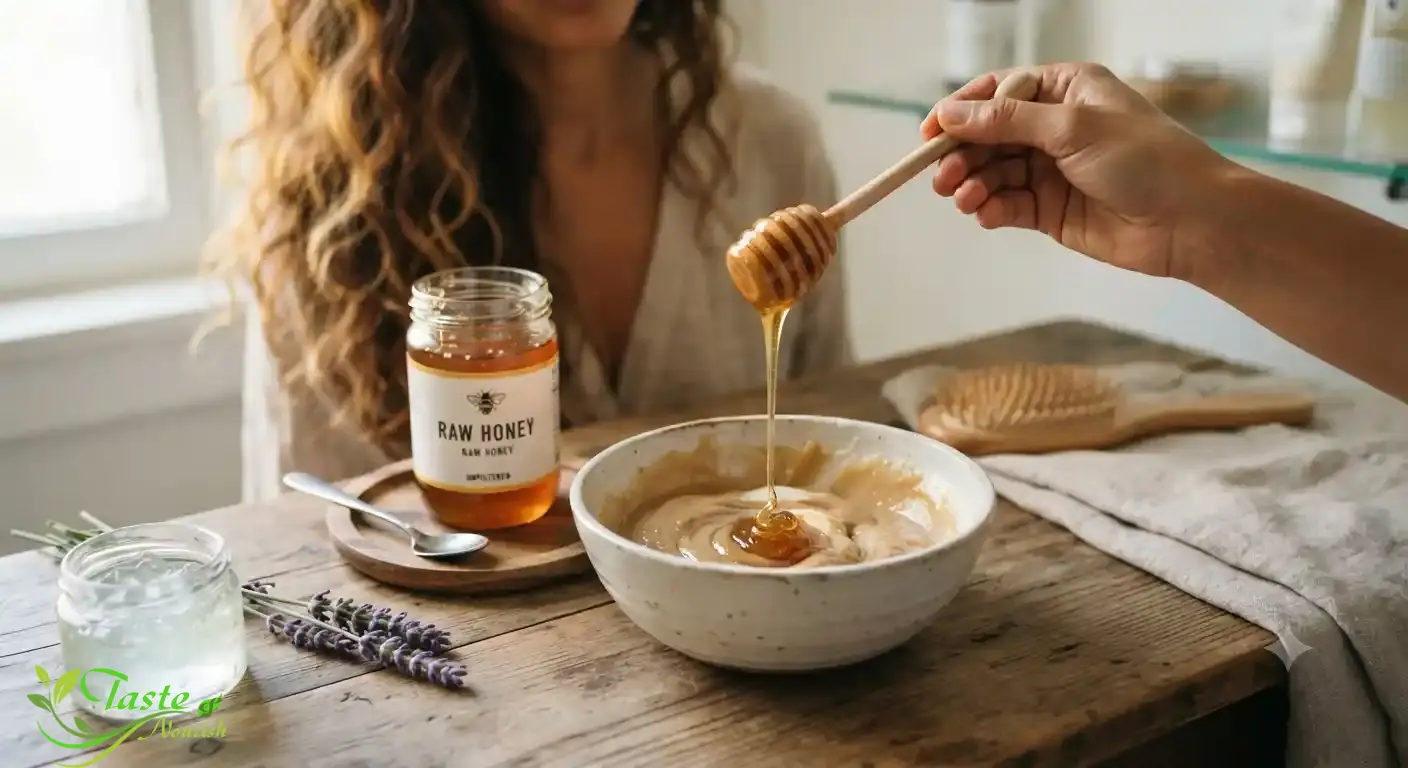
Honey for Hair — Honey has a way of showing up everywhere in the “natural beauty” conversation, and hair care is no exception. Scroll through any hair forum or salon waiting room, and someone is talking about a honey mask, a honey rinse, or a spoonful of honey stirred into conditioner. But does it actually do anything for your strands, or is this just another kitchen-cabinet trend riding on nostalgia?
The honest answer sits somewhere in the middle. Honey does have real, documented properties that matter for hair and scalp health. It’s not a miracle cure, and it won’t reverse genetic hair loss. What it can do is add moisture, support a calmer scalp, and give strands a smoother, glossier finish when used correctly.
This guide walks through what honey actually is from a chemical standpoint, what the research says about its effects on hair and scalp, how to use it safely, and who might want to skip it altogether.
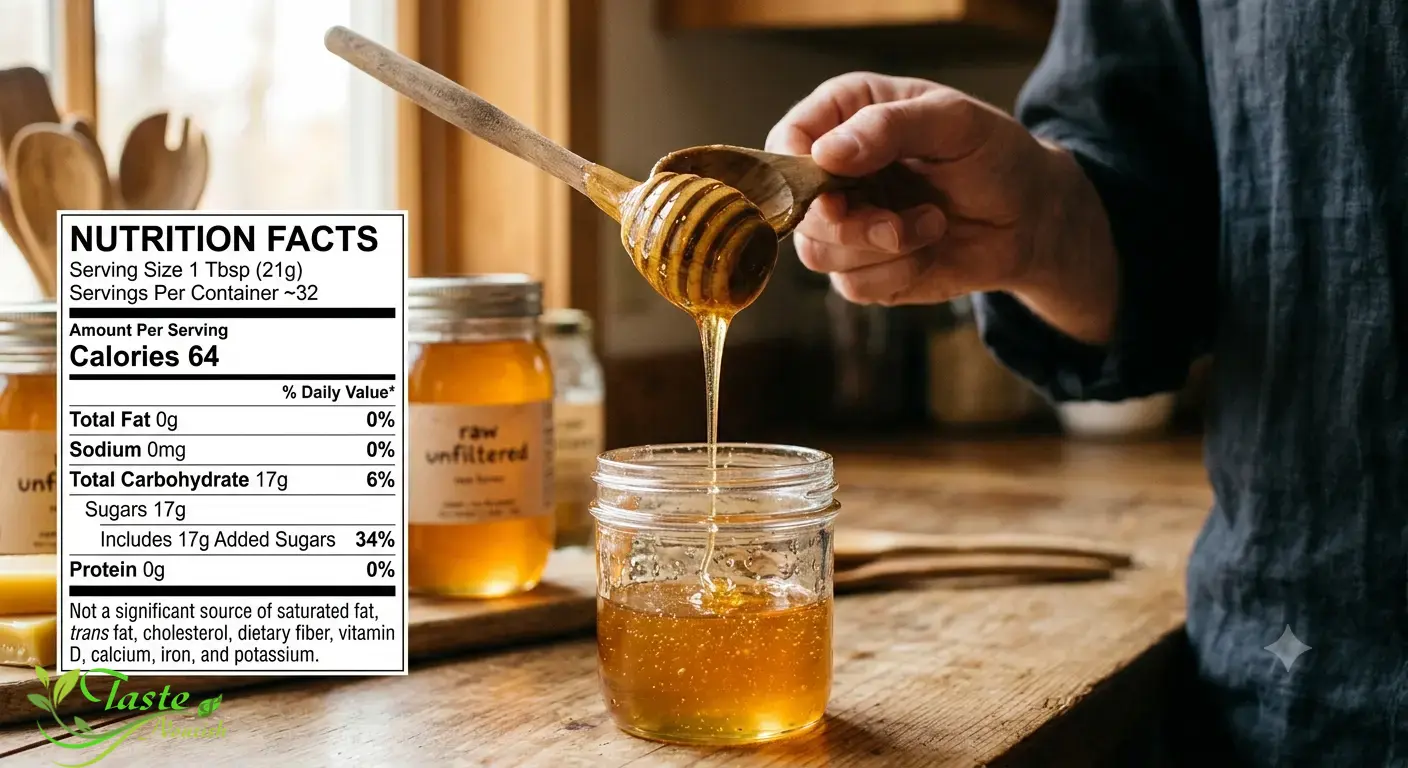
Honey isn’t just sugar water. It’s a supersaturated solution made mostly of fructose and glucose, but it also carries trace proteins, amino acids, enzymes, organic acids, and antioxidant compounds picked up from the flowers bees visit. That mix of sugars and bioactive extras is exactly why it behaves differently on hair and skin than a plain syrup would.
Cosmetic scientists have studied honey for decades, and a peer-reviewed review in the Journal of Cosmetic Dermatology confirms that honey has been used in skin formulations since ancient times, prized for properties that go well beyond sweetness. In cosmetic formulations, honey exerts emollient, humectant, soothing, and hair conditioning effects, and it helps keep skin healthier while regulating pH and limiting pathogen growth.
That combination of effects is the real reason it keeps turning up in shampoos, masks, and conditioners.
Humectant and Emollient Properties
A humectant pulls water toward itself, drawing moisture from the air (or a wet hair strand) into whatever it’s applied to. An emollient works differently — it coats a surface and helps seal moisture in rather than pulling it in. Honey happens to do both jobs at once, which is fairly rare for a single natural ingredient.
This dual action explains why a honey mask can leave dry, brittle hair feeling noticeably softer right after rinsing. The humectant effect draws water into the strand, and the light emollient film that remains behind helps lock some of that hydration in place, at least temporarily. It’s not a permanent fix, but for anyone dealing with dry or frizz-prone hair, that short-term boost in softness is genuinely useful.
Antibacterial and Antioxidant Compounds
Honey’s antibacterial reputation isn’t folklore. A widely cited review on honey’s clinical applications found consistent evidence supporting its use as an antibacterial, anti-inflammatory, antioxidant, and antiviral agent, largely due to enzymatic hydrogen peroxide production and other bioactive compounds. That same mechanism, which makes honey useful in wound care, is part of why it’s been studied for scalp conditions linked to microbial overgrowth, like dandruff and seborrheic dermatitis.
The antioxidant side matters too. Darker honey varieties, such as buckwheat, tend to carry higher polyphenol content than lighter varieties like clover honey, and these compounds may help reduce oxidative stress on the scalp environment. None of this means honey “detoxes” your scalp, a claim you’ll see thrown around online with no real backing, but it does mean the ingredient carries more functional chemistry than a simple sugar.
Potential Benefits of Honey for Hair
Most of the excitement around honey for hair boils down to four overlapping benefits: moisture, scalp comfort, strand strength, and a smaller, more debated claim around growth. Each one is worth examining on its own terms, because the strength of evidence varies quite a bit between them.
Moisture and Shine
This is honey’s best-supported hair benefit. Because of its humectant and emollient qualities, honey can help hydrate strands and coat the hair shaft in a way that reflects light more evenly, which reads visually as shine. Curly and coily hair types, which tend to lose moisture faster due to the shape of the hair shaft, often respond especially well to this kind of treatment.
Key takeaway: If your main hair concern is dryness, frizz, or dullness, honey’s moisture-related properties are the most reliably useful reason to try it.
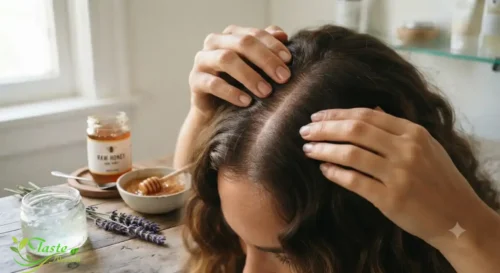
Scalp Health and Dandruff
This is where honey has actual clinical research behind it, not just cosmetic-industry talking points. A study published in the European Journal of Medical Research applied diluted crude honey to the scalp, face, and chest of patients with chronic seborrheic dermatitis, a condition that causes itchy, flaking, inflamed skin and can contribute to hair shedding.
The researchers noted that honey’s antibacterial, antifungal, and antioxidant activities made it a candidate for managing seborrheic dermatitis and dandruff, and reported meaningful improvement in symptoms with weekly topical application.
That’s a genuinely notable finding, but it comes with caveats. The study was small, used a specific application method (diluted honey left on for a few hours), and hasn’t been replicated at scale. Seborrheic dermatitis itself is a chronic, relapsing condition; the National Institutes of Health’s clinical overview notes that it’s often resistant to standard treatments, which is part of why a low-cost, low-risk option like honey drew research interest in the first place.
If you have diagnosed seborrheic dermatitis, this is a case where honey may be worth discussing with a dermatologist rather than something to rely on alone.
Hair Strength and Breakage
Honey contributes a small amount of protein and, more importantly, helps hair retain moisture — and moisture retention is directly linked to reduced breakage. Dry hair is more porous and more prone to snapping, so anything that improves the hair’s moisture balance can indirectly reduce split ends and mechanical damage from brushing or styling.
That said, this benefit is secondary and cumulative rather than dramatic. Honey isn’t a protein treatment in the way a keratin mask is, and it won’t repair already-split ends. Think of it as supportive maintenance rather than a repair product.
Hair Growth Claims: What the Evidence Actually Shows
This is the claim that needs the most caution. You’ll see plenty of articles suggesting honey “stimulates” follicles or “wakes up” dormant hair growth. The honest picture is much more modest: some early research suggests honey may support new cell activity on skin generally, and by extension, a healthier scalp environment could be more supportive of hair retention.
But there is no strong clinical evidence that honey regrows hair lost to genetic pattern baldness, hormonal shifts, or other established causes of hair loss. Where honey may help is indirectly — by calming an inflamed, flaky, or irritated scalp (as seen in the seborrheic dermatitis research above), which in turn may reduce hair shedding tied to that specific inflammation. That’s a meaningfully different claim than “honey grows hair,” and it’s the distinction worth keeping in mind before trying it as a hair-loss remedy.
Types of Honey and Which Works Best for Hair
Not all honey is created equal, and the differences aren’t just marketing. Processing, floral source, and purity all affect how much of honey’s original enzyme and antioxidant content survives into the jar.
Honey Type
Processing
Antioxidant Level
Best Use for Hair
Raw honey
Unpasteurized, unfiltered
Highest
Masks, scalp treatments
Regular (pasteurized) honey
Heat-treated, filtered
Lower
Light conditioning, shampoo add-ins
Manuka honey
Minimally processed, lab-graded
High, with added antibacterial compounds
Scalp irritation, dandruff-prone scalps
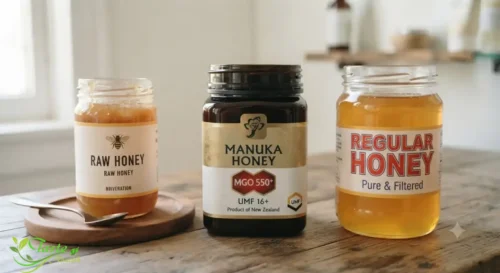
Raw Honey vs. Regular Honey vs. Manuka Honey
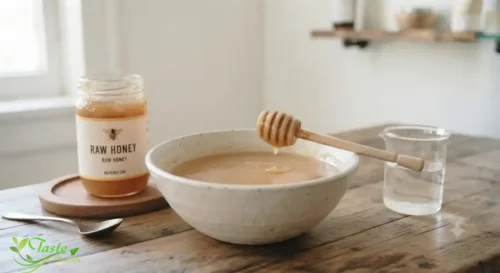
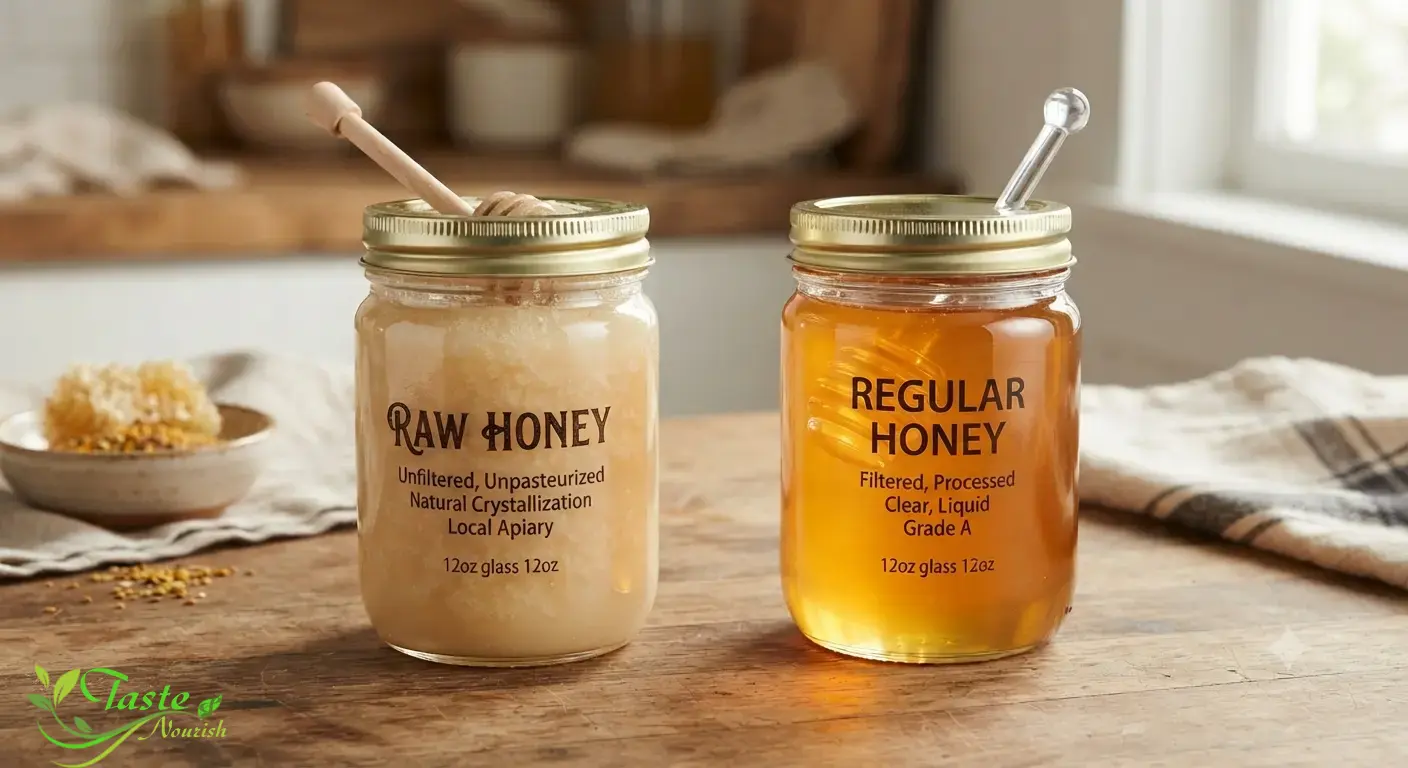
Raw honey retains more of its natural enzymes, pollen, and antioxidant compounds because it skips the heavy filtration and pasteurization most grocery-store honey goes through. For hair masks and scalp treatments, this makes raw honey the generally preferred choice, since the goal is to get as much of honey’s bioactive content onto the hair and scalp as possible.
Manuka honey, sourced from New Zealand’s manuka bush, contains methylglyoxal, a compound linked to its notably stronger antibacterial activity compared to most other honey varieties. It’s pricier and mostly marketed for skin and wound care, but some people with dandruff-prone or easily irritated scalps prefer it for hair treatments specifically because of that added antimicrobial edge. Regular, heavily processed honey still works reasonably well for basic moisture, but it’s the least potent option of the three for anyone chasing the antibacterial or antioxidant benefits.
How to Use Honey for Hair
Honey is sticky, which is the single biggest practical hurdle to using it in hair care. The workarounds are simple, though, and mostly come down to dilution and rinse technique.
Pro tip: Always dilute honey with water or oil before applying it to hair. Undiluted honey is thick enough to be genuinely difficult to rinse out, especially from longer or thicker hair.
Simple Honey Hair Mask
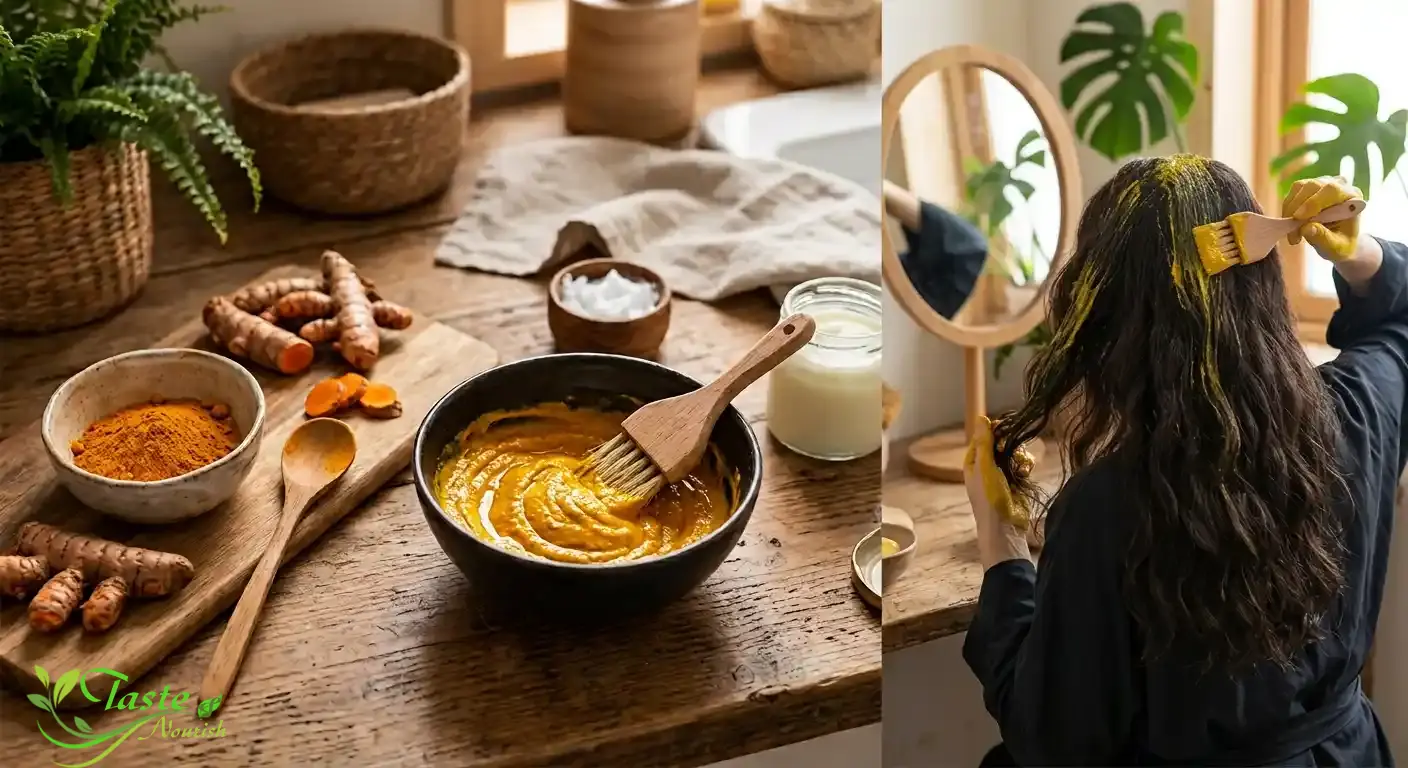
Mix two tablespoons of raw honey with two tablespoons of warm water until it loosens into a pourable consistency.
Apply section by section, focusing on mid-lengths and ends rather than the scalp if your hair is fine or oily.
Leave it on for 20 to 30 minutes, covering with a shower cap if you’d like to avoid drips.
Rinse thoroughly with lukewarm water, then shampoo as usual to remove any residue.
Honey and Oil Treatment
Combining honey with a carrier oil like coconut, argan, or olive oil balances out the stickiness while adding extra slip and moisture. A common ratio is one part honey to one part oil, warmed slightly so the two blend smoothly rather than separating. This version tends to work especially well on very dry or coarse hair textures that need a heavier treatment than the water-diluted mask above.
Honey in Shampoo or Conditioner
For a lower-commitment option, stir a teaspoon of honey directly into a dollop of shampoo or conditioner in your hand before applying as usual. This won’t deliver as concentrated a dose as a standalone mask, but it’s a low-effort way to add a bit of extra moisture to a regular wash routine without adding a separate step.
Key takeaway: Start with the diluted mask or the shampoo mix-in before trying a heavier oil treatment, especially if you haven’t used honey on your hair before and want to gauge how your scalp responds.
Risks, Side Effects, and Who Should Avoid Honey on Hair
Honey is generally well tolerated on skin and scalp, but it isn’t risk-free for everyone. The most relevant concerns are allergic reactions, scalp irritation, and a few situations where caution is genuinely warranted.
Bee product allergies: Anyone with a known allergy to bee venom, pollen, or other bee-derived products should patch test honey on a small area of skin before applying it to the scalp, or avoid it altogether.
Sensitive or broken skin: Honey applied to scalps with open sores, active infections, or significant irritation should be discussed with a dermatologist first rather than self-treated.
Stickiness and buildup: Improperly rinsed honey can leave hair feeling tacky or attract dust and debris, particularly in humid climates.
Color-treated hair: There’s limited formal research here, but the mild acidity and sugar content of honey are generally considered safe for color-treated strands when used occasionally and rinsed well.
One important note that isn’t about topical hair use but comes up often in honey-related searches: honey should never be given to infants under 12 months old. According to the CDC, honey can contain the bacteria that cause infant botulism, and it should never be fed to a child younger than one year old. This applies to ingestion, not topical scalp use on an older child or adult, but it’s worth knowing if honey shows up anywhere else in a household with a baby.
Buying and Storing Honey for Hair Care
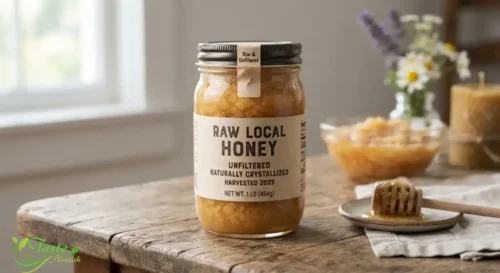
For hair care purposes, raw and unfiltered honey is generally the better buy, since it retains more of the enzymes and antioxidants responsible for honey’s cosmetic benefits. Look for labels that say “raw” or “unpasteurized,” and check that the ingredient list is just honey, with nothing added.
Storage is refreshingly low-maintenance. Honey doesn’t need refrigeration and, stored in a sealed container at room temperature, away from direct sunlight, it can last for years without spoiling. If it crystallizes, which is a completely normal process and not a sign of spoilage, a gentle warm-water bath around the jar will return it to a liquid, spreadable state.
Common Myths About Honey for Hair
A few honey-and-hair claims circulate widely enough that they’re worth addressing directly:
Myth: Honey lightens hair color like lemon juice. Honey has a very mild natural bleaching effect at best, and it’s far too subtle to lighten hair in any noticeable way from a single treatment.
Myth: Honey “detoxes” the scalp. Scalps don’t accumulate toxins in the way this framing implies; what honey may do is support a healthier microbial balance, which is a different and more modest claim.
Myth: More honey means better results. Using excessive amounts mostly increases the difficulty of rinsing without adding proportional benefit, and can leave hair feeling heavier rather than lighter.
Myth: Honey works the same as a keratin or protein treatment. Honey offers trace protein at best; it’s a moisture-focused ingredient, not a structural repair treatment.
Honey for Hair FAQs
Q1. Can honey regrow hair on a bald spot?
There’s no strong clinical evidence that honey regrows hair lost to genetic pattern baldness or other established hair-loss causes. It may support scalp health, which indirectly matters for hair retention, but it isn’t a growth treatment.
Q2. How often should I use a honey hair mask?
Once a week is a reasonable starting point for most hair types. Very dry or coarse hair may tolerate more frequent use, while fine or oily hair often does better with a honey treatment every two to three weeks.
Q3. Does honey help with dandruff?
Topical honey has been studied specifically for seborrheic dermatitis and dandruff, with one clinical study reporting meaningful symptom improvement from weekly application. Persistent or severe dandruff still deserves a dermatologist’s input.
Q4. Is raw honey better than regular honey for hair?
Generally yes. Raw, unpasteurized honey retains more of the enzymes and antioxidants that give honey its cosmetic benefits, since heavy processing and filtration reduce these compounds.
Q5. Can honey damage colored or chemically treated hair?
There’s no strong evidence that occasional honey treatments harm color-treated hair. As with any new ingredient, patch testing and thorough rinsing are sensible precautions.
Conclusion
Honey earns its place in hair care conversations for real reasons: documented humectant and emollient properties, antibacterial and antioxidant compounds, and a genuinely interesting body of research on scalp conditions like dandruff and seborrheic dermatitis. Where the claims fall apart is in the growth-miracle territory, where the evidence simply doesn’t support the more dramatic marketing language you’ll find scattered across the internet.
Used with reasonable expectations, a honey hair mask or an occasional oil-and-honey treatment is a low-cost, low-risk way to add moisture and shine, particularly for dry or curl-prone hair types. Just dilute it properly, patch test if you have any bee-product sensitivities, and treat scalp-condition claims with the same cautious optimism the actual research supports.
References
Al-Waili, N.S. “Therapeutic and prophylactic effects of crude honey on chronic seborrheic dermatitis and dandruff.” European Journal of Medical Research (via PubMed, National Library of Medicine, NIH). https://pubmed.ncbi.nlm.nih.gov/11485891/
Yaghoobi, R., et al. “Honey in dermatology and skin care: a review.” Journal of Cosmetic Dermatology (via PubMed, National Library of Medicine, NIH). https://pubmed.ncbi.nlm.nih.gov/24305429/
Bulman, S.E.L., et al. “Evidence for Clinical Use of Honey in Wound Healing as an Anti-bacterial, Anti-inflammatory Anti-oxidant and Anti-viral Agent: A Review.” PubMed Central (PMC), National Center for Biotechnology Information, NIH. https://www.ncbi.nlm.nih.gov/pmc/articles/PMC3941901/
U.S. Department of Agriculture, Agricultural Research Service. “FoodData Central” — food composition and nutrient database for honey and other foods. https://fdc.nal.usda.gov/
**Hanan Abo Samra** shares practical cooking insights, delicious recipes, and evidence-based nutrition information. Drawing on more than 20 years of hands-on cooking experience, she creates helpful food content that combines everyday cooking knowledge with information from reliable scientific sources. Her goal is to help readers better understand the foods they eat, explore their nutritional benefits, and prepare delicious meals with confidence.