If you’ve ever stood in your kitchen holding a cracked egg over the sink, trying to decide whether to toss the yolk or let it slide into the pan, you’re not alone. The egg white vs whole egg debate has followed fitness enthusiasts, dietitians, and health-conscious home cooks for decades — and somehow, in 2025, it’s still one of the most Googled nutrition questions on the planet. But here’s what’s changed: science has caught up with common sense, and the old “yolks are evil” narrative is crumbling fast.
This article will walk you through every angle of the egg white vs whole egg comparison using the latest research, real nutrition data, and practical, actionable guidance so you can make a genuinely informed choice — not one based on gym-floor mythology.
Why the Egg Debate Still Matters in 2026
For years, the conventional wisdom was simple — if you wanted to be lean, build muscle, and protect your heart, you cracked the eggs, dropped the whites into the pan, and threw the yolks in the trash. Gyms across the world reinforced this idea, and breakfast menus filled up with egg-white omelets presented as the pinnacle of clean eating.
But what if this advice was not only oversimplified but actually counter-productive? What if discarding the yolk was like buying a car and throwing away the engine? That’s essentially what modern nutrition research is telling us now, and the findings are genuinely surprising even to seasoned athletes.
The truth is that both egg whites and whole eggs have a legitimate, strategic role to play in a balanced diet. The choice between them isn’t really about which is “healthier” in some universal, one-size-fits-all sense — it’s about understanding your personal goal, your caloric budget, your metabolic health, and what your body actually needs at a given moment.
Understanding the Anatomy of an Egg
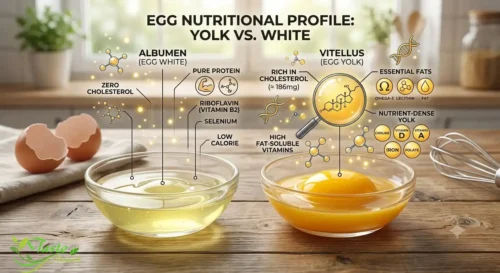
Before we can compare what’s in an egg white versus a whole egg, it helps to understand why an egg is built the way it is. Think of a chicken egg as a brilliantly engineered biological package, each component designed with a specific purpose. The egg white (also called the albumen) exists primarily to protect the developing embryo and provide it with protein and water.
The yolk, on the other hand, is the nutrient powerhouse — the fuel source packed with fats, fat-soluble vitamins, and bioactive compounds that support growth and development. When you eat just the white, you’re consuming the protection layer. When you eat the whole egg, you’re consuming the entire system.
What’s Inside the Egg White?
Egg whites are high in protein — about 3.6 grams per large egg white — but very low in calories, containing just 17 calories, with essentially no fat and no cholesterol, making them a concentrated protein source.
The egg white is made up almost entirely of water (roughly 90%) and protein (around 10%), with the remaining fraction being trace minerals like sodium and potassium. It provides a complete protein, meaning it contains all nine essential amino acids your body cannot produce on its own. This is an important distinction — not all protein sources are created equal, and egg white protein sits at the top of the biological value (BV) scale alongside whey and casein.
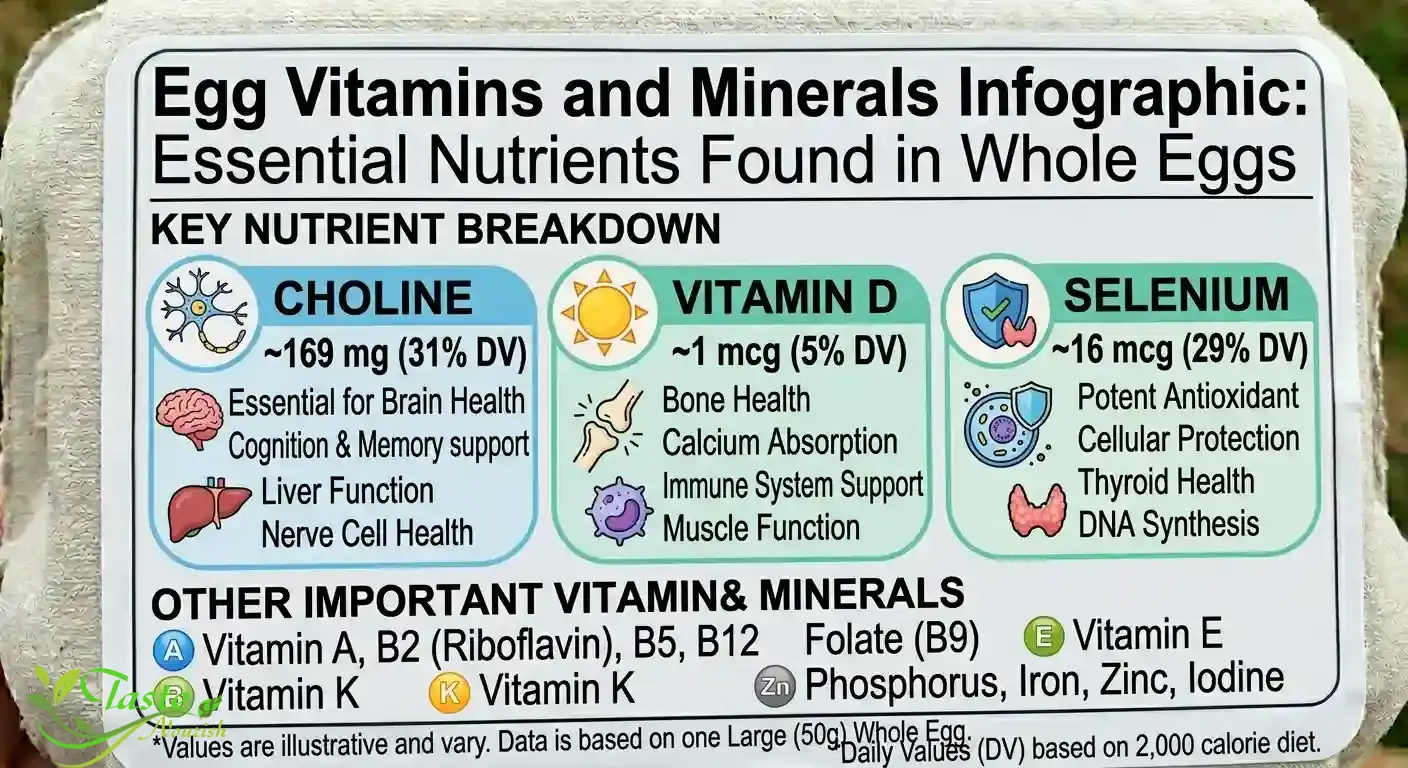
What the egg white does not contain is equally important to understand. Compared with whole eggs, egg whites provide fewer vitamins and minerals — most of an egg’s nutrients, including vitamin A, vitamin B12, vitamin D, choline, and selenium, are found in the yolk. So while the white gives you a clean, lean, high-quality protein hit, it’s delivering that protein stripped of the companion nutrients that would otherwise help your body use it most effectively. It’s protein in isolation, efficient but incomplete.
What’s Inside the Egg Yolk?
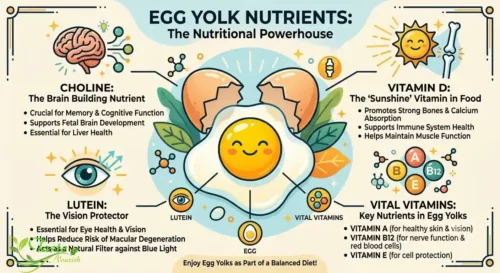
The yolk is where the real nutritional drama happens. The yolk contains significant amounts of vitamins A, D, E, K, and B complex vitamins, along with iron and zinc. The yolk is also a major source of choline, a nutrient needed for brain development, neurotransmission, and bone health.
On top of those, the yolk delivers lutein and zeaxanthin — two powerful antioxidants that are directly linked to eye health and the reduction of age-related macular degeneration. It also contains healthy unsaturated fats, phospholipids, and yes, cholesterol — but as we’ll discuss shortly, that cholesterol is far less sinister than you’ve been led to believe.
Key Takeaway: The egg white delivers lean, high-quality protein with minimal calories. The yolk delivers a dense matrix of micronutrients, healthy fats, and bioactive compounds. Together, they form one of the most complete whole foods available to humans.
Egg White vs Whole Egg: Complete Nutrition Facts
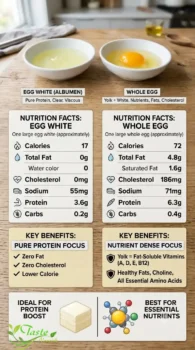
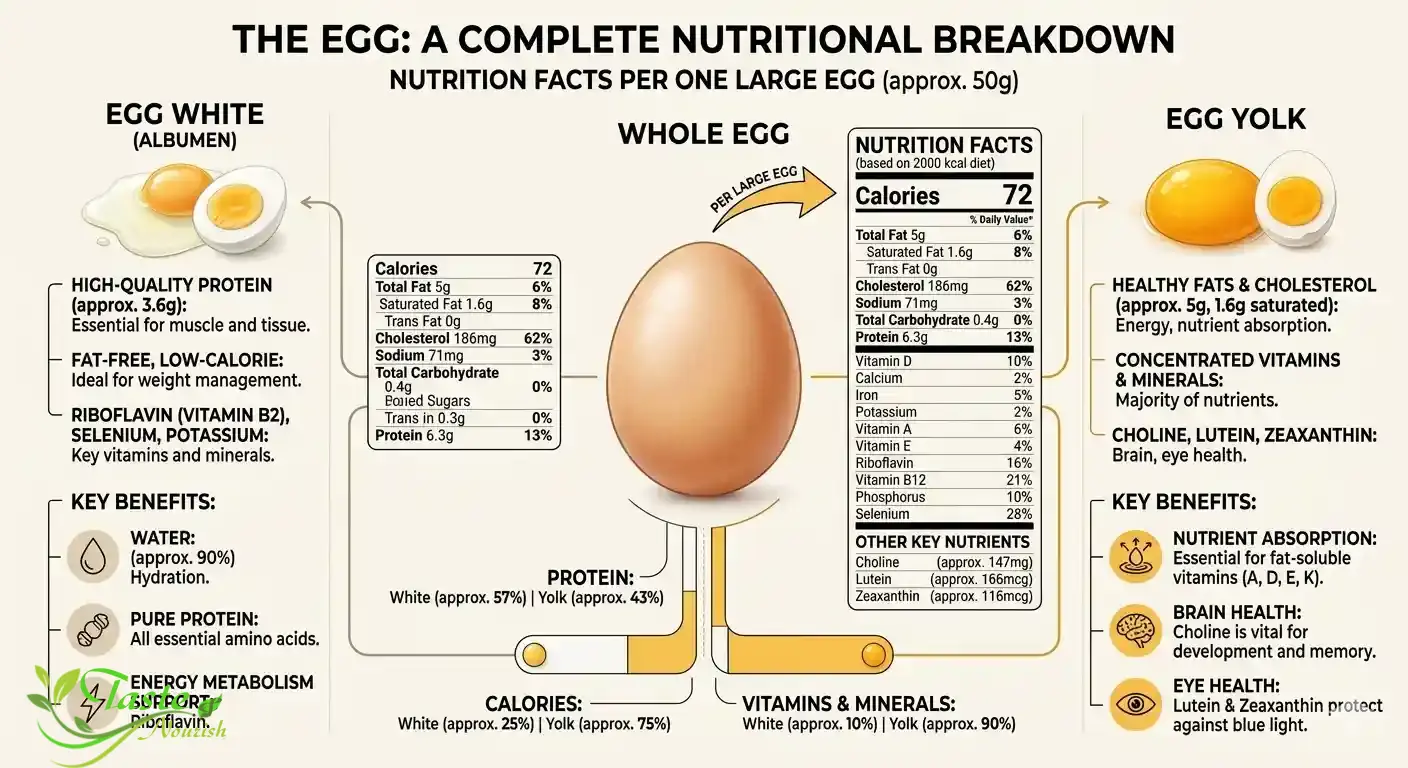
Let’s get granular. Nutrition decisions should be based on data, not dogma. Here is a full side-by-side breakdown of one large egg white versus one whole large egg, sourced from USDA Food Data Central:
Egg White vs Whole Egg — Macronutrient Comparison (Per 1 Large Egg)
Nutrient
Egg White Only
Whole Egg
Calories
17 kcal
70–80 kcal
Protein
3.6 g
6.3 g
Fat
0 g
~5 g
Saturated Fat
0 g
~1.6 g
Cholesterol
0 mg
~185–200 mg
Carbohydrates
0 g
~0 g
Sodium
~55 mg
~65 mg
Egg White vs Whole Egg — Key Micronutrients
Nutrient
Egg White Only
Whole Egg
Vitamin A
0 IU
~245 IU
Vitamin D
0 IU
~41 IU
Vitamin B12
Trace
~0.6 mcg
Choline
~0.4 mg
~147 mg
Selenium
~6.6 mcg
~15.4 mcg
Lutein + Zeaxanthin
0 mcg
~252 mcg
Iron
~0.03 mg
~0.9 mg
Zinc
~0.01 mg
~0.6 mg
Looking at this table, the picture becomes very clear very quickly. The egg white wins handily on the calorie-to-protein ratio — it’s an incredibly efficient vehicle for lean protein. But the whole egg wins on almost every other micronutrient metric, often by a factor of 10 or more. The key takeaway from USDA data is that egg protein per 100g is 12.6g for whole eggs and 10.9g for whites alone. The yolk is actually richer in protein per gram, at 15.9g per 100g, but it also brings 26.5g of fat along with it.
Calorie Comparison at a Glance
One of the most common points of confusion in the egg white vs whole egg debate is the calorie math. People assume that eating egg whites is automatically “lighter,” but the gap depends entirely on how many you’re eating. To get 30 grams of protein from egg whites alone, you need about 8 egg whites. To get 30 grams from whole eggs, you need about 5 whole eggs. The calorie difference? 136 calories from whites versus 360 calories from whole eggs. That’s a meaningful gap if you’re in a calorie deficit — but it also means you’re missing out on an enormous amount of fat-soluble vitamins, choline, and healthy fats that the yolks would have supplied.
Protein Content: Who Wins?
Here’s where it gets counterintuitive. Gram for gram, egg whites appear to offer more protein per calorie — and they do. But protein quality isn’t just about grams. It’s about what your body actually does with that protein once it’s inside you. Healthline estimates that consuming the same 74 calories as one whole egg in egg whites would supply nearly 15 grams of protein compared with 6.2 grams in one egg. So if your only goal were maximizing protein per calorie consumed, egg whites win that race. But the story doesn’t end there — not even close.
The Cholesterol Myth — Busted Once and For All
Ask anyone over 50 why they avoid egg yolks and they’ll almost certainly reference cholesterol and heart disease. This fear has its roots in nutritional research from the 1960s and 1970s, when scientists observing populations with high saturated fat intake assumed that dietary cholesterol was a direct driver of cardiovascular disease. Entire generations of Americans were told to avoid egg yolks as a result. But that research was flawed, correlational, and critically — it didn’t distinguish between dietary cholesterol and blood cholesterol. These are two very different things.
What Does Modern Science Actually Say?
Studies have verified that eating whole eggs does not increase cholesterol or your risk for heart disease. Lecithin, a phospholipid in the egg yolk, actually decreases absorption of the cholesterol in the gut. This is one of the most stunning reversals in modern nutrition science. The very thing that was supposed to kill you — the yolk’s cholesterol — comes packaged with a compound that limits how much your intestines actually absorb. Nature, it turns out, had already built in a safeguard.
In the 2020–2025 Dietary Guidelines for Americans, limits on dietary cholesterol were removed entirely, with the guidelines now stressing the importance of overarching dietary patterns rather than isolating individual nutrients. This was a landmark shift in official nutritional policy, one that validated what many researchers had been arguing for years. A 2024 meta-analysis of 23 studies found no significant link between eating up to 7 eggs per week and increased cardiovascular risk in healthy adults, according to a review published in the National Library of Medicine.
📌 Reader Note: The real dietary villain when it comes to raising LDL cholesterol is not the egg yolk — it’s saturated fat from sources like butter, processed meats, cheese, and fried foods. What you cook your eggs with matters far more than the eggs themselves.
Who Should Still Be Cautious About Yolks?
While the vast majority of healthy adults can eat whole eggs freely, there are specific populations who should exercise more caution. For those managing hyperlipidemia or cardiovascular diseases, egg whites are favored for their lack of cholesterol. Most current guidelines allow for moderate whole egg consumption — about one egg daily — for the average person, while individuals with dyslipidemia or diabetes are encouraged to focus on egg whites. If you fall into one of these categories, the smart move is to consult your physician or a registered dietitian before making blanket dietary decisions based on general population research.
People who are genetically classified as “hyper-responders” — those with variations like the ApoE4 gene — may see meaningful increases in LDL cholesterol from dietary cholesterol intake. These individuals represent a small but important minority, and for them, limiting egg yolks to three or four per week while relying more heavily on egg whites is a reasonable, evidence-based approach. Everyone else, however, has significantly less to worry about than the outdated cholesterol narrative would have you believe.
Egg White vs Whole Egg for Muscle Building
This is arguably the most contested battleground in the egg white vs whole egg debate, particularly among athletes, bodybuilders, and recreational gym-goers. For decades, the standard gym wisdom held that egg whites were the superior muscle-building food — lean, protein-dense, and free from “unnecessary” fat calories. That advice is now being actively challenged — and overturned — by some of the most compelling exercise nutrition research published in recent years.
The Landmark University of Illinois Study
A landmark study published in the American Journal of Clinical Nutrition found that the widespread practice of throwing away egg yolks to maximize dietary protein intake from eggs is actually counterproductive, according to Nicholas Burd, a University of Illinois professor of kinesiology who led the research. The yolks also contain protein, along with key nutrients and other food components that are not present in egg whites, and something in the yolks is boosting the body’s ability to utilize that protein in the muscles.
Participants who ate whole eggs after resistance training experienced a 40% greater muscle protein synthesis response compared with those who ate egg whites with the same protein content. Both conditions increased the phosphorylation of key muscle-building signaling pathways, but whole-egg ingestion increased the postexercise myofibrillar protein synthetic response to a significantly greater extent.
This is a stunning finding. It means that two people eating the exact same amount of protein from eggs — one eating whole eggs, one eating only whites — will have dramatically different anabolic responses. The whole-egg eater builds more muscle.
The implications of this research cannot be overstated. If you’re spending time in the gym, investing in a training program, and trying to optimize your recovery and muscle growth, eating only egg whites while discarding the yolks is actively working against your goals. You’re not getting “purer” protein — you’re getting less effective protein.
Why the Yolk Makes Protein Work Harder
Researchers believe the additional micronutrients and healthy fats in the yolk enhance amino acid uptake and stimulate muscle-building pathways — a “natural food matrix” effect. This finding does not mean that egg whites are useless; rather, it highlights that whole-food proteins may outperform isolated proteins in certain contexts.
The concept of the “food matrix” is increasingly central to modern nutritional science. When you eat a whole, unprocessed food, its nutrients interact synergistically in ways that isolated supplements or food fragments simply cannot replicate.
The leucine in egg yolks — an anabolic amino acid — combined with the fat-soluble vitamins and phospholipids creates a biological environment that’s far more conducive to muscle protein synthesis than isolated egg white protein alone.
Think of it like this: egg whites are a single instrument playing alone; whole eggs are the entire orchestra.
Practical Muscle-Building Strategies
Post-workout meals: Prioritize 2–3 whole eggs combined with additional egg whites to maximize the muscle protein synthesis response while keeping calories manageable.
Bulking phases: Eat 3–5 whole eggs daily without restriction — the extra calories, healthy fats, and micronutrients support the anabolic environment you need.
Cutting phases: Use a 1:2 ratio of whole eggs to egg whites to maintain the “food matrix” effect while reducing caloric intake.
Pre-workout meals: Opt for whole eggs 2–3 hours before training to provide sustained energy from the yolk’s healthy fats.
Recovery days: Whole eggs provide choline and B vitamins that support nervous system recovery between training sessions.
Late-night protein: Boiled whole eggs provide a slow-digesting protein source that supports overnight muscle repair.
Egg White vs Whole Egg for Weight Loss
Weight loss comes down to calories, and on a pure caloric basis, egg whites have an obvious advantage. But the full picture of how eggs affect weight loss is more nuanced — and more interesting — than simple calorie arithmetic.
When Egg Whites Give You the Edge
Egg whites optimize caloric restriction — they provide 15 grams of protein per 74 calories, compared to just 6.2 grams in a whole egg at the same calorie count. For someone on a very strict caloric deficit — say, 1,400 to 1,600 calories per day — every calorie has to work hard. In that context, choosing egg whites over whole eggs allows you to hit higher protein targets without blowing your calorie budget.
This is especially relevant for people who are already eating a wide variety of micronutrient-rich foods throughout the day and don’t need the yolk’s additional vitamins to meet their nutritional needs.
Egg whites are also remarkably filling relative to their calorie content. Due to their high protein content, eating egg whites can help curb your appetite and make you feel fuller for longer. High satiety per calorie is a golden property for any weight-loss food, and egg whites deliver it in spades. A breakfast of four egg whites scrambled with spinach and tomatoes gives you roughly 15 grams of protein for just 68 calories — an almost unbeatable calorie-to-satiety ratio that makes managing hunger on a deficit dramatically easier.
6 Scenarios Where Egg Whites Are the Better Choice
You are in a strict calorie deficit (under 1,500 kcal/day) and need maximum protein per calorie
You have been diagnosed with high LDL cholesterol or cardiovascular disease
You have type 2 diabetes and your doctor recommends limiting dietary cholesterol
You are following a very low-fat dietary approach prescribed by a healthcare provider
You are combining eggs with other high-fat foods (avocado, cheese, nuts) and need to balance macronutrients
You are using eggs as a high-volume, high-protein food to fight hunger without adding significant calories
How Whole Eggs Help With Satiety
Here’s the counterintuitive truth about whole eggs and weight loss: the fat in the yolk actually helps you stay full longer and may prevent overeating later in the day. Dietary fat slows gastric emptying — the rate at which food leaves your stomach — which prolongs the feeling of fullness and reduces the likelihood of mid-morning snacking. Several studies have shown that people who eat a whole-egg breakfast consume fewer calories throughout the rest of the day compared to those who eat a bagel or carbohydrate-heavy breakfast with the same calorie count.
A 2025 study in The American Journal of Clinical Nutrition found that consuming 2 eggs daily as part of a low-saturated-fat diet actually reduced LDL cholesterol, and saturated fat from butter, cheese, and processed meats raises blood cholesterol far more than egg yolks do. This is an important reminder that the context of your overall diet matters enormously. Two whole eggs eaten with a bowl of steel-cut oats and berries is a completely different nutritional scenario than two whole eggs fried in a tablespoon of butter and served alongside bacon and sausage.
Micronutrients — The Hidden Advantage of Whole Eggs
Health Benefits of Key Egg Yolk Nutrients
Nutrient
Function
Found In
Choline
Brain health, neurotransmission, liver function
Yolk only
Vitamin D
Bone density, immune function, mood regulation
Yolk only
Lutein & Zeaxanthin
Eye health, macular degeneration prevention
Yolk only
Vitamin A
Vision, immune system, skin health
Yolk only
Vitamin B12
Red blood cell production, nerve function
Primarily Yolk
Vitamin K2
Cardiovascular health, bone metabolism
Yolk only
Selenium
Thyroid function, antioxidant defense
Higher in Yolk
Iron
Oxygen transport, energy production
Higher in Yolk
The micronutrient gap between egg whites and whole eggs is not a minor detail — it’s a fundamental difference that shapes the long-term health outcomes of people who choose one over the other. Choline alone deserves special attention. The yolk is a major source of choline, a nutrient needed for brain development, neurotransmission, and bone health. While your liver produces a small amount of choline, most of the choline in your body comes from the food you eat.
Most people in Western countries are chronically deficient in choline — it’s one of the most under-consumed essential nutrients in the modern diet. Pregnant women in particular require high levels of choline to support fetal brain development, making whole egg consumption during pregnancy especially important. Discarding the yolk in pursuit of “clean eating” means losing your single richest dietary source of this critical compound. Similarly, vitamin D is notoriously difficult to obtain from food sources alone, and egg yolks are one of the rare natural dietary sources available.
For people who live in northern climates, work indoors, or have limited sun exposure, the vitamin D in egg yolks can make a meaningful contribution to preventing deficiency.
💡 Practical Tip: If you want to boost protein without sacrificing the yolk’s micronutrients, try the “1+2 method”: use 1 whole egg plus 2 egg whites per serving. You get the full food matrix effect of the yolk with significantly more protein and fewer additional calories than eating 3 whole eggs.
How to Combine Both for Maximum Results
The most sophisticated nutritional approach to eggs isn’t choosing one or the other — it’s using both strategically based on your daily goals, your caloric budget, and your overall dietary context. If you want to benefit from both egg whites and whole eggs, consider adding egg whites to whole eggs to boost the protein content while keeping the calories down. This “hybrid” approach is increasingly recommended by registered dietitians and sports nutritionists as it preserves the anabolic synergy of the yolk while allowing for greater total protein intake at a controlled calorie level.
Here is a practical framework for when to lean toward each option:
Use Egg Whites When:
You are aggressively cutting calories and every kcal needs to earn its place
You have a medical condition that specifically requires limiting cholesterol or fat
You are already getting abundant fat-soluble vitamins and choline from other foods in your diet
You are adding protein to baked goods, smoothies, or recipes where whole eggs don’t work texturally
You are managing overall macronutrient targets and the fat in yolks would push you over your limit
You are eating multiple egg servings in a single meal and want to reduce total cholesterol intake
Use Whole Eggs When:
You want maximum muscle protein synthesis following a workout
You are in a bulking or maintenance phase where calories and fats are not being strictly restricted
You are relying on eggs as a primary source of vitamins D, B12, choline, and other fat-soluble micronutrients
You want greater satiety and fullness from your meal
You are cooking dishes where the yolk’s richness, flavor, and emulsifying properties are essential
You are a healthy individual with no diagnosed cholesterol or cardiovascular concerns
Egg White vs Whole Egg FAQs
Is it bad to eat egg whites every single day without the yolk?
Eating only egg whites daily long-term isn’t dangerous for most people, but it does mean you’re consistently missing out on choline, vitamins A, D, E, K, B12, and lutein — all of which are concentrated in the yolk. Raw egg whites also contain avidin, a protein that blocks biotin absorption, so at least ensure you’re cooking them. For best results, combine egg whites with whole eggs or supplement your diet richly with other micronutrient sources.
Do egg whites build muscle as well as whole eggs?
No — and this is one of the most important findings in recent exercise nutrition research. Studies show that whole eggs trigger approximately 40% more muscle protein synthesis than egg whites even when the protein content is equal. The fats, micronutrients, and bioactive compounds in the yolk create a biological environment that makes the protein more effective at stimulating muscle growth. If muscle building is your primary goal, whole eggs are clearly the superior choice.
How many whole eggs can a healthy adult eat per day safely?
For most healthy adults with no pre-existing cardiovascular conditions or metabolic disorders, current research supports eating 2–3 whole eggs daily without meaningful cardiovascular risk. A 2024 meta-analysis of 23 studies found no significant link between eating up to 7 eggs per week and increased cardiovascular risk in healthy individuals. If you have existing heart disease, diabetes, or familial hypercholesterolemia, consult your doctor for personalized guidance.
Are liquid egg whites from a carton as nutritious as fresh egg whites?
Liquid egg whites from a carton are pasteurized and convenient, and they offer essentially the same protein profile as fresh egg whites. However, pasteurization does eliminate salmonella risk, which is a genuine benefit. The nutritional differences between carton egg whites and freshly separated egg whites are negligible for macronutrient purposes, making them a perfectly acceptable swap for high-volume protein cooking.
Which is better for weight loss — egg whites or whole eggs?
It depends on your total daily caloric intake and dietary context. Egg whites win on a pure calorie-per-gram-of-protein basis, making them more efficient during aggressive calorie deficits. However, whole eggs provide greater satiety — the fat in the yolk slows digestion and helps you stay fuller longer, potentially reducing overall calorie intake throughout the day.
For most people in moderate deficits, a combination of 1 whole egg plus 1–2 egg whites per serving offers the best balance of efficiency, satiety, and micronutrient support.
Conclusion
The egg white vs whole egg debate doesn’t have a single winner — and that’s actually a liberating conclusion. You don’t have to pick a side and stick to it forever. What the research consistently shows is that whole eggs are nutritionally superior for muscle building, micronutrient density, satiety, and overall health in most people. Egg whites, on the other hand, offer unbeatable protein efficiency for people in calorie deficits or with specific medical needs around fat and cholesterol management.
The old idea that egg yolks are dangerous, cholesterol-raising enemies of good health has been thoroughly debunked by modern science. There is no evidence to support limiting whole eggs — they are a great source of protein and nutrition. By consuming only egg whites, we miss out on numerous essential nutrients, including the choline, fat-soluble vitamins, and bioactive compounds concentrated in the yolk. The smartest, most evidence-based approach is to eat mostly whole eggs, strategically incorporate egg whites when you need to boost protein without adding calories, and let your current health goals drive the decision — not decades-old nutritional mythology.
Hanan Abo Samra is the founder of Taste & Nourish, sharing trustworthy nutrition guidance and recipes drawn from 20+ years of hands-on cooking experience. When she's not developing new recipes, Hanan is researching the science behind everyday ingredients to bring readers practical, evidence-based guidance for a healthier lifestyle.