
Bell Pepper Colors: Flavor, Nutrition & Best Uses
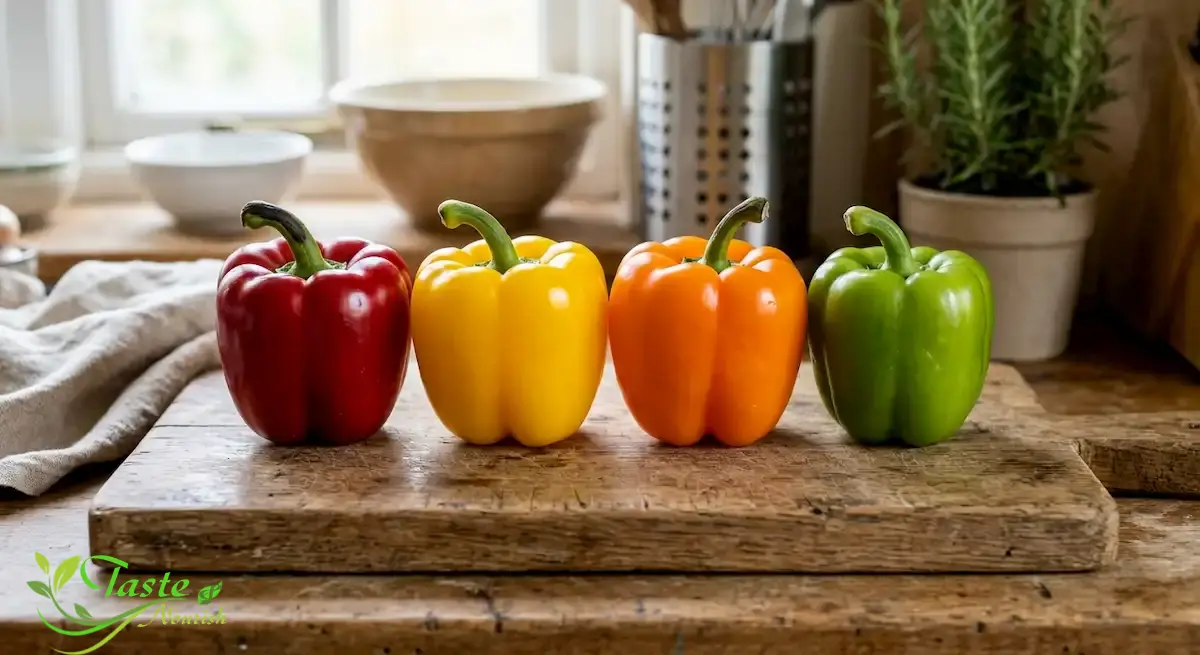
Red, orange, yellow, or green: does the color of a bell pepper actually matter? It does. Bell pepper colors signal how ripe the pepper is, how sweet it tastes, how much vitamin C it carries, and even what it costs. This guide uses USDA data and extension research to show what each color means. It also covers when to buy red instead of green, and how to cook each one so you never pay extra for sweetness that gets lost in the pot.
Quick Answer
Bell pepper colors mostly mark ripeness and variety. Green peppers are picked unripe, so they taste grassier and slightly bitter and cost less. Yellow, orange, and red peppers are usually the ripe stage of their varieties. They are sweeter and, in USDA data, higher in vitamin C than green. Red is the sweetest, and in USDA’s older records it also has more vitamin A than green or yellow. Choose a ripe color for raw eating and roasting, and green for long-cooked savory dishes where its sharper flavor and lower price make sense.
What Bell Pepper Colors Mean: Ripeness and Variety
Mississippi State University Extension explains that a pepper’s variety and the time it spends on the plant determine its color and ripeness. Green appears first and is the least ripe. As the fruit matures it usually turns yellow, orange, red, or purple, and a few varieties mature to nearly white or almost black.
Underneath the color change, chlorophyll breaks down and carotenoid pigments build up. Researchers at Ruhr University Bochum, as reported by Lab Manager, describe the green peppers common in supermarkets as unripe. They also note that some cultivars are bred to finish yellow or orange rather than red. That is why a yellow pepper is not simply an unfinished red one.
Will a green pepper turn red after you buy it?
Probably not. The UC Davis Postharvest Technology Center’s pepper guidance classes bell peppers as nonclimacteric, and the Bochum researchers note they do not ripen significantly after harvest. The same UC Davis page says partially colored peppers change color most effectively when held warm, at 68–77°F (20–25°C), with high humidity. A pepper with a blush of red may deepen on the counter. A fully green one may never change.
Bell Pepper Color Chart: Flavor and Best Uses

The chart below gives typical differences. The flavor notes are general descriptions, not lab measurements, and any single pepper varies with its variety, season, and ripeness.
| Color | What it usually is | Typical flavor | Best uses |
|---|---|---|---|
| Green | Full-size but unripe fruit | Grassy, slightly bitter, least sweet | Sautés, fajitas, stews, stuffed peppers, salsas |
| Yellow | Ripe stage of a yellow-fruited variety | Mild and lightly sweet | Raw platters, salads, quick sautés, skewers |
| Orange | Ripe stage of an orange-fruited variety | Mild and sweet | Raw snacking, salads, roasting |
| Red | Fully ripe stage of a red-fruited variety | Sweetest and fruitiest | Roasting, grilling, sauces, raw eating |
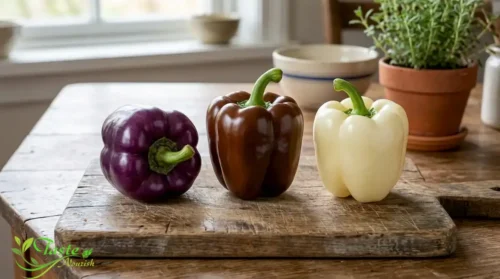
| Purple, brown, white | Varieties that mature to these colors | Varies by variety | Raw dishes where the color shows |
Which Bell Pepper Is Sweetest?
Red. Mississippi State University Extension describes green peppers as slightly bitter and the least sweet, and red as the sweetest. USDA’s SR Legacy entries back this up. The raw sweet red pepper entry lists 4.2 g of total sugars per 100 g, while the raw sweet green pepper entry lists 2.4 g.
So red bell peppers are sweeter than green ones on both taste and measured sugar. “Sweet” is relative, though. Even a red pepper holds only a few grams of sugar per 100 g, which fits the roughly 27 calories you will see in the nutrition table below.
I could not find an authoritative ranking of yellow against orange for sweetness. Treat them as similar mild, sweet peppers, and expect individual varieties to differ more than the colors do.
Nutrition Differences Between Bell Pepper Colors
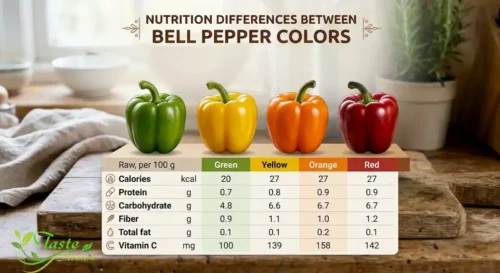
The first table uses USDA FoodData Central Foundation Foods entries for raw green bell peppers, raw yellow bell peppers, raw orange bell peppers, and raw red bell peppers. Values are per 100 g (about 3.5 oz), rounded, and approximate. Variety, ripeness, and growing conditions shift them, so the label on what you bought is the best reference.
| Raw, per 100 g | Green | Yellow | Orange | Red |
|---|---|---|---|---|
| Calories (kcal) | 20 | 27 | 27 | 27 |
| Protein (g) | 0.7 | 0.8 | 0.9 | 0.9 |
| Carbohydrate (g) | 4.8 | 6.6 | 6.7 | 6.7 |
| Fiber (g) | 0.9 | 1.1 | 1.0 | 1.2 |
| Total fat (g) | 0.1 | 0.1 | 0.2 | 0.1 |
| Vitamin C (mg) | 100 | 139 | 158 | 142 |
For a household measure, USDA lists about 149 g for a cup of chopped raw red pepper. Scaling the values above by that weight gives these approximate numbers for one cup, chopped.
| Raw, about 1 cup chopped | Green | Yellow | Orange | Red |
|---|---|---|---|---|
| Calories (kcal) | 29 | 40 | 41 | 40 |
| Protein (g) | 1.1 | 1.2 | 1.3 | 1.3 |
| Carbohydrate (g) | 7.1 | 9.8 | 10.0 | 9.9 |
| Fiber (g) | 1.4 | 1.6 | 1.4 | 1.7 |
| Total fat (g) | 0.2 | 0.2 | 0.2 | 0.2 |
| Vitamin C (mg) | 148 | 207 | 235 | 212 |
All four colors are low in calories and carbohydrate, and the macronutrient gaps are too small to matter in a normal serving. The clear difference is vitamin C. The three ripe colors list 139–158 mg per 100 g, against about 100 mg for green. USDA’s older SR Legacy entries show the same pattern at different levels: 80 mg for green, 128 mg for red, and 184 mg for yellow. The exact numbers move between datasets, but green comes out lowest in both.
For scale, the NIH Office of Dietary Supplements vitamin C fact sheet lists 95 mg in half a cup of raw sweet red pepper and 60 mg in green, against a Daily Value of 90 mg.
Vitamin A is where red separates itself. The Foundation entries above do not report it, but SR Legacy lists 157 µg RAE per 100 g for red, 18 µg for green, and 10 µg for yellow. USDA has no comparable entry for orange. If you want to see how another orange-pigmented vegetable fits in, our guide to the health benefits of carrots covers what carrots offer.
So which color bell pepper is healthiest? It depends on your goal. For vitamin C, any ripe color beats green. For vitamin A, red is the one the USDA data supports. For calories and fiber, the differences are small. The best pepper is the one you will actually eat, and mixing colors covers every base.
What Is the Difference Between Yellow and Orange Bell Peppers?
Mostly pigments. A 2024 Scientific Reports study of yellow, orange, and red bell pepper lines found that the orange fruit contained notably more types and amounts of carotenoids than the other two. The yellow pigments lutein and zeaxanthin were highest in the yellow and orange fruit, and the red pigments capsanthin and capsorubin were enriched only in the red.
That was three inbred lines, so it shows how the pigments work rather than ranking every yellow pepper against every orange one. In the USDA data above, the order of yellow and orange for vitamin C flips between datasets. In the kitchen, swap them freely and choose whichever is firmer and cheaper.
Which Bell Pepper Colors Work Best Raw or Cooked?
Best raw
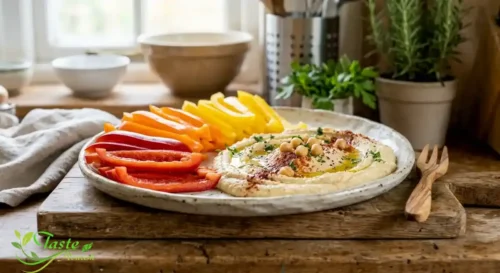
Red, orange, and yellow peppers are the better raw choices because their sweetness is up front. Green is perfectly edible raw, but its sharper, slightly bitter flavor suits people who like that edge.
- Cut strips for dips (see our homemade hummus recipe).
- Dice them into grain salads; our Mediterranean quinoa salad is one place to use them.
- Slice a mix of colors for a platter, since the colors do not clash in flavor.
Best for roasting and grilling
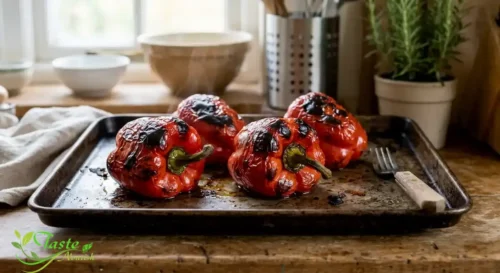
Red comes first here, with orange and yellow close behind. Their extra sugar browns and concentrates in high heat, which turns sweet peppers into something close to candy. Roast or grill until the skin blisters in places, then let the peppers steam in a covered bowl so the skins loosen.
Best for sautéing, stir-frying, and long simmering
Green peppers earn their place in rich, spicy, or tomato-heavy dishes, where a little bitterness balances the other flavors. In practice, ripe peppers soften and mellow faster, so add them later in the cooking time. Fat changes the numbers, too: USDA’s sautéed red pepper entry lists 133 calories per 100 g against about 26 for raw, mostly from the added fat.
Heat also affects vitamin C. The NIH Office of Dietary Supplements notes that cooking and long storage can reduce it, and that steaming or microwaving may lessen cooking losses. If vitamin C matters to you, serve some of your peppers raw or cook them briefly.
Why Some Bell Pepper Colors Cost More
Time on the plant is the main difference. Utah State University Extension says pepper harvest starts about 30 days after flowering, at the mature green stage, and that fruit needs an additional 10 to 20 days to color fully.
Those extra days carry risk. In a Marketplace report, University of Minnesota Extension horticulture educator Karl Foord explained that the longer a pepper stays on the plant, the greater its chance of damage. That cuts the usable yield, which raises the price, and damaged peppers that can still be sold fetch much less.
Green peppers skip most of that exposure, so they are cheaper to grow. Pay the premium when the sweetness will show, as in raw dishes and roasting. Skip it when the pepper will cook down into a sauce or stew.
How to Buy and Store Bell Peppers of Any Color
Pick peppers that feel firm and have no bruises or soft spots. The FDA’s guidance on selecting and serving produce safely advises choosing produce that is not bruised or damaged. UC Davis notes that pepper firmness is directly related to water loss, so a wrinkled skin means the pepper is drying out.
UC Davis reports that the best storage temperature for maximum shelf life is 45°F (7.5°C), and that chilling injury starts to appear after about two weeks at 41°F (5°C). It also says ripe or colored peppers are less sensitive to chilling than green ones. A home refrigerator runs colder than that, since the FDA recommends 40°F (4°C) or below. As a general estimate that varies with freshness and fridge temperature, plan to use whole peppers within a week or two and cut pieces within a few days in a sealed container.
Wash peppers under running water just before cutting. Throw away any pepper that looks rotten or moldy, and never taste a questionable pepper to decide.
Which Bell Pepper Color Should You Choose?
- Raw snacking, dips, and salads: red, orange, or yellow.
- Roasting or grilling for sweetness: red first, then orange or yellow.
- Budget cooking in savory dishes: green.
- More vitamin C than green: any ripe color.
- Vitamin A: red, based on USDA’s SR Legacy records.
- A colorful plate: a mix, since the colors are interchangeable in most recipes.
My Bottom Line
My bottom line: buy red or orange when the pepper will be eaten raw or roasted, because that is where the sweetness shows. Buy green for long-cooked savory dishes, where the sharper flavor and lower price make more sense. Skip the yellow-versus-orange debate and take whichever looks firmer and costs less.
Common Mistakes to Avoid
- Washing peppers with soap or produce wash. The FDA says not to, because produce is porous and can absorb soap residue. Rinse under running water instead.
- Using one cutting board for raw meat and raw peppers. The FDA advises keeping produce that will be eaten raw separate from raw meat, poultry, and seafood, and from the utensils used on them.
- Throwing away a pepper over one bruise. The FDA advises cutting away damaged or bruised areas, and discarding only produce that looks rotten.
- Storing peppers in the coldest part of the fridge. Chilling injury shows up as pitting and soft decay, as described by UC Davis. Keep them in the crisper rather than against the back wall.
Troubleshooting
- The pepper tastes bitter. It is probably green or underripe, and Mississippi State Extension describes green peppers as slightly bitter. Choose a ripe color next time, or roast or sauté until lightly browned and pair it with something rich or acidic.
- Peppers turn watery in a stir-fry. A crowded or under-heated pan steams them instead of searing. Use a hot pan, cook in batches, and add ripe peppers near the end.
- A whole pepper is soft and wrinkled. It has lost water. If there is no mold, slime, or sour smell, cook it soon. Discard it if any of those appear.
- Dark pits or spots appeared in the fridge. That points to chilling injury. Cut away damaged areas, discard anything rotten, and use whole peppers within a week or two next time.
- Garden peppers stay green. According to the Bochum research, time on the plant, growing conditions, and variety all matter. Leave the fruit on the plant longer, and check that the variety is one that matures to the color you want.
Bell Pepper Colors FAQs
Are all bell peppers the same?
They are the same species, Capsicum annuum, but they differ in ripeness stage, variety, and pigments. That is why sweetness, vitamin C, and price vary by color, even though the shape and basic use are the same.
Can I swap one bell pepper color for another in a recipe?
In most cooked dishes, yes. Expect small differences in sweetness and color: replacing red with green gives a sharper, less sweet result, so taste before adding more seasoning. In a recipe built around color, such as a roasted pepper sauce, stick with the ripe color it calls for.
Are purple, brown, or white bell peppers real?
Yes. Mississippi State Extension notes that some varieties mature to purple, nearly white, or almost black. Their flavor depends on the variety, so use them like other peppers and check the seed packet or label.
Why does the same color taste different between stores?
Variety, how ripe the pepper was when picked, and how long ago it was harvested all play a part. Mississippi State Extension ties color and ripeness to variety and time on the plant, and UC Davis links firmness to water loss after harvest.
Is a green pepper with red or orange patches okay to eat?
Yes. Patches of color mean the pepper had started to ripen, and it will taste somewhere between green and fully ripe. Judge it by firmness and the absence of mold, not by how even the color is.
How do I keep cut pepper strips crisp for a veggie tray?
Cut them shortly before serving and keep them refrigerated in a sealed container until then. Because firmness tracks water loss, covering the pieces helps them stay crisp. The FDA recommends keeping cut or packaged produce refrigerated, at 40°F (4°C) or below.
Key Takeaways: Bell Pepper Colors
- Bell pepper colors mostly reflect ripeness and variety: green is unripe, while yellow, orange, and red are usually the ripe stage.
- Red is the sweetest and green the least sweet and slightly bitter.
- In USDA data, ripe colors have more vitamin C than green, and red lists more vitamin A than green or yellow.
- All colors are low in calories, at 20–27 per 100 g raw.
- Choose ripe colors for raw eating and roasting, and green for long-cooked savory dishes and lower cost.
- Ripe peppers cost more because they spend longer on the plant and face more risk of damage.
Conclusion
The simplest way to read bell pepper colors is as a ripeness scale with a few varieties layered on top. Green is the early, firmer, sharper-tasting stage. Yellow, orange, and red are the sweeter, higher-vitamin-C ripe stages, with red the sweetest and the strongest in vitamin A. Pick the color for the job: ripe peppers for raw plates and roasting, and green when the pepper will simmer into a savory dish and the lower price counts.
Explore Colorful Vegetables by Topic
- carrot health benefits: what carrots offer nutritionally, a useful comparison for orange vegetables.
- homemade hummus: a simple dip to pair with raw red, orange, and yellow pepper strips.
- Mediterranean-style quinoa salad: a grain salad recipe that works well with diced raw peppers.
- veggie and hummus bites: a no-cook appetizer built around raw vegetables.