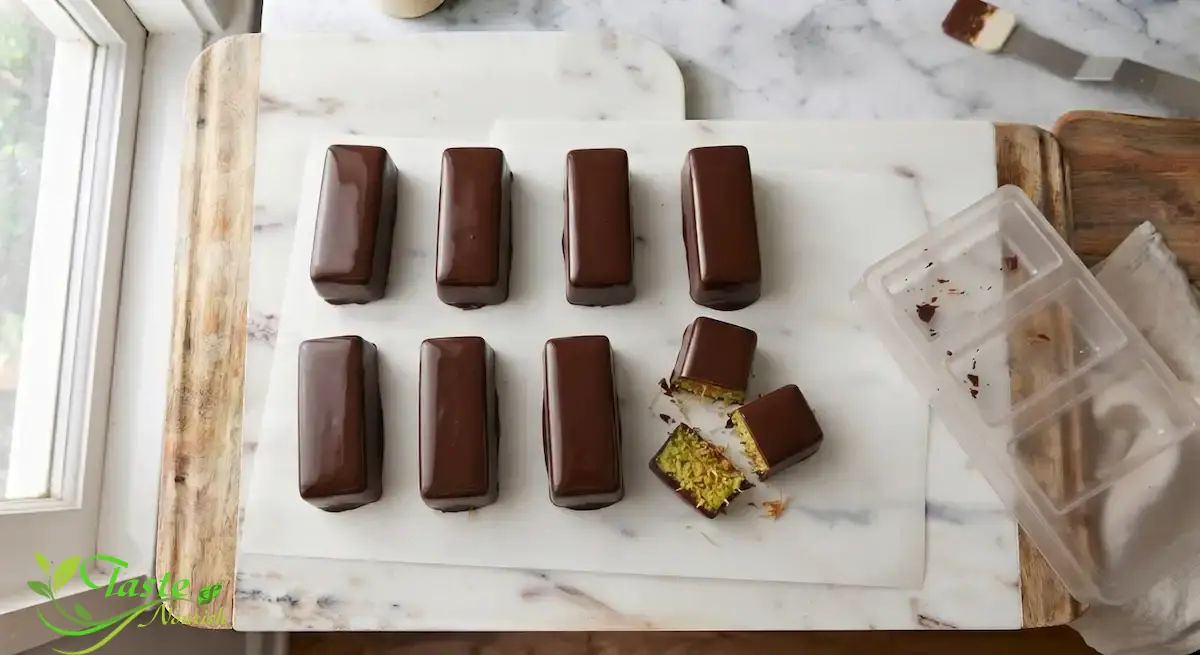
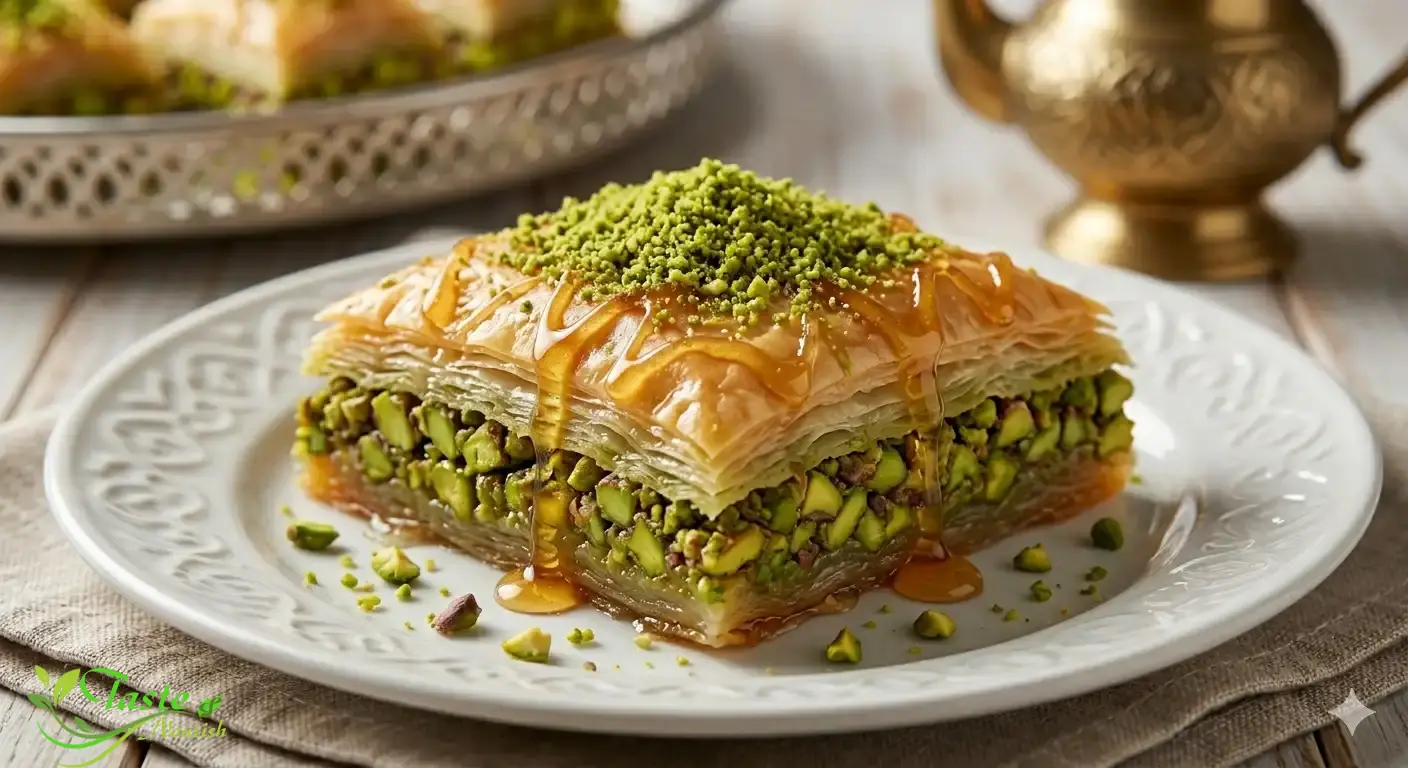
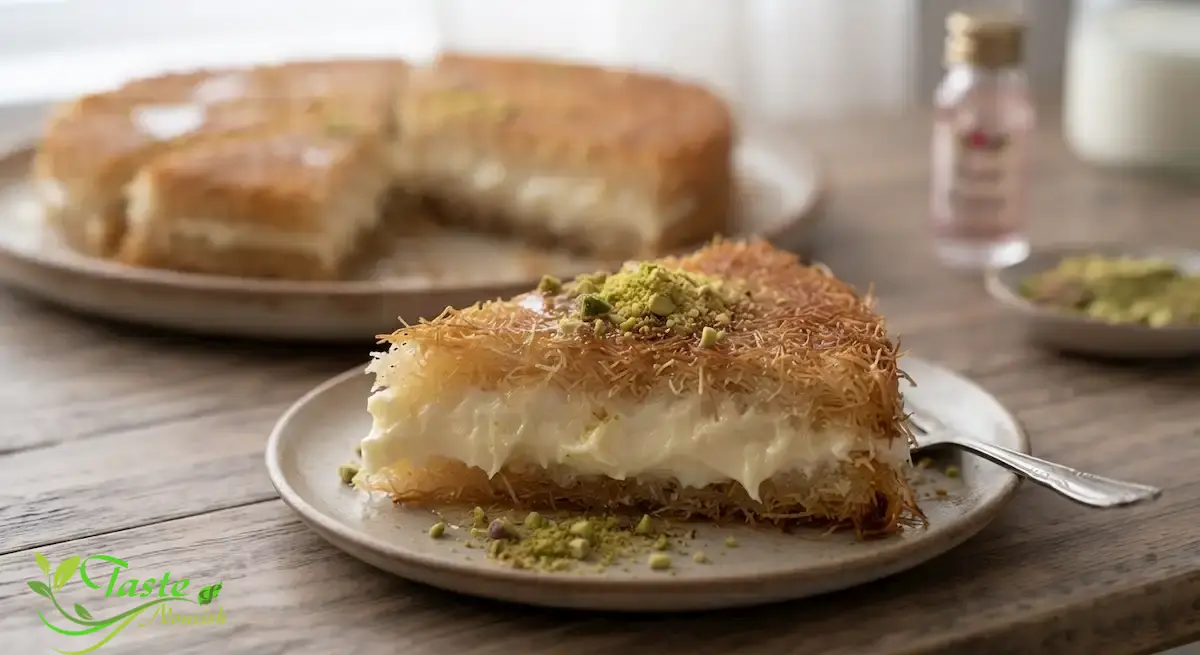
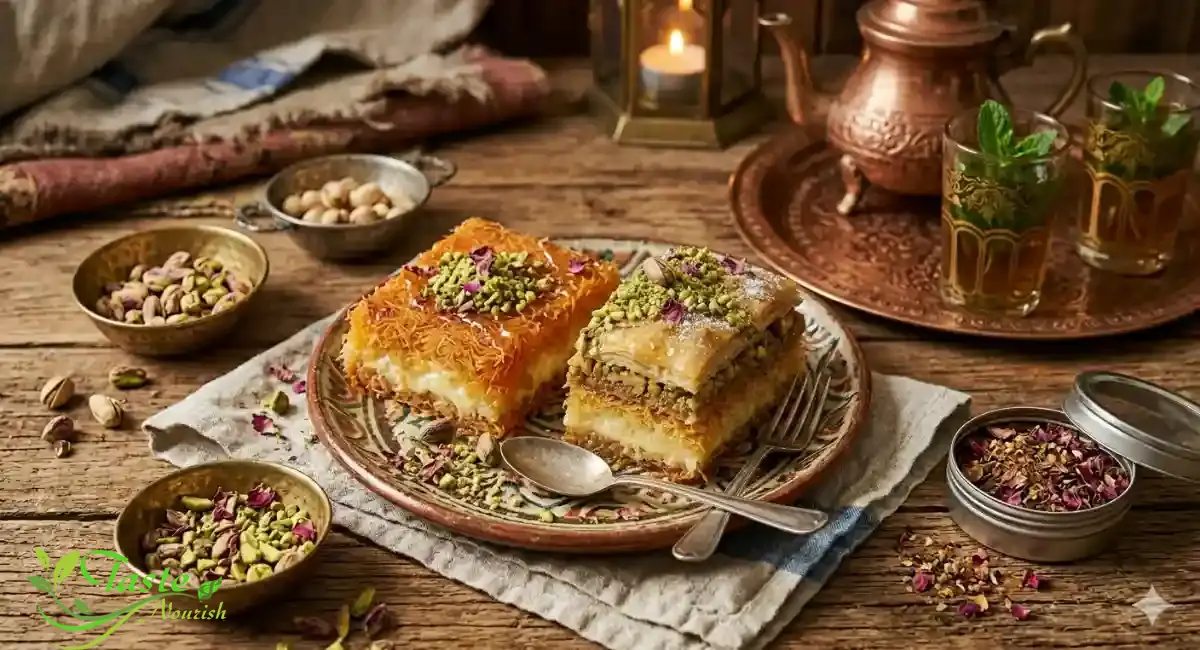
Craving the viral Dubai chocolate bar? This chocolate kunafa recipe rebuilds it at home with butter-toasted kataifi pastry, a thick pistachio-tahini cream, and a properly tempered chocolate shell — no syrup, no plated kunafa technique required. Follow the exact ratios and tempering steps below for bars that snap clean and hold their crunch.
This bar-style kunafa traces back to Dubai-based pastry chef Sarah Hamouda, who built the original around 2021 and sold it locally before a viral video in late 2023 pushed the format worldwide. The recipe below is an original, home-kitchen version of that idea: no syrup timing to manage, but two technical steps that determine whether it works — how thoroughly the kataifi is toasted, and whether the chocolate is properly tempered.
Quick answer:This chocolate kunafa recipe seals butter-toasted kataifi pastry and a thick pistachio-tahini cream inside a shell of tempered chocolate — no syrup involved. The kataifi is toasted separately until deep golden and fully crisp, folded into the pistachio cream once cooled, then packed into chocolate-lined molds and chilled until set. It makes about 8 bars.
Toasting the kataifi in butter or ghee until it turns deep golden brown is the single step that decides whether this chocolate kunafa recipe ends up crisp or soggy.
The filling is built from unsweetened pistachio paste and tahini rather than a sweetened pistachio spread, so it stays thick enough to hold the toasted kataifi together instead of pooling.
There’s no syrup step here — sweetness comes from the chocolate shell and a small amount of powdered sugar stirred into the filling.
Properly tempered chocolate is what gives the bars their glossy shine, firm snap, and clean release from the mold; chocolate that’s simply melted and cooled will stay soft and dull.
Store the bars in a cool, dry spot rather than the refrigerator when your kitchen allows it, since moving chocolate in and out of the fridge causes condensation-related dulling known as bloom.
Kataifi loses some crispness within a few days no matter how it’s stored, so these are best eaten within the first week.
One 8-cavity chocolate bar mold, or one 8-inch square pan cut into 16 pieces
Category
Dessert, confection
Method
No-bake, chocolate tempering
Cuisine
Middle Eastern–inspired, modern
Nutrition Facts — Per Bar (1 of 8 servings)
Calories
500
Total Fat
33 g
Saturated Fat
14 g
Cholesterol
15 mg
Sodium
180 mg
Total Carbohydrate
45 g
Dietary Fiber
5 g
Total Sugars
28 g
Protein
8 g
Nutrition information is an estimate calculated from the ingredients listed and will vary based on brands used and exact portion sizes. It does not include the optional white chocolate drizzle.
Ingredients
For the Crispy Kataifi Layer
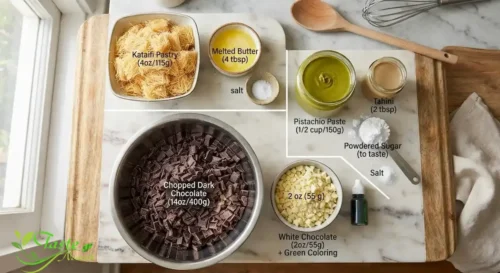
4 oz (115 g) kataifi (kunafa) pastry, thawed if frozen, cut into 1-inch pieces
4 tablespoons (56 g) unsalted butter or ghee, melted
A pinch of salt
For the Pistachio Cream
1/2 cup (150 g) unsweetened pistachio paste (pistachio butter)
2 tablespoons (30 g) tahini
2–3 tablespoons (15–23 g) powdered sugar, to taste
1/4 teaspoon salt (less if your pistachio paste is already salted)
For the Chocolate Shell
14 oz (400 g) dark or milk couverture chocolate, finely chopped
Optional: 2 oz (55 g) white chocolate and a small amount of oil-based green food coloring, for a decorative drizzle
Ingredient Notes
Kataifi (also sold as kunafa, knafeh, or kadayif pastry) is shredded phyllo dough, usually found frozen at Middle Eastern grocers. Thaw it in the refrigerator overnight, then let it sit at room temperature for about 30 minutes before separating the strands — cold, tightly wound kataifi tears instead of shredding cleanly.
Pistachio paste and pistachio cream are sold under both names; look for one with pistachios as the first ingredient and little or no added sugar, since the sweetness here is meant to come mostly from the chocolate. A thin, oily paste will make the filling loose; a very stiff one can be warmed for 10–15 seconds in the microwave to loosen it before mixing.
Tahini adds a faint bitterness and looser texture that keeps the pistachio cream from setting too firm once chilled. It can be left out, but the filling will be denser and slightly sweeter without it.
Use couverture or another chocolate labeled for melting and dipping — it contains enough cocoa butter to temper properly. Standard chocolate chips are formulated to hold their shape when baked and often contain stabilizers that prevent a clean temper, so they’re not a reliable substitute here.
Substitutions
Ghee for butter: works as a direct swap and is traditional for kunafa; it toasts the kataifi slightly faster because it has less water content, so watch it a minute or two earlier.
Almond or hazelnut butter for pistachio paste: changes both the flavor and the color — the filling will no longer be green — but the texture holds up in the same way.
Compound (candy melt) coating instead of real chocolate: skips tempering entirely and sets reliably at room temperature, but the bars will have a softer bite and a duller finish instead of a glossy snap.
Kataifi: there is no reliable substitute that gives the same texture — shredded phyllo, angel hair pasta, or crushed phyllo sheets will not toast or shred the same way, so the dish is best skipped or postponed if kataifi isn’t available.
Equipment
Polycarbonate or silicone chocolate bar mold (silicone is more forgiving for a first attempt)
Medium saucepan or skillet, for toasting the kataifi
Heatproof bowl and a microwave, or a double boiler, for melting the chocolate
Instant-read or chocolate thermometer
Offset spatula or butter knife
Kitchen scale (recommended for the chocolate, where ratios matter most)
How to Make This Chocolate Kunafa Recipe
Toast the Kataifi
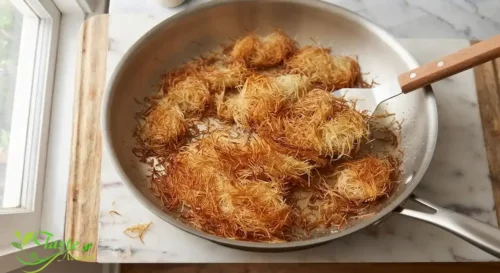
1. Melt the butter in a medium skillet over medium-low heat. Add the shredded kataifi and salt, tossing to coat every strand.
2. Cook, stirring constantly, for 8–12 minutes. The pastry will pass through a pale, slightly limp stage before it starts to crisp — keep stirring through that stage so it browns evenly rather than in spots.
3. Remove from the heat once the strands are a uniform deep golden brown and feel brittle when you press a piece between your fingers. It will crisp further as it cools, so pull it slightly before you think it’s fully done.
4. Spread the toasted kataifi on a plate or tray in a single layer and let it cool completely, about 15 minutes, before combining it with the filling. Adding it while warm will soften the pistachio cream and steam the pastry from the inside.
Make the Pistachio Filling
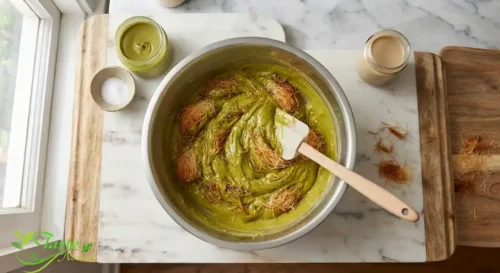
In a medium bowl, stir together the pistachio paste, tahini, powdered sugar, and salt until smooth and glossy.
Add the cooled toasted kataifi and fold it in gently with a spatula, turning the mixture over rather than stirring in circles. The goal is to coat the strands without crushing them; a few gentle folds are enough.
Temper the Chocolate
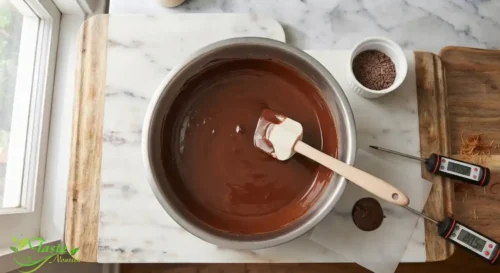
Chop the chocolate finely and set aside about a quarter of it. Melt the remaining three-quarters gently — in 20-second microwave bursts, stirring between each, or over a double boiler — until it reaches 113–120°F (45–49°C) for dark chocolate, or 105–113°F (40–45°C) for milk chocolate.
Remove from heat and stir in the reserved chopped chocolate a little at a time, letting each addition melt before adding more. This “seeds” the chocolate with stable cocoa butter crystals.
Keep stirring until the chocolate cools to 88–90°F (31–32°C) for dark chocolate or 86–88°F (30–31°C) for milk chocolate. To check that it’s in temper, dab a small amount on a piece of parchment paper; it should set matte-glossy and firm within about 3–5 minutes at room temperature. If it stays soft or streaky, it needs more seed chocolate stirred in.
Assemble and Chill the Bars
1. Working quickly while the chocolate is in temper, spoon a thin layer into each mold cavity. Tilt and tap the mold to coat the sides and bottom completely, then invert it over the bowl to let excess chocolate drip out. Scrape the top of the mold clean with an offset spatula.
2. Refrigerate the coated mold for 8–10 minutes, until the chocolate is firm and no longer tacky to the touch.
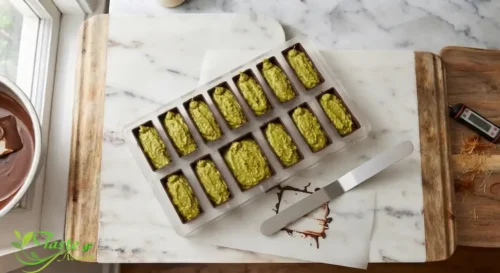
3. Spoon the pistachio-kataifi filling into each shell, pressing it in gently and leaving about 1/8 inch of space below the rim for the final layer of chocolate.
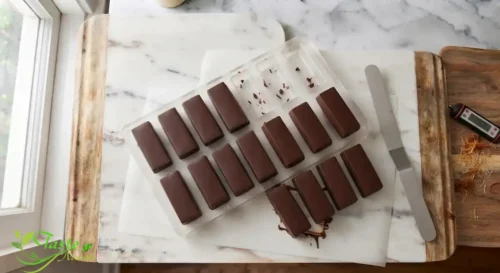
4. Rewarm the remaining tempered chocolate slightly if it has thickened, then spoon it over the filling to seal each bar. Scrape the top flush with the mold, tapping the mold on the counter a few times to release air bubbles.
5. Refrigerate for 15–20 minutes, until the chocolate has pulled slightly away from the mold’s edges and looks matte along the sides — a sign it’s fully set.
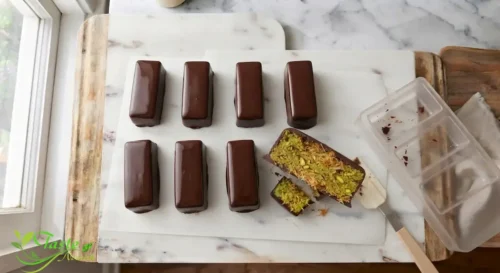
6. Invert the mold over a clean surface and tap firmly, or flex a silicone mold, to release the bars.
Achieving the Right Texture
Two textures have to hold up at the same time in this recipe: a chocolate shell with a clean, audible snap, and a filling that stays crunchy rather than turning chewy. The chocolate side comes down entirely to temper — properly tempered chocolate contracts slightly as it cools, which is what lets the bars release from the mold instead of sticking.
The filling side comes down to moisture: any steam trapped in warm kataifi, or filling assembled before the chocolate shell is fully set, will soften the pastry from the inside before you ever taste it.
Common Mistakes
Kataifi turns soggy instead of crisp
This usually happens when the toasted pastry is folded into the pistachio cream while still warm, or when it wasn’t toasted long enough to fully dry out. Let it cool completely on a tray first, and toast until it’s deep golden rather than pale.
Chocolate looks dull or develops gray streaks (bloom)
This is a sign the chocolate was never properly tempered, or that it went through a temperature swing after setting — for example, moving between the fridge and a warm counter. Bloomed chocolate is still safe to eat but won’t have the intended snap or shine; prevent it by tempering carefully and storing the bars at a steady, cool temperature.
Bars won’t release from the mold
Under-tempered chocolate stays slightly soft and clings to the mold instead of contracting away from it. Chill a few minutes longer, and check that the mold itself is clean, dry, and free of fingerprints before you start.
The chocolate shell cracks when you add the filling
A shell that’s too thin, or filling that’s too firm and cold when pressed in, can crack the base coat. Use a slightly thicker layer for the first coating, and let the filling sit at room temperature for a few minutes before assembling so it’s soft enough to press in gently.
Pistachio filling is loose or oily instead of holding together
This points to a very thin pistachio paste or too much tahini relative to kataifi. Cut back the tahini slightly, fold in a little extra toasted kataifi, or chill the filling for 10 minutes before you fill the shells.
Kataifi burns in patches while toasting
Uneven heat or infrequent stirring causes this. Keep the heat at medium-low and stir constantly — kataifi goes from golden to burnt quickly once it starts to color, so pull it as soon as it’s evenly deep gold.
Bars taste good on day one but lose their crunch by day three or four
This isn’t a mistake so much as the nature of the dessert — kataifi softens gradually even in an airtight container, since it’s suspended next to a moist nut paste. Make bars in a size you’ll finish within about a week rather than trying to hold them longer.
Troubleshooting: Why Isn’t the Chocolate Setting or Snapping?
If the chocolate stays soft, tacky, or streaky well after chilling, temper is almost always the cause rather than the recipe itself. Possible reasons: the chocolate never reached full working temperature before it was poured, the seed chocolate you stirred in wasn’t fully melted before you tested it, or the mold sat in a refrigerator that’s warmer than 40°F (4°C) and slowed the set.
♦ If a batch clearly failed to temper, the most reliable fix is to gently remelt it above 113°F (45°C) and start the tempering process again rather than trying to rescue it mid-process.
Storage
Chocolate itself is shelf-stable and doesn’t spoil the way perishable food does, but it loses quality — and can develop a dusty white or gray bloom — when it’s stored somewhere warm, humid, or prone to temperature swings; a cool, dry spot around 65–70°F generally keeps it from blooming (Iowa State University Extension and Outreach). Store the finished bars in an airtight container at room temperature if your kitchen stays consistently cool, which also protects the crisp texture of the kataifi from picking up moisture from the fridge.
Because the filling contains butter and a nut paste rather than fresh dairy or egg, these bars aren’t highly perishable, but they still shouldn’t sit out for extended periods in a warm room — the general food safety guidance for foods containing butter or dairy is to avoid leaving them in the 40°F–140°F range for more than about two hours (FoodSafety.gov).
If your kitchen runs warm or humid, refrigerate the bars in an airtight container instead — set your refrigerator to 40°F (4°C) or below (FoodSafety.gov Cold Food Storage Chart) — and let them sit at room temperature for a few minutes before serving, since chocolate taken straight from the fridge is more prone to visible condensation and a duller finish.
For a broader reference on how long specific pantry and refrigerated ingredients keep, the USDA-developed FoodKeeper tool is a reliable source (FoodSafety.gov FoodKeeper App).
Freezing
These bars freeze reasonably well, though the kataifi will lose some of its crispness once thawed. Wrap each bar individually in plastic wrap, then place the wrapped bars in an airtight container or freezer bag to protect them from absorbing odors and to limit freezer burn.
Thaw them in the refrigerator overnight, then let them come to room temperature before unwrapping — opening cold chocolate straight to warm room air is what causes the surface condensation that leads to bloom.
Serving and Presentation
Serve at cool room temperature rather than straight from the fridge, so the chocolate shell has its full snap and the filling isn’t stiff. A warm, dry knife makes cleaner cuts if you’re slicing a pan version into squares. For garnish, a light scattering of finely chopped pistachios or a thin drizzle of the reserved white chocolate (tinted green, if you’d like the classic look) is enough — the bar itself is rich, and it doesn’t need much on top.
Variations
Dark chocolate shell: a straightforward swap for the milk chocolate shell; it tempers at a slightly higher working temperature and gives a less sweet, more bitter contrast to the pistachio filling.
White chocolate shell: possible, but white chocolate is more delicate to temper because of its higher milk solid and sugar content, and it scorches easily when melted — use lower heat and shorter intervals than for dark or milk chocolate.
Hazelnut-praline filling: swapping the pistachio paste for hazelnut praline paste changes the color from green to brown and the flavor toward classic praline, though the structure of the recipe stays the same.
Dairy-free version: toast the kataifi in a neutral dairy-free butter alternative and use a dairy-free chocolate for the shell; the texture holds up well, though dairy-free chocolate can be slightly more finicky to temper and may need a few extra degrees of patience while cooling.
Chocolate Kunafa Recipe FAQs
Can I make chocolate kunafa bars without tempering the chocolate?
Yes — melting chocolate and letting it set without tempering, or using a compound coating made for candy melts, will still produce a bar that holds together. It won’t have the same glossy shine, hard snap, or clean release from the mold, and it will be more prone to melting at warm room temperature.
Where do I find kataifi (kunafa) pastry?
Look in the freezer section of a Middle Eastern, Mediterranean, or Eastern European grocery store, sometimes labeled kataifi, kadayif, or kunafa dough. It’s usually sold in one-pound packages alongside phyllo sheets.
Can I make the filling ahead of time?
Yes. The toasted kataifi and pistachio cream can each be made a day ahead and stored separately, airtight, at room temperature. Combine them just before assembling the bars so the kataifi doesn’t sit in the moist filling any longer than necessary.
How should I store chocolate kunafa bars?
In an airtight container at cool room temperature if your kitchen allows it, or refrigerated if it runs warm — see the Storage section above for the reasoning behind each option.
Can I freeze them?
Yes, individually wrapped and stored airtight, though the kataifi will soften somewhat after thawing. See the Freezing section for the full method.
Can I substitute the tahini or pistachio paste?
Tahini can be left out for a firmer, sweeter filling. Pistachio paste can be swapped for another nut butter, though the color and flavor will change — see Substitutions above. Note that pistachios and sesame (the base of tahini) are both on the FDA’s list of major food allergens, so it’s worth flagging both ingredients if you’re serving these to a group (FDA — Food Allergies).
Why did my chocolate shell crack when I unmolded the bars?
Usually a too-thin base coat, or filling that was pressed in while still cold and firm. See Common Mistakes above for the fix.
How do I keep the kataifi crispy for as long as possible?
Toast it until fully golden rather than stopping early, cool it completely before combining with the filling, and store the finished bars airtight at room temperature rather than in the fridge, where condensation speeds up softening.
Hanan Abo Samra is the founder of Taste & Nourish, sharing trustworthy nutrition guidance and recipes drawn from 20+ years of hands-on cooking experience. When she's not developing new recipes, Hanan is researching the science behind everyday ingredients to bring readers practical, evidence-based guidance for a healthier lifestyle.