Game day success isn’t measured by the final score alone. It’s measured by whether the food ran out before halftime. If you’re staring down a table that needs to feed a room full of hungry fans for three-plus hours, a well-planned appetizer platter is the difference between constant kitchen trips and actually watching the game.
This guide walks through the best appetizer platter ideas for game day, how to build a spread that covers hot food, cold food, dips, and dippers without duplicating effort, and how to keep everything safe to eat during a long afternoon of snacking.
The easiest game day appetizer platter ideas combine one hot dip, one hand-held hot item, one cold and crunchy option, and plenty of sturdy dippers like chips, crackers, or bread. Prep the dips and any freezer-friendly hot items a day ahead, assemble the cold platter right before kickoff, and refresh hot food in small batches so nothing sits out longer than two hours.
Key Takeaways
A balanced platter mixes temperature and texture: one hot dip, one hot finger food, one cold/crunchy option, and sturdy dippers.
Good appetizer platter ideas for game day lean on make-ahead components so you’re not cooking during kickoff.
Plan for 6 to 8 appetizer pieces per person when snacks are the entire meal, closer to 4 to 5 if you’re also serving something heartier like chili or sandwiches.
Perishable dips, dairy, and meat should never sit at room temperature longer than two hours; refresh small batches instead of setting out one giant tray.
Keep raw produce and ready-to-eat items away from anything that touched raw meat or poultry during prep.
What Makes a Game Day Platter Actually Work
A great game day spread isn’t just a pile of snacks. It’s built around three practical goals: minimal hands-on time once guests arrive, enough variety that picky eaters and big appetites both find something, and food that holds up sitting out for hours without turning soggy, greasy, or unsafe.
The best approach is to think in categories rather than individual recipes. If every dish you pick fills a different role — hot, cold, dip, dipper, something green — you avoid the common trap of ending up with five variations of the same cracker-and-cheese combo and nothing else.
Build Your Platter by Category
Here’s how to fill out a spread that feels complete without becoming a second job. Pick one or two items from each category based on your group size and how much oven or stovetop space you actually have.
Hot Dips
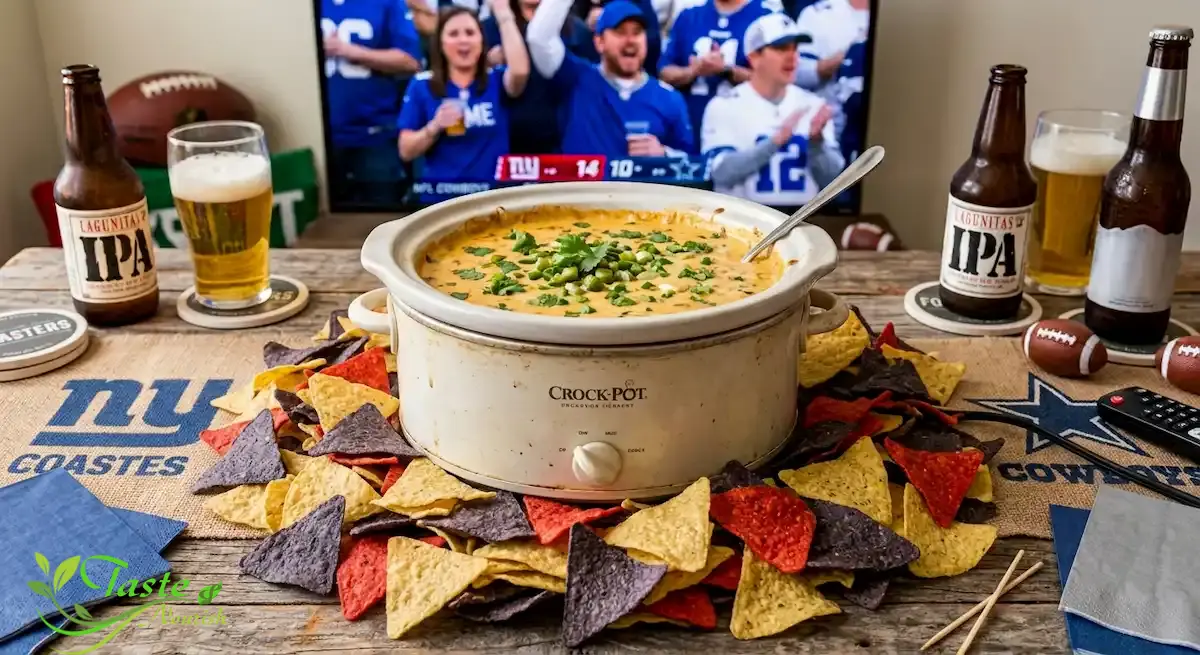
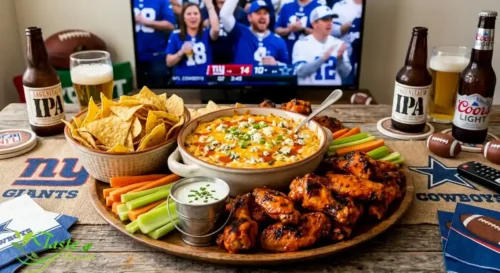
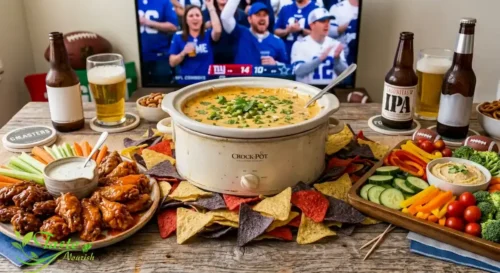
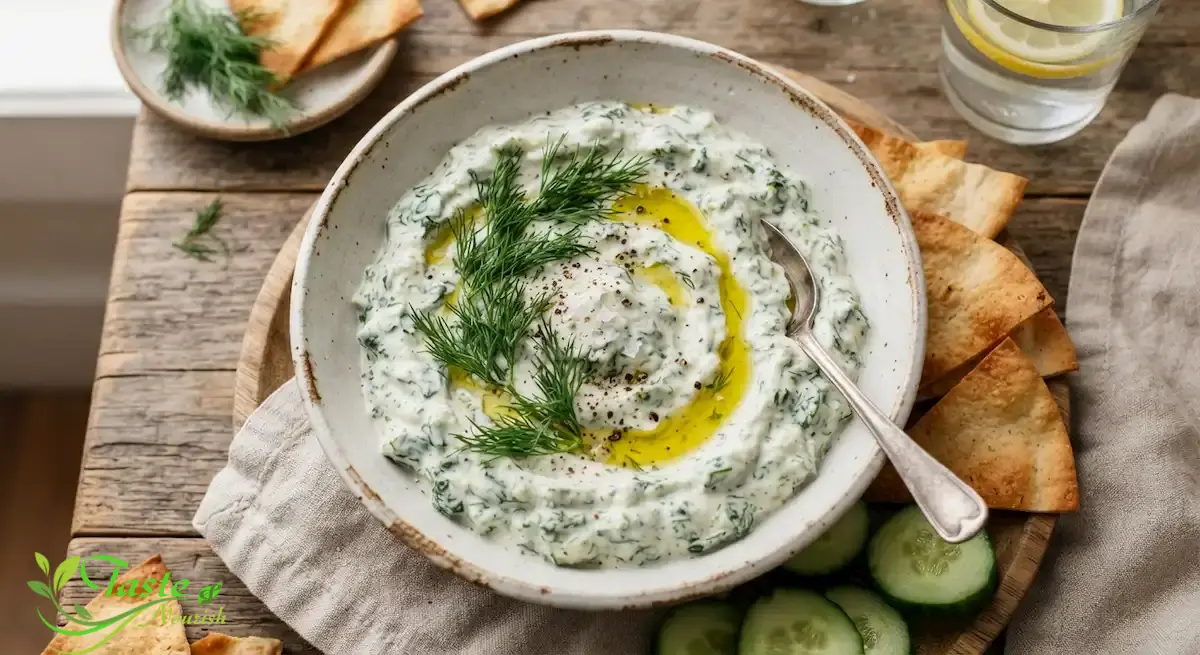
A warm, cheesy dip is the anchor of most game day tables. Buffalo chicken dip, spinach and artichoke dip, and queso are reliable because they can be mixed ahead, baked or simmered right before serving, and kept warm in a slow cooker on low for hours without breaking. Bean dip and chili con queso work the same way and freeze well if you want to make them weeks in advance.
Hot Finger Foods
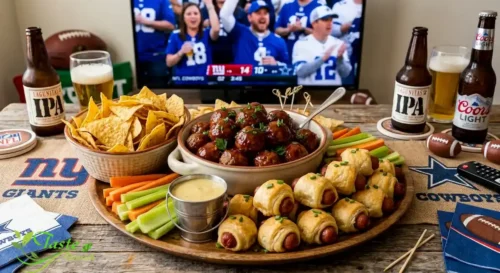
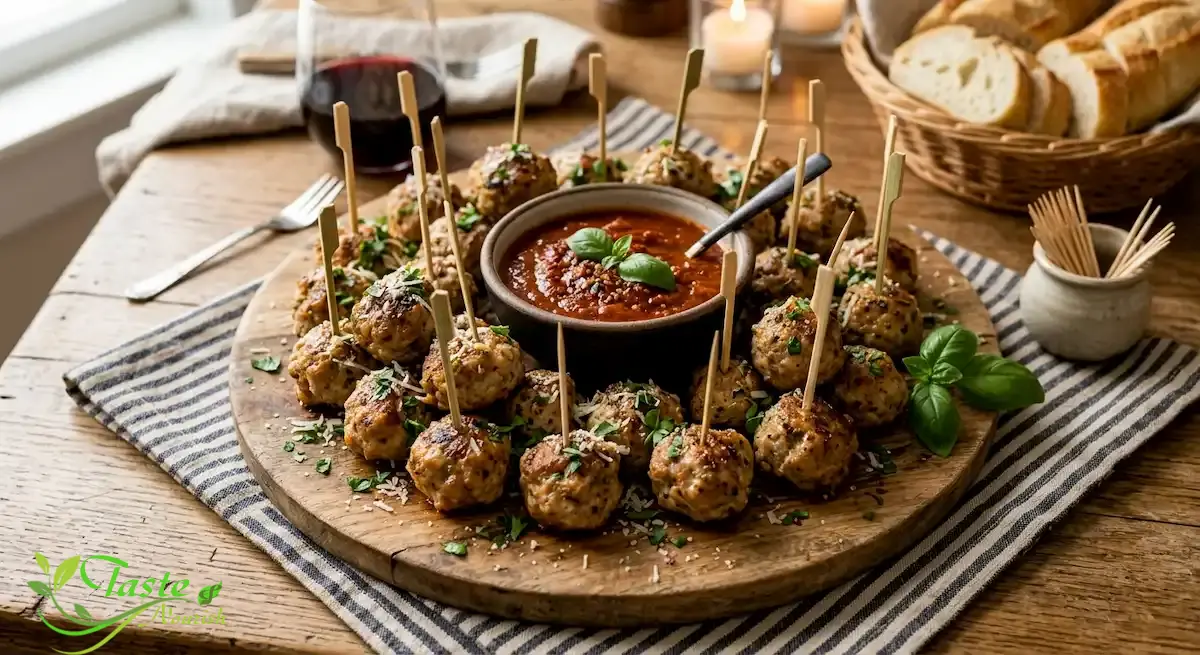
These are the items people reach for first. Chicken wings, meatballs in barbecue or marinara sauce, pigs in a blanket, and baked jalapeño poppers all hold their texture in a slow cooker or on a warming tray, and most can be fully cooked ahead and reheated. Keep these in a separate dish from cold items so condensation and temperature swings don’t affect either one.
Cold and Crunchy
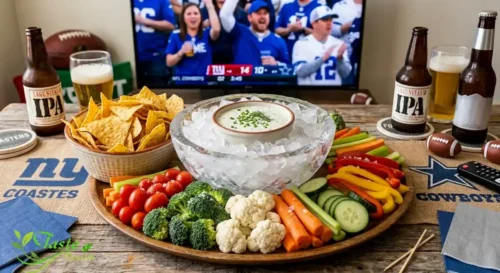
Balance the heavier, cheesy items with something crisp and cold. A classic vegetable tray with ranch, deviled eggs, a bright coleslaw, or a marinated cucumber and tomato salad gives guests something refreshing between rounds of dip. Cold items also require zero last-minute cooking, which frees up your oven and stovetop for the hot dishes.
Dippers and Bases
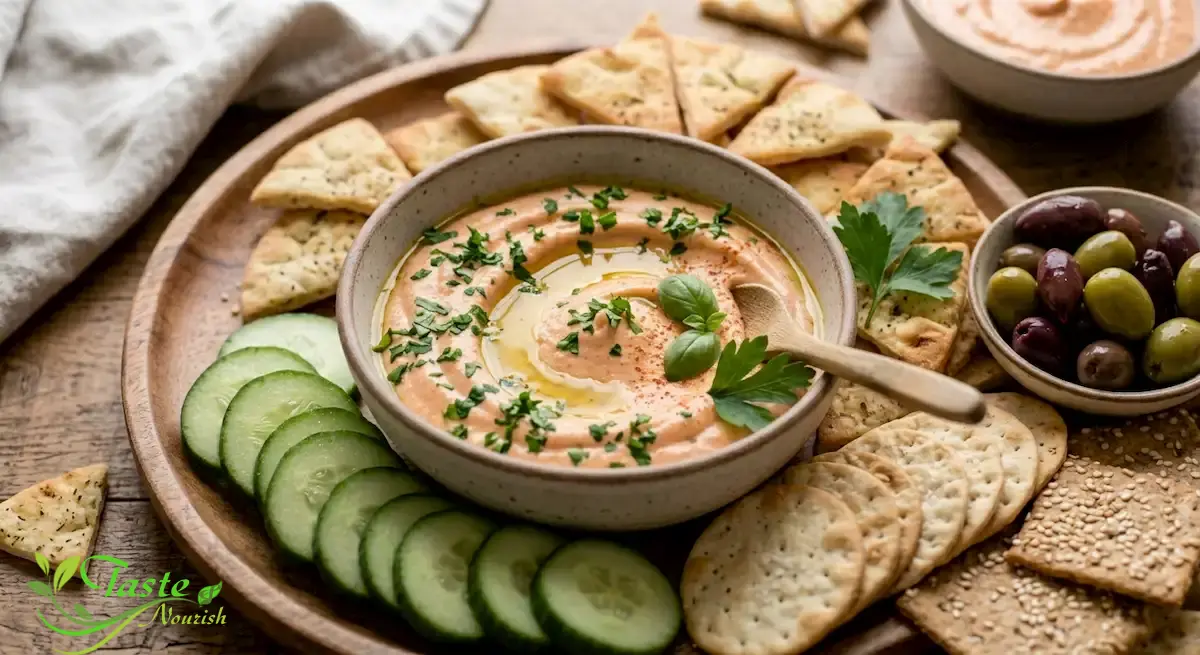
Every dip needs something sturdy to scoop with. Tortilla chips, thick-cut potato chips, pretzel bites, and toasted baguette slices all hold up without snapping in half halfway to your mouth. Crackers work well for spreads and cheese but tend to be too delicate for thick dips like queso — match the dipper’s strength to the dip’s thickness.
A Small Sweet Finish (Optional)
Not every platter needs dessert, but a small tray of something sweet — chocolate-dipped pretzels, mini brownie bites, or a bowl of caramel corn — gives the table a natural stopping point between the third quarter and overtime snacking.
How to Assemble the Platter Step by Step
Choose one item from each category above. A simple, well-executed spread of five items beats a chaotic spread of twelve.
Prep and cook everything that can be made ahead first. Dips, marinated vegetables, and anything freezer-friendly should be done the day before.
Set up separate serving zones. Keep hot dishes together near an outlet for a slow cooker or warming tray, and keep the cold platter on the opposite end of the table.
Portion dippers into smaller bowls rather than one giant bag. This keeps chips crisp longer and makes it easy to refill without dumping a whole new bag into a bowl that already has crumbs at the bottom.
Assemble the cold platter within an hour of kickoff. Vegetables and dips lose their crisp, fresh look if they sit out too long before anyone even starts eating.
Bring hot dips and finger foods out in the final few minutes before guests arrive, then transfer them to a slow cooker or warming tray set on low to hold their temperature through the game.
Refresh in small batches during breaks. Instead of restocking one massive tray, keep backup portions in the fridge or oven and swap out smaller amounts as trays empty.
How Much to Make: Portioning for a Crowd
If appetizers are the entire meal, plan on roughly 6 to 8 pieces per person across all the dishes combined. If you’re also serving something more substantial, like chili, sandwiches, or pizza, 4 to 5 pieces per person is usually enough. For dips, figure about 2 to 3 tablespoons of finished dip per person, which comes out to roughly a quart of dip for 12 people. It’s easier to have a small backup batch ready to warm up than to run out during the third quarter.
Make-Ahead Game Plan
The real trick to an easy game day spread is doing as much as possible before anyone shows up.
1 to 2 days ahead — Mix and refrigerate any dip that only needs reheating, chop sturdy vegetables like carrots and celery, and hard-boil eggs for deviled eggs.
The morning of — Assemble deviled eggs, make dressings or sauces, and portion dry snacks like chips and pretzels into serving bowls.
1 hour before kickoff — Arrange the cold vegetable and dip platter and refrigerate it until guests arrive.
Right before guests arrive — Bake or reheat hot dips and finger foods, then transfer them into slow cookers or onto warming trays.
Avoid fully assembling delicate items like deviled eggs or anything with mayonnaise more than a day ahead — the texture holds up better, and it limits how long those ingredients spend in the refrigerator before serving.
Keeping the Spread Safe During a Long Game
Game day platters are especially prone to food-safety slip-ups simply because of how long they sit out. A three-hour game plus pre-game snacking easily adds up to more time than perishable food should spend at room temperature.
The USDA’s food safety guidance identifies the range between 40°F and 140°F as the “danger zone,” where bacteria multiply rapidly. Perishable foods — dips containing dairy or mayonnaise, deviled eggs, cooked meat, and anything with cheese — shouldn’t sit out longer than two hours total, and that clock doesn’t reset when people start eating again.
USDA guidance for parties and gatherings also recommends keeping raw produce separate from anything that touched raw meat during prep, since juices from raw meat can transfer bacteria onto foods that won’t be cooked again, a problem known as cross-contamination.
A few practical ways to manage this over a multi-hour game:
Keep hot dips and finger foods in a slow cooker or on a warming tray set to hold food at 140°F or above, rather than letting a serving dish cool on the counter.
Nest cold dips and vegetable trays in a larger bowl of ice to keep them at or below 40°F.
Set out smaller portions and refill from the fridge or oven every hour or two instead of leaving one large tray out for the entire game.
Use a fresh serving spoon or fork whenever you refill a dish, rather than adding new food on top of food that’s already been sitting out, per FoodSafety.
If anything has been out for more than two hours, it’s safer to discard it than to try to salvage it — reheating does not reverse the risk once perishable food has been in the danger zone too long.
These aren’t rules meant to slow down a party — they’re the same practices USDA food safety guidance recommends for any gathering where food sits out over several hours.
Serving and Presentation Tips
Group items by how people will actually eat them. Put dips next to their dippers instead of scattering them across the table, so guests aren’t carrying a cracker across the room to find the queso. Use small tongs or spoons for sticky or saucy items like wings and meatballs to keep hands cleaner and the table tidier.
If you’re short on serving dishes, a large wooden board works well for the cold, dry items — chips, pretzels, cut vegetables — while bowls and slow cookers handle anything wet or hot.
Storing Leftovers Safely
Once the game ends, refrigerate anything perishable within two hours of it coming off heat or out of the fridge, following the same danger-zone guidance above. Store dips, cooked meat, and vegetables separately in shallow, airtight containers so they cool quickly in the fridge rather than staying warm in one deep dish.
Most cooked dips and finger foods are best eaten within a few days; if something has an off smell or texture, don’t taste-test it to check — just toss it.
Common Mistakes
Making everything at once. Trying to cook five hot dishes right before kickoff leaves you stuck in the kitchen instead of watching the game. Spread the prep across the day or two before, using the make-ahead plan above.
Choosing too many similar items. Five different cheese-and-cracker combinations look repetitive on the table. Pick one from each category — hot dip, hot finger food, cold item, dipper — instead.
Leaving one giant tray out for the whole game. Food sitting out for three-plus hours moves well past the safe two-hour window. Refill smaller portions from the fridge instead.
Skipping the ice bath for cold dips. A bowl of guacamole or spinach dip left directly on a warm table can climb out of the safe temperature range faster than expected, especially near a TV or in a crowded room.
Using flimsy dippers for thick dips. Thin crackers break apart in queso or bean dip, leaving crumbs in the bowl. Match sturdier chips or bread to thicker dips.
Forgetting a cold, crunchy option. An all-hot, all-cheesy spread gets heavy fast. A vegetable tray or a bright, acidic salad gives the table balance and something lighter to reach for.
Not labeling ingredients. With guests coming and going, unlabeled dishes make it hard for anyone with allergies or dietary preferences to know what’s actually in the buffalo dip or the meatballs.
Easy Swaps and Variations
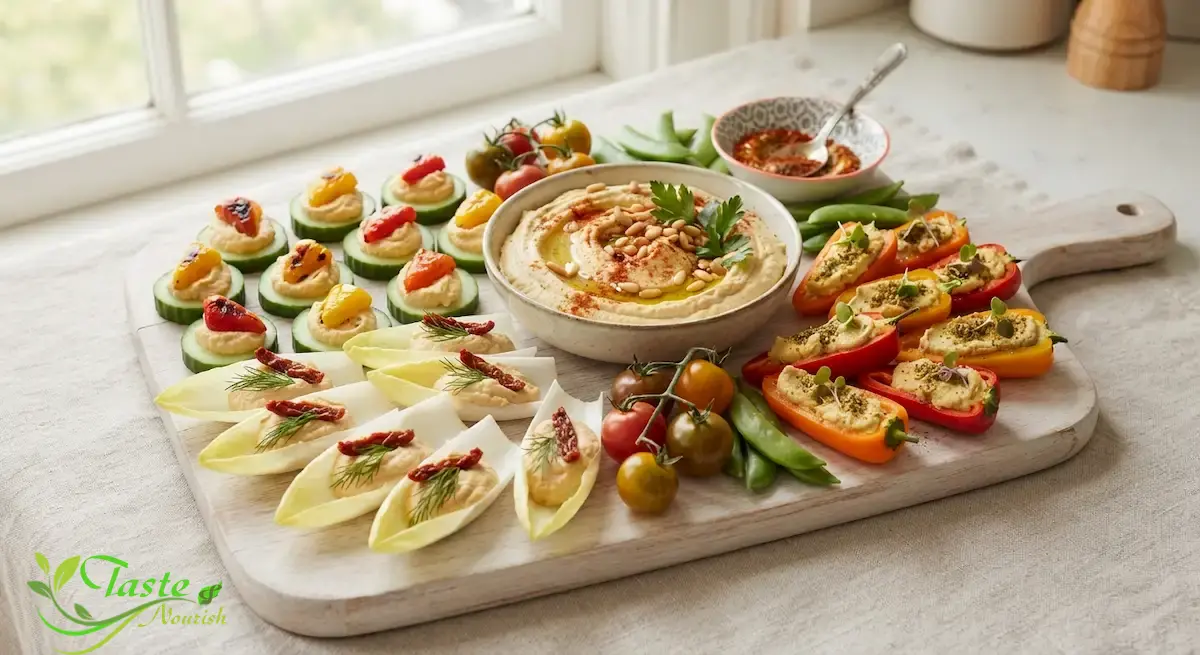
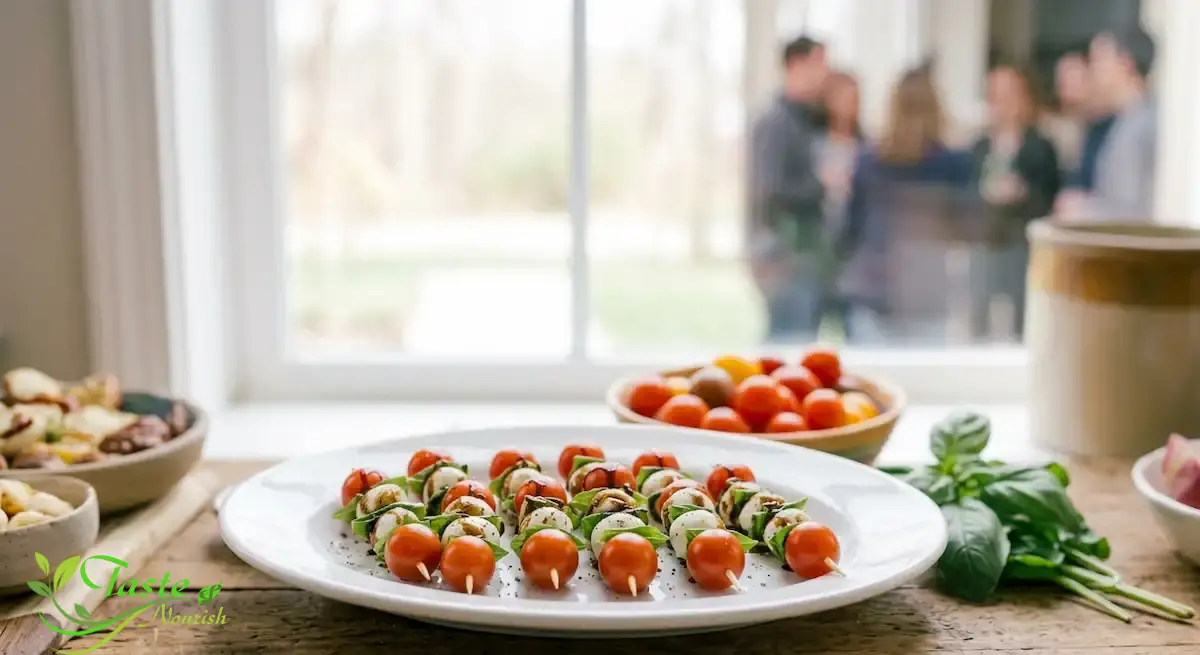
For a vegetarian-friendly table, swap meat-based dips and wings for a hearty bean dip, loaded queso without meat, and a caprese-style skewer platter. For a lighter spread, lean on the cold and crunchy category — a vegetable tray, hummus, and a fruit platter cover a lot of ground without much cooking at all.
If your group likes heat, offer a hot sauce or sliced jalapeños on the side rather than making every dish spicy, so the platter still works for guests who prefer things milder.
Game Day Appetizer Platter FAQs
What are the best appetizer platter ideas for game day?
A balanced mix works best: one hot dip like buffalo chicken or queso, one hot finger food like wings or meatballs, a cold vegetable or egg platter, and sturdy dippers like chips or bread. This combination covers different textures and temperatures without requiring constant cooking during the game.
How far in advance can I prep a game day appetizer platter?
Most dips can be mixed one to two days ahead and reheated before serving. Sturdy vegetables can be chopped a day ahead and stored in airtight containers. Assemble the final cold platter within an hour of guests arriving so everything looks and tastes fresh.
How long can appetizers sit out during the game?
Perishable items — anything with dairy, mayonnaise, eggs, or cooked meat — shouldn’t sit at room temperature longer than two hours total, per USDA food safety guidance. For a game that runs three hours or more, plan to refresh smaller portions from the fridge or oven rather than leaving one tray out the entire time.
Can I freeze appetizers like dips and meatballs ahead of a game?
Many hot dips and cooked meatballs freeze well for a few weeks. Thaw them in the refrigerator the night before, then reheat fully before serving. Cold items like vegetable trays, deviled eggs, and fresh dips don’t freeze well and should be made closer to serving time.
What can I use if I don’t have a slow cooker for hot dips?
A warming tray, chafing dish, or even a low oven set around 200°F can hold hot dips and finger foods at a safe temperature. The key is keeping food above 140°F rather than letting it sit at room temperature on the counter.
How do I keep a vegetable platter from getting warm and wilted?
Nest the serving tray in a larger bowl or dish filled with ice, and swap the ice out as it melts. This keeps vegetables crisp and holds the platter at a safer temperature for longer.
What should I serve alongside dips besides chips?
Toasted baguette slices, pretzel bites, thick-cut potato chips, and crisp vegetables like celery and bell pepper strips all work well. Match sturdier dippers to thicker dips like queso or bean dip so they don’t break apart.
Conclusion
The best appetizer platter ideas for game day aren’t complicated — they’re organized. Pick one item from each category, prep as much as you can the day before, and manage the table in small, fresh batches instead of one giant spread that sits out for hours. Do that, and you’ll spend the game watching the field instead of running back to the kitchen.
Hanan Abo Samra is the founder of Taste & Nourish, sharing trustworthy nutrition guidance and recipes drawn from 20+ years of hands-on cooking experience. When she's not developing new recipes, Hanan is researching the science behind everyday ingredients to bring readers practical, evidence-based guidance for a healthier lifestyle.