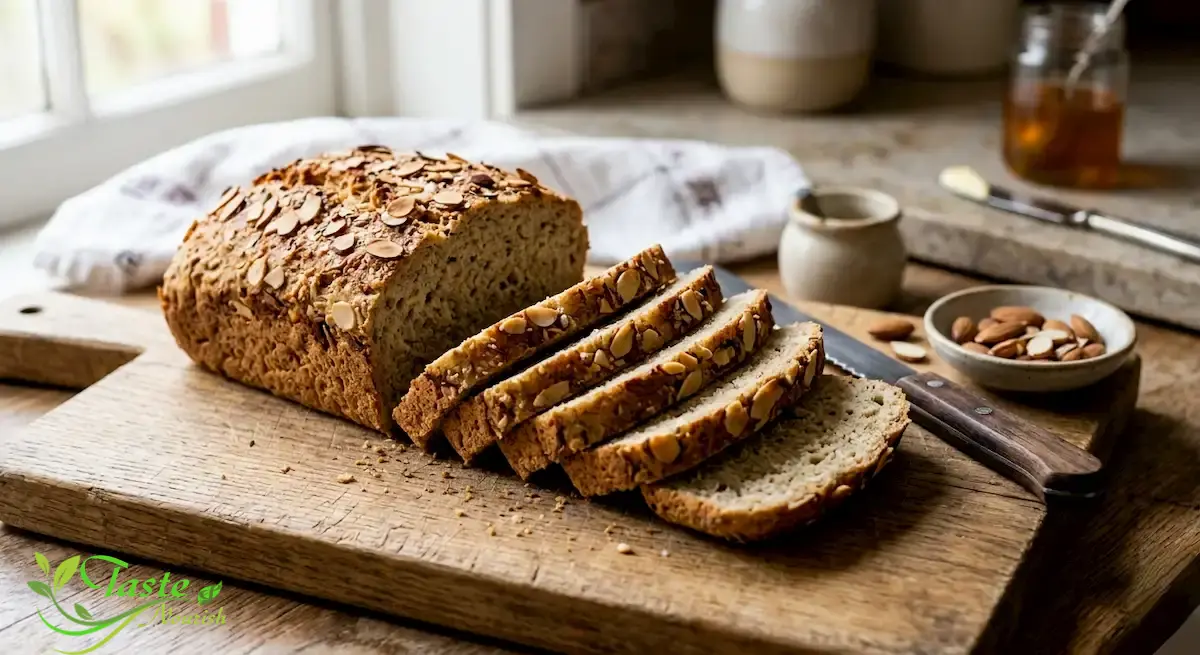
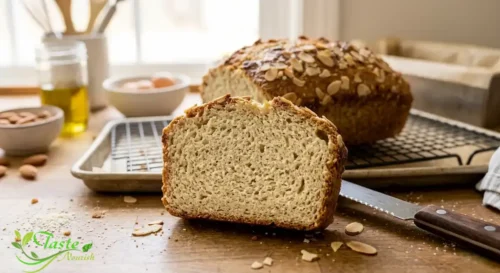
A really good almond flour bread recipe has to solve one problem above all: getting a loaf that slices cleanly and holds together, instead of crumbling apart or turning gummy in the middle. This one does exactly that, using a ratio of almond flour to eggs that’s been dialed in for structure as much as flavor. It’s naturally gluten-free, comes together in two bowls with no yeast and no proofing, and bakes into a loaf firm enough for sandwiches.
If your last almond flour loaf came out dense, greasy, or overly eggy, the technique below fixes each of those issues.
This almond flour bread recipe combines blanched almond flour, eggs, avocado oil, apple cider vinegar, and baking soda into a batter that bakes into a firm, sliceable loaf in about 45 minutes. No yeast, proofing, or stand mixer is required, which makes it one of the fastest gluten-free breads to make from scratch at home.
Recipe at a Glance
Detail
Time / Info
Prep Time
10 minutes
Cook Time
40–45 minutes
Total Time
About 1 hour (plus 1 hour cooling)
Yield
1 loaf, about 12 slices
Difficulty
Easy
Key Takeaways
This almond flour bread recipe uses pantry staples and comes together start to finish in about an hour, most of which is hands-off baking and cooling.
No yeast, proofing, or mixer needed — just two bowls, a whisk, and a loaf pan.
The bread is naturally gluten-free and lower in carbohydrates than standard wheat bread.
Blanched almond flour, not almond meal, is essential for a smooth, sliceable crumb.
The baked loaf keeps in the refrigerator for about a week and freezes well for longer storage.
Why This Gluten-Free Almond Flour Bread Works
Wheat bread gets its structure from gluten, the protein network that traps gas bubbles from yeast and lets a loaf rise and hold its shape. Almond flour has none of that, so this recipe leans on eggs for structure instead — they set during baking the way they do in a quiche, giving the loaf enough backbone to slice without crumbling.
Baking soda paired with apple cider vinegar creates a quick chemical reaction that provides lift in place of yeast fermentation, which is what makes this an easy almond flour loaf recipe rather than a project that requires proofing time or temperature-sensitive dough handling. The result is a loaf with a tight, moist crumb, a subtly nutty flavor, and a texture closer to a hearty sandwich bread than a quickbread.
Ingredients
3 cups (300g) blanched almond flour
5 large eggs, room temperature
1/4 cup (60ml) avocado oil, or melted and cooled coconut oil
1 tablespoon apple cider vinegar
1/2 teaspoon baking soda
1/2 teaspoon fine sea salt
1 tablespoon honey or maple syrup (optional, for a hint of sweetness)
Ingredient Notes
Blanched almond flour is ground from skinless almonds and has a fine, even texture. Almond meal, made from whole almonds with the skins on, is coarser and noticeably heavier in a loaf — it will make the bread denser and slightly gritty, so it isn’t a direct swap here.
Room-temperature eggs incorporate more evenly into the batter than cold eggs, which helps the loaf rise consistently rather than in uneven pockets.
Apple cider vinegar and baking soda work together as the leavening system. The vinegar activates the baking soda, releasing carbon dioxide that lightens the crumb — skip either one and the loaf will bake noticeably flatter and denser.
Substitutions
Oil: Melted coconut oil works as a near-equal swap for avocado oil. Olive oil is usable but adds a more noticeable flavor and can make the crumb slightly denser.
Sweetener: Honey or maple syrup can be omitted entirely for a fully savory loaf with no change to structure.
Eggs: A flax egg substitute (1 tablespoon ground flaxseed plus 3 tablespoons water per egg) can replace one or two eggs, but this is a real trade-off — the loaf will rise less and hold together more loosely, since eggs are doing the structural work that gluten normally would.
Kitchen Tools Needed
8.5 x 4.5-inch loaf pan
Parchment paper (for easy release)
Two mixing bowls
Whisk or hand mixer
Instant-read thermometer (optional, for checking doneness)
How to Make This Almond Flour Bread Recipe
Preheat and prep. Preheat the oven to 350°F (175°C). Line an 8.5 x 4.5-inch loaf pan with parchment paper, leaving an overhang on the long sides for easy lifting.
Mix the dry ingredients. In a large bowl, whisk together the almond flour, baking soda, and salt until no clumps remain.
Whisk the wet ingredients. In a separate bowl, whisk the eggs, oil, vinegar, and honey (if using) until the mixture looks pale and slightly frothy, about 1 minute.
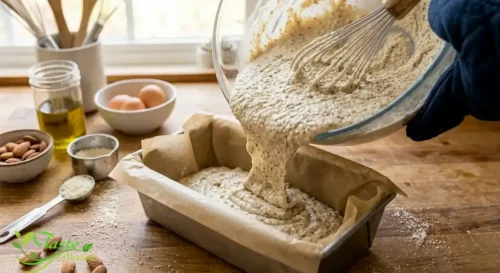
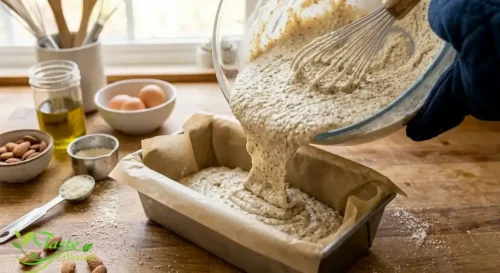
Combine. Pour the wet ingredients into the dry and fold together with a spatula until just smooth. The batter will be thick and glossy — stop mixing as soon as no dry streaks remain, since overmixing can make the loaf denser.
Transfer to the pan. Pour the batter into the prepared pan and smooth the top with a spatula.
Bake. Bake for 40–45 minutes, until the top is deep golden brown, the loaf feels firm when pressed lightly, and a toothpick inserted in the center comes out clean. An instant-read thermometer should register around 200°F (93°C) in the center.
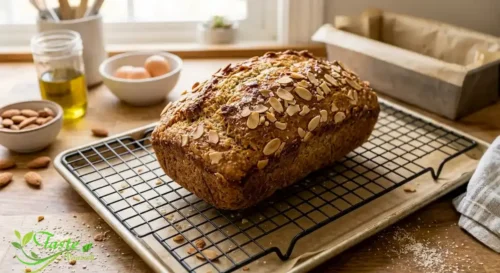
Cool completely. Let the loaf cool in the pan for 10 minutes, then lift it out using the parchment overhang and cool fully on a wire rack, about 1 hour, before slicing. Cutting too early will produce a gummy, underset crumb even if the bread is fully baked.
Expert Cooking Tips
Weigh the almond flour rather than scooping it by volume — packed cups can add up to 20% more flour than intended, which dries out the loaf.
Tent the loaf loosely with foil after 30 minutes if the top is browning faster than the center is setting.
Let eggs sit out for 20–30 minutes before baking rather than using them cold from the fridge.
Resist opening the oven door in the first 25 minutes; a temperature drop can cause the center to sink slightly.
Common Mistakes to Avoid
Using almond meal instead of blanched almond flour. The coarser texture and skins throw off both the crumb and the rise. Use finely ground, blanched almond flour specifically.
Scooping flour straight from the bag. This compacts the flour and leads to a dense, dry loaf. Spoon the flour into the measuring cup and level it off, or weigh it.
Slicing while warm. The crumb needs time to finish setting as it cools. Cutting into a hot loaf usually looks underbaked even when it isn’t.
Skipping the vinegar. Without it, the baking soda has nothing to react with, and the loaf rises far less.
Recipe Variations
Herb and garlic loaf — Add 1 teaspoon dried rosemary or thyme and 1/2 teaspoon garlic powder to the dry ingredients.
Seeded loaf — Fold in 2 tablespoons each of pumpkin and sunflower seeds, reserving a spoonful to sprinkle on top before baking.
Everything bagel loaf — Sprinkle everything bagel seasoning over the batter just before it goes into the oven.
Cinnamon swirl loaf — Add 1 teaspoon cinnamon to the batter and increase the honey to 2 tablespoons for a lightly sweet breakfast version.
Serving Suggestions
Toast slices and top with butter, avocado, or nut butter for breakfast. The firm crumb also holds up well for open-faced sandwiches with eggs, smoked salmon, or deli turkey. Served alongside soup or a green salad, a slice or two rounds out a light lunch without the heaviness of wheat bread.
Nutrition Information
Figures below are estimates for one of 12 slices and will vary by brand of almond flour and exact slice size.
Nutrient
Approximate Amount
Calories
~210
Total Fat
~18g
Protein
~8g
Total Carbohydrates
~5g
Dietary Fiber
~3g
Almond flour is the main contributor to these numbers. According to USDA FoodData Central’s entry for almond flour, it is notably higher in protein and fiber, and lower in carbohydrates, than wheat flour, which is part of why baked goods made with it tend to be more filling per slice.
Almonds and almond flour are also a source of vitamin E; the NIH Office of Dietary Supplements’ fact sheet on vitamin E notes that nuts are among the better dietary sources of this nutrient, which functions as an antioxidant in the body. These figures describe the food itself and aren’t a claim about health outcomes from eating this bread specifically.
Storage Instructions
Refrigerator: Store the cooled loaf in an airtight container or wrapped tightly in plastic for up to 1 week. Because this bread contains no preservatives, refrigeration keeps it fresher longer than counter storage.
Freezer: Slice the loaf before freezing so you can pull out individual pieces. Layer slices with parchment paper, seal in a freezer bag with the air pressed out, and freeze for up to 3 months. The USDA Food Safety and Inspection Service’s guidance on freezing notes that food held continuously at 0°F stays safe indefinitely, though quality — texture and flavor — is what actually declines over time, which is why the 3-month window is about taste, not safety.
Reheating: Toast slices directly from frozen for the best texture. To thaw without toasting, let a slice sit at room temperature for about 15 minutes.
Make-Ahead Tips
This loaf is a good make-ahead option precisely because it freezes so well. Bake it up to 3 months in advance, slice, and freeze; pull individual slices out as needed rather than thawing the whole loaf at once.
Almond Flour Bread Recipe FAQs
Can I use almond meal instead of almond flour?
Not for this recipe. Almond meal is coarser and includes the almond skins, which makes the loaf denser and more crumbly. Use finely ground, blanched almond flour for the texture this recipe is built around.
Is this bread keto-friendly?
At roughly 5g total carbohydrates and 3g fiber per slice, this loaf fits comfortably within most low-carbohydrate and ketogenic meal plans, though individual macros should be checked against your specific targets.
Why did my loaf sink in the middle?
This usually means the center wasn’t fully set before cooling, often from underbaking, opening the oven door too early, or using cold eggs that slowed the rise. Bake until a thermometer reads about 200°F in the center.
Is almond flour bread safe for people with celiac disease?
Almond flour itself doesn’t contain gluten, but people with celiac disease need every ingredient — including baking soda and any add-ins — to be free of cross-contact with wheat, barley, or rye. The NIH’s National Institute of Diabetes and Digestive and Kidney Diseases advises that a strict, lifelong gluten-free diet is the primary treatment for celiac disease, and checking that packaged ingredients are labeled gluten-free is part of managing that risk.
In the U.S., the FDA’s gluten-free labeling regulation requires that any product bearing a “gluten-free” claim contain less than 20 parts per million of gluten, which gives a concrete standard to look for on ingredient packaging. Anyone with celiac disease or a diagnosed gluten sensitivity should confirm labeling with their usual brands and consult their doctor or dietitian about specific products.
Can I make this dairy-free?
Yes — as written, this recipe contains no dairy.
Can I add yeast to make it taste more like traditional bread?
Yeast isn’t recommended here. This recipe relies on eggs and a baking soda reaction for structure and rise, not fermentation, so adding yeast won’t improve the result and can throw off the texture.
This almond flour bread recipe combines blanched almond flour, eggs, avocado oil, apple cider vinegar, and baking soda into a batter that bakes into a firm, sliceable gluten-free loaf in about 45 minutes, with no yeast or proofing required.
Ingredients
3 cups (300g) blanched almond flour
5 large eggs, room temperature
1/4 cup (60ml) avocado oil, or melted and cooled coconut oil
1 tablespoon apple cider vinegar
1/2 teaspoon baking soda
1/2 teaspoon fine sea salt
1 tablespoon honey or maple syrup (optional)
Directions
Preheat the oven to 350°F (175°C). Line an 8.5 x 4.5-inch loaf pan with parchment paper, leaving an overhang on the long sides.
In a large bowl, whisk together the almond flour, baking soda, and salt until no clumps remain.
In a separate bowl, whisk the eggs, oil, vinegar, and honey until pale and slightly frothy.
Pour the wet ingredients into the dry and fold until just smooth, stopping as soon as no dry streaks remain.
Pour the batter into the prepared pan and smooth the top.
Bake for 40–45 minutes, until deep golden brown and a toothpick inserted in the center comes out clean.
Cool in the pan for 10 minutes, then transfer to a wire rack and cool fully, about 1 hour, before slicing.
Conclusion
The difference between an almond flour bread recipe that slices cleanly and one that falls apart usually comes down to two things: weighing the flour instead of scooping it, and letting the loaf cool completely before cutting. Get those two details right, and this loaf holds up as a genuinely useful everyday gluten-free bread — not just a workaround.
**Hanan Abo Samra** shares practical cooking insights, delicious recipes, and evidence-based nutrition information. Drawing on more than 20 years of hands-on cooking experience, she creates helpful food content that combines everyday cooking knowledge with information from reliable scientific sources. Her goal is to help readers better understand the foods they eat, explore their nutritional benefits, and prepare delicious meals with confidence.