Almonds have a reputation as one of the healthiest snacks you can grab from your pantry, and there’s real science behind it. The health benefits of almonds go well beyond a satisfying crunch — this small, energy-dense nut is linked to better heart health, steadier blood sugar, and a nutrient profile that’s hard to beat for its size. Whether you eat them raw by the handful, stir almond butter into oatmeal, or swap them in for less nutritious snacks, understanding what almonds actually do for your body can help you make smarter choices at the store and in the kitchen.
This guide walks through the nutrition facts, the research, the risks, and the practical details — how many to eat, how to store them, and how to avoid the common mistakes people make with this popular nut.
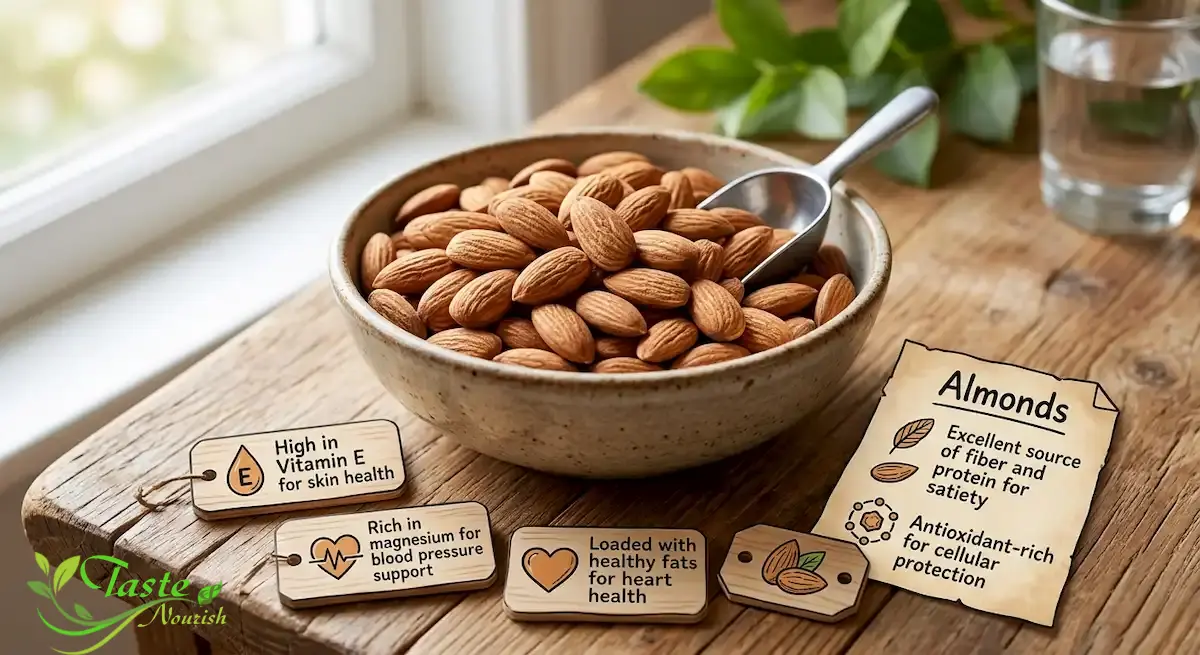
The health benefits of almonds are tied mainly to their fat, fiber, protein, and vitamin E content. Regularly eating a small handful of almonds — about one ounce, or 23 almonds — is associated with lower LDL (“bad”) cholesterol, improved blood sugar control, better satiety, and a reduced risk of cardiovascular disease when eaten in place of less nutritious snacks.
Almonds are also one of the richest food sources of vitamin E, an antioxidant that supports skin and cell health. Most of the supporting research is observational or comes from short-term clinical trials, so almonds should be viewed as part of a broader healthy dietary pattern rather than a cure for any specific condition.
Key Takeaways on the Health Benefits of Almonds
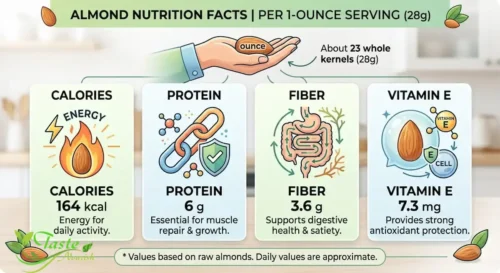
A one-ounce serving of almonds (about 23 nuts) provides roughly 164 calories, 6 grams of protein, 3.5 grams of fiber, and nearly half your daily vitamin E needs.
Research consistently links regular nut consumption, including almonds, to improved cholesterol levels and a lower risk of heart disease.
The health benefits of almonds also extend to blood sugar management, weight maintenance, and gut health, largely because of their fiber and healthy fat content.
Most of the evidence comes from population studies and short-term trials, so almonds work best as part of an overall healthy eating pattern, not a standalone fix.
People with a tree nut allergy should avoid almonds entirely, and anyone adding them to their diet should watch portion sizes, since almonds are calorie-dense.
What Are Almonds?
Almonds are the edible seeds of the almond tree (Prunus dulcis), a species related to peaches, cherries, and plums. Technically, they’re a drupe, not a true botanical nut, but they’re eaten and classified as a tree nut in nutrition science and food labeling.
Almonds come in two main varieties: sweet almonds, which are the kind sold for eating, and bitter almonds, which contain compounds that release cyanide and are used mainly for flavoring extracts in small, processed amounts. You’ll find sweet almonds sold raw, roasted, blanched (skin removed), sliced, slivered, or ground into almond flour and almond butter.
Almond Nutrition Facts
Almonds are calorie-dense but nutrient-rich, meaning a small serving delivers a meaningful amount of healthy fat, plant protein, fiber, and minerals. The table below shows the nutritional breakdown for a standard one-ounce (28-gram) serving, based on data from the USDA FoodData Central almond entry.
Nutrient
Amount per 1 oz (28g, about 23 almonds)
Calories
164 kcal
Protein
6 g
Total fat
14 g (mostly monounsaturated)
Saturated fat
about 1 g
Carbohydrates
6 g
Fiber
3.5 g
Vitamin E
about 7.3 mg (roughly 45–50% of the Daily Value)
Magnesium
about 76 mg (around 18% of the Daily Value)
Calcium
about 76 mg
Potassium
about 208 mg
Almonds are also one of the best natural sources of vitamin E among all foods. The NIH Office of Dietary Supplements lists almonds as one of the top food sources of this antioxidant nutrient, right behind fortified oils.
Health Benefits of Almonds
Now for the part most people care about: what eating almonds actually does for your health. Below are the benefits of eating almonds that show up most consistently across nutrition research.
1. May Support Heart Health
Almonds are rich in monounsaturated fat, the same type of heart-friendly fat found in olive oil. Several studies have found that replacing saturated fat with almonds or other nuts is associated with lower LDL cholesterol. The Mayo Clinic notes that regularly eating nuts as part of a balanced diet may help improve artery health and lower inflammation markers tied to heart disease.
2. May Help With Blood Sugar Control
Because almonds are low in carbohydrates and high in fiber, fat, and protein, they don’t cause the same blood sugar spike as many other snack foods. Some research suggests pairing almonds with higher-carb meals may blunt post-meal blood sugar rises, which is one reason they’re often recommended to people managing type 2 diabetes risk.
3. May Support Weight Management
It seems counterintuitive that a high-fat, high-calorie food could help with weight control, but almonds are one of the more studied examples of this. Their combination of fiber, protein, and fat promotes fullness, and some of the fat in whole almonds isn’t fully absorbed during digestion, which may slightly reduce their effective calorie count.
4. Provides Antioxidant Protection Through Vitamin E
Almond skins are particularly rich in flavonoids and vitamin E, both of which act as antioxidants that help protect cells from oxidative damage. This is one reason nutrition experts generally recommend eating almonds with the skin on rather than blanched.
5. May Support Gut Health
The fiber and polyphenols in almonds may act as a mild prebiotic, feeding beneficial gut bacteria. Some small studies have found that regular almond consumption is linked to changes in gut microbiota associated with better digestive health, though this research is still developing.
6. Supports Bone and Muscle Health
Almonds contain calcium, magnesium, and phosphorus — three minerals involved in maintaining bone density — along with a respectable amount of plant protein that supports muscle maintenance, especially useful for people eating fewer animal products.
Benefits of Eating Almonds Every Day
Eating almonds daily, in moderate portions, appears to offer the most consistent benefit in research, largely because cardiovascular and metabolic improvements tend to show up with regular, ongoing intake rather than occasional consumption. The key word is moderate — daily doesn’t mean unlimited.
The Science Behind the Health Benefits of Almonds
The health benefits of almonds aren’t just marketing — they’re backed by a fair amount of nutrition research, though it’s worth understanding the strength and limits of that evidence.
Much of the strongest data on nuts and heart health comes from large, long-running cohort studies like the Nurses’ Health Study, along with the PREDIMED trial, a large randomized controlled trial that tested a Mediterranean diet supplemented with nuts, including almonds. Harvard’s Nutrition Source reports that people who ate tree nuts, including almonds, two or more times a week had a meaningfully lower risk of cardiovascular disease and coronary heart disease compared with those who rarely ate nuts.
Because of this accumulated evidence, the U.S. Food and Drug Administration allows a qualified health claim on nut packaging stating that eating 1.5 ounces of most nuts daily, as part of a diet low in saturated fat and cholesterol, may reduce the risk of heart disease. Despite that claim, national survey data compiled in a CDC data brief on nut consumption found that only about one in ten U.S. adults actually eat that recommended amount on a given day.
It’s worth being honest about the limits here: many of the supporting studies are observational, meaning they show an association rather than definitive cause and effect. People who eat more nuts also tend to have other healthy habits, which can make it hard to isolate the exact effect of almonds alone. That said, the direction and consistency of the findings across multiple large studies gives researchers reasonable confidence in the benefit.
Potential Risks and Side Effects of Eating Almonds
Almonds are generally safe for most people, but there are a few things worth knowing.
Allergic reactions. Tree nut allergies, including almond allergies, can range from mild to severe and, in rare cases, cause anaphylaxis.
Digestive discomfort. Eating large amounts of almonds at once can cause bloating or gas, mainly due to their fiber content.
Excess calorie intake. Almonds are calorie-dense. Mindlessly snacking straight from a large bag can add up quickly.
Oxalate content. Almonds contain oxalates, compounds that may contribute to kidney stone formation in people who are already prone to calcium oxalate stones.
Choking risk. Whole almonds are a choking hazard for young children and should be given chopped or as almond butter instead.
Who Should Avoid Almonds?
A few groups should be more cautious with almonds or avoid them altogether:
People with a diagnosed tree nut allergy should avoid almonds and almond-derived products entirely.
People with a history of calcium oxalate kidney stones may want to discuss almond intake with their doctor or a registered dietitian, given the oxalate content.
People on a low-fiber or low-residue diet for a medical condition should check with their healthcare provider before adding almonds back in.
Young children should only have almonds in chopped, slivered, or butter form, never whole, due to choking risk.
How Many Almonds Should You Eat a Day?
Most nutrition guidance points to about one ounce, or roughly 23 almonds, as a reasonable daily serving. This lines up with the FDA’s qualified health claim on nuts and with the amount used in several of the clinical trials that found cardiovascular benefits.
Because almonds are calorie-dense, portioning them out — into a small bowl or pre-measured bag — rather than eating from the container tends to help people stick to a reasonable amount.
How to Choose the Best Almonds
Check the color. Fresh almonds should be a uniform tan-brown color without dark spots, mold, or a shriveled appearance.
Smell them if possible. Rancid almonds have a sharp, bitter, or “paint-like” smell due to oxidized fat.
Choose raw or dry-roasted over oil-roasted. Oil-roasted almonds usually have added sodium and unnecessary extra fat.
Buy in smaller quantities if you don’t go through them quickly. Almonds bought in bulk can sit long enough to go rancid before you finish them.
Read the label on flavored varieties. Honey-roasted, chocolate-covered, or seasoned almonds often carry significantly more sugar and sodium than plain almonds.
Storage Tips for Almonds
Almonds contain a lot of unsaturated fat, which makes them prone to going rancid if stored improperly.
Store raw almonds in an airtight container in a cool, dark pantry for up to six months.
For longer storage, keep them in the refrigerator for up to a year, or in the freezer for up to two years.
Keep almonds away from direct sunlight and heat, both of which speed up fat oxidation.
Almond butter should be refrigerated after opening, especially natural varieties without added stabilizers.
Best Ways to Eat and Cook With Almonds
Eat them raw or dry-roasted as a portioned snack, ideally unsalted.
Slice or sliver them over oatmeal, yogurt, or salads for texture.
Blend into almond butter for spreading on toast or fruit.
Use almond flour in place of some wheat flour for baking, keeping in mind it behaves differently and works best in tested recipes.
Add chopped almonds to stir-fries, grain bowls, or roasted vegetables for crunch.
Make homemade almond milk by blending soaked almonds with water and straining.
Common Mistakes People Make With Almonds
Eating them straight from a large bag. This makes it easy to eat far more than a serving without noticing.
Buying flavored or candy-coated versions and assuming they’re just as healthy. Added sugar and oil change the nutritional picture significantly.
Removing the skins. Blanched almonds lose some of the flavonoids and fiber found in the skin.
Storing them in a warm cabinet near the stove. Heat accelerates rancidity and shortens shelf life.
Assuming almond milk has the same nutrition as whole almonds. Most commercial almond milk is mostly water and contains far less protein, fiber, and fat than whole almonds.
Almond Myths vs Facts
Myth
Fact
Almonds are too high in fat to be healthy.
Most of the fat in almonds is monounsaturated, the same heart-friendly type found in olive oil, and research links moderate almond intake to better, not worse, cholesterol profiles.
Raw almonds are always more nutritious than roasted ones.
Dry-roasting causes only minor nutrient changes. The bigger concern is oil-roasting and added sodium, not roasting itself.
Soaking almonds overnight dramatically boosts their nutrition.
Soaking may soften the skin and slightly ease digestion for some people, but there isn’t strong evidence it meaningfully increases nutrient absorption.
Almond skins should be removed because they’re hard to digest.
Almond skins contain much of the fiber and antioxidant flavonoid content, so removing them lowers the nutritional value.
Eating almonds will automatically cause weight gain.
When eaten in place of less nutritious snacks and kept to a reasonable portion, almonds are more often associated with weight maintenance than weight gain.
Almonds vs Other Nuts: A Quick Comparison
Nut (1 oz serving)
Calories
Protein
Fiber
Standout Nutrient
Almonds
164
6 g
3.5 g
Vitamin E
Walnuts
185
4 g
2 g
Omega-3 (ALA)
Cashews
157
5 g
1 g
Magnesium, iron
Pistachios
159
6 g
3 g
Potassium, lutein
Peanuts (legume)
161
7 g
2.4 g
Folate
Health Benefits of Almonds FAQs
What are the health benefits of almonds?
The health benefits of almonds include support for heart health, blood sugar control, weight management, and antioxidant protection through their vitamin E content. Most of these benefits come from regular, moderate intake as part of an overall healthy diet, not from almonds alone.
Is it better to eat almonds raw or roasted?
Both are nutritious. Raw and dry-roasted almonds are nutritionally similar; oil-roasted and heavily salted versions add extra fat and sodium that can offset some of the benefit.
Can eating almonds help you lose weight?
Almonds may support weight management when they replace less nutritious, lower-fiber snacks and are eaten in controlled portions, thanks to their combination of protein, fiber, and healthy fat that promotes fullness.
How many almonds should I eat per day?
About one ounce, or roughly 23 almonds, is the portion most commonly used in research and referenced in FDA guidance on nuts and heart health.
Are almonds good for people with diabetes?
Almonds are low in carbohydrates and may help moderate post-meal blood sugar spikes when paired with higher-carb foods, though people with diabetes should still monitor portion sizes and overall carbohydrate intake.
Do almonds go bad?
Yes. Because of their fat content, almonds can turn rancid, especially if stored in a warm or humid spot. Refrigerating or freezing them extends their shelf life significantly.
Conclusion
Almonds earn their reputation as a genuinely healthy food, but they’re not a miracle cure — they’re a nutrient-dense addition to an already reasonable diet. The research consistently points to real, if modest, benefits for heart health, blood sugar, and overall diet quality when almonds are eaten regularly and in sensible portions. Keep servings around an ounce a day, choose plain or dry-roasted over heavily flavored versions, store them properly, and almonds can be one of the easiest small upgrades you make to your daily eating habits.
**Hanan Abo Samra** shares practical cooking insights, delicious recipes, and evidence-based nutrition information. Drawing on more than 20 years of hands-on cooking experience, she creates helpful food content that combines everyday cooking knowledge with information from reliable scientific sources. Her goal is to help readers better understand the foods they eat, explore their nutritional benefits, and prepare delicious meals with confidence.