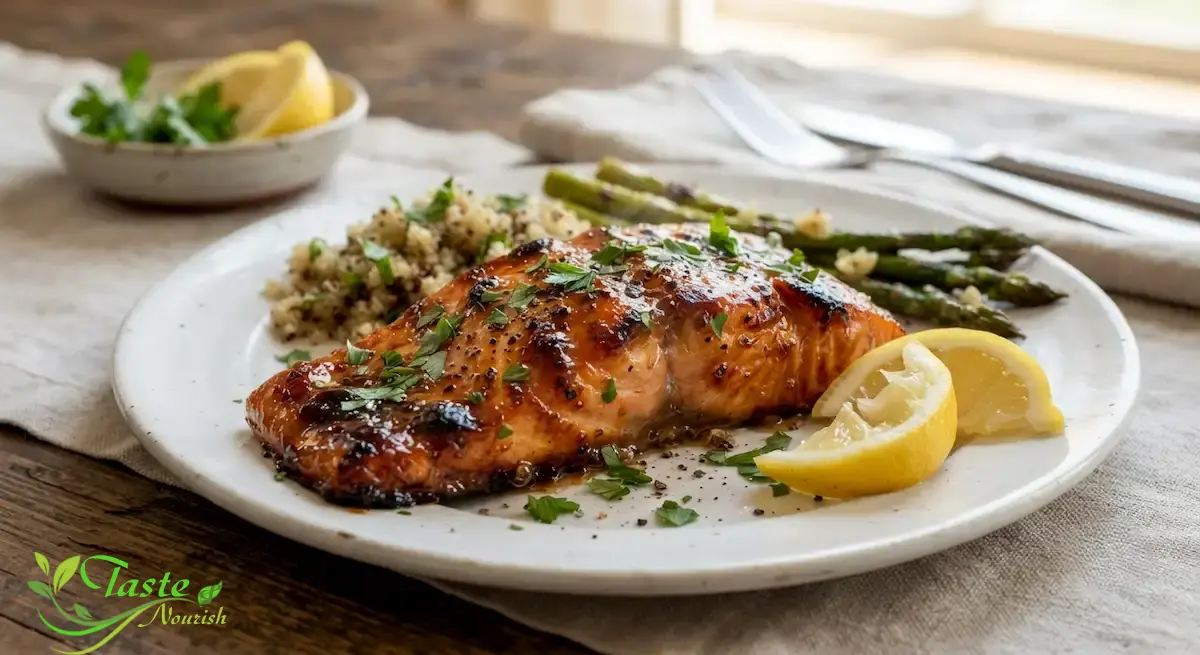
Few weeknight dinners deliver as much payoff for as little effort as a good brown sugar salmon recipe. The sugar melts into a sticky, caramelized glaze while the fish stays tender underneath, and the whole thing comes together in about 25 minutes with ingredients most people already have on hand. It’s the kind of dish that tastes like it took real effort but never actually asks you to prove it.
What makes this version worth bookmarking is the balance: just enough brown sugar to caramelize without tipping into candy territory, a splash of soy sauce for depth, and a hit of garlic and lemon to keep it from feeling one-note. It works equally well for a rushed Tuesday and a dinner you’d actually serve to guests.
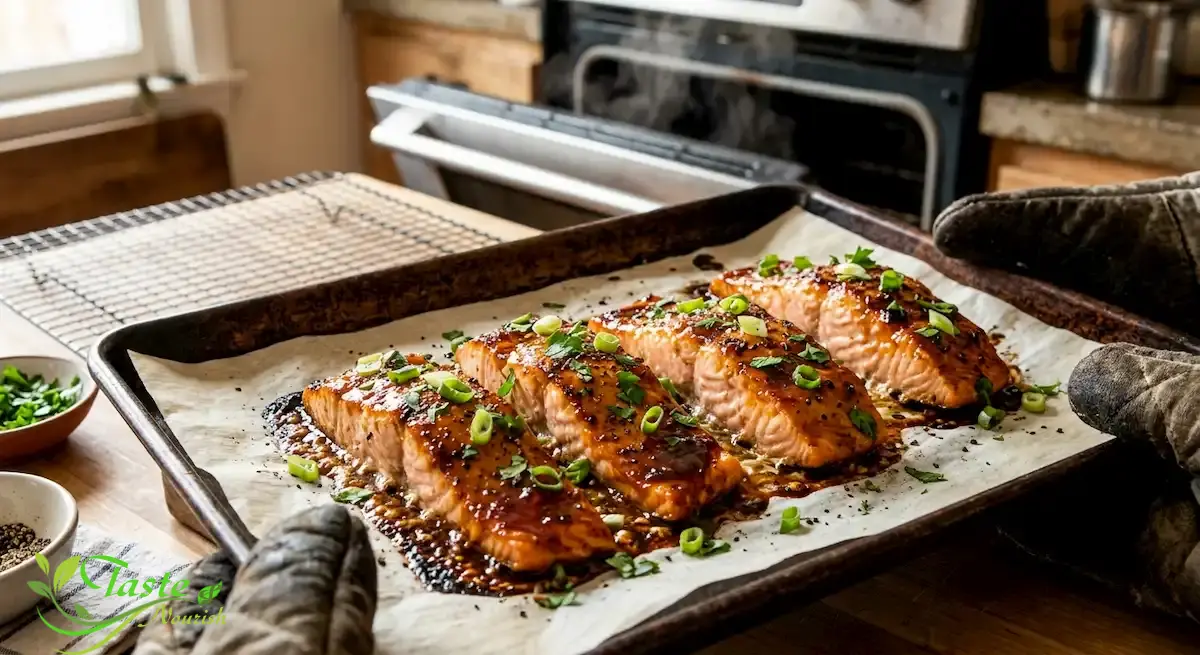
This brown sugar salmon recipe bakes salmon fillets under a glaze of melted butter, brown sugar, soy sauce, garlic, and lemon juice at 400°F for 12–15 minutes, then finishes under the broiler for one to two minutes to caramelize the surface. The result is a sweet, sticky crust over moist, flaky fish, ready in about 25 minutes total.
Recipe at a Glance
Detail
Time / Info
Prep Time
10 minutes
Cook Time
12–15 minutes
Total Time
About 25 minutes
Yield
4 servings
Difficulty
Easy
Key Takeaways
This brown sugar salmon recipe uses a four-ingredient glaze — butter, brown sugar, soy sauce, and garlic — that caramelizes under the broiler in under two minutes.
A quick-read thermometer is the most reliable way to avoid the single biggest mistake with this dish: overcooking.
Dark brown sugar produces a deeper, more molasses-forward glaze than light brown sugar, though both work.
The recipe scales easily and adapts to baking, grilling, or the air fryer with only minor timing changes.
Leftovers hold up well in the fridge for a few days, making this a solid meal-prep option.
Why You’ll Love This Brown Sugar Salmon Recipe
The glaze does double duty: the sugar caramelizes into a glossy, slightly crisp crust while the butter keeps the fish from drying out underneath. Soy sauce adds savory depth so the dish reads as dinner rather than dessert, and a squeeze of lemon at the end keeps the richness in check.
It’s also forgiving. The glaze comes together in one bowl, there’s no marinating time, and the technique transfers cleanly to a grill or air fryer if the oven is busy with something else.
Ingredients for Brown Sugar Salmon
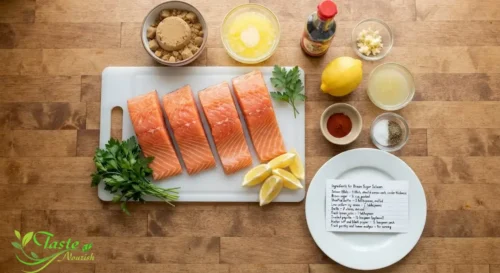
Salmon fillets — 4 fillets, about 6 ounces each, similar thickness
Brown sugar — ⅓ cup, packed
Unsalted butter — 3 tablespoons, melted
Low-sodium soy sauce — 2 tablespoons
Garlic — 2 cloves, minced
Fresh lemon juice — 1 tablespoon
Smoked paprika — ½ teaspoon (optional)
Kosher salt and black pepper — ¼ teaspoon each
Fresh parsley and lemon wedges — for serving
Ingredient Notes
Center-cut fillets of even thickness cook more predictably than tail-end pieces, which taper and finish faster. Dark brown sugar carries more molasses than light brown sugar, giving the glaze a deeper, slightly smoky-sweet flavor; light brown sugar produces a milder, more straightforward caramel note. Either works well in this sweet brown sugar glazed salmon.
Substitutions
Tamari swaps in for soy sauce with no real difference for anyone avoiding gluten. Olive oil can replace the butter for a dairy-free version, though the glaze will taste slightly less rich and won’t set quite as glossy. Coconut sugar can stand in for brown sugar in a pinch — it’s sweet in the same way, but it caramelizes less readily, so expect a softer glaze rather than a crackly one.
Kitchen Tools Needed
Rimmed baking sheet
Small saucepan or microwave-safe bowl, for the glaze
Pastry brush (a spoon works if you don’t have one)
Instant-read thermometer
How to Make Brown Sugar Salmon: Step-by-Step Instructions
Preheat the oven to 400°F and line a rimmed baking sheet with foil or parchment for easy cleanup. Pat the salmon fillets dry with paper towels — this matters more than it sounds like it should, since a wet surface steams instead of caramelizing.
Season both sides of the fillets with salt and pepper, then arrange them skin-side down on the prepared pan, spacing them so they aren’t touching.
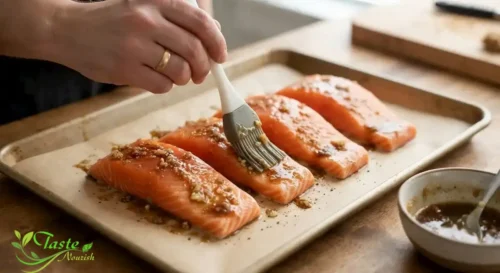
Melt the butter, then whisk in the brown sugar, soy sauce, garlic, lemon juice, and smoked paprika until the sugar mostly dissolves into a loose glaze.
Brush about two-thirds of the glaze evenly over the fillets, reserving the rest for a second coat.
Bake for 10 minutes, then brush the salmon with the remaining glaze.
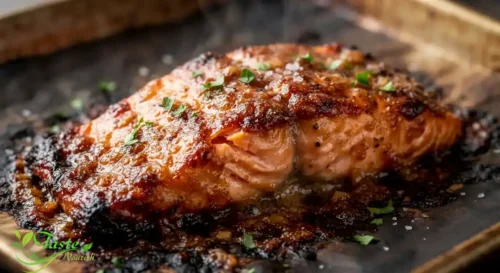
Switch the oven to broil and cook for 1–2 minutes more, watching closely — this is where the glaze bubbles and caramelizes, and it can go from golden to burnt in under a minute.
Check for doneness with an instant-read thermometer inserted into the thickest part of a fillet; USDA food safety guidance lists 145°F as the safe minimum internal temperature for fish. The flesh should also flake easily with a fork and look opaque rather than translucent.
Let the salmon rest for 2–3 minutes before serving, then garnish with parsley and lemon wedges.
Expert Cooking Tips for Sweet Brown Sugar Glazed Salmon
Bring the salmon close to room temperature for 10–15 minutes before baking so it cooks more evenly edge to edge.
Stay near the oven during the broiler step — sugar-based glazes caramelize fast, and the difference between glossy and scorched is often 30 seconds.
If your fillets vary in thickness, pull the thinner ones a minute or two before the thicker ones to avoid overcooking.
A thin coat of glaze caramelizes better than a thick one; if the glaze pools on the pan, brush a little less next time.
Line the pan even if you’re a confident cook — caramelized sugar left to bake onto metal is a genuine pain to scrub off.
Common Mistakes to Avoid
Overcooking the fish. Salmon keeps cooking briefly after it leaves the oven, so pulling it right at 145°F, or even a few degrees under if you prefer it more medium, prevents the dry, chalky texture that overcooked salmon gets. A thermometer removes the guesswork entirely.
Skipping the pat-dry step. Moisture on the surface of the fillet dilutes the glaze and prevents real caramelization, leaving you with a wet, syrupy coating instead of a sticky crust.
Walking away during broiling. Brown sugar glazes burn quickly under direct heat. Standing at the oven for those final 90 seconds is the difference between a beautifully caramelized top and an acrid, burnt-sugar smell in the kitchen.
Using fillets of mismatched thickness. A thin tail piece and a thick center cut on the same pan will never finish cooking at the same time. Trimming for even thickness, or adjusting timing per piece, solves this.
Recipe Variations
Spicy brown sugar salmon: add ¼ teaspoon cayenne or a pinch of red pepper flakes to the glaze for heat that plays well against the sweetness.
Bourbon brown sugar salmon: whisk 1 tablespoon of bourbon into the glaze before brushing; the alcohol cooks off in the oven, leaving a warm, slightly boozy depth.
Air fryer method: cook at 380°F for 8–10 minutes, brushing with glaze halfway through; skip the broiler step since the air fryer already browns the surface.
Grilled brown sugar salmon: cook skin-side down over medium heat on a foil sheet or in a grill basket for 10–12 minutes, basting with glaze in the final few minutes to avoid flare-ups from dripping sugar.
Serving Suggestions for Brown Sugar Salmon
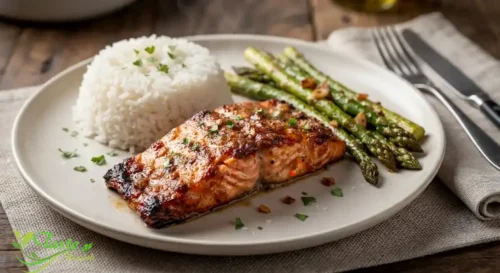
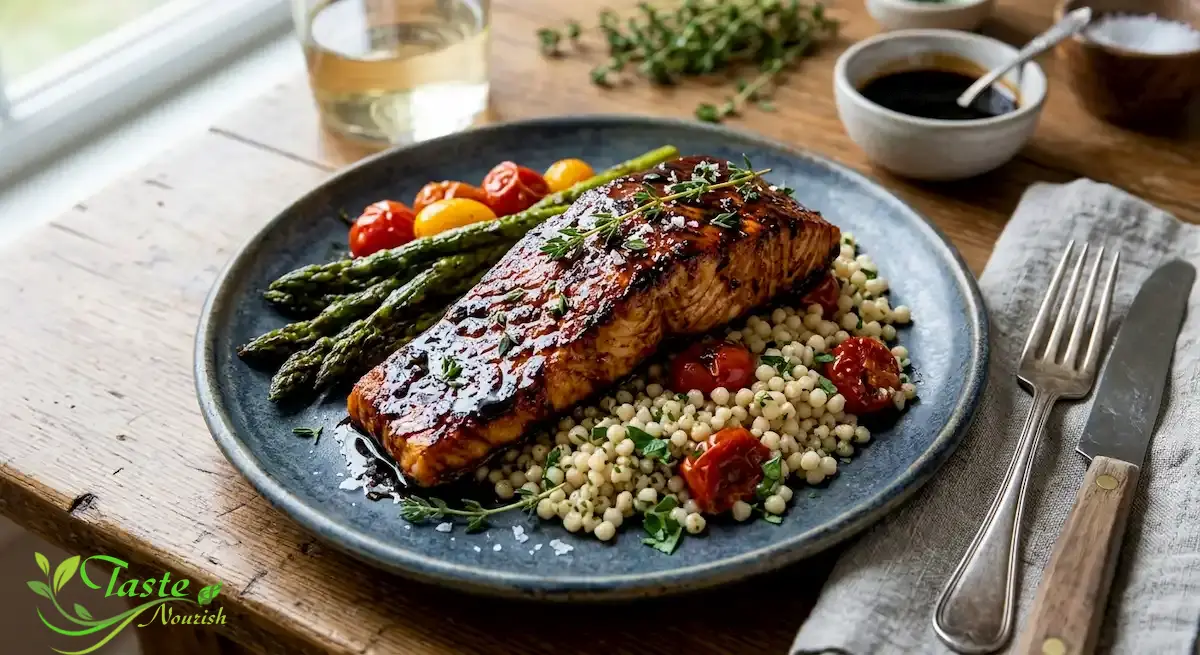
Steamed jasmine or basmati rice soaks up the extra glaze well, and roasted asparagus or green beans add a fresh, slightly bitter contrast to the sweetness. A cool cucumber salad or a simple slaw with rice vinegar also cuts nicely against the richness of the glaze. For something more substantial, garlicky sautéed greens or roasted baby potatoes round the plate out into a full dinner.
Nutrition Information
The following values are estimates for one glazed salmon fillet (about 6 ounces raw weight) and will vary based on exact portion size and specific ingredients used.
Nutrient
Approximate Amount
Calories
~370 kcal
Protein
~34 g
Total Fat
~20 g
Carbohydrates
~14 g
Sodium
~380 mg
Salmon is naturally rich in protein and long-chain omega-3 fatty acids; USDA FoodData Central lists roughly 22 grams of protein and 12 grams of fat per 100-gram cooked serving of farmed Atlantic salmon. According to the National Institutes of Health Office of Dietary Supplements, fatty fish like salmon are among the richest dietary sources of EPA and DHA omega-3s, which may support heart and brain health as part of an overall balanced diet. These figures are general estimates rather than a substitute for personalized nutrition guidance.
Storage Instructions
Refrigerate leftover salmon in an airtight container within two hours of cooking. According to the federal Cold Food Storage Chart, cooked fish keeps well in the refrigerator for a few days when stored below 40°F, and can be frozen for longer-term storage with some loss of texture over time. For best quality, plan to eat refrigerated leftovers within three to four days.
To reheat, warm the salmon gently in a 275°F oven for about 10 minutes, or cover and microwave in short bursts, until it reaches 165°F throughout — gentle, low heat helps prevent the fish from drying out and turning rubbery. For guidance on handling raw and cooked seafood safely before it ever reaches this stage, the FDA’s guidance on selecting and serving fresh and frozen seafood is a useful reference.
Make-Ahead Tips
The glaze can be mixed up to two days ahead and stored covered in the refrigerator; bring it to room temperature and whisk briefly before using, since the butter will solidify when chilled. The salmon itself is best glazed and cooked just before serving, since baking it ahead and reheating tends to dull the caramelized top.
Brown Sugar Salmon Recipe FAQs
Can I use frozen salmon for this recipe?
Yes. Thaw it overnight in the refrigerator, then pat it thoroughly dry before glazing — frozen fillets release more moisture as they thaw, and that extra moisture is exactly what prevents good caramelization.
How do I know the salmon is done without a thermometer?
Press gently with a fork at the thickest point. The flesh should flake apart easily and look opaque and light pink all the way through, with no translucent, glassy center remaining.
What’s the best cut of salmon for this recipe?
Center-cut fillets of even thickness are easiest to work with, since they cook at the same rate across the whole piece. Skin-on fillets also hold together better during broiling than skinless ones.
Can I substitute honey or maple syrup for the brown sugar?
You can, though the texture changes — liquid sweeteners produce a thinner, stickier glaze rather than the slightly crisp, caramelized crust brown sugar gives. If you swap in honey or maple syrup, reduce the broiling time slightly, since liquid sugars can scorch faster than granulated brown sugar.
Is brown sugar salmon a healthy dinner option?
It can fit comfortably into a balanced diet. Salmon itself is a good source of protein and omega-3 fatty acids, and the added sugar in a single serving of glaze is modest compared to many dessert-level sweetened dishes. As with any recipe, portion size and how often it’s eaten matter more than any single ingredient.
Can I make this recipe ahead for meal prep?
Yes — it reheats reasonably well for meal prep, though the glaze won’t stay quite as glossy as it is fresh from the broiler. Portion it into containers with rice and
vegetables for grab-and-go lunches through the week.
A quick baked salmon recipe glazed with butter, brown sugar, soy sauce, and garlic, then broiled until sweet and caramelized. Ready in about 25 minutes.
Ingredients
4 salmon fillets, about 6 ounces each
1/3 cup packed brown sugar
3 tablespoons unsalted butter, melted
2 tablespoons low-sodium soy sauce
2 cloves garlic, minced
1 tablespoon fresh lemon juice
1/2 teaspoon smoked paprika (optional)
1/4 teaspoon kosher salt
1/4 teaspoon black pepper
Fresh parsley and lemon wedges, for serving
Directions
Preheat the oven to 400°F and line a rimmed baking sheet with foil or parchment. Pat the salmon fillets dry and season both sides with salt and pepper.
Arrange the fillets skin-side down on the pan, spaced apart.
Whisk the melted butter with brown sugar, soy sauce, garlic, lemon juice, and smoked paprika to make the glaze.
Brush about two-thirds of the glaze over the fillets, reserving the rest.
Bake for 10 minutes, then brush with the remaining glaze.
Broil for 1–2 minutes, watching closely, until the glaze is bubbly and caramelized.
Check for an internal temperature of 145°F, then rest for 2–3 minutes before garnishing with parsley and lemon.
Conclusion
The single habit that makes this brown sugar salmon recipe consistent every time is using a thermometer instead of guessing — pull the fish at 145°F, and the glaze, timing, and side dishes all fall into place around it.
**Hanan Abo Samra** shares practical cooking insights, delicious recipes, and evidence-based nutrition information. Drawing on more than 20 years of hands-on cooking experience, she creates helpful food content that combines everyday cooking knowledge with information from reliable scientific sources. Her goal is to help readers better understand the foods they eat, explore their nutritional benefits, and prepare delicious meals with confidence.