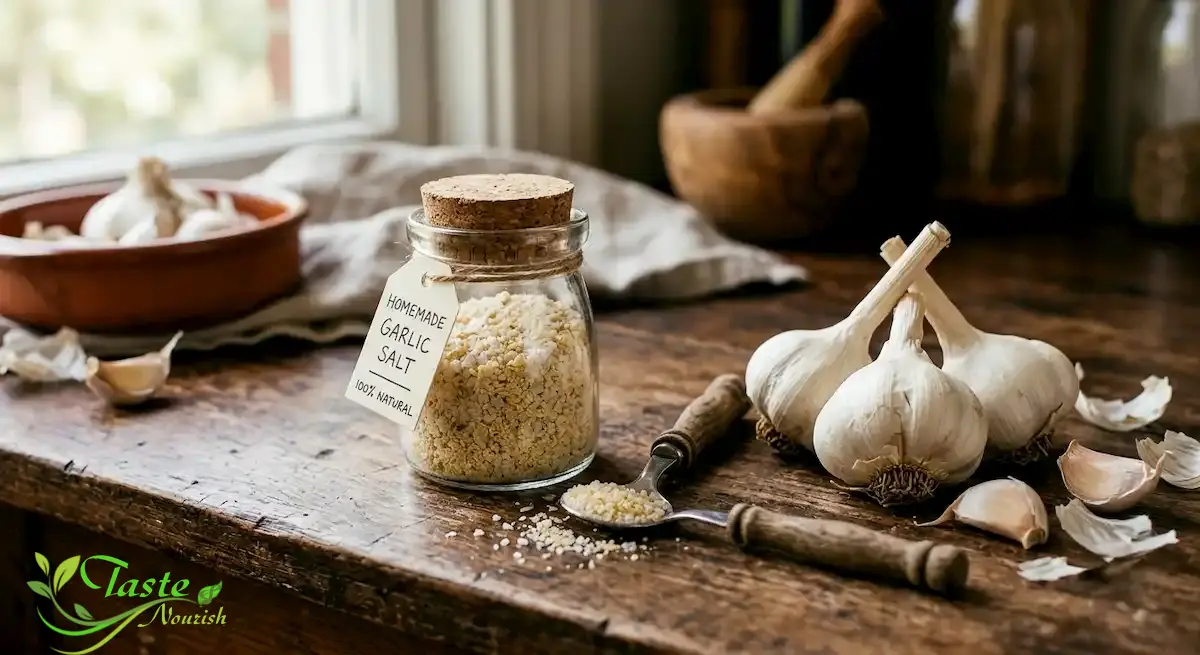
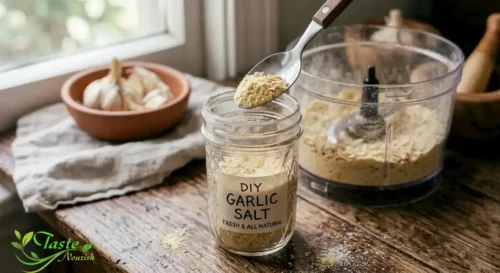
There’s a real difference between the garlic salt sitting in most spice cabinets and a batch you make yourself. This homemade garlic salt recipe uses actual dehydrated garlic instead of the anti-caking agents and flow additives found in a lot of commercial blends. It takes a few hours of mostly hands-off drying time, a spice grinder or food processor, and two ingredients you likely already have on hand. Once you taste how much brighter freshly dried garlic is compared to the jarred version, it’s hard to go back to store-bought.
To make this homemade garlic salt recipe, peel and thinly slice a bulb of fresh garlic, dehydrate the slices until they’re completely brittle, grind them into a fine powder, and combine that powder with salt at roughly a 1-to-4 ratio. Store the finished seasoning in an airtight jar away from heat and light, where it should hold its flavor for about six months to a year.
Key Takeaways
This homemade garlic salt recipe needs only two core ingredients: fresh garlic and salt.
Dehydrating the garlic before grinding it is what gives the seasoning its concentrated flavor and long shelf life.
A starting ratio of about 1 part garlic powder to 4 parts salt mimics most store-bought blends, though you can adjust it to taste.
Garlic salt is still mostly sodium chloride, so the CDC’s guidance on daily sodium intake is worth keeping in mind when you cook with it.
Dried and stored properly, homemade garlic salt is shelf-stable and doesn’t carry the refrigeration requirements that garlic-in-oil mixtures do.
What Is Garlic Salt?
Garlic salt is a seasoning blend of dried, ground garlic mixed with salt, usually alongside a small amount of anti-caking agent in commercial versions. It’s different from garlic powder, which is pure dehydrated garlic with no salt added. When you make garlic salt from fresh garlic at home, you control exactly what goes into the jar, down to the ratio of garlic to salt.
Most people reach for garlic salt because it does two jobs at once: it seasons and it salts. That convenience is part of why it became a pantry staple in American kitchens starting in the mid-20th century, particularly for grilling, popcorn, and roasted vegetables. The tradeoff is that pre-made versions can taste more like salt than garlic, especially if they’ve been sitting on a shelf for a year or more.
Ingredients for This Homemade Garlic Salt Recipe
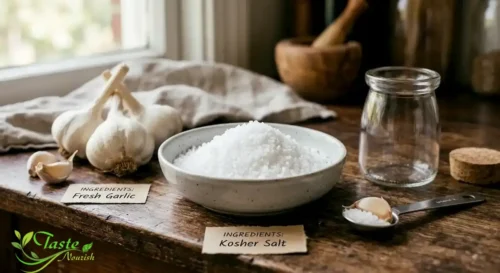
The ingredient list is short on purpose. You want the garlic flavor to lead, with just enough salt to season food properly.
1 large bulb fresh garlic (about 10 to 12 cloves), peeled
3/4 cup kosher salt or fine sea salt
1/2 teaspoon cornstarch or rice flour (optional, helps prevent clumping in humid climates)
You’ll also want a food dehydrator or an oven that can hold a low temperature, plus a spice grinder, clean coffee grinder, or a sturdy mortar and pestle for the grinding step. A fine-mesh sieve is handy if you want a smoother, more uniform texture.
Step-by-Step: How to Make This Homemade Garlic Salt Recipe
Step 1: Peel and Slice the Garlic
Separate the cloves from the bulb and peel each one. Slice the cloves as thinly and evenly as you can, about 1/8 inch thick, so they dry at the same rate. Uneven pieces mean some slices finish drying before others, which can leave a few spots of moisture that invite mold later on.
Step 2: Dehydrate the Garlic Until Brittle
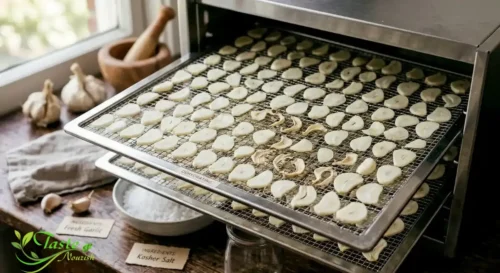
Arrange the slices in a single layer with space between them, either on dehydrator trays or a parchment-lined baking sheet. In a dehydrator, dry at around 125°F to 135°F for 8 to 12 hours. In an oven, use the lowest possible setting, prop the door open slightly to let moisture escape, and check every hour starting around the 3-hour mark.
You’ll know the garlic is ready when the slices snap cleanly instead of bending. Any flexibility means there’s still moisture trapped inside, and that moisture is what leads to spoilage in storage. This step matters more than any other in the whole process, so don’t rush it.
Step 3: Grind Into a Fine Powder
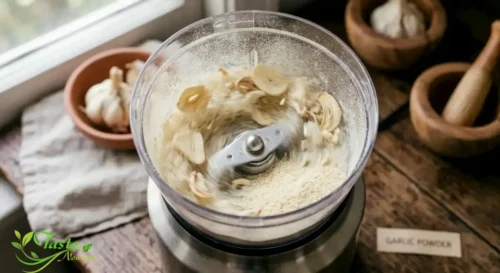
Let the dried garlic cool completely before grinding, since warm pieces can gum up in the grinder. Pulse in a spice grinder or blender until you have a fine, even powder. If you used a mortar and pestle, work in small batches and sift out any larger fragments to grind again.
Step 4: Mix With Salt
Combine the garlic powder with the salt at a starting ratio of about 1 part garlic to 4 parts salt by volume, then taste and adjust. If you want a more garlic-forward blend, increase the powder slightly. Whisk or shake the mixture in a sealed jar until the color and texture look uniform throughout.
Step 5: Store the Finished Homemade Garlic Salt Recipe
Transfer the blend to a clean, airtight jar and label it with the date. Keep it in a cool, dark cabinet rather than next to the stove, since heat and light both speed up flavor loss.
Nutrition Facts
Because this seasoning is mostly salt by volume, its nutrition profile is driven almost entirely by sodium rather than by garlic’s own nutrients. Fresh garlic itself is very low in calories and sodium, according to USDA , which lists raw garlic at roughly 4 calories and about 1 milligram of sodium per clove. Once that garlic is ground and blended with salt, the sodium content of the final seasoning rises sharply.
Nutrient
Amount per 1/4 teaspoon (approx.)
Calories
Less than 1
Sodium
Approximately 440–460 mg (varies with ratio used)
Total Carbohydrate
Less than 1 g
Protein
Trace
These figures will shift depending on how much garlic powder you use relative to salt, and on whether you use table salt, kosher salt, or sea salt, since their sodium density per teaspoon varies slightly by crystal size.
Potential Health Benefits of the Garlic in This Seasoning
Garlic has a long history of traditional use, and modern research has looked closely at some of those claims. According to the National Center , garlic supplements may reduce total and LDL cholesterol to a small extent in people with elevated cholesterol, and limited evidence suggests garlic may modestly lower blood pressure in people who already have hypertension.
It’s worth being realistic about scale here. The amount of garlic in a sprinkle of homemade garlic salt is far smaller than what’s used in most clinical studies, which typically rely on concentrated garlic extract or several fresh cloves a day. Cooking with this seasoning is more about flavor than about meaningful supplementation, even though the garlic itself may offer some incidental benefit.
What the Scientific Evidence Says
Research on garlic and disease prevention is a mixed picture rather than a settled one. Some trials point to modest improvements in cholesterol when garlic is used consistently for more than two months, while a Cochrane review found insufficient evidence that garlic reduces cardiovascular death risk in people with high blood pressure.
Studies on garlic and cancer prevention have also been inconclusive, with dietary garlic showing more promising associations in observational research than garlic supplements have shown in controlled trials.
None of this changes the practical takeaway for a home cook: garlic salt is a flavor tool first. Any health effect from the small amount of garlic in a seasoning blend is likely to be minor compared to what’s been studied in trials using concentrated extracts.
Potential Risks and Side Effects
Garlic itself is generally well tolerated, though some people experience mild digestive discomfort, heartburn, or bad breath after eating it in larger amounts. Because garlic can have a mild blood-thinning effect, people taking anticoagulant medication should talk with a healthcare provider before significantly increasing garlic intake.
The bigger practical concern with garlic salt is sodium, not garlic. Since the blend is mostly salt, using it heavily across multiple dishes in a day can add up quickly for anyone managing blood pressure or a sodium-restricted diet.
Who Should Avoid Garlic Salt?
Anyone on a doctor-recommended low-sodium diet should use this seasoning sparingly or consider a salt-free garlic powder instead. People with a diagnosed garlic allergy or intolerance should avoid it entirely, since even a small amount can trigger a reaction. If you take blood-thinning medication, it’s reasonable to mention your garlic intake, including seasonings like this one, at your next appointment.
How Much Should You Use?
There’s no official serving guideline for garlic salt specifically, but general sodium guidance is a useful reference point. The FDA notes that the Dietary Guidelines for Americans recommend adults keep sodium intake under 2,300 milligrams a day, which is roughly equal to one teaspoon of table salt total, from every source combined.
A light sprinkle, around 1/8 to 1/4 teaspoon per serving of food, is usually enough to season a dish without overwhelming it with sodium. If you’re cooking for someone managing blood pressure, it’s easy to make a lower-sodium version by increasing the garlic-to-salt ratio in your own batch.
How to Choose the Best Garlic for This DIY Garlic Salt Seasoning
Firm, heavy bulbs with tight, unbroken skin make the best starting point. Skip any bulb with soft spots, visible mold, or cloves that have started sprouting green shoots, since these are signs the garlic is past its prime and won’t dry evenly.
Hardneck and softneck garlic both work fine for this homemade garlic salt recipe. Hardneck varieties tend to have a sharper, more complex flavor, while softneck garlic is milder and often easier to find in grocery stores. Either one will dry down into a flavorful powder as long as the cloves were fresh and firm to begin with.
Storage Tips for This Homemade Garlic Salt Recipe
Once fully dried and ground, this seasoning is shelf-stable at room temperature, unlike fresh garlic stored in oil. That distinction matters: the CDC warns that homemade oils infused with garlic or herbs need to be refrigerated and used within about four days because of botulism risk, but dry garlic salt doesn’t carry that same danger since there’s no low-oxygen, moisture-rich environment for bacteria to grow in.
Keep the finished blend in a tightly sealed glass jar, away from the stove, dishwasher steam, or a sunny windowsill. Stored this way, it typically holds good flavor for six months to a year, though it won’t spoil in a dangerous sense after that; it will simply taste flatter over time.
Best Ways to Use This DIY Garlic Salt Seasoning
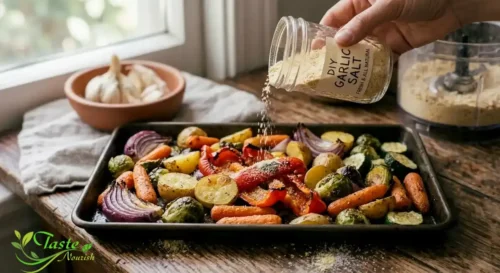
Garlic salt earns its keep on simple, everyday foods. A pinch works well on roasted or grilled vegetables, scrambled eggs, popcorn, homemade fries, and grilled meats before they hit the heat.
It also blends easily into compound butter, salad dressings, marinades, and dry rubs for chicken or steak. Because the flavor is already balanced between garlic and salt, you can often skip adding extra salt separately when a recipe calls for garlic salt, which helps you season more precisely.
Common Mistakes to Avoid
Underdrying the garlic is the most common misstep. If any slice still bends instead of snapping, moisture is trapped inside, and that moisture can lead to clumping or mold once the jar is sealed.
Grinding warm garlic right out of the dehydrator is another frequent issue, since residual heat can create steam inside a sealed grinder, reintroducing moisture into an otherwise dry batch. Skipping the ratio adjustment step is a smaller but common mistake too; tastes vary, and a ratio that works for one cook may taste too salty or too mild for another.
Myths vs. Facts About Garlic Salt
Myth
Fact
Garlic salt is just garlic powder with a different name.
Garlic salt contains actual salt mixed in; garlic powder has none added.
Homemade garlic salt doesn’t need refrigeration precautions at all.
Dry garlic salt is shelf-stable, but garlic stored in oil is a different, higher-risk product that does need refrigeration.
More garlic in the mix always means better flavor.
Too high a garlic ratio can taste harsh or bitter once dried; balance matters more than quantity.
Garlic salt and garlic powder can always be swapped 1:1 in recipes.
Because garlic salt contains sodium, swapping it for garlic powder without adjusting added salt can make a dish too salty.
Homemade vs. Store-Bought Garlic Salt
Feature
Homemade Garlic Salt
Store-Bought Garlic Salt
Ingredients
Fresh garlic and salt only
Often includes anti-caking agents and preservatives
Flavor freshness
Brighter, more pronounced garlic flavor
Flavor fades over long shelf storage before purchase
Sodium control
Fully adjustable to your own ratio
Fixed ratio set by the manufacturer
Cost
Lower per batch if you already cook with fresh garlic
Convenient but priced at a premium for the blend
Shelf life
About 6 months to 1 year at peak flavor
Often listed at 2 to 3 years, though flavor fades sooner
A simple homemade garlic salt recipe made with dehydrated fresh garlic and salt, ready in a few hours with no artificial anti-caking agents.
Ingredients
1 large bulb fresh garlic (about 10 to 12 cloves), peeled
3/4 cup kosher salt or fine sea salt
1/2 teaspoon cornstarch or rice flour (optional, anti-caking)
Directions
Separate and peel the garlic cloves, then slice them evenly about 1/8 inch thick so they dry at the same rate.
Arrange the slices in a single layer and dehydrate at 125 to 135 degrees F for 8 to 12 hours, or in a low oven with the door propped open, until completely brittle.
Let the dried garlic cool completely, then grind it into a fine powder using a spice grinder or mortar and pestle.
Combine the garlic powder with salt at roughly a 1-to-4 ratio, then taste and adjust to your preference.
Transfer the finished garlic salt to an airtight jar and store it in a cool, dark cabinet for up to a year.
Garlic Salt Recipe FAQs
What is the best ratio of garlic powder to salt for garlic salt?
A common starting point is 1 part garlic powder to 4 parts salt by volume, which produces a balanced blend similar to most store-bought versions. From there, you can adjust up or down depending on whether you want a stronger garlic presence or a milder one.
Can I use store-bought garlic powder instead of dehydrating fresh garlic myself?
Yes, you can skip the drying step and mix pre-made garlic powder with salt for a quicker version. Dehydrating fresh garlic yourself tends to produce a more vivid, less dusty flavor, but both approaches result in a usable garlic salt.
Is homemade garlic salt healthier than the store-bought kind?
It isn’t necessarily lower in sodium, since salt is still the main ingredient either way. What you gain is control over the ratio and the ability to skip anti-caking additives, which some people prefer for a cleaner ingredient list.
How long does homemade garlic salt last?
Stored in an airtight jar away from heat and light, it typically stays flavorful for about six months to a year. It won’t become unsafe to eat after that point, but the garlic flavor will gradually fade.
Can I substitute garlic salt for garlic powder in a recipe?
You can, but you’ll need to reduce or remove any additional salt the recipe calls for, since garlic salt already contains a significant amount. As a rough guide, use about 1/4 the amount of garlic salt in place of garlic powder, then adjust to taste.
Conclusion
Making your own garlic salt is a small kitchen project with an outsized payoff in flavor. Once you’ve dried and ground a batch yourself, the difference in freshness compared to a jar that’s been sitting on a store shelf becomes obvious fast. With just fresh garlic, salt, and a little patience during the drying step, you end up with a seasoning you can adjust to your own taste and keep on hand for months.
Hanan Abo Samra is the founder of Taste & Nourish, sharing trustworthy nutrition guidance and recipes drawn from 20+ years of hands-on cooking experience. When she's not developing new recipes, Hanan is researching the science behind everyday ingredients to bring readers practical, evidence-based guidance for a healthier lifestyle.