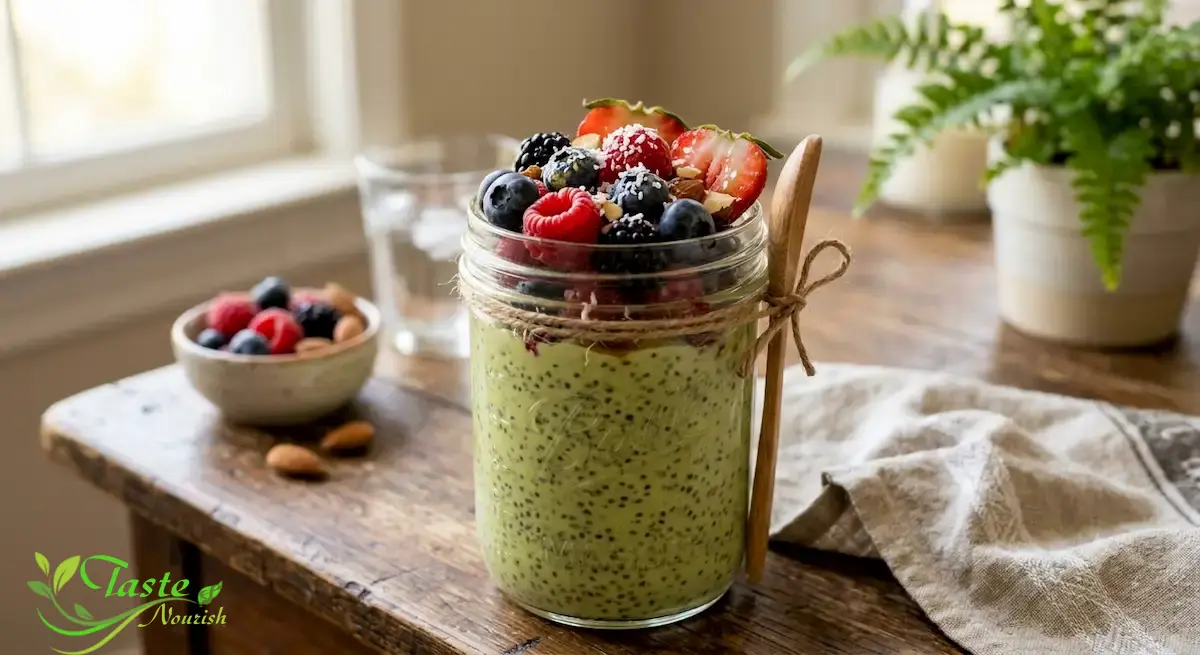
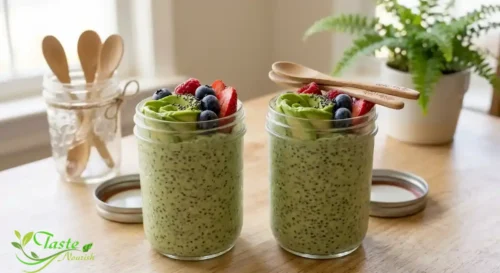
Jump to Recipe Print RecipeIf you’ve never combined two of the internet’s favorite health foods in one bowl, this avocado chia pudding recipe is a good place to start. Ripe avocado blends into a chia seed base to create a spoonable, pudding-like breakfast or snack that sets up in the fridge overnight. It’s naturally dairy-free, needs no cooking, and leans on whole-food ingredients rather than added starches or gums for its thick texture.Below, you’ll find the full recipe, the nutrition behind it, and some practical guidance on who might want to enjoy it in moderation.
This avocado chia pudding recipe works by blending one ripe avocado with milk, a touch of sweetener, and vanilla, then whisking in chia seeds and refrigerating the mixture for at least four hours, ideally overnight. The chia seeds absorb liquid and swell into a gel, while the avocado adds natural creaminess and healthy fat, so you get a thick, spoonable pudding without eggs, dairy, or stovetop cooking.
Key Takeaways
This avocado chia pudding recipe needs just five main ingredients and about 10 minutes of hands-on prep.
Chia seeds contribute plant-based omega-3 fat and fiber, while avocado adds monounsaturated fat and natural creaminess, based on USDA nutrient data.
Refrigerating overnight gives the chia seeds time to fully absorb liquid, which produces a smoother, less gritty pudding.
Research on avocados and chia seeds separately suggests they may support heart and digestive health as part of an overall balanced diet.
The recipe is naturally dairy-free and vegan-friendly, and easy to adjust for less added sugar or different flavors.
What Is Avocado Chia Pudding?
Avocado chia pudding is a no-cook dish made by soaking chia seeds in a liquid base until they swell into a gel, then blending that base with mashed or pureed avocado. The result looks and eats like a rich pudding, though it’s built almost entirely from whole-food fats, fiber, and a modest amount of natural sweetener.
It’s part of a broader family of chia puddings that have grown popular as an easy make-ahead breakfast, and the avocado version adds extra creaminess along with a mild, slightly savory-sweet flavor that pairs well with cocoa, citrus, or vanilla.
Avocado: A Quick Nutritional Snapshot
A 100-gram portion of raw avocado, a bit less than one medium fruit, provides about 160 calories, roughly 15 grams of fat, and just under 7 grams of fiber, according to USDA . Most of that fat is monounsaturated, the same type found in olive oil, and avocados also supply potassium, folate, and vitamin C.
They contain very little natural sugar, which is part of why avocado works so well in a pudding that still needs a bit of added sweetness from another source.
Chia Seeds: A Quick Nutritional Snapshot
One ounce of chia seeds, about two tablespoons, contains roughly 138 calories along with close to 10 grams of fiber and around 5 grams of plant-based omega-3 fat, per USDA data. Chia seeds also supply calcium, magnesium, and manganese.
Their standout feature for this recipe is their ability to absorb many times their weight in liquid, forming the gel-like texture that gives chia pudding its structure without eggs, gelatin, or starch.
Avocado Chia Pudding Nutrition Facts
These numbers are estimated for one serving of the recipe below, which makes two servings total. Actual values will shift with the brand of milk, amount of sweetener, and portion size you use.
Nutrient
Approximate Amount (per serving)
Calories
320 kcal
Total Fat
21 g
Saturated Fat
3 g
Carbohydrates
30 g
Dietary Fiber
13 g
Sugars
13 g
Protein
6 g
Potassium
550 mg
Omega-3 (ALA)
3 g
How to Make the Best Avocado Chia Pudding Recipe
Prep time is about 10 minutes of active work, plus at least 4 hours of chilling, though overnight (6 to 8 hours) gives the creamiest results. This batch makes two generous servings, or four smaller snack-sized ones.
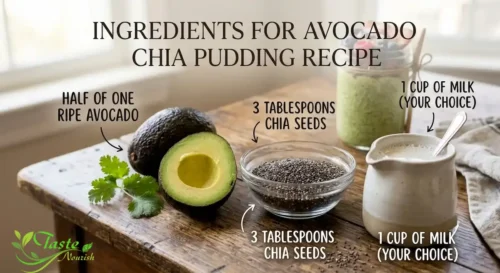
1 1/4 cups unsweetened milk of choice (almond, oat, or dairy all work)
3 tablespoons chia seeds
2 tablespoons maple syrup or honey, or to taste
1 teaspoon vanilla extract
1 tablespoon unsweetened cocoa powder, optional, for a chocolate version
Pinch of salt
Squeeze of fresh lime juice, optional
Overnight Avocado Chia Seed Recipe Instructions
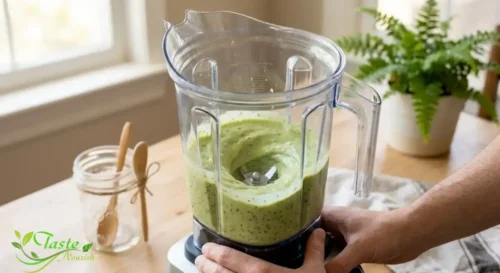
Add the avocado, milk, sweetener, vanilla, salt, and cocoa powder if using to a blender.
Blend until completely smooth, with no visible avocado chunks.
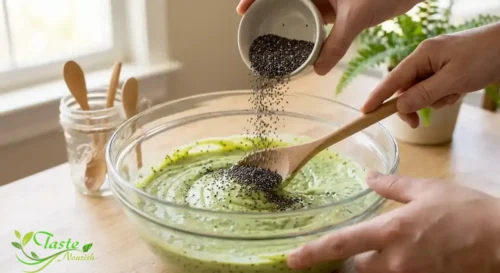
Pour the mixture into a jar or bowl and stir in the chia seeds.
Whisk well for about 30 seconds, then let it sit for 5 minutes before whisking again to break up any clumps.
Cover and refrigerate for at least 4 hours, or overnight for the creamiest, least grainy texture.
Stir before serving, adding a small splash of milk if the pudding is thicker than you’d like.
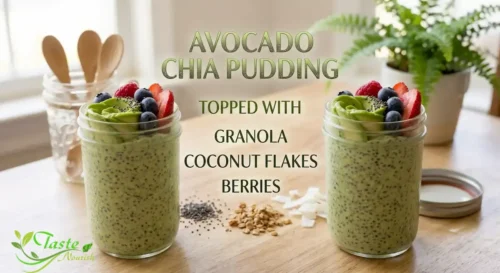
Top with berries, granola, coconut flakes, or a drizzle of nut butter, then serve chilled.
Health Benefits of This Avocado Chia Pudding Recipe
Neither ingredient here is a cure-all, but both have research behind their individual nutrients that’s worth understanding before you dig in.
Heart-Healthy Fats and Fiber
Both main ingredients in this recipe lean on fats and fiber types that research has linked to cardiovascular health. A Harvard-led analysis following more than 110,000 adults for 30 years found that people who ate at least two servings of avocado weekly had a meaningfully lower rate of heart disease compared with those who rarely ate it.
Fiber, meanwhile, is associated with healthier cholesterol levels, and Mayo Clinic notes that a higher-fiber diet may help lower the risk of heart disease as part of an overall healthy eating pattern.
Plant-Based Omega-3s
Chia seeds are one of the richest plant sources of alpha-linolenic acid, or ALA, an omega-3 fat the body cannot make on its own. According to the National Institutes , the body converts only a small percentage of ALA into the more active omega-3s, EPA and DHA.
That means chia works best as a complement to other omega-3 sources, such as fatty fish, rather than a full replacement for them.
Steady Energy and Blood Sugar Support
Because this pudding is built around fat and fiber rather than refined starch, it tends to digest slowly, which may help you feel fuller for longer between meals. Fiber-rich foods are also generally associated with steadier post-meal blood sugar responses, since fiber slows how quickly sugar enters the bloodstream.
That’s a food-pattern observation rather than a guarantee for any one person, so anyone managing diabetes should still track their own carbohydrate intake as usual.
What Does the Research Say?
Most of the evidence on avocado and chia comes from nutrient-composition research and broader studies of their individual nutrients rather than clinical trials evaluating chia pudding as a whole dish. Among the two, the evidence for avocado is considerably stronger. A peer-reviewed study published in the *Journal of the American Heart Association* followed tens of thousands of participants over many years and found that higher avocado intake was associated with a lower risk of cardiovascular disease, even after adjusting for overall diet quality.
Chia’s evidence base leans more on its individual nutrients, fiber and ALA omega-3, both of which have long-standing research behind their roles in digestion and cardiovascular health, according to federal health resources. It’s worth being clear that no study has tested “avocado chia pudding” as a specific dish, so the benefits described here are reasonably extrapolated from its two main ingredients rather than proven for the recipe itself.
Potential Risks and Side Effects
Chia seeds and avocado are both generally well tolerated, but a few things are worth keeping in mind. Because chia seeds absorb so much liquid, eating them dry without enough fluid has occasionally been linked to throat discomfort, so this recipe’s soaking step matters for safety as well as texture.
Some people notice bloating or gas when fiber intake increases quickly, which can happen if chia becomes a daily habit overnight rather than a gradual addition. Avocado is calorie-dense, so portion size matters if you’re watching total calorie intake, and in rare cases people with a latex allergy also react to avocado due to a shared protein structure.
Who Should Avoid or Limit This Recipe?
People with a diagnosed latex-fruit allergy syndrome, since avocado can trigger cross-reactions in some individuals.
Anyone on blood-thinning medication who hasn’t discussed vitamin K intake with their doctor, since avocado contains a moderate amount of vitamin K.
People newly introducing high-fiber foods, who may want to start with a smaller portion to see how digestion responds.
Anyone with a known chia seed allergy, which is uncommon but has been documented.
People who need to closely limit calories or fat for a medical reason, without professional dietary guidance first.
This isn’t an exhaustive medical list, and anyone with an existing health condition should check with a doctor or registered dietitian before making major changes to their diet.
How Much Should You Eat?
There’s no official serving guideline specifically for avocado chia pudding, but the portion context from its two ingredients is useful. Mayo Clinic notes that most adults benefit from getting between roughly 21 and 38 grams of total fiber a day depending on age and sex, and a single serving of this recipe contributes a meaningful share of that target.
A reasonable approach is treating one serving, around three-quarters of a cup, as a breakfast or snack rather than an unlimited food, both because of avocado’s calorie density and because a lot of added fiber at once can cause digestive discomfort.
How to Choose the Best Avocados and Chia Seeds
For avocado, look for fruit that gives slightly to gentle pressure without feeling mushy, and check under the small stem cap for green rather than brown flesh. If your avocado is still firm, let it ripen at room temperature for a day or two before using it in this recipe.
For chia seeds, black and white varieties are nutritionally similar, so the choice is mostly about appearance. Buy from a source with good turnover, store them away from heat and light, and give them a sniff before use, since rancid seeds will smell noticeably off rather than neutral.
Storage Tips
This pudding keeps well because chia’s gel structure holds up in the refrigerator. Store it in an airtight container for up to 4 days, stirring before each serving since some liquid can separate on top.
It doesn’t freeze particularly well, since avocado’s texture turns grainy once thawed. It’s better to make a batch sized for what you’ll eat within a few days rather than freezing extra portions.
Best Ways to Eat and Serve It
Layer it in a glass with granola and fresh berries for a parfait-style breakfast.
Add a tablespoon of cocoa powder and a few chocolate chips for a dessert-style version.
Top with toasted coconut flakes and a squeeze of lime for a tropical twist.
Swirl in a spoonful of nut butter right before serving for extra richness.
Pack it in small jars for a grab-and-go breakfast during the week.
Common Mistakes to Avoid
Not whisking the chia seeds thoroughly, which leaves clumps instead of an even, creamy texture.
Using an underripe avocado, which can taste bitter or starchy instead of mild and creamy.
Skipping the short rest-and-rewhisk step, which is what helps prevent a grainy pudding.
Not chilling long enough, so the chia seeds haven’t fully absorbed the liquid.
Over-sweetening before tasting, since ripe avocado already softens the need for a lot of added sugar.
Myths vs Facts
Myth
Fact
Avocado makes the pudding taste like guacamole.
Blended with vanilla and sweetener, avocado flavor is mild and mostly reads as creaminess rather than a savory taste.
Chia pudding needs added thickeners to set properly.
Chia seeds alone provide enough gel to thicken the pudding without cornstarch, gelatin, or other additives.
All the fat in this recipe is unhealthy.
Most of the fat is monounsaturated from avocado and omega-3 from chia, both generally considered supportive of heart health in research.
This recipe is a strong source of complete protein.
Chia offers all nine essential amino acids, but in modest amounts, so this pudding shouldn’t replace other protein sources in a meal.
Avocado Chia Pudding vs. Regular Chia Pudding
Attribute
Avocado Chia Pudding
Regular Milk-Based Chia Pudding
Primary fat source
Monounsaturated fat from avocado
Depends on milk type, often lower in fat
Texture
Extra creamy, mousse-like
Thicker, more gel-like consistency
Calories per serving
Higher, roughly 300 to 350
Lower, roughly 150 to 200
Fiber content
Higher, due to added avocado fiber
Moderate, from chia alone
Flavor profile
Mild, subtly rich
Neutral, takes on added flavors easily
Expert Tip
Nutrition researchers at Harvard T.H. Chan School of Public Health have pointed out that avocado’s benefit shows up most clearly when it replaces less healthy fats, such as butter or processed meats, rather than simply being added on top of an existing diet. Applied here, that means this pudding works best as a swap for a higher-sugar breakfast rather than an extra dessert stacked on top of everything else you already eat.
Gastroenterologists at Mayo Clinic also recommend increasing fiber gradually and drinking enough water alongside it, which is a useful reminder if chia pudding becomes a regular part of your routine rather than an occasional treat.
Creamy Avocado Chia Pudding Recipe FAQs
Can I make avocado chia pudding without a blender?
Yes. Mash the avocado very well with a fork, then whisk it vigorously with the milk and other ingredients until smooth. The texture will be slightly less silky than a blended version, but it still sets up nicely overnight.
How long does avocado chia pudding last in the fridge?
It generally keeps well for up to 4 days in a sealed container. Give it a stir before eating, since some liquid may separate on the surface over time.
Can I use frozen avocado for this recipe?
Frozen avocado works if you thaw it fully first, though the texture may be slightly softer than fresh. Blend it well to smooth out any inconsistencies before adding the chia seeds.
Is avocado chia pudding good for weight loss?
No single food drives weight loss on its own, but the fiber and fat in this recipe may help with fullness between meals, which some people find useful for managing appetite as part of an overall eating pattern.
Can I make this recipe vegan?
Yes, it’s vegan as written as long as you choose a plant-based milk and maple syrup instead of honey.
Why is my chia pudding still watery in the morning?
This usually means the seeds weren’t whisked thoroughly enough right after mixing, or the pudding didn’t chill long enough. Give it another firm whisk and let it sit for another hour or two before deciding it needs more chia seeds.
A creamy, dairy-free avocado chia pudding recipe made with ripe avocado, chia seeds, and milk, chilled overnight for a smooth, spoonable texture.
Ingredients
1 ripe avocado, pitted and peeled
1 1/4 cups unsweetened milk of choice
3 tablespoons chia seeds
2 tablespoons maple syrup or honey
1 teaspoon vanilla extract
1 tablespoon unsweetened cocoa powder, optional
Pinch of salt
Squeeze of fresh lime juice, optional
Directions
Add the avocado, milk, sweetener, vanilla, salt, and cocoa powder if using to a blender.
Blend until completely smooth, with no visible avocado chunks.
Pour the mixture into a jar or bowl and stir in the chia seeds.
Whisk well for about 30 seconds, then let it sit for 5 minutes before whisking again to break up clumps.
Cover and refrigerate for at least 4 hours, or overnight for the creamiest texture.
Stir before serving, adding a splash of milk if the pudding is thicker than desired.
Top with berries, granola, coconut flakes, or nut butter, then serve chilled.
Conclusion
This avocado chia pudding recipe is a simple, mostly hands-off way to combine two nutrient-dense whole foods into a creamy, spoonable breakfast or snack. It leans on real ingredients rather than added thickeners, and the research behind its two main components suggests it can fit comfortably into a balanced diet for most people.
As with any recipe, individual needs vary, so anyone with allergies, medication interactions, or specific health conditions should check with a healthcare provider before making it a regular habit.
References
U.S. Department of Agriculture, Agricultural Research Service. “FoodData Central.” https://fdc.nal.usda.gov/
Hanan Abo Samra is the founder of Taste & Nourish, sharing trustworthy nutrition guidance and recipes drawn from 20+ years of hands-on cooking experience. When she's not developing new recipes, Hanan is researching the science behind everyday ingredients to bring readers practical, evidence-based guidance for a healthier lifestyle.