
Honey vs Maple Syrup: Which Is Healthier? Full Comparison
Honey vs Maple Syrup: Nutrition, Benefits & Differences
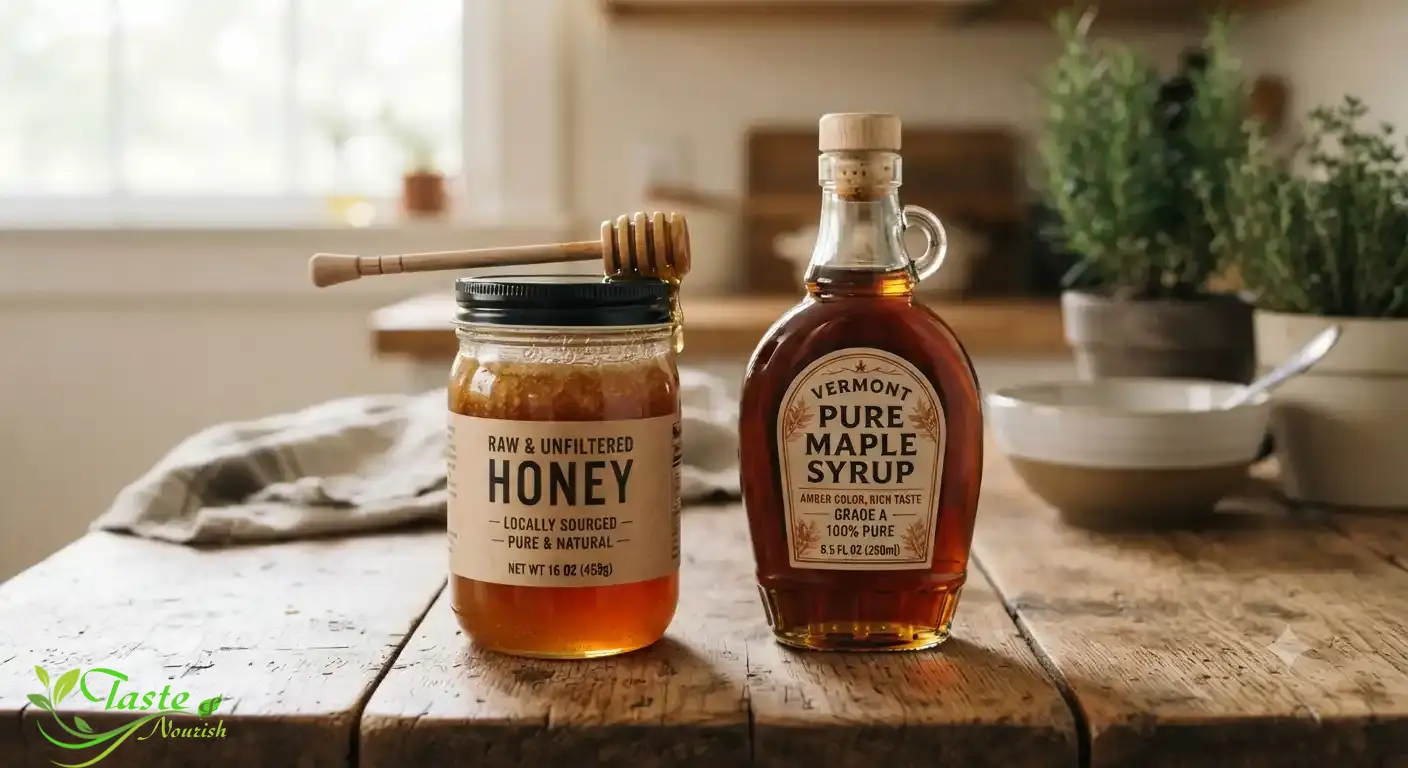
Honey vs Maple Syrup at a Glance
| Feature | Honey | Maple Syrup |
|---|---|---|
| Source | Floral nectar, processed by bees | Sap of the sugar maple tree |
| Calories per tablespoon | ~64 | ~52 |
| Glycemic index (approximate) | 50–65, varies by floral source | ~54 |
| Dominant sugars | Fructose and glucose | Sucrose |
| Standout micronutrient | Trace antioxidants, small amounts of iron and potassium | Manganese and riboflavin (B2) |
| Vegan-friendly | No | Yes |
| Shelf life (unopened, room temp) | Indefinite | 1–2 years |
| Safe for infants under 1 year | No — botulism risk | Generally considered lower risk, but check with a pediatrician |
Key Takeaways
- Maple syrup has slightly fewer calories and less sugar per tablespoon than honey.
- Honey’s sugar profile is mostly fructose and glucose; maple syrup’s is mostly sucrose.
- Maple syrup is naturally vegan; honey is an animal-derived product and is not.
- Honey should never be given to infants under 12 months old due to a botulism risk.
- Both sweeteners are still added sugars — neither should replace whole-food nutrition.
What Is Honey?
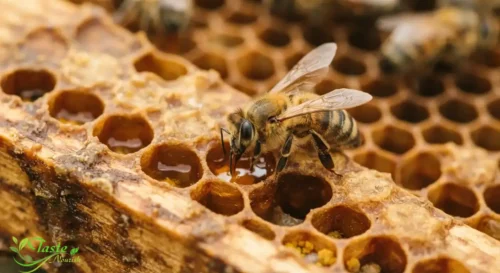
Honey is a thick, viscous liquid made when bees collect floral nectar, break it down with enzymes, and store it in the hive to evaporate into a concentrated syrup. It’s one of the oldest sweeteners known to humans, with evidence of beekeeping dating back thousands of years.
How Honey Is Made
Worker bees gather nectar and pass it between themselves, adding the enzyme invertase, which breaks complex sugars into simpler fructose and glucose. Back at the hive, bees fan the nectar with their wings to evaporate excess moisture, thickening it into the honey we recognize.
Types of Honey and Flavor Profile
Honey’s flavor depends almost entirely on which flowers the bees visited. Common varieties include:
- Clover honey: Mild, light, and widely available in supermarkets.
- Wildflower honey: More complex flavor, varies by season and region.
- Buckwheat honey: Dark, robust, and molasses-like.
- Manuka honey: Earthy and intense, prized for its unique antibacterial compounds.
- Acacia honey: Very light, delicate, and slow to crystallize.
As a rule, the darker the honey, the more pronounced its flavor — and generally, the higher its antioxidant content.
What Is Maple Syrup?
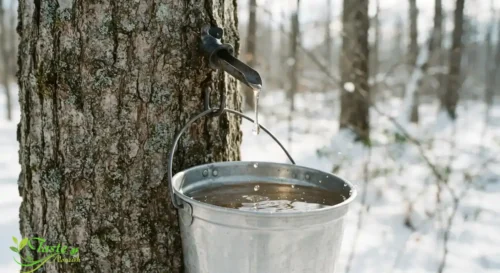
Maple syrup comes from the sap of sugar maple, black maple, or red maple trees, harvested in late winter and early spring when overnight freezes and daytime thaws cause sap to flow. According to a peer-reviewed review of maple syrup’s composition, producers boil and concentrate the collected sap from the sugar maple tree (Acer saccharum) during this narrow seasonal window, and North American production reaches tens of millions of gallons annually between Canada and the United States.
How Maple Syrup Is Made
Raw maple sap is roughly 98% water and only slightly sweet. It takes about 40 gallons of sap, boiled down, to produce a single gallon of syrup. That intensive reduction process is what concentrates the sugar and develops maple syrup’s signature caramel-like flavor.
Maple Syrup Grades and Flavor Profile
All maple syrup sold in the U.S. is classified as Grade A, then divided into color and flavor classes:
- Golden, Delicate Flavor: Light color, mild taste, harvested earliest in the season.
- Amber, Rich Flavor: The most common grade found at grocery stores.
- Dark, Robust Flavor: Deeper color and more intense maple taste, great for baking.
- Very Dark, Strong Flavor: Harvested at the end of the season, best used in cooking rather than pouring over pancakes.
Nutritional Comparison: Honey vs Maple Syrup
Per USDA FoodData Central and USDA FoodData Central nutrient data, here’s how the two compare per 100 grams:
| Nutrient (per 100g) | Honey | Maple Syrup |
|---|---|---|
| Calories | 304 | 260 |
| Total carbohydrates | 82.4g | 67g |
| Sugars | ~82g (mostly fructose and glucose) | ~60g (mostly sucrose) |
| Dietary fiber | 0g | 0g |
| Protein | 0.3g | Negligible |
| Fat | 0g | 0g |
| Potassium | 52mg | Present in moderate amounts |
| Manganese | Trace | High — a standout mineral for this sweetener |
| Riboflavin (B2) | Trace | Notable amount relative to other sweeteners |
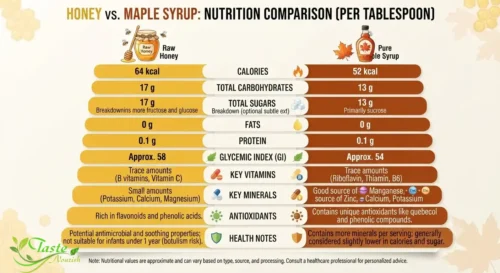
The takeaway: gram for gram, maple syrup is slightly lower in calories and total sugar than honey. Honey, however, tastes noticeably sweeter, so people often use less of it — which can offset the calorie gap in practice.
Vitamin and Mineral Differences
Neither sweetener is a significant source of vitamins or minerals in typical serving sizes, but each has one nutrient where it genuinely stands out.
Where Honey Shines
- Small amounts of iron, zinc, and potassium
- Trace B vitamins
- Naturally occurring enzymes like glucose oxidase and invertase, largely destroyed by heat or pasteurization
Where Maple Syrup Shines
- Manganese, an essential trace mineral involved in bone formation and metabolism — maple syrup is one of the richer food sources of it
- Riboflavin (vitamin B2)
- Smaller amounts of zinc and calcium
Pro Tip: If you’re choosing a sweetener partly for its mineral content, maple syrup’s manganese and riboflavin levels give it a modest edge — but the amounts in a typical tablespoon are still small relative to daily needs.
Glycemic Index and Blood Sugar Response
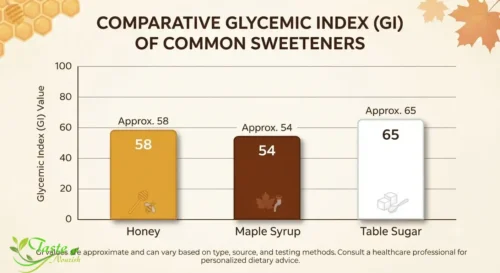
The glycemic index (GI) measures how quickly a food raises blood sugar compared to pure glucose. Lower numbers generally mean a slower, gentler rise.
| Sweetener | Approximate Glycemic Index |
|---|---|
| Table sugar | ~65 |
| Honey | 50–65 (varies significantly by floral source; acacia honey runs lower, clover honey runs higher) |
| Maple syrup | ~54 |
Both sweeteners sit in a similar mid-range GI zone, and both are still primarily sugar. Neither should be treated as a “safe” sweetener for unlimited use by people managing blood sugar — moderation and portion awareness matter more than which one you choose.
Antioxidant Content: Which Has More?
Both honey and maple syrup contain polyphenols — plant-derived compounds associated with antioxidant activity. A comprehensive review of maple syrup’s composition notes that its phenolic compounds are of particular scientific interest because of their potential antioxidant properties, though research on their real-world health impact is still developing.
Honey’s antioxidant profile has been studied more extensively, and darker varieties like buckwheat honey generally test higher than lighter varieties like clover or acacia. As a general pattern across both sweeteners: darker color usually signals a higher concentration of antioxidant compounds.
Pro Tip: If antioxidant content is your priority, reach for darker options in both categories — buckwheat or wildflower honey, and Grade A Dark or Very Dark maple syrup.
Potential Health Benefits of Honey
A 2023 clinical research review examining 48 trials on honey found that its intake has shown more beneficial effects than negative or null effects across several outcomes, including certain cardiovascular and metabolic risk markers, glucose tolerance, treatment-related mucositis, cough in children, and wound healing — particularly when honey replaced other added sugars rather than being added on top of them.
Based on current evidence, honey may help with:
- Soothing occasional cough, particularly in children over 1 year old
- Supporting topical wound care when used as a medical-grade dressing under professional guidance
- Providing modest antioxidant intake when it replaces refined sugar in the diet
These are associations observed in research, not guarantees, and honey should not be used as a substitute for medical treatment.
Potential Health Benefits of Maple Syrup
Maple syrup’s health research is less extensive than honey’s, but its phenolic compound content has drawn scientific interest. Emerging research on these compounds is associated with potential antioxidant activity, and maple syrup’s manganese content may modestly contribute to overall mineral intake when used to replace other sweeteners.
Maple syrup may offer:
- A source of manganese and riboflavin not typically found in significant amounts in other sweeteners
- Antioxidant compounds from its natural phenolics
- A lower calorie and sugar count per tablespoon compared to honey or table sugar
Risks, Side Effects, and Who Should Avoid Each
Infants and Honey: A Critical Safety Rule
This is the most important safety distinction between the two sweeteners. According to the Centers for Disease Control and Prevention, honey given to children younger than 12 months can cause a serious illness called infant botulism, and parents should not add honey to a baby’s food, water, formula, or pacifier before their first birthday.
This isn’t about product quality — even raw, organic, or “pasteurized” honey can carry the bacterial spores responsible for infant botulism, because standard heat processing doesn’t destroy them.
Diabetes and Blood Sugar Management
Both honey and maple syrup raise blood glucose. People managing diabetes or insulin resistance should treat both as they would any added sugar — accounting for portion size and total carbohydrate intake, and checking with a healthcare provider or registered dietitian about how either fits into their plan.
Allergies and Sensitivities
- Honey can occasionally trigger reactions in people allergic to bee products or specific pollens.
- Maple syrup allergies are rare but not unheard of, particularly among people with tree nut or tree sap sensitivities.
Overconsumption Risks
Both are classified as added sugars, not health foods. Regularly consuming large amounts of either is associated with the same risks tied to excess added sugar intake generally — weight gain, dental issues, and blood sugar spikes — regardless of how “natural” the source is.
Cooking and Baking — How to Substitute Honey and Maple Syrup
Because they behave differently in recipes, swapping one for the other takes a few adjustments.
| Substitution | Ratio | Adjustment Needed |
|---|---|---|
| Honey for maple syrup | 1:1 | Reduce other liquids slightly; honey is thicker and sweeter |
| Maple syrup for honey | 1:1 | Expect a milder sweetness and thinner batter consistency |
| Either for granulated sugar | ¾ cup liquid sweetener per 1 cup sugar | Reduce other liquids by about ¼ cup; add ½ tsp baking soda per cup used |
- Lower your oven temperature by about 25°F when baking with either sweetener, since both caramelize faster than granulated sugar.
- Whisk liquid sweeteners into wet ingredients before combining with dry ingredients for even distribution.
- In marinades and glazes, honey’s stickiness helps it cling to proteins better than maple syrup.
- In oatmeal, yogurt, or coffee, maple syrup’s thinner consistency blends in more easily without needing to warm it first.
Common Mistakes to Avoid
- Giving honey to infants under 1 year old — even a small taste on a pacifier carries risk.
- Assuming “pure maple syrup” and “pancake syrup” are the same thing — most pancake syrups are corn syrup with maple flavoring and contain little to no actual maple sap.
- Boiling honey at high heat — this destroys many of the enzymes and antioxidant compounds that make raw honey distinct from processed varieties.
- Overusing either as a “health swap” — both are still sugar, and doubling the amount used because it “seems healthier” defeats the purpose.
- Storing maple syrup at room temperature after opening — this speeds up mold growth; refrigeration is essential once the seal is broken.
Buying and Storage Tips
How to Buy Real Maple Syrup
- Check the label for “100% pure maple syrup” — anything labeled just “maple-flavored” is likely corn syrup-based.
- Grade A syrups are standard for retail; darker grades have a more intense flavor and work well in baking.
- Glass or metal containers help preserve flavor better than plastic for long-term storage.
How to Buy Real Honey
- Look for “raw” or “unfiltered” on the label if you want to retain more of honey’s natural enzymes and pollen.
- Be wary of very cheap honey — some products are diluted with corn syrup or rice syrup.
- Crystallization is a natural sign of purity in raw honey, not a defect. A quick warm water bath restores its liquid texture.
Storage Guidelines
| Sweetener | Unopened | Opened |
|---|---|---|
| Honey | Indefinite, room temperature, sealed | Indefinite if kept sealed and dry; may crystallize over time |
| Maple syrup | 1–2 years, cool, dark place | Refrigerate; use within about 1 year, watch for mold |
Honey vs Maple Syrup: Which Should You Choose?
There’s no universal winner — the right choice depends on what you need.
- Choose honey if: you want a more intense sweetness (so you can use less), you’re interested in its studied topical and cough-soothing uses, or you enjoy exploring different floral varieties.
- Choose maple syrup if: you follow a vegan diet, you prefer a milder, less cloying sweetness, or you want a sweetener with a notable manganese and riboflavin contribution.
- Use both if: you cook a variety of cuisines — honey tends to suit glazes, marinades, and Middle Eastern or Mediterranean dishes, while maple syrup shines in baking, breakfast foods, and North American-style recipes.
Honey vs Maple Syrup FAQs
Is honey healthier than maple syrup?
Neither is definitively “healthier.” Maple syrup has slightly fewer calories and less sugar per tablespoon, while honey has more established research behind specific uses like cough relief and wound care. Both are added sugars and should be used in moderation.
Which has less sugar, honey or maple syrup?
Maple syrup contains somewhat less total sugar per equivalent serving than honey, based on USDA nutrient data for both foods.
Can people with diabetes eat honey or maple syrup?
Both raise blood sugar and should be treated as added sugars in a diabetes management plan. Portion size matters more than which sweetener is chosen. Speak with a healthcare provider or registered dietitian for personalized guidance.
Is maple syrup vegan? Is honey vegan?
Maple syrup is plant-derived and vegan. Honey is produced by bees and is not considered vegan by most standards, since it’s an animal-derived product.
Can I substitute one for the other in recipes?
Yes, generally at a 1:1 ratio, though you may need to adjust other liquids slightly since honey is thicker and sweeter than maple syrup.
Which has more antioxidants, honey or maple syrup?
Darker varieties of both sweeteners tend to have higher antioxidant content. Honey’s antioxidant profile has been studied more extensively overall, but maple syrup’s phenolic compounds are an active area of ongoing research.
Can babies have maple syrup?
Maple syrup doesn’t carry the same documented botulism risk as honey, but it’s still an added sugar with no place in an infant’s diet. The American Academy of Pediatrics generally recommends avoiding all added sugars before age 2. Always check with your pediatrician before introducing any sweetener.
Is raw honey nutritionally different from regular honey?
Raw honey retains more of its natural enzymes and antioxidant compounds because it hasn’t been heated or filtered as extensively. The calorie and sugar content, however, remain essentially the same between raw and regular honey.
The Bottom Line
Honey and maple syrup are both natural, minimally processed sweeteners with distinct flavor profiles, production methods, and nutrient strengths. Maple syrup offers a slight edge in calories, sugar content, and mineral contribution from manganese and riboflavin. Honey brings a more concentrated sweetness and a longer track record of clinical research into specific uses like cough relief and wound care.
Neither should be treated as a health food to use freely. Used thoughtfully — in place of refined sugar rather than in addition to it — both can have a reasonable place in a balanced diet.
References
- U.S. Department of Agriculture, Agricultural Research Service. “Honey, Raw.” FoodData Central. https://fdc.nal.usda.gov/food-details/169640/nutrients
- U.S. Department of Agriculture, Agricultural Research Service. “Syrups, Maple.” FoodData Central. https://fdc.nal.usda.gov/food-details/169661/nutrients
- Centers for Disease Control and Prevention. “Foods and Drinks to Avoid or Limit.” Infant and Toddler Nutrition. https://www.cdc.gov/infant-toddler-nutrition/foods-and-drinks/foods-and-drinks-to-avoid-or-limit.html
- National Institutes of Health, National Library of Medicine (PMC). “Nutritional, Pharmacological, and Sensory Properties of Maple Syrup: A Comprehensive Review.” https://pmc.ncbi.nlm.nih.gov/articles/PMC10469071/
- National Institutes of Health, National Library of Medicine (PMC). “A Comprehensive Review of the Effect of Honey on Human Health.” https://pmc.ncbi.nlm.nih.gov/articles/PMC10346535/