Honey is one of those rare foods that has been sitting at the intersection of nutrition and medicine for literally thousands of years. Long before modern nutritional science existed, ancient Egyptians were slathering it on wounds, Greek athletes were consuming it for endurance, and Ayurvedic practitioners were prescribing it for everything from coughs to digestive issues. So what exactly makes this amber liquid so special — and does the science actually back up all the hype? The answer, as you’ll discover throughout this guide, is nuanced, fascinating, and genuinely worth understanding.
What Is Honey? Understanding Nature’s Golden Sweetener
At its core, honey is a natural food product created by honeybees from the nectar of flowers. The bees collect nectar, transform it enzymatically in their bodies, and then deposit it into honeycomb cells where it dehydrates through evaporation — producing that thick, sweet syrup we all recognize.
The main nutritional constituents of honey are carbohydrates in the form of simple sugars, particularly fructose and glucose. In addition to water, honey contains very small amounts of protein, vitamins, minerals, trace elements, enzymes, and polyphenols, including flavonoids from pollen which can help identify the honey’s origin. What makes honey different from plain table sugar isn’t a massive nutritional gulf — it’s the layered complexity of its minor compounds that matter most, and understanding that distinction will change how you think about using it.
The global production of honey is staggering in scale. The total honey production worldwide is currently about 1.2 million tons per year, and the bees usually produce more than three times the amount of honey they need. This abundance has made honey one of the most universally available natural sweeteners on the planet, used across every cuisine, culture, and continent. Whether you drizzle it over yogurt, stir it into tea, or use it in baking, you’re tapping into a food with a far richer nutritional story than most people realize.
Honey Nutrition Facts at a Glance — Full Breakdown Per 100g and Per Tablespoon
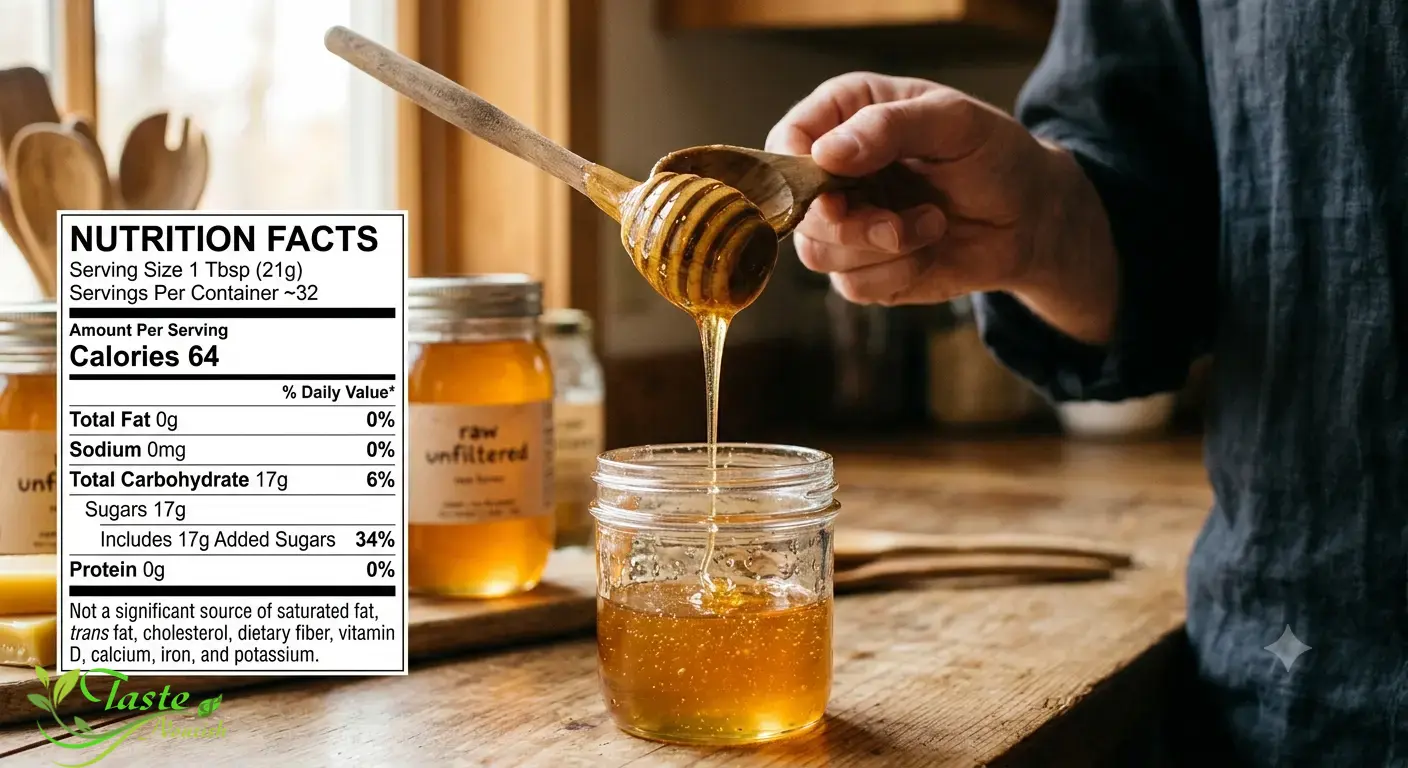
Before we dive into the science, let’s anchor ourselves in the real numbers. One average serving size of honey is one tablespoon, equal to 21g. Other serving sizes include one teaspoon equal to 7g, one packet or half an ounce weighing 14g, and one cup containing 339g of honey. Most people consume honey by the spoonful rather than by the cup, so it’s useful to understand both scales simultaneously.
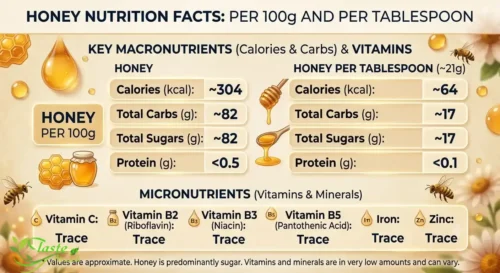
Honey Nutrition Facts Per 100g and Per Tablespoon (21g)
Nutrient
Per 100g
Per Tablespoon (21g)
% Daily Value (per tbsp)
Calories
304 kcal
64 kcal
~3%
Total Carbohydrates
82.4g
17.3g
~6%
Total Sugars
82g
17.2g
—
Dietary Fiber
0.2g
<0.1g
<1%
Protein
0.3g
<0.1g
<1%
Fat
0g
0g
0%
Water
~17g
~3.6g
—
Sodium
4mg
0.84mg
<1%
Iron
0.42mg
0.09mg
~1%
Manganese
0.08mg
0.02mg
~1%
Potassium
52mg
11mg
<1%
Vitamin C
0.5mg
0.1mg
<1%
Macronutrients in Honey: Carbohydrates, Protein & Fat
When it comes to macronutrients, honey is essentially a one-trick pony — and that trick is carbohydrates. About 95 to 97% of honey’s dry weight is comprised of carbohydrates. A 100g serving of honey, equalling around 5 tablespoons, contains 82.2g of carbohydrates, putting honey in the top 2% of foods as a source of carbohydrates. This isn’t a criticism — it’s just the reality of what honey is.
Understanding this helps you use it wisely rather than either overcelebrating or unnecessarily fearing it. The carbohydrate content is what makes honey an almost instant energy source, which is why athletes and sports nutritionists have long valued it as a pre- or during-workout fuel.
Honey contains negligible protein — less than half a gram per 100g serving. This low content includes free amino acids and enzymes such as diastase, invertase, and glucose oxidase. Fat is essentially absent from honey. So if you’re building a macronutrient plan, honey contributes calories almost exclusively through carbohydrates, and zero meaningful fat or protein. The practical takeaway? Honey is a concentrated energy food. Use it purposefully, not carelessly.
Calories in Honey — How Much Energy Are You Getting?
100 grams of honey contains approximately 304 calories, and a single tablespoon of honey contains 64 calories, with the macronutrient breakdown being essentially 100% carbohydrates. Compare that to white granulated sugar, which provides around 387 calories per 100g. So honey is actually lower in calories than refined sugar per 100g — but here’s the catch: because honey is sweeter (due to its higher fructose content), many people naturally use less of it, amplifying the calorie savings in real-world use.
If you normally put two teaspoons of sugar in your coffee, you may find that one teaspoon of honey delivers the same perceived sweetness, which adds up meaningfully over time.
Vitamins in Honey — What Does Honey Actually Contain?
One of the most important conversations around honey nutrition is the vitamin content — and this is where honesty matters most. Unlike sugar, honey contains vitamins, minerals, and antioxidants; hence it is easy to think that there are significant health benefits to honey compared to sugar. However, vitamins and minerals in honey are present in less than 1% of the recommended daily intake amount. That doesn’t mean vitamins in honey are meaningless — it means you shouldn’t rely on honey as a meaningful source of vitamins. Think of it as a bonus, not a primary nutritional strategy.
B Vitamins and Vitamin C in Honey
The vitamin found in the highest amount in honey is vitamin C, with 0.5mg per 100g serving — covering only 1% of the daily needed value. Honey also contains small amounts of vitamins B2, B3, B5, and B6, and the folate form of vitamin B9. Honey completely lacks fat-soluble vitamins A, D, E, and K, and water-soluble vitamins B1 and B12. The B vitamins present in honey play supporting roles in energy metabolism, which aligns well with honey’s primary function as a carbohydrate-rich energy food.
Some of the vitamins found in honey include ascorbic acid, pantothenic acid, niacin, and riboflavin, along with minerals such as calcium, copper, iron, magnesium, manganese, phosphorus, potassium, and zinc. While these amounts are small per serving, they represent a legitimate nutritional advantage over refined sugar, which delivers zero micronutrients whatsoever. Even tiny amounts of these compounds contribute to honey’s overall functional complexity.
Vitamin Profile of Honey Per 100g
Vitamin
Amount per 100g
Notes
Vitamin C
0.5mg
Highest vitamin in honey, ~1% DV
Riboflavin (B2)
0.04mg
Trace amounts
Niacin (B3)
0.12mg
Present in small amounts
Pantothenic Acid (B5)
0.07mg
Trace levels
Vitamin B6
0.02mg
Very small amount
Folate (B9)
2mcg
Minimal but present
Vitamin B1, B12
0
Not present in honey
Fat-soluble (A, D, E, K)
0
Absent from honey
Minerals in Honey — The Trace Element Treasure Trove
Honey’s mineral content tells an interesting story — it’s modest in quantity but remarkably diverse in variety. Honey contains most minerals but in small quantities and cannot be considered a good source of minerals given the small serving sizes. Honey is relatively rich in iron and manganese. It also contains low levels of zinc, selenium, copper, calcium, potassium, magnesium, and phosphorus. Honey is low in sodium, containing only 4mg per 100g serving. Essential trace components can also be found in honey, including silicon, rubidium, vanadium, zirconium, lithium, and strontium.
What’s fascinating here is the sheer breadth of mineral diversity. Very few foods contain such a wide spectrum of trace elements in a single serving. While the quantities won’t move the needle on your daily mineral targets, the combination of manganese, copper, iron, and selenium has real antioxidant significance at the cellular level. Darker varieties of honey — like buckwheat — tend to contain significantly higher mineral concentrations than light, mild honeys like acacia or clover, making variety selection a meaningful nutritional consideration.
💡 Reader Note: The mineral content of honey varies considerably based on the plant source, geographic origin, and soil composition of the region where the bees forage. Honey from mineral-rich soils will naturally contain higher levels of trace elements.
The Sugar Profile of Honey — Fructose, Glucose & More
Understanding honey’s sugar composition is essential for anyone thinking about it in the context of energy, digestion, or blood sugar management. The most important nutritional components in honey are carbohydrates, around 75–80%, which are mainly fructose and glucose (monosaccharides), but also several oligosaccharides such as sucrose, maltose, trehalose, turanose, 1-kestose, 6-kestose, palatinose, and others. The fructose-to-glucose ratio is actually what determines whether honey stays liquid or crystallizes over time — not the quality or freshness.
Honey typically contains slightly more fructose than glucose, with the ratio sitting around 55% fructose to 45% glucose on average. The balance of fructose and glucose content determines if the honey is clear or not, causing no difference in taste but a difference in the process of carbohydrate absorption. Fructose is absorbed more slowly than glucose, which is one reason honey has a slightly lower glycemic response than pure glucose. This fructose dominance also means honey has a notably sweeter taste per gram than regular sugar, allowing you to use less for the same sweetness level.
It’s also worth knowing that honey is considered a high-FODMAP food. FODMAPs are safe for most people; however, people with Crohn’s disease, ulcerative colitis, IBS, and other functional gastrointestinal disorders should avoid high-FODMAP foods, as they may trigger or worsen symptoms. Only one tablespoon of honey may be considered low in FODMAPs. If you have a sensitive gut, this is critical information.
Honey’s Glycemic Index: Is It Better Than Sugar?
In one clinical trial of Type 1 and Type 2 diabetes mellitus, the application of honey was associated with a dramatically lower glycemic index than sucrose or glucose in Type 1 diabetes and normal individuals. The glycemic index of honey typically ranges from 45 to 64 depending on variety — lower than white table sugar (GI of 65) but still a food that raises blood glucose. Acacia honey tends to have the lowest GI of all common honey varieties, making it the preferred choice for those monitoring blood sugar levels.
Antioxidants and Bioactive Compounds in Honey
Here is where honey genuinely distinguishes itself from any refined sweetener. The antioxidant and bioactive compound profile of honey is what nutritional scientists have been most excited about, and for good reason. Honey is a natural product of honeybees that has been consumed for centuries due to its nutritional value and potential health benefits, and recent scientific research has focused on its antioxidant capacity, which is linked to a variety of bioactive compounds. These aren’t just theoretical health markers — they translate into measurable biological effects in the body.
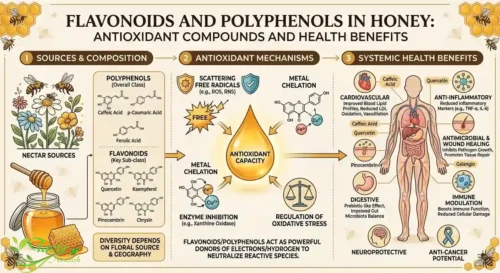
Flavonoids and Polyphenols in Honey
Among polyphenols, flavonoids are the most abundant in honey and are closely related to its biological functions. Honey positively affects risk factors for cardiovascular diseases by inhibiting inflammation, improving endothelial function, as well as the plasma lipid profile, and increasing low-density lipoprotein resistance to oxidation. Honey also displays an important antitumoral capacity, where polyphenols are considered responsible for its complementary and overlapping mechanisms of chemopreventive activity.
The specific flavonoids present in honey include quercetin, kaempferol, luteolin, apigenin, and chrysin — each with documented biological activity. Quercetin, one of the most extensively studied honey polyphenols, has shown the ability to inhibit various kinases involved in cancer cell signaling, including membrane tyrosine kinases and protein kinase C. This is genuinely cutting-edge nutritional science, and it places honey in a different category from sugar entirely.
Enzymes in Honey: Diastase, Invertase, and Glucose Oxidase
Honey is one of the few foods that contains naturally occurring enzymes with functional relevance. Diastase breaks down starch into simpler sugars, invertase converts sucrose into fructose and glucose, and glucose oxidase produces hydrogen peroxide — which is central to honey’s famous antibacterial activity. These enzymes are particularly concentrated in raw, unprocessed honey and are significantly reduced or destroyed when honey is heated during commercial pasteurization.
Key Bioactive Compounds in Honey and Their Functions
Compound
Type
Primary Health Function
Quercetin
Flavonoid
Antioxidant, anti-inflammatory, anticancer
Kaempferol
Flavonoid
Cardioprotective, anticancer
Caffeic Acid
Polyphenol
Anti-inflammatory, antiviral
Glucose Oxidase
Enzyme
Produces H₂O₂, antibacterial
Diastase
Enzyme
Starch digestion, honey ripening
Methylglyoxal (MGO)
Organic compound
Potent antibacterial (especially in Manuka)
Hydrogen Peroxide
Reactive compound
Broad-spectrum antimicrobial
Defensin-1
Peptide
Bee-derived antibacterial peptide
Raw Honey vs. Processed Honey: Nutritional Differences That Matter
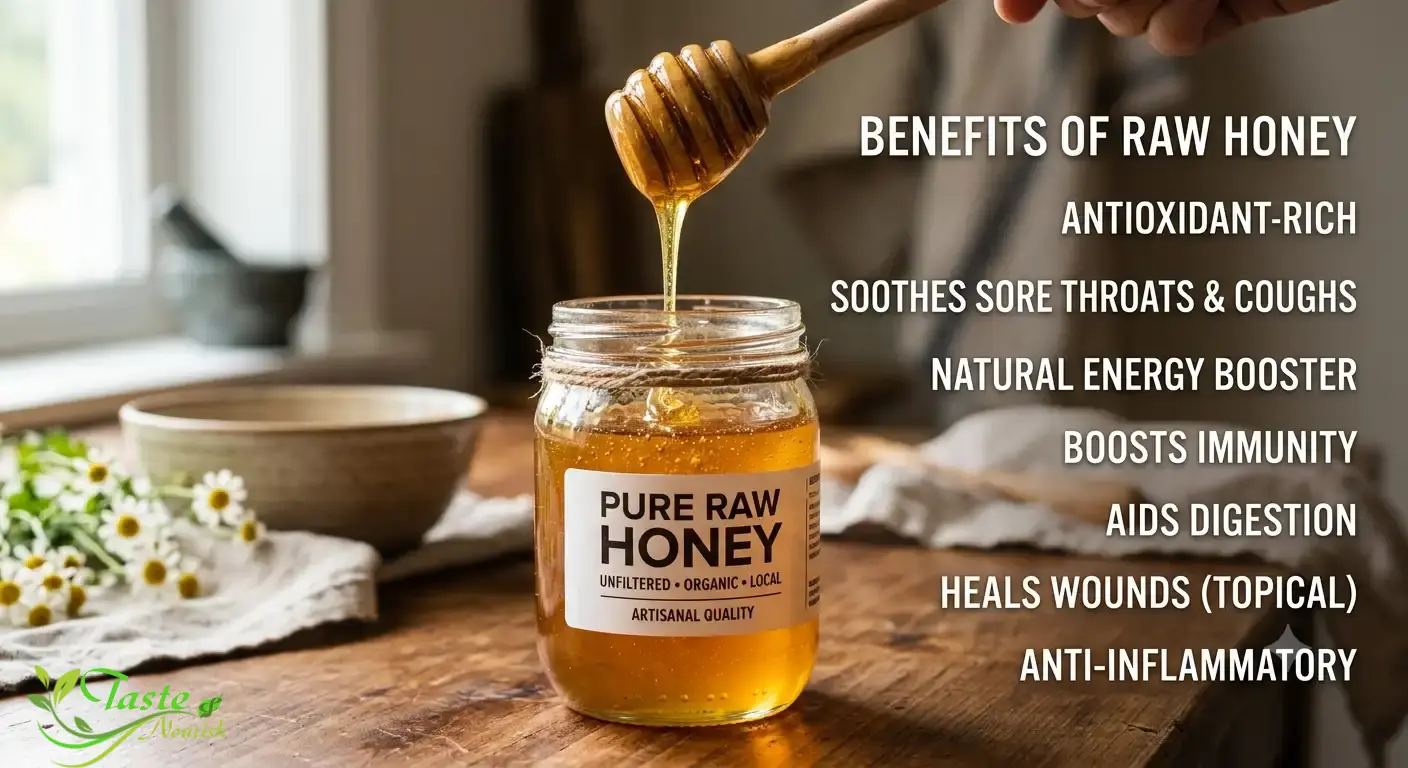
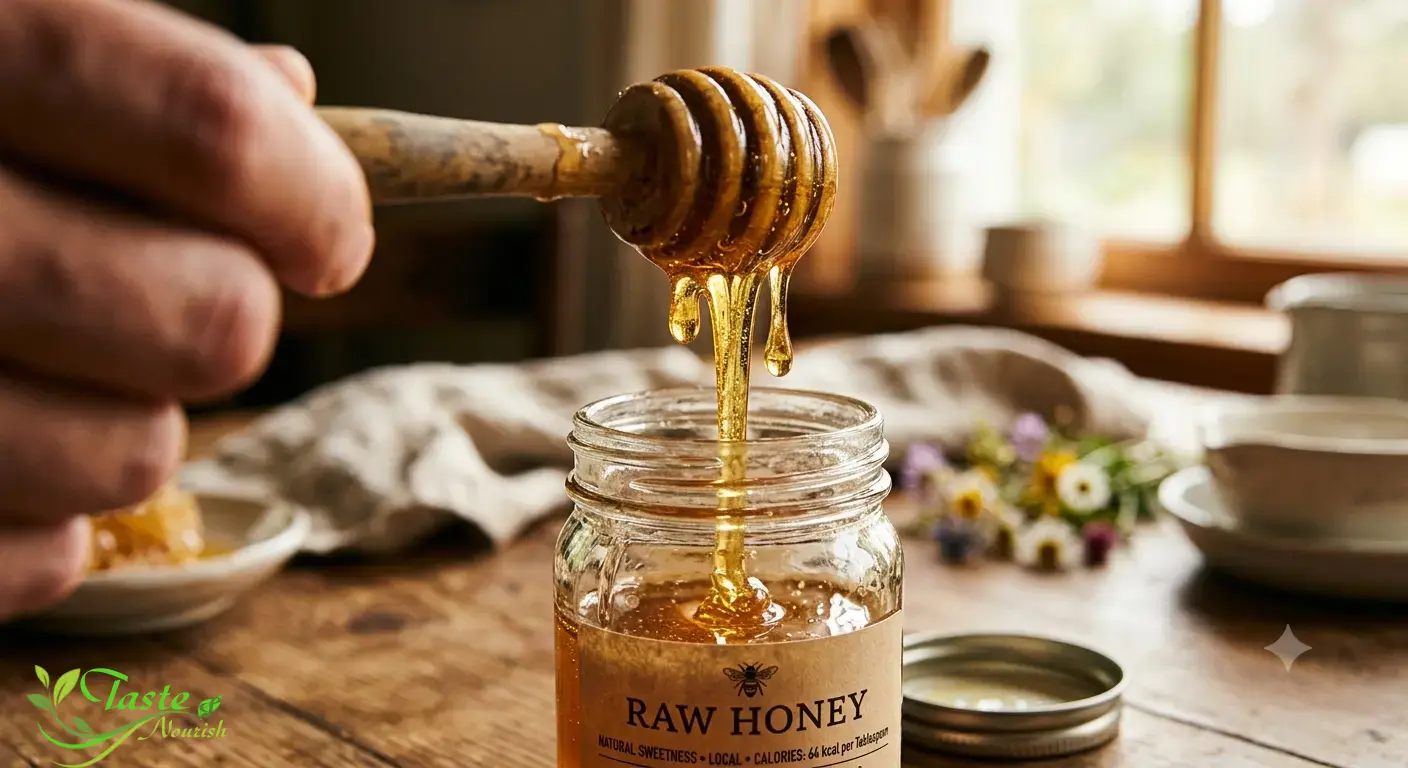
This is one of the most practically important distinctions in the entire world of honey nutrition, and it’s one that most supermarket labels deliberately obscure. Raw honey comes straight from the hive and will likely contain more nutrients, but it is not pasteurized. Regular honey is pasteurized to remove particles and bacteria, but this process may destroy antioxidants and other beneficial elements. It may also contain added sugar. That last point — added sugar — is particularly alarming and worth reading your labels carefully to check for.
Raw honey is the least processed form and most closely resembles what is found in the hive, retaining more of its natural enzymes, pollen, and nutrients. Pasteurized and filtered varieties tend to have a smoother texture and longer shelf life, but may lose some of these beneficial compounds during processing. From a nutrition standpoint, if you’re using honey primarily for taste, the choice between raw and processed matters less. But if you’re using it for its bioactive properties — antioxidants, enzymes, antibacterial effects — then raw honey is categorically superior.
🔑 Key Takeaway: Always look for labels that say “raw,” “unfiltered,” or “unpasteurized” if you want maximum nutritional benefit. Commercial honey sold in cute bear-shaped bottles is almost always pasteurized and filtered to the point of nutritional insignificance beyond its sugar content.
6 Ways Raw Honey Differs From Processed Honey
Enzyme content — Raw honey retains diastase, invertase, and glucose oxidase in full; pasteurization destroys them
Antioxidant levels — Polyphenols and flavonoids are significantly higher in unprocessed honey
Pollen content — Raw honey contains natural bee pollen, a nutritional bonus entirely absent in filtered honey
Propolis traces — Raw honey often includes traces of propolis, which has its own impressive antimicrobial properties
Color and texture — Raw honey is often cloudier and thicker; it may crystallize faster, which is actually a sign of quality
Additives — Commercial processed honey sometimes has syrups blended in; raw honey from a trusted source should be 100% pure
Types of Honey and Their Unique Nutritional Profiles
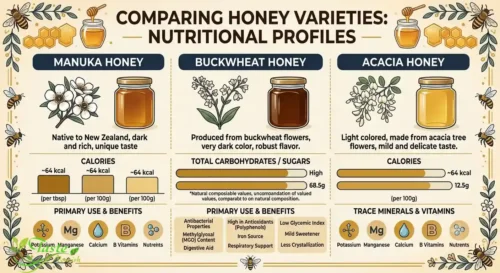
Not all honey is created equal — and the difference can be dramatic. The floral source determines not just flavor, but the entire polyphenol profile, mineral content, glycemic index, and antibacterial potency of a given honey. Here’s how the major varieties stack up:
Manuka Honey
Manuka honey is the undisputed heavyweight champion of medicinal honey. Manuka honey contains methylglyoxal (MGO) at concentrations up to 100 times higher than conventional honey, and this single compound is what separates Manuka from every other honey on the shelf. Manuka bees forage on the Leptospermum scoparium bush, native to New Zealand and parts of Australia.
The MGO compound gives Manuka honey heat-stable antibacterial activity that doesn’t degrade when exposed to light, heat, or dilution — making it uniquely suitable for clinical wound care applications. It’s also the most expensive honey you’ll find, typically costing five to ten times more per ounce than regular raw honey.
Buckwheat Honey
Buckwheat honey is the nutritional dark horse that most people walk right past. Its deep, almost molasses-like color is a direct indicator of its exceptional antioxidant density — a well-established correlation in honey science. Certain dark honey varieties like buckwheat can demonstrate significant antibacterial activity, though generally less consistent than high-grade Manuka honey.
Studies have shown that buckwheat honey has antioxidant levels comparable to some of the most celebrated superfoods. If you want maximum antioxidant power at a fraction of the cost of Manuka, buckwheat honey is your answer.
Acacia Honey
Acacia honey is at the opposite end of the spectrum — light, clear, and mild in flavor. Its primary nutritional claim to fame is its exceptionally low glycemic index, which makes it the most blood-sugar-friendly honey variety available. It also has a very high fructose-to-glucose ratio, which keeps it liquid for much longer than other honeys (preventing crystallization), making it highly practical for everyday use. Acacia honey is made by bees that feed from the flowers of the black locust tree and is often lighter than other types of honey. It’s ideal for people who need the sweetness of honey with the gentlest possible glycemic impact.
Health Benefits of Honey Backed by Science
Let’s move beyond the anecdotal and look at what peer-reviewed research actually supports when it comes to honey’s health effects.
6 Science-Backed Health Benefits of Honey
Antibacterial action — Hydrogen peroxide, MGO, and defensin-1 peptide give honey broad-spectrum antimicrobial activity
Wound healing — Medical-grade honey has been used in clinical settings for treating burns, ulcers, and surgical wounds
Cardiovascular protection — Regular moderate consumption is linked to improved HDL cholesterol and reduced LDL
Antioxidant defense — Flavonoids and polyphenols reduce oxidative stress at the cellular level
Cough suppression — Multiple studies support honey as an effective cough remedy in children (over age 1)
Gut health support — Oligosaccharides in honey act as prebiotics, supporting beneficial gut bacteria
Antibacterial and Wound-Healing Properties
Honey exerts antibacterial properties caused by its consistent amount of hydrogen peroxide and non-peroxide factors including flavonoids, methylglyoxal, and defensin-1 peptide. This multi-mechanism antibacterial action is why honey is resistant to developing the kind of bacterial resistance that plagues antibiotic drugs. It attacks bacteria on multiple fronts simultaneously — through osmotic pressure (drawing water out of bacterial cells), low pH, hydrogen peroxide production, and the direct antimicrobial action of its flavonoids.
Honey stands out for its extensive health benefits, which include robust protection against cardiovascular issues, notable anticancer and anti-inflammatory effects, enhanced glycemic control in diabetes, immune modulation, neuroprotection, and effective wound healing.
Cardiovascular Health and Cholesterol
One of honey’s most well-documented systemic benefits is its effect on cardiovascular risk markers. When used daily in moderate doses, honey can reduce systolic blood pressure, low-density lipoprotein (LDL), and total cholesterol levels, while also increasing high-density lipoprotein (HDL) cholesterol levels. This is a clinically meaningful combination — lower LDL, lower blood pressure, and higher HDL represent a trifecta of cardiovascular protection.
The polyphenols in honey are credited with improving endothelial function (the health of your blood vessel walls), which is foundational to long-term heart health. Think of it as honey doing quiet, unglamorous maintenance work on your circulatory system every time you use it.
Honey and Diabetes — What the Research Actually Says
Honey positively modulates the glycemic response by reducing blood glucose, serum fructosamine, or glycosylated hemoglobin concentrations. This sounds almost paradoxical — a sugar-dense food that helps regulate blood sugar? The key lies in its fructose composition, polyphenol content, and the fact that honey stimulates insulin secretion more efficiently than glucose alone.
There is strong evidence which indicates the beneficial effects of honey in the treatment of diabetes mellitus, pointing out the therapeutic prospects of using honey or other potent antioxidants as an adjunct to standard antidiabetic drugs. That said, diabetics should always consult their physician before adding honey to their diet, because individual glycemic responses vary significantly.
How Much Honey Should You Eat Per Day?
The WHO recommends keeping free sugars (which includes honey) below 10% of total daily energy intake, with an additional benefit below 5%. For an average adult on a 2,000-calorie diet, that’s roughly 50g (maximum) or 25g (optimal) of free sugars per day from all sources combined. A single tablespoon of honey is 21g, containing approximately 17g of sugar — so in the context of an already sugar-rich modern diet, it’s genuinely easy to overconsume honey without realizing it.
6 Practical Daily Honey Consumption Guidelines
Healthy adults — 1 to 2 tablespoons per day (21–42g) as a sweet treat or sweetener substitute is generally appropriate
Athletes — Can use honey strategically around workouts (1–2 tbsp pre-exercise for fast glycogen loading)
Weight management — Treat honey as a caloric sweetener and account for its ~64 calories per tablespoon
IBS/gut sensitivity — Limit to no more than 1 tablespoon per serving to stay in low-FODMAP range
Children under 1 year — Never give honey to infants, due to the risk of botulism from Clostridium botulinum spores
Diabetics — Consult a healthcare provider; acacia or raw varieties with lower GI may be more appropriate
⚠️ Important Reader Note: Honey should never be given to infants under 12 months of age. Their digestive systems cannot neutralize Clostridium botulinum spores, which can be naturally present in honey, potentially causing infant botulism — a serious and potentially fatal condition.
Practical Tips for Buying and Using Honey
Shopping for honey has become genuinely complex given the wide range of products on the market — many of which are cut with syrups or over-processed to the point of nutritional irrelevance. Here’s how to navigate it intelligently.
6 Tips for Buying and Using Honey Wisely
Check the label for “raw” and “unfiltered” — these terms indicate minimal processing and better retention of enzymes and antioxidants
Look for single-origin or monofloral honeys — they have more consistent and predictable nutritional profiles than generic blended honey
Store honey at room temperature — refrigeration causes unnecessary crystallization; honey stored in a cool, dark cupboard is ideal
Don’t heat honey above 40°C (104°F) — high heat destroys enzymes and degrades polyphenols, eliminating much of its functional value
Use honey to replace sugar in baking — substitute approximately 3/4 cup of honey for every 1 cup of sugar, and reduce liquids slightly
Buy local where possible — local raw honey may contain pollen from local plants, which some research suggests can support seasonal allergy resilience over time
6 Best Culinary Uses for Honey
Sweetening herbal teas, warm lemon water, or golden milk lattes
Drizzling over plain yogurt, oatmeal, or cheese boards
Creating glazes for roasted meats like chicken or salmon
Whisking into salad dressings as a natural emulsifier and sweetener
Substituting refined sugar in baking recipes for chewy, moist results
Spreading raw honey on whole-grain toast in place of jam or preserves
Honey Nutrition Facts FAQs
How many calories are in a tablespoon of honey?
A standard tablespoon of honey (21g) contains approximately 64 calories, derived almost entirely from carbohydrates. There is essentially no fat or meaningful protein in honey.
Is honey healthier than sugar?
Honey has a modest but real nutritional edge over refined sugar because it contains trace vitamins, minerals, antioxidants, and enzymes. However, vitamins and minerals in honey are present in less than 1% of the recommended daily intake amount, meaning honey should not be thought of as a meaningful micronutrient source. For blood sugar management, honey offers a slightly lower glycemic index than sugar in some contexts, but both should be consumed in moderation.
What is the glycemic index of honey?
Honey’s glycemic index typically ranges from 45 to 64 depending on the variety. Acacia honey has one of the lowest GIs among honey types, making it preferable for those managing blood sugar. This compares to white sugar’s GI of around 65.
Can honey go bad or expire?
Pure honey has an almost indefinite shelf life when stored correctly. Archaeologists have found 3,000-year-old honey in Egyptian tombs that was still edible. Its low moisture content, acidic pH, and natural antimicrobial compounds prevent bacterial growth. Crystallized honey is not spoiled — simply warm the jar gently in warm water to re-liquefy it.
What are the best types of honey for health benefits?
Raw polyfloral and monofloral honey varieties can outperform Manuka in certain categories such as antioxidant content, mineral diversity, or enzyme activity, depending on their floral sources. Manuka is best for wound care and antibacterial applications; buckwheat is best for antioxidant potency; acacia is best for low glycemic impact; and raw wildflower honey offers the broadest spectrum of natural compounds for general wellness.
Conclusion
Honey is not a superfood in the exaggerated sense — it won’t cure disease, and eating it by the jar won’t transform your health. But within its proper context, honey is a genuinely impressive natural food with a nutritional profile that no refined sugar can touch. Honey’s nutrient content consists of 82% carbs, 17% water, and less than 1% other nutrients — but within that tiny fraction lives a world of enzymatic activity, antioxidant complexity, and bioactive diversity. From its flavonoids and polyphenols to its naturally occurring enzymes and broad-spectrum antimicrobial compounds, honey earns its status as something more than just sweetness.
The most important things to take away? Choose raw over processed whenever possible. Consume it mindfully — it’s calorie-dense and sugar-rich. Match the variety to your purpose: Manuka for medicinal use, buckwheat for maximum antioxidants, acacia for the lowest glycemic impact. And enjoy it as what it truly is — one of nature’s most ancient, complex, and genuinely beautiful foods.
Hanan Abo Samra is the founder of Taste & Nourish, sharing trustworthy nutrition guidance and recipes drawn from 20+ years of hands-on cooking experience. When she's not developing new recipes, Hanan is researching the science behind everyday ingredients to bring readers practical, evidence-based guidance for a healthier lifestyle.