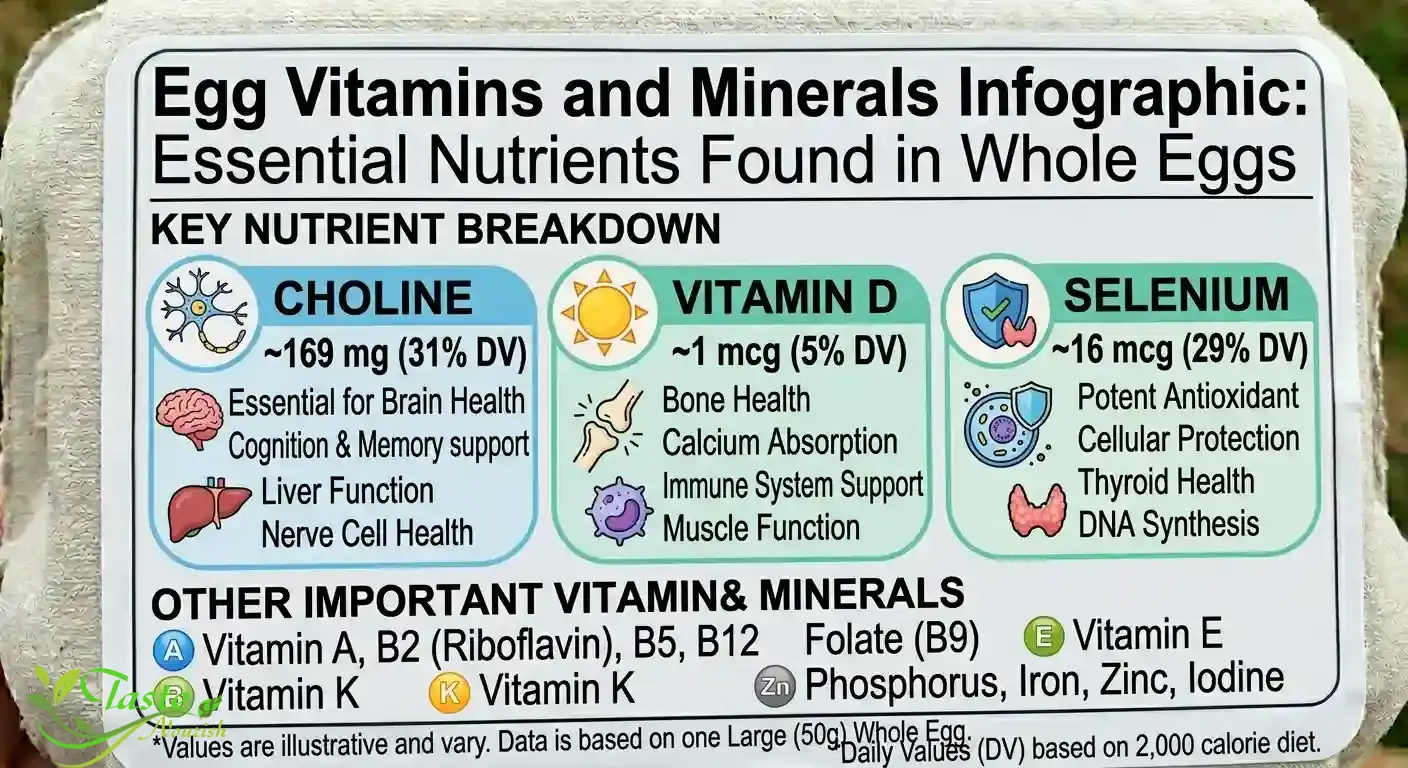
Before we answer “are eggs healthy,” we need to understand what we’re actually eating. Eggs are one of the most nutrient-dense foods on the planet — a complete food package that nature designed to fuel an entire developing organism. That alone tells you something about how nutritionally rich they are.
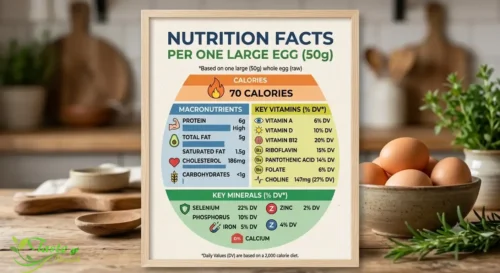
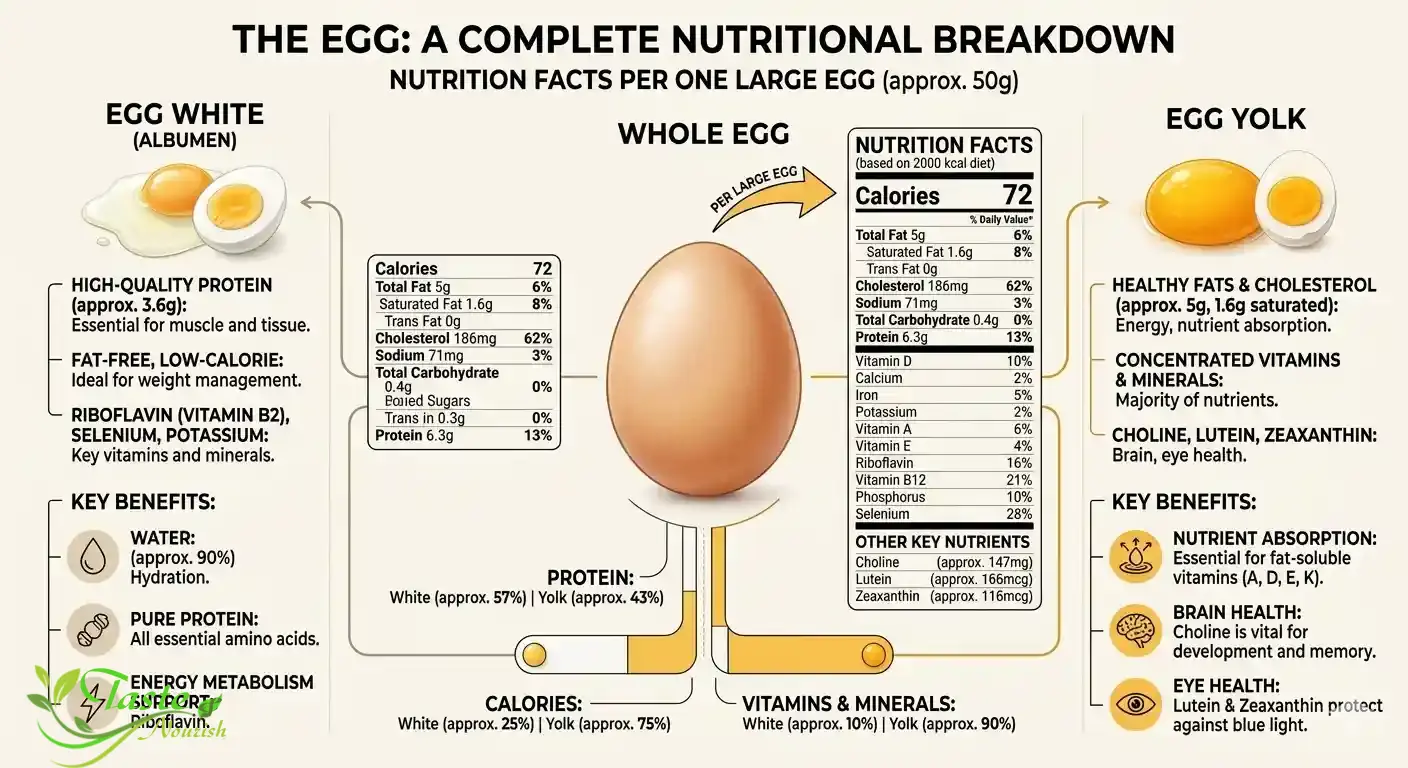
One egg contains approximately 75 calories, 5 grams of fat, 6 grams of protein, 0 carbohydrates, 67 milligrams of potassium, 70 milligrams of sodium, and 210 milligrams of cholesterol. Eggs are also a great source of vitamins A, D, and B12, as well as choline, a nutrient essential in many metabolic steps.
Nutrient
Amount per Large Egg
% Daily Value
Calories
75 kcal
4%
Protein
6 g
12%
Total Fat
5 g
6%
Saturated Fat
1.56 g
8%
Cholesterol
186–210 mg
62–70%
Carbohydrates
0 g
0%
Choline
147 mg
27%
Vitamin B12
0.6 mcg
25%
Vitamin D
1.1 mcg
6%
Vitamin A
75 mcg
8%
Selenium
15.4 mcg
28%
Lutein + Zeaxanthin
252 mcg
—
Riboflavin (B2)
0.23 mg
18%
Phosphorus
99 mg
8%
What makes this table especially impressive is how much nutrition is packed into just 75 calories. You’re getting a significant protein hit, a range of fat-soluble vitamins, and brain-protecting choline — all for fewer calories than most snack bars. Eggs are what nutrition scientists call “nutrient dense,” meaning they deliver a lot of nutrition per calorie, which is exactly what you want in any food.
Egg White vs. Egg Yolk — Which Part Is Healthier?
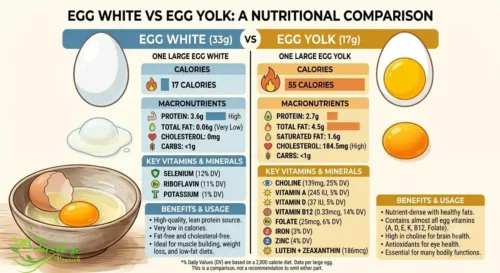
This is a question that has split breakfast tables for years. The egg white is the protein star — it contributes roughly 3.6 grams of protein with almost zero fat and virtually no cholesterol. Many athletes and fitness enthusiasts reach for egg whites specifically to boost protein without calories. But here’s the thing: eating egg whites alone means you’re missing out on the most nutritionally complex part of the egg.
The egg yolk is where most of the egg’s nutrients live. The yolk contains all the fat, essentially all the cholesterol, and the vast majority of the vitamins and minerals — including vitamin D, vitamin A, vitamin B12, choline, lutein, zeaxanthin, and omega-3 fatty acids. Think of the yolk as the control center. Choline alone is worth highlighting: it’s a nutrient that most people don’t get enough of, and eggs are one of the richest dietary sources available. Choline supports brain health, liver function, and fetal neural development during pregnancy.
Key Takeaway: While egg whites are great for lean protein, the real nutritional treasure is in the yolk. Unless you have a specific medical reason to avoid yolks, whole eggs give you far more nutritional value.
Are Eggs Healthy? What the Latest Research Says
Eggs and Cholesterol: The Myth That Refuses to Die
Here’s where things get really interesting, because the old story about dietary cholesterol has been completely overturned by modern science. For a long time, we assumed a simple equation: eat cholesterol → blood cholesterol goes up → heart disease risk rises. But the human body is far more sophisticated than that.
Humans produce cholesterol endogenously, and most of the cholesterol in the body comes from biosynthesis. Only about 25% of serum cholesterol in humans is derived from the diet, while the rest comes from biosynthesis — and these numbers skew even more towards cholesterol biosynthesis in overweight and obese people.
In other words, your liver is constantly calibrating how much cholesterol it makes based on how much you eat. When you eat more cholesterol from food, your body often compensates by producing less — a balancing act that keeps your overall cholesterol levels far more stable than the old theory assumed.
A 2025 randomized, cross-over study published in The American Journal of Clinical Nutrition confirmed that consuming two eggs daily as part of a diet low in saturated fat actually led to reductions in LDL cholesterol after five weeks. That finding is a genuine game-changer. It shifts the focus from “how many eggs are you eating” to “what else are you eating alongside those eggs.”
Pair your eggs with bacon, butter, and white toast, and the saturated fats in those foods will raise your LDL. Pair them with vegetables, whole grains, and olive oil, and the picture looks entirely different.
Considering that eggs are affordable and nutrient-dense food items, containing high-quality protein with minimal saturated fatty acids (1.56 g per egg) and are rich in several micronutrients including vitamins and minerals, it is worthwhile to include eggs in moderation as part of a healthy eating pattern.
Eggs and Heart Disease — The 2025 Verdict
Perhaps no question about eggs has been more hotly debated than their relationship to cardiovascular disease. The good news is that the latest evidence is decidedly more positive than what was believed even five years ago.
Research from a Monash University-led team found that regular consumption of eggs is associated with a 29% lower risk of cardiovascular disease-related death in relatively healthy older adults. The researchers found that for relatively healthy older adults, consuming eggs 1–6 times per week was associated with a lower risk of all-cause mortality and CVD mortality compared to those who rarely or never eat eggs.
The study involved over 8,700 adults aged 70 and above — a substantial sample size that carries real statistical weight.
The American Heart Association recognizes the nutritional benefits of eggs and recommends up to 2 eggs per day within the context of a heart-healthy diet for healthy older adults. Importantly, the 2025 Dietary Guidelines for Americans do not mention dietary cholesterol at all — a striking departure from previous editions that repeatedly warned about cholesterol intake.
This omission reflects the growing scientific consensus that dietary cholesterol in eggs is not the cardiovascular threat it was once thought to be.
Study / Source
Finding
Year
Monash University (Journal: Nutrients)
29% lower CVD death risk with 1–6 eggs/week
2025
American Journal of Clinical Nutrition
2 eggs/day on low-sat-fat diet reduced LDL
2025
University of South Australia
Bacon’s saturated fat, not egg cholesterol, drives LDL
2025
Examine.com RCT
Adding eggs to DASH diet didn’t harm cardiometabolic markers
2025
Nordic Nutrition Review
Up to 1 egg/day not linked to increased CVD risk in European populations
2023
Eggs and Brain Health
One of the most exciting emerging areas of egg research is their impact on cognitive function. Recent data from the Rush Memory and Aging Cohort found a relationship between egg consumption and lower risk of Alzheimer’s dementia, a relationship driven by dietary choline.
Choline is a precursor to acetylcholine, one of the brain’s key neurotransmitters involved in memory formation and muscle control. Most people fall short of their daily choline needs, and eggs are one of the easiest and most affordable ways to close that gap.
Eggs are a widely consumed, nutrient-dense food containing choline, phospholipids, tryptophan, and omega-3 fatty acids, which individually support cognitive processes such as memory, attention, and neurogenesis. The combination of these nutrients working together in a whole food matrix may offer cognitive benefits that go beyond what any single supplement can replicate.
Tryptophan, for instance, is a precursor to serotonin, the neurotransmitter deeply tied to mood regulation and emotional resilience.
Top Health Benefits of Eating Eggs
Eggs Are a Complete Protein Powerhouse
If you’re looking for a protein source that delivers every essential amino acid your body needs, eggs are as close to perfect as it gets. Egg protein has been recognized to be highly digestible and an excellent source of essential amino acids, with the highest attainable protein digestibility-corrected amino acid score.
That score — called PDCAAS — is the gold standard metric for protein quality, and eggs hit the ceiling. This makes eggs particularly valuable for athletes, older adults trying to preserve muscle mass, and anyone recovering from illness or surgery.
Unlike protein powders or processed protein bars, eggs come with their nutrients in their natural whole food form. The amino acid leucine, found in eggs, is particularly important for triggering muscle protein synthesis — the biological process by which your body builds and repairs muscle tissue. If you’re hitting the gym, a couple of eggs post-workout isn’t just a cheap snack; it’s a scientifically supported muscle-building strategy.
Eggs Support Eye Health
Most people have never heard of lutein and zeaxanthin, but these two carotenoids — concentrated in the egg yolk — are superstars when it comes to protecting your eyes. They accumulate in the macula of the eye and act as a natural filter against high-energy blue light and UV radiation.
Research consistently shows that adequate intake of lutein and zeaxanthin is associated with reduced risk of age-related macular degeneration (AMD) and cataracts, two of the leading causes of vision loss in older adults.
What’s particularly interesting is that the lutein in egg yolks appears to be more bioavailable than the lutein in plant foods like spinach or kale. The fat content in the yolk actually enhances absorption of these fat-soluble carotenoids — which is another reason why whole eggs, rather than egg whites alone, deliver superior nutritional value. If you care about your long-term vision, regular egg consumption is one of the simplest dietary strategies you can adopt.
Eggs Aid Weight Management
Here’s something that might surprise you — eggs are one of the most satiating foods you can eat for breakfast. Studies on satiety consistently find that people who eat eggs in the morning consume significantly fewer calories throughout the rest of the day compared to those who eat carbohydrate-heavy breakfasts of similar calorie counts.
The combination of high-quality protein and healthy fat in eggs slows gastric emptying — the process by which your stomach empties its contents into the small intestine — which keeps you feeling full longer.
Most egg-derived nutrients, including lecithins, apolipoproteins, and unsaturated fatty acids, are not associated with increased obesity risk. Surprisingly, most research suggests these nutrients reduce the probability of obesity via lipid metabolism regulation. The protein-to-calorie ratio of eggs is also outstanding — 6 grams of protein for just 75 calories is a deal that’s hard to beat in the food world.
For anyone managing their weight, eggs represent a nutrient-dense, low-calorie, high-satiety food that can genuinely make a difference in how much you eat throughout the day.
Eggs and Bone Health
Vitamin D deficiency is a global health epidemic, and eggs are one of the few non-fortified food sources of naturally occurring vitamin D. This nutrient is critical for calcium absorption, immune function, and bone mineralization. Without enough vitamin D, your body cannot effectively absorb the calcium it needs to maintain bone density, no matter how much dairy you consume.
Eggs also contribute phosphorus and vitamin K2 — both of which play important supporting roles in skeletal health and bone mineral density maintenance.
For populations in northern latitudes or those who spend limited time outdoors — which increasingly describes most of the modern world — dietary vitamin D from eggs can be a meaningful contribution to bone health. Pair eggs with fatty fish and fortified dairy, and you’ve built a solid foundation for long-term skeletal integrity without needing supplements.
How Many Eggs Should You Eat Per Day?
Recommendations by Health Organization
The question of how many eggs is “safe” to eat per day is one that nutritional organizations have gradually relaxed their stance on over the past decade. There is no single universal answer, but the trend across major health bodies is toward greater flexibility.
Organization
Recommendation
American Heart Association (AHA)
Up to 1 egg/day for healthy adults; up to 2/day for healthy older adults
2025–2030 U.S. Dietary Guidelines
No specific cholesterol limit mentioned
Australian Dietary Guidelines
Up to 7 eggs/week for adults with normal cholesterol
European countries (general guidance)
3–4 eggs/week (more conservative approach)
Italian SINU Guidelines (2024)
1 egg per serving, 2–4 times/week
The current Australian Dietary Guidelines and the American Heart Association recommend that adults with normal cholesterol can eat up to seven eggs per week, while some European countries suggest limiting it to 3–4 eggs per week. The AHA also supports up to two eggs per day for older adults with normal cholesterol.
The honest answer? For most healthy adults, eating one egg per day is well-supported by current evidence. If you’re a fit, active adult without metabolic issues, eating up to two eggs per day is unlikely to cause harm — particularly if your overall diet is low in saturated fat. Where people get into trouble is not in eating eggs, but in eating eggs alongside a diet already high in butter, cheese, processed meats, and refined carbohydrates.
Special Cases — Diabetes, High Cholesterol, and Heart Conditions
Not everyone is in the same position when it comes to eggs, and it’s important to acknowledge that individual responses to dietary cholesterol vary. Individual responses to dietary cholesterol vary, with some people classified as “high responders” who may experience significant changes in cholesterol levels, underscoring the importance of personalized dietary advice.
If you have type 2 diabetes, familial hypercholesterolemia, or existing heart disease, the picture becomes more nuanced. Some studies in diabetic populations have observed associations between higher egg consumption and elevated cardiovascular risk, though it’s often difficult to separate the eggs themselves from the dietary patterns they’re embedded in. The wisest approach for people with these conditions is to:
Consult with your physician or registered dietitian before making changes to egg consumption.
Limit egg yolk intake to 3–4 per week while using egg whites more liberally.
Pay close attention to what you eat with your eggs — eliminate saturated fat companions like sausage and butter.
Monitor cholesterol levels and adjust intake based on your individual lab results.
Consider tracking your overall saturated fat intake as a better predictor of cardiovascular risk than egg count alone.
Best and Worst Ways to Cook Eggs
How you cook your eggs matters more than most people realize — and not just for taste. Cooking method has a genuine impact on the nutritional profile of the final product.
The healthiest cooking methods, ranked:
Soft-boiled – Retains the most nutrients; the yolk remains slightly liquid, preserving heat-sensitive compounds
Hard-boiled – Still excellent; minimal added fat, fully cooked yolk
Poached – No added fat, gentle cooking preserves most nutrients
Scrambled (with olive oil) – Good choice when using healthy fats
Fried (in butter or lard) – Adds saturated fat; less ideal for heart health
Deep-fried – Adds significant calories and unhealthy fats; not recommended regularly
Soft-boiled eggs were identified as the optimal cooking method, retaining the most beneficial nutrients compared to hard-boiled or fried eggs. Undercooked egg whites, however, may present risks due to antinutrient factors and bacterial contamination. Avidin — a protein in raw egg whites — binds to biotin (vitamin B7) and can interfere with its absorption, which is why raw eggs and severely undercooked whites are worth avoiding. Cooking the white fully neutralizes avidin completely.
Reader Note: The fat you cook your eggs in matters as much as the eggs themselves. Swap butter for extra virgin olive oil, and you’ve made your egg dish dramatically more heart-healthy without changing the protein or micronutrient content.
Eggs vs. Other Protein Sources — A Comparison
How do eggs stack up against other popular protein sources? Let’s put them side by side.
Protein Source
Protein per 100g
Calories per 100g
Saturated Fat
Cost
Bioavailability
Whole egg
13g
155 kcal
3.1g
Low
Highest (PDCAAS 1.0)
Chicken breast
31g
165 kcal
0.9g
Medium
Very high
Greek yogurt
10g
59 kcal
0.5g
Medium
High
Canned tuna
26g
116 kcal
0.2g
Low
High
Tofu
8g
76 kcal
0.4g
Low
Moderate
Whey protein
80g
400 kcal
1g
High
Very high
Lentils
9g
116 kcal
0.1g
Low
Moderate
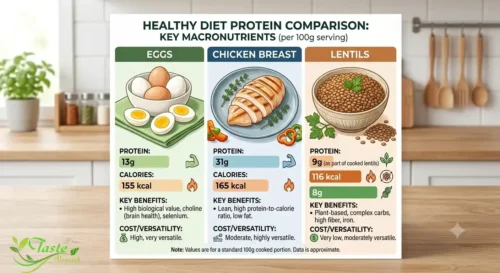
Eggs hold their own remarkably well in this comparison. While chicken breast and tuna offer more protein per gram, eggs deliver superior bioavailability, a complete amino acid profile, and an unmatched array of micronutrients at a price point that’s accessible to virtually everyone. For people on a budget, eggs may actually be the single best protein investment available at any grocery store.
Who Should Limit Egg Consumption?
While eggs are healthy for the vast majority of people, certain groups need to exercise more caution:
People with familial hypercholesterolemia – A genetic condition that causes abnormally high LDL cholesterol regardless of diet. Dietary cholesterol can have a more pronounced effect in this group.
People with type 2 diabetes – Some (not all) studies suggest a modest elevated risk with very high egg intake. Individual guidance from a healthcare provider is essential.
People with egg allergies – Egg allergy is one of the most common food allergies, particularly in children, and requires complete avoidance.
People on heavily cholesterol-restricted medical diets – Some cardiac patients are placed on specific therapeutic diets; follow your doctor’s guidance.
“Hyper-responders” – A subset of the population whose LDL cholesterol rises more sharply in response to dietary cholesterol. A blood test before and after increasing egg intake can identify this.
It’s also worth noting that the cooking context matters enormously. Eggs scrambled in butter and served with bacon represent a very different cardiovascular package than poached eggs served with avocado and whole grain toast. Don’t assess egg health in isolation from the meal they’re part of.
Practical Tips for Including Eggs in Your Diet
Ready to make the most of eggs? Here are six actionable, evidence-based strategies:
Start your day with a two-egg breakfast — the protein and fat will blunt mid-morning hunger and reduce calorie intake at lunch.
Hard-boil a batch at the start of the week — they keep for up to a week in the fridge and make the perfect on-the-go snack.
Pair eggs with colorful vegetables — spinach, tomatoes, bell peppers, and mushrooms add fiber and antioxidants that work synergistically with egg nutrients.
Use olive oil instead of butter for cooking — you protect the heart-health profile of your meal without compromising on taste.
Don’t toss the yolk — unless you have a specific medical reason to, the yolk is where choline, vitamin D, and lutein live.
Watch your egg companions — sausage, bacon, white bread, and processed cheese are the real dietary culprits often eaten alongside eggs. Swap them out for healthier sides.
Here are some excellent ways to incorporate eggs throughout the day:
Breakfast: Soft-boiled eggs with whole grain toast and sliced avocado
Lunch: Nicoise salad with hard-boiled eggs, tuna, and green beans
Snack: Hard-boiled egg with a small handful of almonds
Dinner: Frittata loaded with seasonal vegetables and fresh herbs
Post-workout: Two scrambled eggs with spinach and olive oil within 30 minutes of training
On-the-go: Egg muffins prepped in a muffin tin and refrigerated for the week.
The Great Egg Debate — A Quick History
Few foods in the history of nutrition have had such a dramatic arc as the humble egg. For decades, eggs were practically the villain of the breakfast table — slapped with warnings, stripped down to their whites, and blamed for everything from high cholesterol to heart disease. The fear stemmed from a simple, and as it turns out, overly simplified hypothesis: dietary cholesterol raises blood cholesterol, which raises your risk of heart disease.
Since one large egg contains around 186–210 mg of cholesterol, mostly in the yolk, eggs became public enemy number one.
That fear started to unravel around 2015 when the U.S. Dietary Guidelines removed the longstanding 300 mg/day cholesterol limit, acknowledging that the scientific evidence simply didn’t support it. Since then, study after study has continued to rehabilitate eggs.
New research from the University of South Australia, published in 2025, reveals that eggs aren’t the dietary villains they’ve long been made out to be — it’s actually the saturated fats found in foods like bacon and sausage that elevate harmful LDL cholesterol levels. So if eggs were on trial, the jury has returned a verdict: not guilty — with some important conditions.
nderstanding eggs today means going beyond the cholesterol debate. It means looking at what eggs actually contain, what they do in your body, and how they fit into a broader healthy dietary pattern. And the science in 2025 is more nuanced, more reassuring, and more interesting than anything we were taught about eggs a generation ago.
Are Eggs Healthy FAQs
Are eggs healthy to eat every day?
For most healthy adults, eating one egg per day is considered safe and nutritionally beneficial based on current research. The 2025–2030 U.S. Dietary Guidelines do not set a limit on dietary cholesterol, and the American Heart Association allows up to two eggs daily for healthy older adults.
Do eggs raise your cholesterol?
Eggs contain dietary cholesterol, but research now shows that saturated fat — not dietary cholesterol — is the primary driver of elevated blood LDL cholesterol. A 2025 clinical study found that eating two eggs daily on a low-saturated-fat diet actually reduced LDL cholesterol levels.
Is the egg yolk bad for you?
No — the yolk is actually the most nutrient-dense part of the egg. It contains choline, vitamin D, vitamin A, lutein, zeaxanthin, omega-3 fatty acids, and B12. Unless you have a specific medical reason to avoid it, the yolk should be part of your egg consumption.
How many eggs per week is considered healthy?
The American Heart Association and Australian Dietary Guidelines suggest up to 7 eggs per week for adults with normal cholesterol. European guidelines are slightly more conservative at 3–4 per week. The right number for you depends on your overall diet and personal health status.
Are eggs good for weight loss?
Yes — eggs are one of the most satiating foods you can eat. High in protein and healthy fats with only 75 calories each, eggs reduce overall calorie intake by keeping you fuller for longer. Research confirms that egg-based breakfasts lead to significantly lower calorie consumption throughout the day compared to carbohydrate-heavy alternatives.
Bring a small saucepan of water to a rolling boil over medium-high heat.
Gently lower the eggs into the boiling water using a spoon to prevent cracking.
Cook for exactly 6 minutes for a fully set white and a slightly runny, jammy yolk — the optimal texture for maximum nutrient retention.
Transfer eggs immediately to a bowl of ice water and let them sit for 1–2 minutes to stop the cooking process.
Gently peel the eggs under running water. Serve immediately with a pinch of salt and whole grain toast for a balanced, nutrient-dense breakfast.
Conclusion
So, are eggs healthy? The answer, backed by the best available evidence in 2025, is a confident yes — for most people, eaten in reasonable amounts, as part of a balanced diet. Eggs are a safe food that provide energy, important nutrients, and have several chemical-physical properties that make them particularly useful in the preparation of various recipes. The cholesterol fear that dominated nutritional thinking for decades has given way to a far more nuanced understanding — one that recognizes eggs as a nutrient-dense, affordable, and scientifically validated component of a healthy diet.
The real enemies of heart health aren’t the eggs on your plate — they’re the saturated fats in the processed meats and full-fat dairy that often accompany them. As new 2025 research from the University of South Australia confirms, it’s the saturated fats in foods like bacon and sausage that actually drive harmful LDL cholesterol, not eggs themselves. If you’re a healthy adult without specific metabolic conditions, one to two eggs per day is safe, nutritious, and in fact, associated with measurably better health outcomes — including a lower risk of cardiovascular disease mortality.
Eat your eggs. Eat the yolk. Cook them gently. Watch what you serve them with. And enjoy one of nature’s most perfectly designed foods.
Hanan Abo Samra is the founder of Taste & Nourish, sharing trustworthy nutrition guidance and recipes drawn from 20+ years of hands-on cooking experience. When she's not developing new recipes, Hanan is researching the science behind everyday ingredients to bring readers practical, evidence-based guidance for a healthier lifestyle.