Let’s be real — eggs are one of those foods that seem almost too simple to be this good for you. You crack one open, cook it in minutes, and what you get is a package of high-quality protein, essential fats, vitamins, and minerals that most other whole foods struggle to match.
Whether you’re a fitness enthusiast trying to build muscle, a parent feeding growing children, or simply someone who wants to eat smarter, understanding egg nutrition facts is genuinely transformative for how you approach your diet.
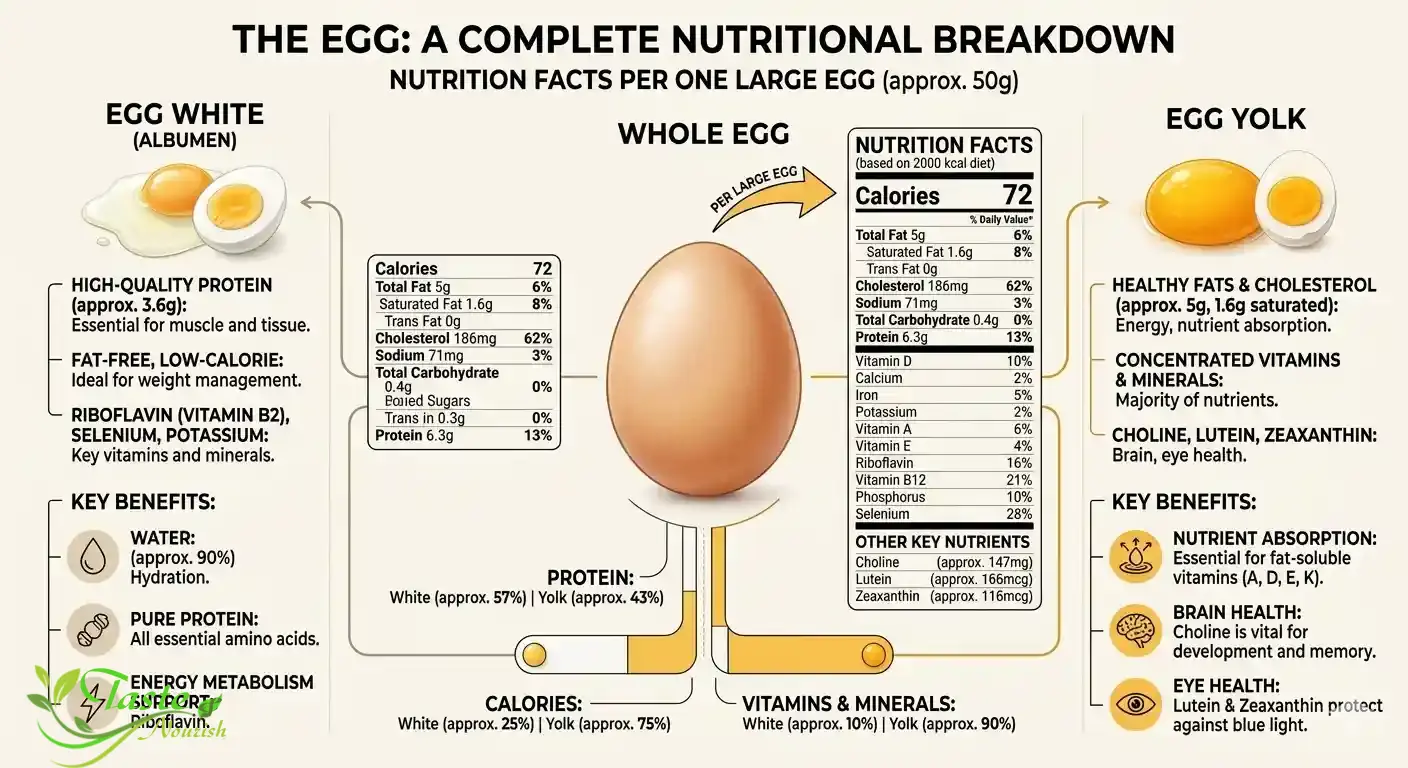
Before we get into the deeper benefits, let’s talk raw numbers. A 100g serving of whole raw egg contains approximately 143 calories, 9.51g of total fat, 3.13g of saturated fat, 1.91g of polyunsaturated fat, 3.66g of monounsaturated fat, 0.72g of carbohydrates, 12.60g of protein, along with 2.00µg of vitamin D, 56mg of calcium, 1.75mg of iron, and 138mg of potassium.
These numbers, sourced directly from USDA Food Data Central, give you a clear picture of just how nutrient-dense one of the world’s simplest foods really is.
Key Takeaway:Eggs are low in carbohydrates, moderate in calories, and exceptionally high in protein and essential micronutrients — making them ideal for a wide range of dietary goals including weight loss, muscle gain, and general wellness.
The macronutrient breakdown of eggs reveals something fascinating — eggs are essentially a zero-carb, high-protein food with a healthy blend of fats that skews heavily toward the unsaturated variety. That means the fat in eggs isn’t the villain it was once portrayed to be.
The monounsaturated and polyunsaturated fats found in egg yolks are the same types of fats praised in olive oil and fatty fish, and they play a vital role in hormone production, cell membrane integrity, and the absorption of fat-soluble vitamins.
The protein in eggs — all 12.6 grams per 100g — is complete, meaning it contains all nine essential amino acids that your body cannot manufacture on its own.
Vitamins and Minerals in Eggs
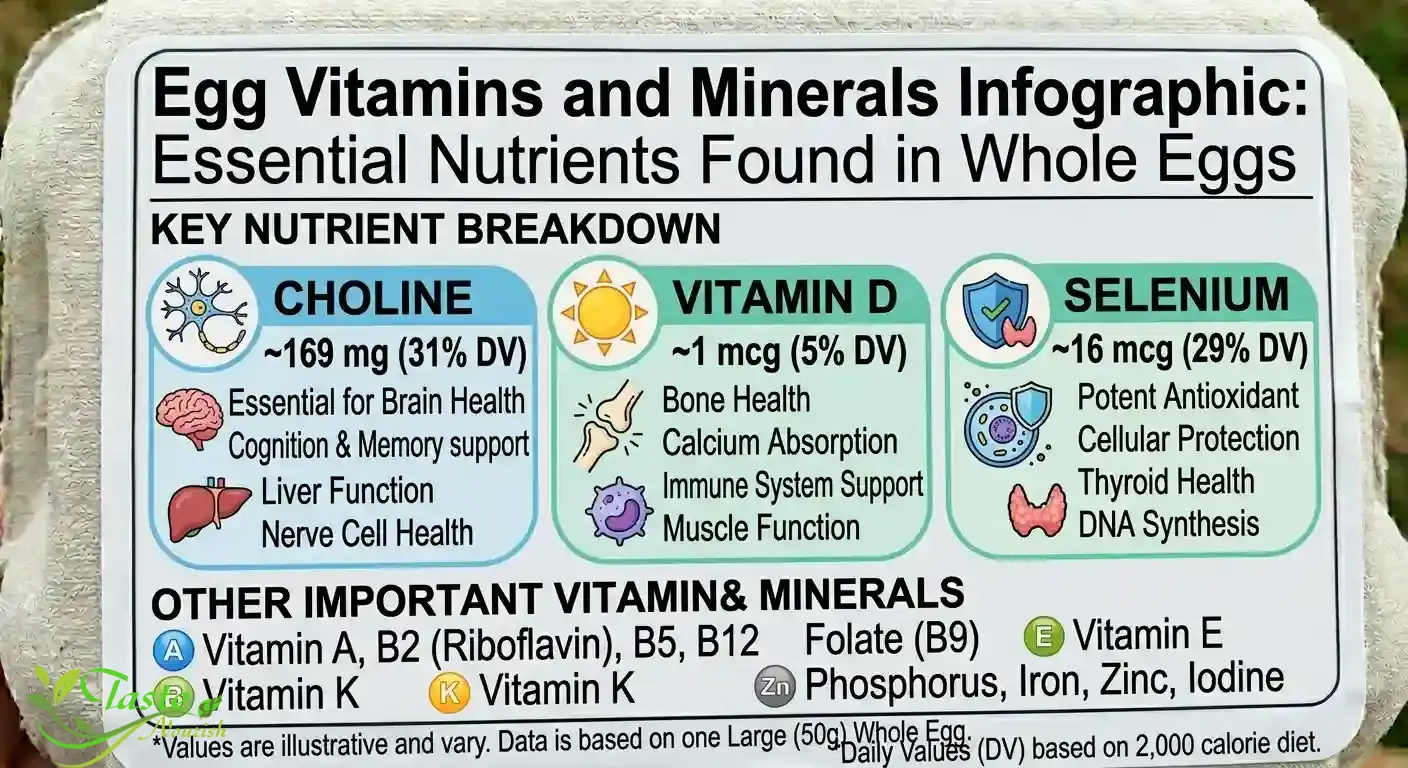
Key Vitamins and Minerals in One Large Egg (Approx. 50g)
Vitamin / Mineral
Amount
% Daily Value
Vitamin A
98µg
11%
Vitamin D
1.1µg
6%
Vitamin B12
0.6µg
25%
Riboflavin (B2)
0.26mg
20%
Folate
24µg
6%
Choline
147mg
27%
Selenium
15.4µg
28%
Phosphorus
86mg
12%
Iron
0.875mg
~11%
Zinc
0.55mg
5%
The nutritional value of eggs is impressive, making them one of the most nutrient-dense foods available. Eggs are exceptionally rich in cholesterol (373 mg per 100 g, or 124% of the Daily Value), copper (222% of the Daily Value), and choline, ranking higher in these nutrients than 99% of foods in nutritional databases.
Eggs provide significant amounts of several essential nutrients, including:
Cholesterol: 373 mg per 100 g (124% DV)
Copper: 222% of the Daily Value
Choline: One of the richest dietary sources of this brain-supporting nutrient
Beyond these standout nutrients, eggs also offer a broad range of vitamins and minerals that contribute to overall health.
Eggs are a good source of:
Vitamin D
Vitamin B2 (Riboflavin)
Vitamin B12
Most of these vitamins are concentrated in the egg yolk.
Why the Nutritional Value of Eggs Can Vary
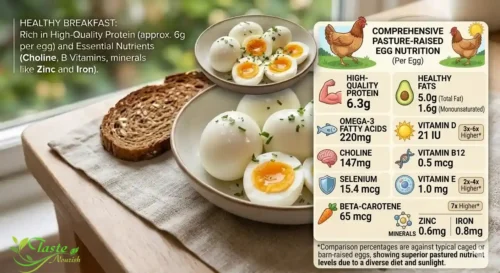
The nutritional value of eggs can differ depending on the living conditions and diet of the hens. For example, the vitamin D content may be significantly higher in eggs from hens raised outdoors or exposed to sunlight. Likewise, feeding hens vitamin D-enriched diets or exposing them to ultraviolet light can increase the vitamin D content of their eggs.
⇒For this reason, free-range and pasture-raised eggs may offer a more favorable nutritional profile and can be worth considering when available.
📌 Reader Note: Pasture-raised eggs often have higher levels of omega-3 fatty acids and vitamin D compared to conventional eggs, thanks to the hen’s access to sunlight and varied natural diet.
Egg White vs. Egg Yolk — Which Part Holds More Nutrition?
This is one of the most searched questions about eggs, and the answer might surprise anyone who’s been ordering egg white omelets for years to “eat healthy.
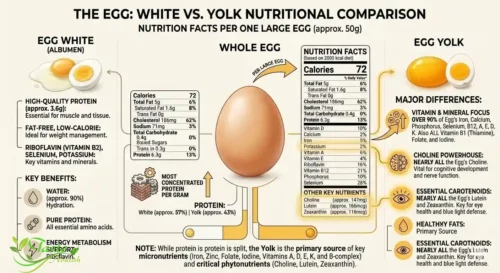
” The truth is that the egg white and egg yolk each bring something distinct to the nutritional table, but the yolk is unambiguously where most of the micronutrient action happens. Separating them out loses far more than it saves for the average healthy person, and the science increasingly backs this up. Whole eggs are nutritionally superior to egg whites for most people, as the yolk contains the majority of an egg’s nutrition: vitamin D, choline, lutein, zeaxanthin, B12, and healthy fats. Egg whites provide pure protein at 3.6g per white, but no fat-soluble vitamins.
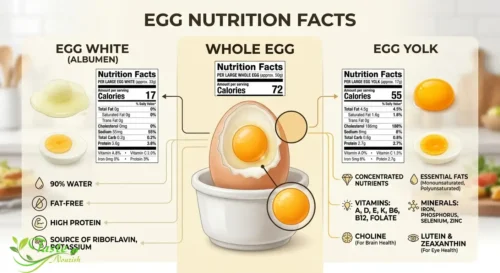
Egg White vs. Egg Yolk Nutritional Comparison (Per Large Egg)
Nutrient
Egg White
Egg Yolk
Calories
17 kcal
55 kcal
Protein
3.6g
2.7g
Fat
0g
4.5g
Cholesterol
0mg
186mg
Choline
Minimal
~147mg
Vitamin D
0
Present
Vitamin A
0
Present
Lutein & Zeaxanthin
0
~292/213µg
Selenium
Present
Higher
What’s Inside the Egg White?
The egg white — or albumen — is composed predominantly of water (about 90%) and protein (about 10%). It’s essentially nature’s lean protein source, delivering around 3.6 grams of high-quality protein with virtually no fat, no cholesterol, and very few calories.
The proteins in egg whites include ovalbumin, ovotransferrin, and ovomucin, all of which are highly digestible and contain the full spectrum of essential amino acids. For people with specific dietary needs like managing blood cholesterol or following very low-fat diets under medical supervision, egg whites are an excellent protein source.
However, for the vast majority of people following a balanced diet, consuming only egg whites means leaving a significant portion of the egg’s nutritional value untouched and wasted.
What’s Inside the Egg Yolk?
The yolk is where the real nutritional treasure lies, and it’s time that reputation was fully restored. The yolk contains 90% of an egg’s vitamins — vitamin D, A, E, K, B12, folate, and the essential nutrient choline. Choline supports brain development, liver function, and methyl group metabolism, and an estimated 90% of Americans are choline-deficient.
Beyond those vitamins, the yolk also provides healthy unsaturated fats that serve as carriers for fat-soluble vitamins, meaning that without fat in your meal, your body would struggle to absorb vitamins A, D, E, and K efficiently. The egg yolk is richer in almost all minerals, especially selenium, phosphorus, iron, zinc, and choline, and is also much lower in sodium than egg white.
Choline — The Hidden Supernutrient in Egg Yolk
Choline deserves its own spotlight because it’s both critically important and consistently underconsumed in modern diets.
One egg contains 147mg of choline, and the US Recommended Nutrient Intake for healthy adults is 425mg per day for females and 550mg per day for males. If you aren’t an egg eater, other lean protein sources of choline include beef top round (117mg in 3 oz) and soybeans (107mg in 1/2 cup).
Choline functions as a precursor to acetylcholine, one of the brain’s most important neurotransmitters, and plays a vital role in memory, muscle control, and mood regulation.
Choline is also a component of phosphatidylcholine, a major building block of cell membranes, and plays a vital role in lipid transport and metabolism, making it essential for liver function. Inadequate choline intake can be a factor in conditions like fatty liver disease.
How Many Calories Are in an Egg?
One of the most commonly asked questions about eggs is also one of the most practical — how many calories am I actually eating? The answer depends on the size of the egg and how you cook it. There are approximately 147 calories in 100 grams of whole egg. But since most people think in terms of individual eggs rather than 100g portions, here’s a practical breakdown.
Calories by Egg Size
Here’s what you can expect from different egg sizes, all based on data aligned with USDA standards:
Small egg (38g): approximately 54 calories
Medium egg (44g): approximately 63 calories
Large egg (50g): approximately 72–78 calories
Extra-large egg (56g): approximately 84 calories
Jumbo egg (63g): approximately 90 calories
Two large eggs (a common serving): approximately 144–156 calories
These numbers shift slightly based on cooking method. Boiling or poaching an egg adds zero calories, while frying in butter or oil can add anywhere from 50–100 extra calories per egg depending on how much fat you use. If you’re watching your calorie intake, boiled or poached eggs are your best bet for getting maximum nutrition with minimal caloric addition from cooking fats.
Actionable Tip:
Boil or poach eggs for the lowest-calorie preparation
Scramble with a light spray of olive oil instead of butter to cut ~50 calories per serving
Pair eggs with fiber-rich vegetables to increase satiety without adding many calories
Avoid heavy cream or full-fat cheese additions if managing calorie intake
Hard-boiled eggs make excellent portable, high-protein snacks with no added cooking calories
Eggs and Cholesterol — Clearing Up the Biggest Myth
No discussion of egg nutrition facts would be complete without tackling the cholesterol question — because this is where decades of confusion have caused real harm to people’s dietary choices.
For years, the message was simple and scary: eggs are high in cholesterol, cholesterol clogs arteries, therefore eggs are bad for your heart. It was a logical-sounding chain of reasoning that turned out to be far too simplistic. The real story is considerably more nuanced, and for most people, considerably more reassuring. Here are 6 key evidence-based points about eggs and cholesterol:
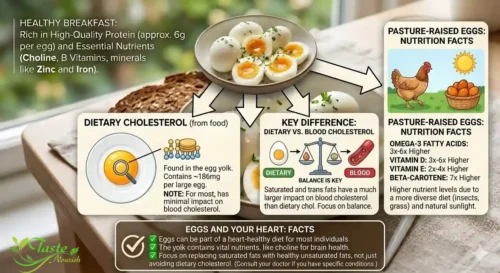
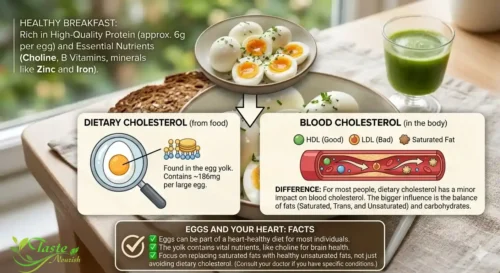
Dietary cholesterol ≠ blood cholesterol: Your liver produces the majority of your blood’s cholesterol, and it adjusts output based on how much you consume. Eating more cholesterol from food typically leads your liver to produce less.
Most people are “non-responders”: Dietary cholesterol from eggs has minimal impact on blood cholesterol for most people — the concern over egg yolks has largely been debunked by modern research, with approximately 75% of people classified as non-responders.
Saturated fat matters more: Research has shown that the cholesterol in eggs has a minimal impact on blood cholesterol levels. Recommendations have now shifted from a focus on dietary cholesterol to the saturated fat content of foods, since saturated fat intake increases LDL ‘bad’ cholesterol. Eggs are relatively low in saturated fat, with the majority of fat in eggs being heart-healthy unsaturated fat.
Fortified eggs show benefits: A major 2024 clinical trial found that eating 12 fortified eggs per week had no adverse effect on blood cholesterol. Secondary endpoints revealed numerical reductions in total cholesterol, LDL particle number, apoB, high-sensitivity troponin (a marker of heart damage), and insulin resistance scores in the fortified egg group.
European populations show no increased risk: Recent evidence from observational studies does not provide strong support for a detrimental role of moderate egg consumption — up to one egg per day — on the risk of cardiovascular disease, especially in European studies. The overall evidence indicates that egg consumption is not associated with increased risk of mortality or type 2 diabetes in European study populations.
Pre-existing conditions change the equation: For those with preexisting heart conditions, high LDL cholesterol, or type 2 diabetes, it is advisable to limit egg intake to no more than seven eggs per week. For everyone else, there is no specific limit.
What Modern Research Actually Says
The scientific literature on eggs and heart health has undergone a genuine evolution over the past decade. Large-scale epidemiological studies have found only tenuous associations between egg intake and cardiovascular disease risk.
Well-controlled clinical studies show the impact of dietary cholesterol via egg intake on serum lipids is highly variable, with the majority of individuals — roughly two-thirds of the population — having only minimal responses, while those with a significant response increase both LDL and HDL cholesterol, typically with maintenance of the LDL/HDL cholesterol ratio.
⇒ In other words, even those who do respond to dietary cholesterol often do so in a way that doesn’t necessarily increase heart disease risk, because both the “bad” and “good” cholesterol rise together, preserving the balance.
Expert Insight: According to a peer-reviewed analysis published in Nutrients journal: “Once the general public accepts that dietary cholesterol is not a concern for cardiovascular disease risk, foods labeled as high-cholesterol sources, including eggs, may be appreciated for their various other dietary components.” — Puglisi & Fernandez, University of Connecticut (2022)
The Top Health Benefits of Eating Eggs
With the nutritional profile clearly established, let’s translate those numbers into real-world health outcomes. Eggs aren’t just a source of protein and fat — they deliver targeted benefits for specific biological systems in ways that few other foods can match.
6 Evidence-Based Health Benefits of Eggs:
High-quality complete protein for muscle repair and growth
Choline-rich for brain development and liver health
Lutein and zeaxanthin for eye protection and vision longevity
Vitamin D for bone health and immune function
B vitamins (especially B12) for energy metabolism and nerve health
Selenium for thyroid function and antioxidant defense
Eggs Support Brain Health
The brain benefit of eggs is one of the most compelling and least discussed aspects of egg nutrition. The primary driver is choline, which the brain relies on to produce acetylcholine — a neurotransmitter essential for memory formation, learning, mood stability, and muscle control. Think of acetylcholine as the CEO neurotransmitter in the parasympathetic nervous system, communicating signals for muscle control, blood vessel dilation, and regulation of heart rate.
♥ Choline also plays a role in memory, mood, and other brain and nervous system functions, and although our bodies can make small quantities of choline, most of it must be consumed through diet.
This is why pregnant women are specifically encouraged to consume adequate choline — the developing fetal brain requires large amounts of it for neural tube development and long-term cognitive function. Eating two to three whole eggs daily provides a meaningful contribution toward meeting daily choline needs, and there’s no plant-based food that comes close to matching the concentration and bioavailability found in egg yolks.
Eggs Protect Eye Health
One of the most fascinating benefits of eggs is their role in preserving vision as you age. The two carotenoids found in egg yolks — lutein and zeaxanthin — accumulate specifically in the macula of the retina, where they act as a kind of natural sunscreen against blue light and oxidative damage.
According to the American Journal of Clinical Nutrition, egg yolk is a highly bioavailable source of lutein and zeaxanthin. These carotenoids have antioxidant properties, prevent the formation of free radicals, and may delay the progression of age-related macular degeneration and cataracts.
Egg white, however, is completely absent in lutein and zeaxanthin. What makes this particularly meaningful is that while lutein and zeaxanthin are found in leafy green vegetables like kale and spinach, the form found in egg yolk is significantly more bioavailable — meaning your body absorbs and uses it more efficiently.
⇒ On average, each egg yolk contains approximately 292 micrograms of lutein and 213 micrograms of zeaxanthin, and these pigments are also what give the yolk its characteristic yellow color.
Eggs Help with Weight Management
Here’s something that surprises many people — eggs are not a food to avoid when you’re trying to lose weight — they’re actually one of the most effective foods to include. The reason is satiety.
The combination of high-quality protein and fat in a whole egg creates a feeling of fullness that can significantly reduce total calorie consumption throughout the day.
Protein is the most satiating macronutrient, and with roughly 6 grams of protein per large egg, a two-egg breakfast delivers around 12 grams of protein before you’ve added anything else to your plate. Reinforcing the health benefits of eggs is essential to promote a balanced diet and combat obesity, given their high satiety and overall nutritional value.
Studies comparing high-protein breakfasts featuring eggs to carbohydrate-heavy breakfasts like bagels or cereal consistently find that the egg-eating group consumes fewer calories at subsequent meals throughout the day — without feeling deprived or hungry.
√ If you’re looking for a practical, evidence-backed strategy for weight management, starting your day with eggs is genuinely hard to beat.
Are Eggs Safe to Eat Every Day?
For most healthy adults, eating one to two eggs daily is considered safe and nutritionally beneficial. The broader body of research supports moderate egg consumption as part of a varied, balanced diet without any meaningful increase in health risk. However, context always matters in nutrition. A 2024 study found that in those with cardiovascular disease, consuming more than 50g of eggs — approximately one egg — per day showed a significant positive association with mortality risk.
Overall, the research suggests that eggs are a nutritious food choice when eaten in moderation and as part of a balanced diet.
The practical guidance, then, looks something like this: if you’re a generally healthy adult with no pre-existing cardiovascular conditions or insulin resistance issues, eating one to two whole eggs daily is a sound nutritional strategy. If you have existing heart disease, elevated LDL cholesterol, or type 2 diabetes, it’s worth consulting your doctor or dietitian about your specific egg intake, but even for these groups, eggs haven’t been conclusively ruled out — they simply call for more mindful portion management. The method of preparation matters too.
Boiled, poached, or scrambled eggs with vegetables represent a very different meal than fried eggs dripping in butter alongside processed meats, and how you eat your eggs affects the overall health profile of your meal significantly.
6 Practical Tips for Making the Most of Egg Nutrition:
Eat the whole egg — don’t discard the yolk unless medically advised
Choose pasture-raised or free-range eggs for higher omega-3 and vitamin D content
Cook at moderate heat — excessive heat can oxidize cholesterol in the yolk
Pair with vegetables for a fiber boost and enhanced micronutrient absorption
Avoid high-sodium additions like processed meats that negate eggs’ health benefits
Store properly in the refrigerator to maintain freshness and prevent bacterial growth
Why Eggs Are Considered a Nutritional Powerhouse
. It’s no accident that nutrition scientists often use the egg as the gold standard for measuring protein quality in other foods. In fact, the Protein Digestibility Corrected Amino Acid Score (PDCAAS) for eggs is at the very top of the scale, meaning your body can use virtually all the protein in an egg efficiently and completely.
What makes eggs truly stand out, though, isn’t just protein. Eggs contain several nutritional components which protect against chronic disease, including lutein, zeaxanthin, choline, vitamin D, selenium, and vitamin A. That’s a remarkable lineup for a food that costs very little and takes less than five minutes to cook. Think of the egg like nature’s multivitamin — compact, bioavailable, and complete.
A Brief History of Eggs in Human Nutrition
Humans have been eating eggs for tens of thousands of years, long before nutritional science existed to explain why they were so beneficial. Ancient civilizations across Asia, the Middle East, and the Mediterranean all incorporated eggs into their diets, and for good reason — eggs were affordable, calorie-dense, and packed with nutrients in a time when food scarcity was a real concern.
Fast forward to the 20th century, and the narrative around eggs got complicated thanks to the cholesterol panic of the 1960s and 70s, which led to widespread dietary guidelines warning people away from egg yolks.
Fortunately, modern nutritional research has largely rehabilitated the egg’s reputation, with current evidence pointing to eggs as a healthy, nutrient-dense food for the vast majority of people.
Egg Nutrition Facts FAQs
How much protein is in one large egg?
One large egg (approximately 50g) contains around 6–6.3 grams of high-quality complete protein, distributed between the egg white (approximately 3.6g) and the egg yolk (approximately 2.7g). This protein contains all nine essential amino acids and has one of the highest bioavailability scores of any food source.
Is the egg yolk really bad for you?
No — for most healthy people, the egg yolk is not bad for you. While it does contain cholesterol and saturated fat, modern research consistently shows that dietary cholesterol from eggs has minimal impact on blood cholesterol levels in the majority of people. The yolk also contains the vast majority of the egg’s vitamins, minerals, choline, lutein, and healthy fats, making it nutritionally essential.
How many eggs can you eat per day safely?
For healthy adults without cardiovascular disease or diabetes, most nutritional experts and current dietary guidelines support consuming up to one to two whole eggs per day without adverse health effects. For individuals with existing heart conditions or elevated cholesterol, it’s advisable to consult a healthcare provider, but generally staying at or below seven eggs per week is recommended.
Do eggs have carbohydrates?
Eggs are extremely low in carbohydrates — a whole large egg contains less than 1 gram of carbohydrates. This makes eggs an excellent food choice for people following low-carb, ketogenic, or diabetic-friendly diets where carbohydrate management is a priority.
What is the best way to cook eggs to preserve their nutritional value?
Boiling and poaching are considered the best cooking methods for preserving egg nutrition, as they require no added fats and expose the egg to lower temperatures. Scrambling at moderate heat is also a good option. Avoid cooking eggs at very high temperatures for extended periods, as this can cause some oxidation of the cholesterol in the yolk and may reduce the bioavailability of certain heat-sensitive vitamins.
Conclusion
Eggs are one of the most nutritionally complete, versatile, and affordable foods available to us. From delivering high-quality complete protein and essential B vitamins to providing brain-supporting choline, vision-protecting lutein, and a full spectrum of minerals, the egg nutrition facts tell the story of a genuine superfood hiding in plain sight. The cholesterol debate that once cast a shadow over egg consumption has been largely resolved by modern research, and for the vast majority of healthy people, eggs deserve a prominent and regular place in the diet.
Whether you boil them, poach them, scramble them, or bake them into your favorite dish, you’re getting one of the most efficiently packaged bundles of nutrition that nature has ever produced. So crack that egg with confidence — your body will thank you for it.
Hanan Abo Samra is the founder of Taste & Nourish, sharing trustworthy nutrition guidance and recipes drawn from 20+ years of hands-on cooking experience. When she's not developing new recipes, Hanan is researching the science behind everyday ingredients to bring readers practical, evidence-based guidance for a healthier lifestyle.