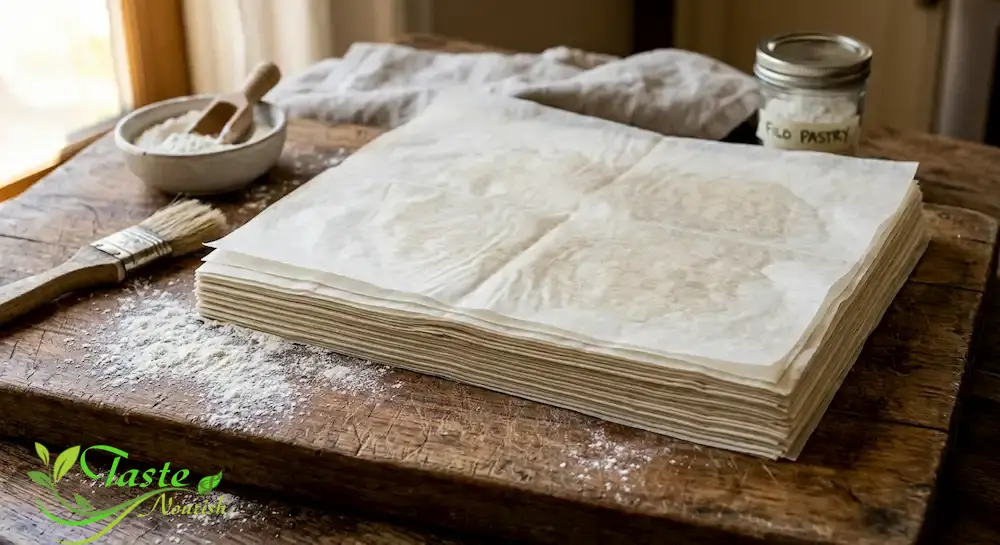
Filo pastry sheets look delicate for good reason: they are thinner than paper and dry out in minutes. The good news is that a few simple habits fix most problems. Thaw them slowly, keep them covered, use a light hand with the butter, and bake until deep golden. This guide shows you how to handle filo pastry sheets so they bake up crisp and flaky instead of cracked, gummy, or soggy.
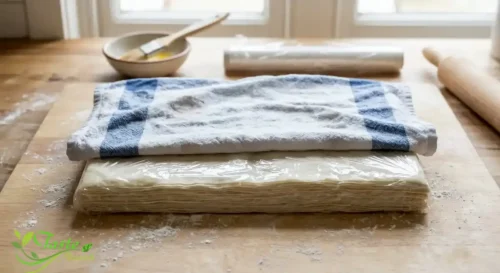
Thaw your Filo Pastry Sheets overnight in the refrigerator without opening the package. If the label says so, let the sealed package rest at room temperature before use. Unroll the stack, cover it with plastic wrap and a barely damp towel, and take out one sheet at a time. Brush each sheet with a thin film of melted butter or oil, add the filling, and bake at about 375°F (190°C) until deep golden. Wrap unused sheets airtight right away, and bake any egg-based filling until it reaches 160°F.
Key Takeaways
Thaw Filo Pastry Sheets in the refrigerator, still sealed, so condensation doesn’t glue the layers together.
Keep unused sheets under plastic wrap and a barely damp towel, and never leave the stack open on the counter.
A thin, even film of fat between sheets gives crispness. Too much fat makes them heavy and greasy.
Cooked fillings with eggs, dairy, or meat are perishable. Cool and refrigerate leftovers within two hours.
Opened sheets need tight wrapping. Once thawed, they are best used rather than refrozen.
Why Filo Behaves the Way It Does
Filo (also spelled phyllo) is a dough of flour, water, and a little oil that is stretched until it is nearly transparent. The dough itself contains almost no fat, and the sheets are so thin that they lose moisture in minutes. That is why they crack when they dry out and turn gummy when they get wet.
Nearly everything in this guide comes down to managing moisture. Keep the sheets from drying, keep the filling from leaking, and use just enough fat to separate the layers.
Sheet size varies by brand, from roughly 9 by 14 inches up to 12 by 17 inches. Check the dimensions on the package before you plan a pan size or a sheet count.
Choosing the Right Filo Thickness
Filo pastry sheets come in different thicknesses, and the right one depends on what you are making. Many brands label their packages with numbers such as #4, #5, #7, and #10, and as a general rule, a higher number means a thicker sheet. Thin sheets bake into delicate, crisp layers, medium sheets are sturdy enough for filled pies and triangles, and thick “country-style” sheets suit hearty, rustic pies.
According to Saveur’s guide to phyllo types, a medium sheet such as #7 is a good choice for individual spanakopita and tyropita, a #5 works as an all-purpose dough for tart shells and small cups, and the thickest country-style sheets are best for rustic savory pies.
Thickness
Common label
Good for
Thin
#4 to #5
Delicate pastries, small cups and tart shells, custard-filled pastries
Medium
#7
Spanakopita, tyropita, börek, triangles
Thick (country-style)
#9 to #10 or “country-style”
Hearty, rustic savory pies
These numbers come from a labeling system used by certain brands, so the same number may not feel identical from one brand to another, and some packages carry no number at all. Check the package for the brand’s own description, and when in doubt, choose a medium sheet for savory pies and the thinnest sheet you can find for delicate, crisp layers.
How to Thaw Filo Pastry Sheets Without Making Them Gummy
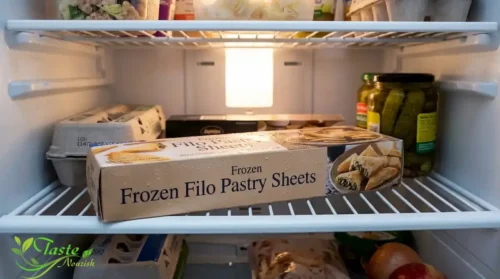
Move the sealed package to the refrigerator the night before. Leave it in its wrapper or box. Opening it early lets moisture condense on the cold sheets and fuse them.
Give it enough time. Overnight works for most brands, but follow the package. A stack that is still icy in the center will tear when you unroll it.
Rest it at room temperature if the label calls for it. Many brands suggest a short rest, often an hour or two, so the sheets loosen and flex. Keep the package sealed during this time.
Open it only when everything else is ready. Your filling, melted butter, and pan should be waiting.
Refrigerator thawing is also the method USDA recommends for frozen foods in general, because the food stays at a constant, safe temperature of 40°F or below. USDA describes the safe ways to thaw frozen food. Its cold-water and microwave methods suit meat but would ruin filo, since water soaks the dough and microwaves steam it into a sticky block.
There is no good shortcut for thawing filo. If you forgot, switch to a recipe that uses puff pastry and try the filo another day.
Set Up Your Workstation Before You Unroll Anything
Filo gives you a short window, so preparation matters more than speed. Have these ready:
A clean, dry work surface, ideally lined with parchment.
Melted butter or oil and a soft pastry brush.
Plastic wrap and a clean kitchen towel, dampened and wrung out until it is barely moist.
A sharp knife or a pizza wheel for trimming the stack.
Your baking pan, already greased or lined.
A filling that is cool and relatively dry.
The filling deserves extra attention. A hot or wet filling melts the fat and soaks the bottom layers before the pastry sets. Squeeze cooked spinach in a towel until no liquid comes out, and drain feta or ricotta well. Let cooked meat or vegetable fillings cool to room temperature first.
How to Layer and Fold Filo Pastry Sheets
1. Trim the stack to fit. If the sheets are larger than your pan or your triangle strips, cut the whole stack at once with a sharp knife or pizza wheel, then re-cover everything immediately.
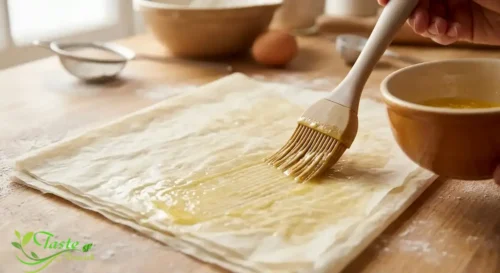
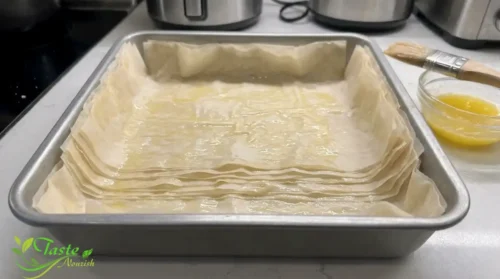
2. Lay down the first sheet and brush it lightly with butter or oil. Start at the edges and corners, which dry first, and work toward the center.
3. Stack more sheets the same way. As a rough guide, a pan pie takes 6 to 10 sheets on the bottom and the same on top. Triangles and rolls usually use 2 to 3 stacked strips.
4. Add the filling, leaving a margin around the edge. Overfilling pushes steam out through the seams and splits them.
5. Finish with the top layers, trim any overhang, and tuck the edges down inside the pan.
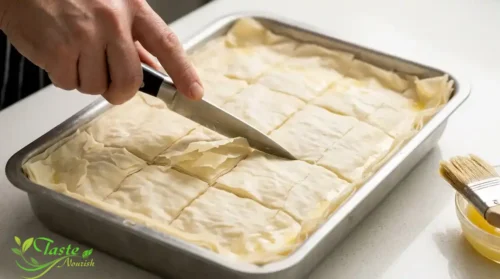
6. Score before baking. Cut through the top layers into serving portions with a sharp knife. Baked filo shatters under a knife, so this step keeps the cuts clean.
7. Brush the top generously. It is the layer everyone sees, so it deserves a bit more fat than the layers inside.
A torn sheet is not a problem. Patch it into a middle layer, where nobody will see it, and save your intact sheets for the top and bottom.
Butter, Oil, or Spray Between the Layers
The fat separates the sheets so each one bakes into its own crisp layer. Your choice changes both flavor and texture.
Melted butter gives the richest flavor. I keep it melted but not hot, because hot butter soaks into the sheet instead of sitting on its surface.
Clarified butter has had the water and milk solids removed. It crisps more evenly and is less likely to scorch.
Olive oil or a neutral oil suits savory dishes and gives a sturdier, cleaner crunch. It is also the simplest dairy-free option.
Cooking spray is quick and light, but it coats unevenly and produces a drier, paler result.
For juicy fillings such as fruit, sprinkle a thin layer of fine breadcrumbs or finely ground nuts between the lower layers. The crumbs absorb moisture and protect the pastry from the filling.
Baking Temperature, Timing, and Doneness
Most filo dishes bake well at 375°F (190°C), which is hot enough to crisp thin layers before the filling dries out. Rack position matters too. Bake pies on a lower-middle rack in a fully preheated oven so the bottom layers get direct heat.
What You’re Baking
Approximate Oven Temperature
Approximate Time
Doneness Cue
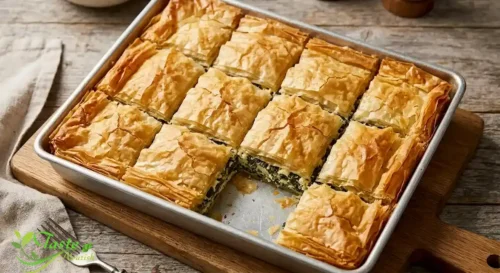
Pan pie, spanakopita-style
375°F (190°C)
40 to 55 minutes
Deep golden top, hot filling
Triangles or small hand pies
375°F (190°C)
15 to 25 minutes
Golden all over, crisp underneath
Rolls or cigars
375°F (190°C)
20 to 25 minutes
Evenly golden
Baklava
325 to 350°F (165 to 175°C)
45 to 60 minutes
Deep golden, then syrup
Fruit strudel
375°F (190°C)
30 to 40 minutes
Golden, juices bubbling at the ends
Tartlet shells
350°F (175°C)
8 to 12 minutes
Light golden and crisp
These times are approximate. Dark pans, thick fillings, and oven quirks all shift them, so use color and the filling’s temperature as your real guide. For baklava, pour cooled syrup over the hot pastry (or hot syrup over cooled pastry) so the layers absorb it without turning mushy.
Fillings and Food Safety
Filo is a low-risk ingredient, but many popular fillings are not. Cheese, eggs, and meat need careful handling.
Egg-based fillings:FoodSafety.gov’s minimum internal temperature chart lists 160°F for egg dishes such as quiche and frittata. Spanakopita made with beaten eggs falls in the same category, so check the center with a thermometer.
Meat or poultry fillings: Cook them completely before assembling. The same chart lists 165°F for casseroles containing meat and poultry, which is a sensible target for a meat-filled pie.
Thermometer placement: Slide it through a scored cut into the center of the filling, not into the pastry.
Bacteria multiply fastest between 40°F and 140°F, and USDA advises against leaving perishable food in that range for more than two hours. A USDA food safety notice on the Danger Zone explains the range and the two-hour limit. A pie on a buffet table counts, so serve it warm or chill it promptly.
How to Store Filo Pastry Sheets
Unopened packages
Keep frozen packages in the freezer until the night before you need them. USDA notes that freezing keeps food safe, and that recommended freezer times are about quality rather than safety, in its guidance on freezing and food safety. For filo, follow the date and storage instructions on the package, since the label reflects the brand’s own quality testing.
Opened packages and leftover sheets
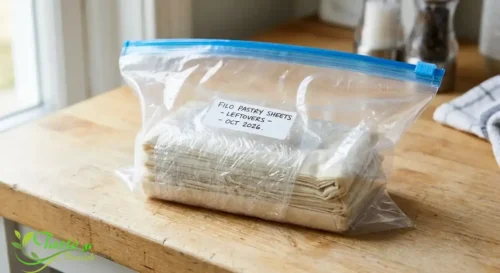
Once opened, the sheets begin drying immediately. Press out as much air as you can, wrap the remaining stack tightly in plastic wrap, and slide it into a zip-top bag or an airtight container. Refrigerate it and use it soon, since it gets stiffer and harder to handle each day. Follow any use-by guidance on the package.
Refreezing thawed sheets
From a safety standpoint, USDA says food thawed in the refrigerator can be refrozen, though some quality is lost. Filo loses more than most foods, because repeated thawing leaves condensation that fuses the layers and makes the sheets brittle. If the package says not to refreeze, follow it. Otherwise, plan to use thawed sheets, or freeze only what you can’t use as an assembled, unbaked dish.
Assembled and baked dishes
Unbaked pies and triangles: Freeze on a tray until solid, then transfer to a freezer bag. Bake from frozen, allowing extra time, and check that the center is hot.
Baked savory pastries with cheese, egg, or meat: Cool them quickly and refrigerate within two hours.
Baklava: It is traditionally kept covered at room temperature because of the high-sugar syrup. If yours has a custard or cream filling, treat it as perishable and refrigerate it.
How to Tell If Filo Is No Longer Good
Discard filo that shows any of these signs:
Fuzzy or colored spots of mold on the sheets or inside the wrapper.
A sour, musty, or rancid smell when you open the package.
A damp, slimy surface rather than a dry one.
A swollen, torn, or leaking package.
Dry, stiff edges or a stack that cracks apart is a quality problem rather than a safety problem, though the sheets will be frustrating to use. Never taste filo or a filling to decide whether it is safe. Discard it if you have any doubt.
Troubleshooting Filo Pastry Sheets
The sheets crack or shatter as you unroll them
They are either dried out or still too cold. Let a sealed, refrigerator-thawed package rest at room temperature if the label allows it, and keep the stack covered at all times. If a few sheets are already brittle, use them in the middle layers.
The sheets are stuck together in a block
Moisture is the usual cause, from opening the package while it was still cold, thawing too fast, or refreezing. Peel apart what you can, patch the rest into inner layers, and use extra fat on the next stack. Next time, thaw slowly in the refrigerator with the package sealed.
The bottom is soggy
The filling was too wet, too hot, or the pie had too little heat from below. Drain and cool the filling, add a layer of fine crumbs, and bake on a lower rack. A metal pan browns the base better than glass.
The top browns before the center is hot
The oven may be too hot, or the pie is thick. Tent it loosely with foil, lower the oven by about 25°F, and keep baking until a thermometer confirms the filling is done. Cutting filling ingredients smaller also helps next time.
The layers slide or shatter when you cut
The pie was not scored before baking, or you cut it while it was piping hot. Score it beforehand, and let it rest 10 to 15 minutes before cutting so the filling can set.
Expert Tips for More Reliable Results
Work in batches. Pull out only as many sheets as you need, and re-cover the stack after each one.
Brush corners first. Edges and corners dry out fastest, so they get the first pass of butter.
Don’t press down hard. Brushing gently keeps the air pockets between layers that make filo flaky.
Use a preheated sheet pan under your baking dish. It adds bottom heat and catches drips.
Crumple scraps for a rustic top. Torn sheets, loosely scrunched and buttered, make a deeply crisp, uneven topping.
Rest before serving. A short rest firms up the filling so slices hold together.
Substitutes and Alternatives
Nothing replicates filo exactly, but a few products come close for certain jobs.
Puff pastry: It is thicker and made with solid fat laminated into the dough, so it puffs up and tastes richer rather than crisp and papery. It works for triangles and pies, but not for baklava.
Spring roll wrappers: They are heavier and meant for frying, so they won’t flake in the oven the way filo does.
Brik or warqa-style pastry sheets: These are similarly thin and work in many of the same recipes. Check the package, because handling varies.
What to Do With Leftovers
Leftover baked pastries lose their crispness in the refrigerator, but you can restore much of it. Reheat them uncovered in a 350°F (175°C) oven, on a rack or sheet pan, for about 10 to 20 minutes. Check that the center reaches 165°F, the temperature USDA gives for reheating leftovers in its guidance on leftovers and food safety. A microwave will warm the filling but leave the pastry soft.
Leftover raw sheets can be brushed with oil, sprinkled with salt or sugar, and baked into crisp shards for salads or yogurt. They can also be pressed into muffin tins for small cups.
Filo Pastry Sheets FAQs
Is filo the same as phyllo?
Yes. Both spellings describe the same paper-thin dough, and packages use them interchangeably.
Do I have to thaw the sheets before baking?
Yes, for loose sheets, because they must separate cleanly to layer. Fully assembled, unbaked dishes can go into the oven frozen, with extra time.
Can I assemble a filo pie ahead of time?
Freezing is the most reliable make-ahead method. A short stay in the refrigerator can work if the filling is dry and the dish is tightly covered, but moisture will gradually soften the lower layers.
Can I use filo without any butter or oil?
You can, but the sheets will bake up pale, dry, and papery, and they won’t stay separated. A thin film of fat, or a light coat of spray, is what turns them into flaky layers.
Is filo vegan?
Many plain filo products are made from flour, water, and oil, but ingredients differ by brand, so read the label. The butter used in most recipes is the part that makes the finished dish non-vegan. Olive oil or a dairy-free butter alternative solves that.
How many sheets do I need?
Sheet count and size vary by brand, so check the package. A pan pie uses roughly 12 to 20 sheets in total, while triangles use far fewer per serving, since each strip is cut from a sheet.
Conclusion
Success with Filo Pastry Sheets comes down to a few habits. Thaw them slowly in the refrigerator, keep them covered, and brush each layer with a thin film of fat. Bake until deep golden, cook egg or meat fillings to a safe temperature, and wrap whatever is left tightly. The sheets are delicate, but they respond well once you manage the moisture around them.
**Hanan Abo Samra** shares practical cooking insights, delicious recipes, and evidence-based nutrition information. Drawing on more than 20 years of hands-on cooking experience, she creates helpful food content that combines everyday cooking knowledge with information from reliable scientific sources. Her goal is to help readers better understand the foods they eat, explore their nutritional benefits, and prepare delicious meals with confidence.